
Bold crimson cliffs, vivid red sand, and brilliant blue water—Red Beach in Santorini really does look like something from another planet. After hearing about its unusual landscape and the short but steep hike down, I just had to see for myself if it truly stood out from other beaches on the island.
If you’re searching for a unique natural environment and a view that feels otherworldly, Red Beach is definitely worth the climb and the hype.
From the moment I stepped onto the reddish shoreline, I could see why so many travelers rave about this spot. The contrast of deep red rocks against the bright sea is unforgettable, and the scenery almost doesn’t feel real.
Sure, getting down to the sand takes a bit of effort. Still, watching the clear blue waves lap against the crimson shore made every step worthwhile.
Curious what makes Red Beach in Santorini a must-see? I’ll break down what the climb is really like, tips for visiting, and whether the experience lives up to those jaw-dropping photos online.
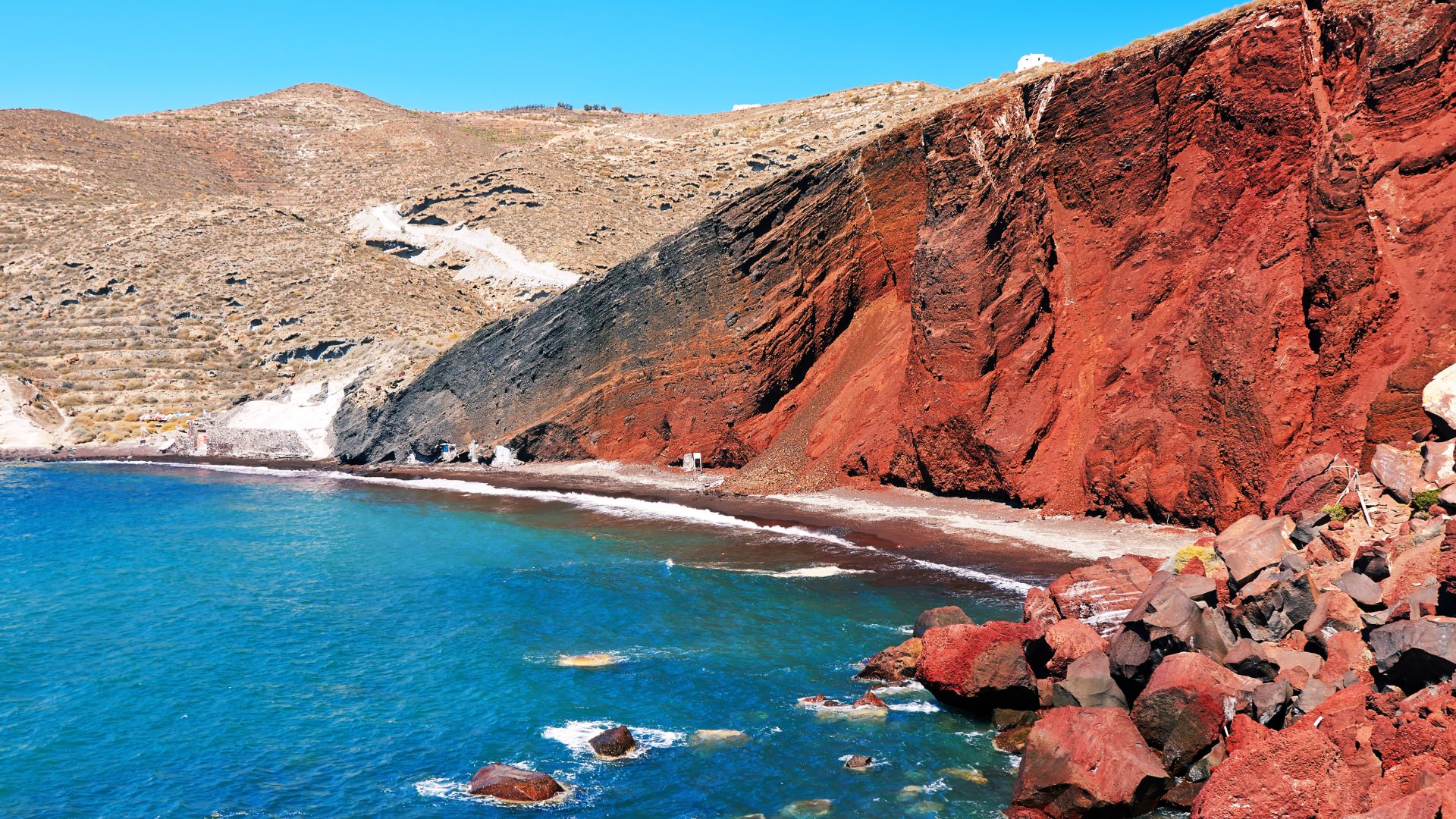
First Impressions: Arriving at Red Beach
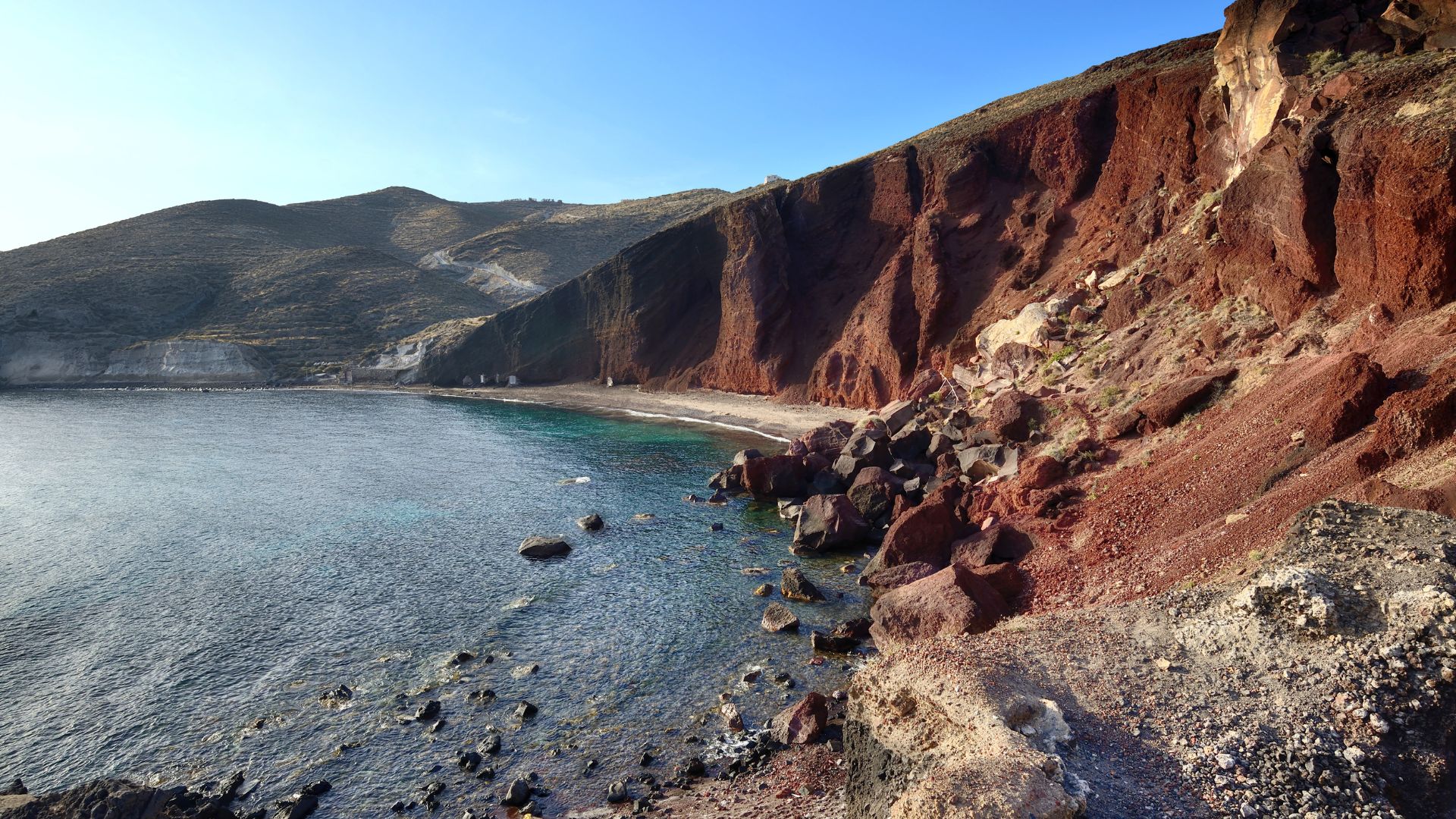
Red Beach really does look like another world, with those vivid red cliffs and the bright blue water below. Standing above the bay, I get why people say this spot gives off serious Mars vibes.
The Mars-Like Landscape
I stepped out of the car and pulled up my GPS, just to double-check the route. The walk down isn’t smooth or flat—it’s rocky, with loose stones underfoot.
All around, massive cliffs rise up, colored a deep, rusty red. They almost look fake, like someone painted them for a sci-fi movie.
Sunlight hits the cliff face, and suddenly the colors pop even more. I see streaks of orange and brown mixed with the red, which gives the place a dramatic feel.
The sand below is coarse and almost the same color as the cliffs. It’s not the soft, white sand you’d expect from a Greco-Roman postcard, but it fits the wild, rugged setting.
Looking around, there’s barely any shade. The landscape feels exposed and raw.
My eyes keep adjusting to the strange sights, and I can’t help but imagine ancient Romans or Greeks clambering along these same cliffs. The area seems untouched, yet shaped by centuries of natural force.
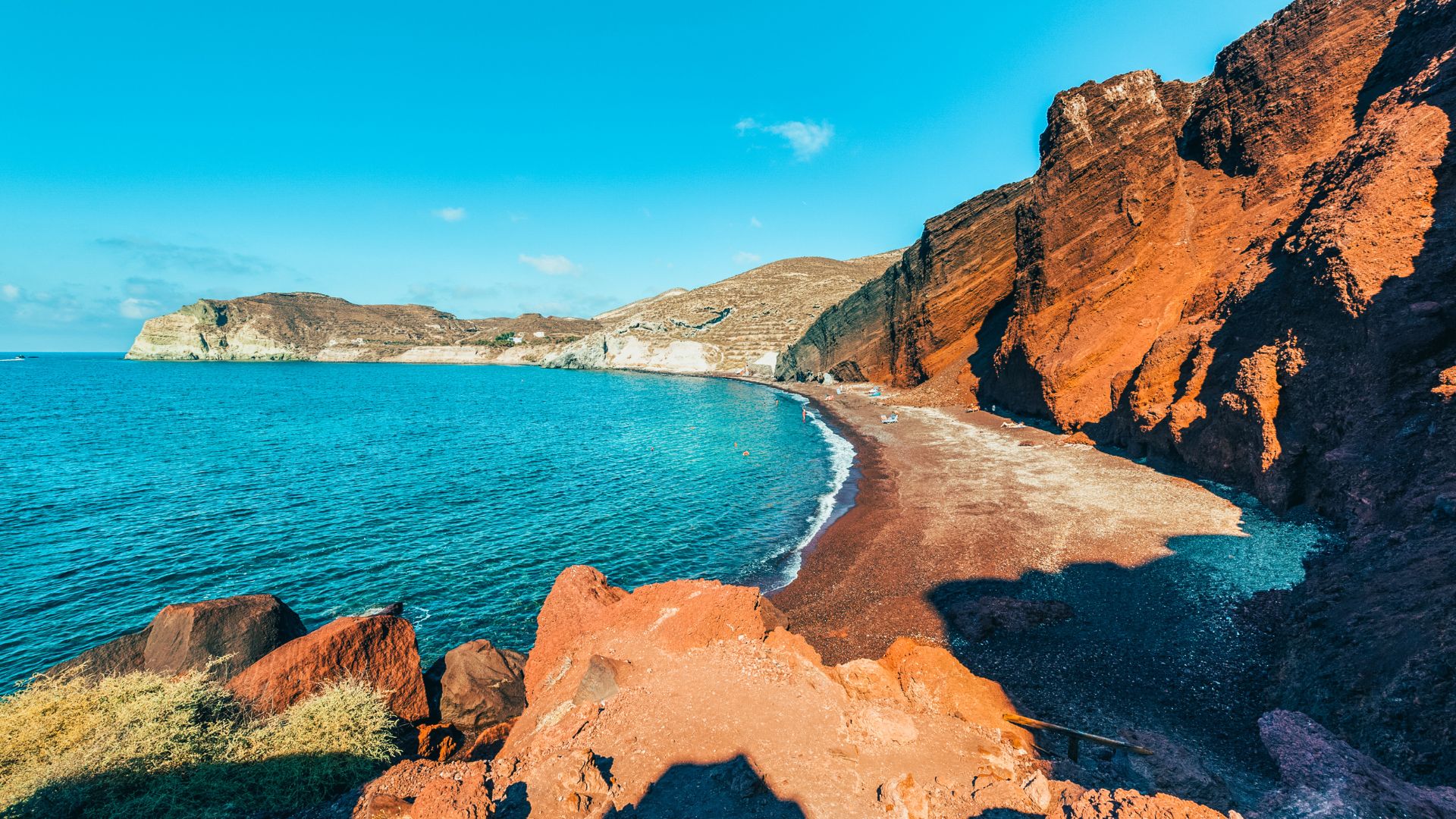
Catching the First Glimpse
As I hit the last bend of the path, the view suddenly opens up. At first, all I see is that striking contrast: crimson cliffs, dark sand, and the deep blue Aegean Sea.
The colors really are that intense—no filter needed. On my left, the shore curves in a small arc, framed by high, jagged rocks.
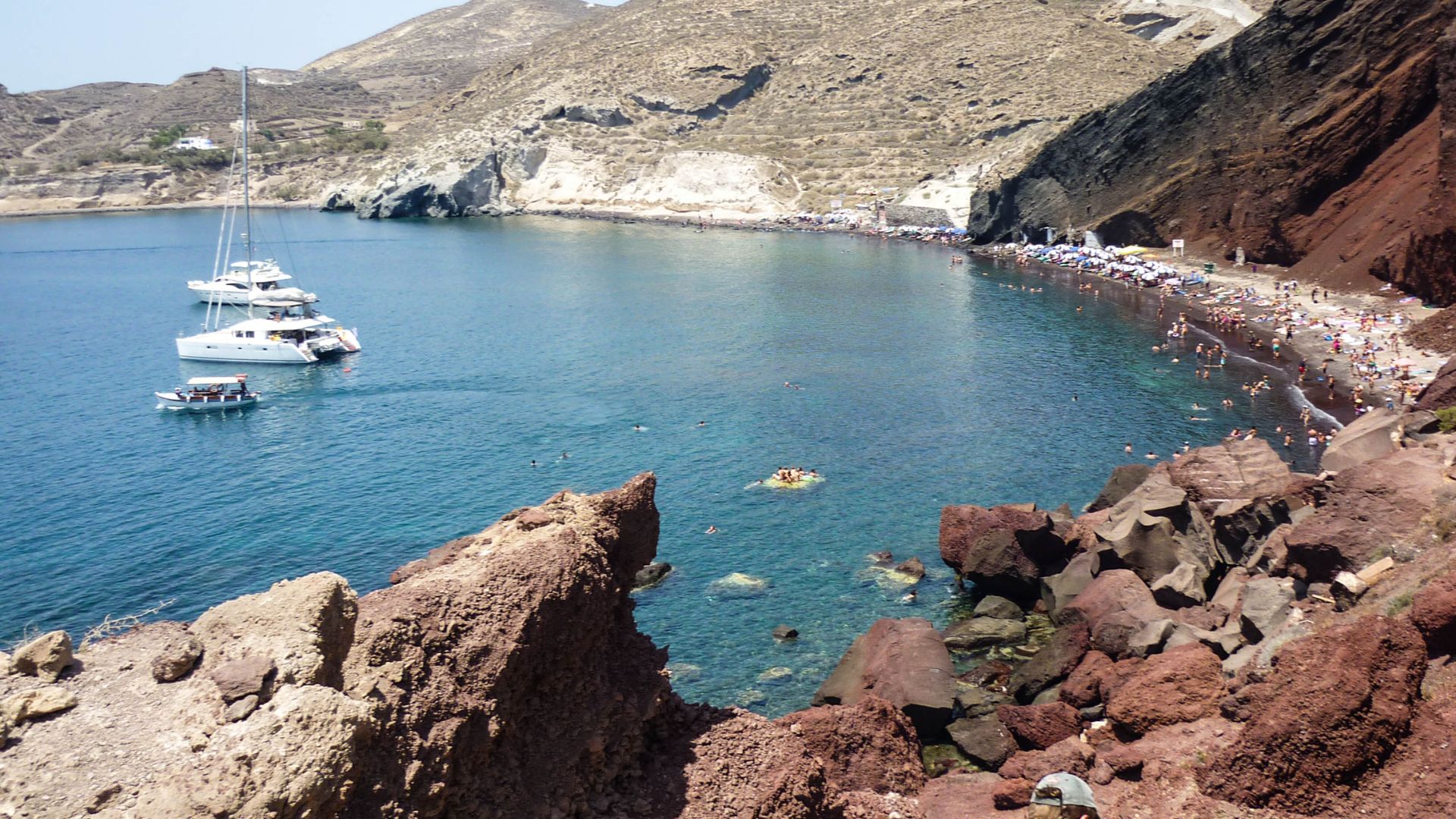
The beach below isn’t huge. I spot a few sunbathers who look tiny against the bold landscape.
From up here, it’s easy to notice how the volcanic layers have stacked themselves over thousands of years. The stripes would probably catch the eye of any geologist or ancient history fan.
It’s almost silent except for the waves and a few distant voices. A little sign warns about possible rock falls, so I step carefully.
Standing there, what hits me first isn’t just the color—it’s the strange mix of beauty and ruggedness. That first look really sets the tone for the rest of the visit.
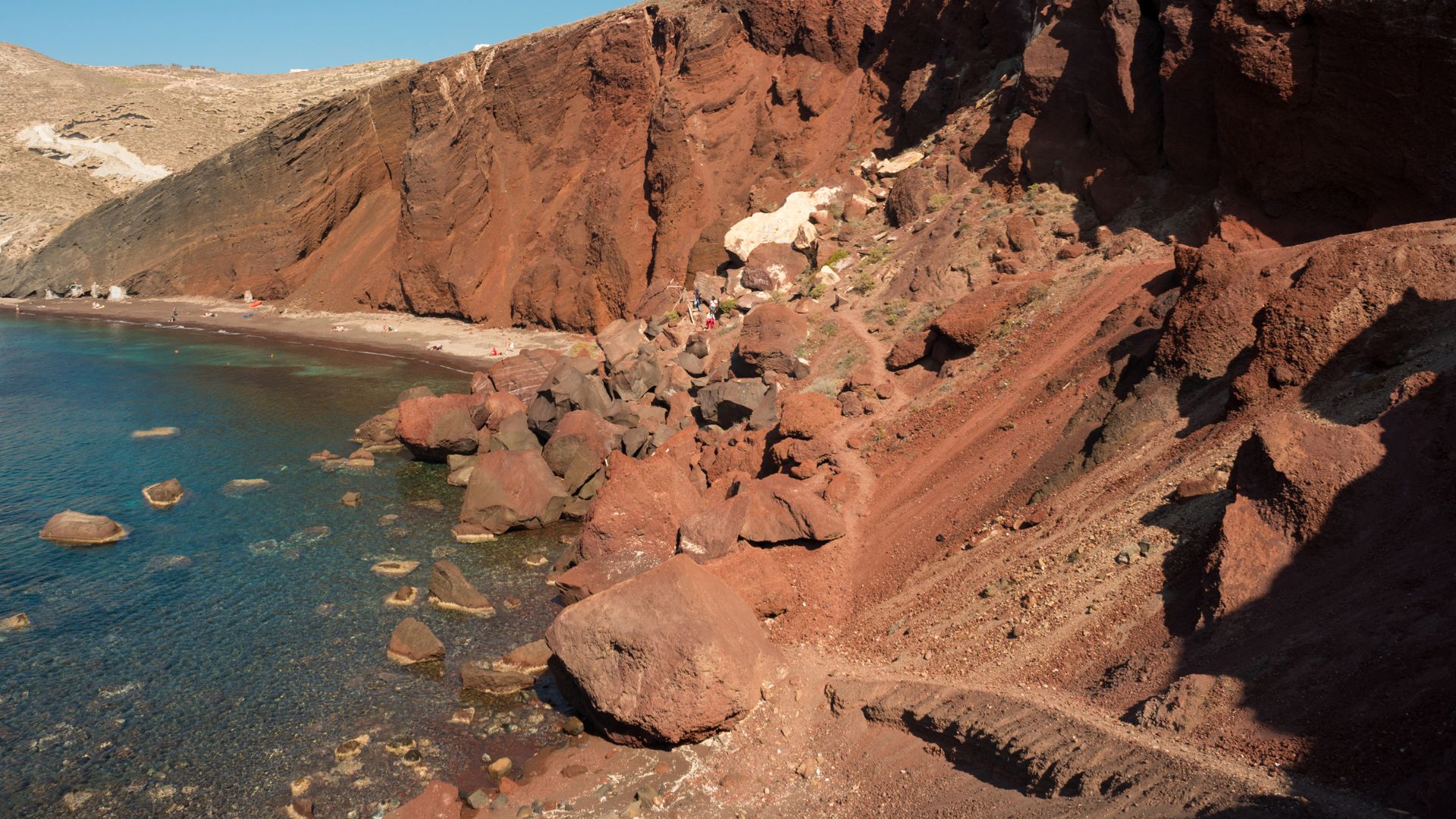
The Climb and Challenge: Getting There
Getting to Red Beach isn’t a casual stroll—it takes some effort, planning, and careful steps. The path down is part of the adventure, but knowing what to expect can help you stay safe while soaking in the wild landscape.
Navigating the Pathway
The route to Red Beach starts near the ancient site of Akrotiri, an archaeological spot just a short walk away. After parking or hopping off a bus, I followed a rough uphill footpath with rocky terrain and reddish soil.
Sometimes, the climb feels almost Martian, thanks to the dusty red cliffs all around. The walk isn’t long—usually less than ten minutes—but it can get steep and slippery.
Loose gravel and jagged stones are everywhere, and you won’t always find handrails or clear signs. I passed some shrubby patches and caught glimpses of the bright blue sea below, with red cliffs pushing up on all sides.
Along the way, some people stopped for photos of the vivid cliff faces. Others just pushed forward, eager for the shore.
If you’re into history, the path’s starting point near Akrotiri’s ruins makes it easy to combine sightseeing at the ancient settlement with a trip to Red Beach.
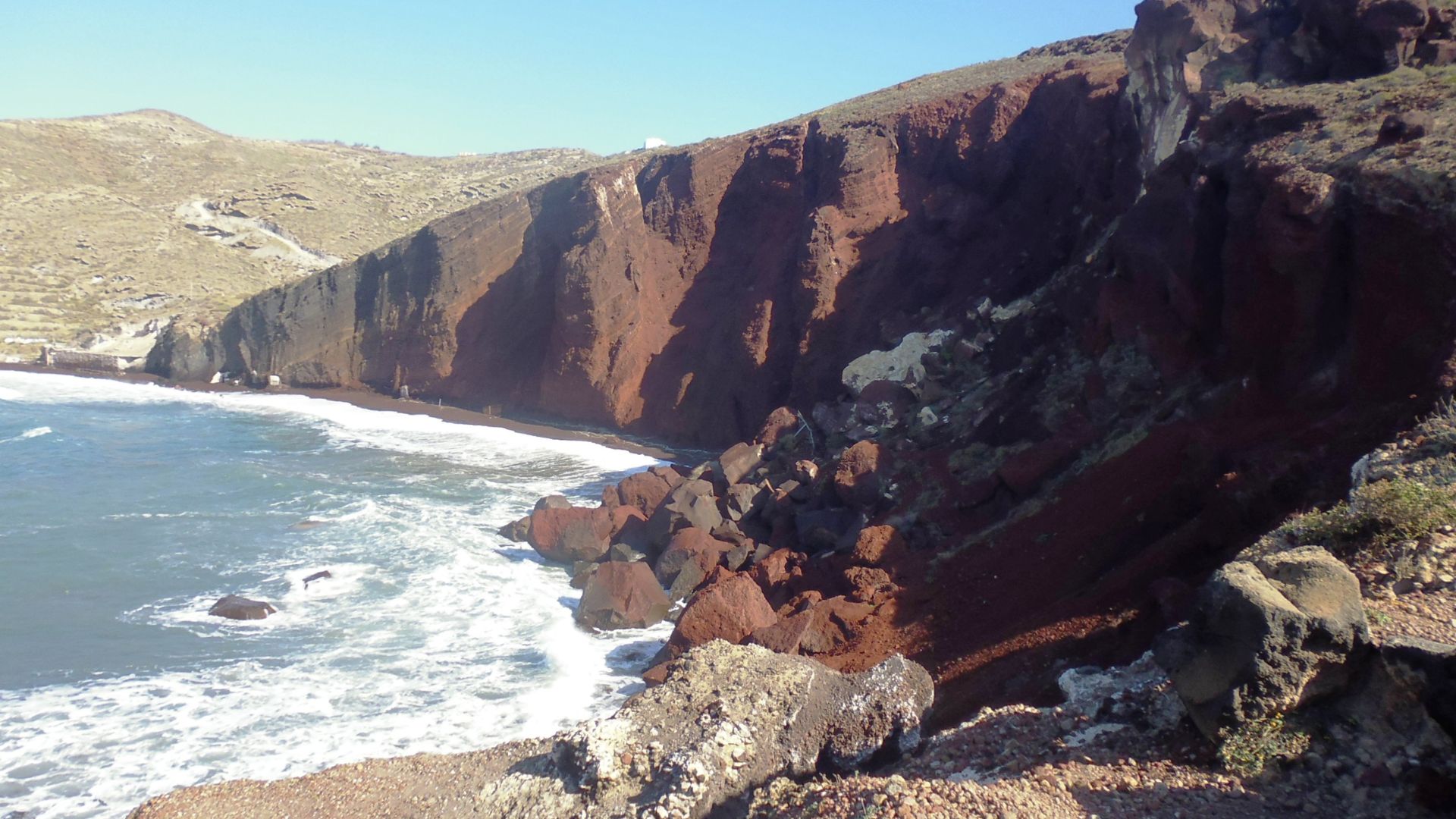
Accessibility and Safety Tips
Getting to Red Beach isn’t for everyone. The footing can be uneven, with rocks shifting underfoot, especially if it’s busy or hot.
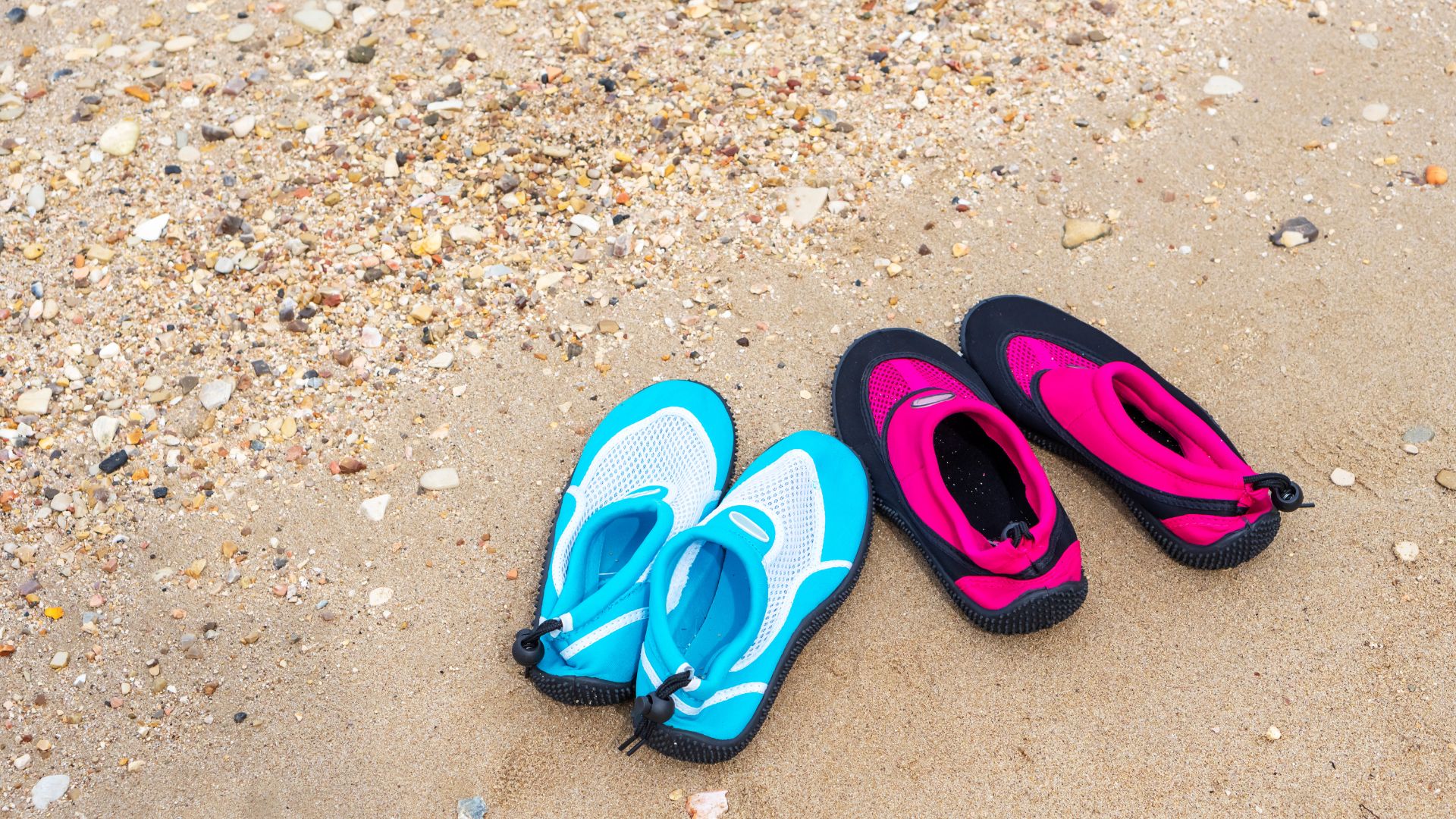
Sturdy shoes with good grip are a must—I watched one tourist nearly wipe out in sandals. There’s no wheelchair access, and travelers with mobility issues may find the climb too tough.
If you’re carrying a lot of gear, it’s best to pack light. I kept my bag small and left heavy stuff in the car.
Here are a few safety tips I found helpful:
- Start early: The midday sun is intense, and there’s hardly any shade on the climb.
- Watch your step: The path narrows in places, and it can get crowded.
- Hydrate: Bring a water bottle; you can’t buy drinks until you reach the beach.
- Respect the environment: Stick to marked trails to protect fragile plants and archaeological areas.
Even though the climb takes effort and some caution, reaching the red sand and dramatic cliffs feels like stepping into another world. The views from above are just stunning.
Experiencing the Crimson Shore
Red Beach’s dramatic red cliffs and sapphire waters instantly set it apart from other Mediterranean beaches. Getting there is a bit of an adventure—after a short but steep hike, the sweeping view made my heart skip.
Swimming and Snorkeling
Taking a dip at Red Beach honestly felt unreal. The water is clear and cool, and the way the deep blue sea meets the red sand just looks wild.
I found the best spot for snorkeling near the rocky outcrops on the right side of the shore. Underwater, bright fish darted between rocks, and I even spotted some old pottery bits—little reminders of the island’s deep history.
Made me wonder how ancient Greeks lived beside these same waters. The beach slopes pretty quickly, so weaker swimmers should stay close to shore.
Water shoes help a lot—the pebbly sand and sharp rocks can be rough on bare feet. No lifeguards watch over the beach, so I kept an eye on my things and swam with a buddy.
If you have health concerns, it’s smart to stay in shallow water and bring a small first aid kit, just in case.
Sunbathing and Relaxation
Stretching out here didn’t feel like any other beach towel experience. The sand at Red Beach has a reddish tint, almost like crushed bricks.
It gets hot under the sun, so I rented an umbrella and sunbed from a local vendor. Two loungers and an umbrella cost about €15 for the day, but shade was a lifesaver.
While I read and watched the tide, I realized how peaceful the area felt without big crowds. There’s a small snack bar nearby for drinks and simple food.
I made sure to pack high-SPF sunscreen—the sun is strong, and the red cliffs reflect extra heat. Before heading out, I checked directions for a nearby medical clinic, just to be safe in case anyone in my group needed help.
History and Mythology of Red Beach
Red Beach sits beneath dramatic crimson cliffs, where history and myth blend in bold colors. From ancient lava flows to echoes of lost civilizations, every grain of sand tells a bit of Santorini’s story.
Santorini’s Volcanic Heritage
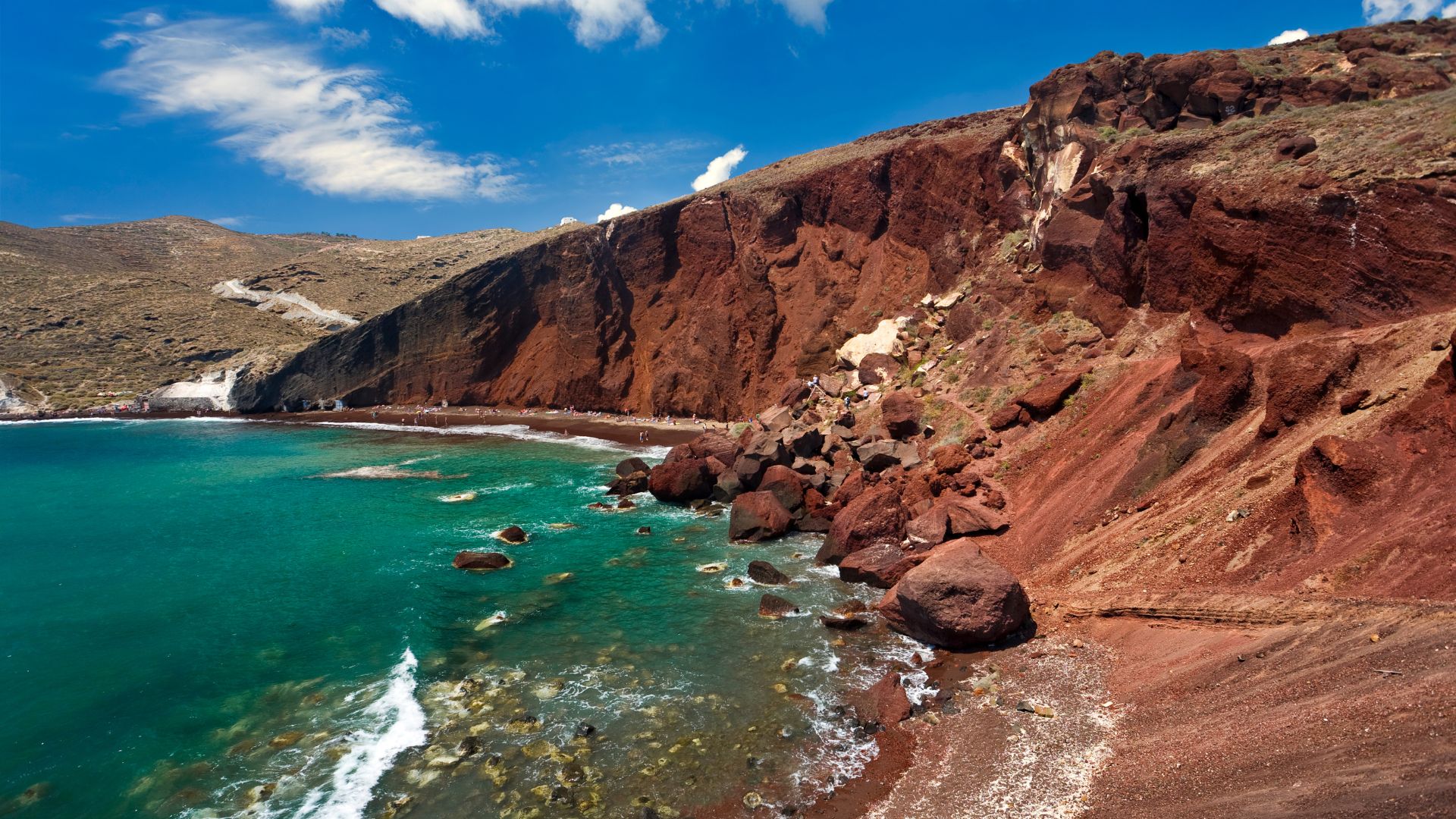
When I first set foot on Red Beach, the bright red sand and towering rock walls stood out like something from another world. These colors aren’t just pretty—they’re the result of Santorini’s explosive volcanic past.
Thousands of years ago, a massive eruption tore off much of the island, leaving deep calderas and new coastlines behind. The red cliffs at Red Beach are mostly iron-rich lava and volcanic ash, which give them that rusty hue.
This eruption changed the whole region. It shaped the geography and affected ancient settlements like Knossos on Crete through earthquakes and tsunamis.
Even now, the sharp rocks and uneven paths remind me how active and powerful the earth once was here.
Greco-Roman Legends and Influence
Walking along Red Beach, I can almost picture how it looked to travelers in classical times. Santorini, once called Thera, was well-known to Greeks and later the Romans.
The scars from the eruption inspired plenty of myths, like the lost city of Atlantis—some say the drama here started those stories.
Ancient writers like Ovid described volcanic islands in their works, fueling legends of temples buried under ash and gods angered by the eruption’s fury.
Temples and shrines once dotted these islands—reminders that people respected, and sometimes feared, the forces beneath their feet.
Each step reminds me that Red Beach isn’t just about the view. It’s a crossroads where natural forces and human stories have collided for ages. The legacy of those Greco-Roman visitors still lingers, wrapped up in the beach’s silent, fiery past.
Practical Tips for Visiting
Getting the most out of Red Beach takes a bit of smart planning. Packing the right gear and knowing where to refuel or explore nearby can make your day way smoother.
What to Pack for the Best Experience
I always double-check my bag before heading to Red Beach. The rocky path down can be tricky, so sturdy sandals or hiking shoes are a must.
The area around the beach is wide open, with hardly any natural shade, so I never forget my hat, plenty of sunscreen, and sunglasses.
A small backpack works best for carrying a towel, water bottle, and light snacks. You can rent umbrellas and sunbeds on the beach, but bringing a sarong or lightweight blanket gives you more options for settling anywhere.
My iPhone stays handy—not just for photos, but also for GPS navigation, especially to find the trailhead or check if I’m still on the right path.
If you plan to swim or snorkel, pack a mask and snorkel to explore the underwater rocks. The unique red cliffs look even better in person—photos just don’t do them justice.
There aren’t any lockers, so I watch my stuff closely and keep valuables to a minimum. No need to overpack; just the essentials mean less to carry up and down that famous climb.

Nearby Attractions and Food Stops
Red Beach sits close to the ancient site of Akrotiri, which stands out as one of the most important archaeological discoveries in the Aegean. I love wandering over from the beach to explore these fascinating ruins—it’s wild to imagine what life looked like here thousands of years ago.
If you walk a bit farther, you’ll bump into the Akrotiri Lighthouse. The views across the caldera? Absolutely unreal, especially if you catch them at sunset.
When it comes to food, I usually just grab something quick from one of the little beach shacks nearby. Honestly, choices are a bit limited, but it does the trick.
If I’m feeling hungrier, I’ll drive a few minutes to Akrotiri village. The traditional tavernas there serve up fresh seafood, Greek salads, and cold drinks. I always go for the grilled octopus—can’t really resist it.
If you’re bouncing between islands like Cyprus or Sicily, Red Beach fits into your plans pretty easily. Local buses and taxis fill up fast, though, so I always use a GPS app to dodge the crowds and avoid getting stuck.
There’s really no need to rush. Half the fun is just letting the day do its thing.
