
As I wandered the sunlit streets of Málaga, Picasso’s spirit seemed to linger everywhere—from lively plazas to those quiet corners near his childhood home. There’s something powerful about standing in the city where one of the world’s most famous artists took his first steps.
Visiting Picasso’s birthplace and the striking Museo Picasso Málaga gives you a rare peek into the early life and works of an art legend.
This trip turned into so much more than just sightseeing. I explored his old neighborhood, stared at his artwork, and learned about his family. Picasso’s story started to feel vivid, almost personal.

Every painting, every narrow alley he once walked, adds new depth to understanding who he truly was.
If you’re traveling to Spain or chasing artistic inspiration, Málaga is the key to connecting with Picasso’s roots in a way no other museum can quite match.
Walking in Picasso’s Footsteps in Málaga
Málaga gave Pablo Picasso his start—he was born and spent his early years here before he became a global art icon.
Exploring the city uncovers layers of Andalusian history and a vibrant culture shaped by traditions, warm weather, and seaside beauty.
Exploring the Atmosphere of Southern Spain
When I arrived in Málaga, the air felt thick with sunlight and the slow rhythm of the south. The buildings glowed cream and orange in the afternoon, and the breeze from the Mediterranean brought a hint of salt and flowers.
I noticed how life seemed to pause during siesta. Streets that were buzzing just an hour before suddenly turned quiet as shops closed and locals rested or enjoyed a mid-day meal.
Walking the narrow streets, I spotted tiled roofs and balconies overflowing with flowers. People chatted at tiny café tables, their voices blending with the sound of distant waves.

Málaga wears its Andalusian roots proudly and celebrates traditions through music, art, and architecture. This easygoing energy lets visitors like me imagine the city as young Picasso once knew it.
Key Spots in the City Center
One of my favorite stops was the Museo Casa Natal Picasso on Plaza de la Merced. Picasso was born here, and now the building is a museum packed with photos, early works, and personal objects from his childhood.
Standing in those small rooms, I tried to picture a young Picasso playing or watching his father paint.
Just a few steps away, the Museo Picasso Málaga displays many of his later works and offers a close look at how Picasso evolved as an artist. Plaza de la Merced buzzes with cafés and people, connecting the past and present.
The city center is full of pretty streets like Calle Larios and charming squares that invite you to wander. Not far off, the sea calls with its wide sandy beaches—a reminder of how close art and nature are here.
Local Life: Siesta, Tapas, and Andalusian Traditions
To really experience Málaga, I slipped into local routines. The siesta still matters; afternoons grow quiet after lunch.
I made time for tapas—small plates of seafood, olives, and ham—shared with friendly locals at busy bars. Each bite felt tied to Andalusia’s long history and maybe even to Picasso’s family meals.
Andalusian traditions burst to life through music in the streets, flamenco dancing in shaded courtyards, and vibrant weekend markets.
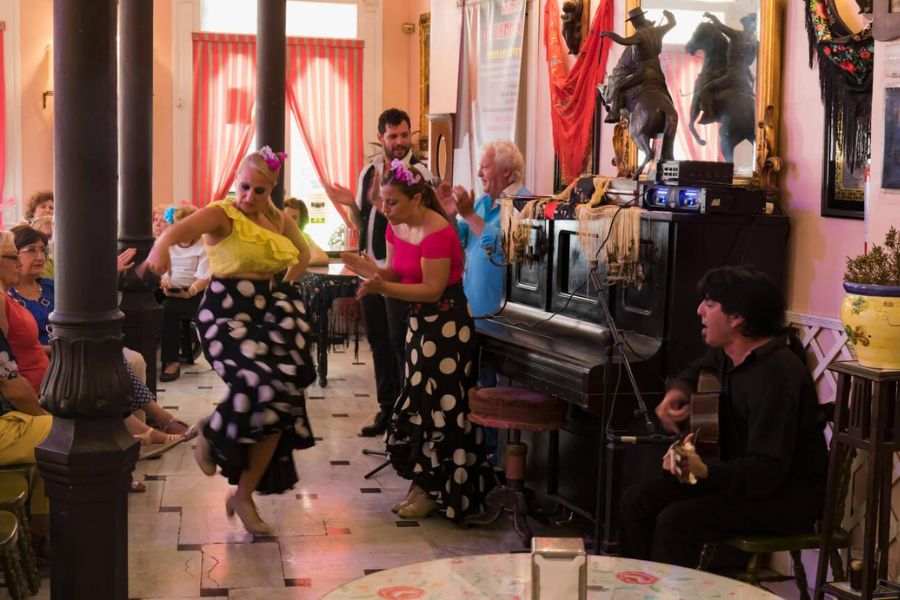
The hospitality here surprised me—every encounter felt warm and genuine. After strolling under palm trees and sitting on the beach at sunset, I started to see how this atmosphere might have inspired Picasso, shaping his earliest memories and his art.
Picasso’s Origins and Early Influences in His Birthplace
As I walked through Málaga, I could sense how Picasso’s childhood here shaped his art from the very start. The close-knit family home and sunlit streets all connect back to the sparks that later fueled his artistic genius.
Family Background and Early Life
Picasso was born on October 25, 1881, in Málaga, Spain. The house where he grew up still sits near Plaza de la Merced.
When I stepped inside, I felt the warmth that must have surrounded him as a child.
His father, Don José Ruiz Blasco, painted and taught art. He filled their home with creativity and tradition.
Picasso’s mother, María Picasso López, came from a local family. Their support helped nurture Picasso’s curiosity and talent.
Family stories fill the museum displays—old sketches, tiny shoes, and photos that let visitors imagine Picasso’s early days.
This strong sense of family stayed with him, even as he became one of the world’s most influential artists.
Art Education and First Inspirations
Picasso’s first art lessons came straight from his father, who taught at the local art school. He watched Don José sketch doves and still lifes, and soon picked up his own brushes.
By age seven, Picasso was already painting beside him.
At school, he copied classics but always gave them his own twist. Málaga’s traditional art scene surrounded him, but he never stuck strictly to the rules.
His father saw Picasso’s hunger for more and let him experiment.

Standing by the old easels used by young artists in the city, I could almost picture Picasso’s restless energy. He chased ideas beyond the canvas, finding early inspiration in daily Málaga life—people at markets, bullfights, and lively street scenes.
The Impact of Málaga’s Light and Colors
Málaga’s Mediterranean light soaks into everything—crisp sunlight, bold colors, and salty sea air. Walking the same streets as Picasso, I started to get why he said the city’s light stayed with him all his life.
On the beaches, the blues reminded me of his early paintings. He once called Andalucía “a small glass of water” that reflected the region’s spirit.
This same light shows up in his art, especially in the blues and whites of his early work.
Picasso’s childhood burst with color: lively markets, painted tiles, and busy plazas. Even the shadows have a special softness.
Málaga’s palette gave him a base for later experiments, from Cubism to his haunting Blue Period.
Inside the Brilliant Museo Picasso Málaga
Stepping into Museo Picasso Málaga, I felt pulled straight into the creative world of one of the 20th century’s most influential artists.
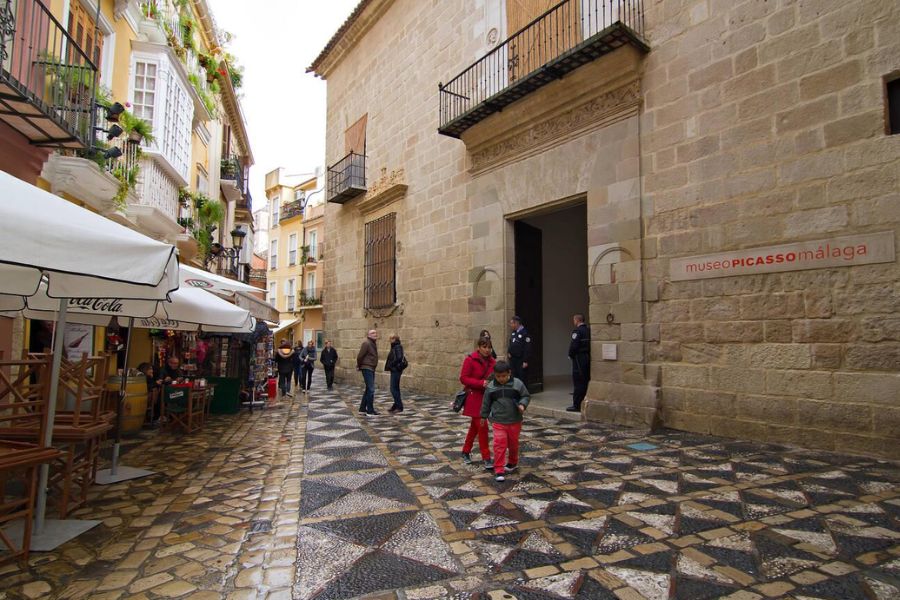
The museum blends rich history with a huge range of Picasso’s works. Each room reveals something new about art, about modern ideas, and about how much still waits to be discovered.
Essential Collections: Paintings, Sculptures, and More
The museum’s heart is its permanent collection, featuring over 200 works by Picasso. You’ll find paintings, sculptures, ceramics, sketches, and prints spanning more than seventy years of his career.
As I wandered, I watched his style shift—from the soft, simple forms of his early Blue Period to bold, colorful cubist pieces.
There’s even a section for Picasso’s ceramics, showing how his talent stretched well beyond canvas.
Bright, spacious rooms inside the old Moorish palace let art lovers get close to the details.
What really caught me off guard was how Picasso reused everyday objects in his sculptures and pottery.
It’s not just a gallery—it feels like a personal collection, offering glimpses into his restless creativity.
Unpacking Symbolism and Modern Art
Picasso’s works brim with hidden meaning and unusual shapes.
Inside the museum, I had plenty of chances to study the forms, symbols, and colors that helped spark modern art.
Symbolism pops up everywhere—from bulls and doves to faces that change shape depending on where I stand.
Information panels next to each piece helped me figure out what Picasso was saying about war, peace, love, and Spain’s shifting culture.
Being here in person brings out the power behind every brushstroke or mark. I watched kids and adults stop to guess what a broken-looking face meant, or why a bird was drawn in strange lines.
It makes art feel alive.
Art Gallery Highlights and Hidden Gems
The major masterpieces get most of the attention, but I found some of my favorite moments with quieter pieces tucked into corners or along less crowded galleries.
A tiny sketch hiding beside bold paintings or a shadowy sculpture in an alcove—those are the surprises that stuck with me.
Friendly museum staff pointed out which rooms were less crowded or where to see the art in natural light.
I’d suggest setting aside extra time to wander and take in both the famous and the lesser-known works.

If you visit during a weekday morning, you might have entire rooms to yourself. That’s the best way to soak in the details—the brush textures, the shifts in color, and the playful experiments Picasso slipped into the margins of his more famous pieces.
| Must-See Art Types | Description |
|---|---|
| Paintings | From Blue Period to Cubism |
| Sculptures | Everyday objects transformed |
| Ceramics | Bold, playful pottery |
| Drawings & Sketches | Glimpses into Picasso’s process |
Masterpieces and Artistic Evolution
Exploring Picasso’s Museum in Málaga opened my eyes to the full range of his creativity. I watched his style change over time, revealing parts of his life and the art movements he helped launch.
Blue Period and Its Emotional Depth
Walking past paintings from Picasso’s Blue Period, I felt the sadness and loneliness that mark this phase. The pale blue colors make everything look cold and quiet, which fits since these works came from a time of loss and struggle.
I found myself drawn to the portraits of poor people and outcasts. Picasso painted beggars and mothers with children, giving their stories a voice through swirling brushstrokes and simple backgrounds.
The lack of bright colors adds to the emotional weight of the paintings.
Seeing these up close makes it clear why the Blue Period matters so much in art history. Picasso was more than just a skilled painter—he was someone willing to show raw feelings in his art.
Experiencing Cubism: Collaboration with Georges Braque
In the museum, I stood in front of several Cubist pieces and tried to follow how Picasso and Georges Braque changed what art could be.
They used sharp angles, broken shapes, and new viewpoints to take apart everyday things and put them back together in surprising ways.
I noticed “Still Life with Chair Caning,” a famous early collage. Picasso glued materials onto his canvas along with paint, making the artwork literally stick out and changing how people see paintings.
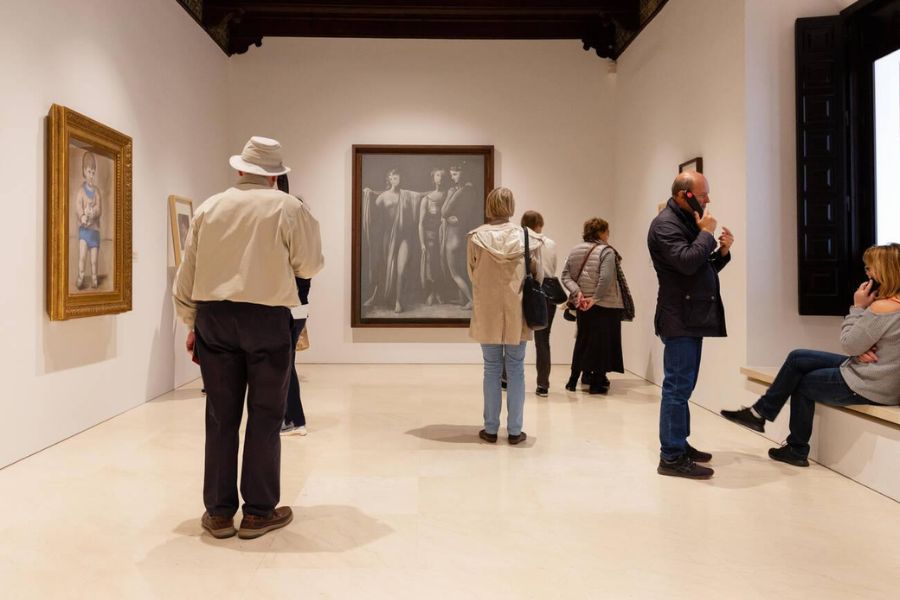
Here’s a quick list of Cubism traits I noticed:
- Objects split into geometric pieces
- Neutral colors and brown tones
- Overlapping forms
- Focus on showing more than one angle at once
Cubism made me stop and rethink how I look at art. Seeing it in Picasso’s birthplace was unforgettable.
Collage, Surrealism, and Modernism Movements
Later in the museum, Picasso’s experiments with collage, Surrealism, and Modernism felt full of fresh energy.
His later pieces showed how he took risks and refused to fit into one box.
He combined newspaper, fabric, and even wallpaper with paint. This mix of materials is part of what made him a modern artist.
Some works played with strange, dreamlike images—figures and faces twisted in ways that made me stop and look twice.
Picasso’s Surrealist side stood out in paintings that seem to come from the imagination more than from real life.
I also found more abstract, bold pieces that fit into the larger Modernism movement.
Visiting Málaga, I realized how much Picasso did to push art forward, and his fearless changes still make visitors think.
Cultural Connections: Málaga’s Influence Beyond the Museum
As I wandered through Málaga, I realized Picasso’s legacy stretches far outside museum walls.
Everywhere I turned—ancient churches, busy markets—I felt the threads of history, faith, food, and art that shaped both the city and its most famous son.
Religious Symbolism: Virgin Mary and The Annunciation
I stepped into one of Málaga’s old cathedrals and found myself surrounded by scenes of the Virgin Mary and the Annunciation.
These religious images aren’t just relics—they’re woven into daily life. Candlelit altars, processions, and street art all echo the story of the angel Gabriel announcing to Mary.
This deep Catholic heritage left a clear mark on Picasso’s early works. Scenes of the Virgin, saints, and the gentle gestures of Annunciation show up often in his childhood drawings.
I noticed Iberian sculpture influences too: stylized faces, calm expressions, and a quiet power that felt both spiritual and timeless.
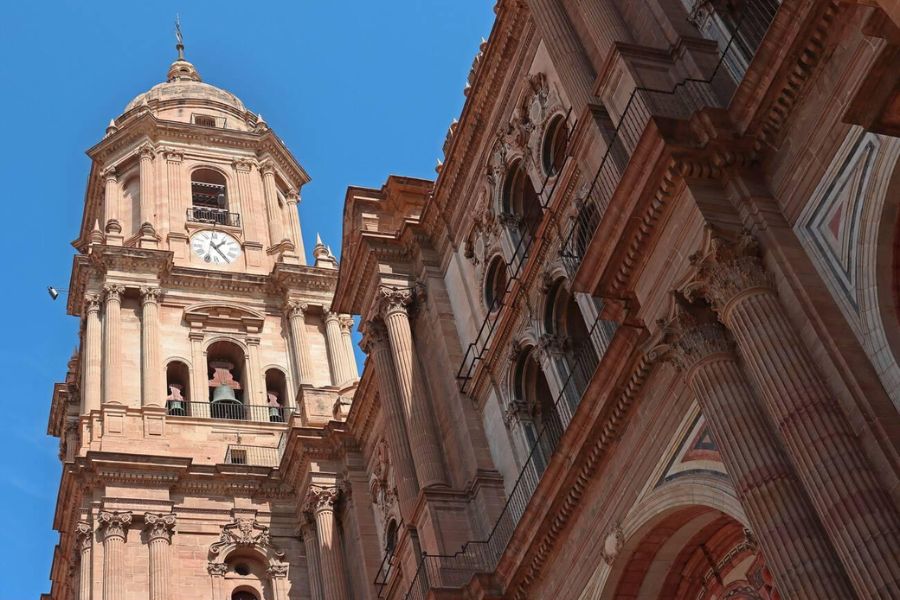
Picasso didn’t just copy religious art. He took these symbols, reshaped them, and tucked them into paintings that sometimes felt sacred in their own way.
It gave his bold lines and wild colors a spiritual depth I hadn’t expected.
A Taste of Málaga: Tapas, Flan, and Local Markets
After a morning of art and churches, I wandered over to the Atarazanas Market, hungry for something truly local. The smells of fried anchovies, grilled peppers, and sweet oranges just filled the air.
Tapas here aren’t just snacks. They’re history on a plate, honestly.
I watched locals pick olives from giant bowls and sip crisp white wine. Laughter echoed around tables loaded with small plates.
My favorite? The flan—rich, golden, and full of orange flavor, probably thanks to those citrus groves outside the city. Each bite tasted like a little summary of Andalusia.
Tasting Málaga’s food gave me a new view of Picasso. Just like he borrowed from Spanish and Moorish designs, the city’s cuisine mixes cultures.
If you want to get his art, maybe start with what’s on the table here: fresh, bold flavors, shaped by sun and centuries of blending.
From Malaga to Granada: Wider Andalusian Inspirations
A day trip east took me to Granada, where the Alhambra rises over the city like a crown. The drive wound through olive groves and white villages, showing off the wider tapestry of Andalusia.
This region carries Roman, Moorish, and Christian traditions everywhere you look.
In Granada, I wandered through the palace, surrounded by geometric patterns and delicate arches. I kept thinking about how Picasso found inspiration here too—maybe in the symmetry, or the way light and shadow play across the walls.
He once saw Iberian sculpture as a student, and you can almost feel that spiritual stillness in the place.

The colors of Andalusia—deep blues, burnt sienna, white plaster—show up in his canvases. Moving between Málaga and Granada, I saw how regional identity and layered histories shaped not just Picasso’s work, but the restless creativity of all Andalusia.
Artistic Legacy and Modern Reflections
Picasso’s connections in Málaga and beyond shaped not just his art, but also his world. Close companions, political struggles during Franco’s rule, and even simple souvenirs in daily life reveal different sides of the master.
Collaborators, Muses, and Patrons: Gertrude Stein’s Impact
Walking through the Museo Picasso Málaga, I couldn’t stop thinking about the people behind Picasso’s greatest leaps. Gertrude Stein stood out the most.
She was more than a friend—her Paris salon turned into a hub for artists and writers. She always talked about new ideas with Picasso.
She collected his paintings and encouraged him during his early struggles. She even became the subject of one of his famous portraits.
Stein’s support gave Picasso the confidence to experiment with new styles. Their partnership reminds me how the right mentor or friend can totally change an artist’s future.
If you visit the museum, check out the letters and early works tied to Stein’s circle. They show how much Picasso needed and valued feedback from others, not just his own genius.
Franco Era and Picasso’s Political Statements
As I walked the sun-soaked streets of Málaga, I tried to imagine the city under the Franco dictatorship. Picasso never let that era silence him.
He never returned to Spain after Franco took power, but his art became a voice for freedom and resistance.
The most powerful example is Guernica. I first saw it in a textbook, then later in Madrid.
Here in Málaga, museums highlight Picasso’s fierce commitment to political expression. Brochures and guides point out how he refused to let his work hang in Spain until democracy returned.
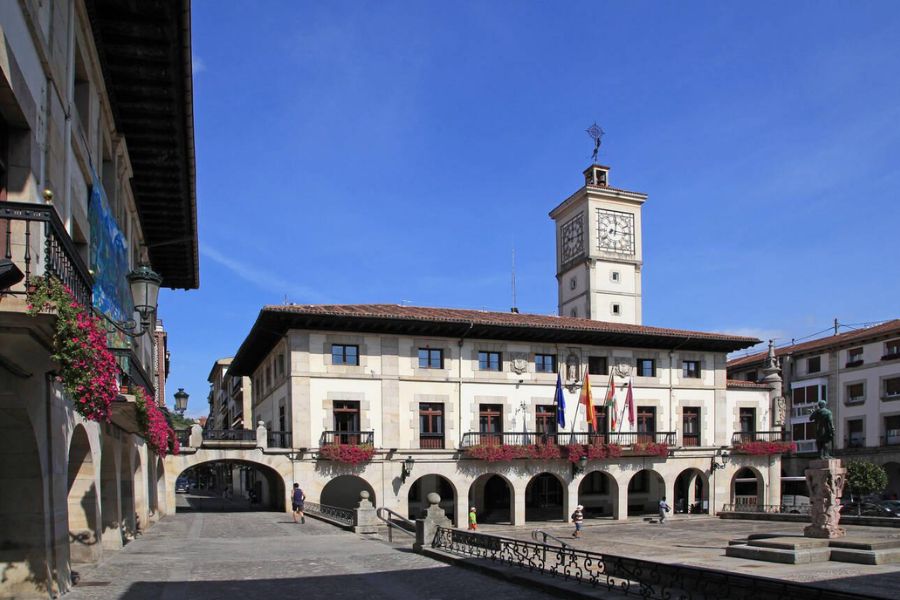
I noticed discussions of this era at the Museo Picasso. They bring alive the struggles that shaped not just his politics, but also his bold art.
It’s an important stop for anyone curious about how personal history shapes creative choices.
Picasso Memorabilia: Postcards, Souvenirs, and Daily Life (Including Aldi)
When I wandered through Málaga, Picasso seemed to pop up everywhere. Statues, colorful tiles, and all sorts of postcards or souvenirs caught my eye at nearly every turn.
Shops near Plaza de la Merced sell postcards with Picasso as a young boy. You’ll also spot refrigerator magnets featuring his paintings—honestly, it’s almost impossible to resist grabbing one.
Supermarkets get in on the action, too. At the local Aldi, I came across a quirky little lineup of Picasso-inspired products, plus wine bottles with artsy labels.
It’s these small surprises that make me realize how art slips right into daily life, far outside museum walls. Maybe that’s what makes Málaga feel a bit magical.
If you’re after a keepsake, just wander over to the postcard stands or poke around the local stores. You might find something that captures a bit of Picasso’s playful spirit to take home.
