
Walking among the Avebury Stone Circle just hit differently from any other historic site I’ve explored. This sprawling prehistoric circle holds the title of Europe’s largest, stretching about 1,400 feet across. The sarsen stones are massive—some tip the scales at over 100 tonnes.
What really sets Avebury apart from Stonehenge? You can wander right up to the ancient stones, touch them, lean on them, and just soak it all in. That freedom makes the experience feel personal, almost like the stones are letting you in on a secret.

I wandered between these giants—some stand taller than four meters—laid out in three circles inside the main henge. There aren’t any ropes or barriers, so the whole visit felt surprisingly intimate.
Avebury Stone Circle: History, Significance, and Mysteries
Avebury stands out as Europe’s largest prehistoric stone circle. Its ancient stones hint at a complex Neolithic past and still keep archaeologists guessing.
Origins and Construction of Avebury
People built Avebury during the Neolithic period—roughly 2500 BC. The site features a huge stone circle, almost 400 meters wide, wrapped by an earthwork henge with a deep ditch and high bank.
Inside the main circle, two smaller circles sit—though their shapes and number of stones have changed over millennia. These sarsen stones are hefty, some over 40 tons. Locals probably hauled them from nearby outcrops using wooden rollers and ropes.
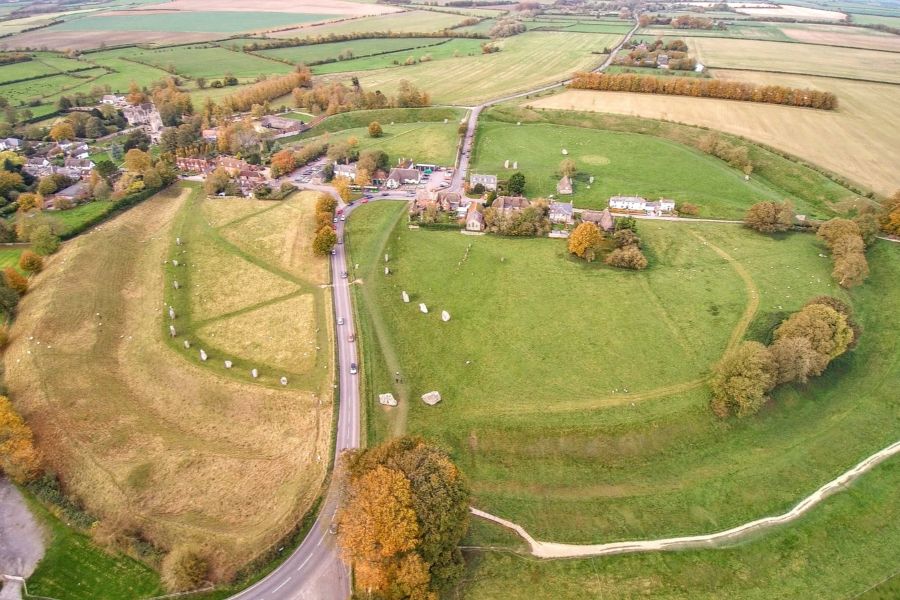
Generations must have worked together to build Avebury. The sheer effort shows how important it was to those early communities. Unlike many ancient sites, people could always wander among and touch the stones, and that connection is still alive today.
Comparison With Stonehenge
Avebury and Stonehenge both date to the Neolithic, but they’re pretty different.
| Feature | Avebury | Stonehenge |
|---|---|---|
| Type | Stone circle, henge, avenues | Stone circle, henge |
| Diameter | About 400 meters | About 100 meters |
| Public Access | Walk among stones | Limited; rope barriers |
| Number of Circles | 1 main + 2 inner | 1 main; 2 in the past |
| Village Within | Yes (Avebury village) | No |
Avebury is much bigger and feels wide open. There’s even a village inside the circle. Unlike Stonehenge, which keeps visitors at a distance, Avebury lets you get up close.
Stonehenge gets more of the international spotlight, thanks to its dramatic “lintelled” stone arrangement. Both sites belong to the same World Heritage Site and share a similar age, but Avebury’s scale and hands-on vibe really stand out.
Purpose and Theories: Rituals, Ceremonies, and Astronomy
No one really knows why Avebury was built. Most experts lean toward religious or ceremonial reasons. Maybe it was all about rituals for life, death, or marking the seasons.
Archaeologists have found signs of feasting and big gatherings here. That hints at Avebury being a social and spiritual center.
Some researchers think the stones and avenues line up with the sun and moon, especially at solstices. The alignments aren’t as precise as Stonehenge, though. Still, Avebury’s size and layout suggest it was meant to awe, unite, and maybe even mystify.
Avebury’s Place in the Prehistoric Landscape
Avebury sits at the heart of a cluster of Neolithic monuments in Wiltshire. The area brims with burial mounds, stone avenues, and other ancient circles.
Silbury Hill isn’t far—a massive man-made mound. There’s also West Kennet Long Barrow, one of Britain’s oldest tombs.
This whole landscape served as a ceremonial center during the Neolithic. The way everything connects suggests careful planning. “Avenues” once linked Avebury to other sacred sites.
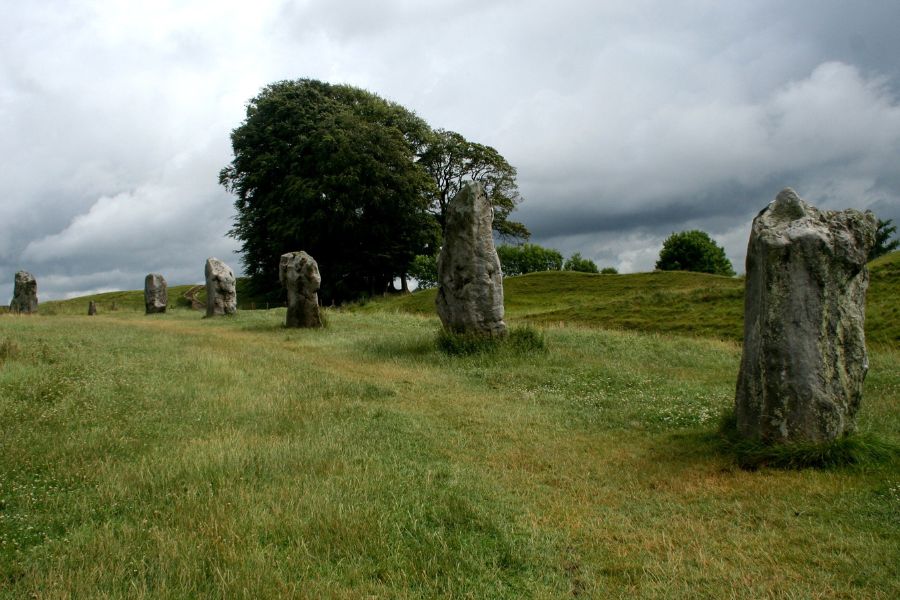
Standing in the circle, I felt plugged into this ancient network. The henge, stones, and setting all tie back to the beliefs and ceremonies of the first builders. It’s a direct line to a mysterious, distant world.
A Walk Among and Touching the Stones: Personal Experience
Avebury gives you the rare freedom to wander between ancient stones, feeling their textures and shapes with your own hands. The layout, the paths, the sensory experience—none of it feels like a typical prehistoric site.
Walking Routes and Accessibility
I kicked off my walk near the main entrance, where paths lead straight into the great stone circle. Wide grassy tracks let me ramble at my own pace.
No fences block the way, so you can approach both the outer and inner circles. Most of the ground is flat, with gentle slopes. That makes it pretty accessible, though the banks and ditches need a bit of caution, especially after rain.
Maps at the entrance and clearly marked routes helped me pick my path. For step-free access, areas near the main road and car park work best. But deeper into the site, wheelchairs might have trouble with the grassy, uneven ground.
| Path Type | Surface | Suitability |
|---|---|---|
| Main Circular | Grass/Dirt | All visitors, mild slope |
| Inner Circle | Grass | Caution, uneven ground |
| Avenue/Approach | Mixed | May be muddy after rain |
Interaction: Touching and Engaging With the Standing Stones
Avebury lets you touch the stones—no velvet ropes here. I pressed my hand against several monoliths. Some felt smooth, others were rough, pitted, and ancient.
Walking among the stones, brushing against their surfaces, made the visit feel personal. These stones are giants, over four meters tall. Up close, their scale is almost overwhelming.
I joined a guided tour, and the guide encouraged respectful contact with the stones. That hands-on approach brought the craftsmanship and sheer age of Avebury to life in a way that just looking from afar never could.
Sensory Impressions and Atmosphere
Avebury feels open, breezy, and peaceful, even with the village and roads nearby. Birds called from hedges, and the wind moved between the stones.
The circle is so huge, I often found myself alone among the monoliths, even when there were other visitors. Touching a cool, sun-warmed stone, I felt lichen under my fingers and saw patterns carved by time.
Every few steps, the view changed. The inner circles and old avenues shifted the lines and focus, making it easy to picture ancient ceremonies happening right where I stood.
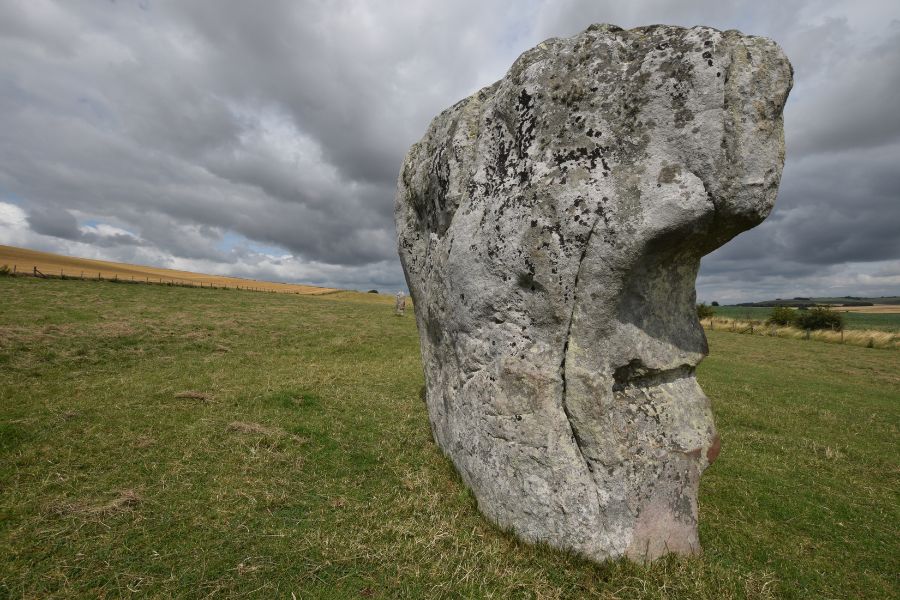
The subtle sounds, shifting light, and gentle quiet made Avebury a totally different experience from the busier Stonehenge.
Avebury’s Monuments and Surroundings: Exploring the Ritual Complex
Avebury isn’t just one circle—it’s a whole ancient complex. Each monument adds its own story to the Neolithic and Bronze Age landscape, giving you plenty to explore.
The Henge and Internal Ditch
The first thing that hit me was the sheer scale of the henge. This earthwork is a massive bank and deep ditch forming a wide circle.
The henge wraps around the outer stone circle. Even now, after thousands of years, the ditch is impressively deep. Standing at its edge, I could almost see ancient people gathering here.
The bank and ditch span about 400 meters across. Avebury is one of the biggest prehistoric henge monuments in Europe.
Inside the bank, the outer stone circle stretches more than 300 meters. Some stones are missing, but many still stand or have been put back up. Being able to walk right up to them—and touch them—made the experience unforgettable.
West Kennet Avenue and Beckhampton Avenue
From the main circle, I followed the remains of West Kennet Avenue. This double row of stones once ran over a mile, linking Avebury to The Sanctuary.
Walking that path, I could picture ancient processions moving between the stones. Not all the stones survive, but enough remain (and some have been restored) to make the route clear.
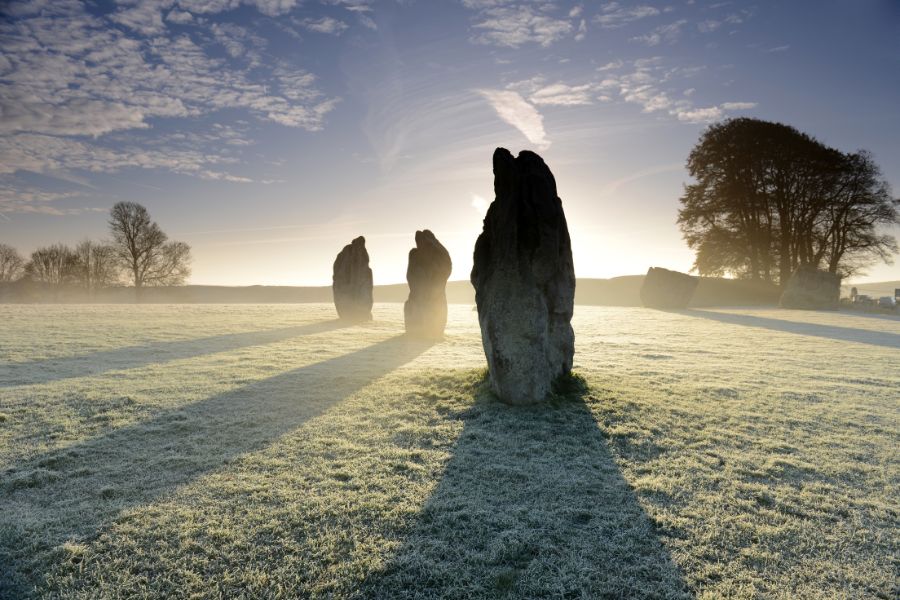
Beckhampton Avenue led west from Avebury, though fewer stones survive along it. Still, these avenues show how Avebury connected to a much bigger ritual landscape. They probably played a big role in ceremonies and movement between sites.
The Cove, The Sanctuary, and Silbury Hill
Inside one part of the circle, I found The Cove—a tight group of three massive stones, set in a small rectangle. It might have marked a special spot or ritual area. Standing among them, I felt the weight of deep history.
Not far from Avebury, The Sanctuary waits. Only stone markers and concrete posts outline it now, but it once held timber and stone circles. The connection to Avebury via West Kennet Avenue is obvious.
Silbury Hill looms in the distance—a giant man-made mound about 40 meters high. You can’t climb it, but walking around its base gives you a sense of just how much work went into building it.
Other Prehistoric and Neolithic Monuments Nearby
Avebury’s neighborhood is packed with ancient sites. Windmill Hill is just a short walk away—a causewayed enclosure with ancient ditches and banks.
There are burial mounds and barrows nearby, some visible from the stone circle itself. These sites show Avebury was at the heart of a much bigger ceremonial landscape.
The mix of stone circles, earthen mounds, and hidden ditches really brings home how important Avebury was for its builders.
Archaeology, Excavation, and Theories of Avebury
Avebury stands as one of the most fascinating archaeological sites in Europe. Over the years, archaeologists have uncovered stones, tools, pottery, and earthworks that piece together the site’s long story.
Alexander Keiller’s Work and the Museum
Alexander Keiller made a huge impact on Avebury’s archaeology. This wealthy archaeologist started major digs here in the 1930s. He led excavations and put many fallen stones back in their places.
Keiller founded the Alexander Keiller Museum, which now displays a treasure trove of artifacts from the site. I spent time there, checking out Neolithic pottery, flint tools, and photos from early digs.
Keiller’s careful records help researchers track changes to Avebury over time. Thanks to his work, both the stones and the finds are well preserved and open for everyone to see.
Archaeological Investigations and Discoveries
Archaeologists have used both old-school digging and modern science to explore Avebury. Excavations revealed two inner stone circles, the Cove, and the Obelisk remains.
Researchers like Aubrey Burl spent years studying the placement and grouping of stones. Teams mapped out stone holes and figured out where missing megaliths once stood.
Surveys show Avebury was a site of complex construction and use, probably serving as a ceremonial hub in the Neolithic.
Artifacts: Pottery, Flint Tools, and Finds
Avebury has turned up all sorts of fascinating artifacts over the years, which really help date the site and hint at the lives of its builders. The most common finds look something like this:
| Artifact Type | Time Period | Description |
|---|---|---|
| Pottery | Early Neolithic | Simple, decorated potsherds |
| Flint Tools | Mesolithic/Neolithic | Scrapers, arrowheads, blades |
| Animal Bones | Neolithic | From hunting and feasting |
I wandered through the museum and spotted several decorated potsherds and some really well-crafted flint tools. These objects made it clear that people gathered here for a long time, probably for feasts or ceremonies.
Artifacts from both the Mesolithic and Early Neolithic periods show that this spot mattered even before the famous henge appeared.
Radiocarbon Dating and Chronology
Researchers have used radiocarbon dating to piece together Avebury’s timeline. They’ve tested charcoal, bones, and wood from different layers in labs. Most results point to the main stone circles starting around 2850–2200 BCE.
Earlier flint tools date back to the Mesolithic period, so folks were active here as early as 8000–4500 BCE. Later on, people built long avenues and dug outer ditches, keeping work going for centuries.
Every new radiocarbon test adds a bit more clarity, showing which parts of Avebury came first and how the site changed over time.

Visiting Avebury: Practical Information and Surrounding Attractions
Avebury offers much more than its famous stones. When I visited, I found plenty of handy facilities, some beautiful local sights, and easy access for just about everyone.
There are helpful amenities, opportunities to explore historic sites, and sweeping views of Wiltshire’s prettiest landscapes.
Avebury Village and Local Facilities
Avebury village sits right inside the stone circle. As I walked around, I noticed it’s small and friendly, with a peaceful vibe.
The Circles Café is the main spot for snacks and hot drinks. I grabbed a seat inside and just watched visitors come and go.
You’ll find a National Trust shop selling souvenirs, books, and guides. Public toilets sit near the car park and café.
Signs throughout the village explain the history and point out walking paths. While there aren’t loads of shops, I found everything I needed for a short stay.
Most of the businesses and the café get help from the National Trust. The village buildings really blend into the landscape, so the whole place feels cozy and connected to the past.
Visitor Centre, Parking, and Accessibility
The Avebury Visitor Centre sits close to the main car park and is run by the National Trust. I started my trip there, picked up some leaflets, and used the facilities.
Entry to the visitor centre is free for National Trust and English Heritage members. Some areas charge a fee if you’re not a member.
Parking is pay-and-display and fills up quickly on weekends and holidays. There’s a short, flat walk from the car park to the stones.
The car park has clear signs and a few disabled parking spaces. All paths are marked, but grass areas can get muddy after rain.
Wheelchair access covers parts of the site and the visitor centre. Staff were friendly and answered my questions.
Toilets, including accessible ones, sit right next to the visitor centre.
Nearby Sites: West Kennet Long Barrow and Marlborough Downs
While I was at Avebury, I checked out some nearby historic spots that really added to the experience. West Kennet Long Barrow is about a mile and a half away—an easy walk or a quick drive.
This prehistoric tomb has open chambers inside, which I found especially interesting. The path to the barrow heads uphill and can get muddy, so sturdy shoes are a must.
The Marlborough Downs offer wide, rolling views of Wiltshire hills. I wandered along local footpaths and saw sheep, wildflowers, and huge open skies.
These Downs are perfect for gentle hikes or just a quiet picnic.
Avebury’s spot in Wiltshire puts it close to several other ancient monuments. It’s easy to plan a full day out exploring these sites.
Bring water, wear comfortable walking shoes, and don’t forget a camera for the scenery.
Avebury as a UNESCO World Heritage Site and Modern-Day Importance
Avebury stands out as one of Europe’s most impressive prehistoric monuments, both for its sheer size and its cultural impact.
It’s got heritage status, legal protection, and still plays a role in local traditions—so it remains a lasting presence in the British countryside.
UNESCO Designation and Protection
Avebury forms part of the “Stonehenge, Avebury and Associated Sites” UNESCO World Heritage Site. UNESCO granted this status in 1986 to recognize the area’s outstanding universal value.
The Avebury landscape includes the stone circle, earthworks, avenues, and nearby prehistoric sites.
UNESCO status protects Avebury through international agreements. This helps preserve the monument for future generations, even as thousands of people visit each year.
Special plans try to balance access, conservation, and local needs.
I spotted several signs around Avebury explaining how to care for the site and the rules for visitors. These aren’t just for tourists—they’re part of UNESCO’s guidelines for this place.
It’s obvious that protection matters just as much as education here.
Scheduled Ancient Monument Status
Avebury is a Scheduled Ancient Monument, so UK law protects it.
This status limits any work, digging, or building at the site unless there’s official approval. The aim is to prevent damage and keep the monument’s archaeology intact.
I came across small markers and fenced-off areas, showing where professionals were working on research or preservation.
Breaking these protection rules can lead to legal trouble, so only experts carry out restoration or exploration.
Historic England and the National Trust manage the site. They handle regular reviews, maintenance, and specialist care.
These layers of protection matter, especially considering the age and fragility of Avebury’s stones and earthworks.
Avebury’s Role in Tourism, Culture, and Folklore
Avebury really stands out as a tourist destination, but it’s more than just a place to snap a few photos. Locals and visitors both treat it as a touchstone for culture and folklore.
You can actually walk right up to the stones—no ropes or barriers like at Stonehenge. That freedom makes the whole experience feel pretty personal, almost like the stones are letting you in on a secret.
When I visited, I noticed people doing all sorts of things. Some joined guided walks, others took photos, and a few just stood quietly, soaking it all in.
The countryside around Avebury is full of trails and ancient earthworks. Sometimes, you’ll stumble across crop circles out there, which only deepens the mystery.
Traditions are alive here. Locals still hold events at Avebury, and it’s not uncommon to see modern pagans celebrating the solstice among the stones.
Stories and legends swirl around this place too. Avebury isn’t just a relic—it’s woven into both local and national identity in a way that feels very much alive.
