
High above Corfu’s northwest coastline, there’s a place that feels almost suspended between heaven and earth. The Monastery of Paleokastritsa draws in travelers and pilgrims alike, offering a blend of ancient religious heritage and some of the most breathtaking panoramic views you’ll ever see across the turquoise Ionian Sea.
Founded back in the 13th century, this monastery perches dramatically on clifftops. For nearly 800 years, it’s been a magnet for those seeking something more than just a pretty view.
What really sets this place apart? It’s the way spiritual tranquility and wild natural beauty intertwine. People don’t just come here for religious reasons; they come for the hush that settles in your bones as you stand in these stone courtyards, surrounded by fragrant gardens and the endless sweep of sea and sky.
The stonework, the peaceful corners, the scent of herbs in the air—it’s a world away from the busy beaches below. I’ve felt that peace myself.
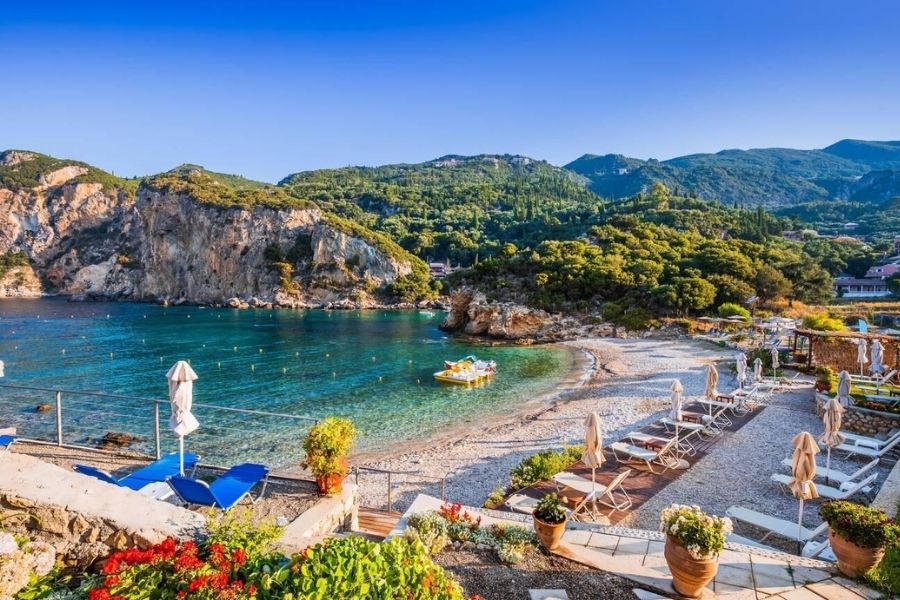
Whether you’re chasing spiritual reflection, camera-worthy moments, or just want to tick off one of Corfu’s most iconic sights, this hilltop sanctuary checks every box. The journey up, the history echoing through its walls, and its ties to the surrounding area make it an absolute must if you’re exploring this Greek island.
Overview of the Monastery of Paleokastritsa
The Monastery of Paleokastritsa stands as one of Corfu’s oldest religious sites, dating back to 1225. It’s dedicated to the Virgin Mary, and the place just oozes history.
You get centuries of spiritual tradition here, plus stunning Byzantine architecture and those sweeping Ionian Sea views.
History and Origins
I’ve always found the monastery’s backstory fascinating. It’s one of Corfu’s oldest religious foundations, and its past is packed with drama.
Monks established the original monastery in 1225. But in 1403, the Genoese swept in and destroyed it.
Not to be deterred, monks rebuilt in 1469. Then, in 1537, the Turks destroyed it again.
The buildings you see today mostly date from 1572, with some final touches added in 1722.
The name “Paleokastritsa” comes from its position on an ancient castle site. Local legend claims monks chose this spot after stumbling upon an icon of the Virgin Mary here.
Key Historical Timeline:
- 1225 – Monastery founded
- 1403 – Destroyed by Genoese
- 1469 – Rebuilt
- 1537 – Destroyed by Turks
- 1572 – Present structure built
- 1722 – Final additions
Nowadays, eight monks keep centuries-old traditions alive in these walls.
Architectural Highlights
The architecture here just fits the landscape. You’ll see classic Greek Orthodox design, but it’s all adapted to these dramatic cliffs.
The monastery sits on a hill above Paleokastritsa bay. Stone walls and those red-tiled roofs give it that unmistakable Mediterranean look.
Courtyards offer quiet corners, surrounded by lush gardens and cypress trees. I love how the buildings seem to grow right out of the rock.
The chapel, right at the heart of things, shows off traditional Byzantine elements. There’s also a museum, home to unique icons and religious artifacts that monks have collected over the years.
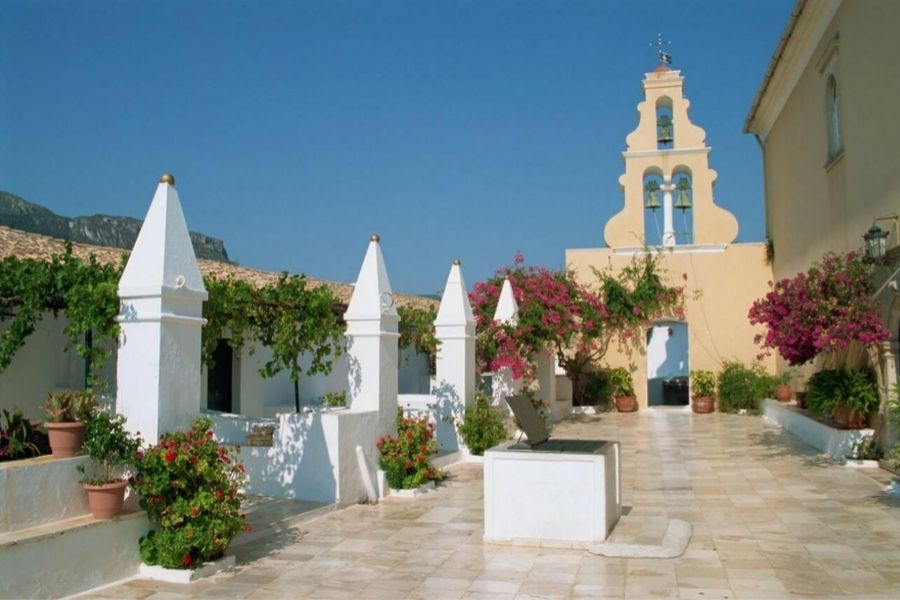
And honestly, the views from up here? Some say they’re the best on Corfu. I could stand for hours just watching the light shift across the emerald sea and the rugged coastline.
Spiritual Significance
This place isn’t just a relic—it’s an active center of Greek Orthodox worship. Every year, two big feast days bring pilgrims from all over Greece.
Primary Celebrations:
- August 15 – Assumption of the Virgin Mary
- Friday after Easter – Life-Giving Spring feast
Even if you’re not religious, the calm here is contagious. The blend of natural beauty and spiritual tradition creates a mood that’s hard to describe.
The monastery’s dedication to the Virgin Mary means a lot in Greek Orthodox culture. The original icon that inspired the whole place still sits at the heart of its identity.
Monks here keep up daily prayers and religious services. Visitors get to glimpse authentic Greek Orthodox life, with the Ionian Sea as a backdrop.
Experiencing Spiritual Serenity at the Monastery
Walking through the Monastery of Paleokastritsa, you can’t help but feel something shift inside. The daily rituals, the sacred art, the hush of the chapels—it all adds up to a powerful experience.
Daily Life and Traditions
The monks stick to routines that go back centuries. Their day starts before dawn, with prayers echoing through the halls.
They gather for morning prayers, then move into work and quiet contemplation. That rhythm of devotion and labor creates a peace that you can feel as soon as you step inside.
This isn’t just a tourist spot—it’s an active religious site. Visitors need to dress modestly out of respect. Shoulders covered, long pants or skirts—simple but important.
Key visiting guidelines:
- Dress modestly
- Be quiet and respectful
- Photography might be restricted in some areas
- Open all year for visitors
The courtyards are ideal for sitting and soaking up the calm. I’ve spent time in the gardens, just listening to the wind and watching the light play through the olive leaves.
Pilgrimage and Worship
For more than 700 years, pilgrims have come here. The monastery started out as both a spiritual hub and a fortress against pirates.
Orthodox Christians travel here for spiritual renewal, especially those with a devotion to the Virgin Mary. I’ve watched pilgrims find real solace in the chapel’s quiet.
Honestly, the location itself feels sacred. Perched on cliffs above the sea, the monastery gives you views that make you pause and reflect. Sometimes, it’s hard not to feel connected to something bigger.
Worship services continue daily. Locals and international visitors gather together, making for a truly diverse crowd. The ancient chapel remains the beating heart of it all.
Art and Iconography
The art here is a feast for the eyes. Byzantine religious art covers the walls—frescoes, icons, all telling stories of saints and scripture.
The iconography follows strict Orthodox traditions. The small museum is well worth a visit if you want to get a sense of Corfu’s spiritual and artistic roots.
Sacred relics and religious objects fill the rooms, each with its own story. Monks have preserved these treasures for generations.
Even the architecture feels like art. The proportions, the arches, the way light filters through—every detail nudges you toward reflection.
Unrivaled Panoramic Views and Natural Beauty
At 150 meters above sea level, the monastery delivers views that are nothing short of spectacular. From the terraces, you can see Paleokastritsa Bay and the endless blue of the Ionian Sea rolling out for miles.
Vantage Points Over the Ionian Sea
The main terrace is the showstopper. I’ve stood there, just taking in the sight of six tiny bays below, each one sparkling in the sunlight.
The water shifts colors throughout the day—soft blues and greens in the early morning, turning to brilliant azure by midday.
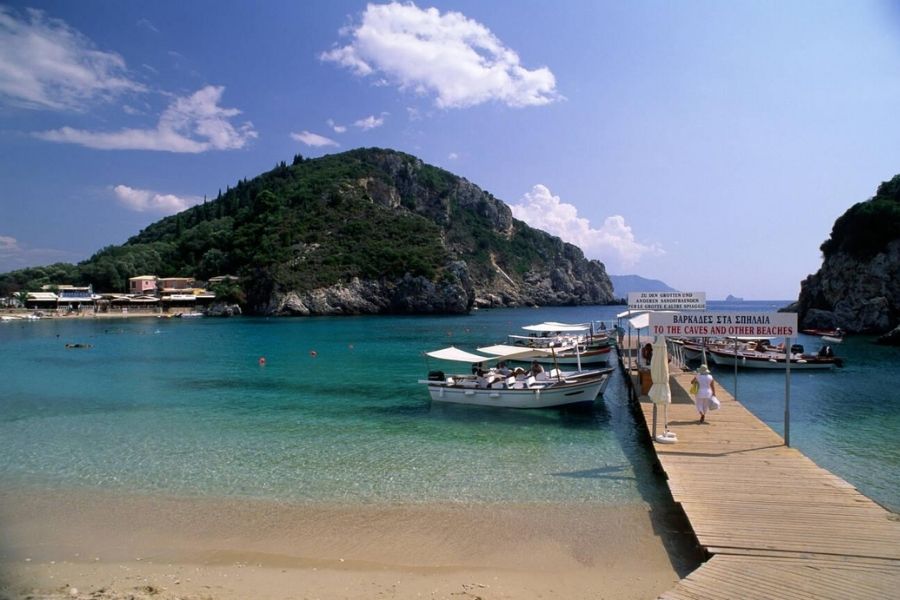
From this spot, you can trace the coastline as it curves around rocky headlands. Some days, little boats drift by, white against the deep blue.
Best viewing times:
- Sunrise (6:30–7:30 AM): Golden light on the water
- Mid-morning (9:00–11:00 AM): Clearest visibility
- Late afternoon (4:00–6:00 PM): Warm light, fewer crowds
The upper courtyard gives you a different angle, looking north along the coast. On a clear day, you might spot distant islands.
Walking the Hilltop Paths
Stone paths snake around the monastery grounds. I like to wander these walkways, finding new perspectives and hidden corners.
The main path climbs from the entrance up to the church. Along the way, you pass through courtyards dotted with olive trees and blooming flowers.
A smaller trail veers off toward the cliff edge. It’s a bit uneven, so watch your step, but the views from there are spectacular.
Garden paths wind through beds of herbs and vegetables that the monks tend. You’ll probably spot a few cats lounging in the sun along the way.
Path highlights:
- Stone steps leading to upper terraces
- Walkways shaded by olive trees
- Cliff-edge viewing spots
- Quiet garden areas
If you want to check out all the viewpoints, give yourself 30–45 minutes.
Photography Opportunities
If you love photography, you’ll have a field day here. The light changes everything, hour by hour.
Wide shots capture the bay below in all its glory. The contrast between the monastery’s white walls and the blue sea is just magic.
Close-ups work well for details—stone arches, weathered doors, the bell tower against the sky.
Best photo spots:
- Main terrace for sweeping panoramas
- Church courtyard for architectural details
- Garden paths for intimate shots
- Cliff edge for dramatic angles
A polarizing filter helps cut glare from the water. Trust me, the Mediterranean sun can wash out your photos if you’re not prepared.
Morning light from the east makes the buildings glow. Late afternoon brings out those warm, golden tones across the whole landscape.
Reaching Paleokastritsa: Travel Tips and Local Connections
Getting to Paleokastritsa takes a little planning. You can use the public bus, or drive if you want to explore the coastal roads at your own pace.
Routes from Corfu Town
The simplest way from Corfu Town to Paleokastritsa is about 25 kilometers along the coastal road. I usually recommend following the route northwest through Gouvia, sticking close to the sea.
By car, the trip takes around 45 minutes to an hour. The road winds through villages and offers glimpses of the coastline before you reach the resort area.
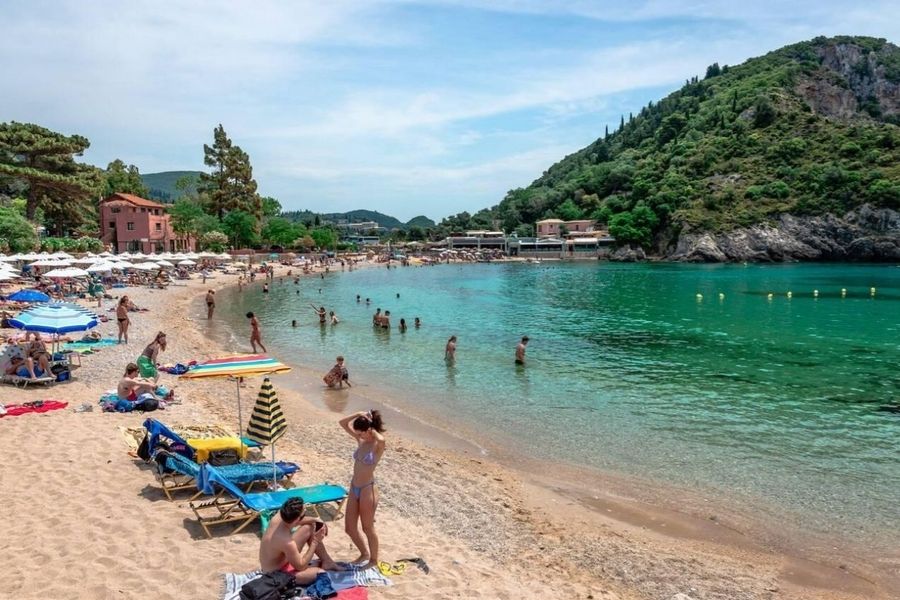
Key landmarks to look out for:
- Gouvia Marina (10 km out)
- Dassia Beach
- Ipsos village
- Mountain villages before the final descent
The last stretch is a winding downhill with tight turns. Take it slow, and don’t be afraid to pull over and let faster drivers pass.
Using the Public Bus Service
The Green Bus service runs regular routes between Corfu Town and Paleokastritsa during tourist season. You’ll find the buses at the main station near the New Port.
Bus info:
- Frequency: Every 1–2 hours in peak season
- Journey time: 60–90 minutes
- Cost: About €2–3 per person
- Operating season: May to October
The bus is reliable, but evening options are limited. The last one usually leaves Paleokastritsa around 6 PM in summer.
Buy your ticket at the station or from the driver. Buses can get packed between 10 AM and 2 PM, so plan ahead if you want a seat.
Parking and Accessibility
Parking in Paleokastritsa fills up fast in summer. If you want a spot near the main beaches or the monastery, try to get there before 10 AM.
Parking options:
- Main parking area: Right by the beach complex (€3-5 per day)
- Monastery parking: A handful of free spaces close to the monastery entrance
- Roadside parking: Along the main road (but definitely check for restrictions)
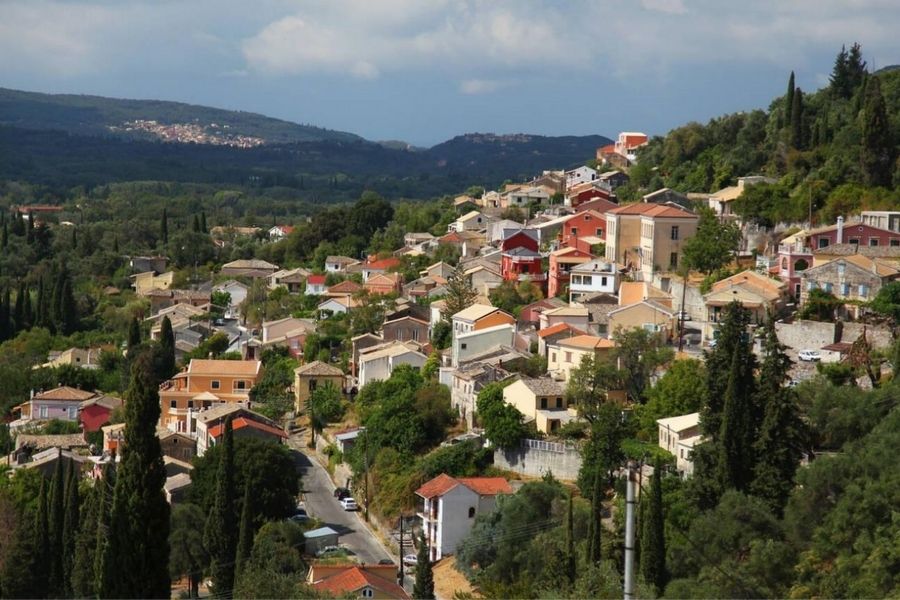
You’ll notice the terrain around Paleokastritsa isn’t exactly flat. Steep paths and stairs crisscross the area, and the monastery perches on a hilltop, so you’ll need to tackle a moderate uphill walk from the parking lots.
Most of the paths are paved, but honestly, they’re not super friendly for anyone with mobility issues. I always wear comfy shoes with good grip when heading up to the monastery.
Traveling from Nearby Attractions
Paleokastritsa sits close to several of Corfu’s best sights. If you plan well, you can hit a few in one day and really make the most of your time on this gorgeous northwest coast.
Distances from nearby sites:
- Angelokastro Castle: 3 km (about 10 minutes)
- Lakones Village: 5 km (15 minutes)
- Glyfada Beach: 12 km (25 minutes)
- Kassiopi: 35 km (50 minutes)
Lakones, a mountain village, offers a scenic detour with jaw-dropping views over Paleokastritsa bay. Sure, it adds 15-20 minutes to your drive, but the photo ops are totally worth it.
You’ll find local boats ready to ferry you to nearby beaches and caves. These trips usually run April to October, and cave tours cost €15-25 per person.
Exploring Nearby Highlights and Experiences
The area around Paleokastritsa feels like a hidden paradise—pristine beaches, wild rock formations, and little tavernas serving up whatever the fishermen hauled in that morning.
Agios Spiridon Beach and Local Seascapes
Agios Spiridon Beach strikes me as one of the calmest spots near the monastery. It’s tucked into a sheltered cove, with gentle turquoise water that’s perfect for swimming.
The pebble shore is great for snorkeling. I’ve spotted all sorts of colorful fish just a few meters from land.
What makes it special:
- Tiny and rarely crowded
- Sheltered from strong winds
- Just a short walk from Paleokastritsa village
- Olive trees offer natural shade
Boat operators here run trips to secret caves and beaches. These 30-minute rides cost around €10-15 per person. If you go in the morning, the sea is usually like glass.
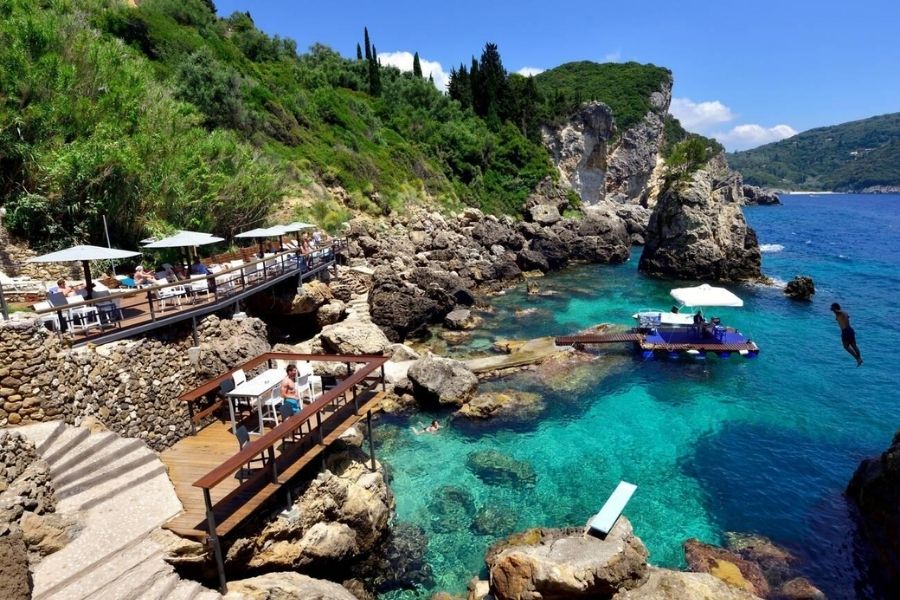
Nearby rocks are a favorite for cliff jumping. The water’s deep enough, but I always double-check with locals before taking the plunge.
Discovering Canal d’Amour and Sidari
Canal d’Amour in Sidari couldn’t be more different from Paleokastritsa. The sandstone cliffs look almost sculpted, with narrow channels cut by centuries of wind and waves.
You can wander through these rock corridors, and the golden cliffs stand out against the blue-green water.
Key attractions in Sidari:
- Canal d’Amour: The famous heart-shaped rock
- Sandy beaches: Pretty rare on Corfu’s west coast
- Sunset Point: The spot for evening views
- Beach bars: Chill spots for a drink by the sea
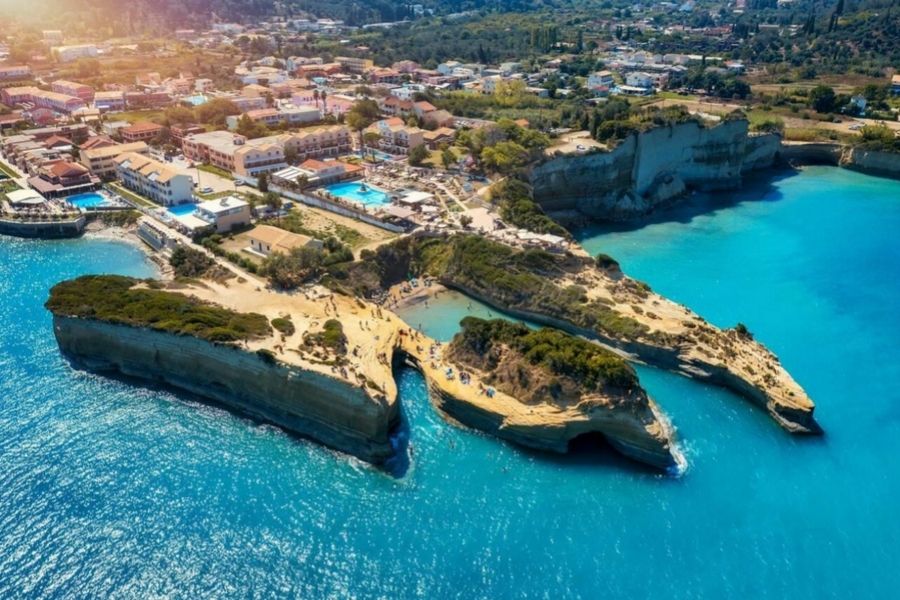
Driving from Paleokastritsa to Sidari takes about 20 minutes. I like to go late in the day and catch the sunset through the rock arches—feels almost magical.
Swimming here takes a bit more caution. The currents, especially near the canal, can be strong.
Seafood Dining and Local Delicacies
Tavernas around Paleokastritsa serve some of the freshest seafood you’ll find on Corfu. I always try to pick places where the fishermen drop off their catch.
Must-try dishes:
- Grilled octopus with olive oil and vinegar
- Fresh sea bream with herbs
- Fried calamari straight from the morning boats
- Bourdeto: Spicy fish stew, a Corfu classic
Most places display fish on ice out front. I like to take a look before ordering—nothing beats picking your dinner yourself. Expect to pay €15-25 for a main seafood dish.
Waterfront tavernas are my favorite. There’s nothing like eating with your feet almost in the sand, watching the boats drift back at sunset.
Don’t skip local specialties like pastitsada (pasta with spiced meat sauce) and sofrito (beef in white wine sauce). They go perfectly with the island’s crisp white wines.
Cultural and Historic Context of Corfu
Corfu’s culture stretches back more than 2,400 years. Venetian, French, and British rulers all left their mark, and today’s Corfu blends Western European and Greek traditions in a way you won’t find anywhere else in Greece.
UNESCO World Heritage Site of Corfu Town
Corfu Town earned its UNESCO stripes in 2007, and for good reason. The Old Town packs three distinct eras into one walkable area.
The Venetian period (1386-1797) dominates the look and feel—narrow cobbled lanes, tall pastel buildings, iron balconies, and those classic red-tiled roofs.
The French era (1807-1814) changed up the city’s layout. Wide boulevards and elegant squares reflect their love of open, organized spaces.
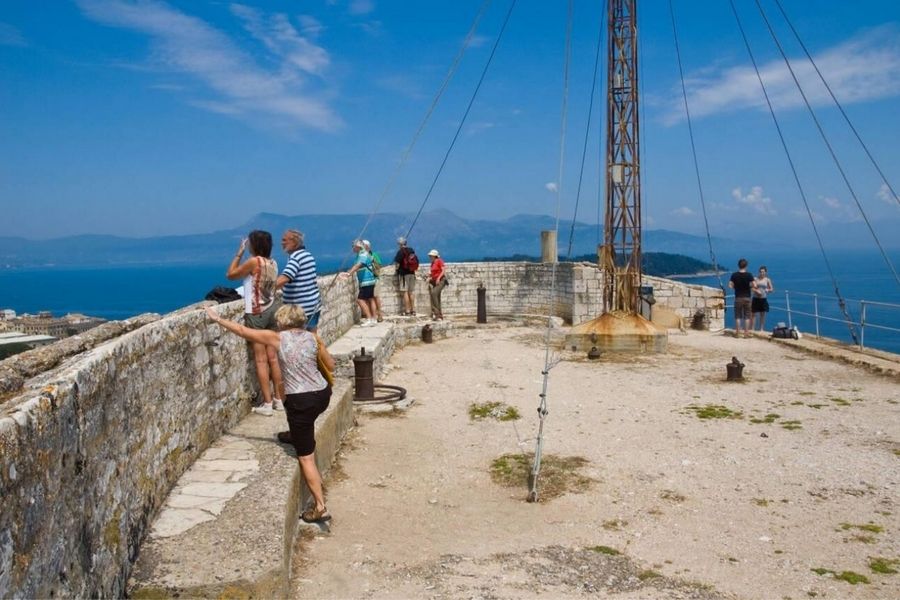
British rule (1815-1864) brought neoclassical touches. The Palace of St. Michael and St. George stands out as a prime example.
Two giant Venetian fortresses still guard the town. The Old Fortress juts out on a rocky peninsula; the New Fortress sits on the west. These defenses kept Corfu safe from the Ottomans.
Venetian Architecture and the Liston
The Liston is Corfu’s architectural showpiece. Built during the French era, it echoes Paris’s Rue de Rivoli.
When I first saw the Liston, I noticed its signature features right away:
- Arched galleries sheltering lively cafes
- Second-floor apartments with green shutters
- A broad walkway made for evening strolls
- Overlooks the Spianada, Greece’s largest square
Venetian influence pops up everywhere in Old Town. Look for:
- Kantounia: Tight alleyways between tall buildings
- Wrought-iron balconies: Ornate metalwork above the streets
- Pastel facades: Ochre, salmon, and cream tones
- Red tile roofs: That classic Mediterranean vibe
The Venetians designed Corfu Town like a fortress. Tall buildings formed walls, and the twisty streets confused would-be invaders.
Traditional Festivals and Events
Corfu’s Easter celebrations are legendary. The island puts its own spin on traditions you won’t see elsewhere in Greece.
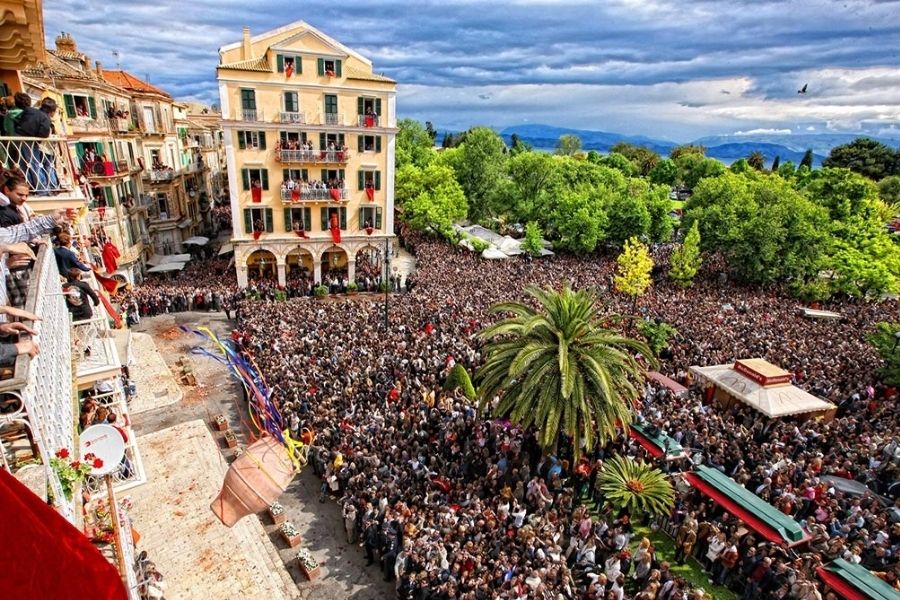
On Holy Saturday, everyone gathers for the “Botides” ceremony. Locals toss clay pots from balconies at exactly 11 AM, and the crashing sound echoes through the Old Town. It’s supposed to symbolize the earthquake at Christ’s resurrection.
The Philharmonic bands play a huge part in processions. Corfu boasts three main bands, and they’re at the heart of Easter week and other big events.
August 11th celebrates Saint Spyridon, Corfu’s patron. His mummified body rests in his namesake church, and locals say he’s saved the island from disaster more than once.
Carnival season lasts for three weeks before Easter. Masked balls, parades, and street parties fill the town. The tradition goes back to Venetian times, when nobles loved a good masquerade.
Frequently Asked Questions
People often want to know about the monastery’s long history, what to wear at religious sites, and which cultural spots to check out around Corfu’s northwest.
What are the historical significances of the Monastery of Paleokastritsa?
The Monastery of Paleokastritsa dates back to 1225—almost 800 years old! Its name, “Palaeocastritsa,” means “old castle,” since it stands on the ruins of an ancient fort.
Throughout history, the monastery has faced destruction more than once. The Genoese leveled it in 1403, then it was rebuilt in 1469. The Turks destroyed it again in 1537 during the Ottoman era.
The current buildings come from the Ottoman period, not the original 13th-century structure. The monastery honors the Virgin Mary, with a big feast day on August 15th.
For centuries, it’s served as an important religious center for Orthodox Christians. Monks have kept the spiritual traditions alive through wars and political upheaval.
How can visitors respectfully explore the Monastery of the Virgin Mary in Corfu?
If you’re heading to the monastery, dress modestly—shoulders and knees covered. They offer shawls at the entrance if you forget.
There’s no entry fee, but donations help keep the place running and support the monks.
Early mornings or late afternoons are the best times for a peaceful visit. Summer crowds can get intense and really change the vibe.
Inside the church and museum, keep your voice down. Many visitors come to pray or light candles, so a respectful attitude goes a long way.
You can usually take photos outdoors, but always ask before snapping pictures inside the church or museum.
What are some lesser-known attractions to experience in Corfu around Paleokastritsa?
Angelokastro fortress sits on a nearby hilltop, offering sweeping views of the coast. This old Byzantine castle tells stories of Corfu’s battles with the Ottomans.
Six different bays hide sea caves you can only reach by boat. Local operators run tours to these secluded gems—most tourists never find them.
Ancient olive groves surround the monastery, with some trees over 500 years old. Walking paths wind through the groves to quiet viewpoints well away from the crowds.
Small fishing villages dot the coastline between Paleokastritsa and Corfu Town. In these spots, you’ll find authentic tavernas and local crafts without the tourist buzz.
Can you provide insights into the architectural highlights of Corfu’s Old Town near Paleokastritsa?
Paleokastritsa sits about 25 kilometers from Corfu’s Old Town, a UNESCO World Heritage site. The Old Town showcases a mix of Venetian, French, and British influences from centuries of foreign rule.
The Liston promenade brings a touch of Paris to Corfu, built during the French occupation. Elegant cafes line the walkway beneath its arches.
Spianada Square, Greece’s largest, was created by the British in the 19th century. Cricket matches still happen here—pretty unusual for Greece!
The Old and New Fortresses show off Venetian military engineering. These massive stone fortresses kept Corfu safe from Ottoman invasions for centuries.
Which regions are considered the best to visit in Corfu for cultural and scenic experiences?
The northwest coast around Paleokastritsa has some of the most dramatic scenery—think steep cliffs, turquoise waters, and hidden coves that look straight out of a postcard.
Mount Pantokrator rises to 906 meters in the northeast, giving you views all the way to Albania. Traditional villages up here still hold onto old customs and architecture.
The Achilleion Palace near Gastouri is a slice of 19th-century imperial luxury. Empress Elisabeth of Austria built it, and the gardens and statues are just stunning.
Kassiopi, up in the northeast, blends a charming harbor with Roman ruins. Despite some tourist development, the village keeps its authentic Greek feel.
Are there any specific visiting hours or days for popular sites in Corfu Town, particularly religious sites?
Most Orthodox churches in Corfu Town open their doors from 7:00 AM to 12:00 PM, then again from 5:00 PM to 8:00 PM. Locals and visitors alike often slip in for morning or evening prayers during these hours.
The Monastery of Paleokastritsa usually welcomes visitors all day, no matter the season. Still, I’ve found the small museum inside sometimes closes for a couple of hours at lunch, typically from 1:00 PM to 3:00 PM—something to keep in mind if you’re hoping to see it.
If you plan to visit during religious holidays, expect tighter access. Special services and feast days, especially August 15th for the Virgin Mary celebration at Paleokastritsa, can draw big crowds and limit entry.
On Sunday mornings, most churches fill up for worship. You can still peek inside, but it’s best to keep quiet and just soak up the atmosphere rather than wander around.
