
Canada has some of the world’s most jaw-dropping blue lakes—sometimes, honestly, it feels like they’re straight out of a dream. These nine extraordinary lakes show off shades of blue and turquoise so vivid, the Caribbean almost looks dull by comparison.
From the legendary glacial lakes tucked in the Rockies to hidden gems scattered across the country, each one brings its own unique twist on blue. Sometimes I catch myself wondering—how did nature even pull this off?
I’ve wandered around lakes all over Canada, and I can promise you, those wild blue tones are the real deal. No filters, no Photoshop tricks—just glacial rock flour and minerals doing their thing, turning water every shade from electric turquoise to deep sapphire.
If you’re plotting a road trip through the Rockies or just hunting for a closer spot in central or eastern Canada, these lakes deliver some of the clearest, most colorful water you’ll ever lay eyes on. Let’s dive in—here’s what makes each lake special, where to dodge the crowds, and how you can actually see these blue wonders for yourself.
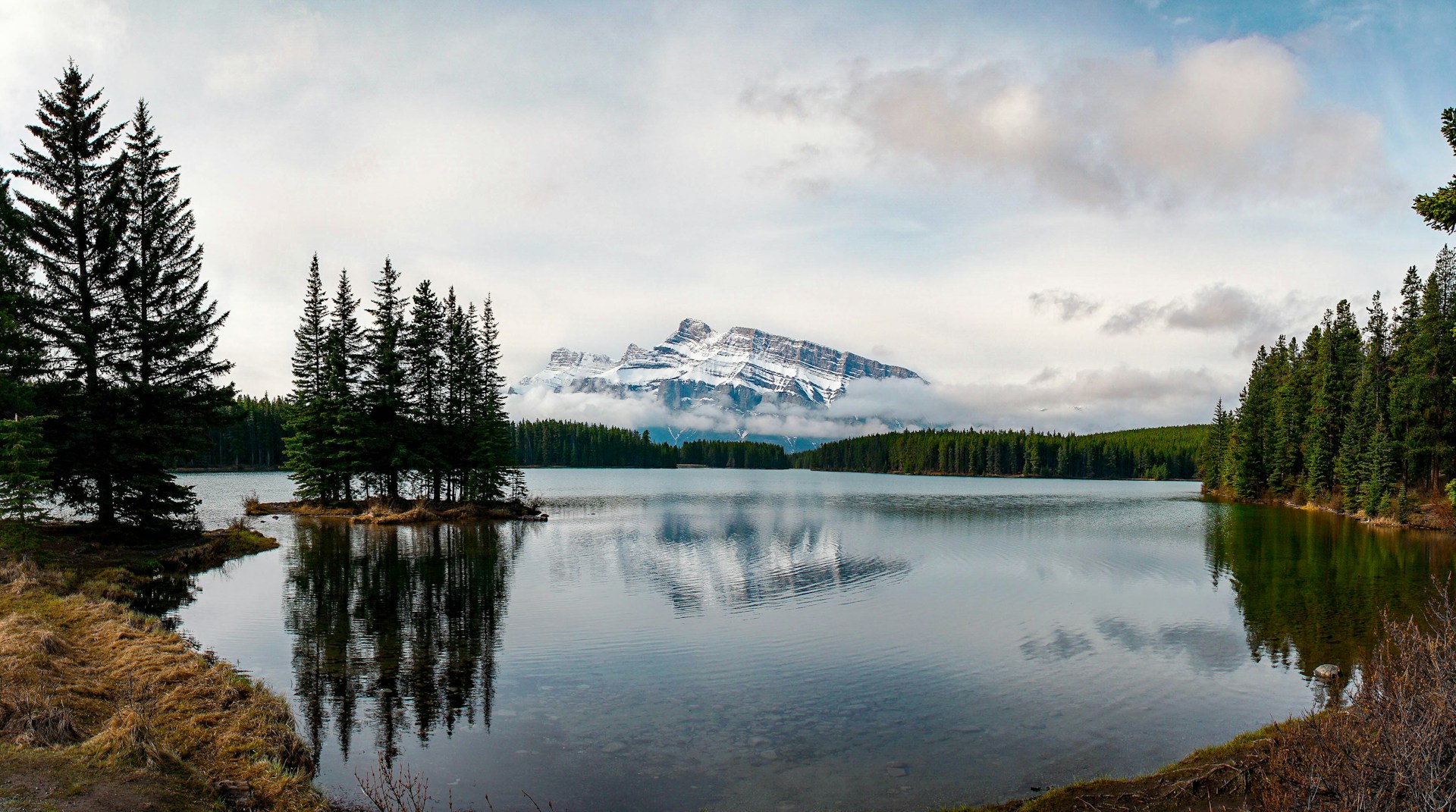
What Makes Canadian Lakes So Strikingly Blue?
Canada’s mountain lakes get their surreal blue colors from a few main things: glacial rock flour, how light dances through clear water, and the wild interaction between sunlight and minerals.
The Magic of Glacial Rock Flour
Glacial rock flour is the secret behind those famous blue Canadian lakes. Glaciers grind down rocks into powder finer than flour over thousands of years.
Meltwater carries these tiny particles into the lakes. Instead of sinking, they just float around.
When sunlight hits the water, these particles bounce back vivid turquoise and blue hues. They act like a million tiny mirrors, reflecting certain wavelengths right into your eyes.
Lakes like Lake Louise and Moraine Lake practically glow because of this. More rock flour means brighter, more eye-popping blues.
But here’s the thing—climate change is starting to mess with this. As glaciers shrink, they produce less rock flour. Some lakes are losing their neon turquoise and shifting to deeper, darker blues.
Rayleigh Scattering and Crystal-Clear Water
Pure water naturally shows off a blue tint thanks to Rayleigh scattering. Water molecules absorb red light and send back blue light.
The deeper and clearer the lake, the stronger this effect. Many Canadian mountain lakes are deep and nearly free of sediment.
Cold, high-altitude lakes slow down plant growth and keep things super clear. No algae, no muck—just pure, blue water.
That combo of depth, clarity, and chilly temps really lets those blue tones shine. It’s why so many alpine lakes in Canada look like they’ve been photoshopped.
Sunlight, Minerals, and Ever-Changing Color
The angle and strength of sunlight can totally change a lake’s color throughout the day. When the sun’s high, blue tones get even more intense.
Minerals from the surrounding rocks tweak the colors too. Limestone can make blues pop, while iron and sulfur add greens or other shades.
Minerals at work:
- Limestone (calcium carbonate): boosts bright blues
- Iron: adds greenish tints
- Sulfur: sometimes creates unusual hues
Weather plays a big role. Stormy skies can make a lake look moody and dark, but on a sunny day, the water practically glows.
People often think it’s just the sky reflecting, but that’s not the whole story. The real blue comes from the water and what’s floating inside it—not just a mirror image of the sky.
Canadian Rockies’ Iconic Blue Lakes
If you want to see blue water at its wildest, the Canadian Rockies are the place. Four lakes here basically set the standard for what “blue” can be.
Lake Louise: Alberta’s Turquoise Showstopper
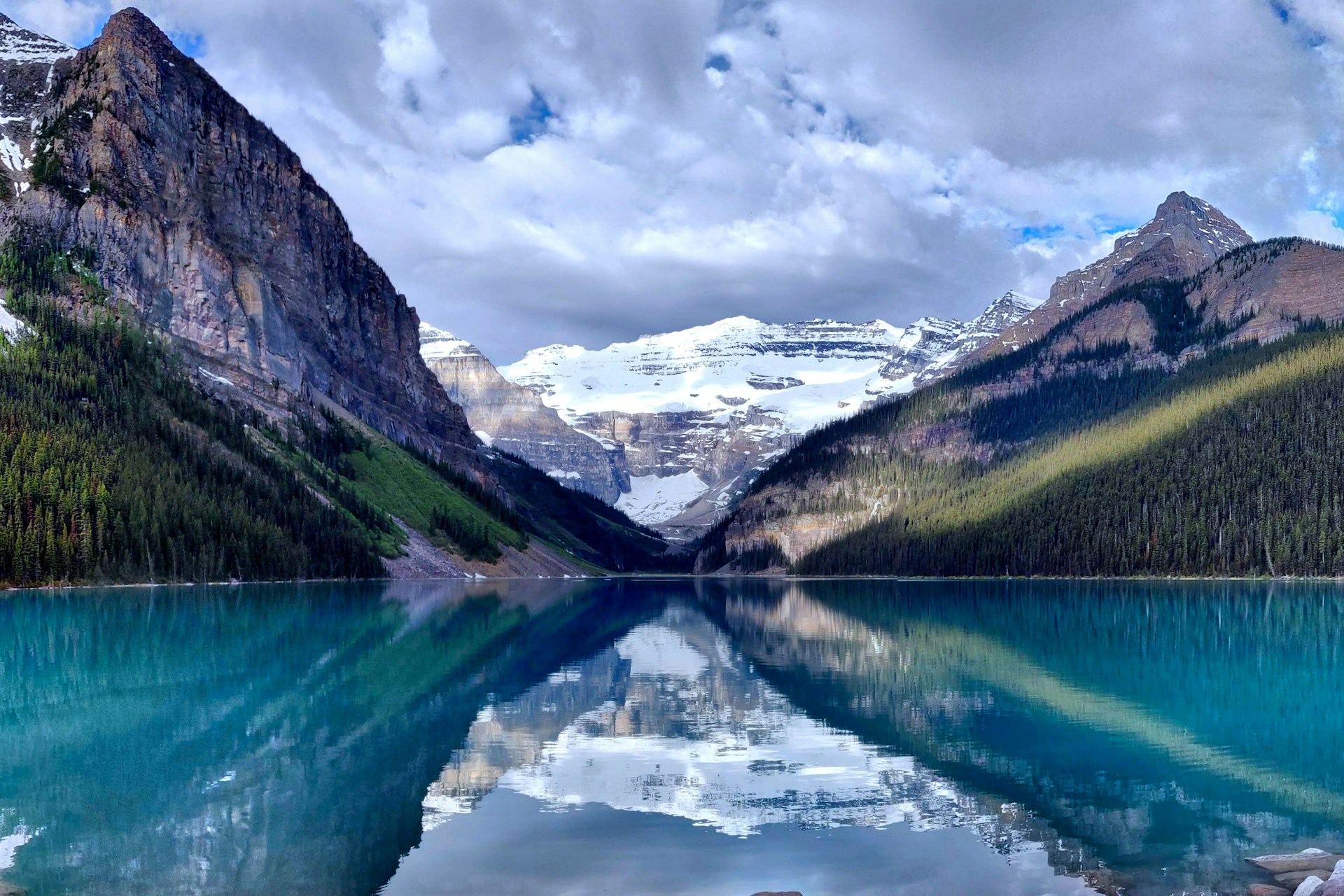
Lake Louise is the superstar of Banff National Park. It sits at 5,676 feet, surrounded by rugged Alberta peaks.
Glacial rock flour gives Lake Louise its famous turquoise glow. Meltwater brings in those tiny particles, and sunlight does the rest.
Best times to visit:
- June to September: Colors at their brightest
- Early morning: Still water, great reflections
- Mid-afternoon: Deepest blues
The Fairmont Chateau Lake Louise stands right on the shore. The view—blue water against snowy mountains—is, honestly, unreal.
You can walk the easy 3.4-mile trail around the lake or rent a canoe in summer. In winter, the lake freezes solid and turns into a whole different kind of magic.
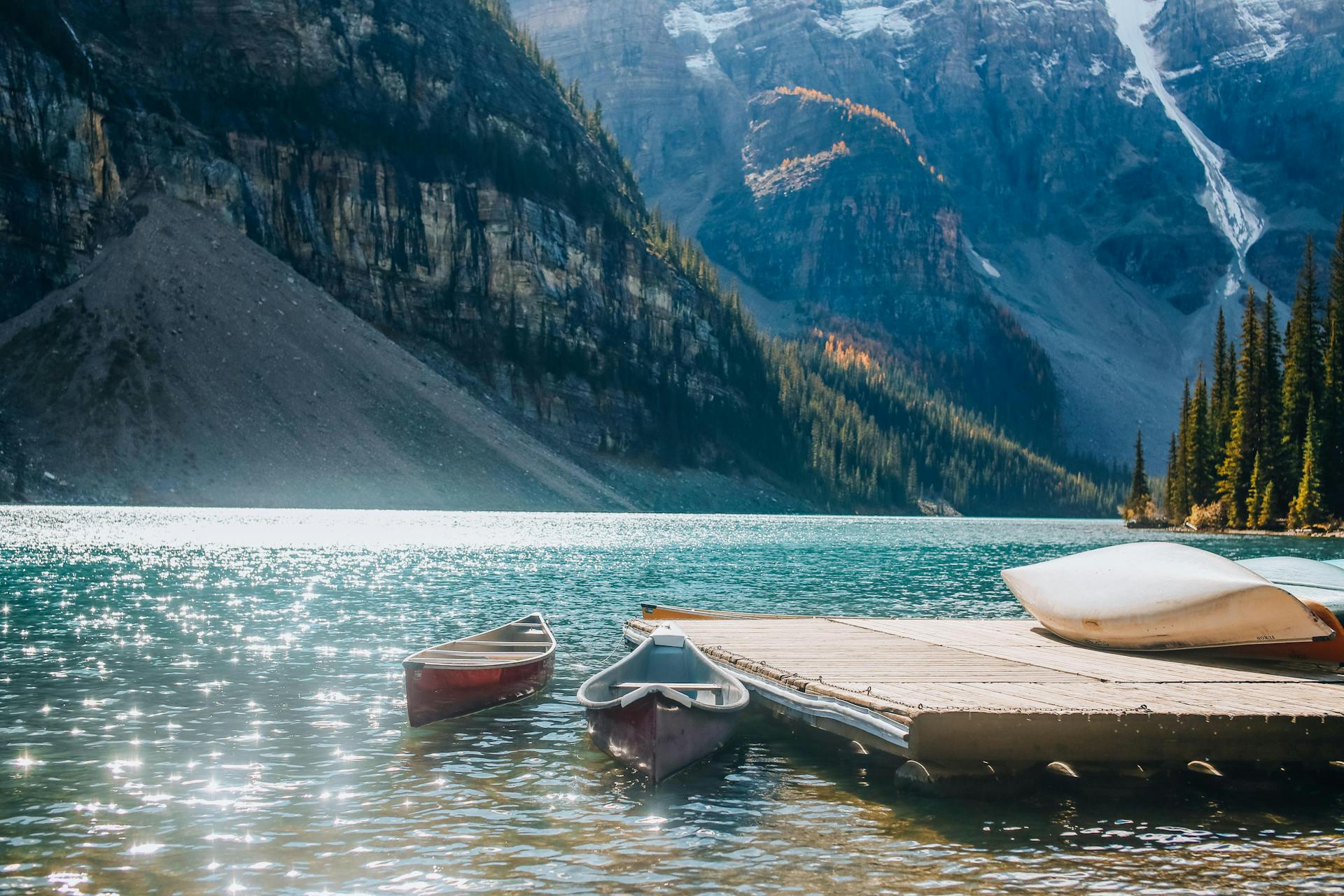
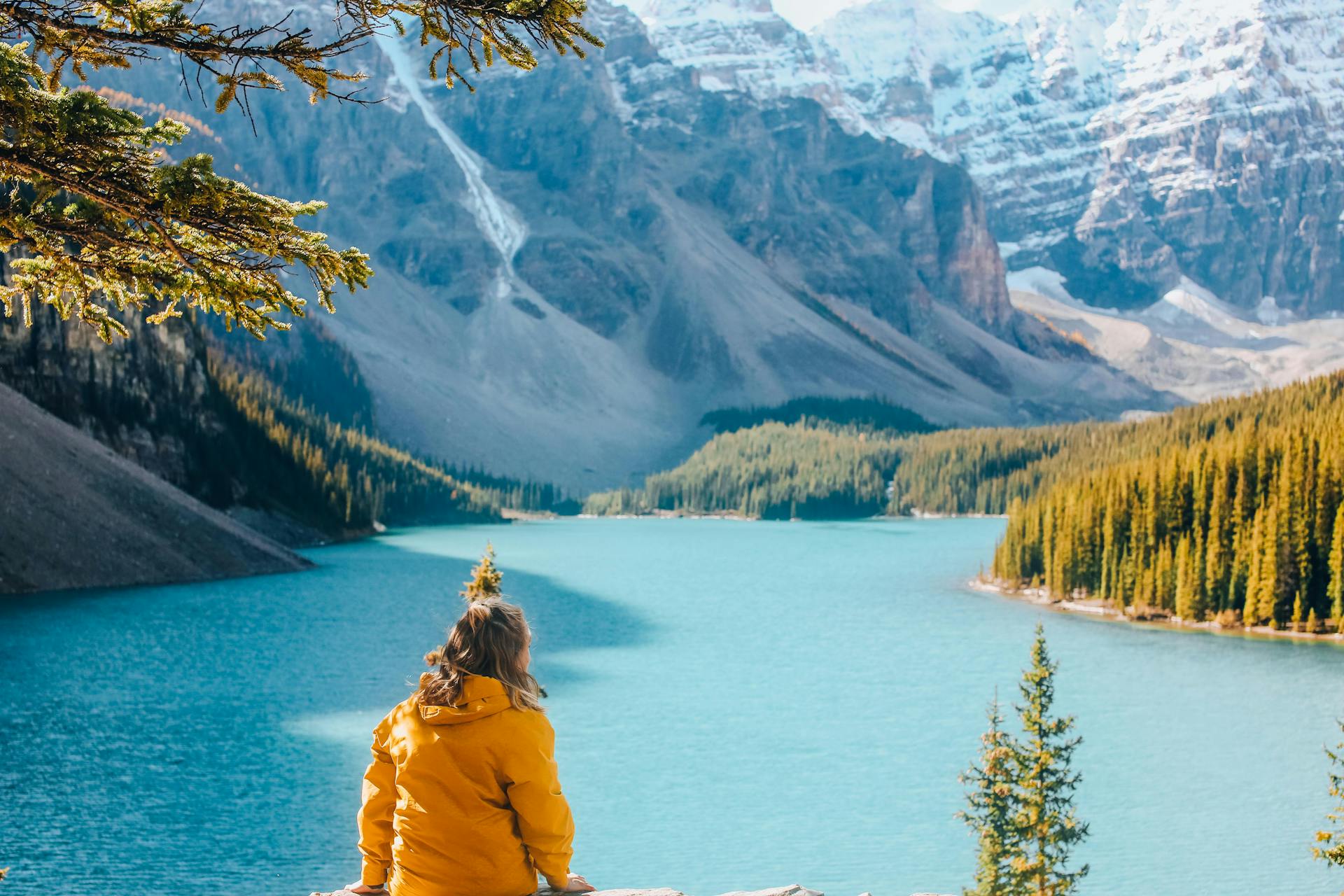
Moraine Lake: Valley of the Ten Peaks’ Blue Wonder
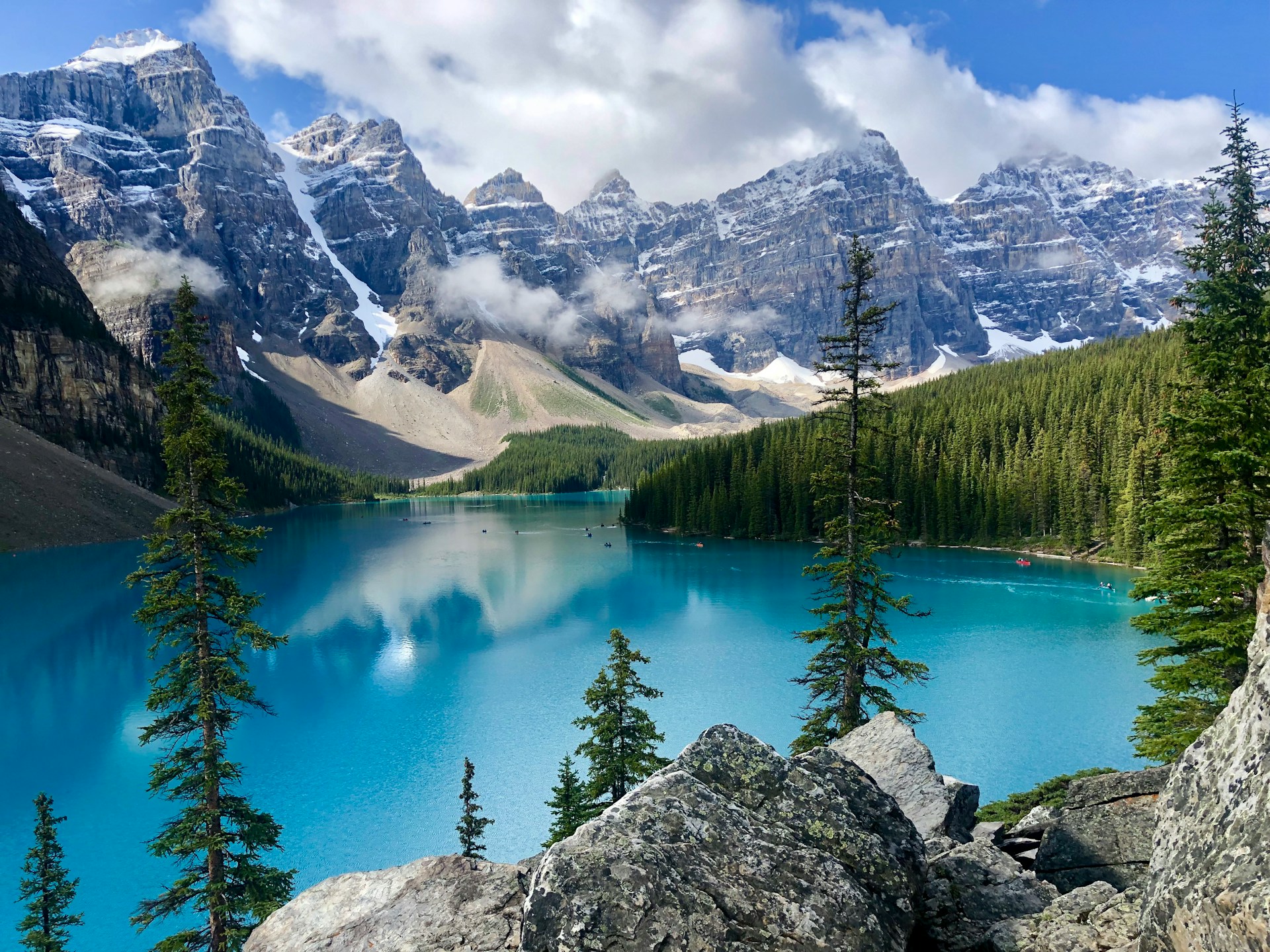
Moraine Lake, tucked in the Valley of the Ten Peaks, might just have the bluest water in all of Canada.
It’s higher up than Lake Louise, at 6,183 feet. That extra elevation seems to crank up the color even more. The ten jagged peaks in the background make it a photographer’s dream.
Quick facts:
- Size: 0.31 square miles
- Depth: 46 feet
- Open: June to October
- Getting there: 8.7 miles from Lake Louise
Glaciers nearby grind out extra-fine rock flour, and that’s why the blue here looks so intense.
The Rockpile Trail is a short, easy climb and gives you that classic postcard view—the same one that used to be on the Canadian $20 bill.
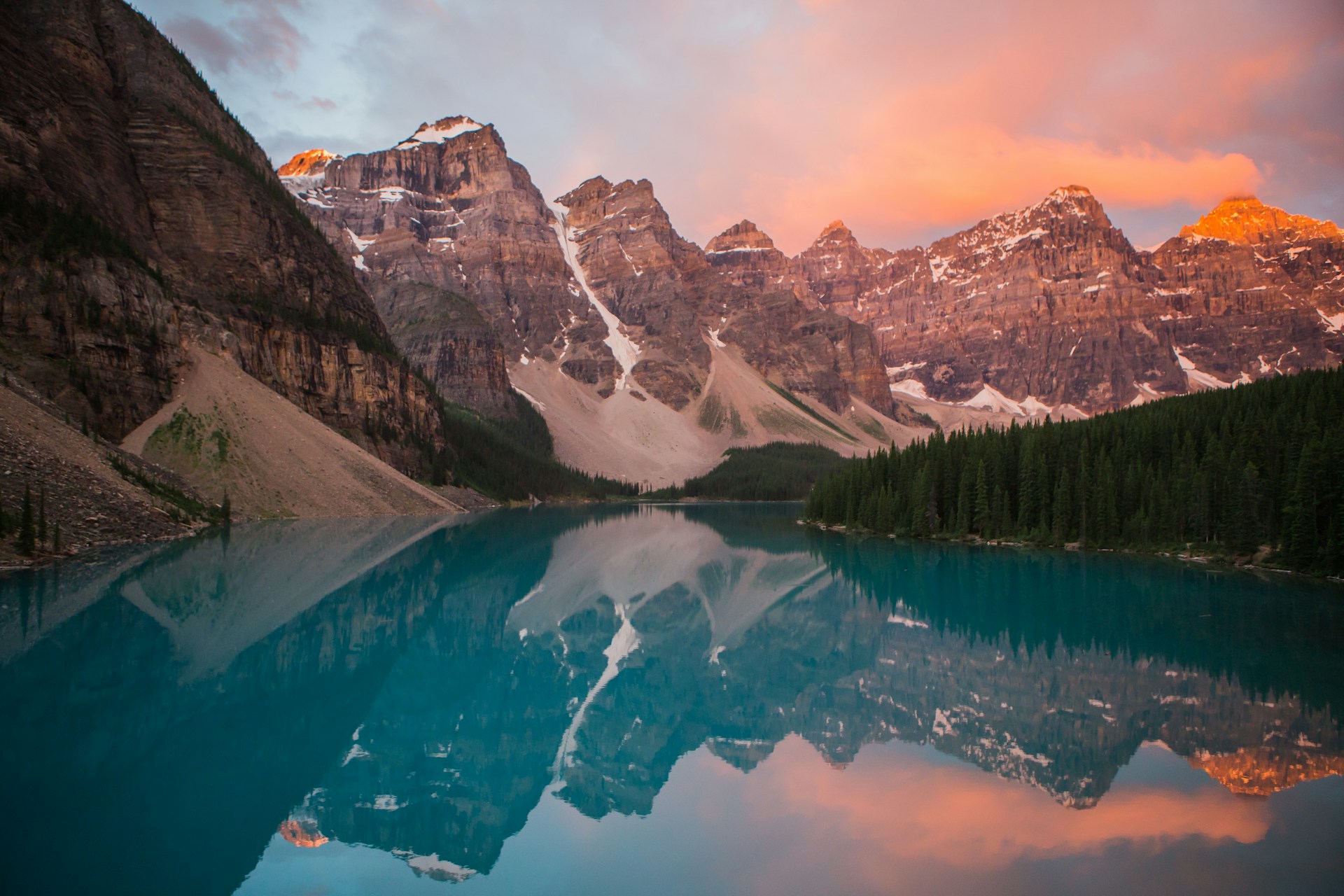
Try to visit early or late in the day. The changing light makes the colors shift in ways that are hard to believe until you see it.
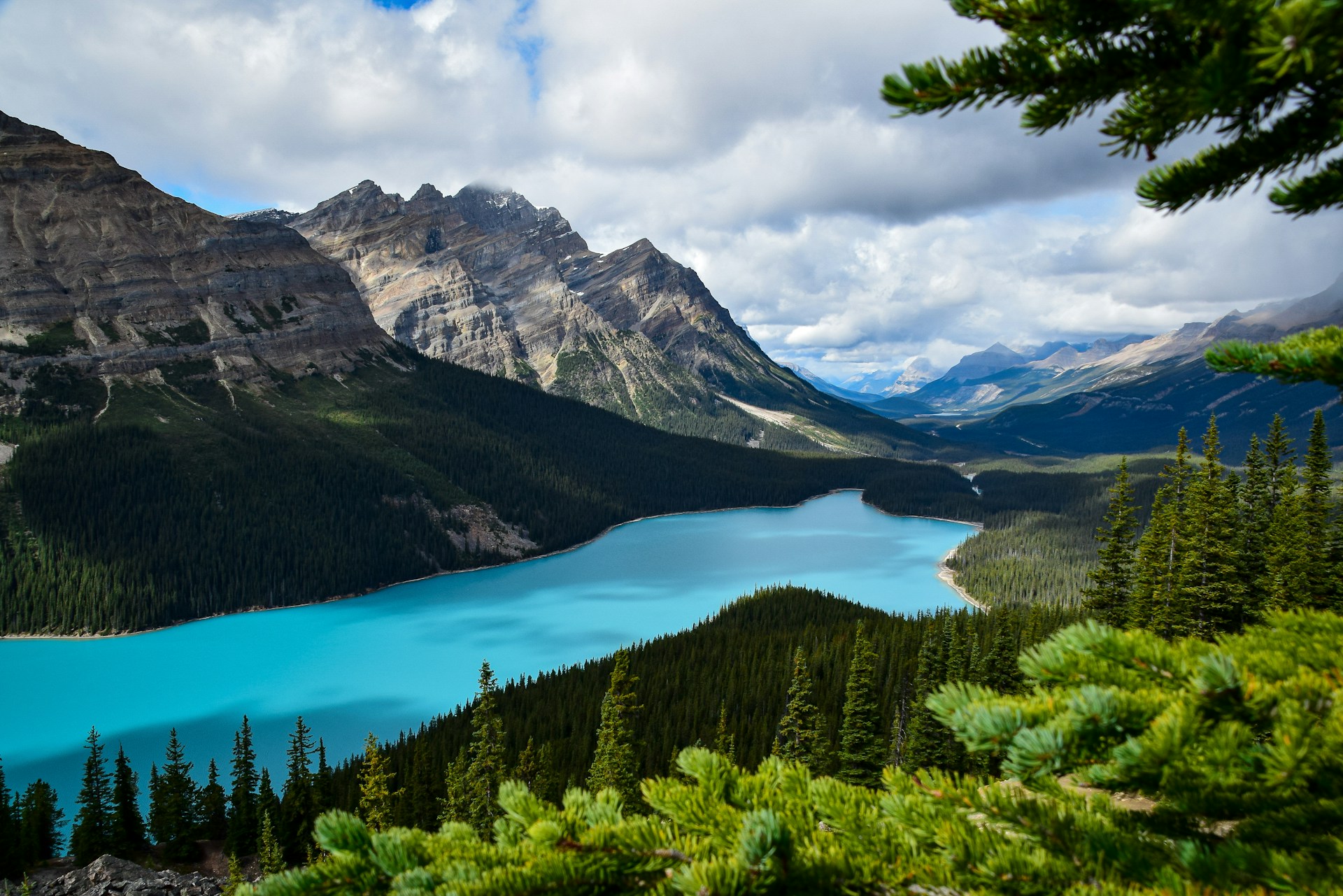
Peyto Lake: The Fox-Shaped Blue
Peyto Lake sits right off the Icefields Parkway in Banff. From above, it looks like a fox or a wolf—take your pick.
A quick 10-minute walk from the parking lot gets you to the main viewpoint at Bow Summit, the highest point on the Parkway.
The Peyto Glacier feeds the lake, dumping fresh rock flour in all summer long. That’s what keeps the blue so bold and steady.
When and how to visit:
- July to September: Best color
- Parking: Fills up fast
- Elevation gain: 328 feet to the overlook
- Photos: Mornings have the best light
Colors shift as the day goes on—lighter blues in the morning, deeper turquoise at midday, then dramatic contrasts by late afternoon.
For photographers, Peyto Lake is a dream. The high vantage point lets you see the lake’s full shape, plus the mountains and forests all around.
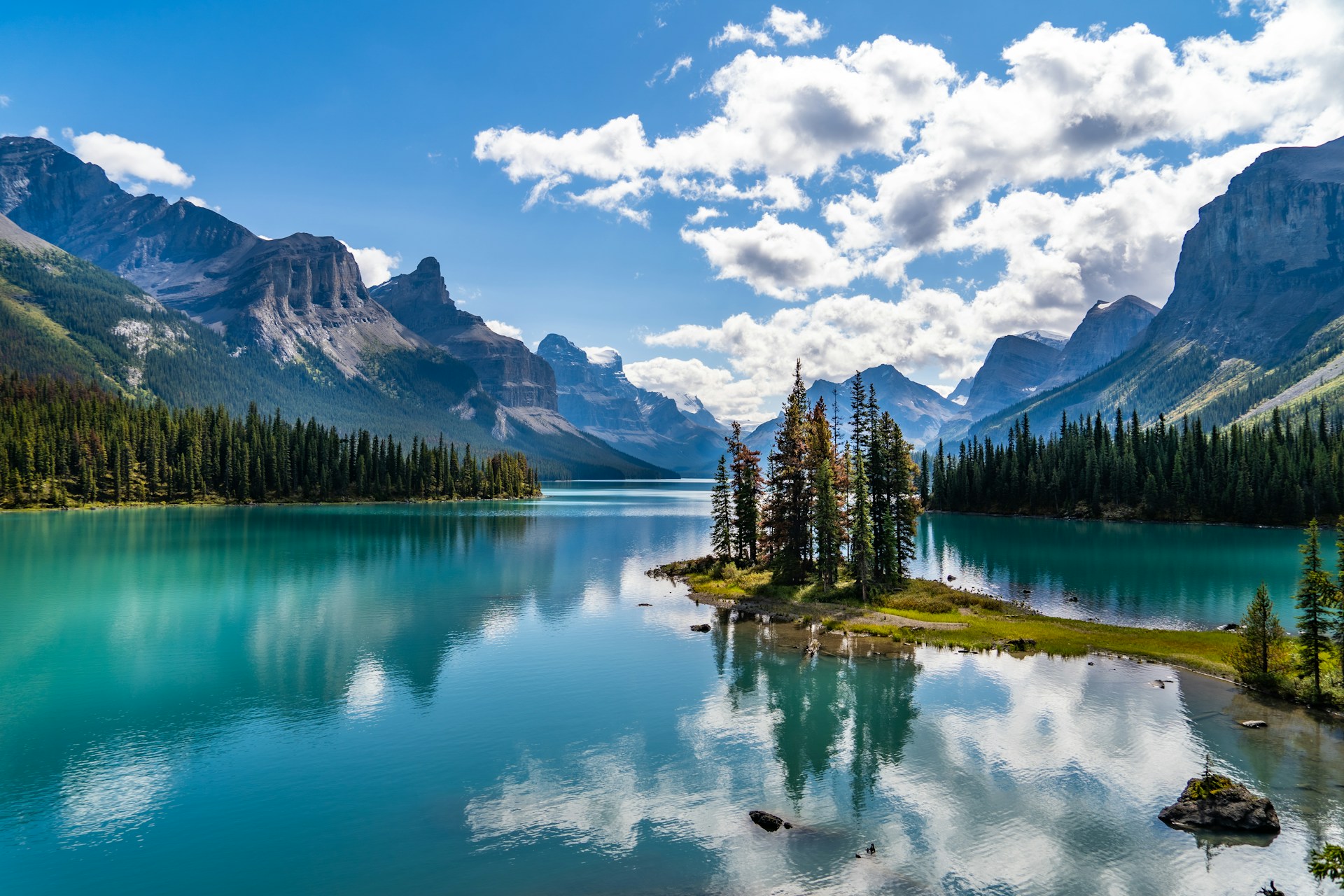
Maligne Lake: Jasper’s Blue Giant
Maligne Lake is the biggest natural lake in the Rockies, stretching a whopping 13.7 miles through Jasper National Park.
It sits at 5,574 feet in the Maligne Valley. Multiple glaciers feed it, so the blue shades actually change as you move along the shoreline.
Lake stats:
- Length: 13.7 miles
- Width: 0.93 miles
- Depth: 318 feet
- Area: 7.7 square miles
Spirit Island is the star here—a tiny, tree-covered patch near the far end of the lake. You can only reach it by boat or kayak.
Boat tours run late May to early October. These 90-minute rides offer sweeping views of mountains and untouched wilderness. I always find the lake looks even bigger from the water.
Maligne Lake’s blue comes from several glaciers, including the Maligne Glacier. The steady flow of rock flour keeps the color bright and even across the surface.
Western Canada’s Lesser-Known Blue Marvels
The Rockies get most of the fame, but British Columbia hides a few blue treasures of its own. These three lakes offer knockout colors—minus the crowds.
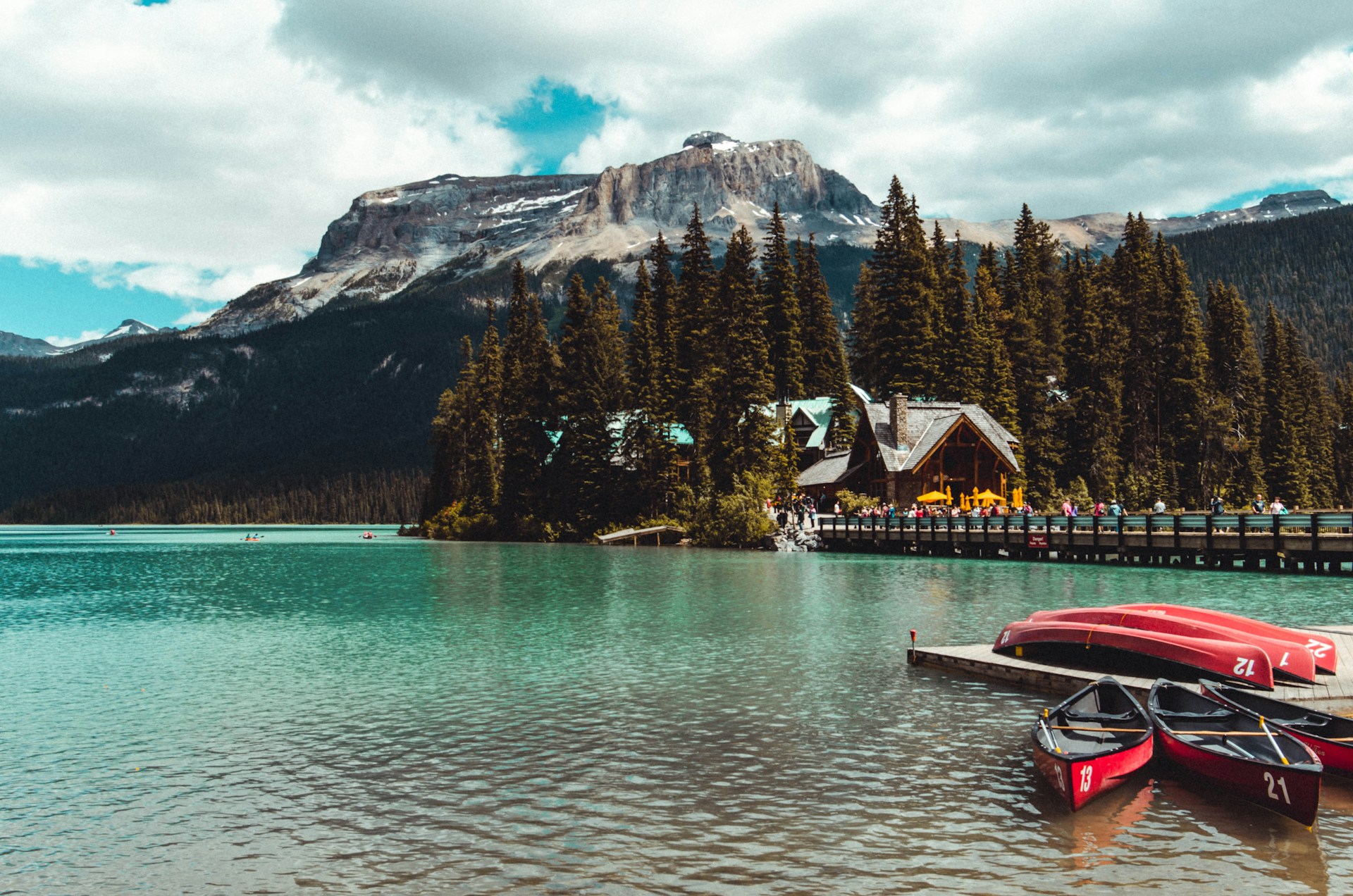
Emerald Lake: Yoho’s Green-Blue Gem
Emerald Lake is perfectly named. Its color shifts from green to blue depending on the light, and sometimes it just looks unreal.
The lake sits at the foot of Mount Burgess and Wapta Mountain in Yoho National Park. Walking the shoreline loop takes about an hour.
Why visit:
- Largest lake in Yoho
- Discovered in 1882
- Great for walking, canoeing, photos
Glacial meltwater, loaded with rock particles, gives the lake its jewel-like color. Early mornings are calmest—perfect for reflections.
I always suggest coming in summer when the road is open. The historic Emerald Lake Lodge sits right on the water and is a cozy spot for a meal or a drink.
Sherbrooke Lake: Yoho’s Quiet Hideaway
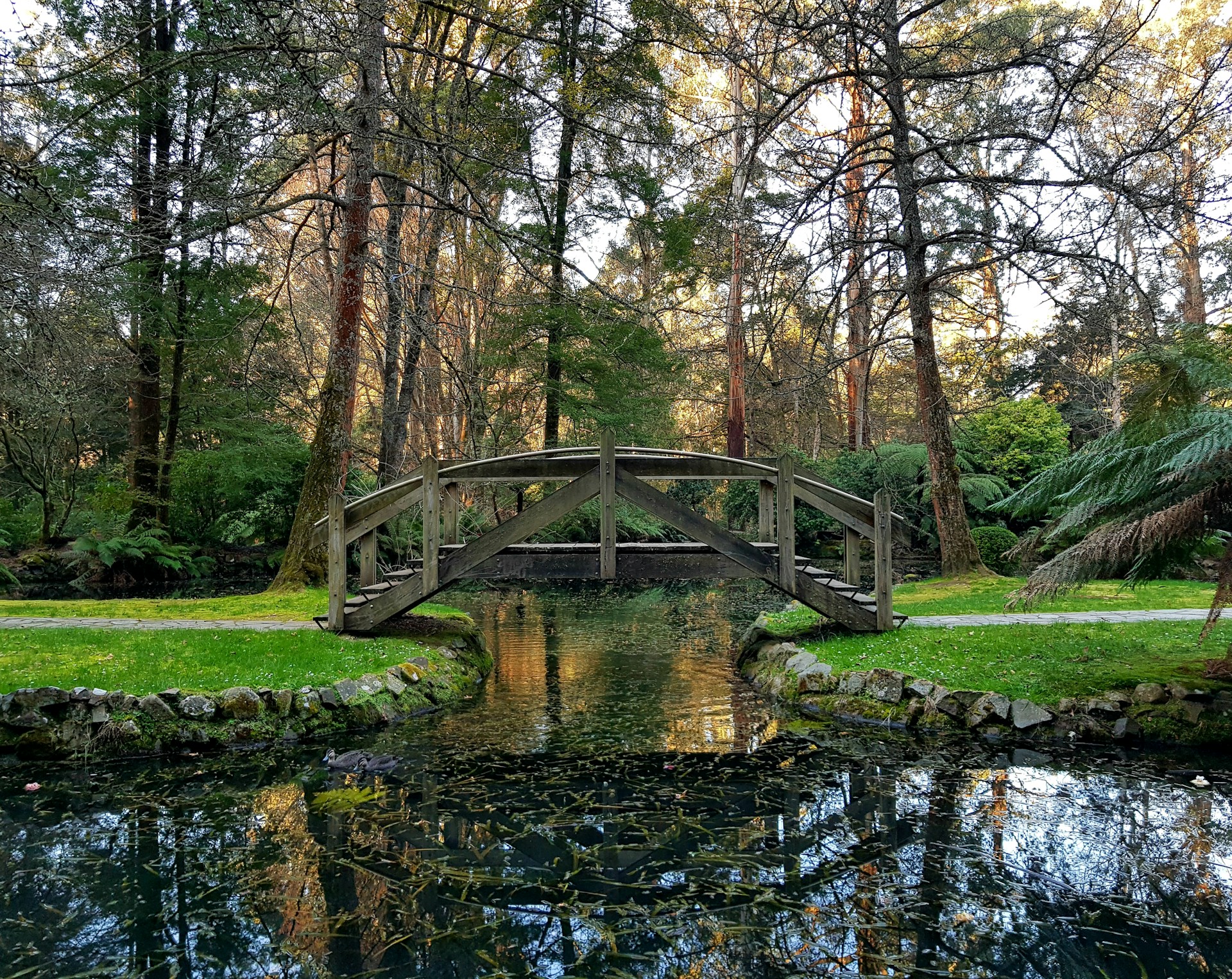
Sherbrooke Lake takes a bit more effort to reach, which keeps it peaceful. The 3-kilometer hike through thick forest opens up to a shockingly blue alpine lake.
You start near Wapta Falls and climb steadily. Suddenly the trees part, and there’s the lake, ringed by steep mountains.
Trail basics:
- 6 km round trip
- 285 meters elevation gain
- Moderate difficulty
- 2-3 hours total
Snow often lingers on the peaks, making the blue water stand out even more.
Wildlife is everywhere. I’ve seen black bears, mountain goats, and all sorts of birds on the trail.
Pack layers—the weather changes fast up here. Most people with a bit of hiking experience can do this trail.
Garibaldi Lake: Whistler’s Hidden Blue
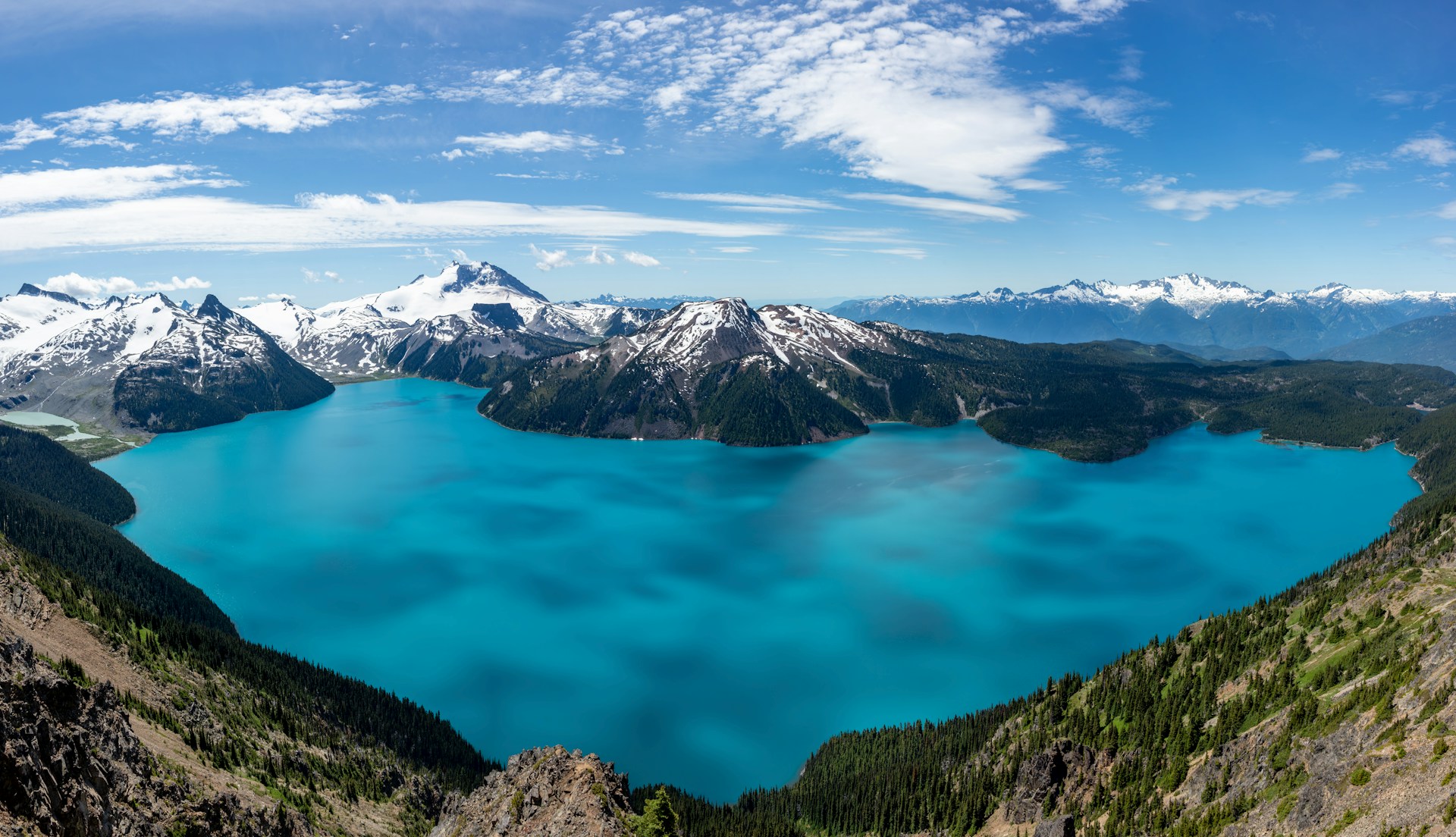
Garibaldi Lake, not far from Whistler, might have the most electric blue water in B.C. The 9-kilometer hike keeps it from getting too busy.
Start at Rubble Creek parking, about 37 kilometers north of Whistler. The trail climbs through thick forest, then opens to alpine meadows.
What to know:
- 18 km round trip
- 820 meters elevation gain
- Best July to October
- Camping with permits
Glacial flour in the meltwater gives the lake its crazy turquoise color. Big peaks like Mount Garibaldi and Panorama Ridge frame the whole scene.
Arrive early—parking fills up fast in summer. The final stretch of trail suddenly reveals this huge, glowing lake backed by glaciers.
You can swim, but it’s freezing, even in July. Most people just hang out on the shore and soak in the view.
Central and Eastern Canada’s Extraordinary Blue Lakes
Not all of Canada’s blue lakes are out west. Some, like the mineral pools of Spotted Lake, look more like art installations, and Lake Superior’s deep blues stretch for miles.
Spotted Lake: Nature’s Polka-Dot Wonder
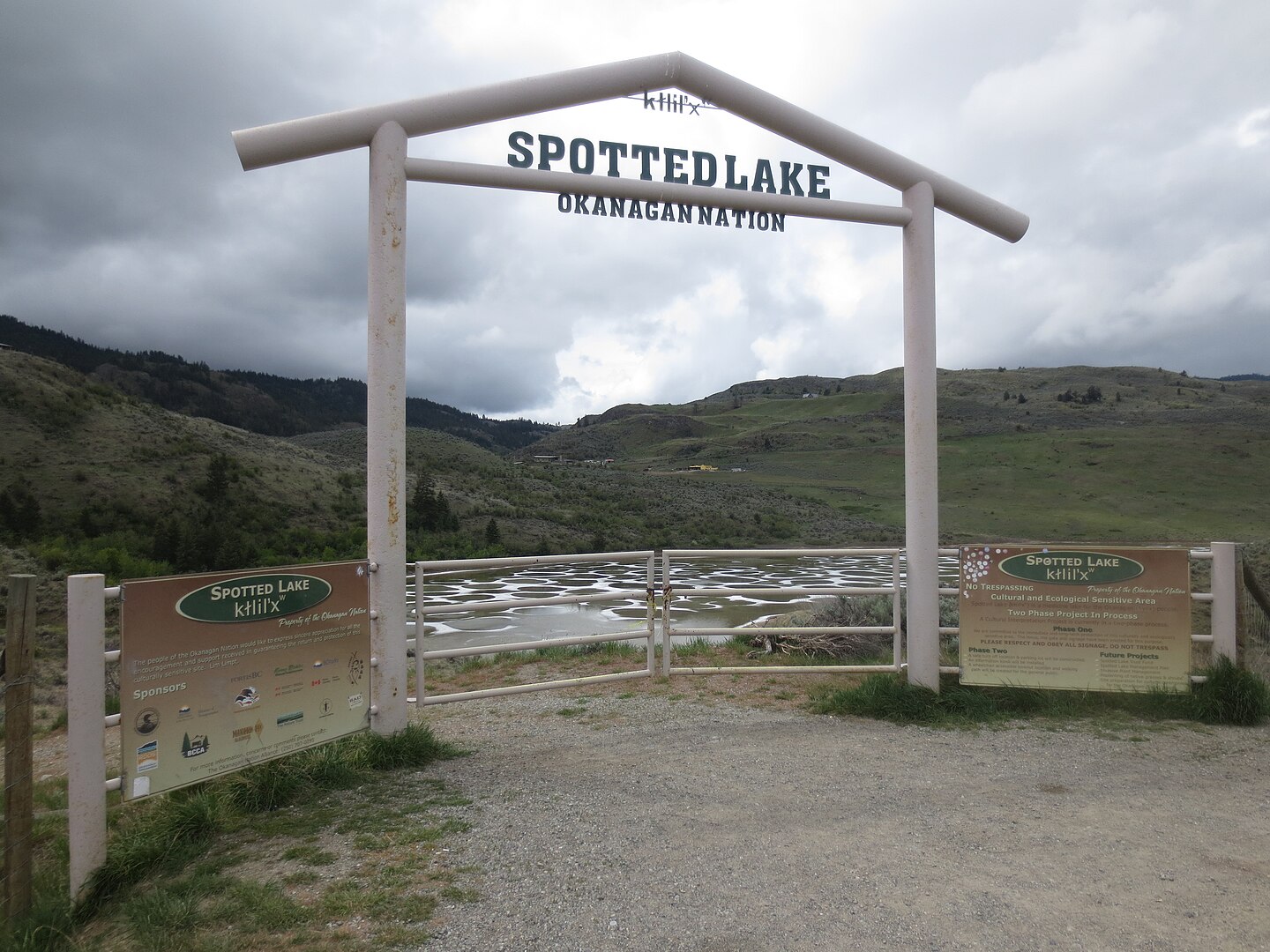
Spotted Lake, near Osoyoos, B.C., is one of the weirdest and coolest sights I’ve ever seen. In summer, it turns into a patchwork of blue, green, and yellow pools.
The lake holds crazy amounts of magnesium sulfate, calcium, and sodium sulfates. As the water evaporates in the summer heat, minerals separate into distinct, colorful circles.
Each spot has its own shade:
- Bright blue: magnesium sulfate
- Green: calcium
- Yellow: sodium
The Okanagan Nation protects Spotted Lake, recognizing its spiritual and healing importance.
Plan your visit between July and September—that’s when the patterns are sharpest. It’s a wild, almost alien landscape of blue pools and white mineral crust.
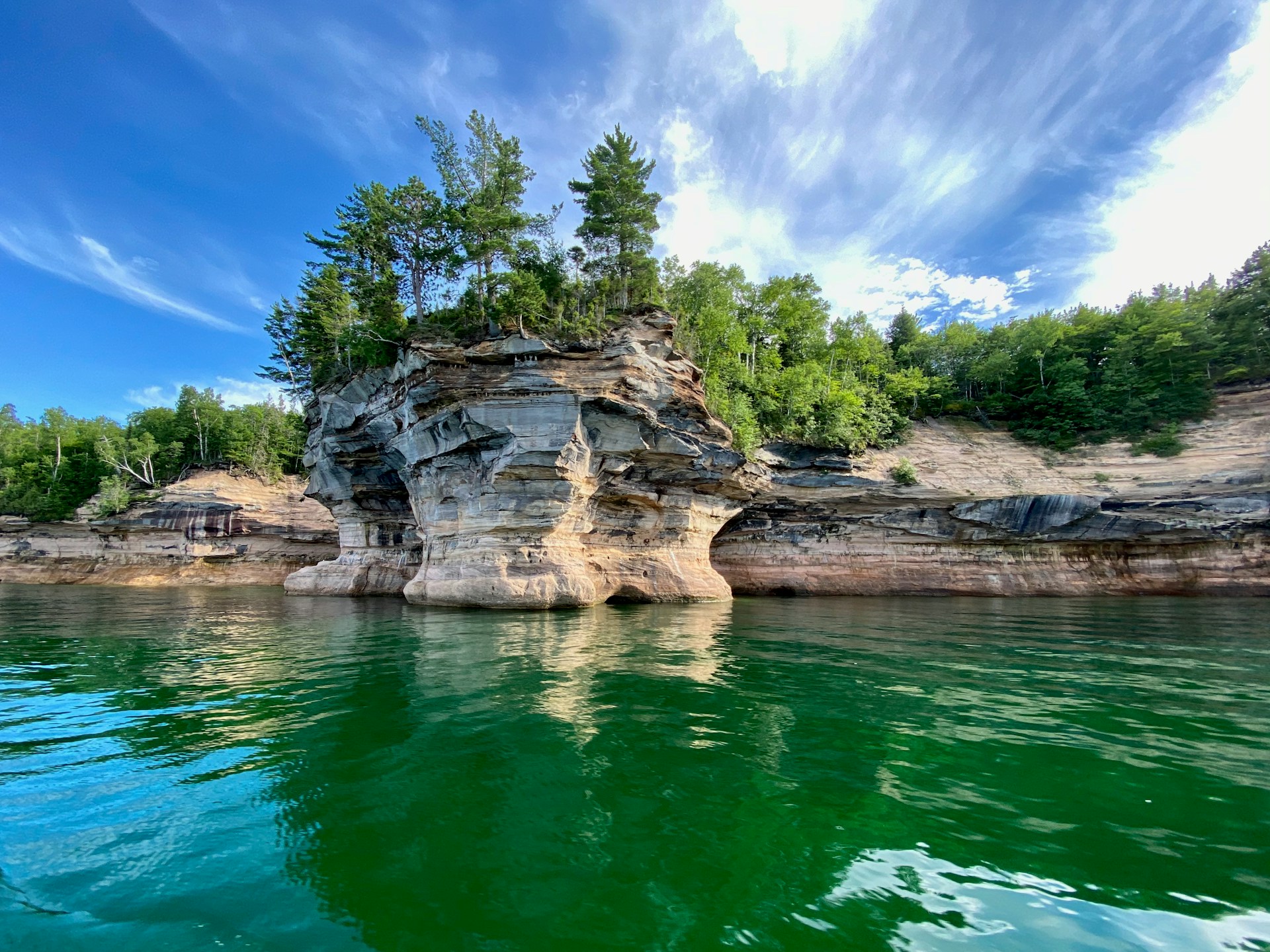
Lake Superior: The Inland Ocean
Lake Superior isn’t just a lake—it’s a full-on inland sea. Standing on its rocky shore, it’s hard not to feel tiny.
Its deep blue comes from sheer depth—1,332 feet at its deepest. That much water absorbs reds and bounces back pure blue.
What makes it special:
- 31,700 square miles of surface area
- Holds 10% of the world’s fresh surface water
- Water rarely tops 55°F
The clarity is unreal. On calm days, I can see down 25 feet or more. Cold water keeps the blue strong all year, making Lake Superior a freshwater sea that rivals any coast.
Planning Your Visit to Canada’s Most Beautiful Blue Lakes
Honestly, there’s nothing quite like seeing Canada’s bluest lakes for yourself. The best ones sparkle brightest at certain times of year, and you’ll want to plan ahead if you’re hoping to catch them at their most stunning.
These pristine waters really do rely on us showing a little care—responsible tourism keeps them crystal-clear for everyone who comes after.
Best Times to Experience Vibrant Blue Waters
If you’re after those jaw-dropping blue views, July through early August is your golden window. During these weeks, the water looks especially clear and there’s barely any algae around to cloud things up.
Lake Superior, for example, really shows off its blue-green glow when the weather stays calm in July and August. I’ve noticed storms don’t roll through as often then, which makes a big difference.
Mid-September to early October is another sweet spot. Fall brings crisp, clear skies, and that mix of blue water and fiery autumn leaves? Unreal.
Water temperature tips:
- Most lakes stay cold all year (think 10-15°C, even in summer)
- Swimming feels best in July and August, but it’s still chilly
- Wetsuits help a lot if you’ll be in the water for a while
Weather plays a huge role here. When the sun’s out and the wind is low, the lakes turn that electric blue everyone raves about. On cloudy days, the colors get a bit muted—so try to plan for sunshine if you can.
Ice usually melts off between late April and early June, depending on where you go. I always check local conditions before heading out early in the season.
Access and Activities Around Top Lakes
Killarney Provincial Park wants you to book camping spots in advance, and you can get in through George Lake or Widgawa Lodge. If you don’t have your own canoe, outfitters nearby have you covered.
Blue Lake Provincial Park (close to Vermilion Bay) has 203 campsites and rents out gear right on site. You can grab a canoe, kayak, or paddleboard straight from the park store.
If you’re feeling adventurous, Nadine Lake in Algonquin takes a multi-day canoe trip to reach. Access points include Brent, Kiosk, or Kawawaymog Lake—so you’ve got options.
Getting there:
- Car camping: Blue Lake, Pancake Bay, and Lake Superior parks all work well if you want to drive in
- Fly-in lakes: Try Agnes Lake (Quetico) or Sunnywater Lake (Temagami) for something wilder
- Multi-day paddling: Lakes like Nellie and Florence reward those willing to paddle a little longer
Top activities to try:
- Clear-bottom kayak tours at Georgian Bay (the views below are just as good as above)
- Snorkeling or scuba diving at Fathom Five Marine Park
- Snapping photos from those epic viewpoints—can’t resist
- Backcountry camping if you crave solitude on a remote lake
Most places have guides and outfitters ready to help with rentals or trips, so you don’t have to go it alone.
Conservation and Responsible Tourism
Book early and follow permit requirements. Trust me, those gorgeous blue lakes in Canada? They get crowded fast, especially in peak season. I always try to snag my campsite and permits months ahead—otherwise, you might miss out.
Practice Leave No Trace principles every single time you visit these fragile spots. The water’s so clear because there aren’t many nutrients in it, and even a little human impact can mess that up.
Water protection measures:
- Always use biodegradable soap, and do it at least 100 meters from the shoreline.
- Pack out all your waste, even those tiny food scraps you think won’t matter.
- Try not to stir up the lake bottom when you swim—sediments cloud the water and hurt the ecosystem.
Respect Indigenous territories and traditional lands. Many of these lakes mean a lot to First Nations communities, so it’s only right to honor that.
Support local conservation efforts by picking certified outfitters and eco-friendly places to stay. Some of my favorite spots work hand-in-hand with local parks to protect that unreal water quality.
Group size limits exist at most of these lakes. I always check the rules before heading out—nobody wants to get turned away at the last minute.
Stick to marked trails and campsites. It might sound strict, but it really helps prevent erosion and keeps those shorelines looking pristine.
Honestly, these blue lakes stay breathtaking only if we all do our part. One careless move can change the whole vibe—so why risk it?

_a_medicine_lake_for_the_Okanagan_people.JPG)