
Standing in the quiet piazza as the sun begins to rise, I watch golden light slowly illuminate the magnificent marble facade of Milan’s Duomo. The world’s largest church of its kind, the Gothic masterpiece transforms completely in the peaceful moments before the city awakens. The 157-meter-long cathedral, capable of holding 40,000 people, feels almost intimate when experienced in solitude at dawn.
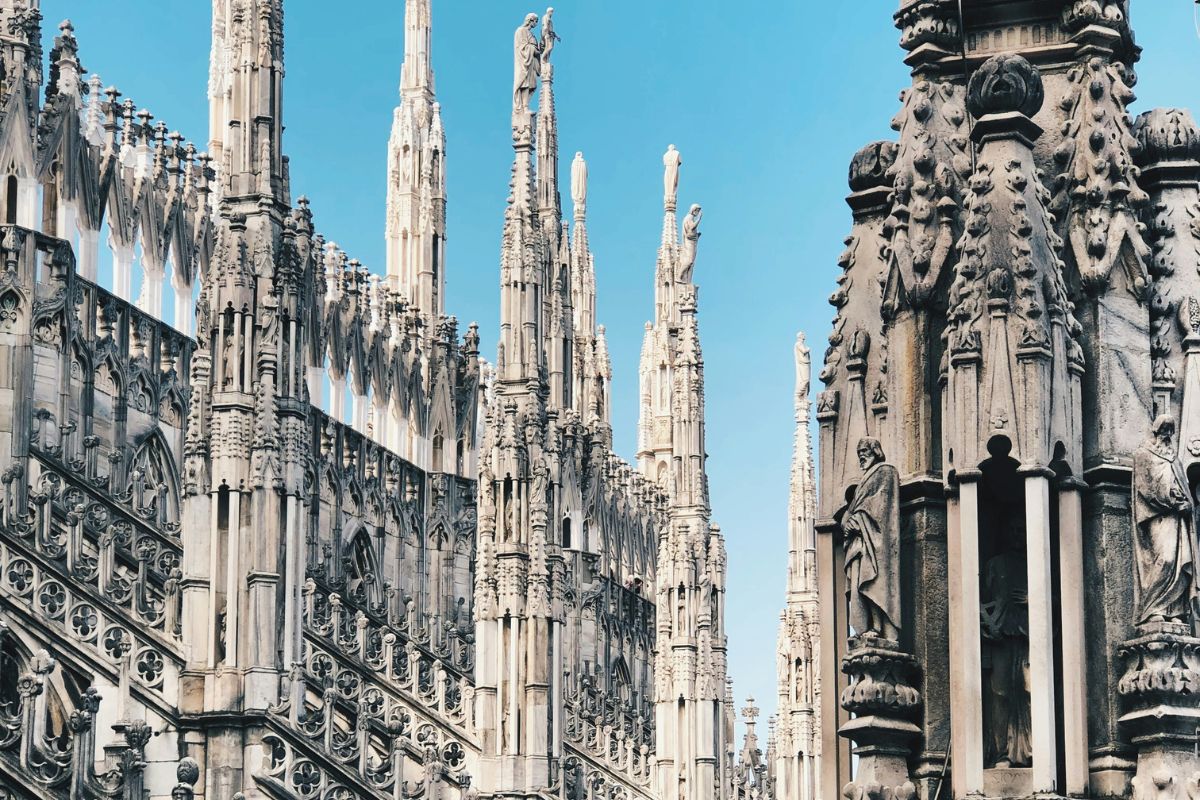
My footsteps echo through the empty square as I circle this architectural wonder with its forest of 135 marble spires reaching toward the sky. The morning light creates a dance of shadows across the intricate stonework, highlighting details that often go unnoticed during busy daytime hours. Many of these spires are currently undergoing restoration. The cathedral’s “Adopt a Spire” program allows visitors to contribute to preserving this 600-year-old treasure.
Inside, a unique feature awaits early visitors – the Meridian Sundial, installed by astronomers in 1786. As morning sunlight streams through specific windows, it creates a magical atmosphere unlike anything experienced during crowded afternoon tours. This ancient timekeeping device reminds me how the Duomo has silently witnessed centuries of Milan’s history while remaining a timeless symbol of Italian art and religious devotion.
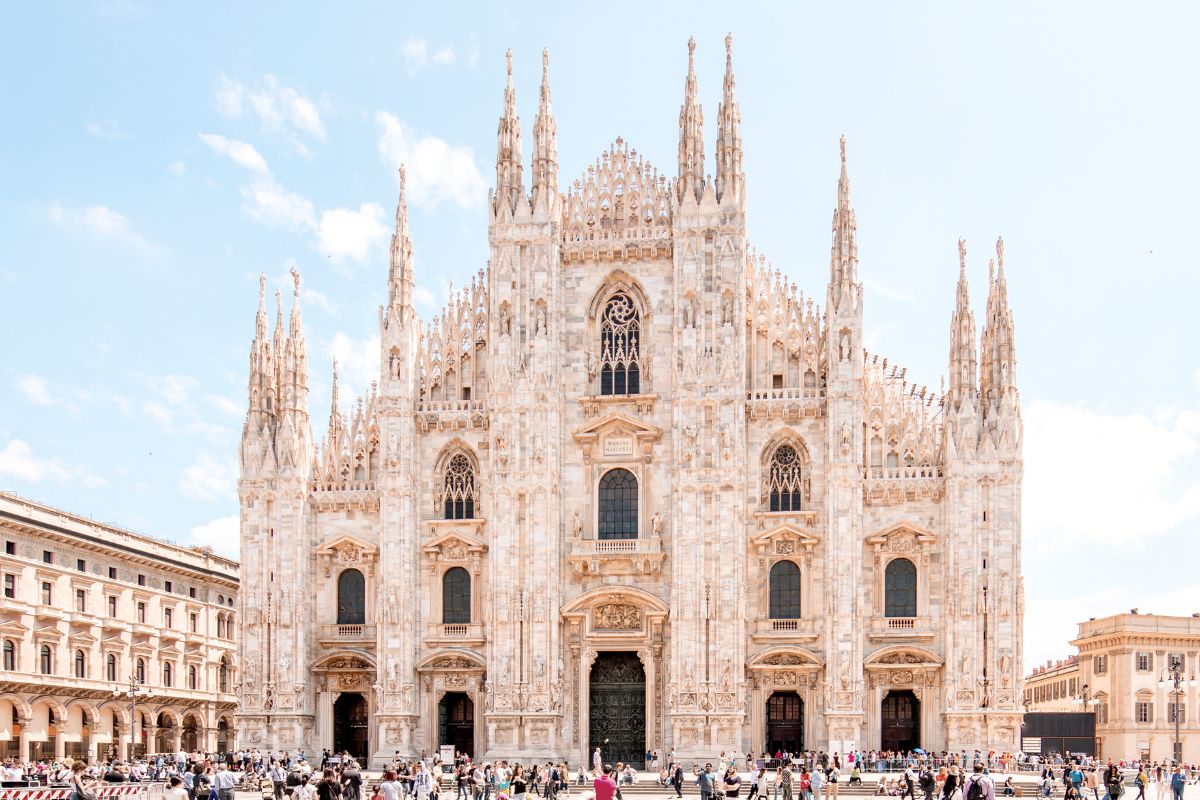
Dawn’s Embrace: Awakening with Milan’s Masterpiece
Standing before Milan’s Gothic masterpiece as daylight breaks offers a transformative experience, unlike any other time of day. The cathedral seems to wake up slowly, revealing its intricate details in the gentle morning light.
The Serenity of Solitude in a Gothic Marvel
I arrived at the Duomo just before sunrise, when the normally bustling piazza lay silent and empty. This rare moment of solitude allowed me to appreciate the cathedral’s massive scale without distractions.
The 158-meter-long structure loomed above me, its marble façade taking on a soft pink hue as dawn approached. What struck me most wasn’t just the building’s size, but the absolute quiet that surrounded it.
In these peaceful morning moments, I could hear my footsteps echo against the stones. The usual crowds of tourists and locals hadn’t yet arrived, creating a private audience with one of the world’s largest Gothic cathedrals.
Milan’s Duomo feels completely different at dawn. The building seems to whisper its 600-year history directly to you when no one else is around to listen.
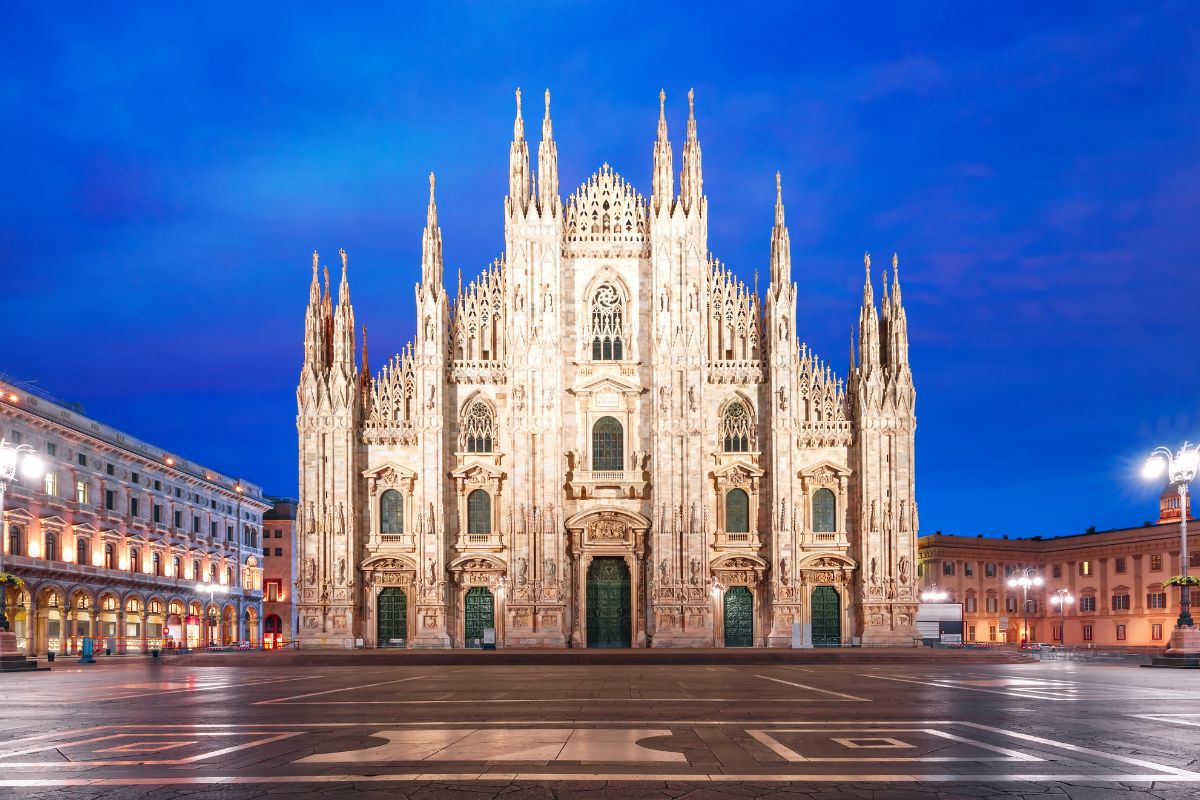
First Light on the Pinnacles: A New Perspective
As the sun broke over Milan’s horizon, its first rays illuminated the Duomo’s 135 delicate spires and countless statues. The cathedral has over 3,400 statues decorating its exterior—more than any other building in the world.
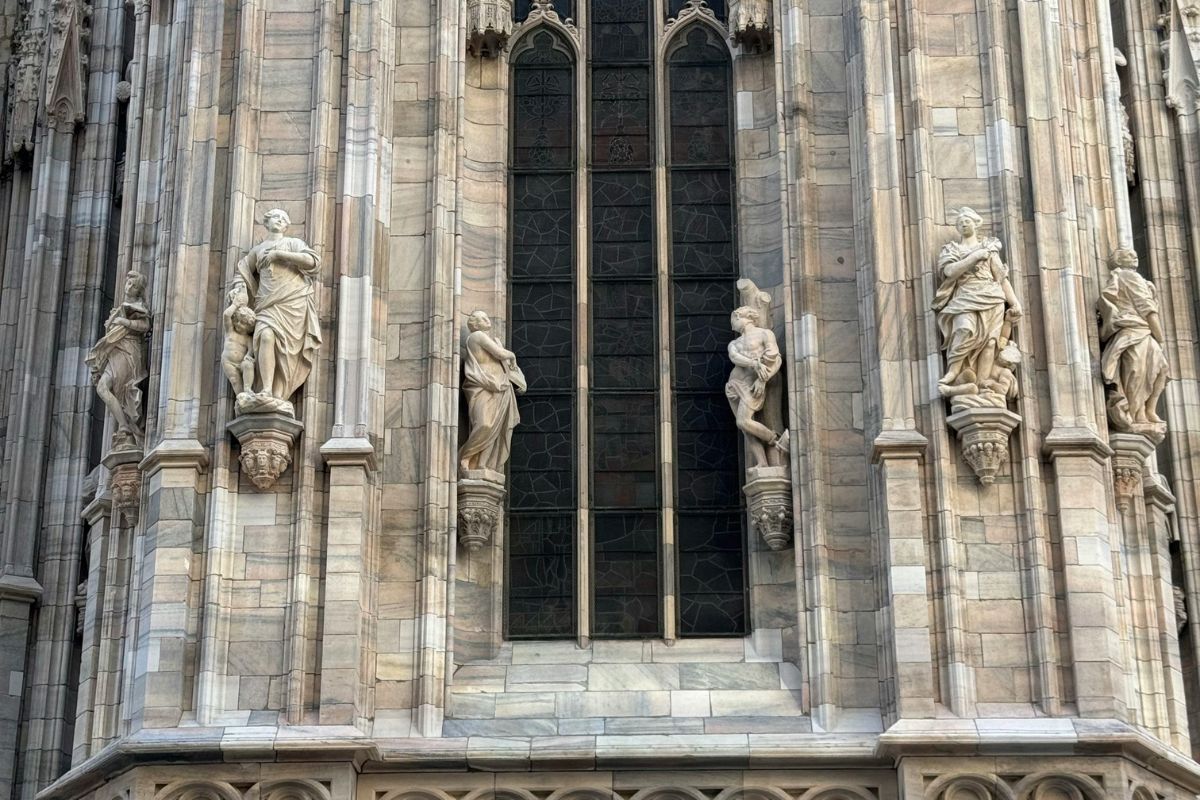
The morning light created dramatic shadows across the intricate carvings, highlighting details impossible to notice during busier hours. Each statue seemed to come alive, telling stories of saints, virtues, and biblical figures.
I watched in awe as the sun climbed higher, transforming the white marble to gold. The pinnacles reached toward the sky like a stone forest catching fire with the morning light.
This perspective revealed why the Duomo took nearly six centuries to complete. The level of craftsmanship visible at dawn—when the light hits just right—shows a dedication to beauty that transcends time.
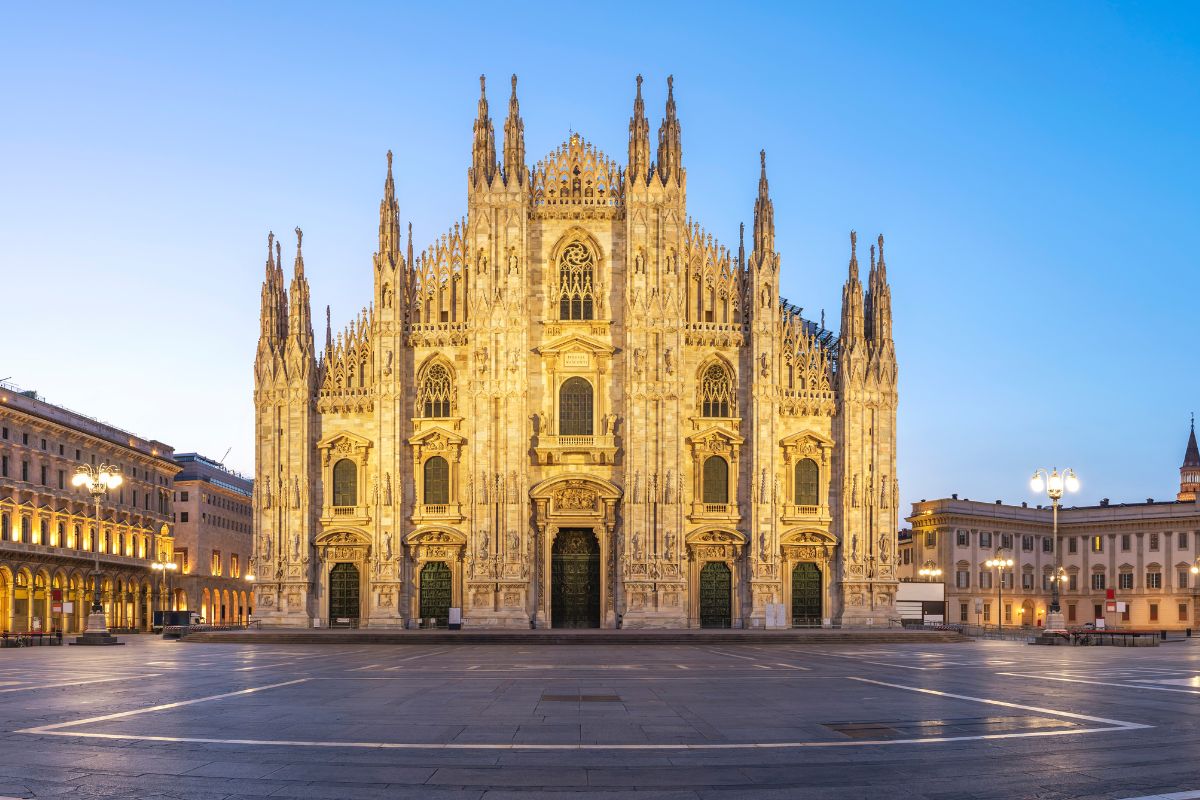
Unveiling History: The Duomo Through the Ages
Milan’s breathtaking cathedral stands as a testament to centuries of artistic vision, political power, and religious devotion. Its six-century construction period reveals a fascinating timeline of Milan’s evolution.
From Visconti to Sforza: Patrons of the Cathedral
The story of Milan’s Duomo begins in 1386 under the ambitious Visconti family. Gian Galeazzo Visconti initiated this massive project to compete with other Italian city-states and showcase Milan’s growing power and wealth.
I was amazed to learn that the cathedral’s construction spanned multiple ruling families. The Viscontis established the foundation and early structure, incorporating their family symbols into the stonework.
When the Sforza family took control of Milan in the 15th century, they continued the cathedral’s development with equal enthusiasm. Francesco Sforza and his successors funded new sections and artistic elements, ensuring the Duomo evolved with Milan’s changing political landscape.
Gothic Grandeur: Architectural Highlights
Walking through the Duomo, I’m always struck by its perfect embodiment of Gothic architecture on an Italian canvas. The cathedral’s soaring spires reach toward heaven, creating that distinctive silhouette recognizable worldwide.
The Duomo features over 3,400 statues, more than any other building in the world. These intricate sculptures depict biblical figures, saints, and mythical creatures.
What makes this cathedral unique is its marriage of northern European Gothic elements with Italian artistic sensibilities. The pink-hued marble from Lake Maggiore gives the structure its warm glow at sunrise and sunset.
The central spire, topped with the famous “Madonnina” golden statue, wasn’t completed until the 18th century. This 14-foot golden Madonna watches over the city from nearly 356 feet above the square.
Artistic Rhythms: Milan’s Pulse in the Duomo’s Shadow
The Duomo stands not just as a religious monument but as the beating heart of Milan’s artistic identity. Around its magnificent Gothic structure, art flows through the city’s veins connecting centuries of creative expression.
Leonardo’s Legacy: A Stone’s Throw from ‘The Last Supper’
Walking away from the Duomo, I find myself drawn to Santa Maria delle Grazie, home to Leonardo da Vinci’s masterpiece, “The Last Supper.” The proximity of these two landmarks creates a perfect art pilgrimage route.
Leonardo’s presence remains palpable in Milan. His engineering genius and artistic vision influenced not just this fresco but the entire city’s approach to art and beauty.
What strikes me most is how Leonardo captured human emotion in such a sacred space. His work bridges the religious and the human—much like the Duomo itself does with its countless statues depicting both biblical figures and everyday people.
The Duomo and Leonardo’s masterpiece bookend Milan’s Renaissance golden age. I recommend booking “The Last Supper” tickets months in advance—they sell out quickly!
Renaissance to Modern: The Evolving Art Scene
Milan’s art didn’t stop with the Renaissance. Today, the area surrounding the Duomo buzzes with galleries and exhibitions that blend historical reverence with cutting-edge creativity.
The Brera district, just north of the cathedral, houses the Pinacoteca di Brera with its remarkable collection of Italian Renaissance and Baroque masterpieces. I love wandering these galleries before returning to the Duomo’s shadow.
Modern art finds its place too. During Fashion Week, the Duomo Square transforms into an outdoor runway. The cathedral’s Gothic spires provide a dramatic backdrop for contemporary expression.
What fascinates me most is how Milan’s artists have always found inspiration in the Duomo. From the 1786 Meridian Sundial built by Brera astronomers to today’s photographers capturing the cathedral’s 3,400 sculptures, the monument continues to fuel creativity.
Spiritual Echoes: The Duomo as a Pillar of Faith
The Duomo of Milan stands as more than just an architectural marvel—it embodies centuries of faith and devotion. Walking through its massive doors, I felt the weight of six centuries of spiritual history enveloping me in something greater than myself.
Christian Life and the Archbishop’s Influence
The Archbishop of Milan has traditionally held a central role in shaping the cathedral’s spiritual importance. As I wandered through the cathedral’s five magnificent aisles, I observed how the Archbishop’s influence extends beyond mere leadership to embodying the connection between the faithful and their place of worship.
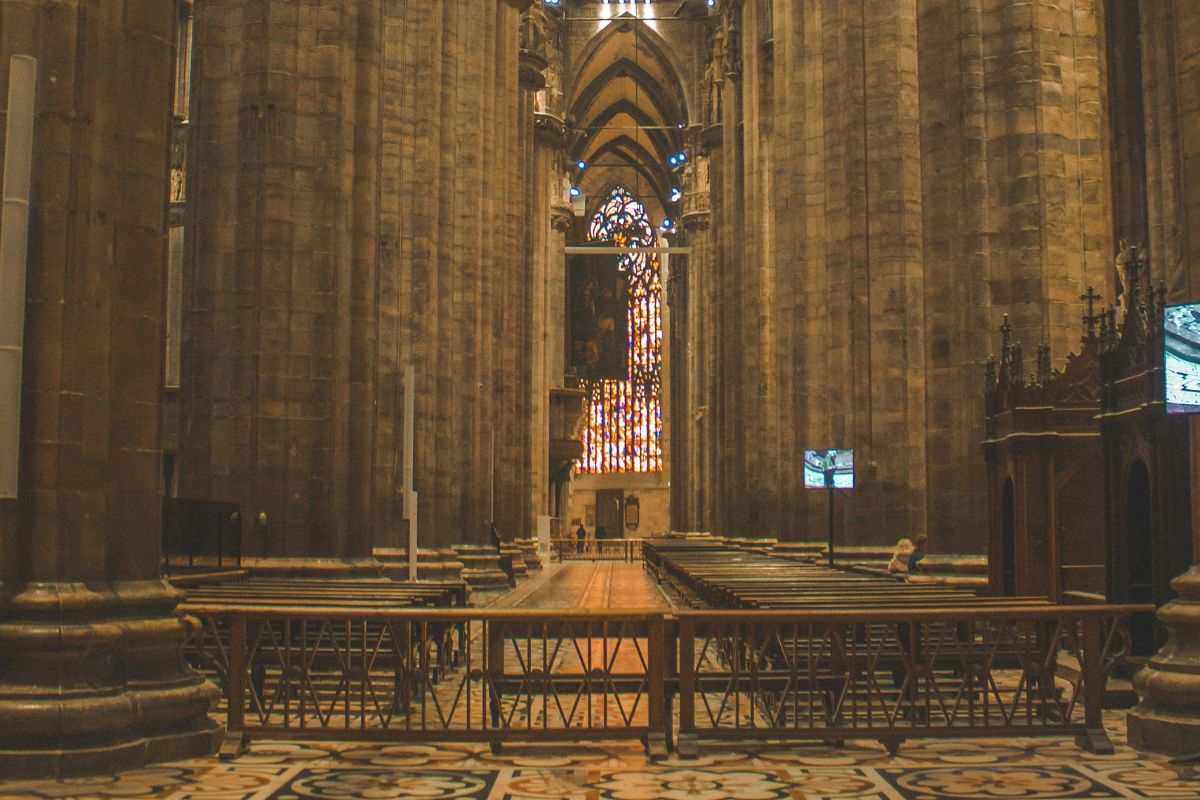
The cathedral serves as the Mother Church of the Diocese, where important religious ceremonies unfold throughout the year. During my visit, I noticed local worshippers praying beneath the same soaring 149-foot central nave that tourists admired for its beauty.
What struck me most was witnessing restoration work happening alongside active prayer. Craftspeople carefully preserved historic elements while parishioners participated in timeless rituals just steps away—a perfect illustration of living faith.
A Calendar of Cathedrals: Celebrating Advent to Christmas
The Duomo transforms during the Advent season, becoming a beacon of anticipation and hope for believers. The space takes on new meaning as the Christian calendar progresses toward Christmas, with special masses and ceremonies marking the journey.
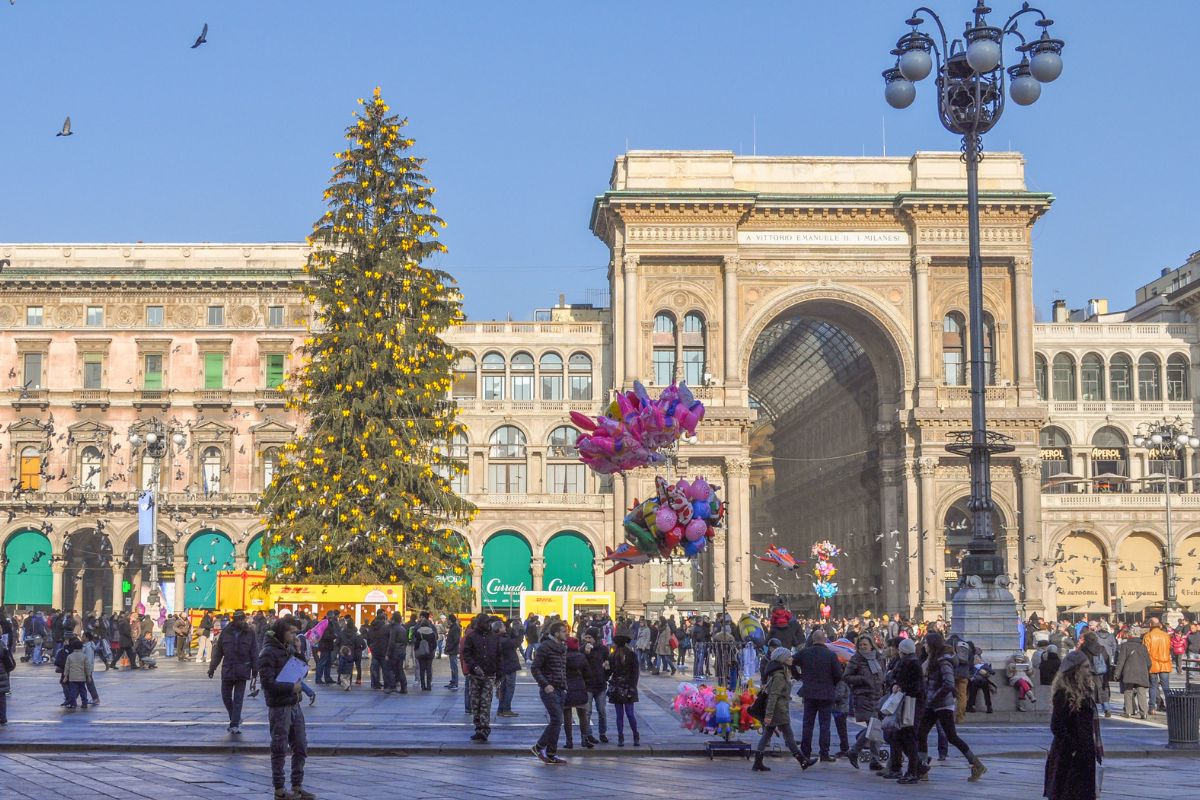
A magnificent Christmas tree often graces the cathedral plaza during December, drawing both the faithful and curious visitors. The contrast of the ancient stone façade with twinkling modern lights creates a timeless scene that I found utterly breathtaking at dawn.
Inside, the statues of saints and apostles seem to come alive during Christmas celebrations, standing as symbolic guardians pointing toward the Kingdom of Heaven. The detailed religious carvings that might seem merely decorative during other times become powerful storytellers of the Nativity.
Beyond the Duomo: Milan’s Cultural Tapestry
Milan offers much more than its magnificent cathedral. The city pulsates with literary history and Renaissance influences that have shaped Italy’s cultural identity for centuries.
Literary Milan: Salons and Reading Rooms
Walking through Milan’s historic center, I discovered a network of literary salons and reading rooms that once hosted Italy’s greatest writers. The city’s café culture has deep roots in intellectual exchange. At Caffè Cova, established in 1817, I sipped espresso where luminaries like Giuseppe Verdi once gathered.
Milan’s Biblioteca Ambrosiana houses over a million books and manuscripts. Founded in 1609, it’s one of Europe’s oldest public libraries. I spent hours browsing rare texts and illustrations.
The Brera district feels like a literary time capsule with its narrow streets and hidden bookshops. Many still host poetry readings and literary discussions that keep Milan’s intellectual tradition alive.
Education and Aesthetics: The Italian Renaissance Revisited
Milan’s Renaissance heritage remains vibrant in its educational institutions. The Brera Academy, founded in 1776, continues to train artists in classical techniques while embracing modern innovations.
The Pinacoteca di Brera museum offers an intimate look at Renaissance masterpieces. I stood mesmerized before Mantegna’s “Lamentation over the Dead Christ.” I appreciated the mathematical precision and emotional depth.
Leonardo da Vinci’s influence permeates Milan’s educational approach. His notebooks, with their marriage of art and science, inspired the city’s technical schools.
The Sforza Castle houses educational workshops where I watched artisans practice Renaissance techniques. These traditions connect modern Milanese to their artistic roots through hands-on learning.
