
Visiting the Leaning Tower of Pisa is on many travelers’ bucket lists, but timing is everything if you want to enjoy this iconic landmark without fighting through crowds. After several visits to Pisa over the years, I’ve discovered that the early morning hours just after opening (around 9 AM) or the last two hours before closing offer the most peaceful experience.
The best time to visit the Leaning Tower of Pisa is either right when it opens in the morning or shortly before sunset when the golden light bathes the Tower and the Monti Pisani mountains create a stunning backdrop.
The difference between a morning and afternoon visit can be striking. When I arrived at 9 AM during my last trip, I was able to take photos without strangers in every shot and climb the tower without feeling rushed. Tour buses typically arrive mid-day, filling the area between 11 AM and 3 PM with large groups that can make your visit less enjoyable.
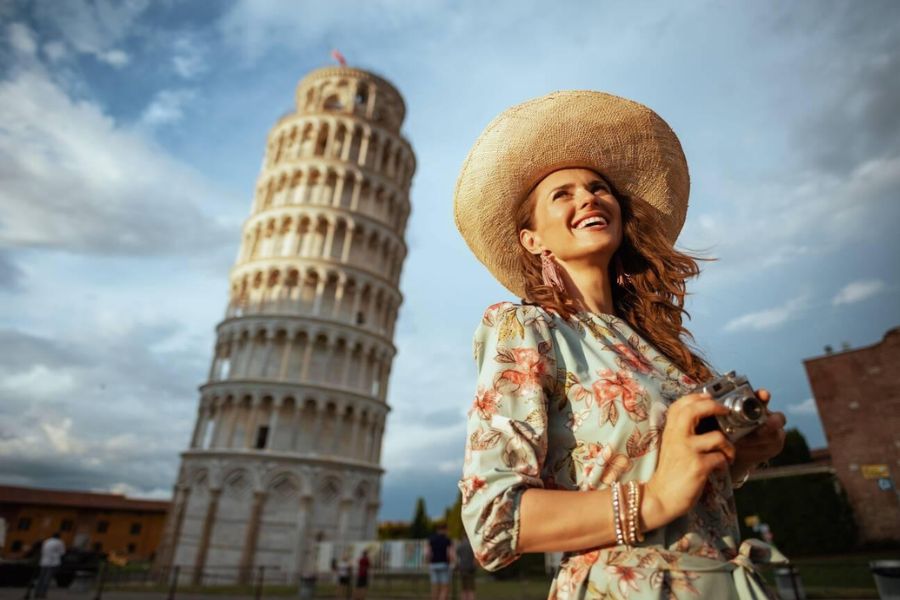
Remember that the Tower is just one part of the remarkable Piazza dei Miracoli. I recommend setting aside at least 1.5 to 2 hours to properly explore both the cathedral and baptistry, which are architectural marvels in their own right. The entire complex deserves your attention, and with the right timing, you can appreciate these incredible structures in a much more intimate setting.
The History of Pisa’s Iconic Tower
The Leaning Tower of Pisa stands as one of Italy’s most recognizable monuments, with a fascinating story that begins in the 12th century. Its famous tilt wasn’t planned but became the very feature that made it world-famous.
Understanding the Tilt: Construction and Restoration
Construction of the tower began in 1173 as part of Pisa’s Cathedral complex. The tower started leaning during construction because the soft ground beneath couldn’t properly support its weight.
Builders noticed the tilt after completing just three floors. They tried to compensate by making one side of the upper floors taller than the other, giving the tower its curved shape. Despite these efforts, the lean continued to worsen over centuries.
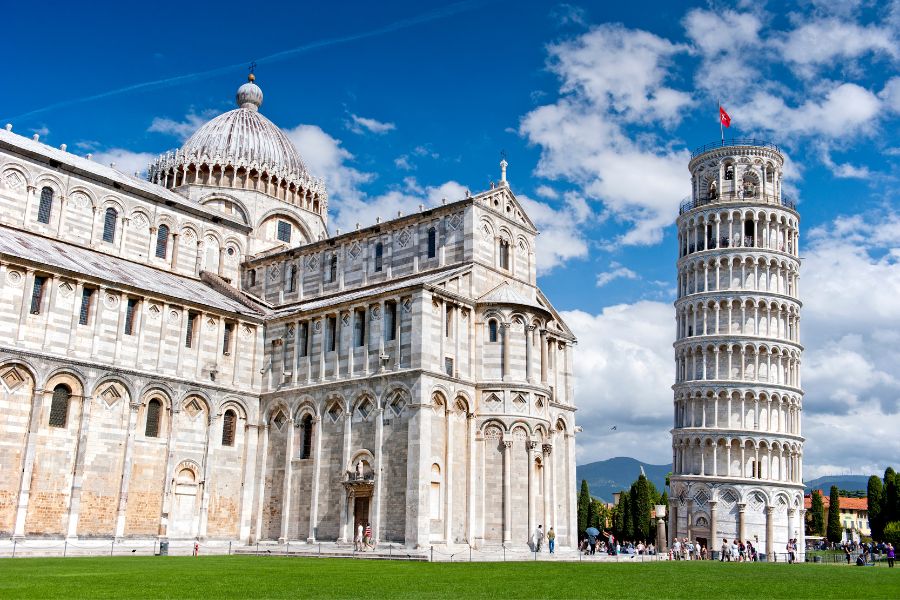
By the late 20th century, the tilt had become dangerous. A major restoration project from 1990 to 2001 reduced the lean by about 45 centimeters, stabilizing the tower while preserving its iconic tilt. Engineers carefully removed soil from beneath the higher side, allowing the tower to slightly shift back.
Galileo Galilei and the Tower’s Scientific Legacy
The tower isn’t just an architectural wonder—it’s also linked to scientific history through Pisa’s famous son, Galileo Galilei. According to popular stories, Galileo used the tower for his gravity experiments in the late 16th century.
He allegedly dropped objects of different weights from the leaning tower to demonstrate they would hit the ground at the same time, challenging Aristotle’s theories about falling objects. While historians debate whether this experiment actually happened, the tower remains symbolically connected to this pivotal moment in scientific history.
The tower’s unique tilt also provided scientists with an ideal laboratory for studying soil mechanics and structural engineering. Modern restoration efforts taught engineers valuable lessons about preserving historic buildings on unstable foundations.
Planning Your Visit
A successful trip to the Leaning Tower of Pisa requires thoughtful planning. Knowing when to arrive, how to secure tickets, and understanding the opening schedule will help you enjoy this iconic landmark without frustration.
Best Times to Avoid the Crowds
I’ve found that early mornings before 9:00 AM offer the most peaceful experience at the Leaning Tower. The site becomes noticeably busier after 11:00 AM when tour buses arrive.
Mid-week visits (Tuesday through Thursday) typically have fewer visitors than weekends. During summer months, I recommend coming at sunset when the Monti Pisani mountains glow with a beautiful golden color.
The off-season (November to March) brings significantly smaller crowds. However, be prepared for cooler weather and occasional rain.
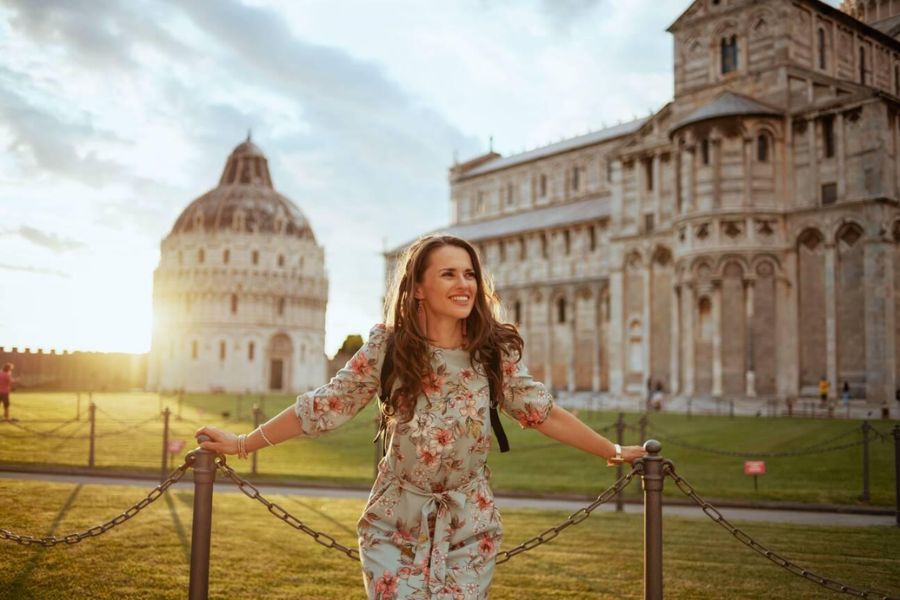
If you’re visiting during peak season (June-August), arriving right when the tower opens or during lunchtime (1:00-2:00 PM) can help you avoid the worst crowds.
Tickets and Admission: Booking Your Spot
I strongly recommend booking your Leaning Tower tickets online in advance. This saves time and guarantees your entry, especially during busy periods.
Standard admission costs about €20 per person to climb the tower. The ticket includes a 30-minute guided tour in groups of 40 people.
Ticket options:
- Tower only: €20
- Cathedral + Baptistery: €5-10
- Combined ticket (all monuments): €25-30
Children under 8 aren’t permitted to climb the tower. For those between 8-18, adult supervision is required.
Ticket reservations can be made up to 20 days in advance on the official website. Print your confirmation or have it ready on your phone.
Opening Times: Aligning With Your Schedule
The Leaning Tower operates on seasonal hours that you should check before visiting:
- Summer (April-September): 9:00 AM to 8:00 PM
- Winter (October-March): 9:00 AM to 6:00 PM
I’ve learned that the last entry is typically 30 minutes before closing time. Plan to spend about 30-45 minutes for climbing the tower and enjoying the views.
The Cathedral complex, including the Baptistery, usually opens earlier (around 8:00 AM) and closes slightly earlier than the tower. If you want to see everything, I recommend allowing at least 2-3 hours for the entire Piazza dei Miracoli.
Remember that the tower might close during severe weather for safety reasons. Check the official website if conditions look questionable.
Exploring the Piazza dei Miracoli
The Piazza dei Miracoli is truly one of Italy’s most stunning architectural ensembles. This incredible “Field of Miracles” houses several magnificent monuments that showcase Pisa’s historical significance and artistic achievements.
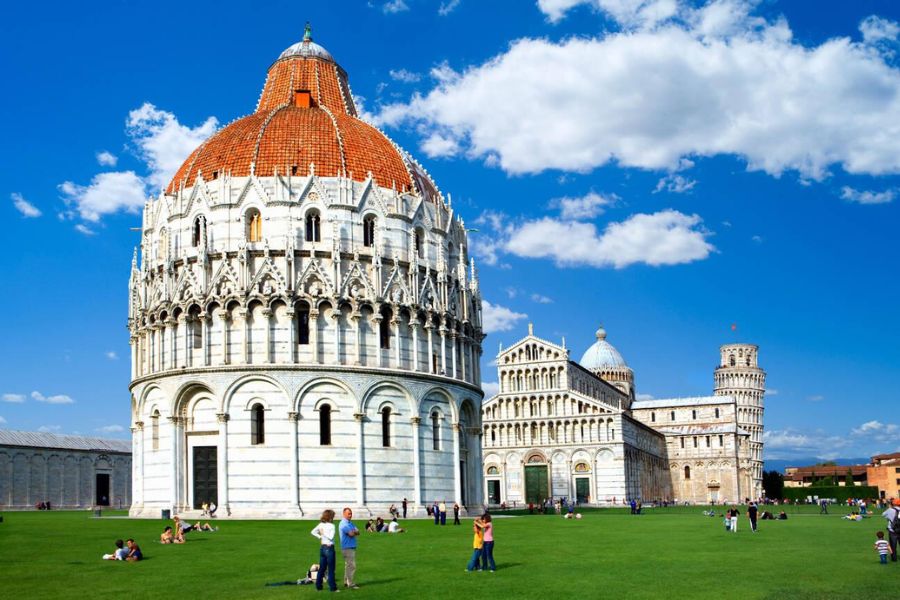
Discover the Cathedral and Its Baptistery
I arrived at the Pisa Cathedral early in the morning and was immediately struck by its impressive Romanesque architecture. The cathedral’s stunning façade features alternating bands of white and gray marble that glisten in the sunlight.
Inside, I found the ornate pulpit by Giovanni Pisano particularly breathtaking. The detailed biblical scenes carved into the marble tell stories that have captivated visitors for centuries.
The Baptistery stands opposite the cathedral and is equally impressive. Its dome creates unique acoustics where even whispers can be heard across the chamber. I was lucky enough to witness a demonstration by one of the guards who sang a few notes, creating a harmonic echo that lingered for several seconds.
Allow at least 30 minutes for the cathedral and another 20 for the Baptistery. Both structures showcase the wealth and artistic vision of medieval Pisa.
Visiting the Camposanto Monumentale
The Camposanto Monumentale felt like stepping into a peaceful haven. This monumental cemetery, believed to contain soil from Golgotha, features a rectangular cloister with beautiful Gothic arcades.
What makes this site special are the remarkable frescoes that once covered the walls. Though damaged during WWII, the restoration work has brought many back to life. The “Triumph of Death” fresco particularly caught my attention with its powerful imagery.
I spent about 40 minutes exploring the Camposanto. The marble floor tombs and sarcophagi of noble Pisan families tell stories of the city’s past. The tranquil central courtyard provides a moment of reflection away from the crowds gathering at the Leaning Tower.
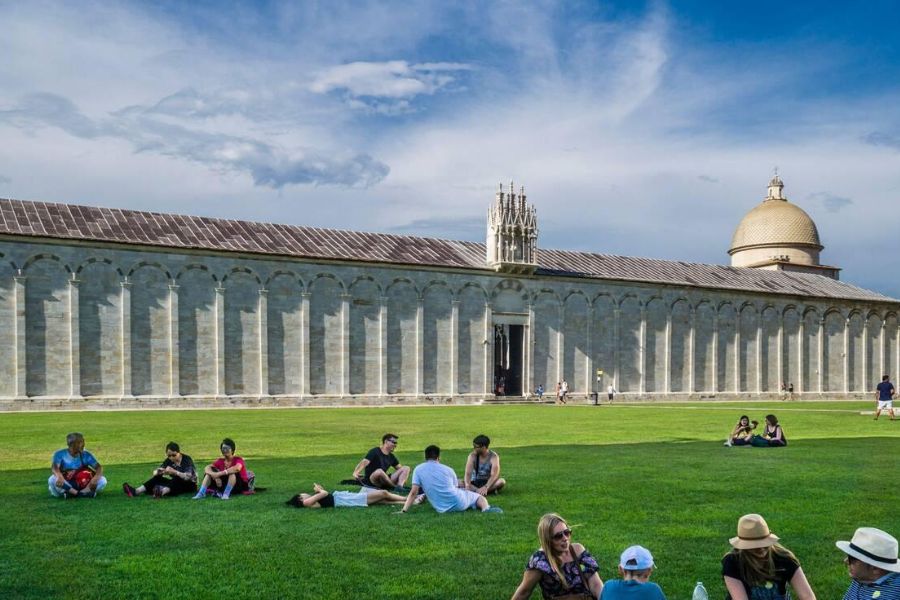
Morning visits offer the best light for appreciating the detailed architecture and the partially restored frescoes.
Wandering Via Santa Maria to Piazza del Duomo
After exploring the main monuments, I took a leisurely stroll down Via Santa Maria. This charming street connects the Piazza dei Miracoli to the Piazza del Duomo and offers a glimpse into local Pisan life.
The street is lined with shops selling souvenirs, local crafts, and delicious gelato. I stopped at a small café for an espresso and watched locals and tourists mingle along the cobblestone pathway.
As I approached Piazza del Duomo, the atmosphere changed from touristy to more authentic. This square offers a different perspective of Pisa’s architectural beauty without the crowds.
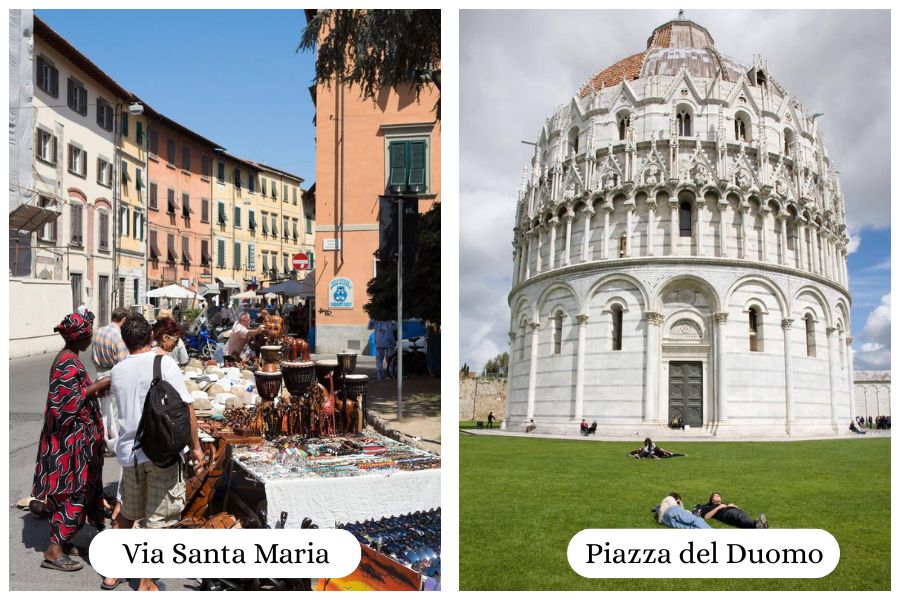
The walk takes about 15-20 minutes if you’re moving directly, but I’d recommend allowing an hour to enjoy the shops and take photos. Early evening is magical here, as the setting sun casts a golden glow on the ancient buildings.
Ascending the Leaning Tower
Climbing the Leaning Tower of Pisa is both a physical journey and a historical adventure. The unique slant of this famous bell tower creates an unforgettable experience that’s worth every step.
The Experience of Climbing the Tower
The climb begins with timed entry tickets, which I strongly recommend booking in advance. Only 45 people can enter every 30 minutes, making early morning (before 10 AM) the ideal time to avoid crowds.
The spiral staircase consists of 294 marble steps that wind their way to the top. What makes this climb special is the unusual sensation – you can feel the tower’s tilt as you ascend! Sometimes you’ll lean into the wall, and other times away from it.
The worn marble steps tell stories of centuries of visitors. They’re smooth from countless footsteps, with visible indentations on the inner edges.
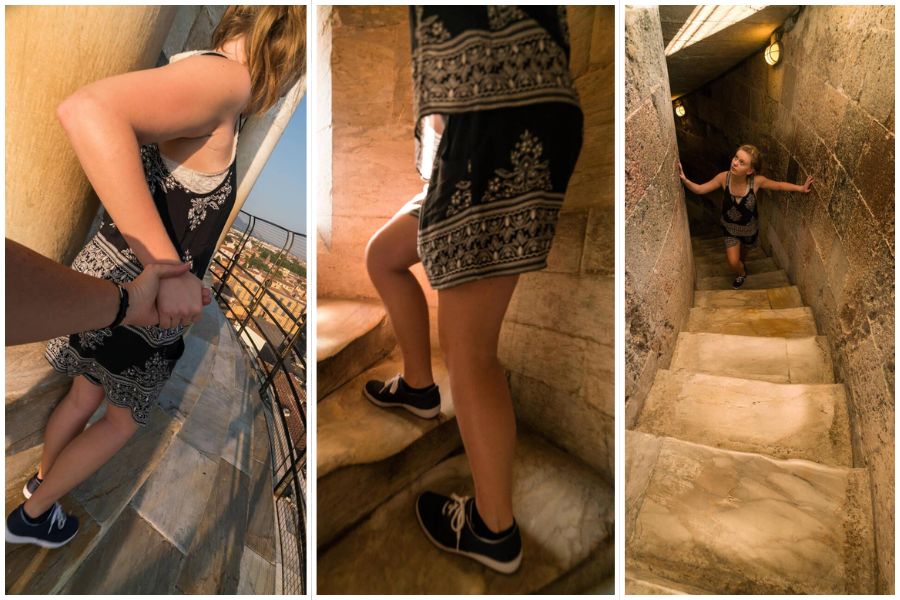
For safety, bags must be stored in lockers before climbing, and children under 8 aren’t permitted. The climb takes about 30 minutes with stops to catch your breath and admire the interior.
The Unparalleled Views from the Top
Reaching the top of the Leaning Tower rewards you with breathtaking panoramic views that simply can’t be matched elsewhere in Pisa.
The bell chamber houses seven bells, each representing a musical note. The largest bell weighs over 3.5 tons! From the viewing platform, I could see the entire Square of Miracles spread below me, with the Cathedral and Baptistery forming a stunning white marble tableau.
On clear days, the vista extends to the Apennine Mountains and even the Mediterranean Sea. The unique tilted perspective gives photos taken from here a surreal quality that friends will immediately recognize.
The best light for photography comes in the early morning or late afternoon when the sun casts dramatic shadows across the square. Take your time at the top – the 30-minute time slot gives you plenty of moments to soak in these once-in-a-lifetime views.
Beyond the Tower: Pisa and Tuscany
Tuscany offers so much more than just the iconic leaning tower. The region’s rolling hills, historic cities, and hidden gems make it worth extending your stay beyond a quick photo op in Pisa.
The Charm of Lucca and Florence
Just a short train ride from Pisa, Lucca captured my heart with its perfectly preserved Renaissance walls. Unlike many Italian cities, you can walk or bike along the entire 3-mile circuit, enjoying stunning views of both the city and surrounding countryside.
Florence, the crown jewel of Tuscany, deserves at least a full day of exploration. I recommend starting at the Duomo early to beat crowds, then wandering toward Ponte Vecchio. The Uffizi Gallery houses masterpieces by Botticelli and da Vinci, but book tickets online weeks in advance.
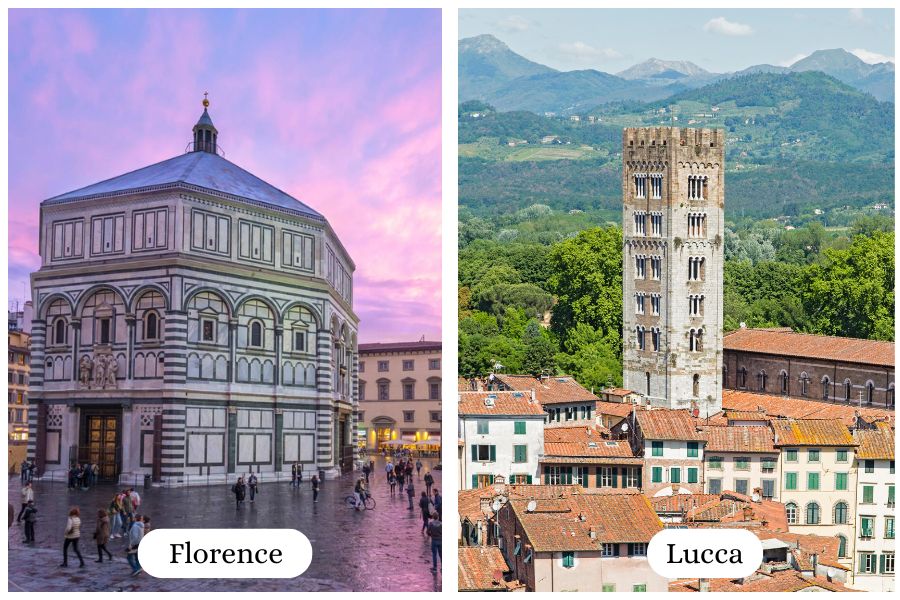
My favorite Florence memory? Climbing to Piazzale Michelangelo at sunset for panoramic views that make those crowded streets worth navigating.
Pisa Beyond the Square of Miracles
Pisa surprised me with its authentic Italian charm once I ventured beyond the touristy tower area.
The Piazza Vittorio Emanuele II offers locals-only vibes. I enjoyed espresso for half the price of those near the tower.
Don’t miss San Michele degli Scalzi with its own subtle lean and virtually no tourists.
The church of San Nicola, tucked away in the city center, showcases beautiful medieval architecture without the crowds.
Pisa Airport connects to major European cities for convenient travel.
I stayed an extra night near the Arno River. Morning walks revealed a student-filled city with vibrant markets and local energy completely different from the tourist hotspots.
