
Tucked away in the southeastern Aegean Sea, Astypalea stole my heart the instant I glimpsed its butterfly-shaped outline from the ferry. This hidden gem throws together the classic whitewashed Cycladic look with the down-to-earth spirit of the Dodecanese, making it feel like nowhere else in Greece.
While most travelers flock to packed Mykonos or Santorini, I found something far more magical on this secluded island.
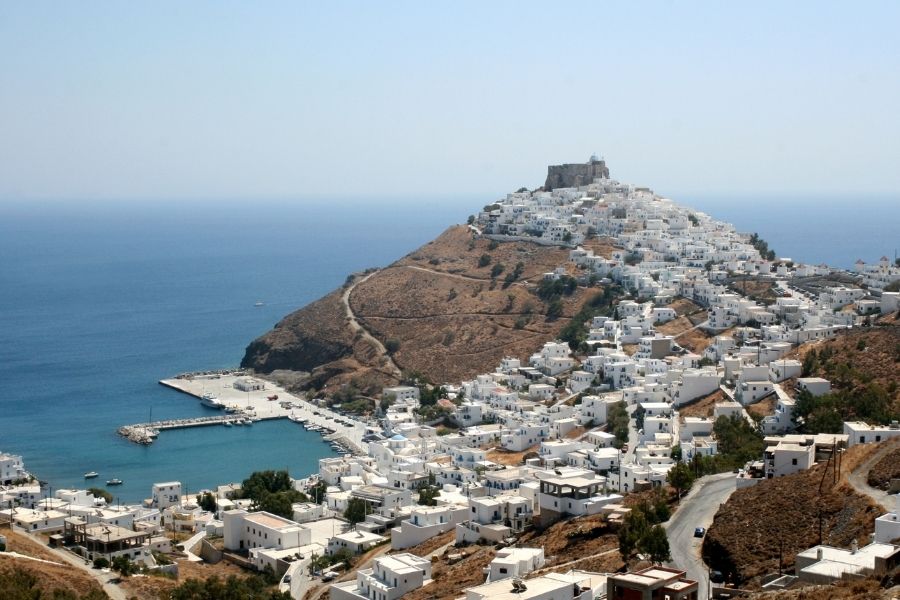
Astypalea stands out because it’s managed to dodge the mass tourism wave, yet still has everything you could want from a Greek island escape. Chora, the main town, climbs steeply from the sea—white houses tumbling down the hillside, all crowned by a medieval castle that gazes out over those impossibly blue waters.

I wandered through ancient bath houses with beautiful mosaics and stumbled onto empty beaches where I didn’t see another soul for hours. Astypalea offers that real-deal Greek island vibe that’s getting harder and harder to find. Sometimes, the best places are the ones you’ve barely even heard about.
Astypalea: The Butterfly-Shaped Gem of the Aegean
People call Astypalea the “Butterfly of the Aegean” because, from above, its twin-lobed shape really does look like butterfly wings. You can spot this quirky geography on any map, and it’s honestly kind of mesmerizing.
This out-of-the-way island sits at the crossroads of two legendary Greek island groups, so it blends Cycladic and Dodecanese cultures in a way I haven’t seen anywhere else.
Origins of the Butterfly Island Name
When I first looked at Astypalea from the plane window, the butterfly comparison jumped out at me. The island splits into two main parts, joined by a skinny strip of land that forms those unmistakable “wings.”
The western side has Chora and most of the villages. The eastern wing? Much wilder, less developed, and honestly, a bit mysterious.
Locals have called it the butterfly for generations, and now it’s even the island’s official tourism slogan. You’ll see that nickname everywhere—in brochures, on websites, and even painted onto little boats bobbing in the harbor.
That narrow “waist” between the wings forms two separate bays, so Astypalea gets more sheltered anchorages than your typical round island. It also means the coastline stretches on and on, making the place feel bigger than it is.
Aegean Location and Dodecanese-Cycladic Fusion
Astypalea floats in the southeastern Aegean Sea, wedged between Kos and Amorgos. It’s officially part of the Dodecanese, but it’s so close to the Cyclades that the influences blur together.
I’ve always been fascinated by this mix. The architecture screams Cycladic style—white houses, blue shutters, the works. But then you’ll notice Dodecanese touches in the traditions and even the food.
Because it sits far from the mainland and the usual tourist routes, Astypalea keeps its authentic character. Overdevelopment hasn’t really touched it.

Ferries come from both Dodecanese and Cycladic ports, but getting here takes a bit more effort than the big-name islands. That’s probably why crowds haven’t overrun it.
Astypalea and Its Place in the Greek Islands
Out of Greece’s 200+ inhabited islands, Astypalea stands apart. While places like Mykonos and Santorini get slammed with tourists, Astypalea welcomes just a trickle by comparison.
You’ll meet plenty of young Greek travelers and international visitors who crave something real, not just Instagrammable. There’s only one campsite and just enough hotels and rooms to keep things cozy.
With about 97 square kilometers and 1,300 residents, Astypalea sits right in the middle size-wise for the Dodecanese. It’s bigger than Symi, but nowhere near as sprawling as Rhodes or Kos.
Fishing, farming, and small-scale tourism keep the local economy ticking. Unlike the resort-heavy islands, Astypalea still has working farms and real village life. That’s a big part of what makes it so appealing if you’re after the genuine Greek island experience.
Exploring Chora: Where Cycladic Whitewash Meets Dodecanese Spirit
Chora sprawls across the hillside, its white cube houses popping against the backdrop of a centuries-old Venetian fortress. The mix of architectural styles turns this capital into one of the most photogenic spots I’ve ever seen.
Chora’s Unique Cycladic Architecture
The main town looks just like you’d imagine a Cycladic island should. White cubes tumble down the slopes, neat and geometric.
But Chora has its own twist. Classic Cycladic shapes—sharp lines, blazing white—blend with Dodecanese touches. You’ll spot pastel trims, bigger windows, and quirky decorative details that break up the uniformity.
Many homes rise three or four stories, stacked like towers with different families on each floor. It’s a style that just sort of happened, thanks to the island’s crossroads location.
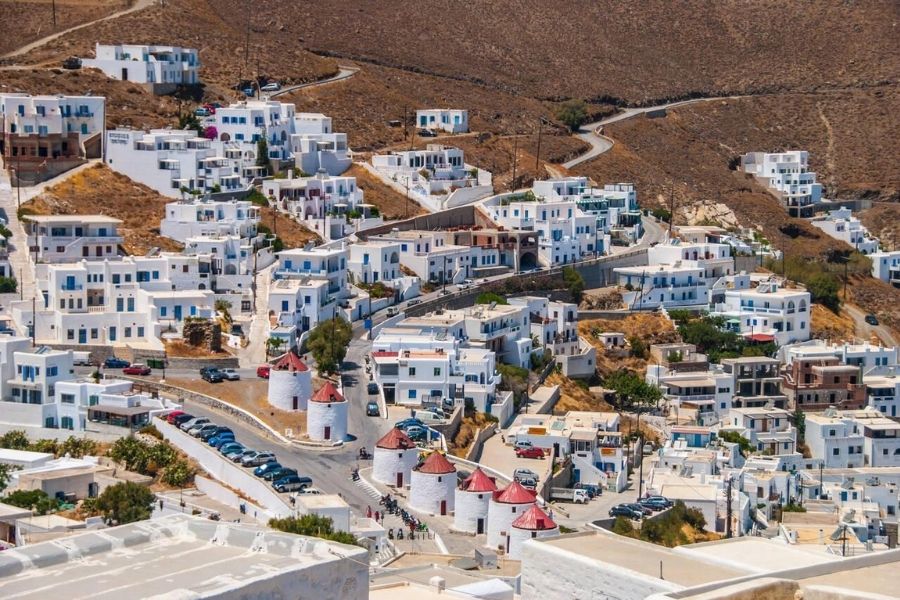
The result? Chora feels familiar but also kind of one-of-a-kind.
Venetian Castle and Hilltop Landmarks
The Venetian Castle sits on top, lording over Chora since the 13th century. The Querini family built it, and the views—wow. You can see forever in every direction.
Inside the old walls, you’ll find ruins from the old settlement, where people lived right up until the 1940s. When they moved out, they built the current Chora using stones from those original homes.
Two lovely old churches sit inside the castle: Aghios Georgios from the 18th century and Panagia from the 19th.
From up here, you get Chora on one side and endless blue on the other. Sunrise is pure magic—the golden light turns the whole place into a painting.
Traditional Windmills and Village Life
Chora’s windmills are iconic. Locals have restored several, and now they serve new purposes but keep their traditional look.
One windmill, the third from the main square, hides a cool surprise—a lending library. Stella Papadopoulou set it up, filling it with Greek books translated into all sorts of languages.
Life in the village moves slow. I often saw old men playing cards at the kafeneio, gossiping over thick Greek coffee.
The narrow lanes between white houses offer shade on scorching days. Tiny churches pop up where you least expect them, and bougainvillea spills over every wall.
Walking Chora early in the morning, before the town fully wakes, feels like stepping into another era.
The Allure of Astypalea’s Beaches and Stunning Nature
Astypalea’s wild beauty hit me right away. Pristine beaches, crystal-clear water, and surprising landscapes make it an outdoor lover’s dream.
The island’s caves, hiking trails, and perfect summer weather mean you can spend all day outside, far from the crowds.
Top Beaches: Livadi, Maltezana, and More
Livadi Beach quickly became a favorite of mine. It’s long and sandy, with shallow turquoise water that’s perfect for families. You’ll find sunbeds and umbrellas, but the vibe stays relaxed.
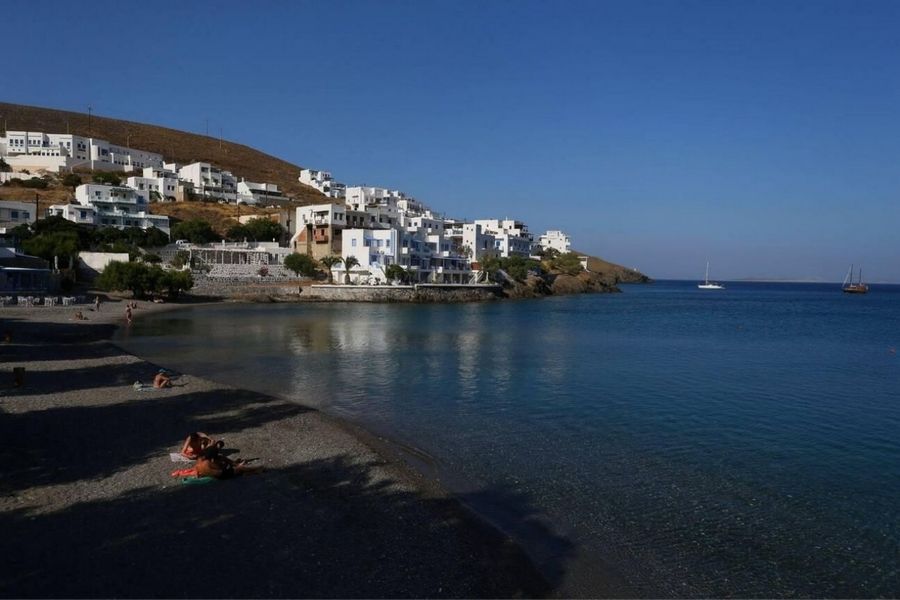
Maltezana Beach sits in a sheltered bay. The fine sand and calm sea make swimming easy, and the natural bay protects you from the wind that sometimes whips other parts of the island.
Pera Gialos Beach sits right outside Chora. I loved being able to stroll down for a swim, then grab lunch at one of the beachside tavernas.

If you want something different, hop on a boat to Kounoupes islet. The sand is blindingly white, and the water glows a ridiculous shade of blue—almost like the Caribbean.
Vathi Beach offers solitude. Pebbles line the shore, and the water is glass-clear, especially after exploring nearby Drakos Cave.
Hiking, Caves, and Natural Wonders
The Drakos Cave at Vathi blew me away. Inside, I found wild stalactites and stalagmites in all sorts of colors. The cave once hid pirates, which adds a bit of mystery to the adventure.
Hiking trails crisscross the butterfly-shaped island. I followed scenic paths linking villages, rewarded by sweeping sea views and glimpses of neighboring islands.
Astypalea’s two main sections give you different landscapes to explore. Exo Nisi holds the inhabited areas, while Mesa Nisi stays wild and protected. I loved that contrast.
Dramatic rock formations dot the coastline. Near Panagia Poulariani chapel, some even look like old religious icons. It’s a little surreal, honestly.
Walking the skinny strip that links the island’s wings lets you really appreciate the butterfly shape. Standing there, it all just clicks.
Best Time to Visit Astypalea
Mid-May through September is prime time. I had the best weather and found everything open during these months. Ferries and the tiny airport run smoothly all summer.
I lean toward July and September. Those months usually dodge the worst of the meltemi winds that can whip up in August. July’s perfect for swimming and water sports.
The meltemi brings its own rhythm. Sometimes it limits beach time during the day, but evenings usually calm down. Honestly, the breeze is a blessing when the mercury hits 40°C.
August gets windy but never unbearable. I learned to plan my swims for early morning or late afternoon. The wind actually makes the heat tolerable.
September is pure bliss—quiet, warm, and uncrowded. If you crave peace, that’s the time to come.
How to Get to Astypalea and Getting Around
Astypalea’s a bit of a trek, but that’s part of its charm. You can fly from Athens or catch a ferry from Piraeus port or nearby islands. Once you arrive, transportation’s limited, so plan ahead.
Flights and Airport Connections
There’s a tiny national airport that takes direct flights from Athens. The hop only takes about an hour, and flights run regularly in summer.
Coming from abroad? You’ll have to connect through Athens. I usually fly into Athens International, then grab the domestic flight to Astypalea.
You could also fly to Rhodes or Kos from Europe, then catch a ferry over. Those islands don’t have direct flights to Astypalea, though.
The airport sits about 10 kilometers from Hora. Since buses are scarce, it’s smart to arrange a ride in advance.
Direct Ferries and Greek Island Links
Direct ferries leave Piraeus five times a week in peak season. The trip takes 8-12 hours, depending on stops, but you can bring a car and save money compared to flying.
You can also reach Astypalea by ferry from other islands. Naxos, Paros, and Amorgos in the Cyclades link up in summer.
Rhodes, Kos, and Kalymnos in the Dodecanese have ferry connections too. From Rhodes, expect about a 4-5 hour ride.
Ferry schedules change with the seasons, so I always double-check before booking. In July and August, book ahead—seats fill up fast.
Transportation on the Island
Astypalea’s small size can be deceiving; those hills make getting around a bit of a challenge. I quickly realized that renting a car or scooter isn’t just convenient—it’s almost a must if you want to see more than Hora.
There’s really just one main road that stretches between the two “wings” of the island’s butterfly shape. It’s simple but gets the job done.
Local buses do run, but only between the main beaches and towns. Their schedule? Let’s just say, you shouldn’t count on them outside the summer season.
You’ll find rental cars and scooters right at the port and airport. I suggest booking in advance if you’re traveling during peak months—choices disappear fast.
Taxis exist, but honestly, they’re rare. Many hotels will happily arrange airport or port transfers, so I always recommend sorting that out when you book your stay.
Walking around Hora feels easy and pleasant. But if you’re hoping to discover hidden beaches or remote corners, you’ll need your own wheels.
Culture, Heritage, and Local Experiences
Astypalea’s vibe is a fascinating mix—think Cycladic whitewashed houses blended with Dodecanese tradition. The Panagia Portaitissa Monastery stands at the heart of local life.
Festivals here aren’t just for show. They’re a real window into Greek customs, and the warmth of the locals is legendary—especially when it comes to food and hospitality.
Religious Sites and Panagia Portaitissa
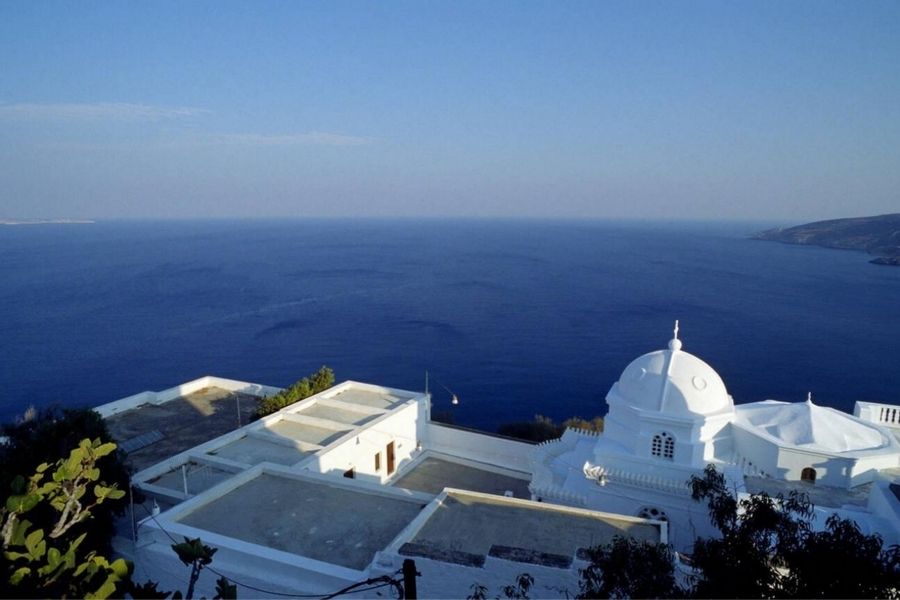
The Panagia Portaitissa Monastery isn’t just another pretty building. I remember standing there, looking out at the landscape, feeling the weight of its spiritual history.
Inside, you’ll find beautiful icons and religious treasures. Pilgrims come throughout the year, hoping for blessings and a moment of peace.
Key Religious Features:
- Ancient Byzantine architecture
- Rare religious manuscripts
- Traditional Orthodox ceremonies
- Peaceful meditation spaces
Centuries ago, monks lived in total seclusion here, devoting their lives to prayer. That sense of quiet dedication still lingers.
Religious customs haven’t changed much. Visitors need to dress modestly and keep silent during services—something I appreciated for its authenticity.
Astypalea’s Festivals and Traditions
When August 15th rolls around, the Feast of the Virgin Mary turns the island into one big celebration. I watched locals gather at Panagia Portaitissa, and the energy was contagious.
Traditional dances take over the monastery courtyard. Musicians play old songs, families bring homemade food, and everyone shares local wine.
The Astypalea Summer Festival livens things up from July through August. You’ll catch:
- Theater performances
- Live music
- Dance shows
- Art exhibits
- Craft workshops
Weddings here? They’re epic. Whole villages come together, and the feasting and dancing go on for days.
Bread-making rituals and wine ceremonies still matter. Elders teach the younger ones, passing down these traditions face-to-face.
Cuisine, Nightlife, and Hospitality
Astypalea’s food scene is a treat if you love fresh, local flavors. I tried honey and saffron grown right here—they’re both incredible.
Traditional Dishes:
- Grilled fish straight from the sea
- Pastries drizzled with local honey
- Saffron rice
- Goat cheese
- Raki (it packs a punch!)
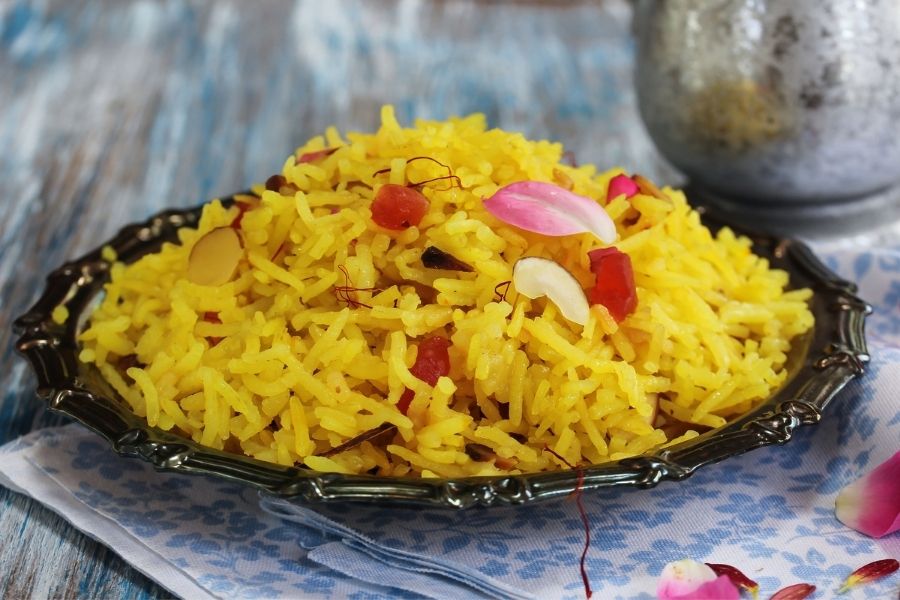
The hospitality really surprised me. Locals often invite strangers to join their table, swapping stories over a meal.
Nightlife stays relaxed and genuine. Taverns fill up with families and friends, and conversation flows as easily as the wine.
Sometimes, restaurant owners pull up a chair to eat with you. That personal touch sticks with me—it’s like dining with friends you never knew you had.
Meals here are about more than eating. Sharing food is a sign of friendship and respect, and you can feel it in every bite.
Frequently Asked Questions
I get a lot of questions about Astypalea’s mix of cultures, its quirky butterfly shape, and how to make the most of a visit. The island’s Venetian castle, clear beaches, and blend of styles always come up.
What are the top attractions to visit in Astypalea?
The Venetian castle stands high above Hora, built by the Quirini family back in the 13th century. You can’t miss it—it’s visible from almost everywhere.
Hora’s whitewashed alleys twist down the hillside. Wandering here feels like stepping into a Cycladic postcard.
Just below the castle, Panagia Portaitissa church catches the eye with its silver dome and bell tower. Built in 1762, it’s a local landmark.
In Maltezana, the Baths of Talara reveal ancient mosaics—zodiac signs and seasonal scenes still vivid after centuries.
Kaminakia beach steals the show for swimming. But Vatses, Livadi, Steno, and Psili Ammos all have their own charm.
How does Astypalea uniquely blend Cycladic and Dodecanese cultures?
Astypalea sits right where the Dodecanese and Cyclades meet. You can see this in everything from the buildings to the food.
Hora’s houses wear classic Cycladic white and blue, even though the island technically belongs to the Dodecanese.
Venetian touches show up in the castle and some chapels. The island’s mixed history is written in stone.
The whole place feels like a crossroads—Cycladic minimalism meets Dodecanese tradition, and you get something you won’t find anywhere else.
What are the best activities to experience in Astypalea for first-time visitors?
Start by wandering Hora’s narrow lanes. The sea views and old houses make it a photographer’s dream.
Climb up to the Venetian castle. The views of the Aegean and the island’s “wings” are worth every step.
Beach hopping is a must. Each stretch of sand feels different, from lively to totally secluded.
If you’re up for a little adventure, hike or boat to the Cave of Negrou at Vatses. The stalactites and stalagmites are wild.
Drive through Livadi valley and you’ll spot citrus groves and vineyards. It’s the greenest part of the island.
What is the best time of year to visit Astypalea for optimal weather?
Late spring through early fall is when the island really shines. From May to October, the weather stays warm and dry.
July and August bring the heat—and the crowds. The sea is at its calmest, but you’ll share the beaches.
September might be my favorite. The weather’s still great, but things quiet down a bit.
If you visit in early spring or late fall, pack for surprises. Rain and cooler days can sneak up on you.
Can you recommend traditional food to try while in Astypalea?
Hora has the biggest selection of places to eat. You’ll find everything from cozy tavernas to spots serving classic Greek dishes.
Down in Livadi, you can grab coffee or a meal near the beach. The views are as good as the food.
Seafood takes center stage here. Fish and shellfish come straight from the Aegean—can’t get fresher than that.
The island’s food, like its architecture, blends Cycladic and Dodecanese influences. You’ll taste the best of both worlds.
What accommodation options are available for tourists staying on Astypalea?
Hora’s the main hub, and honestly, it’s where you’ll find the widest range of places to stay. Hotels, guesthouses, and rental spots are all tucked around this lively settlement.
If you’re dreaming of waking up steps from the sea, the beachside areas have you covered. Some properties sit just close enough that you can practically roll out of bed and into the water.
Astypalea really holds onto its peaceful, unspoiled vibe. Don’t expect flashy resorts here—most accommodations just feel calm and welcoming, matching the island’s slower pace.
I’d definitely recommend booking ahead, especially if you’ve got your heart set on a particular spot. Since Astypalea’s not huge, there aren’t as many places to stay as you’d find on the bigger Greek islands.
