
Standing on the sacred soil of Delos Island honestly felt like I’d just wandered straight into the heart of Greek mythology. Delos, this legendary birthplace of Apollo and Artemis, holds an entire ancient city-sanctuary that’s easily one of Greece’s most jaw-dropping archaeological sites. This tiny, rocky island in the Cyclades once pulsed as the spiritual heart of the ancient Greek world for over a thousand years.
My journey through Delos surprised me with so much more than just scattered ruins. I wandered through whole neighborhoods, stumbled into ancient markets, and traced the same paths as pilgrims who crossed the Mediterranean to get here.
The island preserves not only temples and statues, but a snapshot of an entire civilization—almost as if time just hit pause.
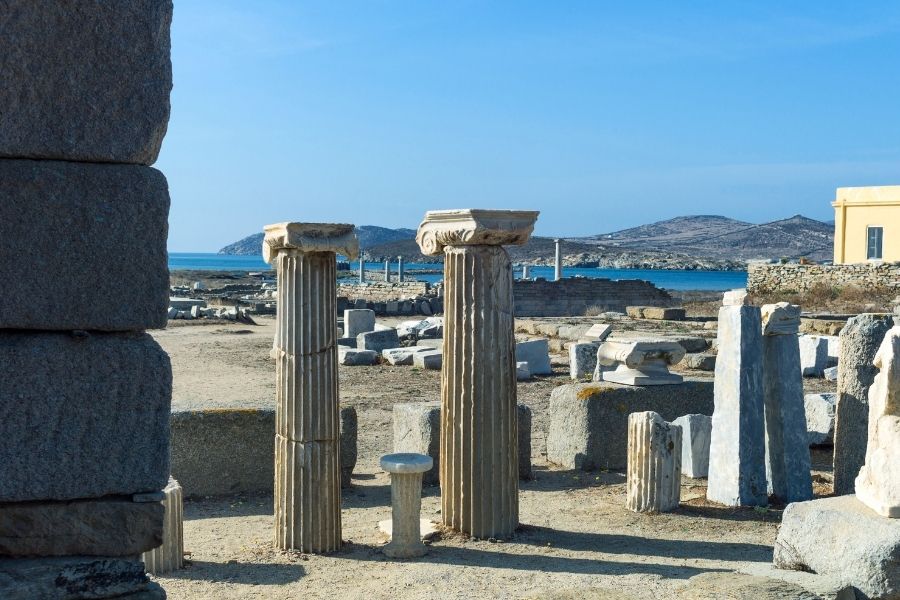
What really hit me was how this barren rock once thrived as a bustling trade hub and spiritual hotspot. From its mythical beginnings to its political and religious clout, Delos gives visitors a rare shot at walking through a complete ancient city that’s managed to dodge modern development.
Mythical Origins: The Birthplace of Apollo and Artemis
The myths swirling around Delos are full of drama—divine love, jealous revenge, and a desperate search for safety. These old stories explain how such a small island became the sacred birthplace of two of the most powerful gods in the Greek pantheon.
The Legend of Leto, Zeus, and Hera
Zeus fell for Leto, a beautiful Titaness. Their secret affair led to twins, but it also sparked Hera’s legendary fury.
When Hera discovered Leto’s pregnancy, she lost it. She banned every land from sheltering Leto, and to make things worse, she sent the serpent Python to chase Leto across the earth.
Leto’s desperate journey dragged her from place to place. Every island and city turned her away, terrified of Hera’s wrath.
Apollo, still unborn, spoke to his mother from the womb. He promised that wherever he was born would become famous and rich. That prophecy? It came true for Delos.
Leto wandered for months, growing weaker with every step. The twins inside her grew restless. She needed a safe place to give birth, or none of them would survive.
Role of Poseidon in the Creation of Delos
Poseidon didn’t just sit back—he played a huge role in the story. Before Leto arrived, Delos existed as a floating island called Asteria.
Asteria had once been a nymph who escaped Zeus’s pursuit by turning into a quail, then a drifting rock. The island floated, with no anchor, lost in the Aegean.
When Leto finally arrived, Asteria took pity on her, recognizing a fellow refugee from Zeus’s relentless attention. The island agreed to help, but needed Poseidon’s help first.
Poseidon anchored Asteria to the sea floor with massive chains, using four diamond pillars that dug deep into the earth. Suddenly, the wandering rock became a stable island.
Thanks to Poseidon, Delos became the only place that could shelter Leto. His intervention literally set the stage for one of Greece’s most sacred places.
Sacred Status and Ancient Rituals
Artemis arrived first, born easily on Delos. She immediately helped deliver her twin Apollo, who took his sweet time—nine days, to be exact.
The moment Apollo was born lit up the island with golden light. Swans circled Delos seven times in celebration. Suddenly, flowers and trees burst from the barren rock.
That miraculous moment made Delos forever sacred. The Greeks considered it second only to Delphi. To keep it pure, they banned births and deaths on the island.
Ancient rituals honored the divine birth with elaborate festivals. Every five years, the Delia festival drew crowds from all over Greece. Pregnant women had to leave the island before giving birth.
Delos became a neutral ground where even enemies could meet in peace. City-states stashed their treasures here, trusting in divine protection.
These rules lasted for over a thousand years.
| Sacred Rules of Delos |
|---|
| No births allowed on the island |
| No deaths permitted on sacred ground |
| All weapons forbidden in temples |
| Purification required before entry |
Exploring the Sacred City-Sanctuary
Delos doesn’t just offer a few temples—it’s a whole city-sanctuary, masterfully planned and centered around Apollo’s worship. Three main areas stand out: the grand Apollonian sanctuary with its temples, the iconic marble lions along the ceremonial route, and diverse temples devoted to Artemis and other gods.
Sanctuary of Apollo: Heart of Ancient Worship
Walking through the Sanctuary of Apollo honestly felt like entering the spiritual core of ancient Greece. This enormous complex completely dominates the island.
The Temple of Apollo is the star attraction. I wandered through three temple structures, each built over different centuries. The oldest goes back to the 6th century BC.
The House of the Naxians immediately drew my eye. This rectangular building once housed a colossal statue of Apollo, dedicated by the Naxians around 600 BC.
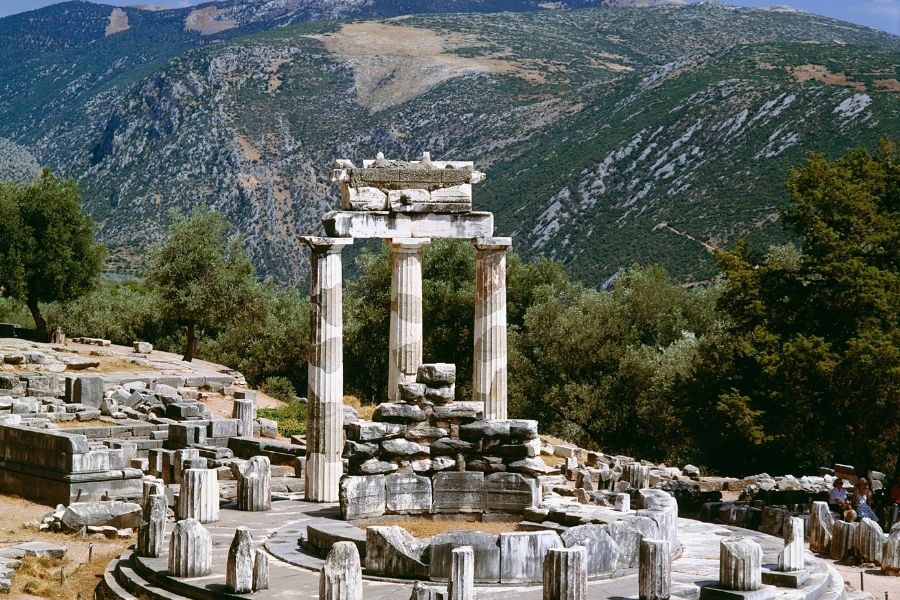
Some temple features that stood out:
- Doric columns stretching up to the sky
- Marble foundations still holding strong
- Remnants of sacred altars
- Pedestals for statues everywhere
The Sacred Way ties these structures together. Pilgrims once followed this path during festivals. I found myself tracing their steps across the worn marble stones.
Temple of Delia sits nearby, built specifically to honor Apollo’s birth. Its circular foundation marks where worshippers gathered. Inscriptions still reveal its sacred purpose.
Terrace of the Lions: Guardians of the Sacred Path
The Terrace of the Lions honestly stopped me in my tracks. Nine marble lion statues once lined this ceremonial avenue—now, five originals remain.
These marble lions date back to the 7th century BC. Naxian sculptors shaped them as eternal guardians, each facing east toward the old Sacred Lake.
Lion statue details:
- Height: Almost 6 feet tall
- Material: Pure Naxian marble
- Style: Archaic Greek
- Purpose: Guarding the sacred grounds
The lions flanked the route to Apollo’s temple. Pilgrims walked between these stone guardians during processions. Their stylized shapes show off early Greek artistry.
I could picture how the Sacred Lake once reflected these statues. The lake dried up centuries ago, but in ancient times, swans and palm trees filled the scene.
The placement of each lion wasn’t random. Ancient planners arranged them with intention, creating a dramatic entrance to the sacred area.
Temple of Artemis and Other Deities
Beyond Apollo’s domain, I found temples for other gods too. The Temple of Artemis honors Apollo’s twin. It’s a smaller sanctuary but still shows her significance on Delos.
Artemis received worship as a goddess of hunting and childbirth. Her temple isn’t as grand as Apollo’s, but the stone foundations still show where her altar once stood.
Other sacred buildings I came across:
- Temple of Hera – Zeus’s wife got her own honors here
- Hermes shrine – a spot for the messenger god
- Dionysus monument – a marble dedication to the wine god
The Heraion (Temple of Hera) sits up on higher ground. Marble steps lead to its rectangular form. Hera’s cult thrived alongside Apollo’s.
Dionysus left behind a striking monument—a giant marble phallus standing on a decorated base. It’s a bold symbol of fertility and divine power.
Delos truly became a spiritual crossroads. Multiple gods shared the sacred ground, each with their own space and rituals.
Landmarks and Living Spaces of Ancient Delos
Exploring Delos felt like time-traveling through a complete ancient city—commercial districts, luxurious homes, and sacred spaces carved right into the landscape. The island’s unique layout reveals how religion and international trade shaped one of the Mediterranean’s most important urban centers.
Agora Districts and Commercial Port
The Agora of the Italians blew me away with its sheer size and marble columns. This massive market served Roman merchants who ran much of Delos’s trade in the 2nd century BC.
I wandered through smaller, specialized markets too. The Agora of the Competaliasts catered to Roman freedmen who worshipped household gods.
Down by the old commercial harbour, I spotted stone foundations where ships once unloaded their cargo. Merchants from all over the Mediterranean brought goods here.
These bustling markets proved Delos wasn’t just about religion. It thrived as a trade hub where people bought everything from slaves and grain to luxury items from Egypt and Syria.
Residential Mansions and Iconic Houses
The private ho
mes on Delos genuinely shocked me with their scale and elegance. The House of Dionysus boasts floor mosaics showing the wine god riding a panther.
I lingered in the House of Masks, famous for its intricate mosaics. The House of Dolphins features sea creatures swimming through colorful stone patterns.
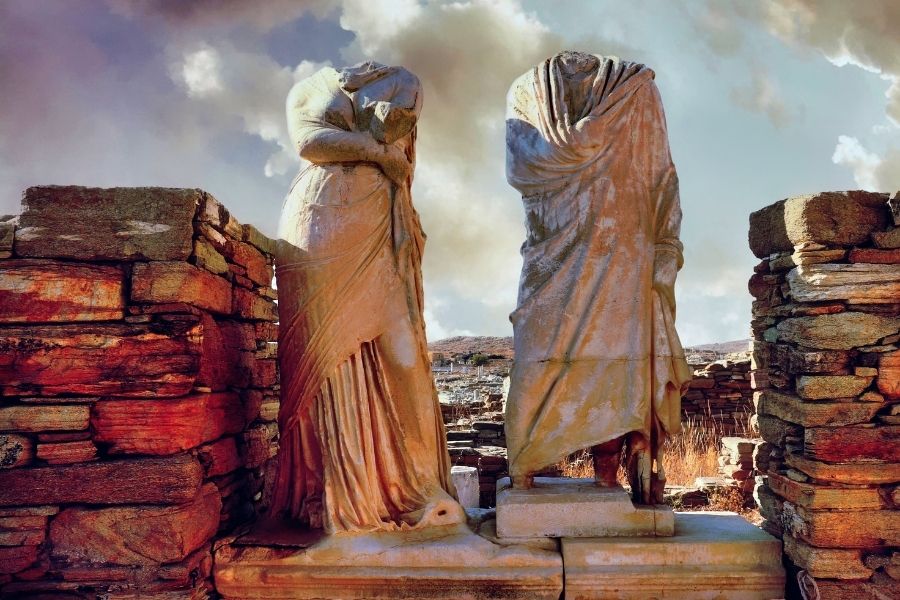
In the House of Kleopatra, statues of the owners stand right in the courtyard. These weren’t pharaohs, just wealthy Greek merchants.
Most homes had multiple stories, private wells, and surprisingly elaborate décor. Three-story mansions provided space for extended families, slaves, and workers.
Ancient Theatre and Cultural Venues
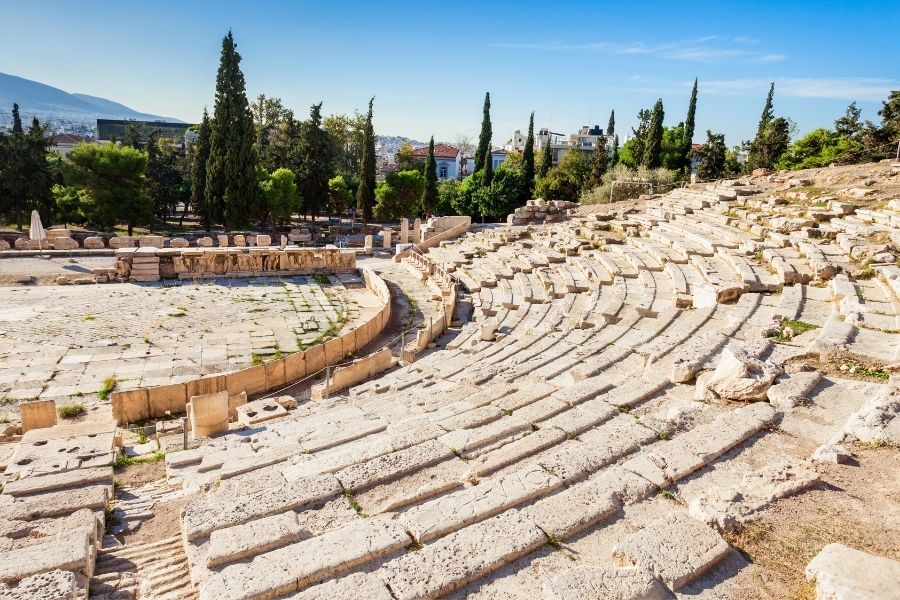
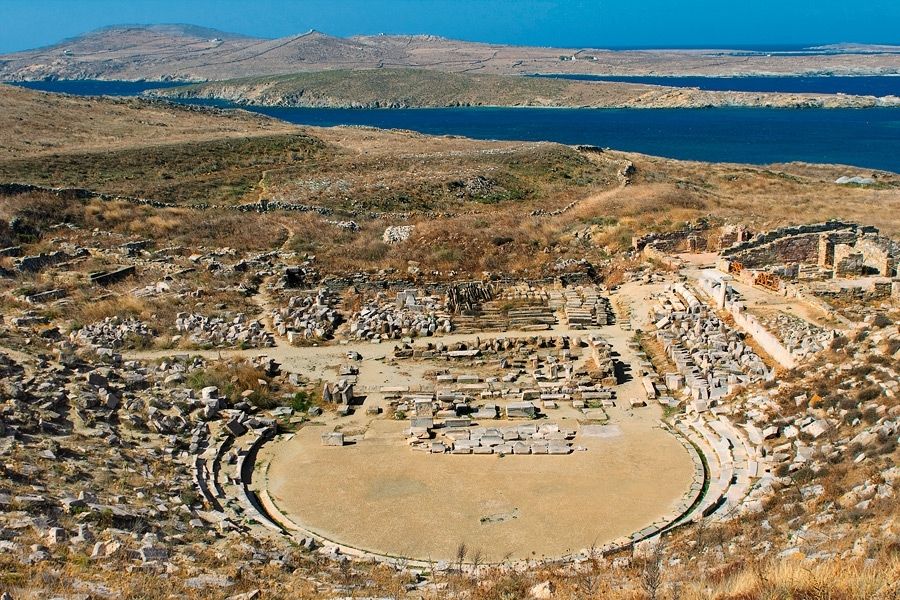
The Theatre of Delos sits carved into the hillside, overlooking the harbor. I climbed the stone seats where 5,500 people once gathered for plays and ceremonies.
Nearby, I found remains of the gymnasium and palaestra—places where young men trained. The stadium saw athletic competitions during religious festivals.
These venues weren’t just for fun. They hosted the thousands of pilgrims who flocked to Apollo’s festivals each year.
The way the theatre fits into the landscape is genius. Every building seems to hug the natural curves of the rocky island.
Mount Kynthos and Panoramic Vistas
I couldn’t resist climbing Mount Kynthos, Delos’s highest point at 368 feet. The path winds past cave sanctuaries for Hercules and other gods.
From the summit, the entire ancient city spreads out below—Sacred Harbor, temple complexes, homes, all laid out like an archaeological map.
Tiny shrines dot the mountainside, left by ancient pilgrims. Foreign merchants even built temples here for their own gods from Egypt and Syria.
The hike takes about 20 minutes, and the views are absolutely worth it. Looking out over the Cyclades, I couldn’t help but wonder if ancient visitors felt the same awe.
Historical Timeline: From Prehistoric Times to Roman Rule
Delos started as a tiny Cycladic settlement and grew into one of the most sacred sites in the Greek world. The island welcomed waves of settlers—Carians, Mycenaeans, Ionians—before Athens turned it into a major religious center. Later, it thrived as a free port under Roman rule.
Early Settlers: Carians, Mycenaeans, and Ionians
The first people arrived on Delos around 5000 BCE, probably venturing from Asia Minor into the Cyclades. These early communities lived simple lives on this little island in the Aegean.
By 3000 BCE, organized communities popped up across the Cyclades. Archaeologists have found marble figurines from this period—now world-famous for their style.
The Carians probably settled Delos permanently around 1400 BCE. Ancient historian Thucydides even mentioned their role in laying the island’s foundations.
Major Cultural Shifts:
- 1700-1400 BCE: Minoan influence from Crete shaped island life
- 1400-1100 BCE: Mycenaeans from mainland Greece took over
- 1100-900 BCE: Ionians arrived and made Delos their religious headquarters
The Ionians changed everything. They built the first temples and set up the religious traditions that would make Delos legendary throughout the Greek world.
Delos in the Archaic and Classical Periods
The Archaic period really shook things up for Delos. Around 700 BCE, builders erected the first temple of Apollo, and that moment kicked off Delos’s rise as a major religious hub.
By 550 BCE, Delos started minting its own silver coins. Those drachmas showed Apollo’s lyre—proof that Apollo wasn’t just important here, he was everything.
Athens swept in and took control around 540 BCE. The Athenians called the island sacred and, in a pretty dramatic move, removed all graves to purify the land. No births or deaths could happen on this holy ground; the rules were strict.
The Delian League (478-454 BCE):
- Treasury sat on Delos until Athens moved it away
- Many Cycladic city-states joined up for safety from Persia
- Delos turned into the heart of Athenian naval power in the Aegean
Delos stayed under Athens’s thumb during the Classical period. The island backed Athens in the Peloponnesian War against Sparta from 431-404 BCE.
Around 300 BCE, workers built a theater. That showed Delos wasn’t just about temples and rituals—it had a real cultural scene.
Hellenistic Prosperity and Free Port Status
New rulers swept in during the Hellenistic period. In 314 BCE, Antigonus I set up the League of Islanders, pulling in Delos and other Cycladic islands.
Then Rome arrived in 166 BCE and changed the game. The Romans handed Delos to Athens but declared it a free port—no taxes on trade. Suddenly, merchants from all over the Mediterranean showed up.
Trade Boom Results:
- Slaves, grain, and luxury goods poured through Delos
- The population soared to about 25,000
- Wealthy traders built grand houses and left their mark with monuments
- People from Rome, Syria, and Egypt mingled in the streets
Delos got rich—really rich. Foreign traders even built temples to their own gods right next to the Greek ones. The place felt like a crossroads of cultures.
But all that wealth made Delos a target. Enemies of Rome started to notice.
Decline under Roman, Venetian, and Ottoman Presence
Delos’s golden age ended in violence in 88 BCE. King Mithridates VI of Pontus stormed the island during his war with Rome, and his troops massacred most of the people and wrecked many buildings.
Pirates finished the job in 69 BCE. They sacked what was left of the once-bustling port. After that, Delos never recovered as a major trading center.
Periods of Decline:
- Roman Period: People abandoned Delos after pirate raids
- Byzantine Era: A tiny Christian community hung on
- Venetian Rule: Hardly anyone lived here, mostly quarrying marble
- Ottoman Period: The island stood nearly empty, just occasional grazing
Under the Venetians and later the Ottomans, Delos emptied out. Builders stripped marble blocks from the ruins to use on nearby islands like Naxos.
By medieval times, only shepherds wandered through the old sanctuaries. The birthplace of Apollo and Artemis faded into a forgotten ruin in the Aegean.
Rituals, Festivals, and Everyday Life
The ancient city buzzed with religious ceremonies every four years during the Greater Delia festivals. Annual celebrations drew pilgrims from all over the Aegean. Delos welcomed worshippers of Greek, Egyptian, and Syrian gods, not just Apollo fans.
Delian Games and Musical Contests
Every four years, the Greater Delia festivals transformed Delos into the ancient world’s ultimate sacred gathering. I wandered through ruins where athletes once boxed and wrestled at the palaestrae foundations.
The Lesser Delia happened every year. These brought “long-robed Ionians” and their families for music competitions and dance. Ancient writers said some performers could “imitate the tongues of all men”—a real melting pot.
Athletic facilities dotted the place:
- The stadium hosted runners
- The gymnasium saw constant training
- The theater fit 5,000 people
- Several palaestrae hosted combat sports
The Hypostyle Hall from 208 BC was a giant dining room. Forty-four columns held up the roof where festival-goers feasted together. These games rivaled the biggest Greek competitions.
Religious Practices and Multicultural Worship
Apollo’s sanctuary dominated everything, but temples for other gods popped up everywhere. Delos’s cosmopolitan vibe meant Egyptians, Syrians, and Greeks all had sacred spaces.
Foreign temples included:
- The Temple of Isis stands partly reconstructed
- A Serapis shrine served Egyptian worshippers
- A Syrian gods’ sanctuary welcomed the east
- The Temple of the Twelve Olympians honored the classics
People carried out ritual purifications regularly. The Delian League headquarters brought in political ceremonies. Athens ran the show, moving sacred objects and even prehistoric graves to Rineia island.
No one could be born or die on Delos. Pregnant women had to go to Rineia before giving birth. This rule kept the island ritually clean for Apollo and Artemis.
Daily Life in a Cosmopolitan City
Wandering the old neighborhoods, I pictured how 10,000 residents lived in this trading hub. Rich merchants built mosaic-paved homes with colonnaded courtyards that could rival any luxury villa.
After 167 BC, the free port status brought in a flood of wealth. Ancient sources say up to 10,000 slaves traded here daily. Different ethnic groups ran their own marketplaces:
- Agora of the Delians
- Koinon of the Poseidoniasts (the Beirut merchants)
- Agora of the Italians
Colonnaded stoas and warehouses lined the harbor. These days, fig trees grow from old cisterns where people once stored water. The Inopos stream still runs down Mount Kynthos, just like it did for ancient families collecting water.
Slaves and workers kept the city running—hauling goods, working in shops and temples, and loading ships with luxury items from all over the Mediterranean.
Archaeological Legacy and Modern Visit
Delos stands as one of Greece’s most important archaeological sites. Excavations uncovered an entire ancient city-sanctuary. The archaeological museum on the island holds some stunning Greek sculptures, and UNESCO World Heritage status helps protect this place for the future.
Major Excavations and Significant Finds
Archaeological digs kicked off in 1872 when the Greek Archaeological Service arrived. The École française d’Athènes joined the next year and still works here today.
These excavations revealed a whole city built around Apollo’s sanctuary. Archaeologists unearthed temples, houses, theaters, and a huge commercial port that once handled 750,000 tons of goods every year in the first century BC.
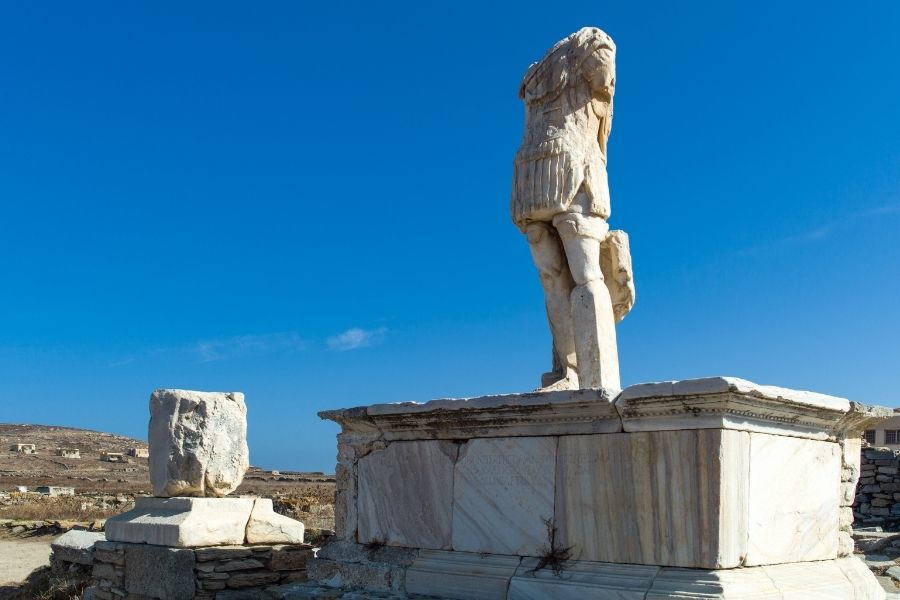
Some of Greece’s best ancient sculptures came out of these digs. The famous Lion Terrace statues still guard the Sacred Lake. Marble statues of gods and wealthy traders line the old streets.
Significant discoveries:
- Whole residential districts with detailed mosaics
- An ancient theater seating 5,500 people
- The Sacred Lake, Apollo’s mythical birthplace
- The Agora of the Italians with shops and trading posts
- The Minoan Fountain, still impressive after all these years
Since people abandoned Delos in the 7th century, the ruins stayed mostly untouched. No modern buildings crowd the ancient stones.
Archaeological Museum of Delos
The Archaeological Museum of Delos sits right on the island, near the main ruins. It holds one of Greece’s best collections of ancient sculpture.
Inside, you’ll find artifacts from all over Delos. These pieces show what daily life looked like in the ancient city-sanctuary.
Key exhibits:
- Marble statues of Apollo and other gods
- Ancient household items and pottery
- Jewelry and coins from the old port
- Religious offerings left at temples
- Marble reliefs showing mythological scenes
The museum isn’t huge, but it’s well-organized. Each room focuses on a different part of daily life. The sculpture collection blew me away—definitely worth seeing.
UNESCO World Heritage Status and Preservation
UNESCO added Delos to its World Heritage list in 1990, recognizing its global significance.
The UNESCO World Heritage Site status shields Delos from development and brings in international support for preservation.
Restoration work has stayed minimal, so the site’s authenticity remains intact. Unlike other ancient sites, Delos lets you wander among original ruins.
Current preservation efforts focus on protecting fragile buildings from the growing number of tourists. Archaeologists work year-round to shore up ancient walls and columns.
Weather and sea erosion keep everyone on their toes. Salt air eats away at marble and stone. UNESCO guidelines help keep conservation on track.
How to Experience Delos Today
You can only visit Delos by ferry on a day trip. There aren’t any hotels—just a handful of caretakers and archaeologists live here.
Ferry options:
- Mykonos: Most people come from here; several daily boats
- Paros: Morning departure, usually with a Mykonos stop
- Naxos: Early morning ferry, good for island hopping
The archaeological site entrance fee is €20 for adults. Ferries from Mykonos cost €22, but that’s just the boat ride.
Guided tours run about €60 and cover the ferry, site entry, and expert commentary. Tours are available in several languages.
I’d book ferry tickets ahead, especially in summer. Morning trips give you more time to explore the sprawling ancient ruins.
The site covers the whole small island. You’ll want at least three hours to see the highlights—temples, residential areas, and the archaeological museum.
Frequently Asked Questions
Delos holds deep religious meaning as the birthplace of Apollo and Artemis. It’s packed with remarkable structures like the Terrace of Lions and the ancient theater. The island gives you a window into daily Greek life, but you can only reach it by boat from nearby islands.
The Terrace of Lions stands out as Delos’s most iconic landmark. These marble lions—originally sixteen—guard the Sacred Lake.
The Sanctuary of Apollo features several temples to the sun god. The biggest dates to the 5th century BC.
The ancient theater impressed me the most. It seats 5,500 and offers sweeping views.
The House of Dionysus boasts gorgeous floor mosaics, with scenes right out of Greek mythology.
The Agora of the Competaliasts served as the bustling commercial heart. Merchants and traders gathered here to make deals.
Greek myth says Leto gave birth to Apollo and Artemis on Delos, making it the most sacred spot for their worship.
Apollo was the sun, music, and prophecy god. Artemis ruled over the moon and hunting.
Pilgrims flocked here from all over the Greek world. Between 900 BC and 100 BC, Delos became a religious magnet.
Religious law forbade births and deaths on the island, keeping it pure for the gods.
The Delian League stored its treasury here, showing Delos’s political and religious clout.
Preserved houses reveal how wealthy Greeks lived—room layouts and decorations reflect their customs.
Home mosaics show off advanced artistry and help us understand Greek styles.
Commercial areas shed light on ancient trade. Storage rooms and shop layouts show how business worked.
Religious artifacts explain Greek worship practices. Statues and temple remains reveal how people honored their gods.
Inscriptions carved into stone provide written records—laws, trade deals, and glimpses of daily life.
Zeus supposedly turned Delos from a floating rock into a solid island so Leto could safely give birth to Apollo and Artemis.
Hera had forbidden any land from sheltering Leto. Only Delos agreed, since it wasn’t a “real” island yet.
Apollo became one of the twelve main Greek gods, and his birthplace made Delos incredibly sacred.
Artemis helped deliver her twin brother, which boosted her status as a goddess of childbirth.
That myth explains why Delos became the heart of Apollo worship. Greeks believed the gods favored places tied to their own stories.
Boats head out to Delos from Mykonos every day during tourist season. The ride usually takes around 30 minutes each way.
If you’re thinking about visiting in the summer, definitely try to grab your tickets ahead of time. Some folks join guided tours, but honestly, you can just go on your own if that suits you better.
You won’t find any hotels or restaurants on Delos. Everyone heads back to Mykonos or another nearby island when it’s time to eat or sleep.
Seriously, bring your best walking shoes and plenty of sun protection. There’s barely any shade, and the ground can get pretty rocky in spots.
There’s a small museum on the island that shows off some fascinating artifacts. Your entry ticket covers both the archaeological site and the museum—pretty convenient, right?
Wealthy families built homes with open courtyards right in the center. These courtyards let in sunlight and fresh air, while rooms wrapped around them for easy access.
In the kitchen areas, you’ll spot clues about how folks cooked and stored their food. They used huge storage jars—imagine them packed with olive oil, wine, or grain.
Some houses even had private bathrooms with running water. That’s honestly pretty impressive for the era; their engineering skills were ahead of their time.
Room decorations? They say a lot. If you look closely, you’ll notice that wealthier families went all out with colorful mosaics and painted walls.
Slave quarters sat apart from the main living spaces. These rooms felt much smaller and were far less decorated, giving a glimpse into the sharp social divide.
