
If you’re searching for the best of France, you really can’t skip the winding road up to Èze Village. This medieval gem sits high above the French Riviera, and my climb to the top felt like I’d stepped into another world.
Old stone lanes twist between bursts of bright flowers, and the views stretch forever over the deep blue Mediterranean Sea. The village sits more than 1,400 feet above sea level, which totally earns it the “eagle’s nest” nickname.
When I explored Èze, the steep climb paid off with the Jardin Exotique. This famous garden bursts with rare plants and bold sculptures right at the village’s highest point.

The view? Absolutely unreal—miles of coastline melt into the horizon, and the sea just glitters. Wandering here, I quickly understood why Èze is always on lists of must-see French Riviera spots for anyone who loves beauty and history.
The Charm and History of Èze
Èze’s story stretches back centuries, winding through hills scattered with stone buildings, art, and all kinds of influences. When I stepped onto those ancient cobblestones, I could almost feel the past come alive.
Castles, churches, and narrow alleys all look out over the dazzling Mediterranean. It’s like history is just hanging out in the shadows.
Medieval Origins and Legends
I wandered through the old town imagining medieval villagers living high above the sea. Èze’s history dates at least to the Middle Ages, when it served as a fortified outpost guarding Provence.
Its dramatic cliffside perch—1,401 feet up—earned Èze the “eagle’s nest” nickname. The stone castle ruins still crown the summit, a real reminder of its defensive role.
Local legend says the ancient Ligurians settled here centuries ago, with customs handed down through the ages. There’s a quiet magic as you wander under arches and past weathered doors.
Every old wall or tower hints at Èze’s stubborn, enduring spirit.
Famous Visitors and Literary History
Èze’s cliffs have drawn plenty of writers and thinkers, but Friedrich Nietzsche stands out. I discovered he often hiked the steep footpath from Èze-sur-Mer up to the village.
He found inspiration in these wild views for his book “Thus Spoke Zarathustra.” Even today, writers and artists seem enchanted by the light and the panorama.
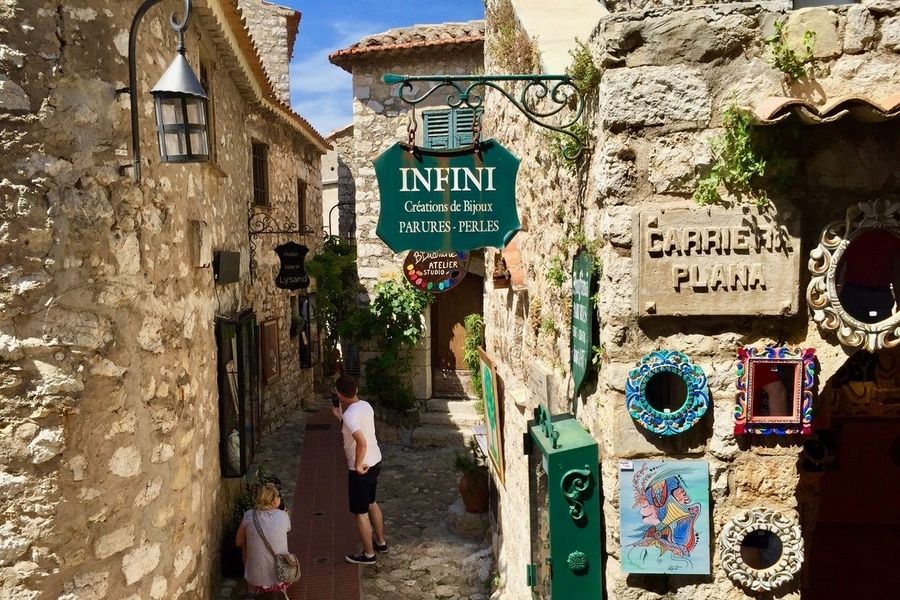
As I walked, it was obvious why creatives like Nietzsche cherished Èze. It’s got that rare mix of solitude, beauty, and history—just the kind of place you’d want to escape to for some thinking or art.
Architectural Marvels and Gothic Beauty
Every corner of Èze shows off its medieval and gothic roots. The winding, pale-stone streets lead up to the ruined castle and the striking Église Notre-Dame de l’Assomption.
That ochre-yellow church, built in the 18th century, stands out with its bell tower visible from the garden above. It’s gothic revival style, surrounded by Provence’s natural beauty.
As I wandered, I passed ancient archways, vaulted passages, and even small palaces now turned into boutiques, museums, or cafés. Strolling through Èze felt like entering a living museum.
This blend of history and architecture gives the village a vibe you just don’t find anywhere else on the Riviera.
The Thrilling Climb to the Eagle’s Nest
Getting to the top of Èze Village isn’t just about the destination. The journey takes you over ancient walkways and up stone stairs.
It’s a bit demanding, but the medieval atmosphere and those sea views make it totally worth it.
Navigating Ancient Streets and Stone Paths
Èze’s streets twist and turn, climbing the steep hillside. Every narrow path is paved with worn cobblestones, and the climb really does feel like stepping back in time.
Some alleyways are so tight, only one person can squeeze through at once. As I got closer to the summit, flower boxes and stone arches marked the way.
My footsteps echoed between the walls. On the way up, I passed tiny art shops, hidden courtyards, and ancient doors—reminders of the city’s long story.
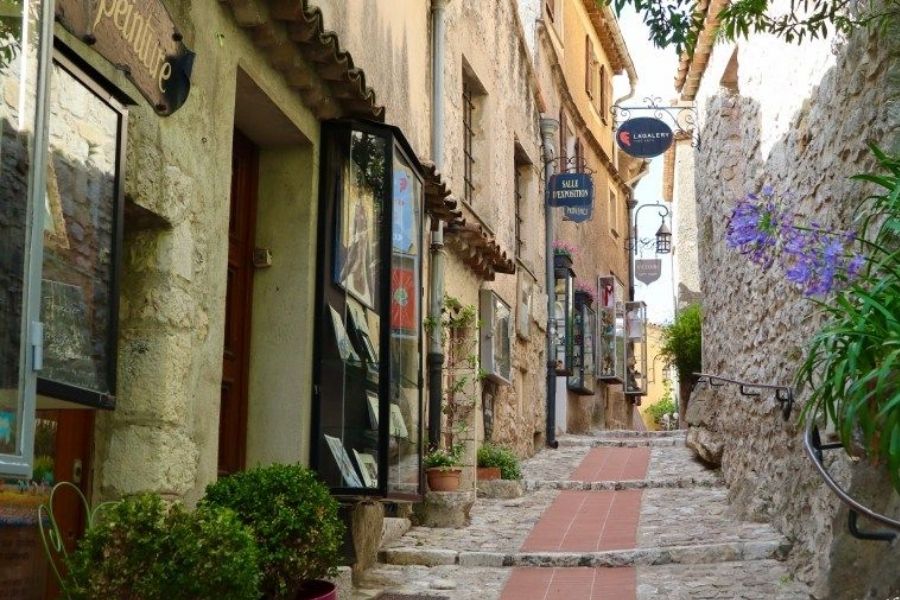
Climbing takes patience, and honestly, some careful footing since the stone can be slippery, especially after rain. I stopped often to catch my breath and just stare at the quick flashes of the sea far below.
Benches and shaded corners offered a welcome break.
Essential Access and Safety Tips
Getting into Èze takes a bit of planning. Parking is down at the base, so you’ll need to be ready for a solid uphill walk.
Good shoes with grip are a must—those stones are no joke. If you have health concerns, know that the route isn’t wheelchair accessible and can be tough if you struggle with steep slopes.
Bring water, especially if it’s hot, since there aren’t many stops until you reach the top. I learned to slow down and avoid rushing, especially when crowds fill the walkways in high season.
Early morning or late afternoons are quieter and much less stressful. Weather sometimes adds to the challenge, making paths slick or crowds heavier.
Know your limits, lean on railings, or bring a walking stick if you need extra support. Patience and a little self-care really do make the trip safer and more fun.
Discovering the Exotic Garden and Jaw-Dropping Views
While wandering Èze Village, I quickly realized the Exotic Garden is the showstopper. It sits right at the top, mixing rare plants with those impossible blue views.
This spot perches on ancient defensive walls, making it the best lookout point for anyone exploring the Riviera.
Exotic Garden’s Unique Collection
Inside the Exotic Garden, rocky paths wind through beds of tall, spiky cacti and flowering succulents. Most plants thrive in Mediterranean climates, but I spotted some from North Africa and even the Americas.
Labels helped me learn about each one. Some grew in tight clusters, others towered overhead, casting wild shadows in the sun.
What struck me most was how the garden almost melted into its surroundings. Old stone ruins peeked out from tangles of green, a reminder that Èze’s botanical oasis sits above medieval walls built for defense.

If you go, check out the aloe and agave—those shapes and colors are just awesome. Benches let me sit and soak up the peaceful vibe before heading higher for the real view.
360° Panoramas Over the Mediterranean and Riviera
At the top of the garden, I found one of the most jaw-dropping sights in France. The view just goes on forever, taking in the sparkling blue water of the Mediterranean and the beaches curving along the Côte d’Azur.
From up here, Èze really lives up to that “eagle’s nest” title. I could see tiny boats below and trace the Riviera coastline all the way to the horizon.
Villages and towns dot the landscape, and you can even spot mountain peaks if you look hard enough. A small lookout platform makes it easy to snap photos without fighting crowds.
Morning or late afternoon light is best—colors pop and shadows give the view extra depth. Standing there, I realized this garden is about more than just plants.
It’s a chance to see southern France from an angle you just can’t get anywhere else. If you visit Èze, don’t skip this view.
Culture, Art, and Cuisine in Èze
Art and tradition run deep in Èze. Cobbled lanes hide creative studios, and family-run restaurants serve up Provence’s best flavors.
There’s always something new to discover around every corner.
Galleries and Artistic Inspiration
Creativity fills Èze, and I found small galleries tucked between the ancient stones. Each one shows work from local painters, sculptors, and craftspeople.
I stepped into a few, watching artists shape their work right in front of me. Many find inspiration in the Riviera’s light—the sunlight bouncing off the sea and brightening the village is something they really capture.
Shops often blend art and tradition, selling handmade ceramics, glass, and olive wood. Street corners buzz with open-air displays, and some studios invite visitors to try their hand at a new craft.
If you’re after a keepsake, original art and Provence-inspired jewelry make for meaningful souvenirs. Èze’s charm shines in its architecture, too.
Medieval arches and stone façades give the village an artistic feel, mixing history with everyday beauty. The whole place feels like an open-air museum, just waiting to be explored.
Provencal Flavors and Local Wineries
Food in Èze is pure Provence. The scents of herbs, lavender, and fresh bread hit me as I wandered through the village.
Restaurants tuck inside centuries-old buildings, with terraces overlooking the sea. Every meal feels special.
Menus feature classics like ratatouille, tapenade, and seafood cooked with olive oil and Provence spices. Ingredients come straight from the countryside and the sea, with seasonal veggies and cheeses changing daily.
Bakeries serve up warm croissants and sweet tarts made fresh each morning. Wineries and small vineyards nearby are a hidden bonus.
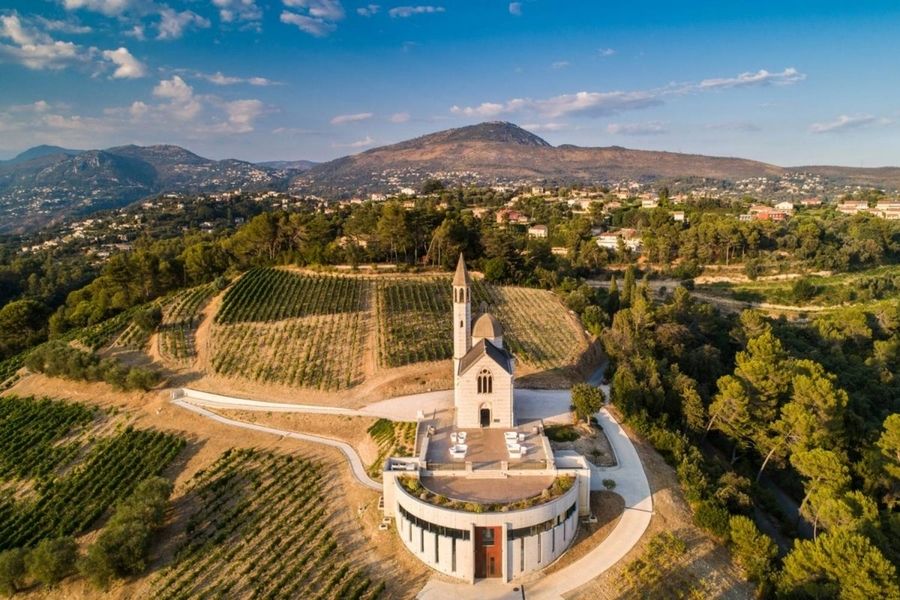
Some offer tastings of bold reds and crisp whites, grown right on the slopes around Èze. When I stopped by a local wine shop, the owners happily poured samples and explained their craft.
Grapes grown in this sun-soaked land give every glass a taste of the Mediterranean. Wine tasting here is a must.
Nearby Destinations and Making the Most of Your Trip
Èze’s dramatic spot between Nice and Monaco makes it a great base for exploring the French Riviera. Travel connections to famous cities are easy, so I found it simple to add more adventures to my trip.
Excursions to Nice, Monte Carlo, and the Côte d’Azur
After wandering Èze’s quiet, flower-filled lanes, I hopped on a bus to Nice—just 30 minutes away. Strolling the Promenade des Anglais, I soaked up bustling markets and turquoise beaches.
For a taste of glitz, I caught a quick train to Monte Carlo, Monaco, where luxury cars lined the streets near the famous casino and harbor. Medieval towns like Villefranche-sur-Mer and Menton are easy day trips, with buses and trains running often.
If you’re into hiking, the coastal “Nietzsche Trail” links Èze to the sea—an unforgettable walk with endless Mediterranean views. Here’s a quick list of spots near Èze:
- Nice (markets, beaches, food)
- Monte Carlo (casino, luxury shopping)
- Villefranche-sur-Mer (charming old town)
- Menton (gardens, lemon festival)
Travel Connections With Europe’s Iconic Cities
Èze sits right along the main rail line that runs across Western Europe, and honestly, I found getting around pretty smooth and flexible.
From Nice’s main train station, I hopped on a high-speed TGV and reached Paris in about six hours.
Getting to Italy was a breeze too.
I spent an afternoon wandering Ventimiglia and then headed off to Milan, Florence, and Venice for longer stays.
Nice Airport also gave me plenty of options.
I caught quick flights to London, Amsterdam, Berlin, and a bunch of other cities in Germany, Eastern Europe, and even places like Budapest or Prague.

That made it so easy to mix my Riviera trip with time in some of Europe’s most famous capitals.
Sometimes I even thought about stretching the journey out to the United States, Canada, or South America—the connections are definitely there.
Here’s a quick table with sample travel times:
| Destination | Transport | Approx. Time |
|---|---|---|
| Paris | TGV train | 6 hours |
| Rome | Train | 8 hours |
| London | Flight | 2 hours |
| Amsterdam | Flight | 2.5 hours |
| Berlin | Flight | 2.5 hours |
| Florence | Train | 6 hours |
If you’re thinking about a Riviera road trip or maybe a bigger adventure through Europe, starting in Èze just makes discovering more feel easy and—dare I say—kind of exciting.
