
I wandered along Devon’s Jurassic Coast, exploring the legendary fossil beaches of Lyme Regis and Charmouth. You might’ve heard this area is a fossil goldmine—honestly, that’s no exaggeration. The rocks here cradle remains from hundreds of millions of years ago.
I’d always wondered what makes this coastline a magnet for fossil hunters, families, and anyone with a bit of curiosity about ancient life. My own search along the beaches and cliffs led to some genuine discoveries, and there’s nothing quite like the thrill of uncovering something from a world that existed long before us.

If you’ve ever imagined hunting for fossils where both seasoned experts and total beginners have found real treasures, you’re not alone. Maybe my adventure will nudge you to try your own luck, or at least get you curious about the wild history hidden in these rocks.
The Jurassic Coast: Geological Wonders and World Heritage Status
The Jurassic Coast in Devon and Dorset really lives up to the hype. Ancient rock layers, wild coastal scenery, and its status as a globally important site all combine to make it unforgettable.
You’ll notice right away that this protected region puts Earth’s past on full display. It’s like an open textbook—except you get salty air and sea views as a bonus.
The Geological Timeframe: Triassic, Jurassic, and Cretaceous Periods
During my visit, I learned the Jurassic Coast isn’t just about the Jurassic period. The rocks here actually span three massive chapters of Earth’s story: Triassic, Jurassic, and Cretaceous.
- Triassic (about 250–200 million years ago): You’ll spot red cliffs and sandstones, which tell tales of ancient deserts.
- Jurassic (about 200–145 million years ago): This is the fossil-hunter’s dream—grey limestone and clay, packed with sea fossils like ammonites and ichthyosaurs.
- Cretaceous (about 145–66 million years ago): Here you’ll find white chalk and sand layers, sometimes with plant fossils and loads of old shells.
As I walked the coast, I could see history unfolding in the cliffs—colors and rock types changing from one stretch to the next. It’s oddly satisfying to recognize which era you’re standing in just by looking at the rocks.
UNESCO World Heritage Site Significance
Back in 2001, UNESCO put the Jurassic Coast on its World Heritage Site list. That was a big moment, especially since it was England’s first natural World Heritage Site.
UNESCO recognized the coast because it shows off a nearly unbroken sequence of rocks from the Triassic, Jurassic, and Cretaceous periods. That’s about 185 million years of Earth’s history, laid out for anyone to see.
Groups like the Jurassic Coast Trust work hard to keep this place protected. Thanks to them, people can keep learning from these rocks and fossils for generations.
Spectacular Cliffs and Landscapes
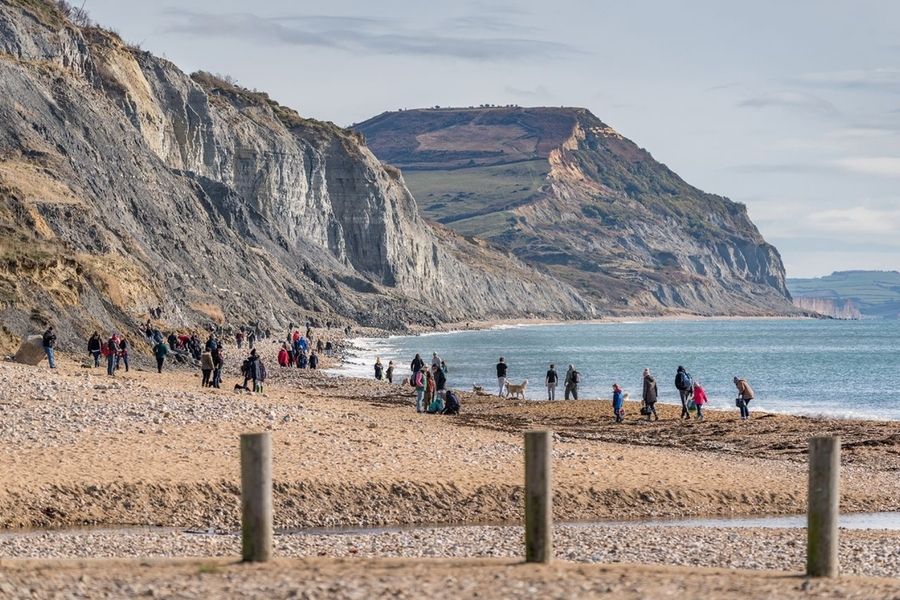
Let’s talk about the cliffs. They’re massive—some reach up to 120 meters—and they’re streaked with bands of ancient rock. Lyme Regis and Charmouth have some of the most fossil-rich cliffs you’ll ever see.
While I explored, I stumbled across arches, stacks, and tucked-away coves. These dramatic cliffs aren’t just stunning—they show how erosion, sea level changes, and shifting land have shaped this coast for millions of years.
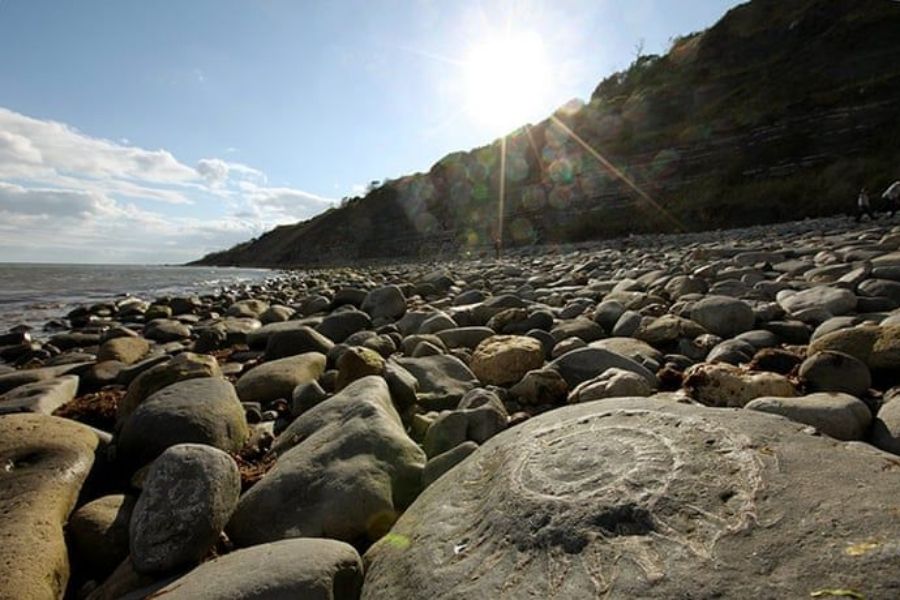
The mix of wild landforms, colorful rocks, and visible fossils makes this place a dream for anyone into geology or just a bit of natural history.
Fossil Hunting in Lyme Regis and Charmouth: Adventure and Discovery
When I set out for the Jurassic Coast, I wanted a mix of adventure and learning. I quickly realized that a good plan, the right gear, and a bit of local know-how can make all the difference.
Planning a Guided Fossil Hunt
Honestly, booking a guided fossil hunt was the smartest move I made in Lyme Regis and Charmouth. Local museums and visitor centers run these tours—you can usually sign up online before your trip.
Most walks started near the beach, lasted a couple of hours, and kicked off with a quick safety chat and some geology basics. The guides knew exactly where to look for ammonites, belemnites, and even the occasional ancient reptile bone.
They shared stories about legendary fossil hunter Mary Anning, which gave the whole experience more depth. I learned way faster than I would’ve on my own, and the guides helped me figure out what I’d found. Plus, being in a group made it easy to swap stories and get questions answered.
Tip: If you want a spot, book early—these walks fill up, especially during weekends and school breaks.
Essential Tools and Safety Tips
I kept my gear simple and light. Here’s what I brought:
| Tool | Purpose |
|---|---|
| Magnifying Glass | To check out small fossils |
| Sturdy Shoes | For safe walking on rocky shore |
| Backpack | To stash finds and water |
| Small Container | To keep delicate specimens safe |
| Gloves | To protect my hands |
I didn’t bother with hammers or breaking rocks—the local rules forbid hammering the cliffs, since this is a World Heritage Site.
I stuck to the foreshore and kept an eye out for loose rocks or unstable ground. The guides reminded us to steer clear of cliff edges because rockfalls happen more often than you’d think.
Weather can turn quickly, so I always dressed for the conditions and brought snacks, water, and sunblock.
Understanding Tides and Natural Erosion
Keeping track of tide times was crucial. The best fossil hunting happened at low tide, when the sea pulled back and revealed fresh fossils washed out from the mud and clay.
After storms, the cliffs shed rocks, making it easier to spot ammonites and other treasures. I always checked the tide schedule and made sure I had time to get back before the water came in.

Knowing that rain, wind, and waves helped uncover these fossils made each find feel like a little gift from the coast itself.
Fossils and Ancient Life: Remarkable Finds Along the Coast
As I walked the Jurassic Coast, I found a surprising variety of fossils. Some, like coiled ammonites, almost jumped out at me from the pebbles. Others—like reptile bones—took a sharper eye and a bit of luck.
Ammonites, Belemnites, and Cephalopods
Ammonites turned out to be everywhere. Their spiral shells ranged from tiny to over 30 cm across.
Belemnites look like smooth, pointed bullets. At first, I missed them, but once I got the hang of their shape, I started seeing them all over.
I even managed to spot a rare nautiloid—another extinct cephalopod with a smooth, curved shell. Not as common, but definitely a nice surprise.
| Fossil | What to Look For | Common Size Range |
|---|---|---|
| Ammonite | Spiral, ribbed shell | 2–30 cm |
| Belemnite | Smooth, bullet shape | 3–10 cm |
| Nautiloid | Curved, simple shape | 2–8 cm |
Marine Reptiles: Ichthyosaurs and Plesiosaurs
Every so often, fossil hunters find marine reptiles in the cliffs and shales. Mary Anning famously found the first ichthyosaur fossil here.
Ichthyosaur fossils sometimes turn up as long jaws, teeth, or paddle-like limbs. Whole skeletons are rare, but once I saw a jawbone with those unmistakable cone-shaped teeth.
Plesiosaurs are a bit different—round bodies, long necks. After storms, their bones and vertebrae occasionally wash up. Finding a vertebra felt like holding a piece of a real sea monster.

These creatures once ruled the Jurassic seas, and their fossils are a wild reminder of how different this coast used to be.
Dinosaurs, Fish, and Crinoids
Dinosaur fossils don’t show up often on the Jurassic Coast, but a few bones and teeth have made appearances. Most of the time, their remains got swept out to sea and mixed with marine sediments.
I found loads of fossil fish scales, small bones, and even some finely preserved fish skeletons in the shales at Charmouth. Local museums sometimes show off whole specimens with delicate bones and fins.
Crinoids—or sea lilies—are distant relatives of starfish. Their fossil stems look like tiny beads or stacks of coins, sometimes making cool patterns in limestone. They’re a glimpse into the rich underwater world that once existed here.
Brachiopods, Bivalves, Echinoids, and Corals
Brachiopods might look like clams, but their insides are different. Their symmetrical shells often cluster together.
Bivalves include ancient oysters and clams. You’ll find their shells whole or in pieces, sometimes lined up neatly in the rocks.
Echinoids (think fossil sea urchins) are round or heart-shaped, sometimes with spines or star patterns. I found a few by gently splitting soft rock near the shore.
Corals from the Jurassic show up as tiny branching tubes or honeycomb patterns in limestone. They’re proof that warm, shallow seas once covered this coast, supporting all sorts of marine life.
Here’s a quick list of the common invertebrate fossils I found:
- Brachiopods (lamp shells)
- Bivalves (ancient oysters, clams)
- Echinoids (sea urchins, heart urchins)
- Corals (branching colonial types)
Museums, Experts, and Education: Learning from the Jurassic Coast
The Jurassic Coast isn’t just about scouring beaches and cliffs. There’s a whole community dedicated to sharing what these fossils mean. Museums and visitor centers offer hands-on learning, and local experts are always ready to help you make sense of your finds.
Lyme Regis Museum and Mary Anning’s Legacy
When I stopped by the Lyme Regis Museum, I got a deeper sense of the area’s fossil hunting history. The museum stands right where Mary Anning lived—she’s one of the most famous fossil collectors ever.
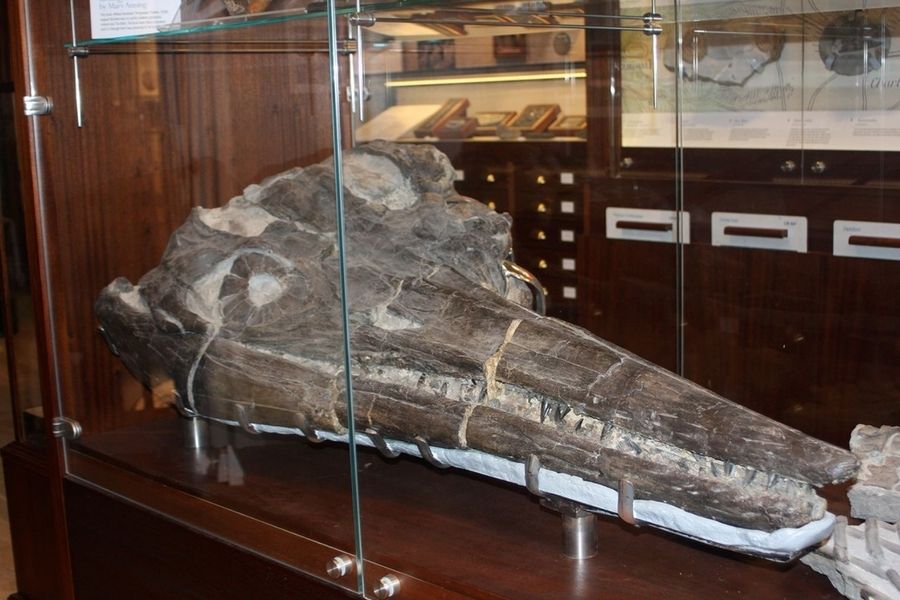
Inside, interactive displays and original fossils bring her story to life. I checked out detailed models and real bones, learning how those ancient sea creatures once thrived here. The museum also runs guided fossil walks, which really helped me figure out what I was actually holding.
Charmouth Heritage Coast Centre
The Charmouth Heritage Coast Centre offered a different vibe but just as much excitement. It’s set right by the cliffs, where fresh fossils often wash out after storms.
Admission was free, and the staff greeted everyone with a genuine enthusiasm. They have displays on local fossils like ammonites and belemnites, and you can actually handle real specimens.
Kids and adults pepper the staff with questions, and they’re happy to help. Regular guided walks make it easy for anyone to try fossil hunting safely, even if you’ve never done it before.
The exhibits explain why the cliffs are always changing and why Charmouth is such a hotspot for fossils. I picked up tips on spotting fossils and learned a bit about how erosion shapes the coast.
Palaeontologists, Geologists, and Local Guided Experiences
Meeting local palaeontologists and geologists was a highlight. These folks really know their stuff and love sharing it. On guided tours, they pointed out hidden fossils, explained the age of rock layers, and showed us safe ways to collect.
Most guided walks start from places like the Lyme Regis Museum or the Charmouth Heritage Coast Centre. The guides don’t just help you find fossils—they explain the rules for collecting, so we all help protect the area.
Learning straight from the experts took the guesswork out of fossil hunting. It made the whole experience way more engaging than going it alone.
Here’s a quick look at some expert-led experiences I tried:
| Experience | Location | Led by |
|---|---|---|
| Guided Fossil Walks | Lyme Regis, Charmouth | Geologists/Palaeontologists |
| Fossil Identification Sessions | Heritage Coast Centre | Staff/Volunteers |
| Museum Demonstrations | Lyme Regis Museum | Educators |
Exploring Devon and Dorset’s Coastal Gems
I spent some time wandering the Jurassic Coast and, honestly, I never expected to find such a wild mix of fossil sites and natural wonders. Every stretch of coastline seemed to have its own personality—sometimes it was fossil-littered beaches, other times it was rugged cliffs or quirky landmarks.
Iconic Fossil Sites: Sidmouth, Seaton, Beer, and Branscombe
Sidmouth greeted me with its red sandstone cliffs. I poked around and found tiny fossils hiding in the rocks—ancient sea creatures, mostly.
Heading east, I wandered into Seaton. It’s a laid-back spot, all smooth pebbles and the occasional ammonite if you’re lucky.
Beer, a postcard-perfect village, surprised me with those striking white cliffs at Beer Head. I actually found some bivalve shells there, and the beach itself kept crumbling to reveal prehistoric traces. From Beer, I took the path toward Branscombe.
Landslides in Branscombe sometimes expose fossils in these massive rocks. Standing there, staring at all those layers in the cliffs, I couldn’t help but think about just how slowly millions of years pass by.
| Site | Fossil Types | Features |
|---|---|---|
| Sidmouth | Shells, sea creatures | Red cliffs, easy trails |
| Seaton | Ammonites, small finds | Pebble beach, quiet |
| Beer | Bivalves, trace fossils | Chalk cliffs, scenic views |
| Branscombe | Mix of fossils | Landslides, large boulders |
Other Highlights: Exmouth, Budleigh Salterton, and Orcombe Point
Exmouth kicked off my trip with its long, sandy beaches and those dramatic red cliffs. The rocks here are some of the oldest around, and while Triassic fossils exist, honestly, I didn’t come across many.
Budleigh Salterton felt peaceful, with smooth pebbles stretching along the coast. Not exactly a fossil hotspot, but I did find a few interesting stones.
Orcombe Point, just west of Exmouth, caught my eye with the “Geoneedle” monument. It marks the official start of the Jurassic Coast and shows off these wild, colorful rock layers.
Key Features:
- Exmouth: Triassic rocks, striking scenery
- Budleigh Salterton: Pebble beaches, rare finds
- Orcombe Point: Start of Jurassic Coast, Geoneedle
Famous Landmarks: Durdle Door, Lulworth Cove, Chesil, and Old Harry Rocks
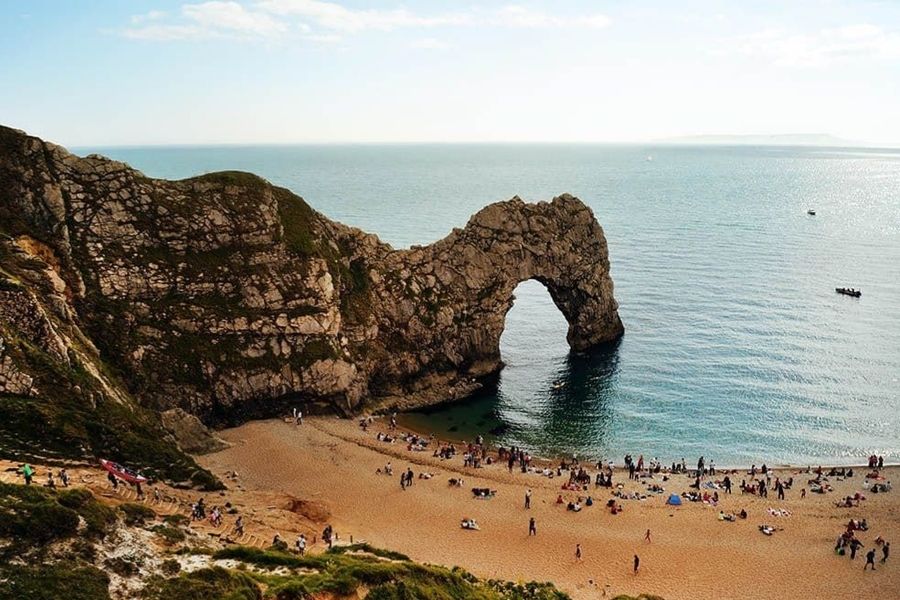
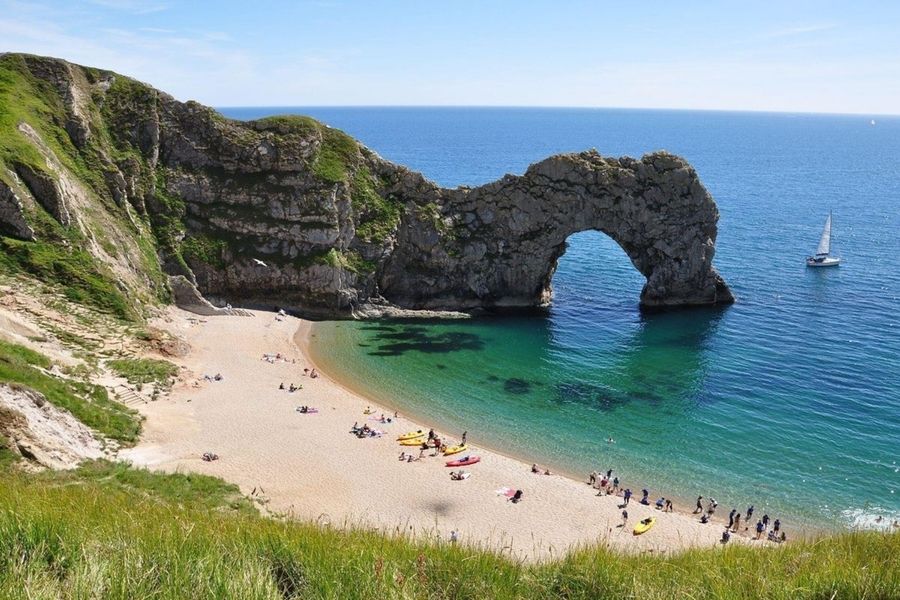
Once I crossed into Dorset, I couldn’t resist the iconic sights. Durdle Door stands out—a limestone arch jutting right out of the sea.
Lulworth Cove, with its perfectly round bay, made for a fun afternoon of rock scrambling and searching for fossilized shells.
Chesil Beach goes on for what feels like forever, a narrow shingle bank that creates a lagoon behind it. It’s not really a fossil beach, but the endless pebbles and salty air made for a memorable walk.
At the far eastern end, Old Harry Rocks rose up as these chalk-white pillars, shaped by centuries of wind and waves. It’s hard not to feel small when you’re standing there, watching nature do its thing.
Making the Most of Your Jurassic Coast Adventure
If you want to get the best out of the Jurassic Coast, timing matters. I found that connecting with local life and respecting the environment made the whole fossil hunting thing way more enjoyable.
When to Visit and Understanding Low Tide
You’ll have the best luck fossil hunting at low tide. That’s when more of the beach and those famous pebble beds show up.
I always checked the tide tables before heading out. At low tide, I could wander further along the shore and poke around newly revealed patches where the sea had just pulled back.
After storms or heavy rain, fresh fossils sometimes tumble out of the cliffs—especially after a wild winter. I always brought sturdy shoes with a good grip, since the rocks and chalk get slippery near the water.
Early mornings felt quieter, and I could explore without bumping into crowds. Some stretches of coastline get risky after rain, though—cliffs can crumble. I kept an eye out for warning signs and stayed well back from anything that looked unstable.
Local Culture and Cuisine: Seafood and Watersports
Lyme Regis and Charmouth really buzz with life shaped by the sea. The restaurants serve up local seafood—crab, mussels, fish, you name it, usually caught that morning.
There’s just something about eating fish and chips while watching the tide roll in. That’s a memory I’ll hang onto.
A list of local specialties I tried:
- Lyme Bay scallops
- Grilled mackerel
- Fresh crab sandwiches
The coast isn’t just about fossils and food, though. I saw people paddleboarding, kayaking, and even taking sailing lessons.
After a morning of fossil hunting, I loved grabbing a swim or renting a paddleboard. The water’s usually clearer than you’d think.
Local shops sell all sorts of handmade crafts and fossil-themed souvenirs. Browsing those gave me a real sense of the pride and community around here.
Environmental Protection and Responsible Collecting
The Jurassic Coast sits under strict protection, so you really have to respect the place if you’re out fossil hunting. I stuck to the rules—only picking up loose fossils lying right there on the beach.
Digging into the cliffs or chalk? That’s a big no. Not just because it’s forbidden, but honestly, it just feels wrong to mess with those ancient layers.
Responsible collecting keeps the habitat safe for all sorts of plants and wildlife. I mean, some fossils are so rare or scientifically important, you never know what you’ll stumble across.
Whenever I spotted something big or unusual, I’d let the local museum or visitor center know. That way, real experts could take a closer look.
I made a point to steer clear of fragile cliff edges. No fossil is worth risking safety—or damaging the coastline.
And, of course, I brought along a small bag for any trash I made. It’s a simple habit, but it really helps keep the beach beautiful for the next folks who wander by.
Honestly, this mindful approach made the whole adventure feel more rewarding. There’s something satisfying about knowing you’re helping protect the coast for everyone who comes after.
