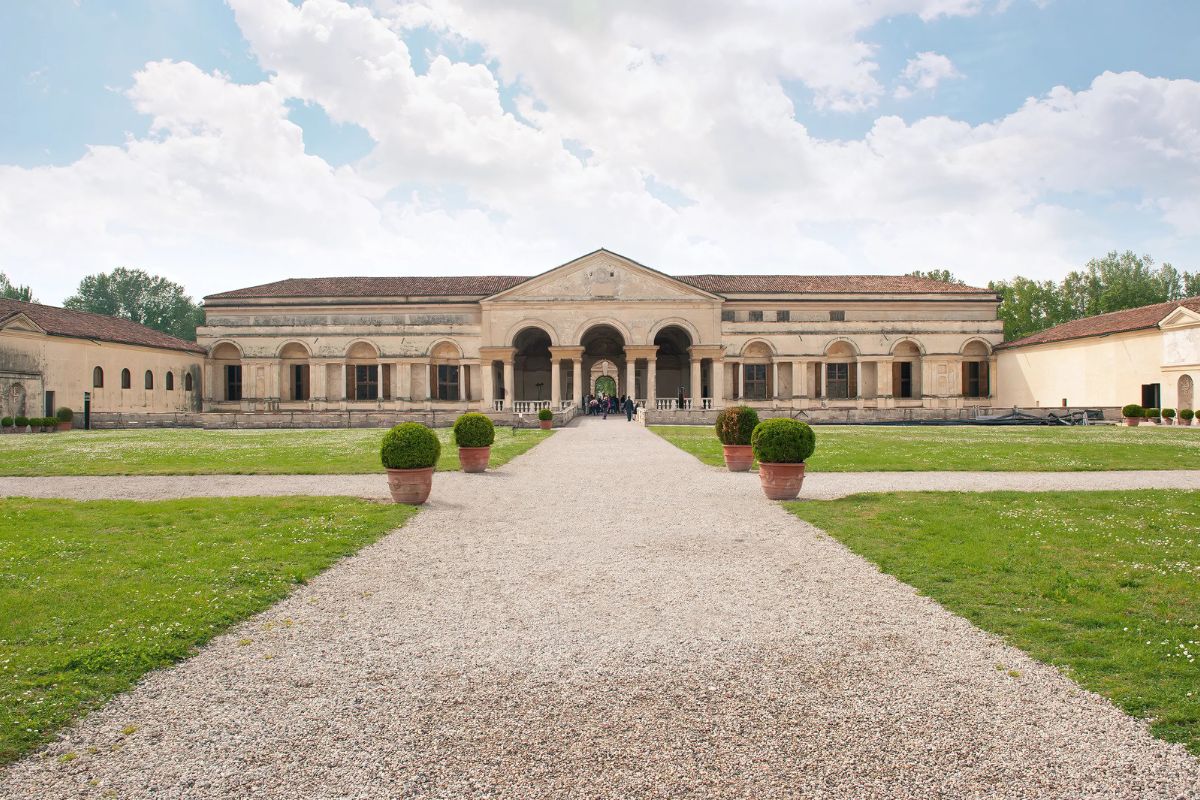
Stepping through the grand doorway of Palazzo Te in Mantua, I felt like I’d discovered Italy’s best-kept secret. This pleasure palace, built for Duke Federico II Gonzaga in the 1520s, stands majestically in a meadow where the duke once kept his prized horses.
The frescoes created by Giulio Romano transform ordinary walls into extraordinary worlds of mythology, optical illusions, and sometimes shockingly sensual scenes.
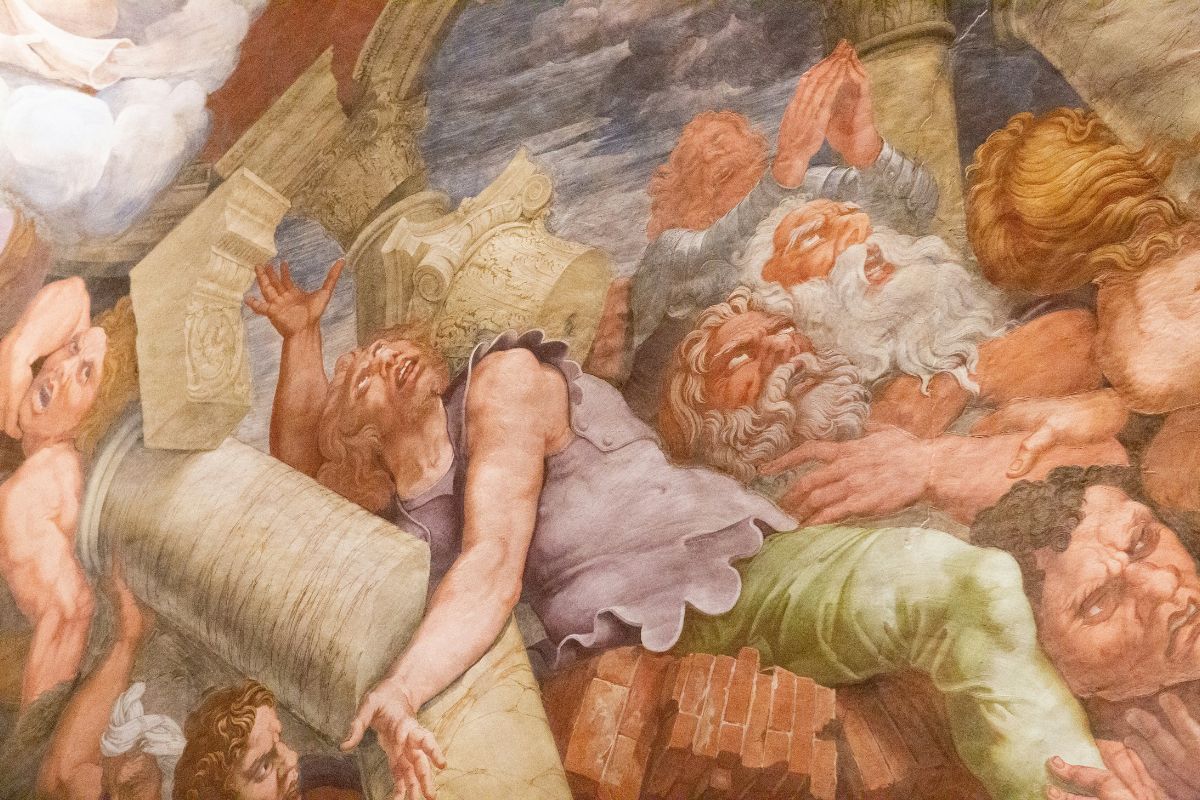
The Camera degli Sposi took nearly a decade to complete, and I can see why as I gaze upward at the intricate details. Romano’s masterpiece, the Sala dei Giganti, literally surrounds visitors with art – the walls, ceiling, and even corners blend seamlessly into a dramatic scene of gods battling giants.
It’s like being inside the painting itself, a 16th-century version of virtual reality.
Wandering through Mantova’s pleasure palace offers a rare glimpse into Renaissance desires and fantasies. Unlike more formal royal residences, Palazzo Te was designed specifically for entertainment and escape.
The building itself sits peacefully in the meadows just outside the city center, making it the perfect afternoon trip after exploring Mantua’s historic core.
History and the Gonzaga Legacy
Walking through Mantua’s Ducal Palace, I found myself immersed in the rich history of one of Italy’s most influential noble families. The Gonzagas shaped not just this magnificent structure but the entire cultural landscape of Renaissance Italy.
The Rise of the Gonzaga Family
The Gonzaga dynasty ruled Mantua for nearly 400 years, transforming a modest city into a Renaissance powerhouse. Their story begins in 1328 when Luigi Gonzaga seized control from the Bonacolsi family.
Under Gianfrancesco Gonzaga, the family received the title of Marquis in 1433, elevating their status. They later became Dukes, cementing their position among Europe’s elite nobility.
What impressed me most was how the Gonzagas used patronage to build their reputation. They supported artists like Pisanello, whose rediscovered Arthurian frescoes in the palace still captivate visitors today.
The family’s influence extended far beyond Mantua’s borders through strategic marriages and alliances with powerful European houses. Despite ruling a small territory, they projected power through culture and diplomacy.
Ducal Palace: A Testament to Power
The palace itself is less a single building and more a sprawling “city within a city.” As I explored its 500+ rooms, I understood why it’s one of Europe’s largest historical residences.
Construction evolved over centuries, with each Gonzaga ruler adding their mark. The result is a fascinating labyrinth of rooms, towers, gardens, and even churches that showcase their immense wealth and artistic vision.
The palace became a treasure house of Renaissance art. The Gonzagas commissioned works from the greatest artists of their time, including Andrea Mantegna, whose paintings transformed entire rooms into immersive environments.
What struck me was how the decoration reflected their worldly ambitions. Despite Mantua being landlocked, the palace featured Ottoman-themed paintings and maps of foreign territories – visual statements of the family’s international outlook.
Exploring the Camera degli Sposi
Hidden away in the northeastern tower of Mantua’s Ducal Palace sits one of the Renaissance’s most magical spaces. The Camera degli Sposi, or “Bridal Chamber,” captivated me with its breathtaking frescoes and clever artistic tricks.
Uncovering the Bridal Chamber
I entered the square room (about 8 meters on each side) through a modest doorway, unsure what to expect. The Chamber isn’t large, but its impact is immediate and powerful. Located on the first floor of the tower in the private section of the palace, this intimate space feels both grand and personal.
Windows on the northern and eastern walls let in natural light that plays across the stunning frescoes. Though called the “Bridal Chamber,” historians debate whether it served as a bedroom or more likely as a reception room for the Duke.
I was surprised to learn the room is part of Italy’s largest museum complex. The limited daily visitor count means booking tickets well in advance is essential, especially during the summer months.
Andrea Mantegna’s Masterpiece
Mantegna worked on these incredible frescoes from 1465 to 1474. Nine years to complete a single room! Standing beneath his famous ceiling oculus—a painted opening that seems to reveal the sky above—I understood why it took so long.
The illusion is perfect. Painted cherubs and courtiers peer down from a balustrade that doesn’t exist. This trompe l’oeil technique creates an astonishing 3D effect that still impresses visitors 550 years later.
The walls display scenes of the Gonzaga court life with remarkable detail and realism. Mantegna’s use of perspective was revolutionary for his time. I spent nearly an hour studying the faces, the architectural details, and the way light seems to pour from both the real and painted windows.
The Artistic Flourishes of Renaissance Mantua
Mantua’s artistic legacy blooms within the walls of its magnificent palaces. The city became a Renaissance powerhouse where artistic techniques evolved and masterful works transformed ordinary spaces into visual feasts.
Leonardo da Vinci’s Influence
Leonardo’s genius cast a long shadow over Mantua’s artistic development. During his visits to the Gonzaga court, he brought revolutionary ideas about perspective and anatomical accuracy.
I noticed how his influence appears in subtle details throughout the palace. Artists who followed incorporated his sfumato technique—that dreamy, soft-edged approach to painting that gives figures an almost ethereal quality.
What struck me most was how Leonardo’s scientific approach to art changed Mantuan painting forever. His meticulous studies of light and shadow inspired local artists to observe nature more carefully.
The palace’s collection includes several works showing this Leonardesque influence, particularly in the delicate handling of fabrics and the natural positioning of figures.
Mantegna and the Court Artists
Andrea Mantegna’s imprint on Mantua is impossible to miss. As court painter to the Gonzagas for nearly 50 years, his work defines the city’s artistic identity.
I stood breathless before his masterpiece—the Camera degli Sposi. The ceiling’s oculus creates an astonishing trompe l’oeil effect. Looking up, I saw painted putti and women peering down at me from a false balustrade.
Mantegna’s revolutionary use of perspective transformed flat walls into three-dimensional spaces. His frescoes blend seamlessly with architectural elements, creating optical illusions that still amaze today.
Other court artists like Giulio Romano continued this tradition. Romano’s work in the Palazzo Te shows how Mantegna’s innovations evolved into increasingly dramatic and dynamic compositions.
Fresco Techniques and Chiaroscuro
The frescoes of Mantua showcase remarkable technical achievements. Artists worked quickly on wet plaster, requiring confident brushstrokes and perfect planning.
I examined sections where the sinopia (preliminary sketches) remain visible, revealing the artist’s original design process. These underdrawings were covered with fresh plaster each day, creating what artists called a “giornata”—the amount completed in one working day.
The masterful use of chiaroscuro—dramatic contrasts between light and dark—gives Mantuan frescoes their distinctive power. These techniques create an illusion of depth that makes flat surfaces appear three-dimensional.
What fascinated me most was seeing how these Renaissance artists experimented with different pigments. The vibrant blues derived from crushed lapis lazuli still retain their intensity centuries later.
Symbols and Stories in the Frescoes
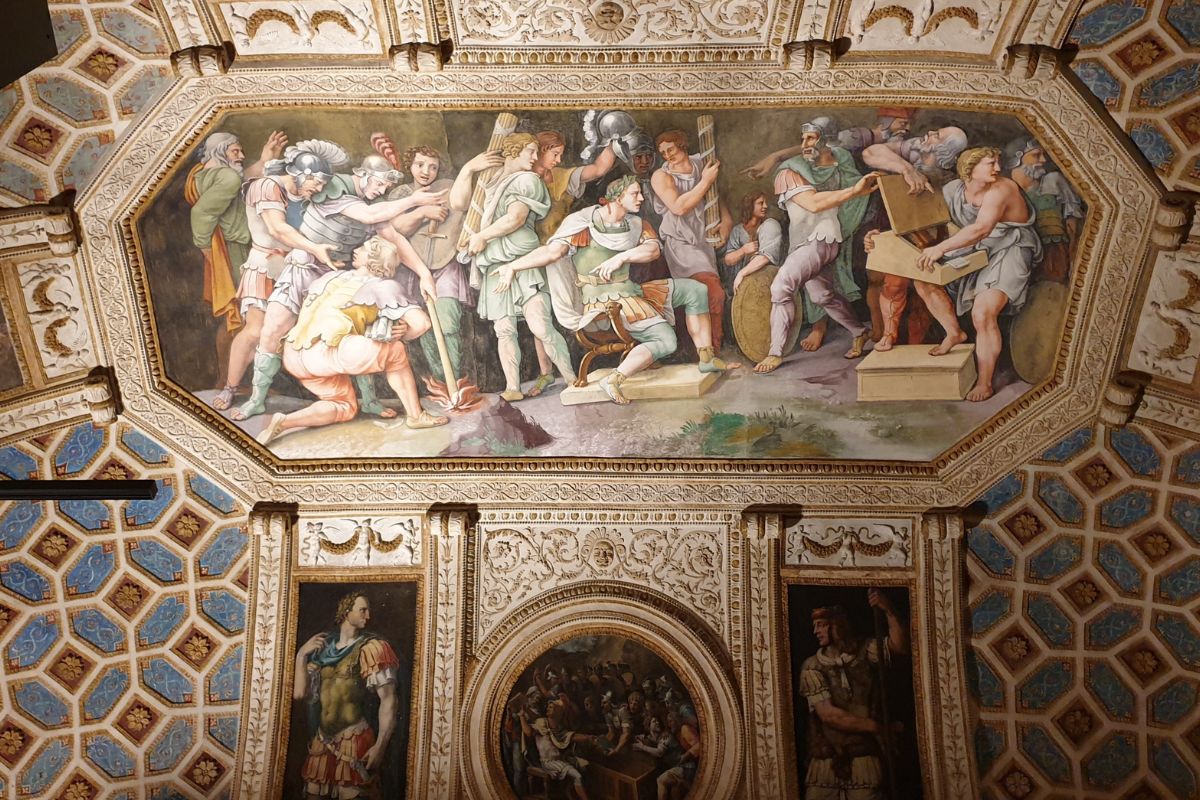
The frescoes inside Palazzo Te are a treasure trove of symbolic imagery that tell fascinating stories from mythology and religion. As I wandered through the rooms, I found myself captivated by the rich narratives painted across walls and ceilings.
Decoding Mythology and Virtue
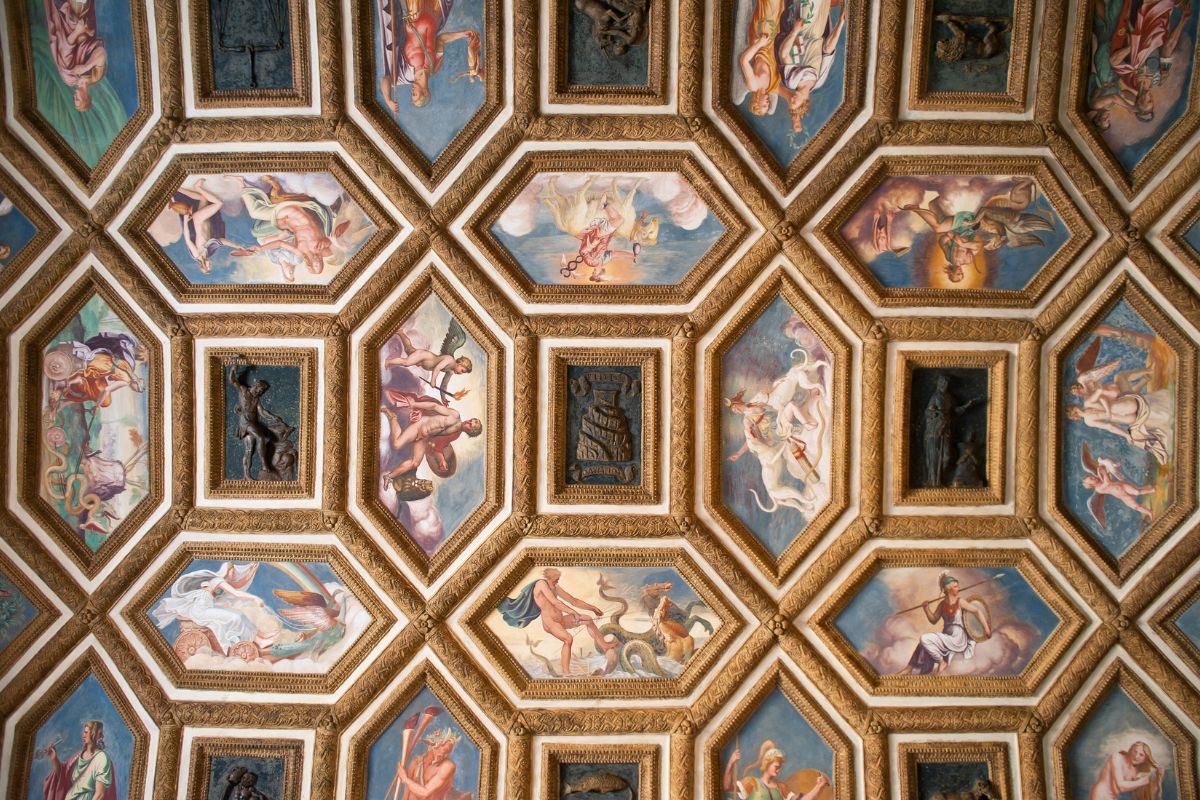
The Palace’s most striking frescoes showcase mythological scenes in vivid detail. In the octagonal sections of one room, I spotted stories nestled among depictions of winds and weather deities. Playful putti (cherub-like figures) fight and frolic across the painted surfaces.
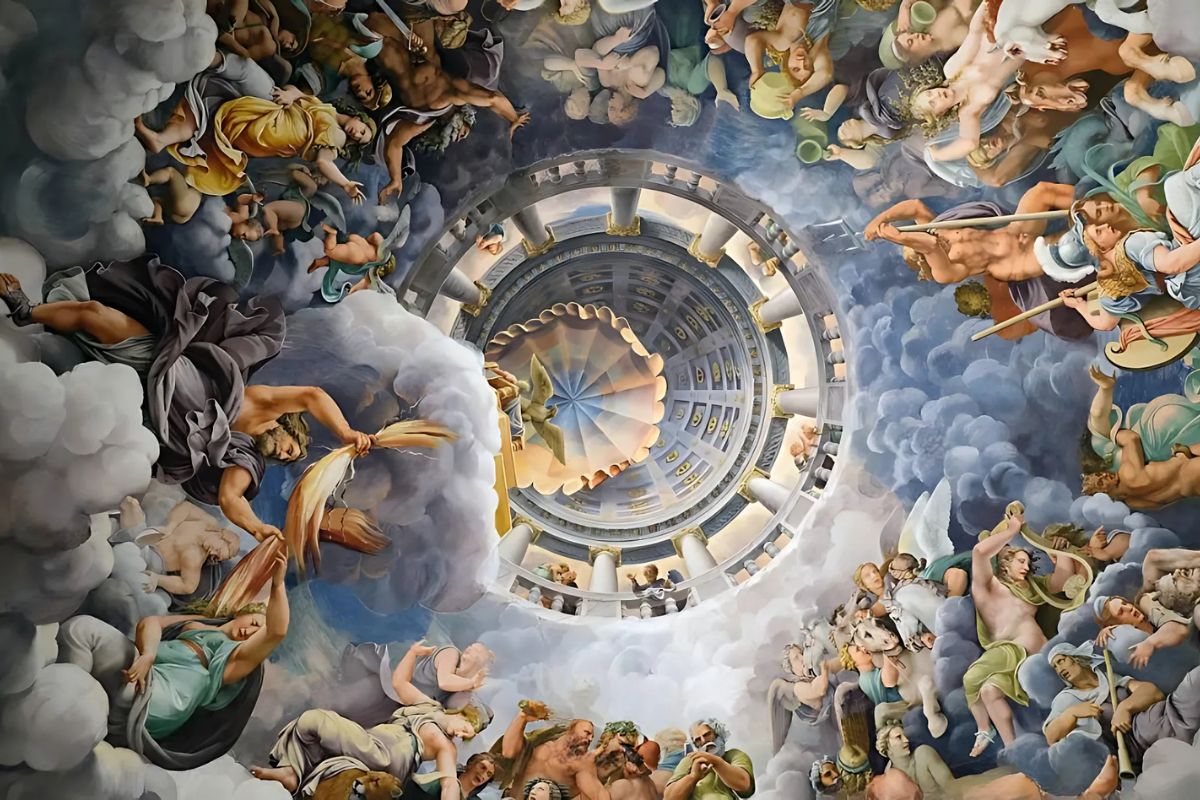
The Giants Room left me speechless. Massive figures tumble from the heavens in a chaotic scene that seems to break through the walls themselves. The artist created an illusion so powerful that I felt I might be crushed by falling debris.
Various virtues appear throughout the artwork. Fortitude stands strong amid chaos, while Prudence gazes into her mirror of wisdom. These personifications reminded me how Renaissance painters used symbolism to teach moral lessons.
Religious Narratives and Ecclesia
Religious themes intertwine with classical imagery throughout the palace. The pendentives (corner sections) display heroes from the Old Testament, both male and female figures who embodied virtues cherished by Renaissance society.
Ecclesia, the personification of the Church, appears in several scenes. She stands as a reminder of the delicate balance between classical mythology and Christian faith that characterized Renaissance art.
I noticed how Justice holds her scales in perfect balance in one corner fresco. In another, Charity extends her arms to those in need. These religious virtues contrast with scenes of luxury that dominate other rooms.
The palace masterfully blends sacred and profane, creating a space where Truth emerges through artistic beauty rather than dogma.
The Palazzo Te: A Renaissance Pleasure Domain
Walking into the Palazzo Te feels like stepping into a world where fantasy and reality blend. This lavish summer palace, built just outside Mantua’s city walls, was designed as a place for Duke Federico Gonzaga to escape, entertain guests, and impress visitors with its artistic wonders.
Architectural Wonders of Giulio Romano
I was immediately struck by the genius of Giulio Romano, Raphael’s talented pupil, who designed this pleasure palace around 1525. The building’s perfect square layout with its central courtyard shows Romano’s masterful understanding of classical proportions. Yet he wasn’t afraid to break rules!
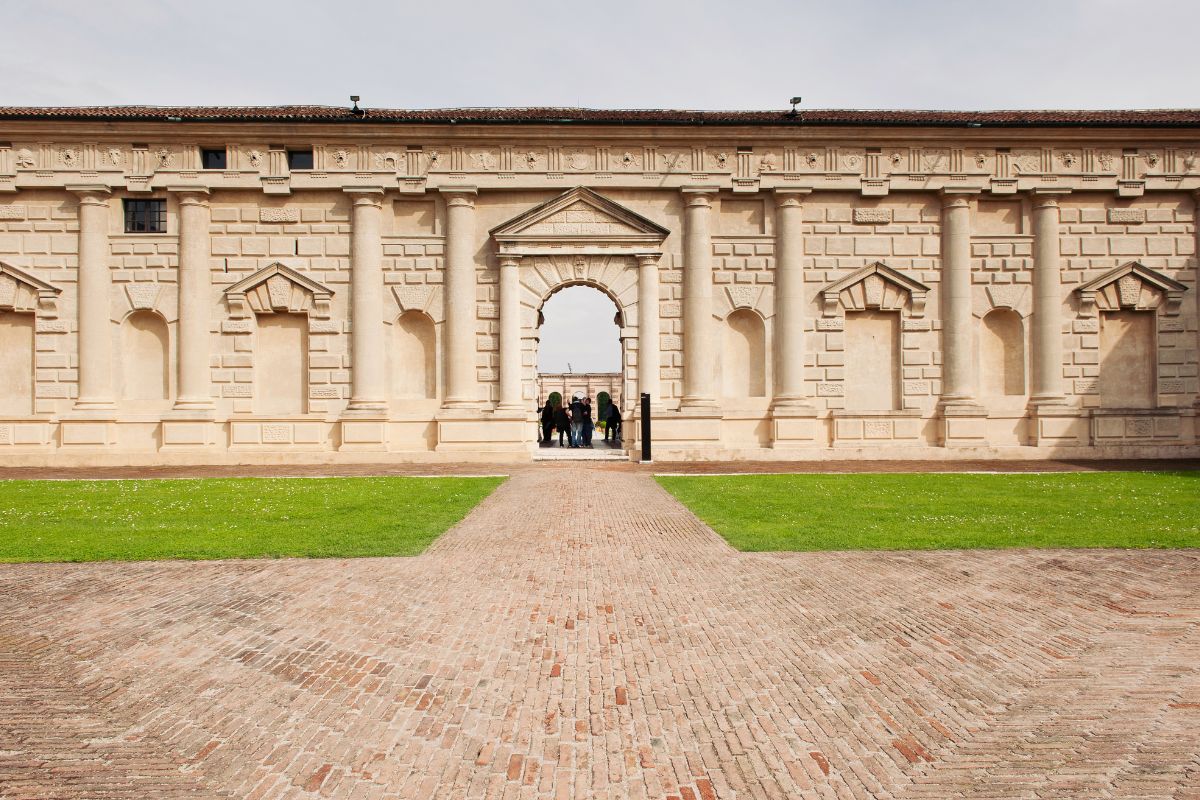
Throughout the palace, I noticed how Romano played with architectural elements in unexpected ways. Some stone blocks seem to slip from their positions, and keystones appear to be falling. These aren’t mistakes but deliberate choices that make the building feel playful and alive.
The facade’s rustic stonework gives way to elegant interiors with a seamless flow between rooms. Romano designed every detail – from floor patterns to door frames – creating a complete artistic vision that still amazes me five centuries later.
Exploring Mythology Amidst the Giants
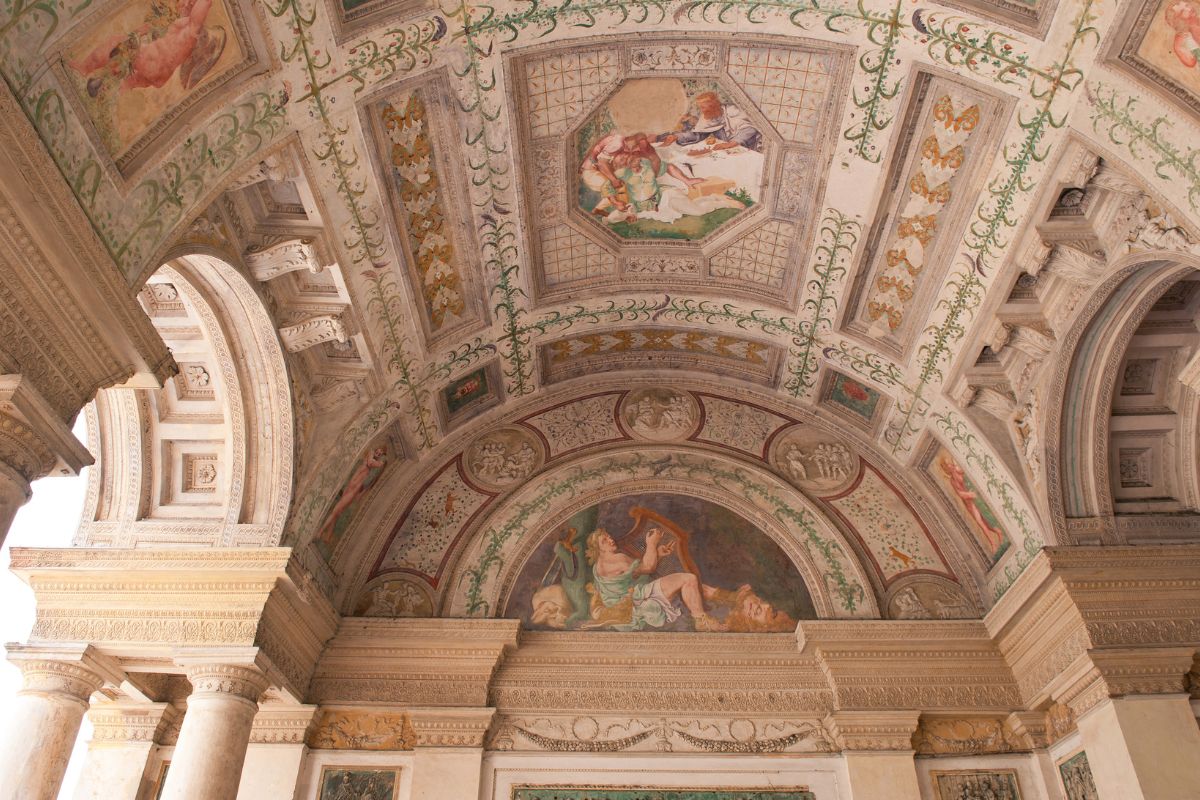
The Hall of Giants took my breath away. Its dramatic frescoes cover every surface. Standing in this room, I felt tiny as painted giants tumbled down around me in a scene of chaos and destruction.
These incredible paintings tell the story of Jupiter punishing the giants who dared challenge the gods. The walls show bodies in various states of anguish. Columns crash down and mountains crumble. Romano created an illusion where the boundary between painted and real architecture disappears completely.
In other rooms, I discovered more mythological scenes painted with equal skill. The Hall of Psyche displays erotic imagery that must have shocked some visitors even in the Renaissance. These bold choices reflect Federico’s desire for a private retreat. He wanted a place where he could escape the formality of court life.