
Glastonbury is a place where legends seem to hang in the air. On my last trip, I decided to dive into two of its most iconic sites—Glastonbury Tor and the haunting ruins of Glastonbury Abbey.
Standing atop Glastonbury Tor, I honestly felt the stories and history pressing in. This hill isn’t just a mound of earth; it’s a living part of the Avalon legend.
As I wandered the Abbey’s peaceful grounds, it hit me how deeply Celtic and Christian traditions intertwine here. Together, the Tor and Abbey create an atmosphere that’s hard to put into words—like you’re closer to the heart of Glastonbury than anywhere else.

My walk through these landmarks wasn’t just about the views. The legends and stories felt real, almost as if they were unfolding right there in front of me.
Glastonbury Tor: Climbing the Mythical Hill
Climbing Glastonbury Tor is something I’ll never forget. The history, the wild scenery, and the way the light hits the landscape—it all stands out.
The hill’s shape is unmistakable, and the walking paths wind up through grass and old terraces. St Michael’s Tower, perched at the top, draws your eye from miles away.
The Conical Hill and its Atmosphere
Glastonbury Tor rises sharply above the Somerset Levels, its cone shape instantly recognizable as you get closer. The slopes look smooth but you’ll spot deep terraces, which some say are leftovers from ancient farming or maybe even Iron Age earthworks.
There’s a strange sense of calm here, but you can’t ignore the legends swirling around. Locals and visitors both treat it as a mystical place, often linking the hill to King Arthur, Avalon, and old pagan myths.

Even the air feels different at the base. I mostly heard birdsong and the occasional sheep. It’s free to visit, and I saw everyone from hikers to spiritual seekers making their way up, all with their own reasons for being there.
The Climb and Walking Trails
You’ll find a few trails leading up the Tor, but most people start near the main road through Glastonbury. The main path is easy to follow, with some steps, though it gets pretty steep in spots.
I took my time, pausing now and then to catch my breath or just stare out over the countryside. Benches pop up along the way, and I think most people can handle the climb, though the steep bits might slow you down.
Wildflowers line the path, and I caught the gentle sound of a spring bubbling nearby. The mix of fresh air and natural beauty makes the effort feel totally worth it.
Whether you’re alone or with friends, the trail up feels safe and friendly.
Views of Avalon and Somerset Levels
At the top, the view just stops you in your tracks. The Vale of Avalon stretches out in every direction, and on a clear day, the Somerset Levels look endless.
Fields, rivers, and meadows spread out below, with Glastonbury town looking tiny from above. If you catch it at sunrise or sunset, the whole landscape glows gold and orange.
Some people brought cameras, but plenty just sat quietly, soaking it all in. The summit is open, with places to sit and let your mind wander across the miles of countryside.
St Michael’s Tower and Archangel Connections
St Michael’s Tower stands right at the top. It’s the last bit left of a 14th-century church dedicated to St Michael, a saint who’s often linked to high places and mysterious ley lines.
I learned that St Michael is seen as a guardian of sacred sites, and you’ll find his name on many hills along these invisible lines that supposedly connect spiritual places across England.
The tower itself offers a break from the wind and gives everyone a spot to pause. People gather here to reflect, meditate, or just admire the old stonework.
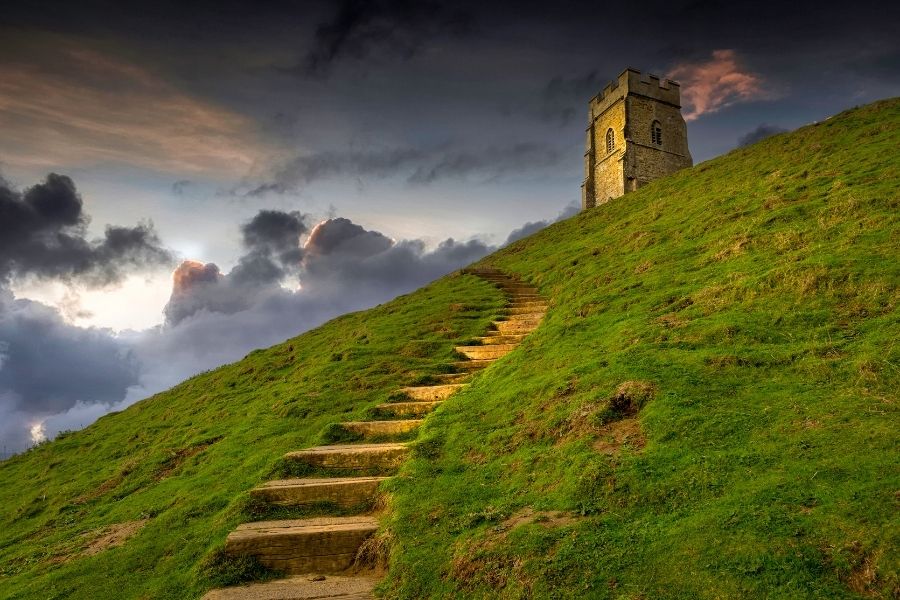
There’s a strong sense of history, and the way the Tor, the archangel, and all the local legends come together adds an extra layer of meaning to the climb.
Legends and Mystical History of Avalon
Glastonbury Tor and Abbey have always been tangled up in legends and ancient stories. King Arthur, the Holy Grail, and all sorts of religious figures shape the area’s mystical reputation.
Isle of Avalon: Myths and Legends
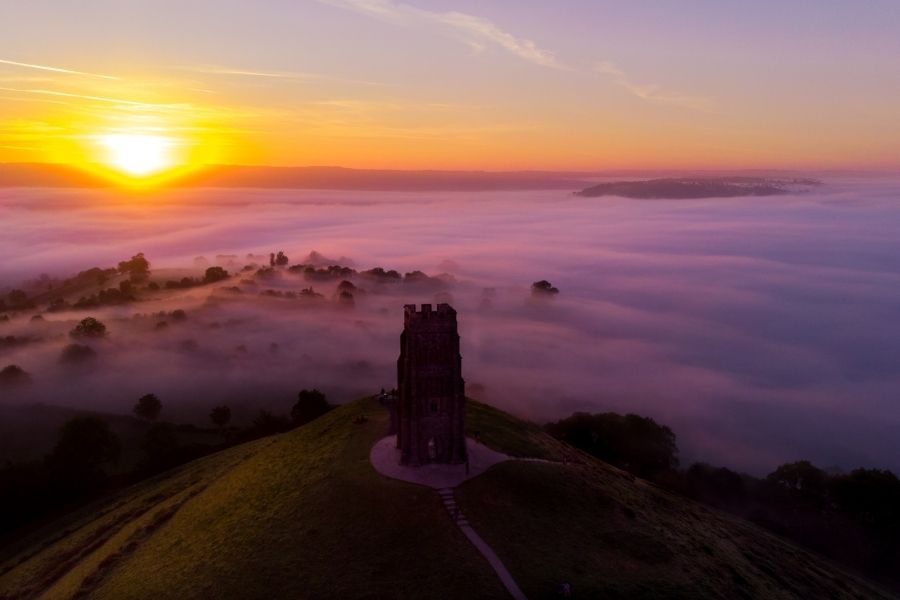
A lot of people believe Glastonbury Tor is the legendary Isle of Avalon, that magical place from old tales. The Tor sits on a hill rising above the Somerset Levels, making it look like an island when the mist rolls in.
In the stories, Avalon is the “Isle of Glass.” Some say that’s because of how the water once shimmered around the hill. The whole area feels like a bridge between the natural world and something a bit more spiritual.
Legends say Avalon is where heroes go to heal and find wisdom. Wounded warriors supposedly came here to rest. For many, Avalon stands as a symbol of hope and transformation, hidden in plain sight.
King Arthur and Arthurian Legend
King Arthur’s story is closely tied to Glastonbury. After the Battle of Camlann, people say Arthur went to Avalon to heal, never to return.
In 1191, monks at Glastonbury Abbey claimed they found a lead cross and the graves of Arthur and Guinevere. The cross read “Here lies Arthur, king,” which must have caused quite a stir back then.
Excalibur, Arthur’s legendary sword, is also connected to Avalon. Some say it was forged there; others believe Arthur’s fate and his bond to the land give Glastonbury its legendary vibe.
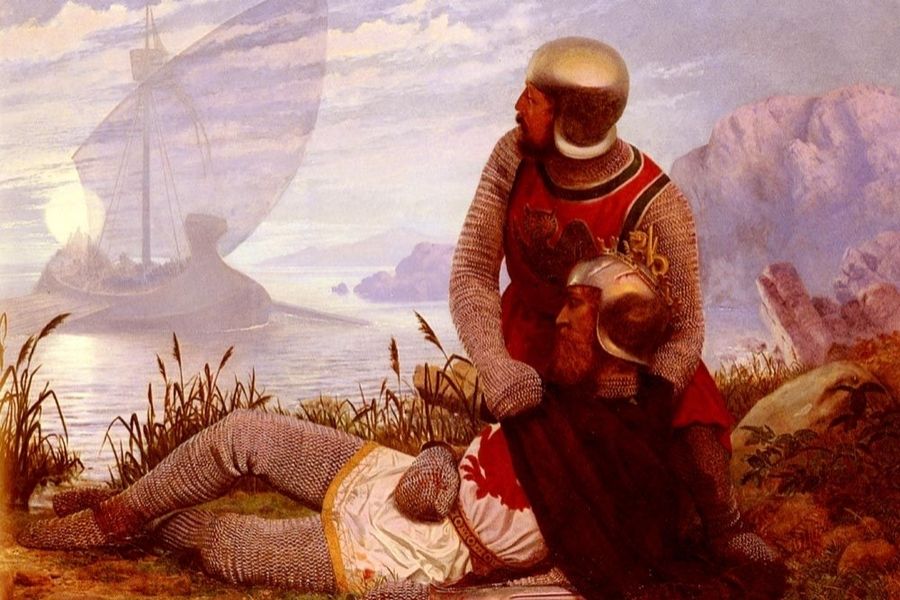
Map:
| Figure | Connection to Avalon |
|---|---|
| King Arthur | Taken to Avalon after battle |
| Guinevere | Said to have been buried in Glastonbury |
| Excalibur | Connected to Avalon’s magic |
Joseph of Arimathea and the Holy Grail
Christian legends tie Joseph of Arimathea to Glastonbury Abbey and the Holy Grail. Joseph, who helped bury Jesus after the Last Supper, supposedly brought the Grail to England.
According to legend, Joseph arrived in Glastonbury and planted his staff, which grew into the “Glastonbury Thorn.” That tree became part of the town’s sacred story.
The Holy Grail—the cup from the Last Supper—is closely linked to both the Abbey and Arthur. Some say the Grail was hidden here, drawing pilgrims who hoped for a taste of spiritual power and healing.
Key Points:
- Joseph is said to have founded the Abbey
- Some believe the Grail is hidden at Glastonbury
- The Glastonbury Thorn tree remains a symbol of blessing
Other Legendary Figures and Stories
Glastonbury’s stories go way beyond Arthur. The Welsh king Melwas supposedly kidnapped Queen Guinevere and brought her to Glastonbury, with Arthur coming to the rescue.
Gwyn ap Nudd, the Lord of the Underworld in Welsh myth, is another key figure. Some tales place his home right inside Glastonbury Tor, mixing local folklore with old Celtic beliefs.

There’s even talk of a great earthquake that shook the Abbey. All these tales and traditions blend together, giving Glastonbury its unique sense of wonder.
Notable Legends:
- Queen Guinevere and Melwas
- Gwyn ap Nudd, lord of the underworld
- Earthquake legend surrounding the Abbey
Glastonbury Abbey: Sacred Ruins and History
Glastonbury Abbey isn’t just a pile of old stones. Even in ruins, it carries a deep sense of history, faith, and legend.
Stories of pilgrims, sacred relics, and kings echo through its grounds.
A Spiritual Pilgrimage Destination
Walking through the abbey grounds, I could see why so many people made pilgrimages here in the Middle Ages. Travelers came from all over England and even further.
Many believed King Arthur was buried here, and there were whispers that Jesus himself walked these fields with Joseph of Arimathea.
Pilgrims often came for healing, praying in the Lady Chapel or just standing on this storied ground. Even now, spiritual seekers and curious visitors walk the same paths as medieval believers.
The abbey’s ritual status helped put Glastonbury on the Christian map of Britain.
Dissolution of the Monasteries and Richard Whiting
When King Henry VIII ordered the Dissolution of the Monasteries in the 16th century, Glastonbury Abbey’s days as a spiritual center ended. In 1539, the Crown seized the abbey, stripped its wealth, and left the buildings to crumble.
Richard Whiting, the last abbot, tried to defend the abbey’s traditions. Officials accused him of treason for refusing to accept the king’s authority over the church, and he was executed on Glastonbury Tor.

His death marked the end of centuries of religious life here—a powerful and somber chapter in the abbey’s story.
Legendary Lady Chapel and Glastonbury Thorn
The Lady Chapel stands on a spot with deep roots in legend. Some say Joseph of Arimathea built Britain’s first Christian church here.
Pilgrims flocked to the chapel, seeking the Virgin Mary’s blessing. Those blue Purbeck marble columns still stand, a quiet reminder of what once was.
Near the chapel, I found the Glastonbury Thorn—a tree that blooms near Christmas and Easter. Tradition says Joseph planted it, and its blossoms are still sent to the Queen every year, keeping the legend alive.
Architectural Highlights and Facilities
Walking through the arches and broken walls, I saw the remains of 12th and 13th-century craftsmanship. The nave and gothic windows hint at the abbey’s former size and beauty.
Even though much was lost after the dissolution, you can still imagine how grand it must have been.
These days, the site has a museum, restrooms, and a peaceful park. Maps and displays help visitors make sense of what they’re seeing.
The ruins are easy to explore, with trails and signs that share plenty of detail for anyone curious about both history and legend.
Sacred Sites Around Glastonbury Tor
The area around Glastonbury Tor is packed with unique sacred sites and natural springs. I found these places deeply tied to Glastonbury’s legends, history, and that mysterious earth energy people talk about.
Chalice Well and the Red Spring
Chalice Well sits at the bottom of Wellhouse Lane, just a short walk from the Tor. The well is ancient and always flowing, with water that runs red from iron—hence the nickname, the Red Spring.
Visitors, myself included, come for the Grail legends and the peaceful vibe. People fill bottles with the mineral-rich water or just sit by the Lion Head Spout.
The gardens are walled-in, with benches for quiet reflection and a pond fed by the spring.
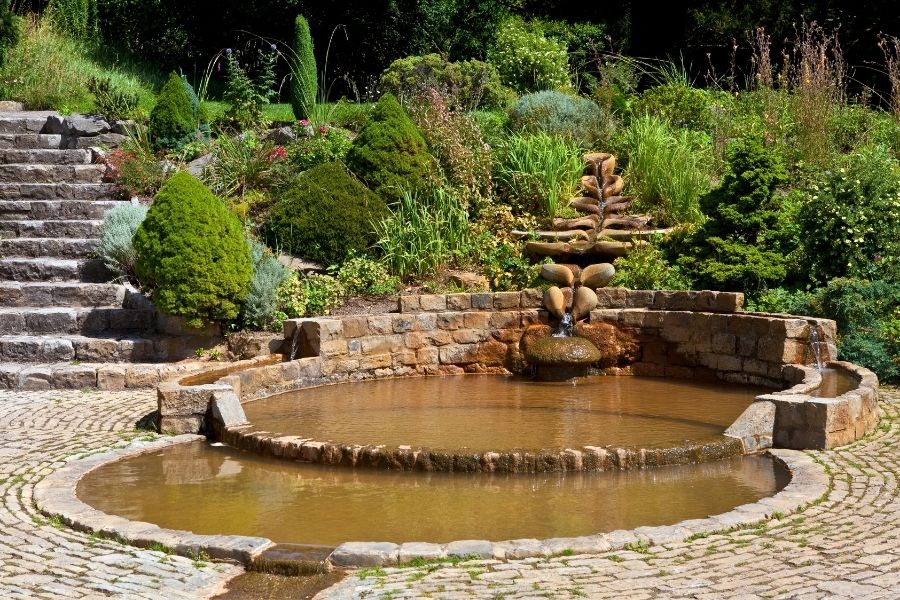
Chalice Well is open to all, with spaces for meditation and gentle rituals. Signs in the garden share stories and history.
It’s a spot where nature and tradition come together in a really gentle, welcoming way.
White Spring Sanctuary
Right across the lane from Chalice Well, you’ll find the White Spring Sanctuary. The water here is clear, loaded with calcium, and totally different from the red water next door.
Inside the sanctuary, the spring fills big pools, and the atmosphere is cool and a bit mysterious.
Candles and shrines surround the pools. Some people meditate quietly, while others leave offerings or prayers.
The White Spring is popular with people looking for a quiet place to reflect or just soak up the land’s energy.
The building is dim, with the sound of running water echoing through the space. It feels very different from Chalice Well but just as meaningful.
There’s no fee to enter, but donations help keep the place going and the candles burning.
Ley-Lines and Earth Energies
People around here genuinely believe Glastonbury sits right at the intersection of powerful earth energies, these so-called ley lines. I chatted with a few locals and visitors, and they all had their own stories about these invisible lines buzzing beneath our feet.
Some guides claim both the Tor and other sacred spots connect to the Michael and Mary ley lines, which apparently run across southern England. Walkers sometimes show up with dowsing rods or pendulums, hoping to feel something for themselves.
Glastonbury’s long history as a ritual site just seems to blend with these beliefs. You’ll sometimes spot charts or basic maps at the local information points. Not everyone claims to feel these energies, but honestly, I picked up on a shared respect for the idea that Glastonbury’s landscape has something mysterious going on.
Planning Your Visit in the Heart of Somerset
When I wandered around Glastonbury Tor and the Abbey, things like the weather, travel logistics, and even simple stuff like parking really shaped my experience. Little details—like where to leave the car, or which walking route to pick—absolutely made a difference in how much I enjoyed the trip.
Weather and When to Experience the Tor
Somerset’s weather? It changes fast. I noticed spring and early summer brought mild temperatures and way fewer crowds. If you like peace and comfort, those months are a sweet spot.
Wildflowers pop up on the Tor in late spring, and suddenly butterflies and birds are everywhere. But even on sunny days, the wind at the summit can be wild, so I always carried a light jacket.
Rain turns the Tor’s paths into a slippery challenge, especially after a good downpour. If you want those sweeping views of the Somerset Levels and Avalon Marshes, aim for a clear morning. Winter brings more mud and erosion, so sturdy shoes aren’t really optional. I’d say check the forecast before you set out, and start your climb early if you want to dodge the afternoon rain.
Car Parks and Facilities Near Key Sites
Driving around Glastonbury felt pretty straightforward. I found several public car parks close to both Glastonbury Tor and the Abbey.
St Dunstan’s Car Park sits right in the center and makes it easy to walk to most of the main sights. You’ll need to pay, and in the summer, it fills up quickly—so arriving early helps.
If you’re heading straight for the Tor, the Wellhouse Lane car park gets you closest to the start of the climb. There aren’t any restrooms or cafés at the very top, but you’ll find those back in town.
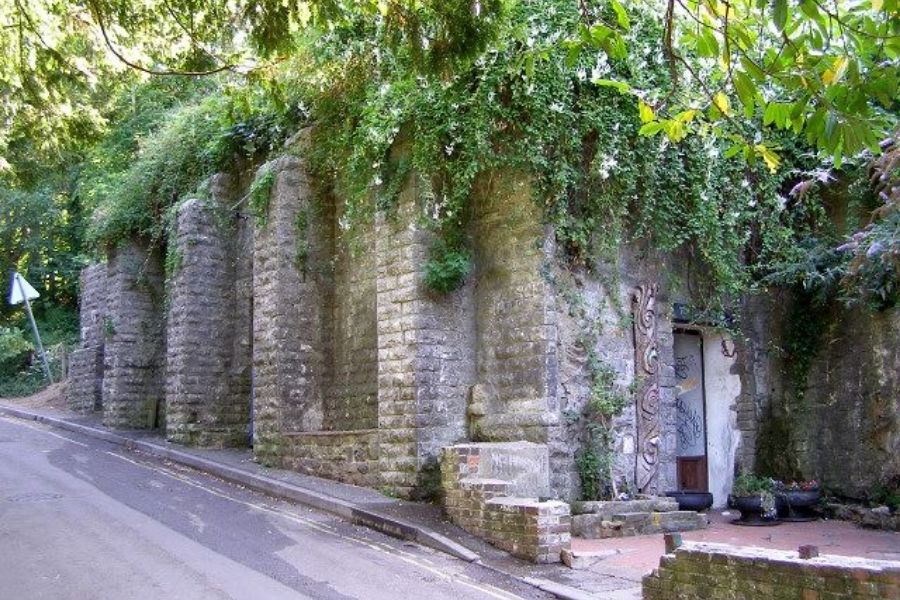
I stumbled on the Somerset Rural Life Museum nearby, which had facilities and gave me a glimpse into local farm history. If you plan to see both the Abbey and Glastonbury Lake Village, parking once in town means you can just stroll between them.
Walking Routes and Rural Attractions
You’ll find a handful of main walking routes that lead up to Glastonbury Tor. I picked the Wellhouse Lane path—honestly, it’s steep, but thankfully it’s short and marked well enough that you won’t get lost. The climb isn’t too bad for most people, though after a rainstorm, it gets slippery and a bit more challenging.
Once I reached the top, the panoramic view really blew me away. You can spot the Somerset Levels stretching out and even catch a glimpse of the far-off Avalon Marshes if the weather’s clear.
After soaking in the view, I wandered down toward the historic Glastonbury Abbey. The walk took me past quirky shops and cozy tearooms—couldn’t resist peeking inside a few. If you’re up for more exploring, the area has nice walks out to the Somerset Rural Life Museum and Glastonbury Lake Village. Both places dive into the region’s fascinating past.
It’s pretty easy to navigate since there are plenty of signs and maps scattered around. I noticed benches here and there, which made for some perfect rest stops. The paths get a bit rough after rain, with some uneven patches, so I made sure to wear sturdy shoes—definitely recommend you do the same.
