
Dartmoor has a long history of spooky legends, strange stories, and reported hauntings. Mystery and folklore seem to seep into every walk here. Whenever I wander the misty moors and climb those ancient tors, it’s honestly not hard to understand why people say Dartmoor is haunted. Ghostly monks at Buckfast Abbey, the heartbreaking tale of Mary Jay’s grave near Hound Tor—chilling stories seem to wait around every bend.
The area brims with myths about pixies, witches, and spirits that just won’t rest. Burnt-down churches and lonely crossroads pop up in many of Dartmoor’s ghost stories. On my own walks, these old legends shaped the way I saw things. Every shadow felt a bit heavier, every gust of wind a little more ominous. The famous “Hound of the Baskervilles” only adds to the moor’s mysterious vibe.
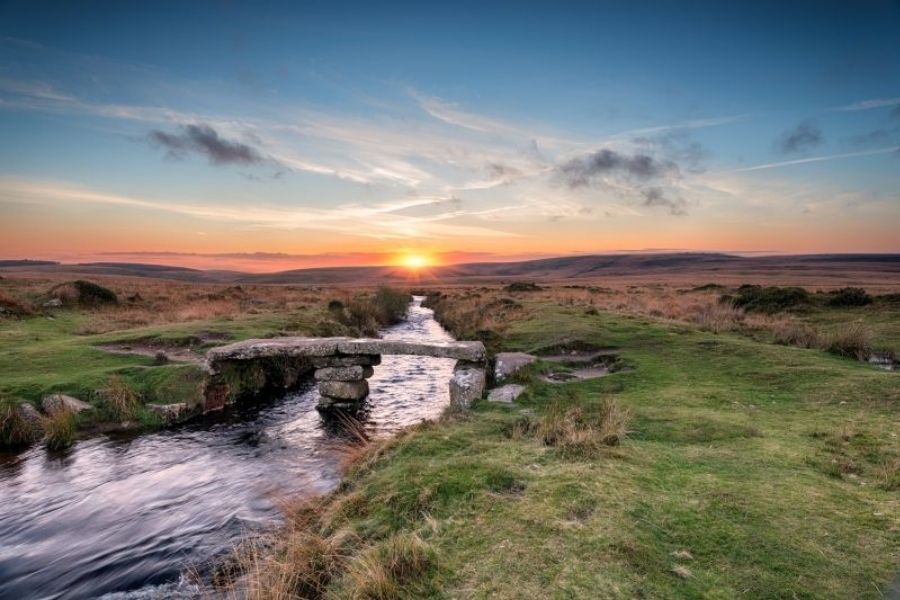
Locals still share these legends, passing them down through the generations. Walking here feels like stepping into a place where folklore is stitched right into the land. You never really know what story you’ll stumble across next.
Dartmoor’s Haunted Reputation: Myths and Legends
Dartmoor has always been thick with tales about spirits, witches, and odd creatures wandering the moors. On my rambles, I kept bumping into local legends and classic ghost stories that shape how people see this wild patch of Devon.
Origins of Dartmoor Legends
The moor’s harsh, misty weather sets the perfect stage for myths. For generations, folks tried to explain weird sights and sounds out here with supernatural stories. Open spaces, sudden fog, and those lonely tors spark the imagination—ghosts, pixies, even the infamous “Evil One” all seem possible.
People blend real fears with family folklore. Shepherds, travelers, and villagers have swapped eerie tales in pubs or by the fire for ages. Over time, these stories sunk deep into Devon’s culture.
Ancient ruins and stone circles dot the moors, adding to the spooky mood. I can’t help but think these places make the legends feel even more real. Sometimes, there’s even a grain of truth mixed in—proof that this wild land shapes both its stories and the people living here.
Famous Ghost Stories of the Moors
Some ghost stories from Dartmoor have traveled well beyond Devon. The tale of phantom monks haunting Buckfast Abbey stands out. Folks claim they’ve seen shadowy figures in monk’s robes gliding through the old stone halls after dark.
Another shiver-inducing legend is the witch Vixiana at Vixen Tor. People say she lured travelers into deadly bogs. Her reputation as a cruel figure keeps her story alive in local imagination.
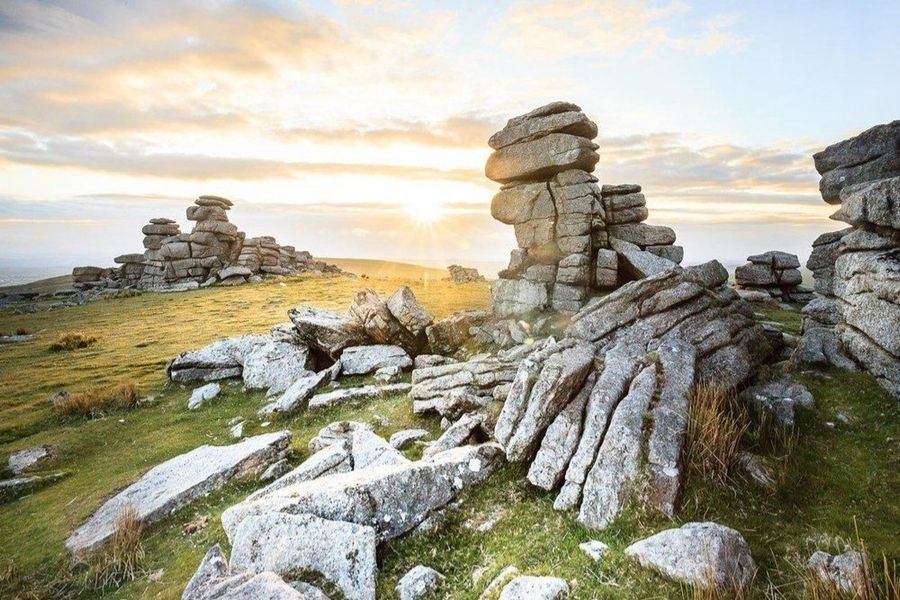
And of course, there’s the Hound of the Baskervilles. This classic Sherlock Holmes tale was inspired by Dartmoor’s own legends of a giant, ghostly black dog. Sir Arthur Conan Doyle picked up these stories on his visit and spun them into one of his best mysteries.
Storytelling Traditions and Folklore
Storytelling thrives on Dartmoor. Evenings in the local pub often turn into impromptu ghost story sessions, or folks swap tales by the fire at home. These stories tie the community together and keep Dartmoor’s supernatural past alive.
Pixies are a favorite subject. Some stories paint them as helpful guides, while others blame them for leading travelers astray.
Legends here always shift and change. Every storyteller tweaks the details or adds a new twist to fit the mood. No two versions are ever quite the same, and that’s part of the fun.
Notable Dartmoor Myths and Superstitions
You’ll find Dartmoor’s myths and superstitions woven into daily life. People used to carry charms for protection, especially when crossing certain tors or bogs. Even now, some visitors avoid walking alone after dark, wary of ghosts or the “Evil One.”
The moors have tales about giants shaping the rocky landscape. Other stories speak of ghostly coaches or headless horsemen on misty roads. Pixies get their own share of the spotlight, too, with some spots known for their mischievous gatherings.
Here are a few characters and beliefs you might hear about:
| Myth or Superstition | Description |
|---|---|
| Vixiana the Witch | Lured travelers into bogs near Vixen Tor |
| Pixies | Said to help or trick those wandering Dartmoor alone |
| Phantom Monks (Buckfast Abbey) | Ghostly monks seen praying or walking late at night |
| Giant’s Tors | Believed to be shaped by the hands of ancient giants |
| The Evil One | A nameless spirit blamed for misfortune or fear |
Every foggy path and crumbling ruin feels charged with possibility, blending history and the supernatural in a way that’s hard to shake.
The Hound of the Baskervilles: Fact, Fiction, and Folklore
Sir Arthur Conan Doyle’s The Hound of the Baskervilles draws straight from the landscape and legends of Devon. Dartmoor’s foggy moors and eerie mood sit right at the heart of both the novel and the ghost stories I’ve heard while rambling around.
Inspiration Behind the Hound of the Baskervilles
That legend of a ghostly hound chasing the Baskerville family? It’s got deep local roots. Devon’s old stories often mention spectral dogs—creatures with glowing red eyes, prowling the moors at night and howling through the mist.
One story that sticks with me centers on Squire Richard Cabell, whose tomb in Buckfastleigh is linked to sightings of phantom dogs. Locals called them “Wisht Hounds” or “Devil Dogs.” For centuries, people feared these beasts as omens of death or as the moor’s guardians.
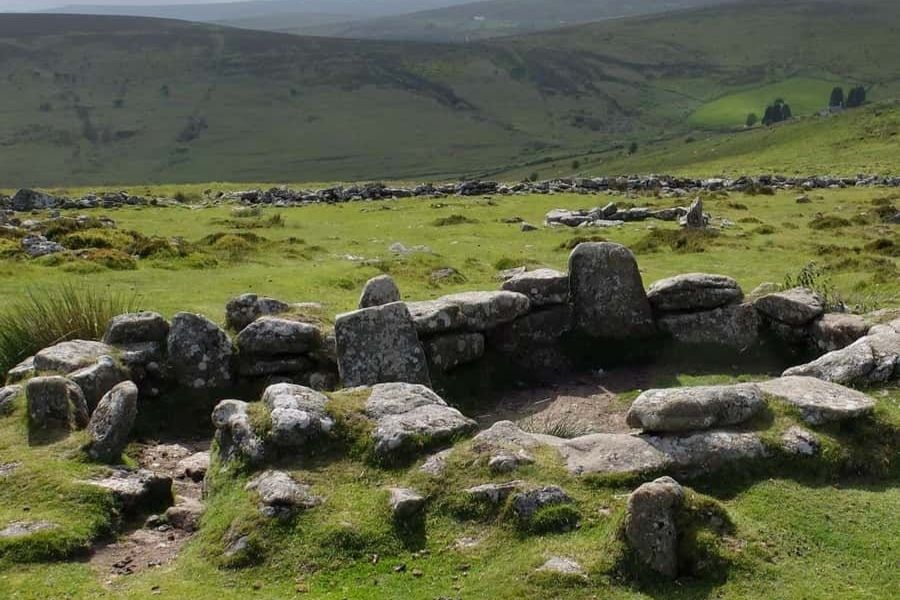
Conan Doyle took these old beliefs and spun them into the backbone of his story, making the supernatural threat feel all too real.
Sir Arthur Conan Doyle’s Dartmoor Visits
Dartmoor’s wild side and mysterious reputation drew Conan Doyle here in the early 1900s. He wandered the moors, dropped by local inns, and soaked up stories from the region. Sometimes, when I’m out there and the fog creeps in, I wonder if I’m feeling the same chill he did.
His friend Bertram Fletcher Robinson, a journalist who knew the area well, guided him. Their trips to places like Hound Tor and Grimspound gave Conan Doyle plenty of material for his novel’s setting. These real spots helped him create that tense, suspenseful atmosphere.
By mixing real geography with myth, Conan Doyle made Dartmoor’s spooky side famous. The moor has never really shaken that reputation.
Spectral Hounds in Local Mythology
Phantom hounds prowl through Dartmoor’s folklore. These “black dogs” supposedly patrol ancient tracks and burial sites. Locals give them names like Wisht Hounds or Yeth Hounds. Hearing their howls at night? Folks say it’s a sure sign of bad luck.
Stories describe the hounds as huge, with shaggy black fur and glowing red eyes. Some claim to have seen packs of them racing across the moor on stormy nights, leading ghostly hunts.
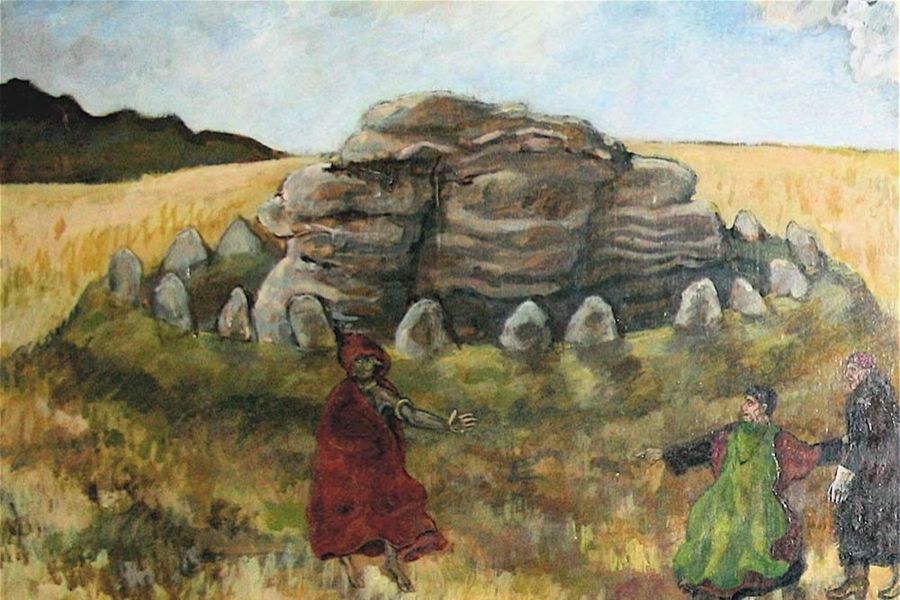
The moor’s fog, wind, and shifting shadows keep these legends alive. When dusk falls and I’m walking those old tracks, I get why people still talk about spectral hounds.
Chilling Sites and Mysterious Locations
Dartmoor’s legends stick to certain places—mysterious graves, haunted tors, and strange stories that hang in the mist. These spots have a way of getting under your skin.
Kitty Jay’s Grave and the Mystery of Fresh Flowers
Out near Manaton, close to Hound Tor, sits Kitty Jay’s Grave. It’s just a lonely mound on the edge of the moor. The story goes that Kitty Jay was a young servant who died tragically in the late 1700s. Because of the scandal, they buried her at a crossroads instead of in the churchyard.
The real mystery? Fresh flowers always appear on her grave, no matter the weather. Nobody admits to leaving them. The flowers change with the seasons, and some say pixies or spirits bring them as a sign of peace.
Standing by her grave, I felt a strange stillness. It’s easy to find, and honestly, it always makes me wonder about the silent visitor who keeps Kitty Jay’s memory alive.
Hairy Hands and the Haunted Roads
The road near Postbridge is notorious for tales of the “Hairy Hands.” Since the early 1900s, drivers and cyclists have claimed that a pair of hairy hands grabbed their steering wheels or handlebars, forcing them off the road.
Accidents on this lonely stretch only fuel the legend. Survivors often describe a sudden force taking over, especially on foggy nights or when they’re traveling alone.

I’ve driven this route when the mist closes in, and I’d be lying if I said it didn’t make me uneasy. Some people blame the tricky bends and poor visibility, but the stories keep coming.
Ghostly Tales at Hound Tor
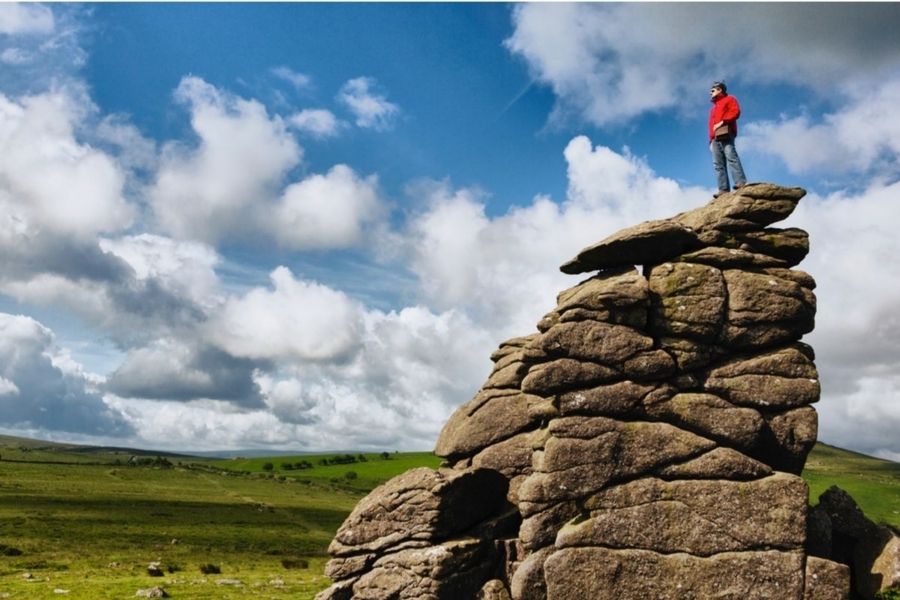
Hound Tor towers above the moor, a heap of broken granite surrounded by fields and scattered stones. Its odd shape draws plenty of myths. Many say the tor is haunted by ghostly hounds—probably part of what inspired Conan Doyle’s “The Hound of the Baskervilles.”
Locals tell stories of spectral black dogs drifting through the mist. The ruined medieval village nearby only adds to the atmosphere, especially as the sun sets.
Points of interest at Hound Tor:
| Feature | Details |
|---|---|
| Ruined Village | Abandoned medieval settlement |
| Hound Tor Summit | Large granite outcrop |
| Nearby Legends | Ghost dogs and supernatural events |
I haven’t spotted any ghostly hounds myself, but honestly, the place makes it easy to believe they’re out there, just beyond the next rock.
Wisht Hounds and Vixen Tor
Vixen Tor is a dramatic granite outcrop with steep sides, often called the “Sphinx of Dartmoor.” For generations, it’s been tied to the legend of the Wisht Hounds—ghostly black dogs led by the supernatural “Old Crockern.” The hounds are said to haunt Vixen Tor, especially during storms or at midnight.
People talk about hearing howls or getting that prickly feeling of being watched near the tor. Some even claim to see shapes darting between the rocks when the mist thickens. The landscape itself feels tense, with giant boulders and sudden drops.

For me, Vixen Tor is one of Dartmoor’s most atmospheric places. Standing there at dusk, I can see why the legend sticks. The idea of ghostly packs racing through the shadows just fits the wildness of the place.
Eerie Characters and Spooky Encounters
Dartmoor’s packed with legends about odd people, ghostly animals, and all sorts of supernatural beings. My walks across these misty moors have brought me close to some of the most memorable stories that give this place its unique, spooky charm.
Bowerman’s Nose and the Legend of Bowerman
Bowerman’s Nose stands out—literally—as a tall stack of rocks shaped a bit like a face with a pointed hat. According to local legend, Bowerman was a bold hunter who once barged in on a witches’ gathering. The witches, furious, cursed him and turned him into stone.
The shape of Bowerman’s Nose is so striking, it’s easy to see how the story stuck. On a windy day, standing beside it, I get why people felt this odd figure added to Dartmoor’s haunted reputation.
Witches, Pixies, and Piskies
Dartmoor’s wild moors have always been tangled up in stories of witches and magical creatures. Folks around here used to whisper that witches hid among the tors and ruins, casting spells on anyone who wandered too close. I can picture them huddled at ancient stone circles on stormy nights, plotting mischief as the wind howled.
Pixies and piskies—tiny, playful tricksters—are said to dart between rocks and trees. Some tales claim they lead travelers off the path, making them lose their way in the thick fog, or play tricks that leave people bewildered and a little spooked. On my own rambles, the sudden hush and drifting mist made it easy to believe these mischievous creatures might be lurking just out of sight.
Squire Cabell and the Phantom Hound
If you’re after a proper chill, the story of Squire Cabell delivers. In the 17th century, Squire Cabell lived here and earned a reputation for cruelty. After he died, people swore they saw a massive, ghostly black hound prowling near his tomb in Buckfastleigh. They said this eerie dog was the restless spirit of the squire himself.
Locals insist this legend inspired Arthur Conan Doyle’s The Hound of the Baskervilles. One evening, I stood in the old churchyard as dusk fell, listening to distant dogs barking, and felt the hairs on my arms stand up. That story still haunts Dartmoor, and honestly, it’s hard not to feel a shiver when the wind picks up.
Giants, Cutty Dyer, and Vixana
Dartmoor’s stories go far beyond ghosts and witches—giants and monsters stomp through local lore too. Some old tales claim giants once hurled boulders across the moor, shaping the wild landscape we see today. They’re described as powerful, even dangerous, and fiercely protective of their home.
Cutty Dyer, a river monster, supposedly lurks by the water’s edge at night, waiting for anyone foolish enough to get too close. Parents used these tales to scare kids away from dangerous rivers. Then there’s Vixana, a witch said to haunt a treacherous pool, dragging the unwary into the water when the fog rolls in.
Here’s a quick rundown of Dartmoor’s supernatural cast:
| Name | Type | Description |
|---|---|---|
| Bowerman | Human/Stone | Hunter turned to stone by angry witches |
| Squire Cabell | Human/Ghost | Feared squire, linked to phantom hound |
| Pixies, Piskies | Fairy Folk | Mischievous, lead travelers astray |
| Giants | Giant | Huge beings from ancient legends |
| Cutty Dyer | Monster | River monster, catches the unwary |
| Vixana | Witch | Drowned travelers in foggy pools |
Whenever I set out on one of Dartmoor’s lonelier trails, these stories echo in my mind. The moor seems to breathe with old secrets, especially when the mist curls around your boots.
Haunted Walks: Exploring Dartmoor’s Supernatural Landscape
Wandering Dartmoor National Park, I’ve realized the moor’s eerie reputation isn’t just old folklore. Strange sights and whispered tales make the land feel alive with mystery. I’ve explored spots with histories so odd, it’s tough not to let your imagination run wild.
Crazywell Pool and the Lure of the Waters
Crazywell Pool looks calm enough, perched on Dartmoor’s edge, but local stories warn it’s haunted. Some say the pool has no bottom, and people used to believe it could predict who’d die next. At dusk or after rain, folks have heard ghostly voices calling from its dark waters.
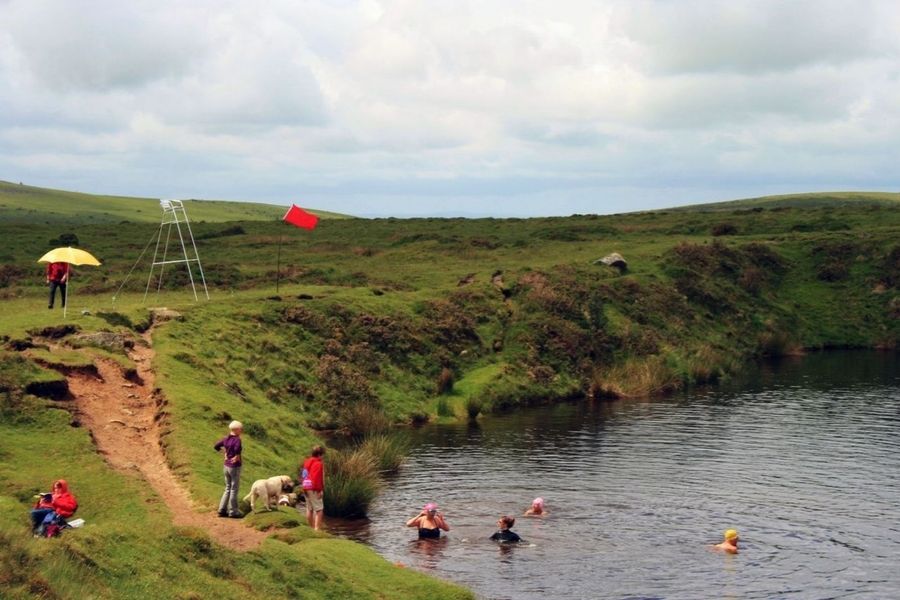
One evening, I circled the pool carefully. The air felt sharper here, and a heavy silence hung over the place, broken only by the wind and distant birds. Locals warn against swimming, certain the pool drags people down—especially if you’re foolish enough to go alone.
Facts about Crazywell Pool:
| Feature | Detail |
|---|---|
| Location | Southwest Dartmoor |
| Shape | Oval, man-made |
| Depth | Varies, but not endless |
Childe’s Tomb and Childe the Hunter
Childe’s Tomb stands alone on the moor, marking the spot where Childe the Hunter is said to have died in a snowstorm. According to legend, Childe killed his horse and crawled inside for warmth, but the cold still claimed him. He left his lands to whoever found and buried him first, which sparked a race between Tavistock’s monks and the local villagers.
Standing by the lonely stone cross, with wind sweeping across the moor, I felt a real sense of Dartmoor’s long, dark history. The story is grim, but the tomb draws walkers hoping to connect with the past. Some people have even claimed to feel watched or hear voices drifting on the wind.
Key points about Childe’s Tomb:
- Stone cross marks the spot
- Linked to real medieval events
- Surrounded by legends of restless spirits
Stone Circles and the Grey Wethers
The Grey Wethers are a pair of stone circles hidden out on Dartmoor’s remote stretches. Their name comes from an old word for sheep—at a distance, the stones look like a flock of grey animals dozing in the grass. These ancient circles are thousands of years old, and people still swap stories about strange sounds or odd feelings at dusk.
When I visited, the air felt heavy and the silence was almost unsettling. Some locals claim they’ve seen ghostly shapes moving among the stones, especially on misty mornings. Others believe the circles once hosted ancient rituals, and the atmosphere crackles with something old, especially as darkness falls or the fog creeps in.
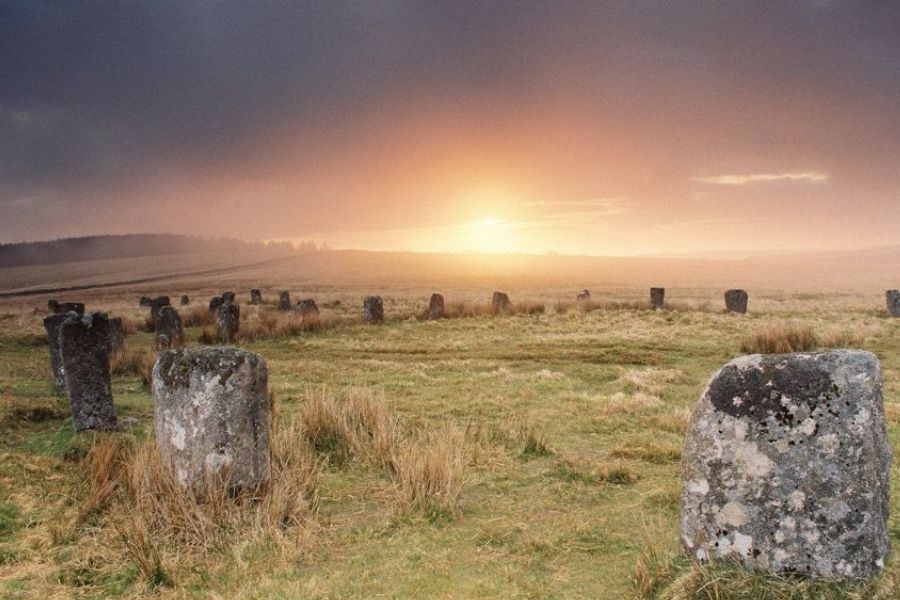
- Location: Near Sittaford Tor
- Number of stones: ~30 in each circle
- Age: Over 3,000 years old
Fitz’s Well, Coffin Stone, and Secret Sites
Fitz’s Well sits tucked away, a tiny spring that people say has some of the purest water around. Locals whisper about its healing powers, and on a quiet night, I’ve heard folks claim they caught the faintest hint of singing drifting from the water’s edge.
Not too far off, you’ll find the Coffin Stone. It’s this big, flat slab—impossible to miss if you know where to look. People believe funeral processions used to pause here, resting coffins on the rock before moving on.
When I wandered through these places, the peace felt almost heavy, like the air itself was holding its breath. Sometimes, it honestly felt like something unseen was watching from the shadows.
Stories swirl around the Coffin Stone, too. Some say the spirits of lost travelers linger here, or maybe those who never found a proper resting place. These spots don’t get much foot traffic, and that’s part of their strange magic.
You won’t find crowds or signs pointing the way. Instead, you get a quiet, slightly eerie corner of Dartmoor that most people just walk right past.
Notable features:
- Fitz’s Well: Linked to old healing rituals
- Coffin Stone: Tied to funeral folklore
- Secret Sites: Usually overlooked by walkers
