
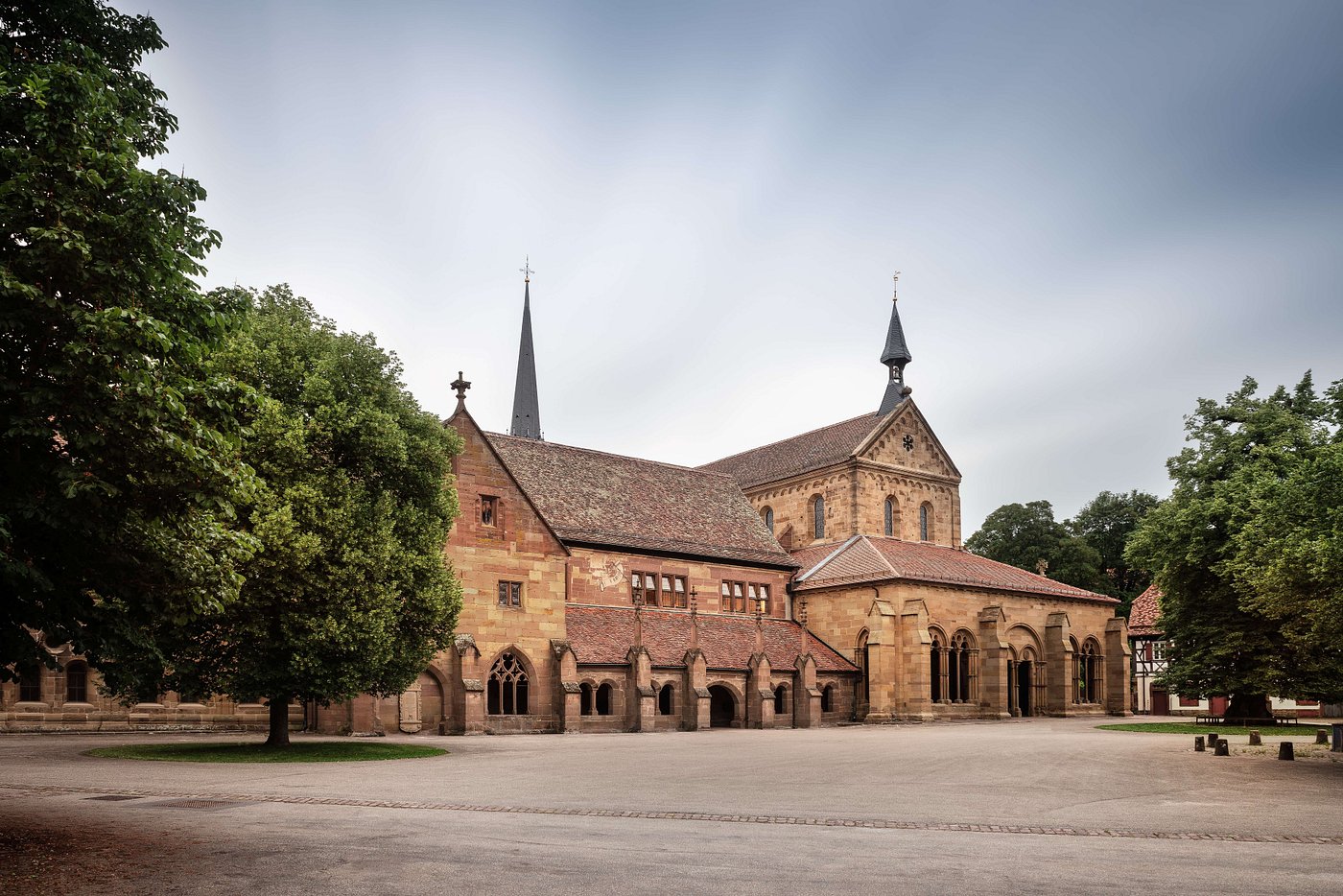
When I wandered through the ancient gates of Maulbronn Monastery in Baden-Württemberg, Germany, I honestly felt like I’d stumbled into another era. Maulbronn Monastery stands as one of the most complete and best-preserved medieval Cistercian monasteries in Europe, and UNESCO even recognized it as a World Heritage Site.
The peaceful courtyards, intricate stonework, and quiet cloisters all seem to whisper stories from nearly nine centuries ago.
It’s wild to think such a hidden gem is just a short drive from busy Stuttgart. As I meandered between centuries-old walls and lush gardens, the place felt almost untouched by modern life.
From the sturdy church towers to the tranquil reflection ponds, every corner of Maulbronn offers a rare chance to step into genuine medieval life.
If you love history or architecture—or just want a unique day trip—Maulbronn Monastery brings both inspiration and discovery.
Discovering a Hidden Gem: The Magic of Maulbronn Monastery
Stepping into Maulbronn Monastery feels like time travel straight to the Middle Ages. The peaceful grounds, ancient stone walls, and preserved buildings tell stories that reach far beyond its quiet spot in Baden-Württemberg.
First Impressions of Kloster Maulbronn
When I passed through the old gates of Kloster Maulbronn, thick stone walls and a deep sense of quiet greeted me. It’s hard to believe I was only an hour from Stuttgart.
The monastery sits nestled among green hills, making it feel completely hidden from the modern world.
As I walked the cobbled courtyards, detailed arches and the simple, strong design of the Cistercian order caught my eye. The church’s heavy doors opened to a cool, shadowy interior.
Stone columns rose up to the ceiling, and sunlight crept in through stained glass.
I could almost see monks moving through these halls centuries ago. Little signs explained what each building had been used for, from the monks’ living quarters to the refectory where they ate.
I especially loved the old cloister walkway. Every step echoed off tiles that had seen countless feet before mine.

Why Maulbronn is a UNESCO World Heritage Site
Maulbronn truly earned its UNESCO World Heritage Site status. It’s the most complete and best-preserved Cistercian monastery complex north of the Alps.
Monks from Alsace started building it in 1147, and the layout has barely changed since the Middle Ages.
What really stands out is how much of the original structure remains—walls, towers, church, and all the monastic outbuildings. UNESCO added Maulbronn in 1993 because it still shows the daily life, architecture, and innovations of the Cistercian order.
The monastery features an advanced water system that brought clean water and powered mills. Highlights include the church, chapter house, and cloister.
Every part has carvings, arches, and stonework that reveal the monks’ focus on both faith and practical living. The layers of history feel close enough to touch.
Maulbronn’s Place in Baden-Württemberg
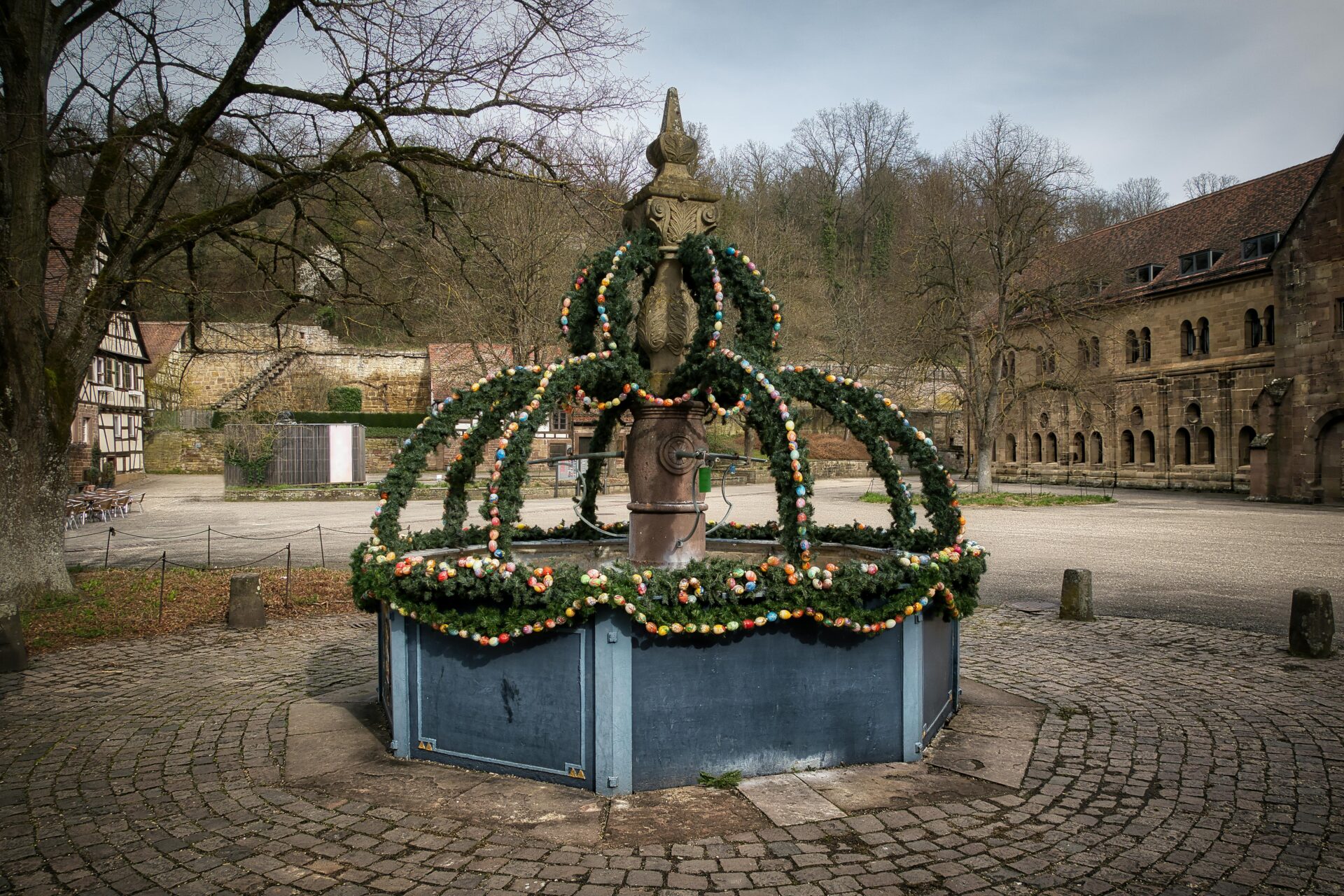
Maulbronn Monastery stands out as a landmark for anyone visiting Baden-Württemberg. It’s tucked on the edge of Maulbronn town, set apart from the busy world by thick fortress walls.
Almost 900 years ago, the monastery brought growth and life to the region.
The monks’ work shaped the economy and culture of southwest Germany over time. Their farming knowledge, craft skills, and dedication to education still echo in the region today.
People visit for the peaceful cycle paths, the historic bakery, and the town’s cozy restaurants.
If you’re exploring Baden-Württemberg, Maulbronn adds something special to your journey. It’s more than a stop—it’s a glimpse into the heart of medieval Germany, a world that, though old, still feels alive.

A Journey Through Time: The Medieval Monastic Complex
Walking through Maulbronn Monastery, I felt like I’d entered another era. Silence, stone walls, and echoing halls transported me straight to the Middle Ages, when the Cistercians first settled here and started shaping their unique world.
Origins of the Cistercians and the Founding of Maulbronn
Cistercian monks founded Maulbronn Monastery in 1147. They came to southern Germany looking for a peaceful place to live out their strict spiritual rules.
The Cistercians wanted to return to a simple, humble lifestyle. They picked this valley not just for its beauty, but for the chance to build a new community from scratch, guided by ideals of work, prayer, and self-sufficiency.
Their order started in France and became known for spreading new farming methods and building techniques wherever they went. The monks at Maulbronn quickly transformed the land around the monastery.
They created ponds, irrigation channels, and vineyards, using medieval tools and teamwork.
Today, the monastery still looks much as it did when it was first built. The original church, cloisters, and outbuildings form the heart of what travelers like me get to explore—offering a rare, direct connection to the Cistercians’ medieval world.
The Best-Preserved Medieval Cistercian Abbey in Europe
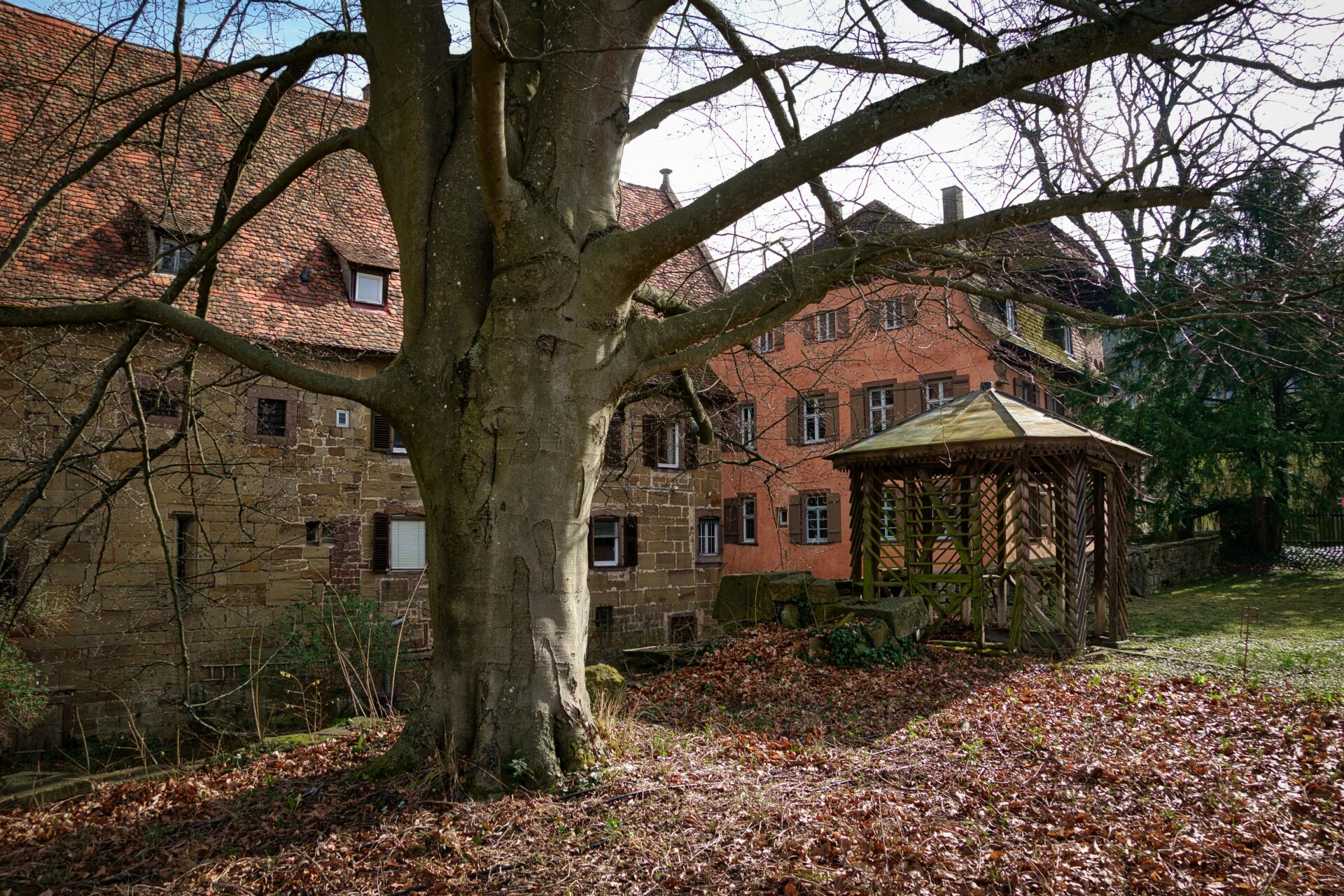
What really amazed me about Maulbronn is how much of the medieval monastic complex survived. UNESCO calls Maulbronn the most complete and best-preserved Cistercian monastery north of the Alps.
Almost all the original buildings remain, so visitors can see an authentic medieval abbey up close.
You’ll find several main sites:
- The Romanesque church: Stone arches, old altars, and original carvings.
- The cloister: Covered walkways where monks once prayed and studied.
- The refectory and workshops: Spaces that show off monastic daily life and traditions.
I spotted the marks of the monks everywhere—from the intricate stone floors to the sturdy wooden doors. The UNESCO status isn’t just a label; it truly reflects how carefully this place has been kept intact.
The Monastery’s Role in the Middle Ages
Back in the Middle Ages, Maulbronn was more than just a spiritual center—it acted as a hub of knowledge, agriculture, and local power. The Cistercians organized the monastery like a small city, with monks, workers, and lay brothers all living within the walls.
Everyone followed a strict daily rhythm of prayer, work, and study.
I learned that the Cistercians weren’t just religious figures. They became innovative farmers, builders, and scholars.
Their monastery ran flour mills, vineyards, blacksmith shops, and even a school, all neatly organized inside the complex. The discipline and self-sufficiency of the monks made Maulbronn a respected center in medieval society.
Walking these pathways, I could sense the routines and quiet determination that shaped the monastery’s history. The echoes of the Middle Ages still linger in every stone and archway.

Architectural Wonders: Styles and Structures Unveiled
Maulbronn Monastery brought my medieval architecture daydreams to life, blending distinct styles and unique design features everywhere I looked. As I wandered the complex, I found a fascinating mix of engineering, artistry, and spiritual purpose.
Romanesque and Gothic Architecture in Harmony
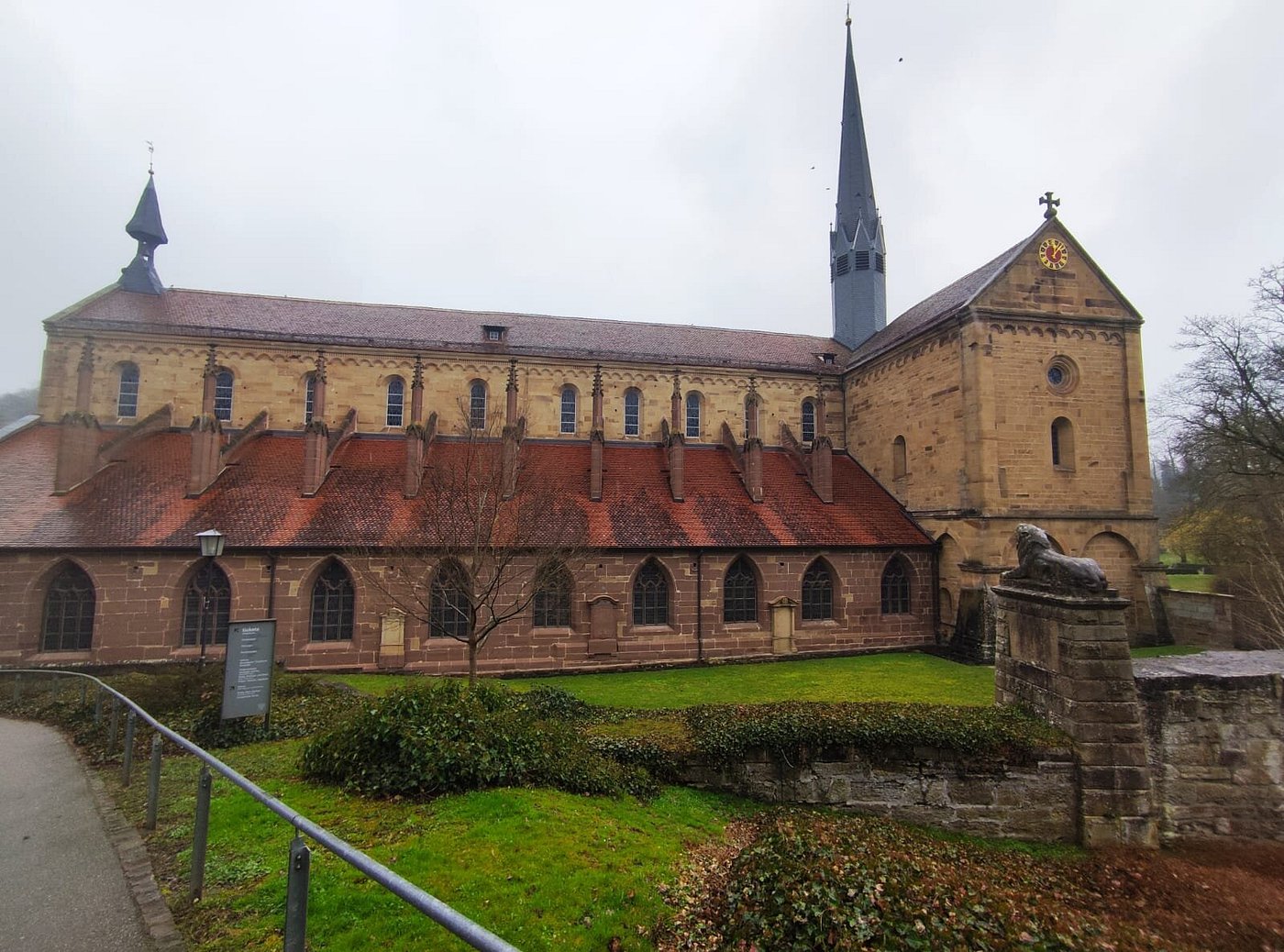
When I stepped into the monastery, I could spot both Romanesque and Gothic architecture. Much of the early construction from the 12th century shows Romanesque features—thick stone walls, small rounded windows, and rounded arches.
These solid forms make the buildings feel strong and timeless.
Over time, the architecture changed. The monks added Gothic elements, like pointed arches and bigger windows.
At the church entrance, I noticed both styles—the low, stony arches of the Romanesque period, and above them, pointed Gothic windows letting in daylight. Seeing these styles blend together gave me a sense of how the monastery changed, yet held onto its roots.
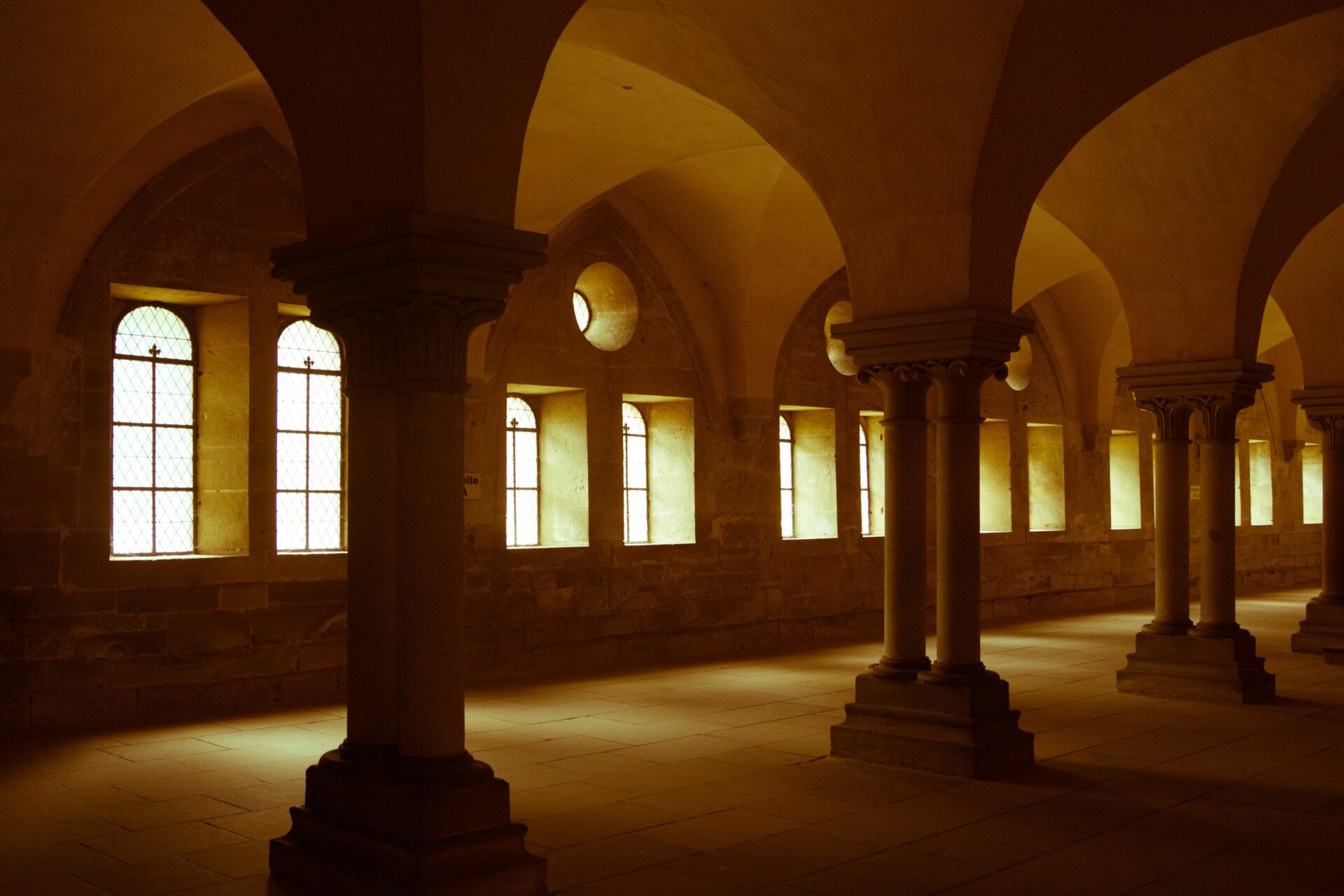
The Cloister, Chapter House, and Fountain House
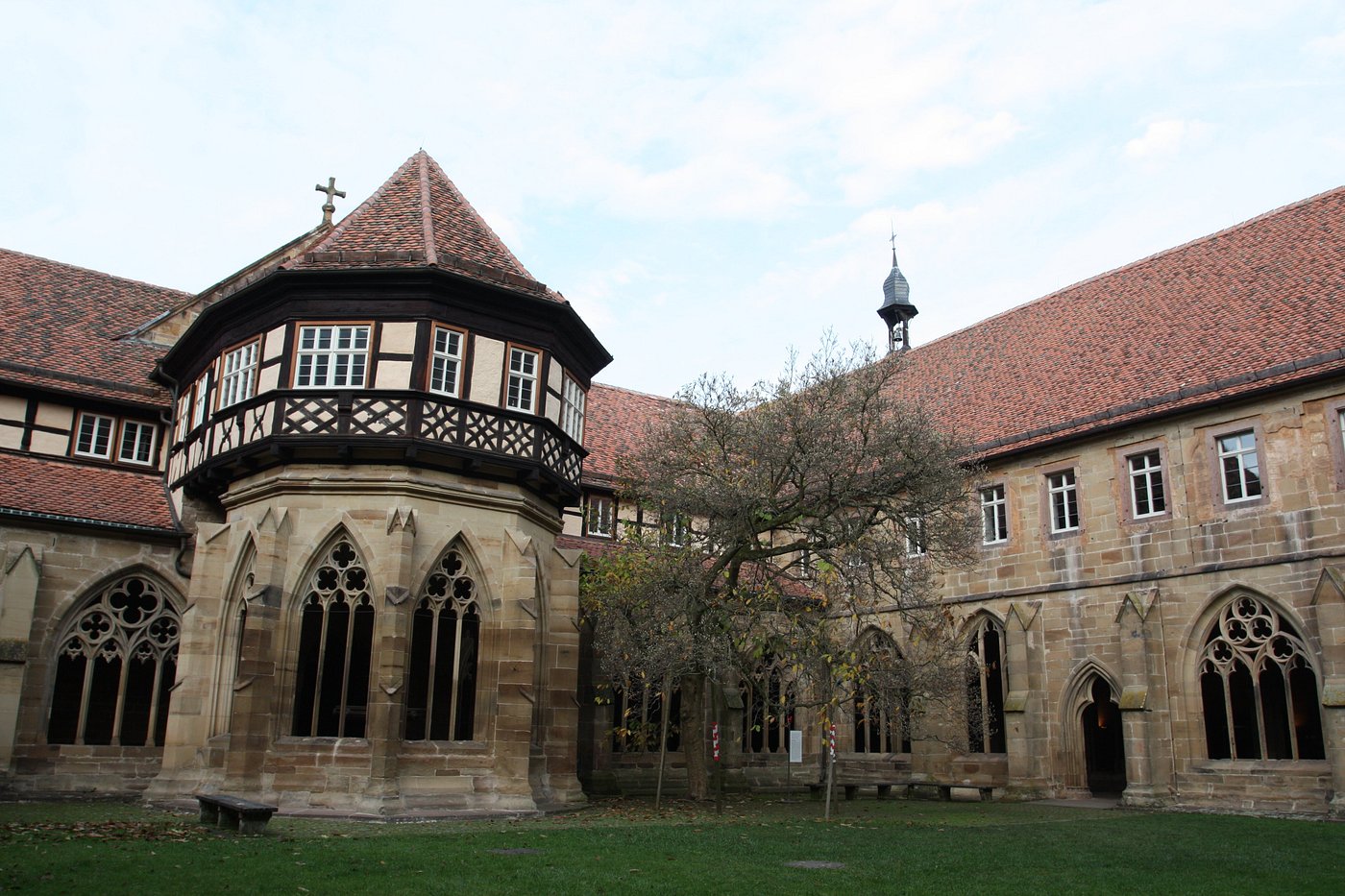
One of my favorite moments came when I entered the cloister. The covered walkways form a square around a green courtyard.
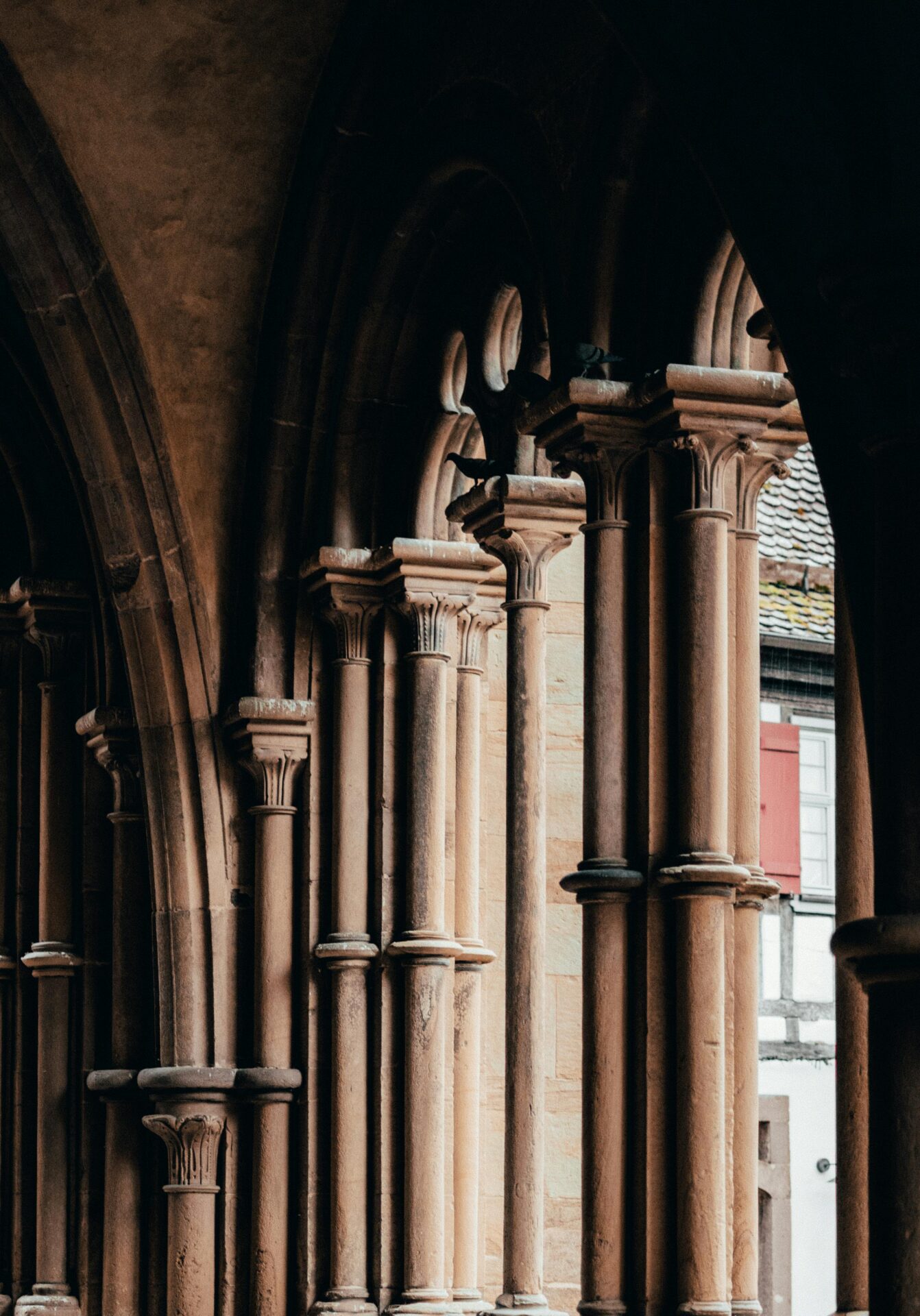
Pillars and arches line the path, each carved with simple Cistercian details. The quiet makes it a perfect spot for reflection.
The chapter house stands just beside the cloister. Inside, monks gathered every day to discuss monastery life and read a chapter of their rule.
Its wide, open space, supported by columns, made it easy to imagine the soft sound of voices echoing off the stone walls.
Not far away sits the fountain house, which is a little marvel. Here, monks washed before meals with water flowing from a central basin.
The sound of water added a gentle rhythm that must have been comforting after a long day.

Gothic Vaulting and Half-Timbered Buildings
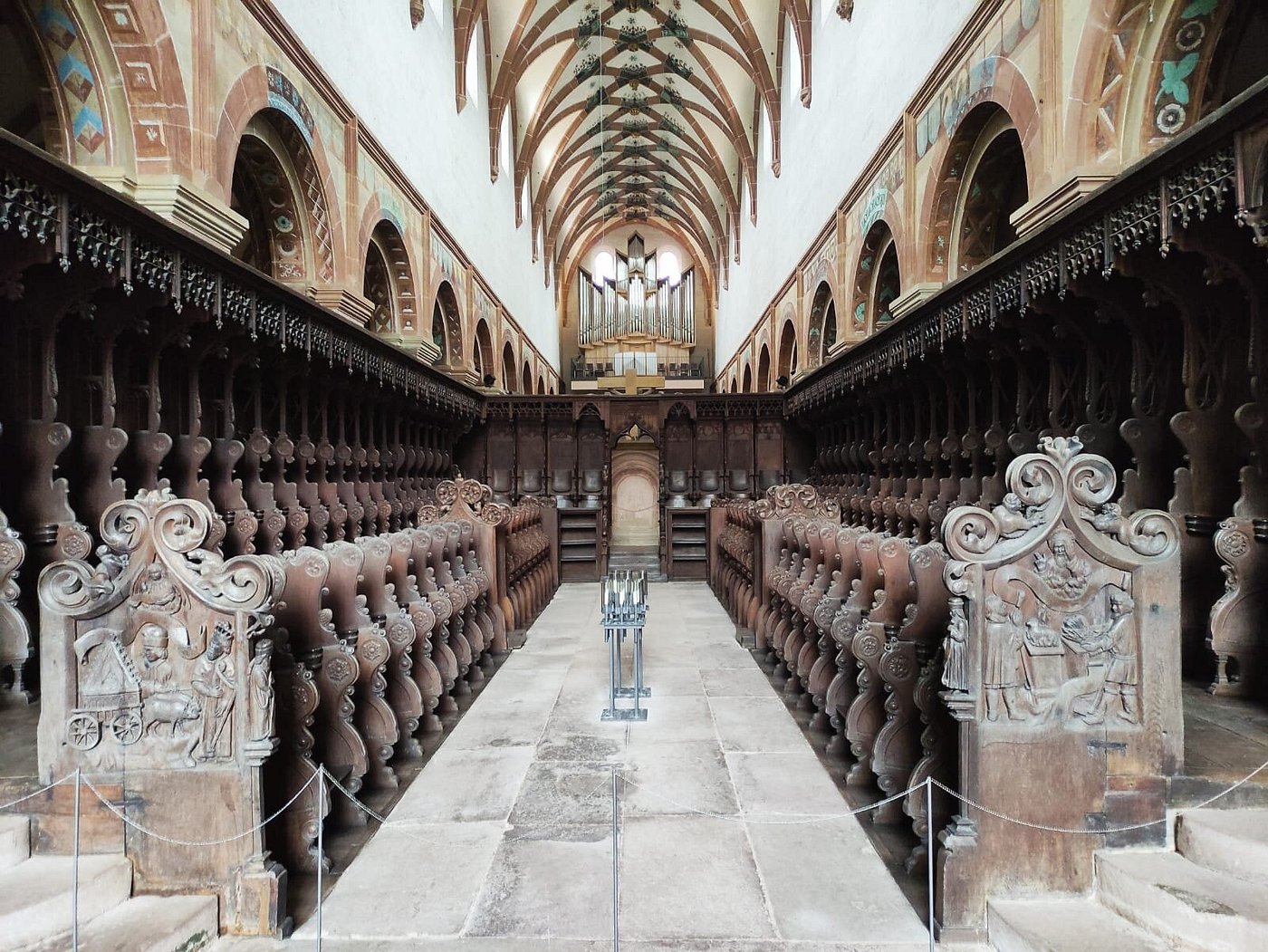
In many rooms and hallways, I looked up and admired the detailed Gothic vaulting. Pointed arches met high overhead, drawing my eyes up.
The ribs in the ceiling split and rejoined in patterns that felt almost mathematical, but still graceful.
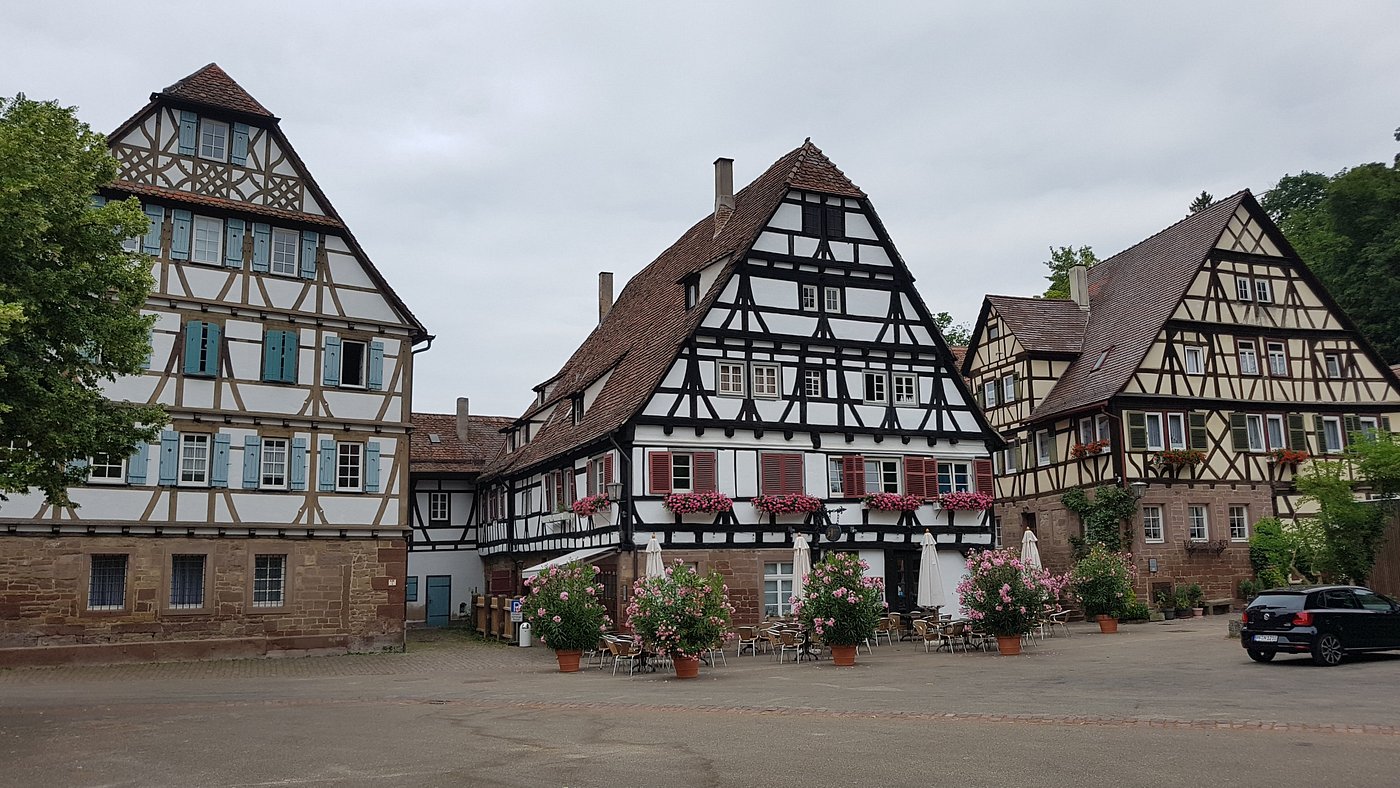
Some of the outbuildings switch styles completely, showing off half-timbered walls. These have wooden beams filled with plaster or brick, giving a warmer, rustic look compared to the stone heart of the monastery.
I loved how these simpler spaces felt more lived-in—a reminder of both the monks’ labor and daily life outside the church.
Defensive Wall and Renaissance Influences
A sturdy defensive wall surrounds everything, built to keep the monastery safe from threats. It still stands tall today.
Looking out from the main gate, I got a sense of what it might have felt like to be protected inside these walls so many centuries ago.
Some sections show traces of Renaissance style, mostly in decorative details and windows added later when tastes shifted. The mix of styles tells a clear story: Maulbronn Monastery adapted to new ideas, but always kept its original purpose at the heart of every wall and walkway.
Living Heritage: Life in and Around the Monastery Today
Maulbronn Monastery isn’t just a relic of the past; it’s alive and buzzing. When I visited, I found a place where history breathes alongside daily life, mixing education, culture, and tourism in a stunning medieval setting.
The Protestant Monastery School and Boarding School Legacy
Stepping onto the old monastery grounds, I realized education runs deep in these walls. Since the Reformation, Maulbronn has housed a protestant monastery school.
It’s actually Germany’s oldest such school still in use. Students have lived and studied here for centuries.
The legacy of scholarship is easy to feel as you wander the courtyards.
Today, the school still operates as a well-known boarding school, drawing young people from all over the country. Passing by students chatting in the cloisters, I sensed a lively energy that contrasted with the silent age of the stone arches.
The blend of tradition and modern learning makes Maulbronn stand out among historic sites.
Key facts:
| Fact | Detail |
|---|---|
| School Type | Protestant Monastery School, Boarding |
| Founded | 1556 (after Reformation) |
| Current Use | Academic Institution (Internat Maulbronn) |
Modern-Day Visitor Center and Guided Tours
I headed to the modern visitor center not long after arriving. It offers practical help, maps, and background for new visitors.
Staff greeted me with helpful directions and tips about where to start and how to join a guided tour.
Guided tours run regularly and really help you understand the details and legends of Maulbronn. Walking with a guide, I discovered hidden corners and got a real sense of how the monks organized daily life.
Tours are available in German and English. If you prefer to go at your own pace, you can use an audio guide.
Tips for Visitors:
- Book guided tours on-site or online
- Multi-language support available
- The center has a small gift shop and restrooms
Experiencing Maulbronn as a Traveler
When I first wandered into Maulbronn, it honestly felt like I’d stepped right into a painting. The gentle hills and half-timbered houses surrounding the monastery set such a peaceful mood.
I found myself drawn to the walking paths. Circling the old moat and drifting through the monastery gardens quickly became my favorite part of the day.
Travelers like me can check out the main church, cloisters, and chapter house. Local cafés and bakeries just outside the gates invite you to pause, grab a pastry, and watch the world go by.
On weekends, the whole area buzzes with art shows, concerts, and markets. Every visit brings something a little new.
Traveler’s Checklist:
- Wear comfortable shoes for cobbled paths
- Bring a camera—photography is allowed in many parts
- Check for seasonal events and music concerts
- Try the local pastries in Maulbronn village

Secrets of Sustainability: Medieval Water Management Explained
Maulbronn Monastery amazed me—not just for its looks, but for how the Cistercian monks handled water centuries ago. Their clever use of water shaped the land and made farming and daily life possible in ways that still impress me.
Mastering Irrigation Canals in the Middle Ages
As I wandered the monastery grounds, I immediately noticed the old irrigation canals and ponds. The monks actually designed about twenty lakes and ponds, connecting them with hand-dug trenches and channels.
They didn’t just let nature take its course. Instead, these systems let the monks store and move water wherever they needed it, even during dry spells.
Thanks to this, they grew crops, ran workshops, and raised fish. That’s pretty impressive for the Middle Ages.
Some of these channels still carry water after more than 850 years. When I looked at the layout, I realized careful planning and constant upkeep kept everything working.
Near the main entrance, I found a posted map showing the water’s path—a bit like a medieval engineering lesson right out in the open.
The Ingenious Monastic Water Management System
Maulbronn’s water system works so well because the monks built it with real thought. The main buildings, like the church, sit higher up, while water features fan out below, following the slope to power mills and provide clean water.
Monks kept an eye on the flow using simple gates and weirs. Just opening a wooden gate or moving a stone could send a stream from a pond to a field.
Inside the visitor center, I saw old photos of workers clearing trenches—something the monks did for centuries.
This approach did more than just meet daily needs. It protected the monastery from floods and helped manage waste.
The place stands as a model of sustainable living, long before anyone used the term. I learned a lot just by following the water’s journey on foot.

Local Delights and Unforgettable Moments Near the Monastery
In the quiet town around Maulbronn Monastery, I found a mix of Swabian flavors, unexpected side trips, and a sense of connection that stretches across Europe.
History here doesn’t stop at the monastery walls. It spills into daily traditions, regional foods, and even international ties.
Savoring Maultasche and Monastery Cookies
I had to try Maultasche, the famous Swabian dumpling. Locals told me monks first made these big ravioli-like pockets, hiding meat inside so they could eat it during Lent.
You’ll find them in broth, fried in butter, or even sliced up in salads. It’s comfort food that really feels like a treat.
After my tour, I ducked into a bakery near the old town square. There, I found Klosterkekse—monastery cookies that are crispy, buttery, and apparently made from recipes hundreds of years old.
I tasted subtle spices and nuts, which made them a perfect souvenir for friends (if they lasted that long).
Every bite felt like a little piece of tradition. If you love food, here’s what you shouldn’t miss:
| Treat | Description | Where to Find |
|---|---|---|
| Maultasche | Savory stuffed dumpling | Local inns, cafés, monastery |
| Monastery Cookie | Spiced, nutty biscuit | Bakeries, souvenir shops |

Visiting Stuttgart and Beyond
Stuttgart, the closest city, surprised me with its modern vibe after all that medieval calm. I hopped on a regional train and soon wandered through the Mercedes-Benz Museum.
Art fans will love the Staatsgalerie’s collection, while car lovers can’t miss Porsche’s famous headquarters.
For a taste of local life, I meandered through Stuttgart’s Markthalle. I sampled German cheeses, fresh pretzels, and a little too much chocolate.
Green parks like Schlossgarten offer a breath of fresh air, and in summer, music festivals spill out onto the plazas.
If you’ve got extra time, the small towns around Baden-Württemberg are absolutely worth exploring. I rented a bike and rode through the gentle Swabian hills—a highlight I’d recommend to anyone.

Maulbronn’s Place in the European Union
I stood in the peaceful Maulbronn courtyard, feeling the weight of European history settle in. The monastery, a UNESCO World Heritage Site, really does represent a kind of shared heritage and unity that crosses borders.
EU programs step in to help preserve places like this for future generations. That’s something I hadn’t thought much about before.
As a traveler from the EU, I crossed into Germany without any hassle. Those open Schengen borders make things incredibly easy.
Signs scattered around the site point out how EU grants have supported restoration work. I found myself appreciating how Maulbronn fits into this much bigger network of European sites.
It’s honestly kind of wild that a quiet village can symbolize so many connections—culinary, artistic, political—stretching far beyond its old stone walls.
