
Wandering through the medieval villages of Chios really does feel like you’ve stumbled into a living museum. Every wall whispers stories.
On my visit to Pyrgi and Mesta, I found two of the most captivating spots in Greece—each one a window into centuries of island life, art, and resilience.
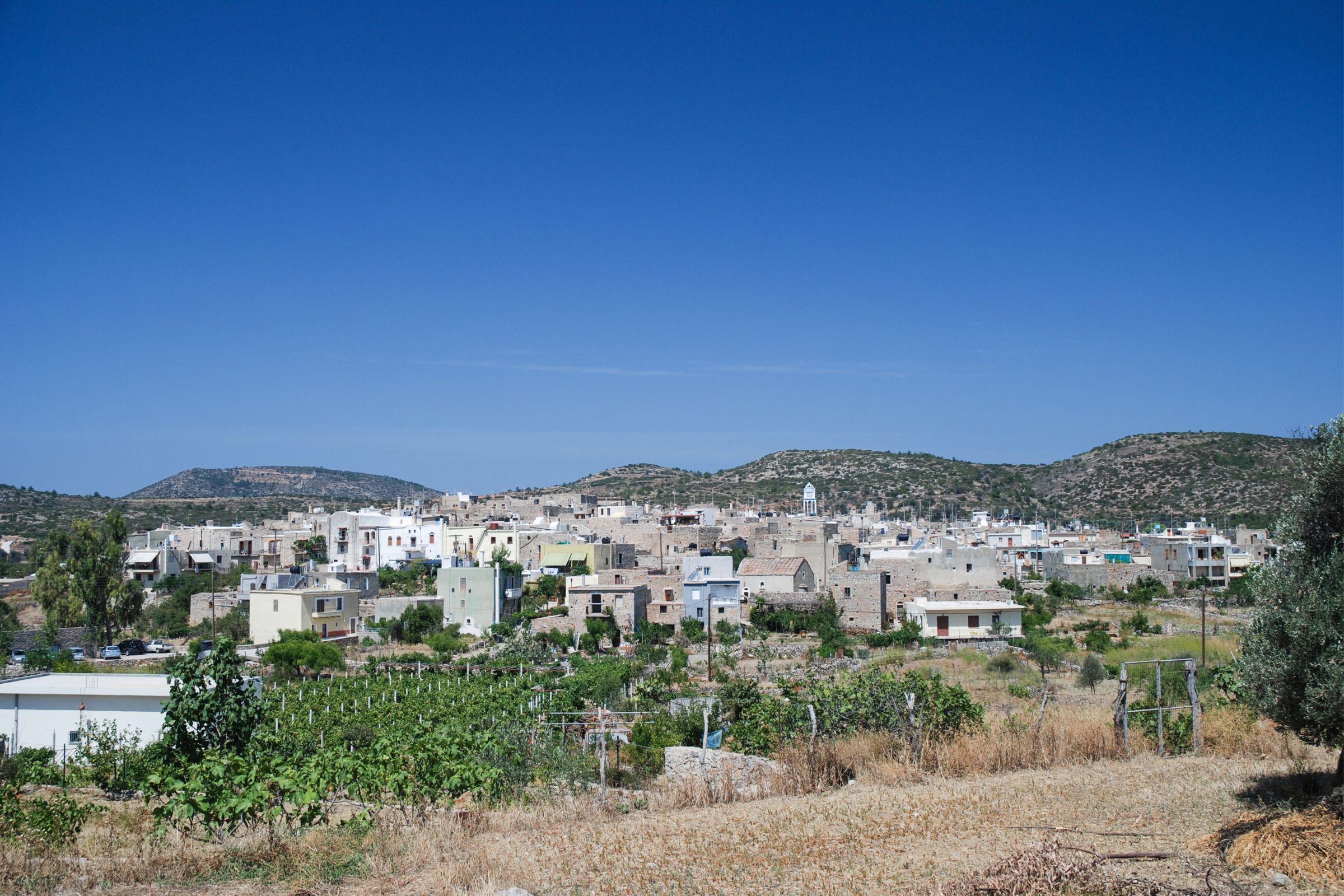
Pyrgi’s hypnotic patterns and Mesta’s ancient stone embrace create an experience that pulls you straight into Greece’s medieval heart. These castle-villages, tucked inland to dodge pirates, now stand proud as living examples of traditional Greek island culture.
I spent a day weaving through their winding streets, chasing shadows, and marveling at the details that make these places unforgettable.
From Pyrgi’s mesmerizing facades to Mesta’s fortress-like architecture, the adventure had it all—visual surprises, ocean views, and that golden Greek light that makes everything feel like a dream.
Stepping into the Geometric Wonders of Pyrgi
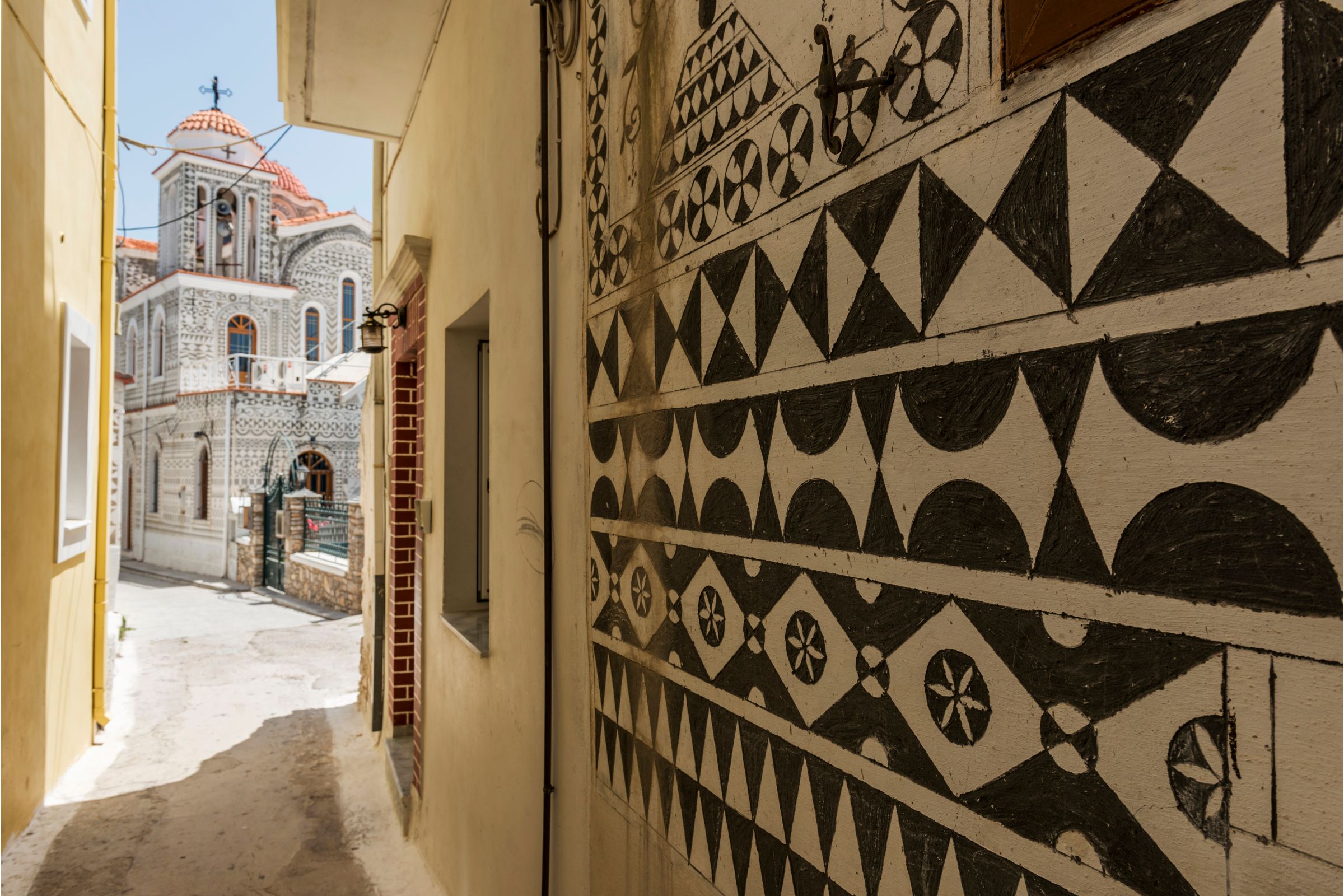
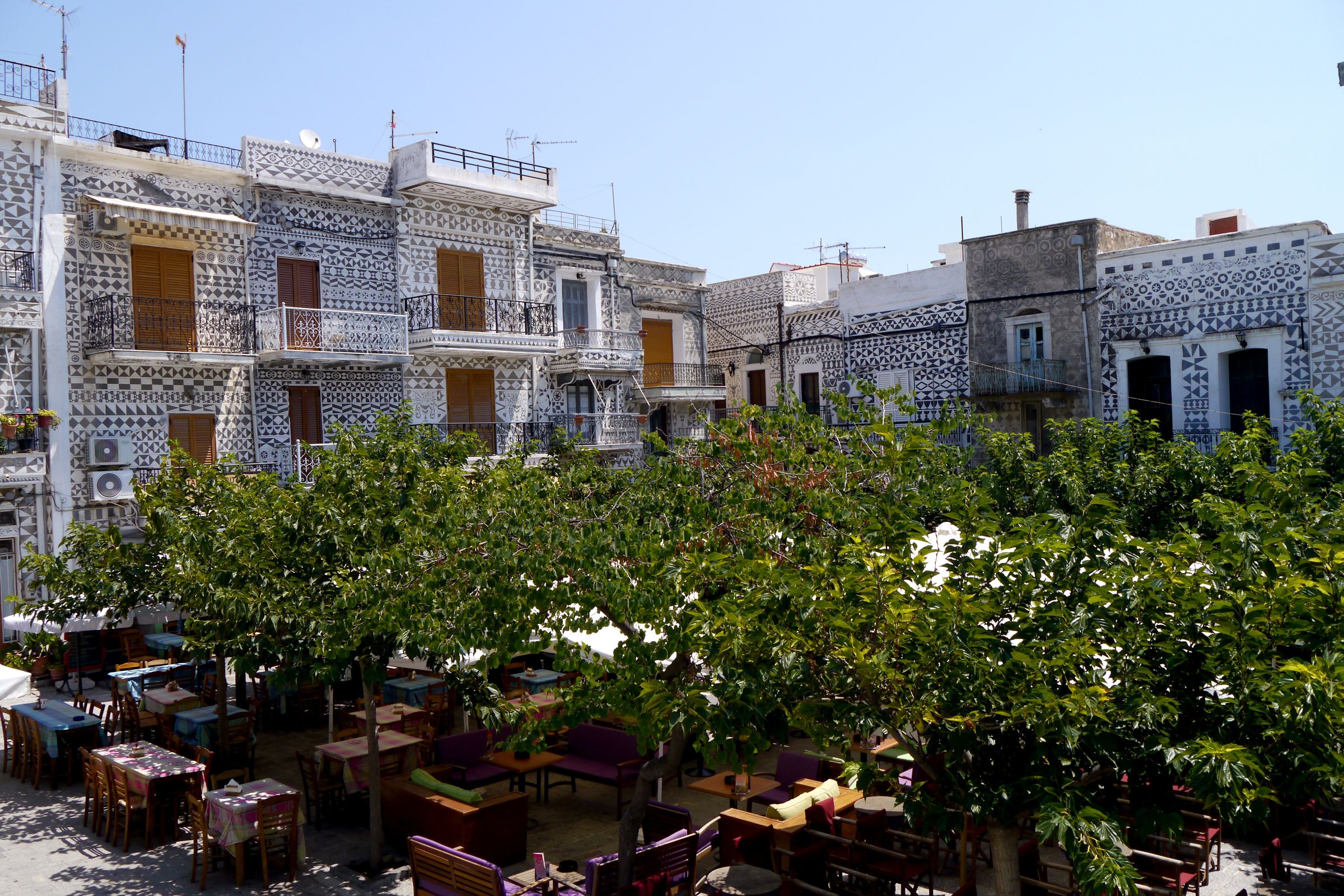
When the morning sun hit Pyrgi’s distinctive facades, the black-and-white patterns—called Xysta—came alive. The whole village felt like an open-air gallery.
Every street corner revealed new geometric wonders. Some patterns looked almost impossible, like puzzles waiting to be solved.
Marveling at the Painted Facades
The first building I saw literally stopped me. Triangles and diamonds danced across its walls, shifting as the sun moved.
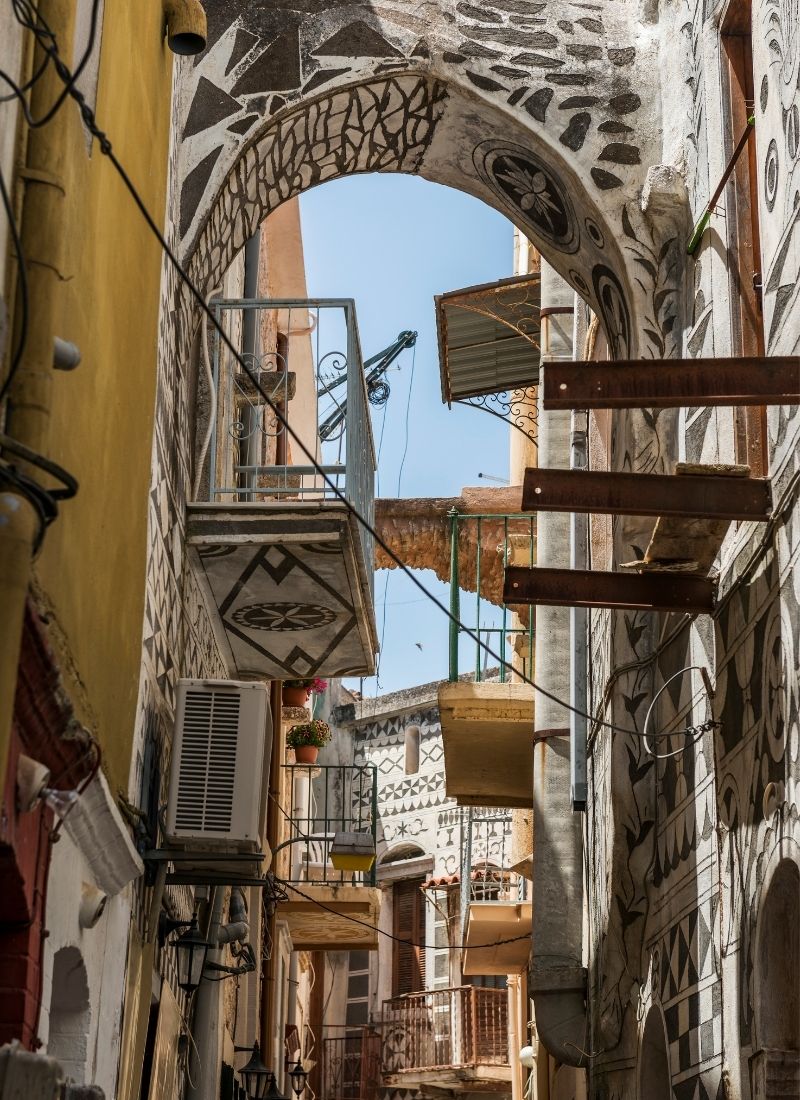
Nearly every home in Pyrgi wears these Xysta decorations. Artisans scrape away white lime plaster to reveal the dark sand below.
This technique creates bold contrasts. Each facade feels like its own artwork.
I spotted:
- Triangles stacked in neat rows
- Diamonds locked together wall-to-wall
- Semicircles wrapping windows and doors
- Tree branches stretching along the edges
The houses rise three or four stories above the narrow lanes. Their balconies, decked out in ironwork, add even more flair.
Discovering the Patterns of Imagination
Getting up close, I realized these designs aren’t random at all. They follow mathematical rules—medieval geometry in action.
I couldn’t help but feel impressed. With just a fork or a simple tool, these artisans etched patterns that would stump most of us.
Some designs even told stories. I caught glimpses of storks and other animals hidden among the shapes. It made me wonder about the families who once watched the world from behind these walls.
Three phases shaped Xysta:
- Early beginnings before the 1800s
- Its golden age up to 1950
- Today’s efforts to keep the tradition alive
Nowhere else in the world does this tradition exist. Pyrgi stands alone as a keeper of this unique art.
Walking the Sun-Kissed Streets
As the sun climbed, I wandered deeper into Pyrgi’s maze. Light and shadow played games on the walls, changing the vibe with every step.
Each turn surprised me with new shapes and patterns. I kept stopping to snap photos—sometimes I’d catch a detail I’d missed just moments before.
The narrow streets funneled cool breezes, even as the day warmed up. It’s a clever layout—medieval comfort meets art.
Locals moved through their routines, many busy with mastic production. Their presence reminded me: this isn’t just a museum. It’s a living, breathing village.
Immersed in the Stone Embrace of Mesta
Mesta wraps you up in stone—walls that have seen centuries of laughter, loss, and everything in between. Each passage feels heavy with memory.
Enigmatic Medieval Alleys
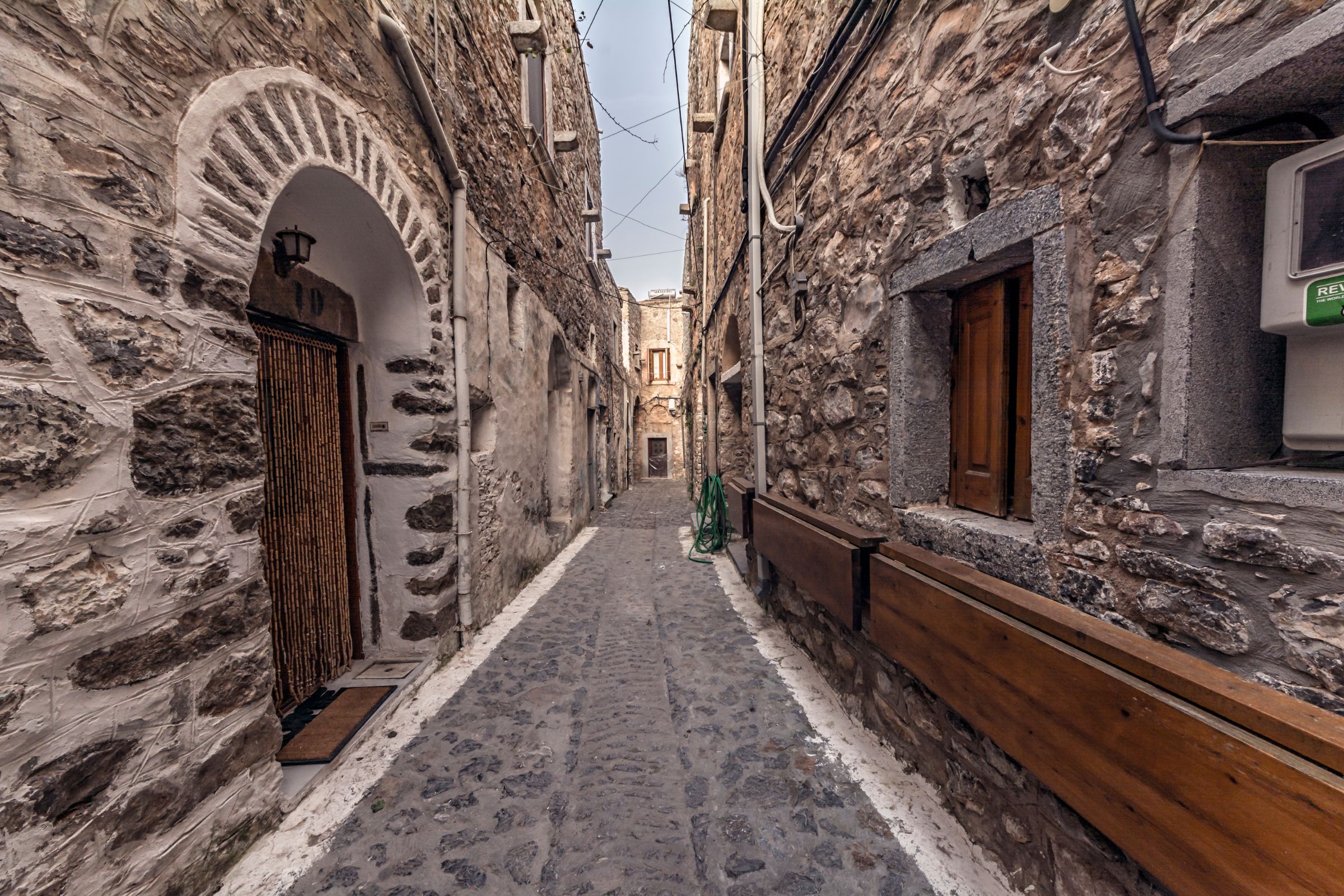
I wandered through Mesta’s twisting lanes, where ancient stones press in close. Some alleys barely fit two people side by side.
Cobblestones looped and doubled back, designed to confuse intruders.
Every corner hid a surprise. Tiny doors opened into secret courtyards. Narrow windows looked down from above.
The defensive design became obvious as I got lost. These winding paths weren’t accidental.
The stones under my feet had been polished by generations. Ancient drainage channels still steered rainwater, and iron rings in the walls hinted at old routines.
Echoes between Ancient Walls
There’s a hush in Mesta’s alleys that’s hard to describe. My footsteps echoed, bouncing off stones that have soaked up centuries of stories.
I pressed my hand against the cold wall. In some places, the stones fit together so perfectly, no mortar was needed.
Tiny niches once held oil lamps. Blackened marks showed where smoke curled for ages. These walls sheltered families when hope felt far away.
Sound behaves strangely here. Voices drift from nowhere, and whispers carry down the narrow corridors.
The Allure of Shadows and Light
Mesta’s stonework creates a constant dance of light and darkness. Cool, shaded alleys open into sunlit squares.
Walking from darkness into sunlight felt dramatic. Thick walls threw deep shadows that shifted with the hours.
The stones changed color as the day passed—warm gold in the morning, silvery gray by afternoon.
Light slipped through small openings, spotlighting details. The medieval builders must have understood how to use sunlight to make even fortress walls beautiful.
Poetic Moments Beneath the Chian Sky
The sky over Chios changed all day, and each moment felt like its own little poem. From the morning’s blue horizon to moonlit celebrations, the heavens set the scene.
The Meeting of Sea and Sky
Above Pyrgi, the morning sky stretched out, impossibly blue, meeting the Aegean in a razor-sharp line.
Fishing boats drifted along that edge, their white sails flashing in the light. The sea mirrored the sky.
Here’s what stood out:
- Sky: Deep, clear blue
- Sea: Flat and calm
- Wind: Just a gentle touch
- Visibility: You could see forever
Pyrgi’s geometric houses framed the view. Every alley offered a new look at the endless horizon.
Clouds drifted by, tossing shadows over land and sea. That meeting point—where the sky and water touch—felt almost otherworldly.
It’s easy to see why poets obsess over horizons. There’s something about that line that feels full of promise.
Cynthia’s Silken Curtains Unveiled
When evening came, Cynthia—the moon—rose over Mesta’s rooftops. Her light spilled across the stone, turning gray walls to silver.
The whole village glowed. Corners that hid in darkness all day now shimmered.

Image Source: Tripadvisor
Moonlight magic:
- Walls: Radiant, almost white
- Passages: Soft and shadowy
- Cobblestones: Glittered faintly
- Towers: Cut sharp against the sky
Moonlight revealed carvings I hadn’t noticed before. The village took on a dreamlike quality.
From Mesta’s highest point, the moon felt close enough to touch. For a moment, everything seemed enchanted.
Twilight Revels in the Village
As dusk deepened, the sky over Mesta shifted to purple and gold. People spilled into the main square, ready for the night.
Musicians played old songs, and the air buzzed with laughter. The sky faded from blue to violet.
Evening vibes:
- Air: Just the right temperature
- Sounds: Music, chatter, happy noise
- Light: That soft twilight glow
- Activity: Neighbors gathering
Kids dashed between stone houses. Their voices bounced off the walls. First stars blinked awake overhead.
This felt timeless—like a scene that’s played out for centuries. The stones and the sky have seen it all.
As night took over, the celebration kept going under a canopy of stars. It was pure magic.
Wonders of the Ocean and Its Tales
The sea around Chios is more than just a backdrop. It’s full of stories—some whispered by waves, others carved into stone.
Blue-Green Tides and Whispering Caves
The water near Pyrgi shifts from sapphire to emerald as it hugs the shore. I watched the colors change all day, never quite the same twice.
Sea caves, carved by centuries of waves, hid along the cliffs. Some amplified whispers; others swallowed sound completely.

Fishermen shared tales of pirates hiding in those caves. The echo of the surf sounded almost musical inside. At low tide, hidden pools and ancient shells appeared.
Cave highlights:
- Arches sculpted by the sea
- Pools clear as glass
- Fossils pressed into stone
- Echoes that lingered for seconds
The tides seemed to bring stories from far-off lands. Every wave carried a secret.
Legends of Ships and Hidden Rocks
Just off Mesta, submerged rocks have claimed more than a few ships. Locals told me stories passed down from their grandparents.
The worst rocks lurk just below the surface at high tide. In the old days, ships would hit them in the dark. Some say ghostly lights once lured sailors in.
One legend tells of a merchant ship loaded with Byzantine gold that sank just north of here. Divers have searched for years, but the treasure remains lost.
Notable shipwrecks:
- 1847: Athena (merchant)
- 1923: Maria (fishing)
- 1962: Poseidon (tourist yacht)
Winter storms hit hardest. Waves crash so high, spray flies thirty feet above the rocks.

Hope and Fears Along the Water’s Edge
Standing by the sea, I felt both awe and caution. Fishermen rely on these waters, but everyone respects the ocean’s power.
Mothers still warn kids about swimming near certain rocks—currents there run strong. The caution passes down through generations.
But when the boats come back full, families celebrate. The sea gives and takes.
Modern tech helps—GPS and weather forecasts keep sailors safer now. Still, storms can surprise anyone.
Every summer solstice, locals float candles on the water to remember those lost and to give thanks. It’s a ritual that mixes old fears with new hope.
Reflections, Emotions, and Social Thought
As I wandered among Pyrgi’s patterns and Mesta’s ancient stones, I found myself thinking about community bonds, the swirl of emotions these places stir up, and how hope and uncertainty seem to shape every human story.
Laurelled Peers and the Embrace of Community
The geometric patterns of Pyrgi immediately pulled me in. I couldn’t help but wonder how these designs help people feel connected—like every line and swirl tells a family’s story.
I lingered near a group of elderly villagers chatting by the painted walls. Their conversations wove together, just like the patterns—sometimes quiet, sometimes bursting with laughter.
Community Elements I Noticed:
- Neighbors pitching in to maintain old buildings
- Older folks naturally taking the lead
- A shared pride in keeping traditions alive
The term laurelled peers made sense to me as I watched certain villagers draw respect without needing any official title. They’d earned it—years of helping out, guiding others, always showing up.
Walking through Mesta, those thick stone walls made the village feel like one big family. Houses weren’t just homes—they were pieces of a larger, living story.
Moments of Love and Tears
In Pyrgi’s main square, I stood still for a moment, completely surrounded by history. Love felt baked right into the stones, each one placed with care and memory.
I spotted an elderly woman tracing the edge of a geometric design with her fingertips. Tears shimmered in her eyes, but I sensed they came from a place of deep belonging, not sorrow.
Every painted house seemed to whisper stories of old joys and heartbreaks. I could only guess at the meaning behind each shape and swirl.
Emotional Moments:
- Kids running and playing games their great-grandparents knew by heart
- Families sharing dinner in cozy courtyards
- Someone pausing quietly by a weathered doorway, lost in thought
Mesta’s narrow lanes made private moments feel even more intimate. The stone seemed to hold secrets, echoing soft footsteps and hushed voices.
The Dance of Hope and Fear
Mesta’s fortress walls brought a strange mix of hope and fear to mind. The people who built them must’ve known both—hoping for safety, fearing what lay beyond.
It’s hard not to feel hope when you see young folks restoring old buildings, learning crafts their ancestors practiced, and deciding to stay put instead of chasing city life.
But there’s fear too. Tourism could change everything, or maybe the next generation won’t really grasp what they’re inheriting.
Balancing Forces:
- Old ways versus new demands
- Earning money from visitors versus holding onto culture
- What I want versus what’s best for everyone
In Pyrgi, the patterns seem to capture that tug-of-war—orderly but not rigid, traditional but open to someone’s personal touch.
The Golden Glow of an Enchanted Evening
As evening settled in, Pyrgi and Mesta turned almost otherworldly. The sun dipped low, and suddenly everything shimmered with golden warmth.
Feathery Gold at Dusk
Sunset crept behind Mesta’s fortress walls, spilling golden light across the old stones. For a second, it looked like gold feathers drifting through the air.
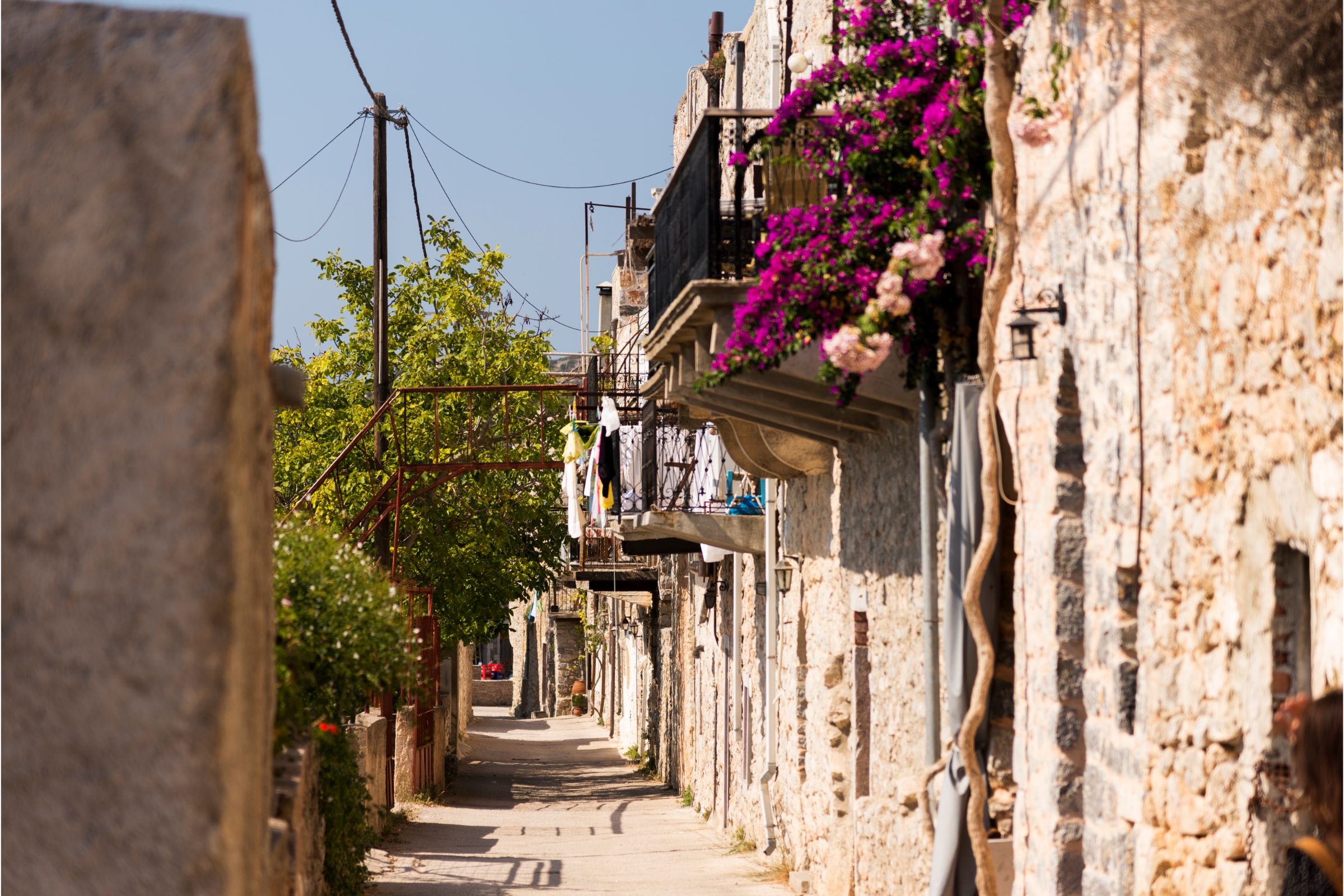
I watched as the houses shifted from plain gray to warm amber. The patterns on Pyrgi’s facades caught the light, showing off details I hadn’t noticed before.
Shadows filled the narrow streets, stretching and curling along the walls. Each stone glowed softly, and the ground turned into a patchwork of gold and dark.
A gentle breeze stirred the scent of wild herbs and sun-warmed stone. Everything felt calm, the world slowing down for just a moment.
Longing, Dreams, and the Setting Sun
As the sun dipped lower, I just sat there, caught up in a quiet sense of wonder. Golden light spilled across the old stones, and I couldn’t help but imagine all the lives that had wandered these same winding streets before me.
I found a spot on a weathered stone wall in Mesta. The sun hovered at the edge of the world, almost gone. Colors shifted—gold melting into orange, then fading into a deep, dreamy purple.
In Pyrgi, those famous geometric designs took on a whole new vibe in the evening light. They almost whispered stories, but I could never quite piece them together. Each pattern seemed to guard its own secret, tucked away in the past.
Honestly, I wished this moment could last forever. That golden glow made everything feel surreal, like I’d stumbled into a half-remembered dream. Even the stone villages seemed to breathe—full of old tales, beauty, and a kind of magic you only find by being there at sunset.
