
Walking along the East Side Gallery in Berlin is like stepping into a living, breathing history lesson. The 1.3-kilometer stretch of the Berlin Wall bursts with striking murals painted by artists from all over after the Wall came down in 1989.
Every artwork tells a story—sometimes hopeful, sometimes heavy—about division, unity, and the ongoing struggle to find common ground.
Here are my top 7 most powerful artworks at the East Side Gallery—and the stories behind them that stuck with me. From bold portraits to strange symbols, these pieces capture some of Berlin’s most important moments and emotions. Even now, they shout about peace and the power of art in ways that feel urgent.
History and Significance of the East Side Gallery
The East Side Gallery in Friedrichshain-Kreuzberg is so much more than an art wall. It’s a tough, beautiful reminder of Germany’s divided past and the wild hope that came with reunification.
After the Wall fell, this place transformed into a symbol of change. It’s now a treasured piece of Berlin’s cultural legacy.
Transformation from Berlin Wall to Open-Air Gallery
For decades, the Berlin Wall split East and West Germany. Everything shifted in 1989 when the Wall finally fell.
What happened next in Friedrichshain was wild—artists from everywhere flocked to Berlin and turned a long stretch of the Wall into a massive open-air gallery.
In 1990, more than 100 artists from over 20 countries came together. They painted murals on the 1.3-kilometer section still standing by the Spree River.
Their art transformed a cold barrier into a canvas for freedom and hope. This stretch, now called the East Side Gallery, stands as the world’s longest open-air gallery.
The murals really capture the mood of that time—dreams, fears, and a raw hunger for peace after reunification.
Role in Berlin’s Cultural Heritage
Today, the East Side Gallery is a vital piece of Berlin’s story. Whenever I walk along the painted Wall, I see crowds—locals and travelers—drawn to Friedrichshain.
People come from everywhere to take in the art and think about Berlin’s journey from division to unity. The gallery preserves fragments of both East and West Germany’s history.
These murals are living records. They show just how tangled art and politics are in Germany’s story. I see the gallery as a museum without a roof—open, public, and full of messages that still matter.
As Berlin keeps changing, the gallery helps keep the city’s recent past alive. It’s a physical reminder of how peaceful change can happen, even after years of separation.
Preservation Efforts and Challenges
Keeping the East Side Gallery alive isn’t easy. Berlin’s urban growth, bad weather, and graffiti constantly threaten the murals.
Some sections have faded or suffered damage from pollution and vandalism. Restoration crews have stepped in, but finding a balance between preserving the art and letting people enjoy it is tricky.
Sometimes, artists come back to repaint their work. Local groups push hard for conservation.
City leaders and cultural organizations are always searching for ways to protect the gallery while keeping it open to everyone. The future of the gallery really depends on constant care.
Each mural is one-of-a-kind, and every year, saving them feels more urgent as Berlin keeps growing and changing.
My Top 7 Most Powerful Artworks (and Their Stories)
Every single time I wander along Berlin’s East Side Gallery, certain murals just grab me. They stand out for their bold images and the weight of history behind them.
These pieces capture hope, struggle, freedom, and unity—each with its own story and style.
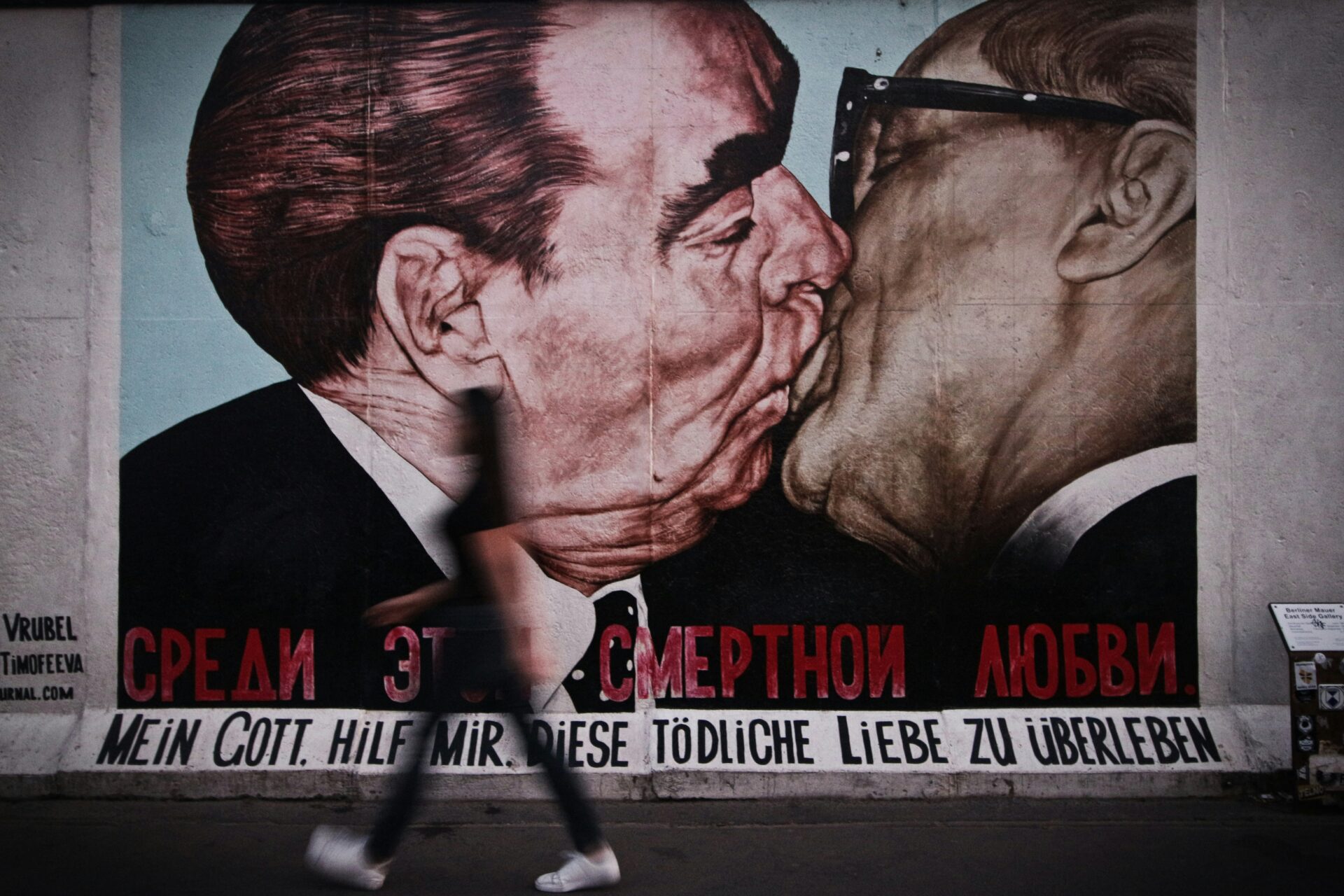
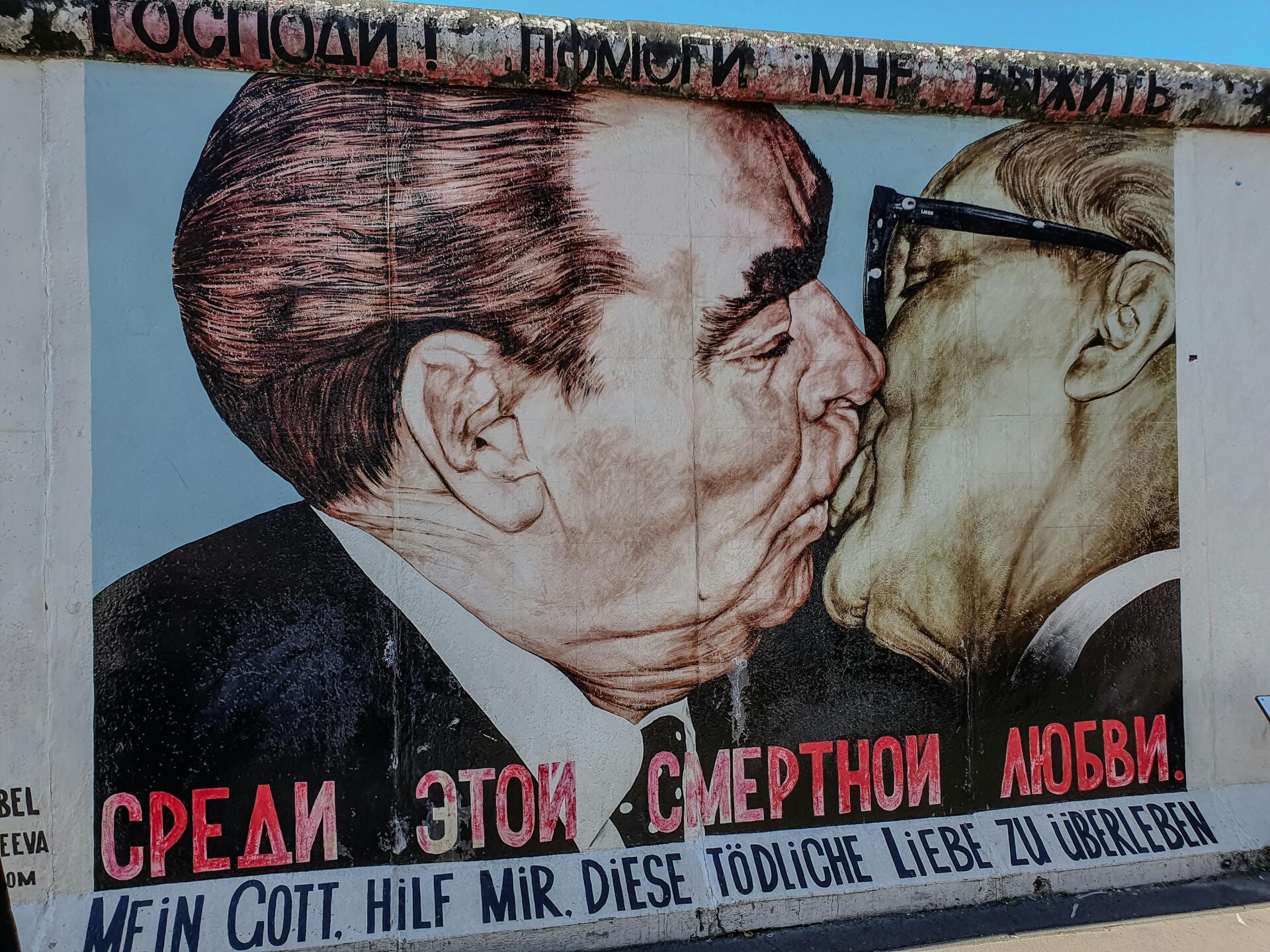
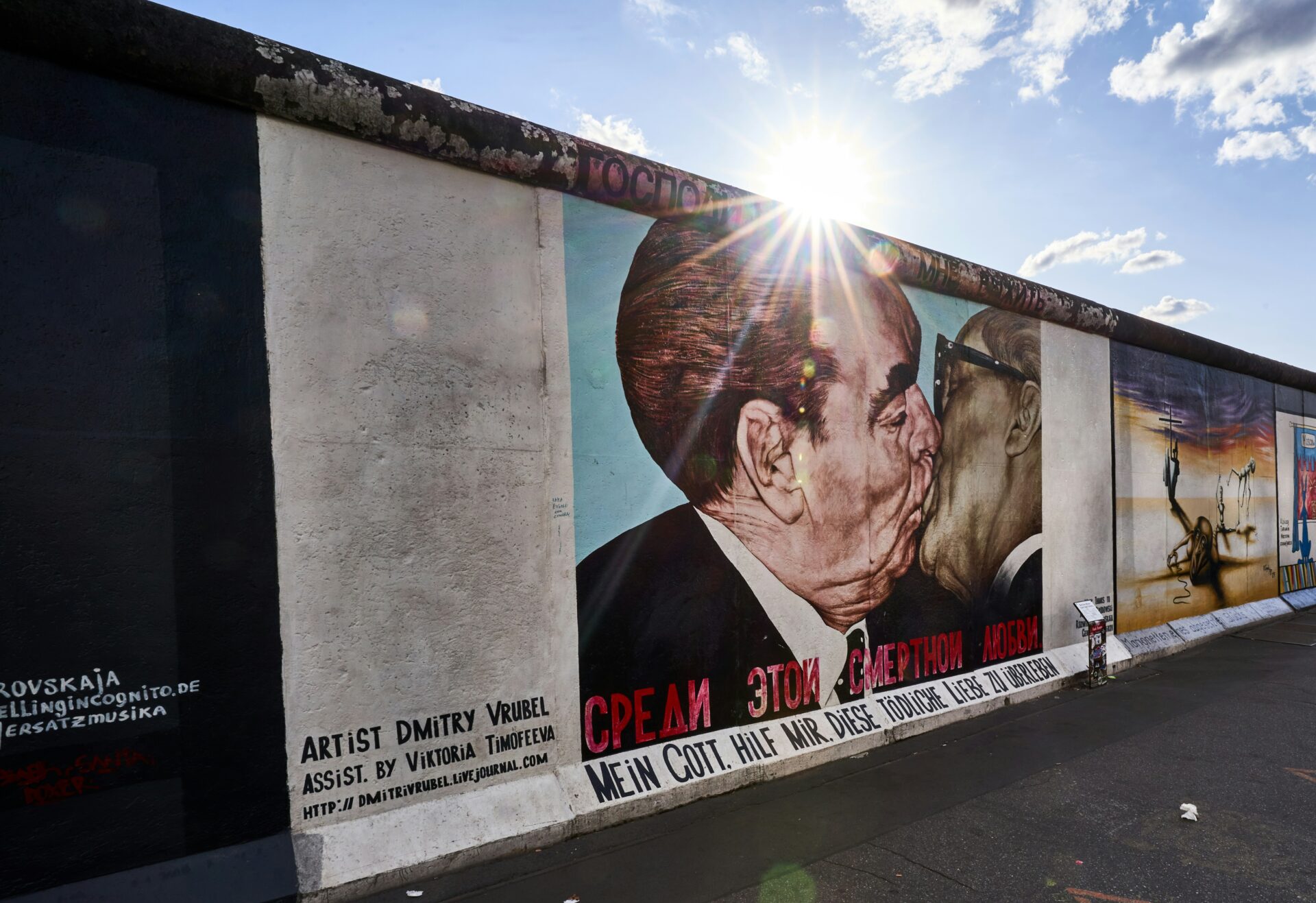
“My God, Help Me Survive This Deadly Love” (Fraternal Kiss) by Dmitri Vrubel
The mural that always draws a crowd is Dmitri Vrubel’s Fraternal Kiss. It’s the most famous one here, and for good reason.
Painted right on the old Berlin Wall, it shows the real-life socialist kiss between Soviet leader Leonid Brezhnev and East German leader Erich Honecker. Vrubel’s bold colors and lifelike detail make the moment feel both intimate and tense.
Underneath, the words “My God, Help Me Survive This Deadly Love” appear in Russian. That line hints at the dangerous, complicated relationship between the two countries.
Every time I pass by, I see people snapping photos, laughing, or just staring. This isn’t just a painting—it’s a snapshot of the political ties that kept the Wall up for so long.
Key Details:
- Artist: Dmitri Vrubel
- Nickname: “The Kiss”
- Painted: 1990
- Symbolizes: Political relationships between the USSR and East Germany
“Test the Rest” by Birgit Kinder
Birgit Kinder’s Test the Rest always stops me in my tracks. The mural shows a Trabant car smashing through the Wall.
That little Trabi wasn’t exactly a speed demon in East Germany, but here, it’s bursting out—full of longing for escape and freedom. Kinder’s perspective and detail make the car almost leap off the wall.
People love to line up for photos with this one. The license plate reads NOV 9-89, the day the Wall fell.
It’s simple, but wow, it packs a punch.
Notable Elements:
- Artist: Birgit Kinder
- Features: Trabant car, realistic style
- Message: Breaking barriers, hope
- Location: Mühlenstraße, East Side Gallery

“It Happened in November” by Kani Alavi
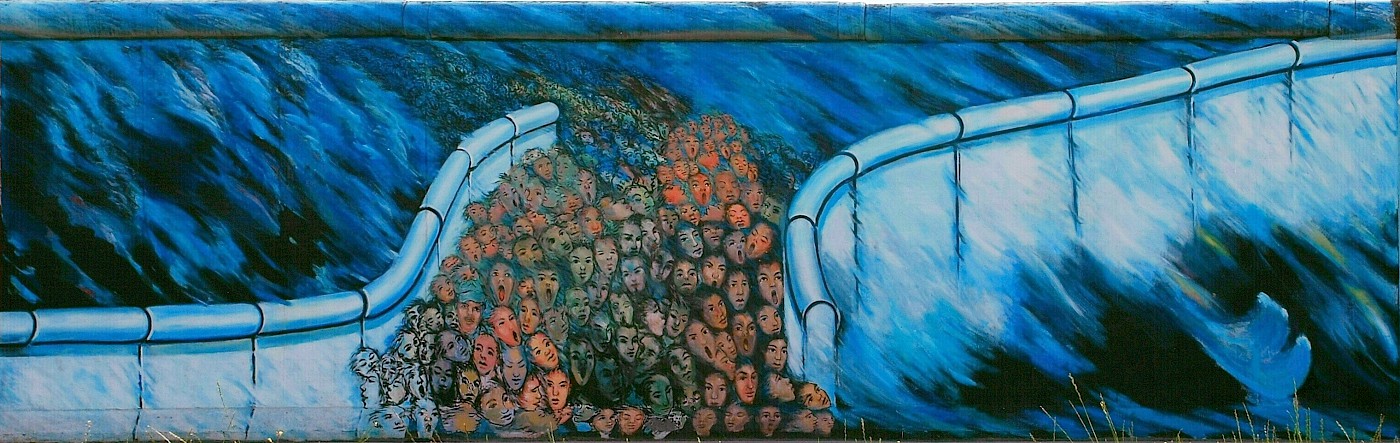
Kani Alavi’s mural stretches along the Wall, packed with faces all moving in one direction. It’s called “It Happened in November,” and you can feel the rush.
Each face is different—some happy, some anxious, some just lost. Alavi wanted to capture the flood of East Germans crossing into West Berlin in November 1989.
The colors are bright, the energy is wild, and the emotion is real. I always find myself pausing here, thinking about how overnight, everything changed for so many people.
Details to Remember:
- Artist: Kani Alavi
- Title refers to: November 1989, fall of the Wall
- Style: Expressive, crowded faces
- Location: East Side Gallery
“The Wall Jumper” by Gabriel Heimler
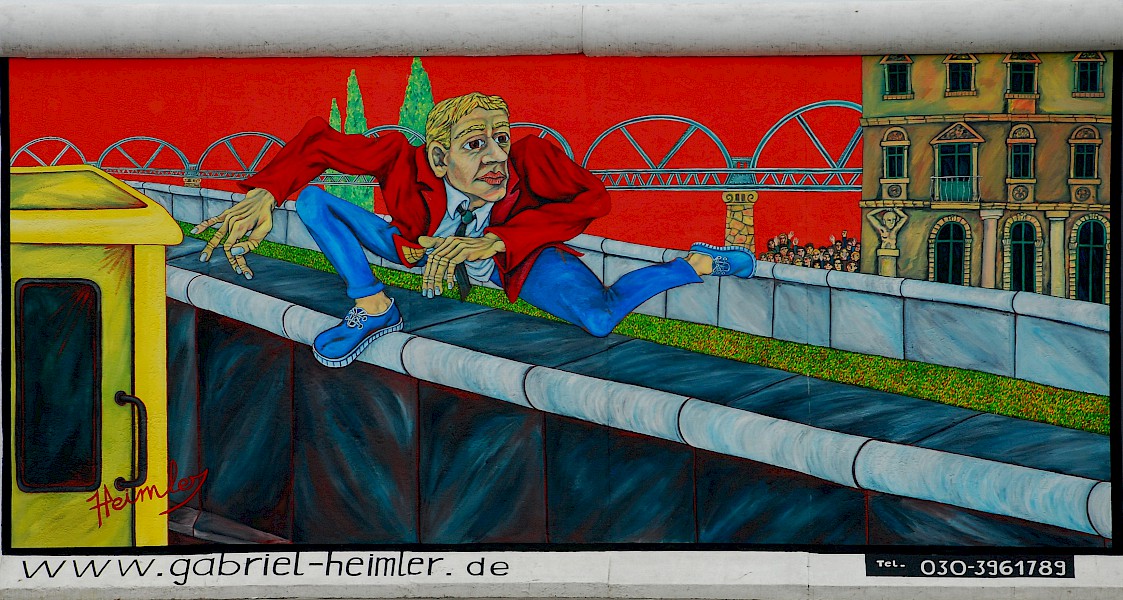
Gabriel Heimler’s The Wall Jumper is one I can’t walk past without stopping. It shows a man mid-leap, climbing over the Wall.
Unlike some of the other murals, this one is all about motion and determination. The way the figure stretches, you can almost feel the hope and effort.
Heimler based it on a real event, but it also stands for the courage of everyone who risked everything for freedom.
Quick Facts:
- Artist: Gabriel Heimler
- Image: Man jumping the Wall
- Theme: Courage, escape
- Found at: East Side Gallery
Artworks Reflecting Freedom and Reunification
A lot of murals at the East Side Gallery shout about freedom, hope, and reunification. They push you to think about Berlin’s divided past and imagine a more peaceful future.
“Tolerance” by Margaret Hunter
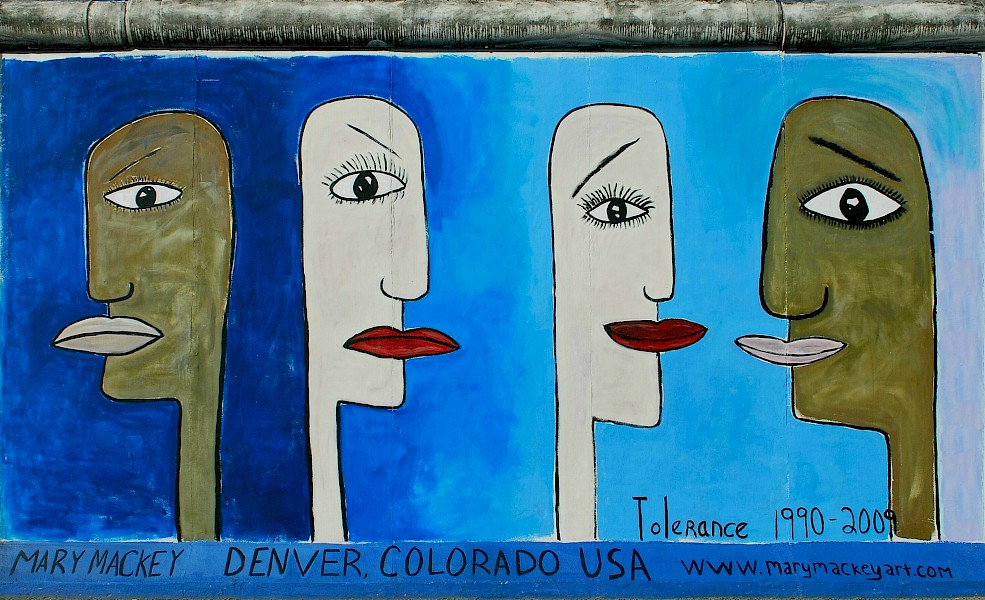
Margaret Hunter’s “Tolerance” really sticks with me. She painted these bold, simple human figures, all reaching out to each other.
Their poses and faces show a real longing for connection. Hunter, who’s from Scotland, painted it in 1990 as her answer to Berlin’s reunification.
What’s cool is how she uses basic shapes and colors to hammer home the message: tolerance is everything. This mural feels immediate and personal, reminding me that real unity is about how we treat each other, day by day.
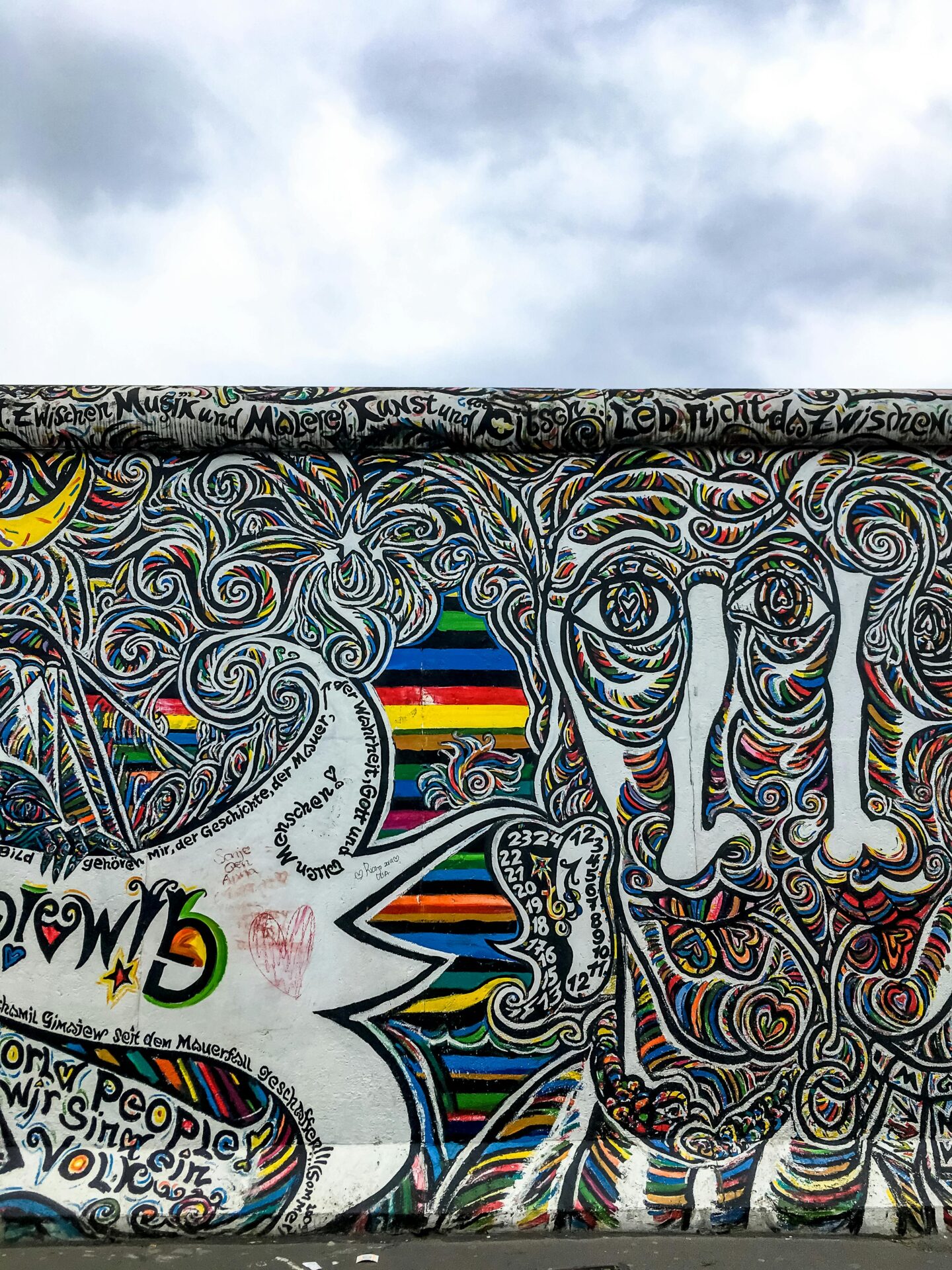
“Worlds People” by Shamil Gimayev
“Worlds People” by Shamil Gimayev covers a big chunk of the wall with faces and shapes from all sorts of cultures. Gimayev, a Russian artist, painted it right after the Wall came down in 1990.
The mural’s bright colors and busy design make it impossible to ignore. Gimayev wanted to show unity across all lines—ethnicity, nationality, you name it.
Every face here feels like hope for a world where differences don’t divide us. “Worlds People” invites everyone to see themselves in the art, no matter where they’re from.
“What Remains” by Mary Mackey
Mary Mackey’s “What Remains” is quieter than the others—almost haunting. She painted with pale colors and faded shapes, giving off a sense of memory and loss.
Her mural asks us to remember the pain and lessons from Berlin’s divided years. The starkness stands out among the brighter murals.
I think “What Remains” matters because it won’t let us forget what came before peace. Its calm look reminds me that freedom isn’t free, and division always comes at a cost.
Influential Artists and Their Legacies
The artists behind these murals are a huge part of why the East Side Gallery matters. Their styles and stories shaped not just the Wall, but Berlin’s whole approach to street art and public expression.

Thierry Noir: Pioneer of Berlin Wall Street Art
Thierry Noir, a French artist, was one of the first to paint the Berlin Wall. He showed up in West Berlin in the early 1980s and started covering the Wall with his colorful cartoon faces.
Noir’s style is hard to miss—bold lines, big eyes, and wild colors. These faces quickly became symbols of hope and rebellion.
By painting in public, Noir helped turn street art from “vandalism” into a kind of protest and creativity. Today, his pieces are some of the most photographed at the East Side Gallery.
Thierry Noir’s impact is huge—he proved art could break barriers and give people a new voice.
Jim Avignon: Pop Art and Vivid Messages
Jim Avignon is another artist I really admire here. He’s known for his pop art style and cartoon-like characters.
Avignon’s murals are full of energy and color, but they also tackle big social issues. He works fast—sometimes finishing massive pieces in a day—which fits the spirit of street art.
Many of his Berlin murals explore freedom versus control, mixing humor with tough questions. What I love is how Avignon makes serious themes feel approachable.
His legacy is all about showing that street art can deliver important messages in a way that speaks to everyone.
Other Significant Contributors
Plenty of other artists left their mark on the East Side Gallery. They come from all over, bringing different styles and backgrounds.
Some focus on wild patterns, others use symbols or words to get political. Kani Alavi painted those unforgettable faces crossing the border, and Dmitri Vrubel created the iconic “My God, Help Me to Survive This Deadly Love.”
Their works dig into freedom, division, and Berlin’s shifting identity. Together, these artists turned the Berlin Wall from a symbol of separation into a living canvas for unity and creativity.
Their legacy keeps inspiring new street artists, not just in Berlin but everywhere.
Experiencing the East Side Gallery Today
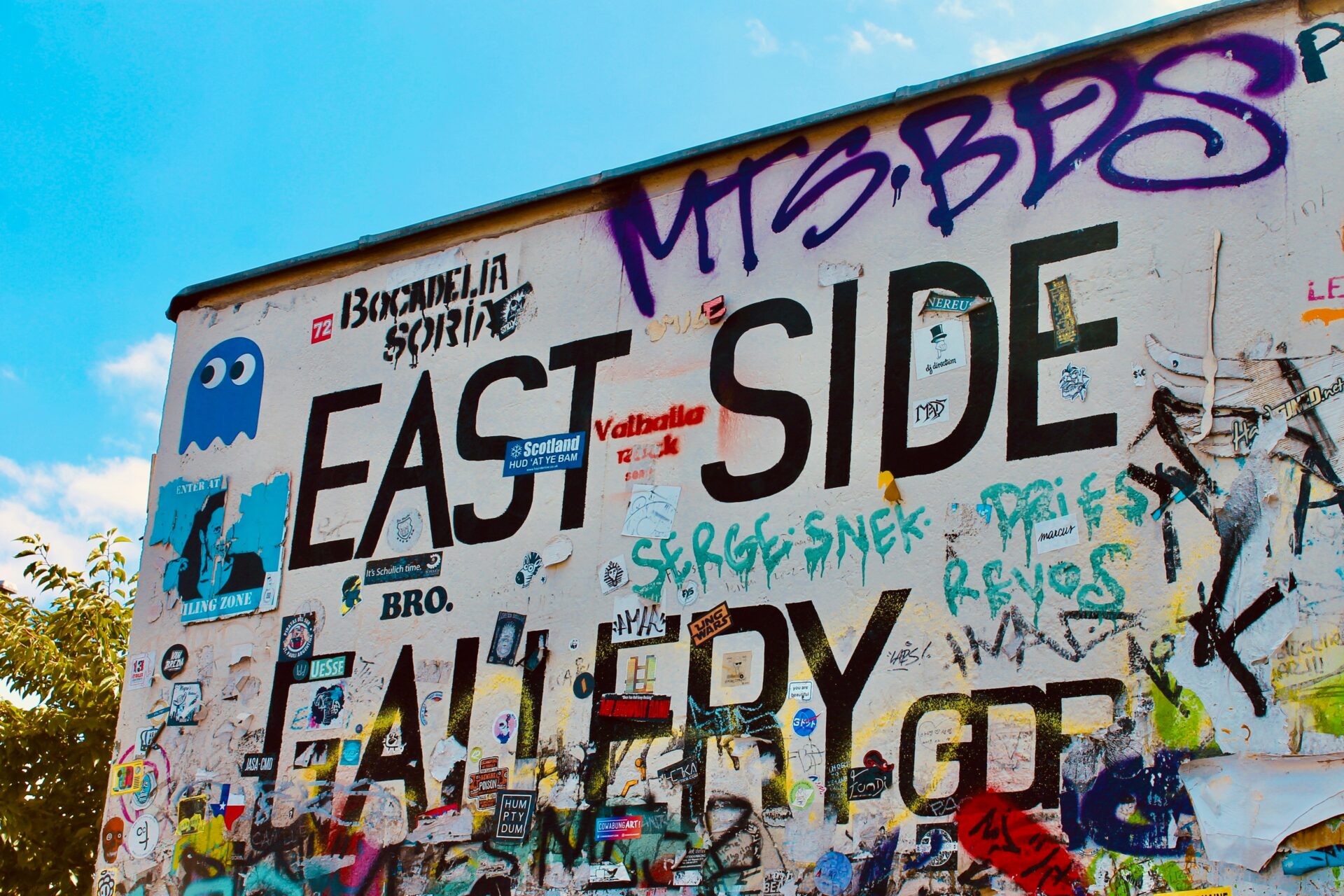
Visiting the East Side Gallery lets me get up close to history, modern art, and Berlin’s buzzing street life—all packed into one riverside walk. It’s a powerful memorial and a creative playground right by the Spree.
Location and How to Visit
The East Side Gallery runs for about 1.3 kilometers along Mühlenstraße, hugging the River Spree in Berlin’s Friedrichshain district. I usually hop on public transport to get there—it’s just so convenient.
Ostbahnhof is the closest S-Bahn stop, and it’s only a short walk from the gallery. If I’m coming from the other direction, Warschauer Straße works well too, since it’s near the opposite end.
The gallery sits outdoors and stays open around the clock. No tickets, no barriers—just show up whenever you want. I tend to start my walk at the historic Oberbaumbrücke (Oberbaum Bridge). Following the murals in order just feels right, and it helps me soak in the story they tell.
This part of Berlin buzzes with people, especially when the weather’s nice. It feels safe, but if you’re not a fan of crowds, maybe try an early morning stroll.
Walking the Gallery: Must-See Spots
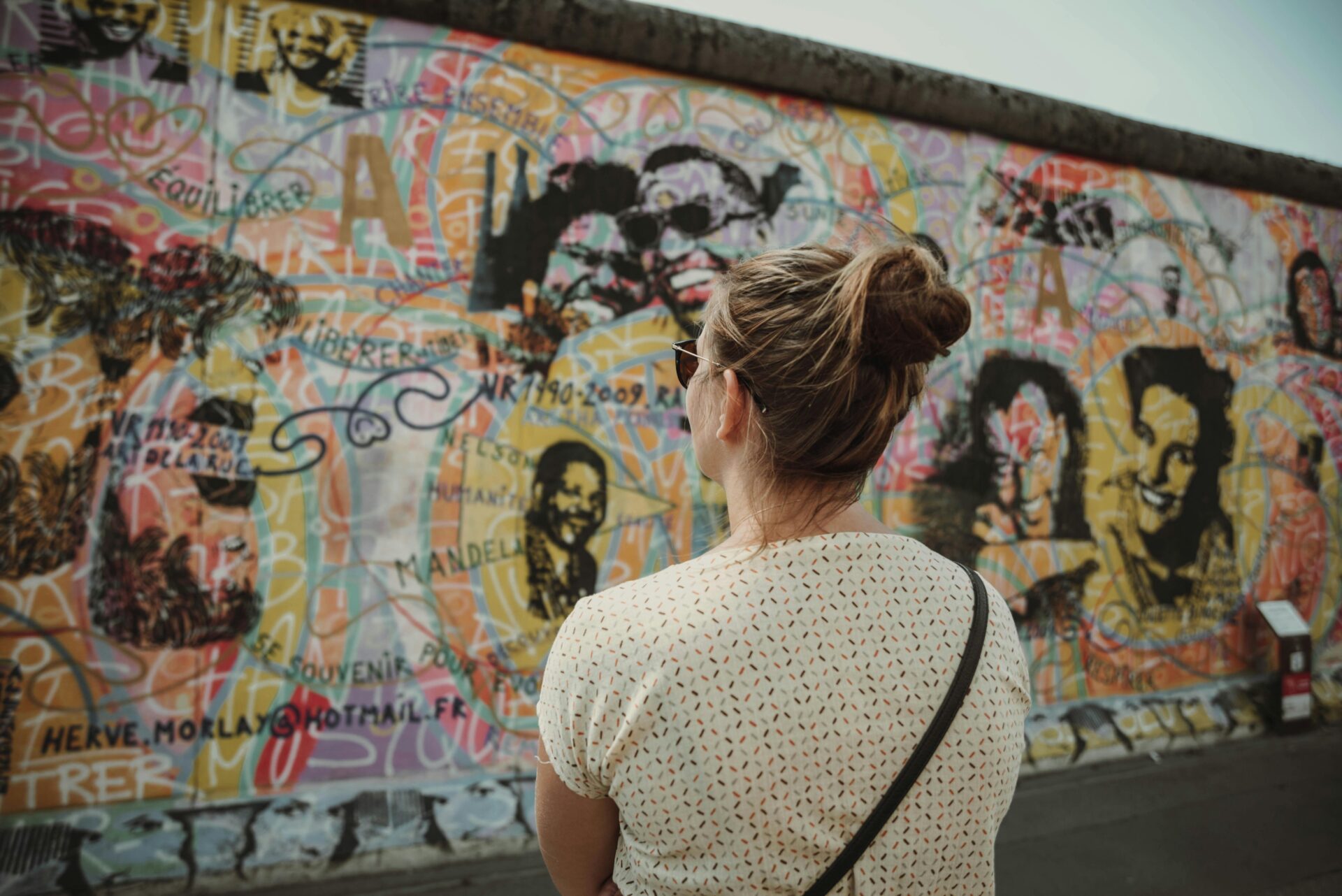
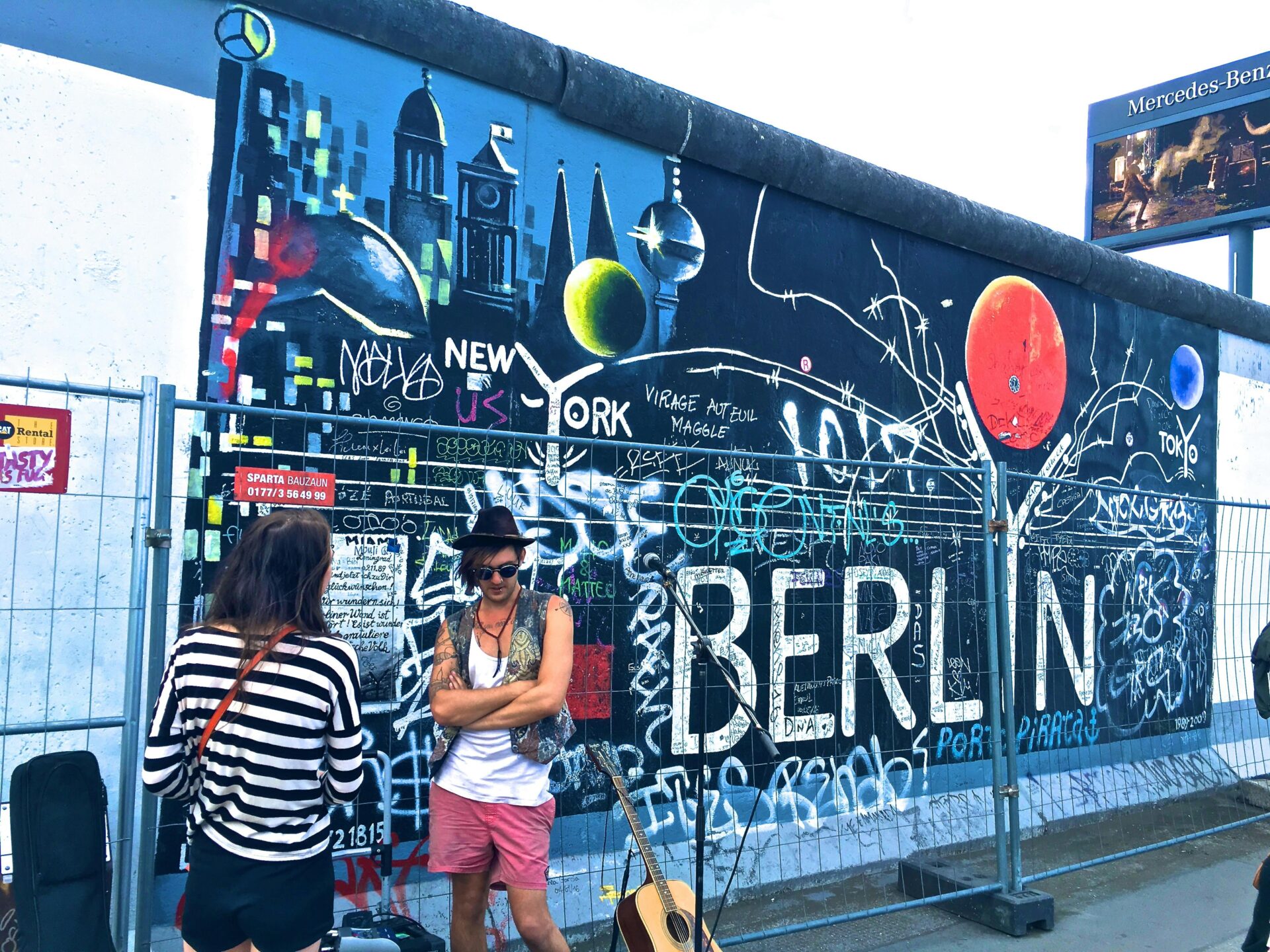
Strolling the East Side Gallery, I pass more than 100 murals—each one splashed across what’s left of the Berlin Wall. No two murals look the same, but some always grab my attention.
Near Ostbahnhof, the “Fraternal Kiss” and “Checkpoint Charlie” murals pull in the biggest crowds. As I wander west, things quiet down a bit and the murals get bigger and bolder. The river’s right there, making everything feel more open and a little bit electric.
The gallery stretches on, so I can wander at my own pace. Benches and grassy spots along the Spree give me a chance to sit, people-watch, or just take it all in. Signs and QR codes pop up here and there, sharing stories about the art and the folks who painted it.
Watching sunlight or rain change the colors on the wall never gets old. Every visit feels a bit different, and honestly, that’s what keeps me coming back.
Events and Community Involvement
The East Side Gallery feels like so much more than a tourist hotspot—there’s a real pulse to it. You’ll stumble upon outdoor concerts near the Oberbaumbrücke, or maybe catch an art workshop in progress. Honestly, something’s always going on along the wall.
Local community groups jump in to organize clean-up days, making sure the murals stay vibrant and fresh. Sometimes, I’ll spot artists up on ladders, carefully retouching faded colors or adding a new twist during restoration projects.
School groups, tourists, and Berliners all mingle here. It’s a space that genuinely lives and breathes with the city.
The Berlin Wall Foundation steps in with exhibitions and creative projects, weaving the gallery’s story into the larger history of the Berlin Wall. Friendly guides and info booths pop up here and there, giving context that keeps the gallery closely tied to Berlin and its people.
