
America’s most beautiful libraries are, honestly, kind of magical. They don’t just store books—they turn knowledge into an experience. You walk through grand marble halls, sunlight pours in through massive windows, and suddenly, reading feels like a privilege.
I’ve wandered through libraries all over the country, and the best ones always do more than just line up shelves. They celebrate the written word. Some, like the Library of Congress with its jaw-dropping details, are famous. Others are quiet gems in small towns. Every single one tells a story about how much Americans value learning and beauty.
Books and beautiful spaces really do belong together. Some libraries hold treasures like the Gutenberg Bible. Others just win you over with their design. Visiting these places reminds me why libraries are still the heart of so many communities.
Defining America’s Most Beautiful Libraries
What makes a library beautiful? It’s not just about the architecture (though, wow, that helps). These places mix stunning design with practical spaces that invite everyone in—whether it’s a neoclassical palace or a sleek glass cube.
What Makes a Library Beautiful?
Honestly, I think it’s all about balance. The best libraries blend form and function. You get soaring ceilings, big windows, and spaces that just make you want to sit down and read for hours.
Key Visual Elements:
- Dramatic heights and open layouts inside
- Skylights or huge windows that flood the space with light
- Gorgeous materials—marble, bronze, carved wood
- Murals, sculptures, and all those little artistic touches
Take the George Peabody Library in Baltimore. Locals call it the “cathedral of books” for a reason. Five stories of cast-iron balconies stretch up to a dizzying ceiling—it’s almost spiritual.
Libraries like Yale’s Beinecke protect their collections in style. Those marble walls? They’re not just for show. They let in a soft glow while keeping rare books safe from harsh sunlight.

Architectural Styles and Influences
American libraries have tried on a lot of different looks over the last century and a half. Each era left its mark, and honestly, it’s fun to spot the differences.
Major Architectural Styles:
| Style | Example | Key Features |
|---|---|---|
| Beaux-Arts | Boston Public Library | Grand staircases, marble everywhere, classical columns |
| Brutalist | Geisel Library (UC San Diego) | Concrete, bold shapes, modern design |
| Modern | Seattle Public Library | Glass, steel, wild angles, open spaces |
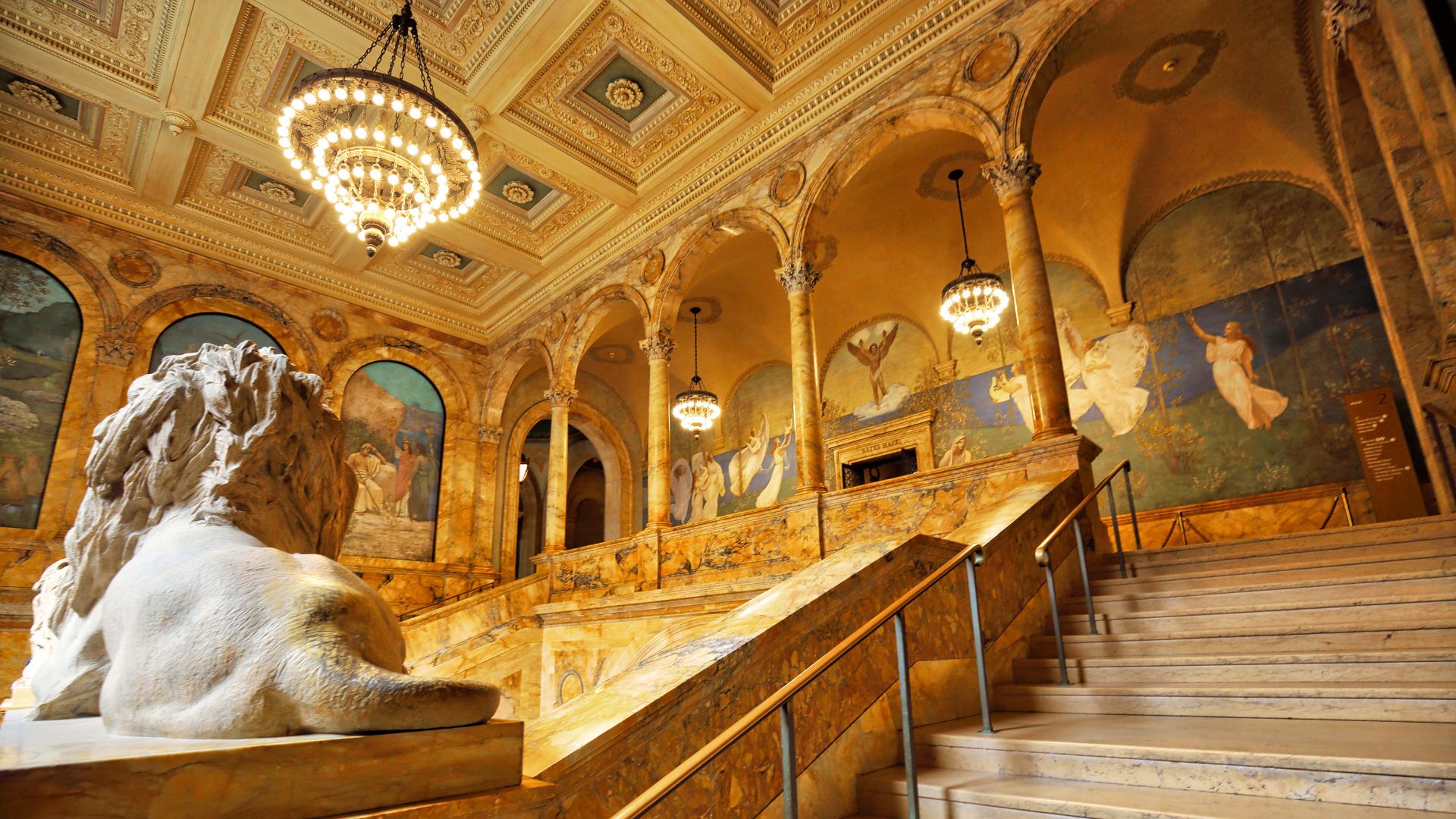
The Boston Public Library is a classic. Finished in 1895, it’s the ultimate Beaux-Arts showpiece. Architect Charles Follen McKim wanted a “palace for the people,” and he nailed it.
Then you get places like Seattle’s central branch—totally different vibe. Rem Koolhaas and Joshua Prince-Ramus went for angular glass and steel, ditching tradition and making something super modern.
Role of Libraries as Cultural Landmarks
Beautiful libraries aren’t just for books. They’re symbols of what communities care about—civic pride, education, culture.
Some libraries earn historic landmark status because of their design. The Boston Public Library, for example, officially became a National Historic Landmark in 1986. That’s a big deal.
Inside, you’ll find priceless stuff. The Library of Congress has Thomas Jefferson’s personal library. The Morgan Library? That place is packed with rare manuscripts and art.
Libraries host lectures, art shows, and community events. The original Peabody Institute even mixed its library with a music conservatory and an art collection. Baltimore really got the full package.
And let’s be honest, these buildings draw visitors from everywhere. Tourists, students, researchers—they all come for the architecture and stay for the atmosphere.
Iconic Masterpieces: America’s Most Famous Libraries
Some libraries just steal the spotlight. They aren’t just places to read—they’re monuments to knowledge and architectural genius. Here are three that always wow me.
Library of Congress: Largest Library in the World
The Library of Congress? It’s the biggest library on the planet. Founded back in 1800, it’s also the oldest federal cultural institution in the U.S.
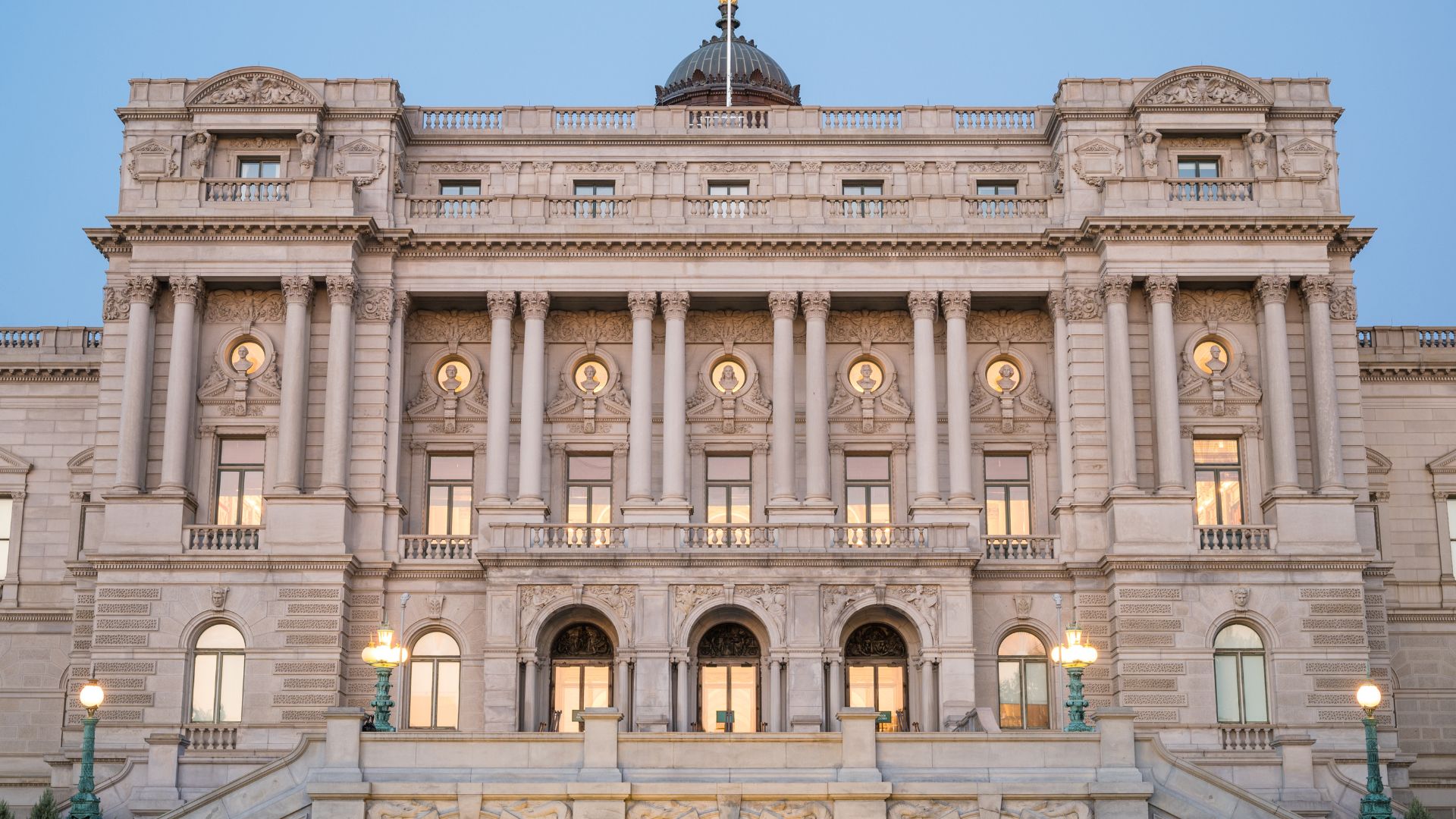
The Thomas Jefferson Building, which opened in 1897, is the real showstopper. The Main Reading Room, with its huge dome, always leaves me a little awestruck.
Key Features:
- 17 million+ books (and that’s just the start)
- 164 million items in total
- Open to researchers age 16 and up
- Original manuscripts and super rare texts
Inside, it’s all marble, bronze, gold, and mahogany. Over 50 artists contributed carvings and paintings.
After the British burned the original collection in 1814, Thomas Jefferson donated his 6,487 books. That collection rebuilt the library from scratch.
New York Public Library: A Beaux-Arts Wonder
The Stephen A. Schwarzman Building is the crown jewel of the New York Public Library. Right by Bryant Park, this Beaux-Arts masterpiece cost $9 million back in the day.
Carrère & Hastings kicked off construction in 1902. When it opened in 1911, tens of thousands poured through the doors on day one.
Notable Collections:
- Medieval manuscripts
- Ancient Japanese scrolls
- Baseball cards and comic books
- Historic maps and prints
Those famous lion statues—”Patience” and “Fortitude”—guard the entrance. The Rose Main Reading Room stretches almost a football field long, with 50-foot ceilings.
This place just nails the idea that public spaces can be inspiring. It’s now a National Historic Landmark, and, honestly, it deserves it.
Boston Public Library: Historic Elegance
The Boston Public Library opened its doors in 1854, making it America’s first free public library. Charles Follen McKim designed the Copley Square building, wrapping up his “palace for the people” in 1895.
This library is a Beaux-Arts classic. It became a National Historic Landmark in 1986 for its design.
Philip Johnson added a modern wing in 1972, giving the place a cool old-meets-new vibe.
Interior Highlights:
- Murals by famous artists
- Rare books and manuscripts
- Historic maps
- Dedicated gallery spaces
McKim’s vision influenced library architecture all over the country. Boston’s library still feels grand and welcoming, even after all these years.

Architectural Marvels and Hidden Gems
Not every beautiful library is famous. Some hide in plain sight, mixing glass and steel with Art Deco flair or Gothic drama. These places prove that libraries can be both practical and breathtaking.
Seattle Central Library: Modern Innovation
Seattle Central Library is just wild. Opened in 2004, its diamond-shaped glass exterior looks like a giant crystal dropped in the city.
Rem Koolhaas designed this 11-story building to break all the old library rules. The odd angles and slopes make every floor feel different.
Key Design Features:
- Glass and steel with a diamond pattern outside
- Spiral ramp connecting all the levels
- Four-story glass tower for the book collection
- Bright yellow escalators zigzagging everywhere
They squeezed in a 275-seat auditorium and even recording studios. The architects made sure there’s space for quiet study and for community events.
The whole place cost $165 million and covers over 360,000 square feet. With all that glass, you almost feel like you’re reading outdoors.
Los Angeles Central Library: Art Deco Brilliance
The Los Angeles Central Library is a total Art Deco gem. Built in 1926, it survived two massive fires and somehow looks even better now.
Bertram Goodhue mixed Egyptian Revival and Art Deco styles. The pyramid tower, topped with a torch, is pure symbolism for learning.
Notable Features:
- Colorful tiles everywhere
- Hand-painted murals in the rotunda
- Carved stone outside
- Sphinx statues at the door
The chandeliers are just fun—zodiac signs and celestial designs. The children’s area? Full of whimsical murals that make you want to pick up a book.
A big renovation in the ’90s added modern touches but kept the vintage charm. Now the library has eight floors and over 6 million items.

University of Michigan Law Library: Gothic Inspiration
The University of Michigan Law Library is Gothic Revival at its best. Built in 1981, it looks like something out of medieval Europe.
I can’t get enough of the pointed arches and stone tracery. Big windows let in natural light but keep the Gothic mood.
Distinctive Features:
- Limestone exterior with detailed carvings
- Vaulted ceilings in reading rooms
- Stained glass windows showing legal themes
- Carved wood furniture and shelves
With over 890,000 volumes, there’s plenty to read. Long wooden tables fill the reading rooms, surrounded by centuries-old legal texts.
Gothic touches like gargoyles and heraldic symbols pop up everywhere. The vibe is pure scholarly tradition.

Libraries Celebrated for Rare Collections
Some libraries are famous for the treasures they protect. Medieval manuscripts, first editions, ancient artifacts—you name it. The Beinecke Rare Book & Manuscript Library and The Morgan Library & Museum are two that totally blew me away.
Beinecke Rare Book & Manuscript Library: Marble Sanctuary
Yale’s Beinecke Library is honestly like nothing else. Opened in 1963, its walls are translucent Vermont marble that softly glow and protect the rare books inside.
Gordon Bunshaft designed this geometric marvel with preservation in mind. During the day, the marble glows, and the atmosphere feels almost otherworldly.
Key Features:
- Marble and granite walls that filter daylight
- Climate-controlled everything
- Glass tower showing off rare manuscripts
- Storage hidden underground
Students and researchers from all over the world come here. The building’s design choices all serve one purpose: protect the collection in serious style.
Morgan Library & Museum: Private Collection Turned Public Treasure
J.P. Morgan built his private library between 1902 and 1906, filling it with rare books and art. In 1924, his son gave it to the public, creating The Morgan Library & Museum.
Charles Follen McKim designed the original building on Madison Avenue. It now covers half a city block and has expanded a bunch since then.
Collection Highlights:
- Medieval manuscripts and ancient artifacts
- Rare books, prints, and historical documents
Renzo Piano led a big renovation in 2006, making the place more accessible and adding gallery space. I love that it still feels like Morgan’s vision but works for today’s visitors.
Preserving and Displaying Rare Books
These libraries go all out to protect their treasures. Temperature and humidity controls keep things safe. Special light filters stop pages from fading.
Preservation Methods:
- Climate-controlled vaults
- Filtered lights
- Custom display cases
- Digital archiving for broader access
Both places really balance preservation with access. Visitors can see the gems behind glass, while researchers get supervised access to the real thing.
They’re also digitizing rare items, which is awesome. Now, more people can study these works without risking the originals.
The George Peabody Library: The Cathedral of Books
The George Peabody Library is Baltimore’s showstopper. Its five-story atrium and neo-Greco architecture earned it the nickname “cathedral of books.” Built in the 19th century, it now forms part of Johns Hopkins University’s special collections.
A Triumph of 19th-Century Design
Honestly, the George Peabody Library’s architectural story just pulls you in. The place opened its doors in 1878, part of the Peabody Institute that George Peabody—one generous philanthropist—started way back in 1857.
Baltimore architect Edmund G. Lind took the lead, working alongside Nathaniel H. Morison, the institute’s very first provost. Morison called it a “cathedral of books”—and honestly, nothing else fits quite as well.
You walk in and the Renaissance Revival style just hits you. It’s grand, almost intimidating, but still manages to keep this uniquely American vibe.
Here’s a fun fact: the building held America’s first music conservatory. Peabody wanted a spot where Baltimore’s arts and culture could really bloom.
Inside the Five-Tier Atrium
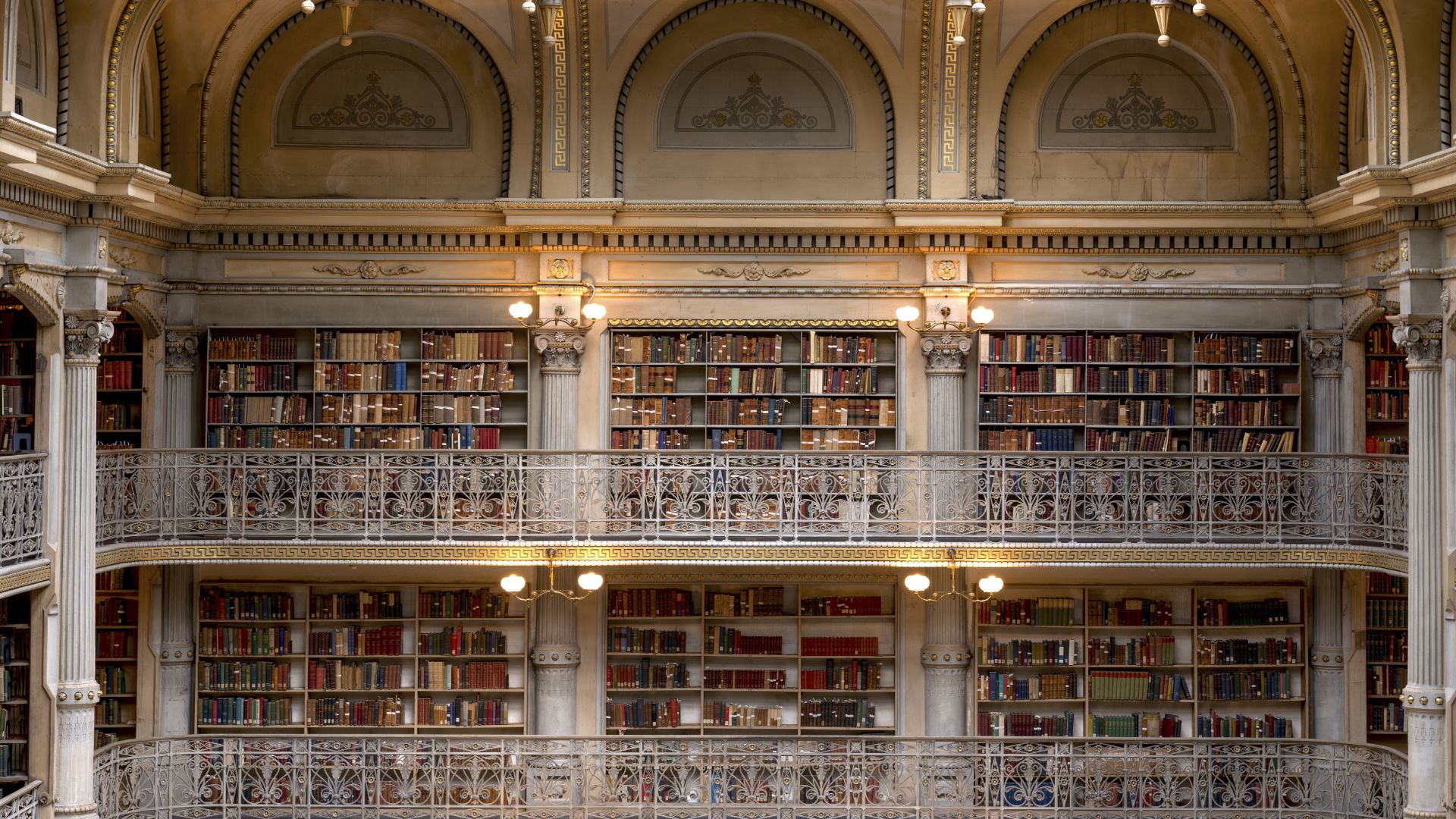
Step inside and, wow, that interior just stuns you. The central atrium rises through five tiers of bookshelves—honestly, it feels almost spiritual.
Key Features:
- Five-story open atrium that just keeps going up
- Black and white marble floors that look way too fancy to walk on
- Neo-Greco details everywhere you look
- Sunlight pouring in from above, making everything glow
It makes sense that people call this one of the most beautiful libraries on the planet. The first glance just stops you in your tracks.
Shelves stretch from the ground all the way up, packed with books. Ornate railings and those classical columns pull the whole look together.
There’s something wild about seeing over 300,000 volumes in one place. Most of these books focus on reference works from the late 1800s—archaeology, history, literature, science, you name it.
The Library’s Legacy and Johns Hopkins University
So, here’s the thing—these days, everyone knows the George Peabody Library as a part of Johns Hopkins University’s Sheridan Libraries system. You can’t check out books, but anyone can walk in and soak up the atmosphere or dive into research.
The library stands right on the Peabody Institute campus in Baltimore’s Mount Vernon neighborhood. That spot keeps it tied to its artistic beginnings, and it’s still a hub for scholars and curious visitors.
Current Status:
- Part of Johns Hopkins University
- Non-circulating special collections library
- Public access available
- Research-focused mission
Inside, you’ll find rare books—some true treasures—and works by legends like Edgar Allan Poe and Walt Whitman. If you’re into American literature or history, this place is basically a goldmine.
What really gets me is how the library holds onto its original spirit while keeping up with what today’s academics need. It’s proof that a stunning old building can still have a real, practical purpose.