
The second I hopped onto that bus at Timanfaya National Park, I realized I was in for something wild. This guided bus tour through Lanzarote’s Fire Mountains lets you get up close to an active volcanic landscape where, believe it or not, the ground just beneath your feet still hits over 400 degrees Celsius. It’s not every day you travel across a terrain shaped by six years of furious eruptions back in the 1700s. The craters and lava fields here look like they’ve been plucked straight from a sci-fi movie.
Driving through this UNESCO-protected landscape, I finally understood why Timanfaya gets so much hype. It’s not just pretty—it’s downright bizarre in the best way. Park rangers love to show off with geothermal tricks, and El Diablo Restaurant, built right into the volcanic rock, is as quirky as it sounds.
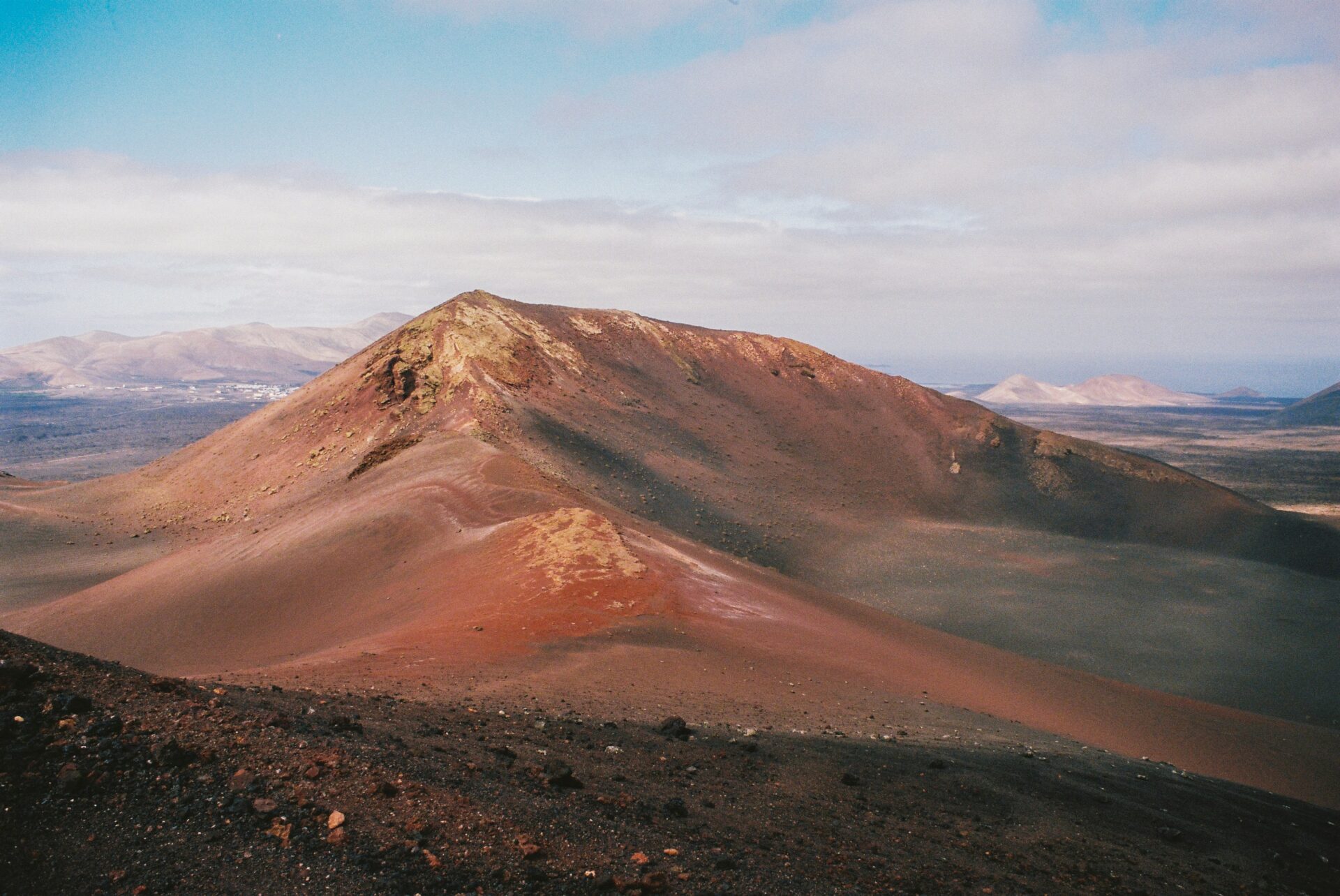
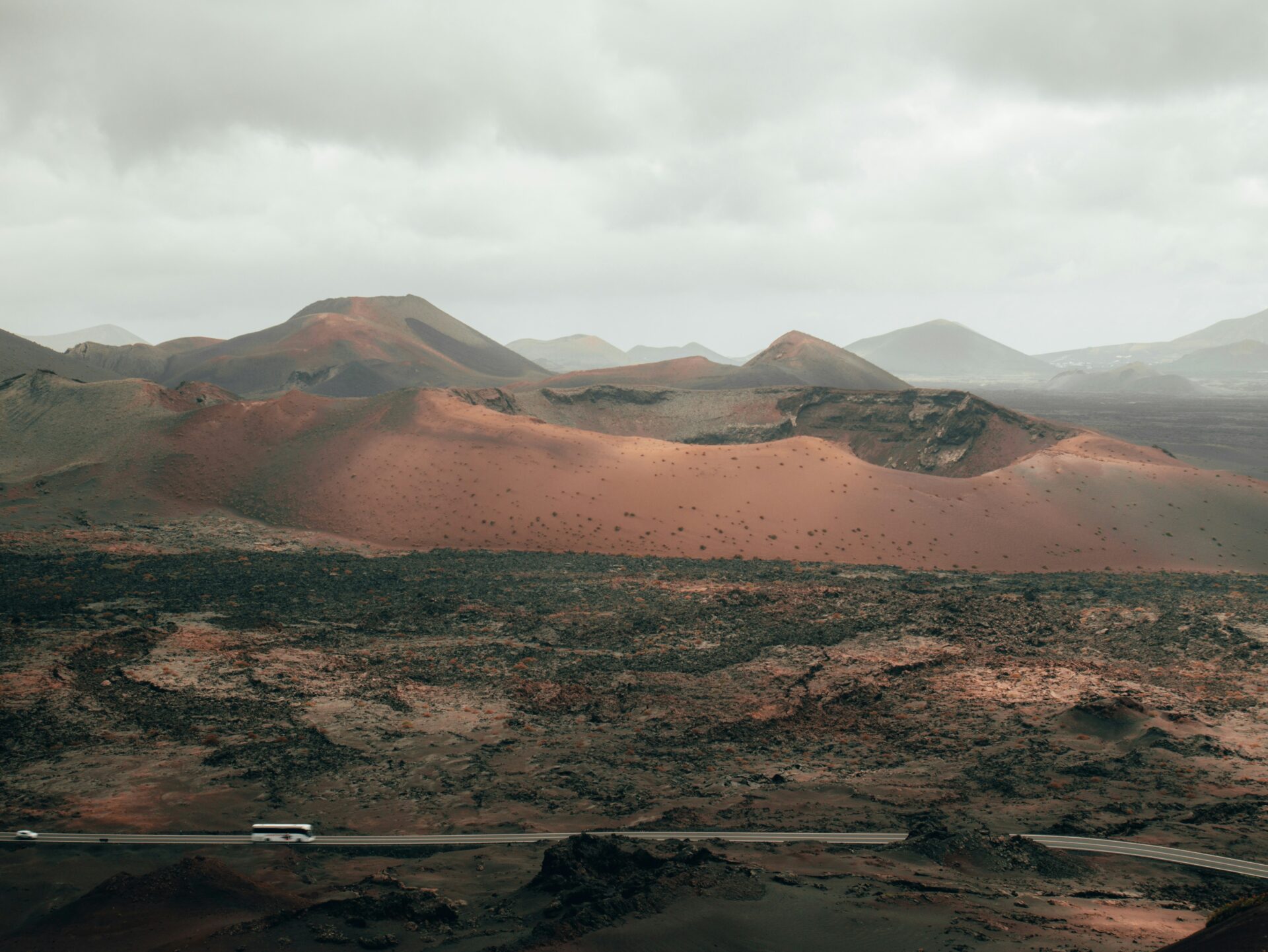
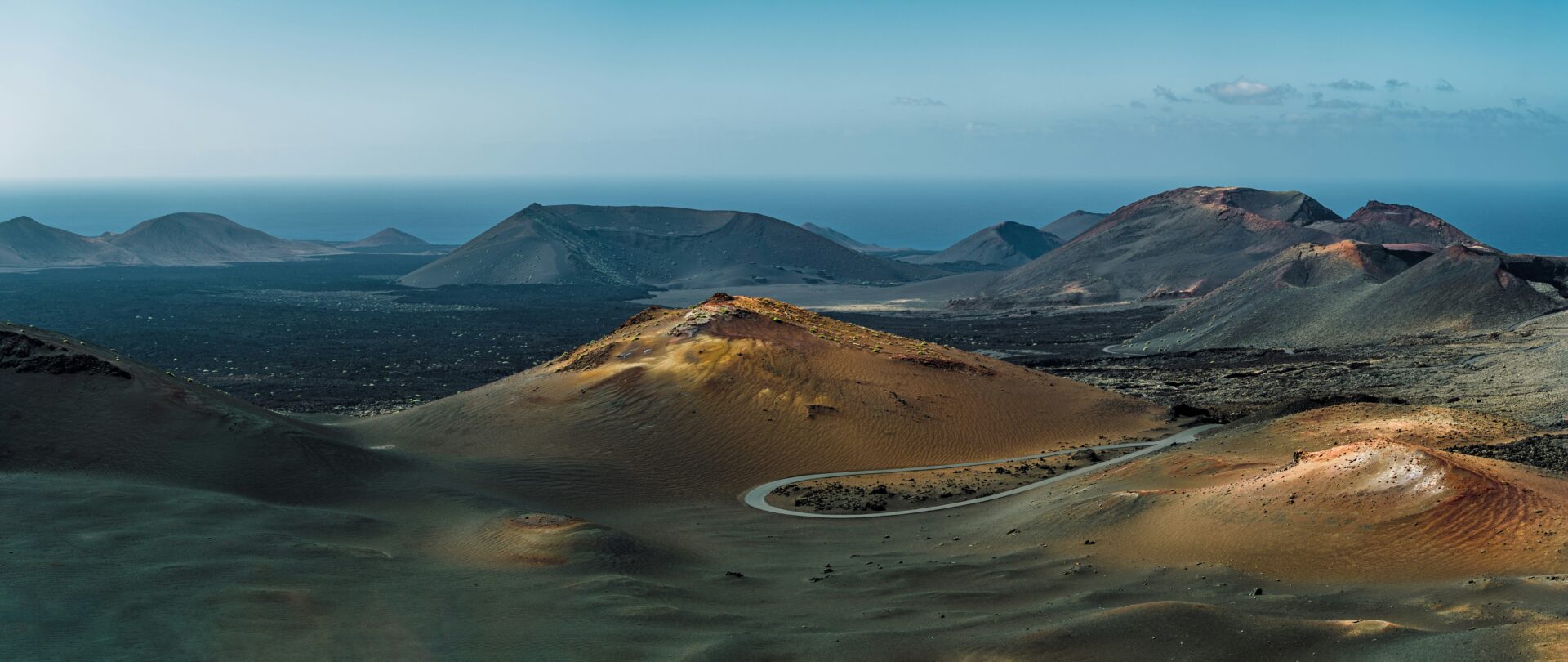
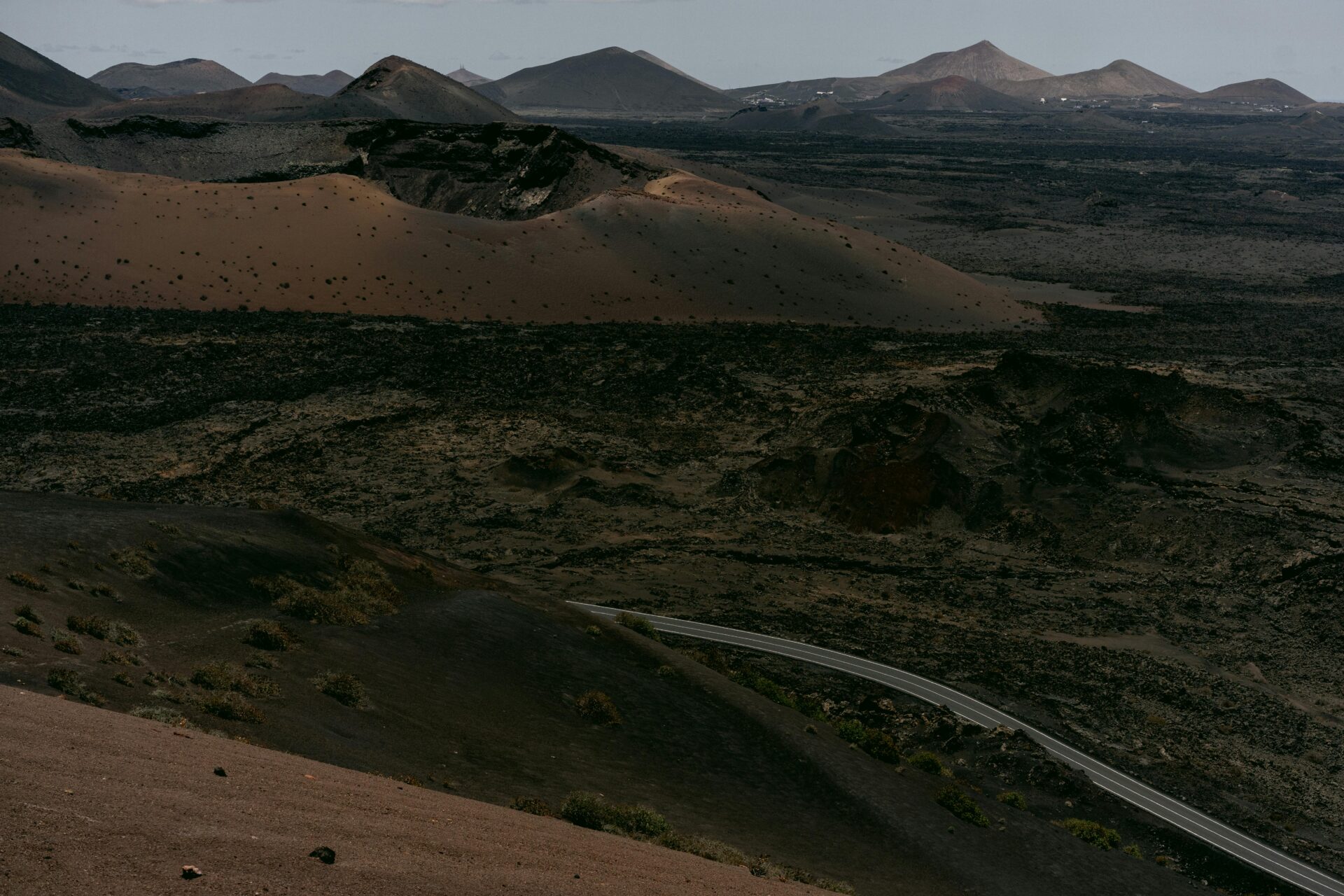
The bus snakes along roads cut between ancient lava flows. You get these wild views of volcanic cones and rocks painted in reds, blacks, and ochres that no photo can ever quite do justice.
Honestly, I didn’t expect the tour to be so much fun and so informative at the same time. The guides break down all the wild geological forces that created this surreal landscape—and then, just as you’re digesting that, staff toss brushwood into cracks that erupt in flames. Pour some water into a vent, and boom: instant steam geyser. It’s not your average sightseeing trip.
And if you’re up for more, you can hop on a camel or pause at scenic lookouts that really show off the raw power bubbling under Lanzarote’s surface.
Experiencing the Fire Mountains by Bus
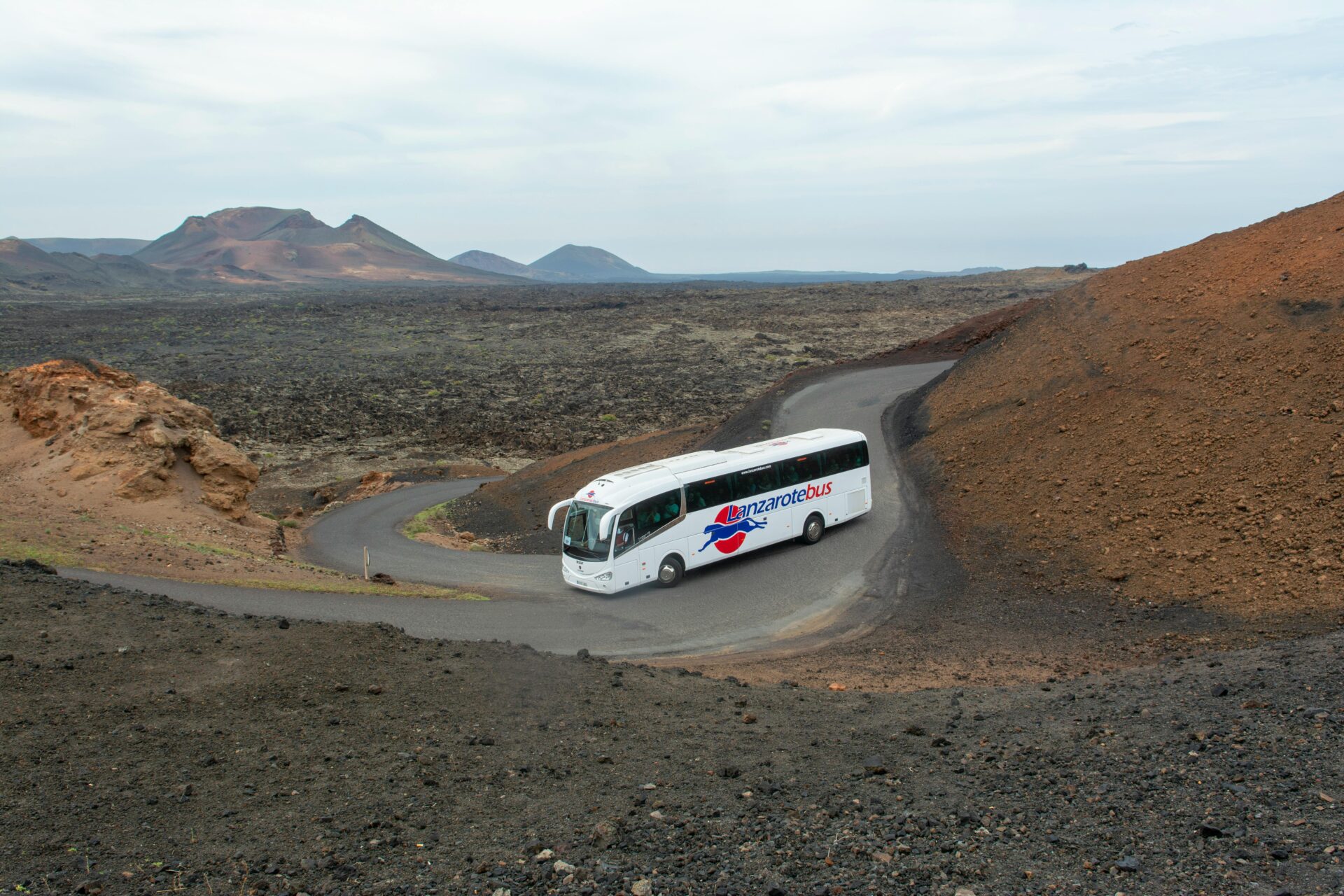
Here’s the thing: the only way to really see the Fire Mountains up close is by bus. These custom vehicles tackle the 14-kilometer loop while guides narrate the island’s volcanic saga.
Getting Started: Pickup and Logistics
Your adventure starts at the main parking lot near Islote de Hilario. After you pay the entry fee at the kiosk, staff direct you to the next waiting coach.
Entry Costs:
- Adults: €12
- Children (7-12): €6
- Canarian residents: €9.60
- Lanzarote residents: €2
The park opens at 9:30 AM and lets the last bus in at 3:45 PM. They close up shop by 5:00 PM.
If you want to dodge the biggest crowds, skip the 11:00 AM to 1:30 PM slot in summer. Trust me, the lines can stretch forever.
Keep an eye out for the burnt orange coaches—they blend right into the landscape.
Highlights of the Guided Bus Tour
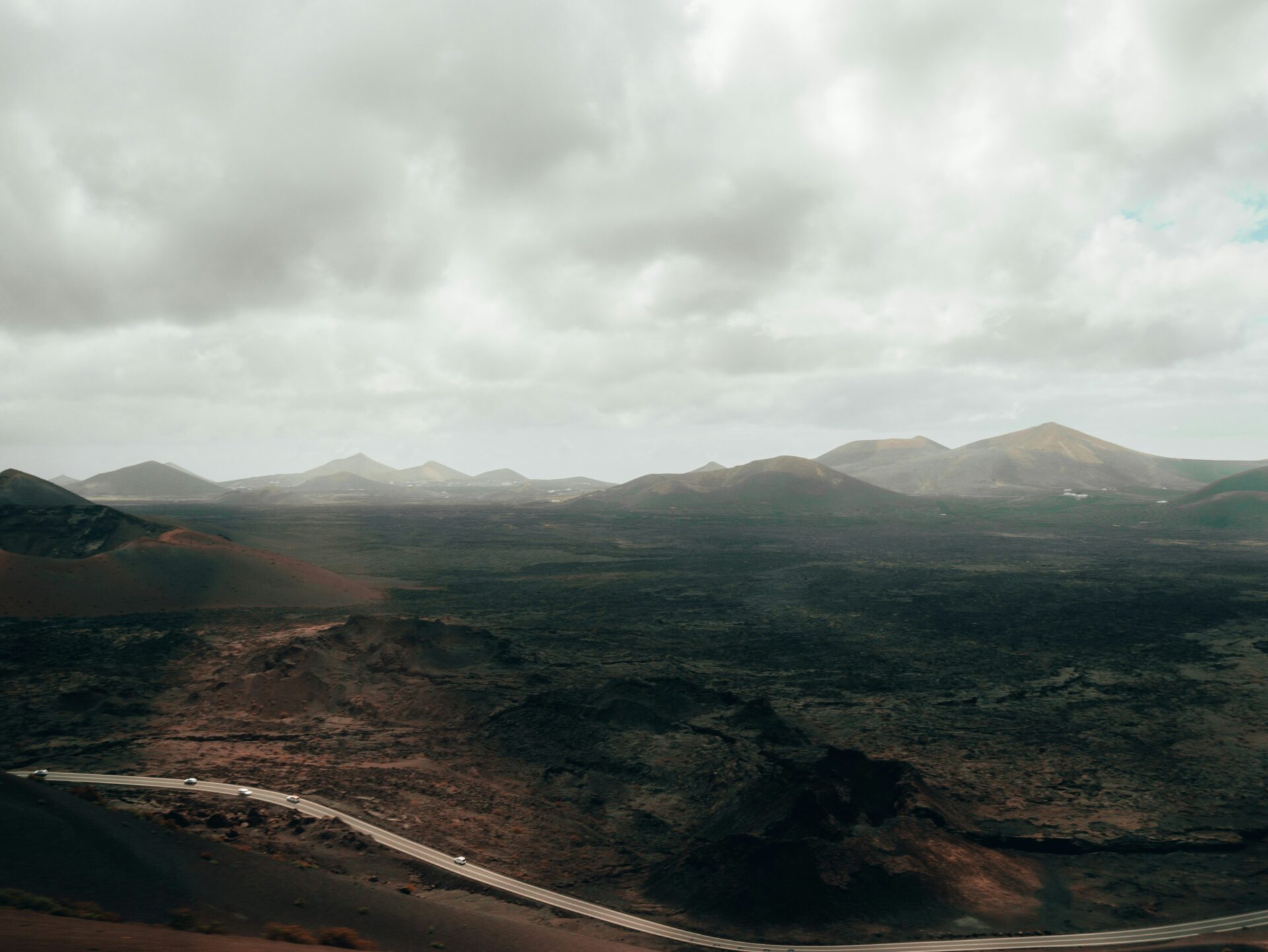
The guided bus tour follows a tight, single-lane track through the restricted zone. You get commentary in Spanish, English, and German, with a soundtrack that adds a bit of drama.
The route stretches from the visitor center out toward El Golfo on the coast. Along the way, you’ll roll past massive lava fields, craters, and some seriously wild rock formations.
Best bits?
- Viewpoints over lava rivers toward Yaiza
- A bird’s-eye look at the main road and entrance
- Close-ups of volcanic cones and craters
If you can, grab a seat on the left side for top-notch views. The drivers are pros at handling those sharp bends, stopping just long enough for you to snap a photo.
The eruptions from 1730 to 1736 left their mark everywhere you look. It’s wild to think this whole landscape is only a few centuries old.
Accessibility and Comfort
The buses are spotless and surprisingly comfy. They’re built to handle the rough volcanic roads, so you won’t feel every bump.
Guided tours welcome visitors with mobility issues. Boarding is easy, and the seats are roomy enough for everyone.
The whole bus loop takes about 40 minutes. You won’t need to walk at all—just sit back while the driver does all the hard work through the Mountains of Fire.
Air conditioning keeps things cool inside, even when it’s roasting outside. Those huge windows mean you won’t miss a thing.
No walking required during the ride. It’s perfect for older travelers or anyone who’d rather not trek over rocks.
Inside Timanfaya National Park: Volcanoes, Craters, and Lava Fields
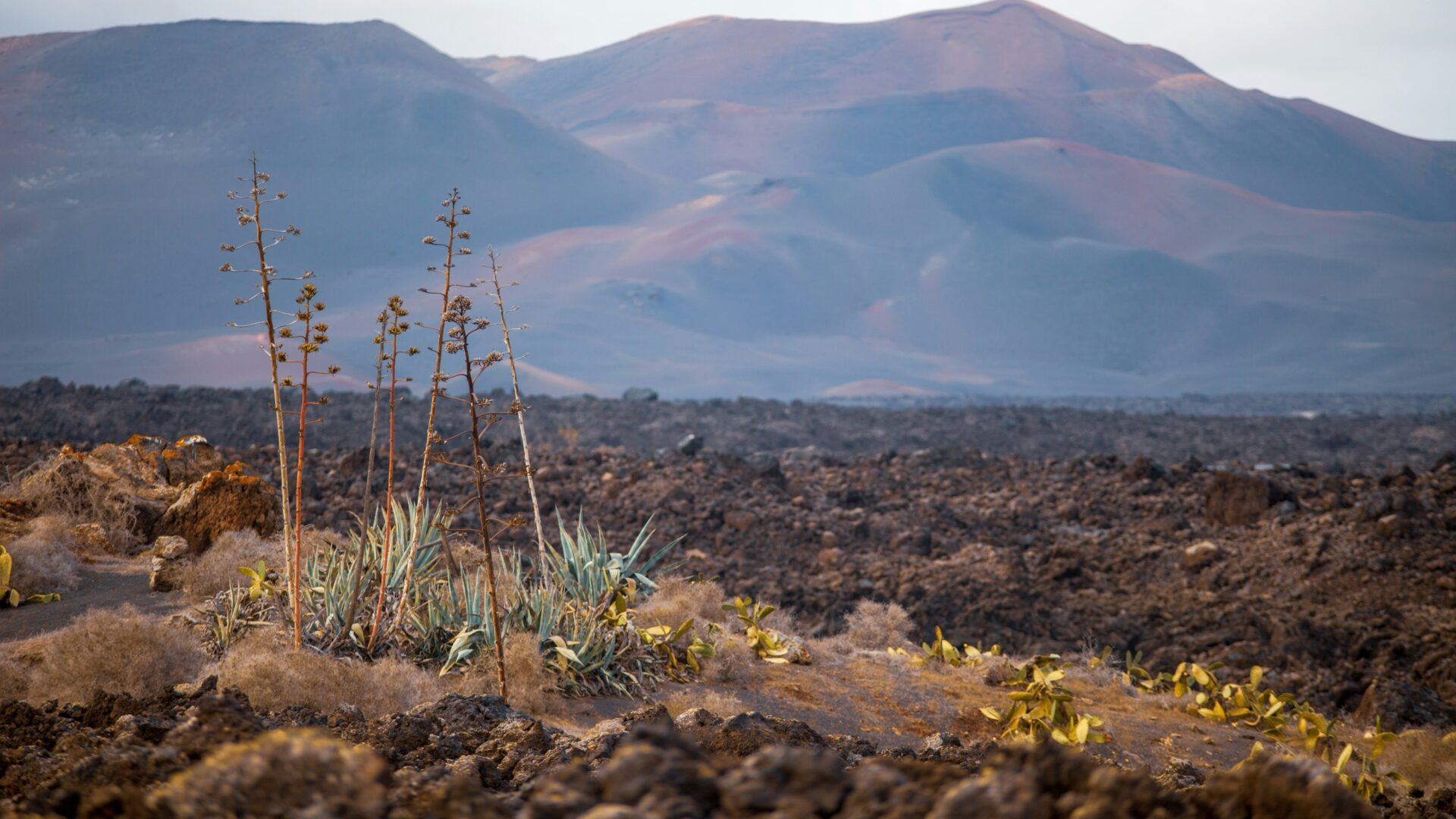
Timanfaya sprawls across 500 hectares, packed with more than 25 craters born from eruptions in the 1700s and 1800s. The park shelters lava fields, volcanic cones, and wild rock shapes that make Lanzarote stand out as a volcanic destination.
History of Volcanic Eruptions
Timanfaya’s wildest eruptions happened from 1730 to 1736. For six years straight, the earth just wouldn’t stop rumbling.
Over 20 villages vanished under lava. The eruptions left behind more than 25 new craters.
Another eruption hit in 1824, creating Tinguatón, Tao, and El Chinero volcanoes.
The 1824 blast didn’t last as long, but it helped shape the park’s modern look.
Eruption timeline:
- 1730-1736: Six years of chaos
- 1824: Last eruption
- Nothing since 1824
All that lava turned fertile farmland into a volcanic wasteland. It covered nearly 200 square kilometers across Lanzarote.
Discovering Timanfaya’s Craters
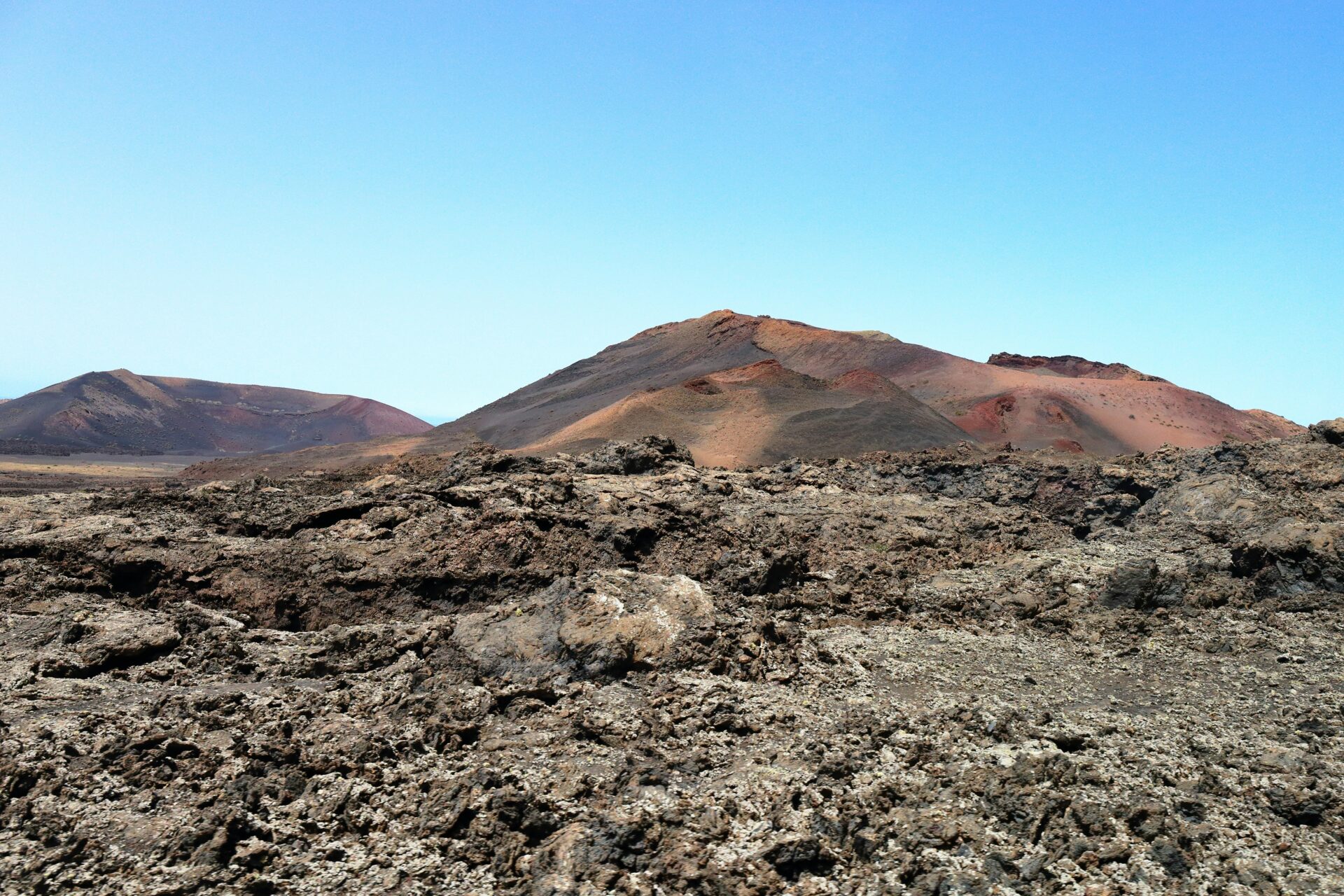
Timanfaya is dotted with major volcanic features you can spot from the bus or roadside stops. Every crater tells its own story.
Montaña de Fuego is the star of the show. It’s right in the heart of the Fire Mountains and gives the place its name.
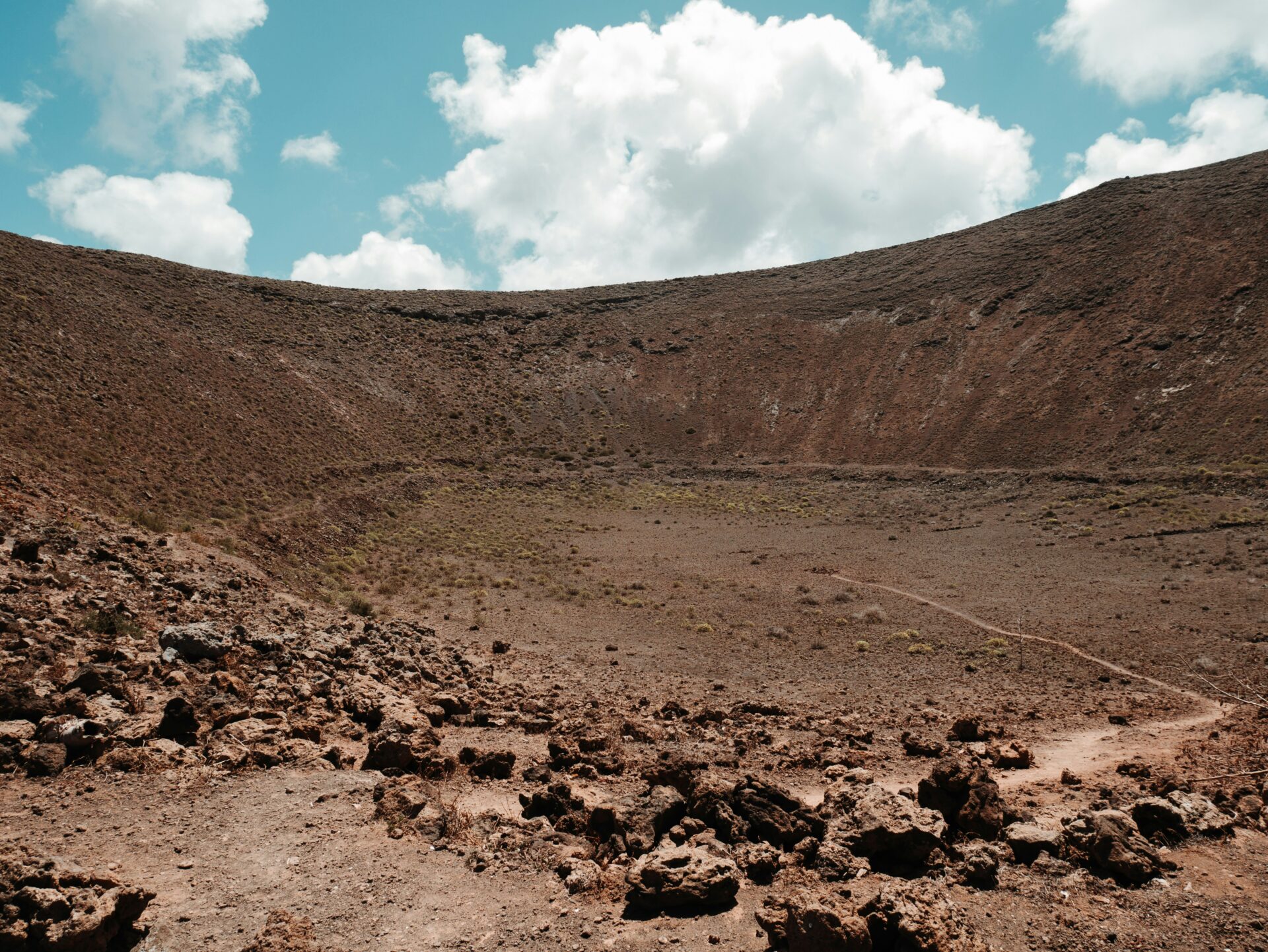
Montaña Rajada stands out with its huge, collapsed interior—a caldera streaked with red and ochre from oxidized rock.
The Caldera del Corazoncillo came from a big explosion, then lava filled it in, leaving a smooth, round basin.
Caldera Rajada is one of the few craters you can actually approach on foot. Its radial fractures and dark lava flows are easy to spot.
Most craters are off-limits to protect the fragile land. You can still get a good look from the bus or along the LZ-67 road.
Exploring Lava Fields and Rock Formations
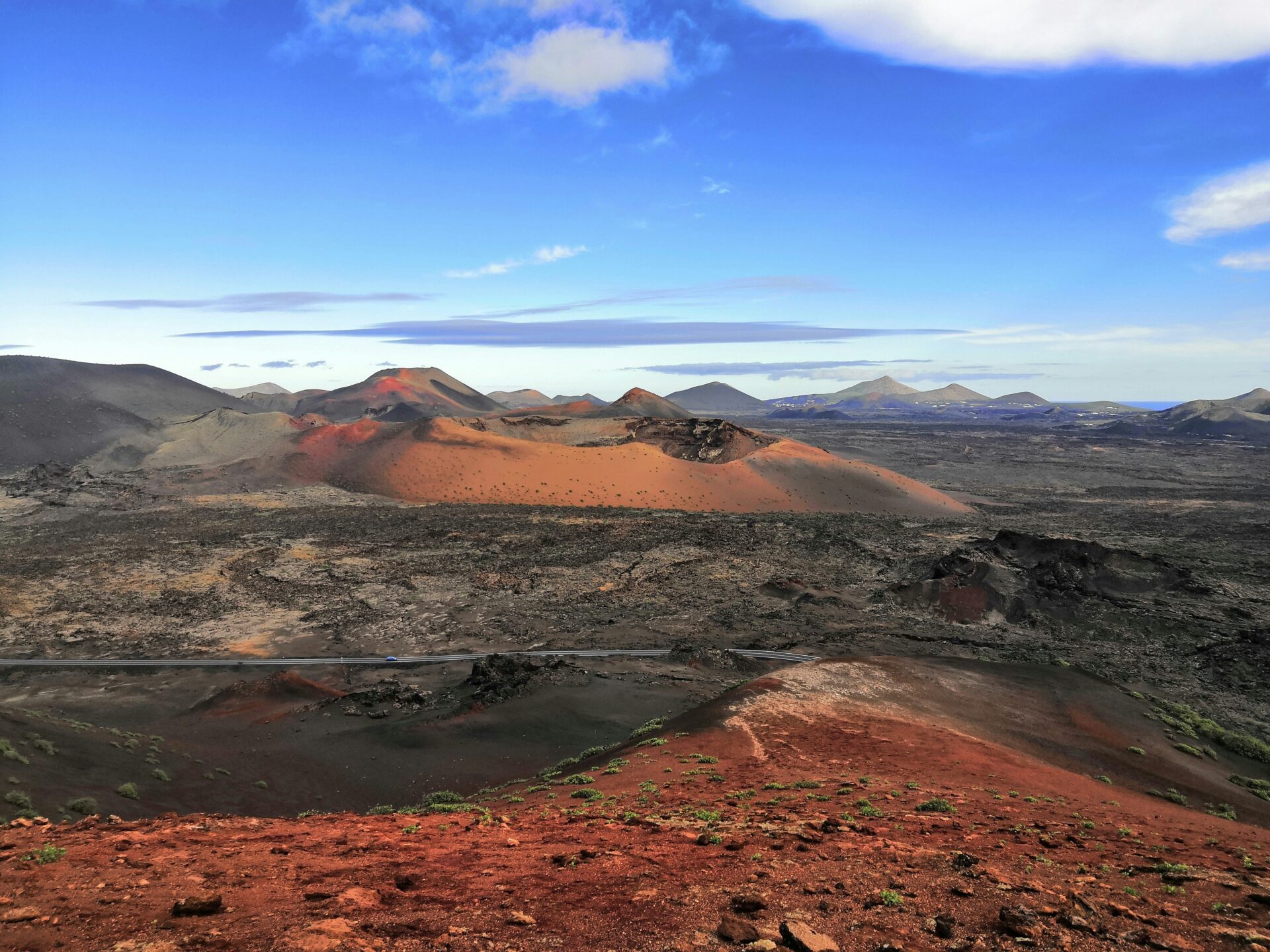
Timanfaya’s lava fields feel like another planet. The rocks here formed as lava cooled at different speeds.
Smooth pahoehoe lava shows up where flows moved slowly, leaving ropey patterns.
Rough aa lava formed when lava raced ahead and cooled fast. These spots look jagged and broken.
You’ll see lapilli fields—blankets of tiny volcanic stones that rained down during eruptions and still crunch underfoot.
Volcanic bombs are those hefty blobs of lava that flew through the air, cooling into round or teardrop shapes before landing.
The Valle de la Tranquilidad is a great spot for lava field fans. In some places, you can still feel heat rising from below.
Hornitos are little mounds that popped up when gas escaped through cooling lava. They look like miniature volcanoes scattered everywhere.
The Protected Area and Conservation
Timanfaya became a national park in 1974. Its main goal? Protect these wild volcanic features.
Most of the park is a strictly protected zone. You can’t just wander off the paths or hike up to the craters.
Why all the rules? The volcanic soil is still changing, and plants barely cling to life in this harsh environment.
Access rules:
- Only bus tours in protected areas
- No walking off marked paths
- Limited daily visitors
- Guided tours need advance booking
UNESCO named all of Lanzarote a World Biosphere Reserve in 1993. That status helps keep Timanfaya safe for the future.
The park staff work hard to balance tourism with conservation. They want everyone to experience the volcanoes without wrecking the place.
In spots like Islote de Hilario, you can step off the bus, but even there, you have to stick to the marked areas.

Geothermal Wonders and Dramatic Demonstrations
The Fire Mountains pack some serious geothermal energy just beneath the surface. Rangers love putting on a show, using water and fire to reveal the volcanic heat that still pulses below. This underground power doesn’t just fuel cool demos—it even runs a volcano-heated restaurant.
Natural Geysers and Steam Shows
At Islote de Hilario, rangers pour water into ground holes. Instantly, steam rockets skyward. That’s what happens when the earth just below you is over 400 degrees Celsius.
I stood there, half-expecting nothing, but within seconds of the water going in, a plume of steam shot up. It’s a wild reminder of how alive the volcano still is.
The steam shows happen right where everyone gathers. Rangers also toss dry brush into shallow pits—the stuff bursts into flames, no lighter needed.
These displays aren’t just for fun; they prove volcanic activity still simmers under Montañas del Fuego. Nearly 300 years since the last eruption, the heat hasn’t let up.
Harnessing Geothermal Heat
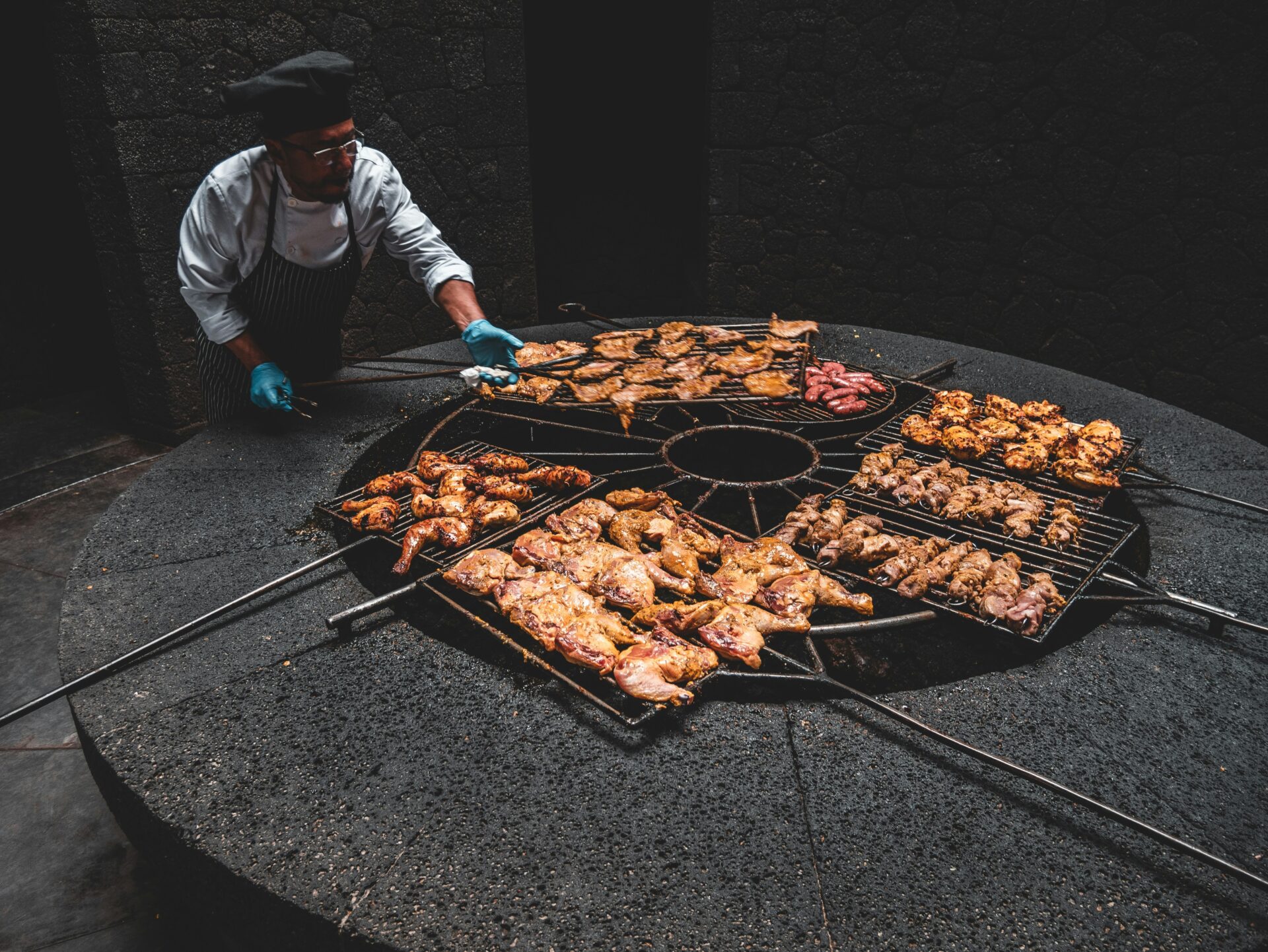
El Diablo restaurant takes volcanic heat and turns it into a kitchen. Chefs grill meat and veggies over a vent in the earth—no gas or charcoal involved.
Watching the process, I couldn’t help but grin. The food cooks right over a natural grill, thanks to the underground temperatures.
Steam rises from the grill area, and the volcanic rock keeps things hot all day. It’s a clever, sustainable way to use the land’s energy.
People from all over come to try food cooked by the volcano itself. It’s one of those rare experiences you can’t find just anywhere.
Unique Geology of Montañas del Fuego
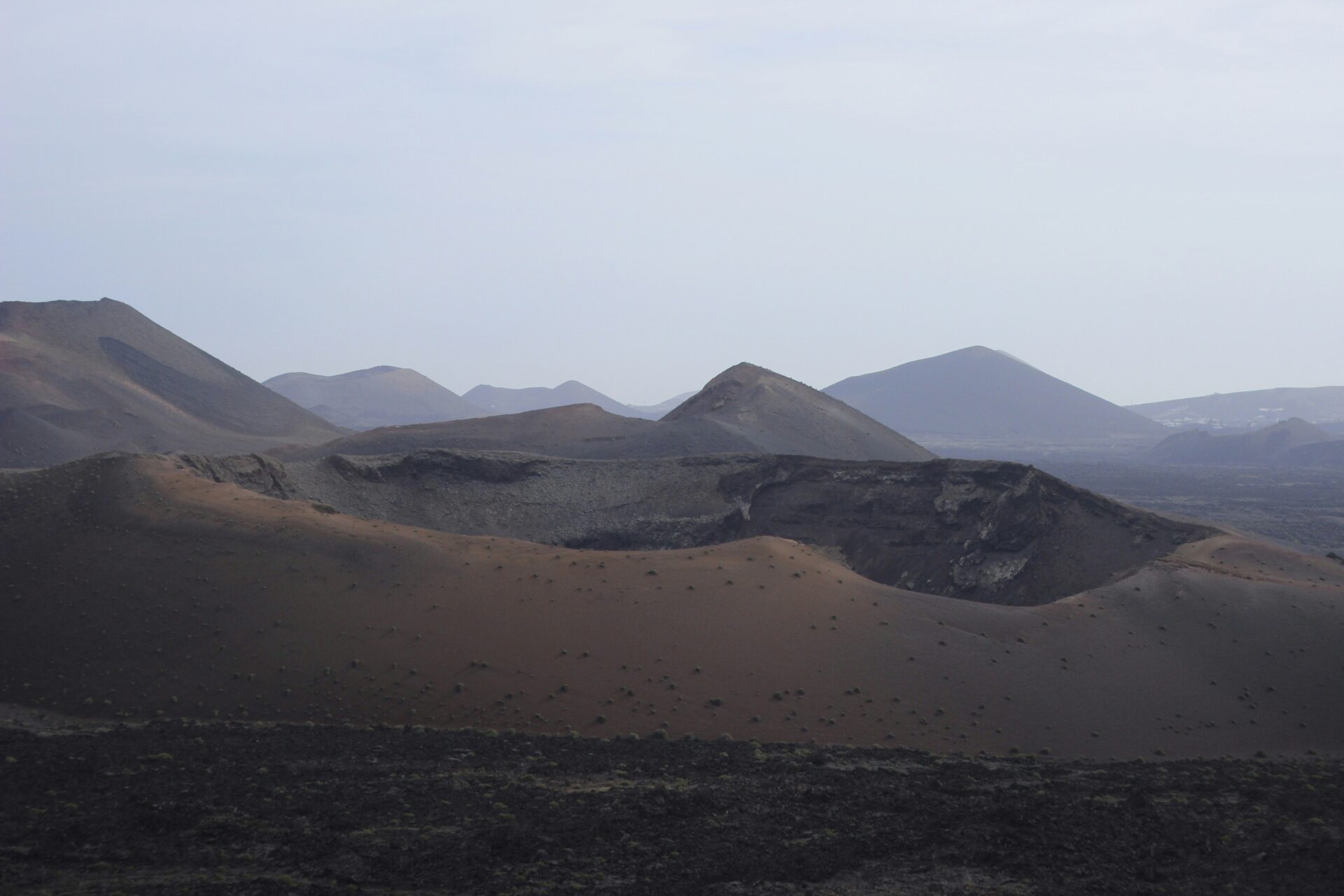
The Fire Mountains came to life between 1730 and 1736, leaving behind about 25 craters and sprawling lava fields. The dark volcanic rock here soaks up and traps heat from below.
You’ll find basaltic lava formations and rocky ground that’s still dangerously hot just a few feet down. It’s hard to believe, but the ground really does stay that warm.
This place shows off geology you won’t see in many other spots. The rocks and minerals formed under intense heat and pressure, and it’s all still changing.
The unique cooling and hardening of the lava centuries ago left perfect conditions for all these geothermal tricks. It’s a science lesson you can actually feel.
El Diablo Restaurant and César Manrique’s Vision
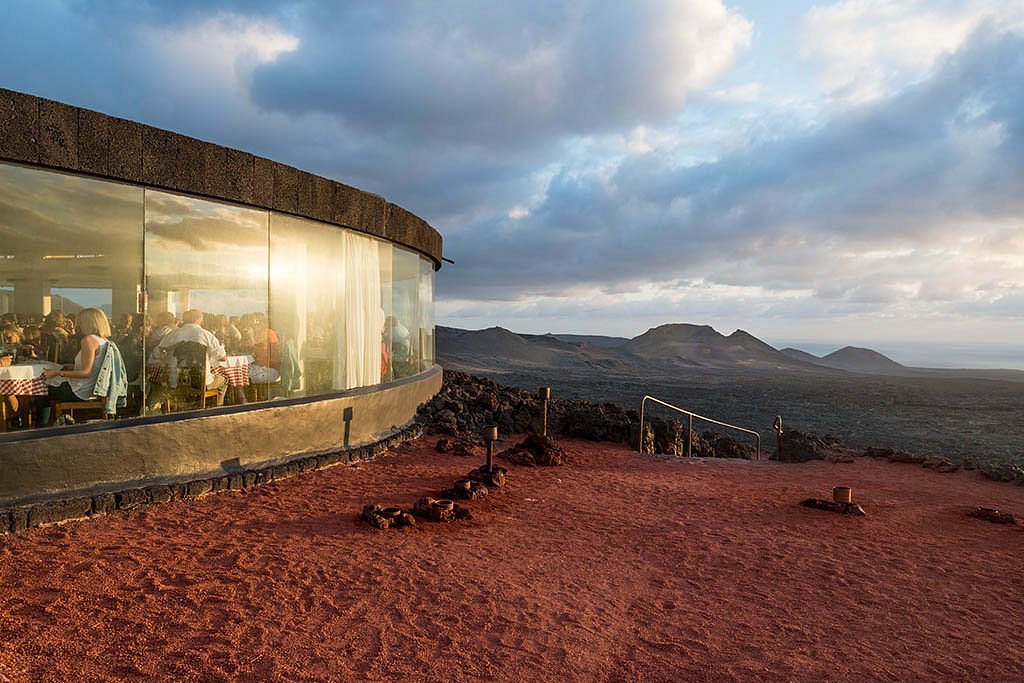
Artist César Manrique dreamed up El Diablo restaurant in 1970, blending architecture with Lanzarote’s volcanic energy. The restaurant literally cooks with the heat of the volcano underneath, making it one of the most memorable places to eat—anywhere.
Grilling with Volcanic Heat
The showstopper at El Diablo is the volcanic grill. The kitchen taps straight into the geothermal heat just below.
Temperatures only 15 meters down soar past 600 degrees Celsius. That’s hot enough for a grill that needs no fuel.
I watched staff lower trays of meat and veggies right into the vent. Everything cooks with nothing but the earth’s energy.
The name “El Diablo” means “the devil”—a nod to the hellish heat that powers the kitchen.
Volcanic cooking highlights:
- Grill fueled by geothermal heat
- Underground temps over 600°C
- No fuel or gas required
- Staff run regular cooking demos for visitors
Design and Architecture
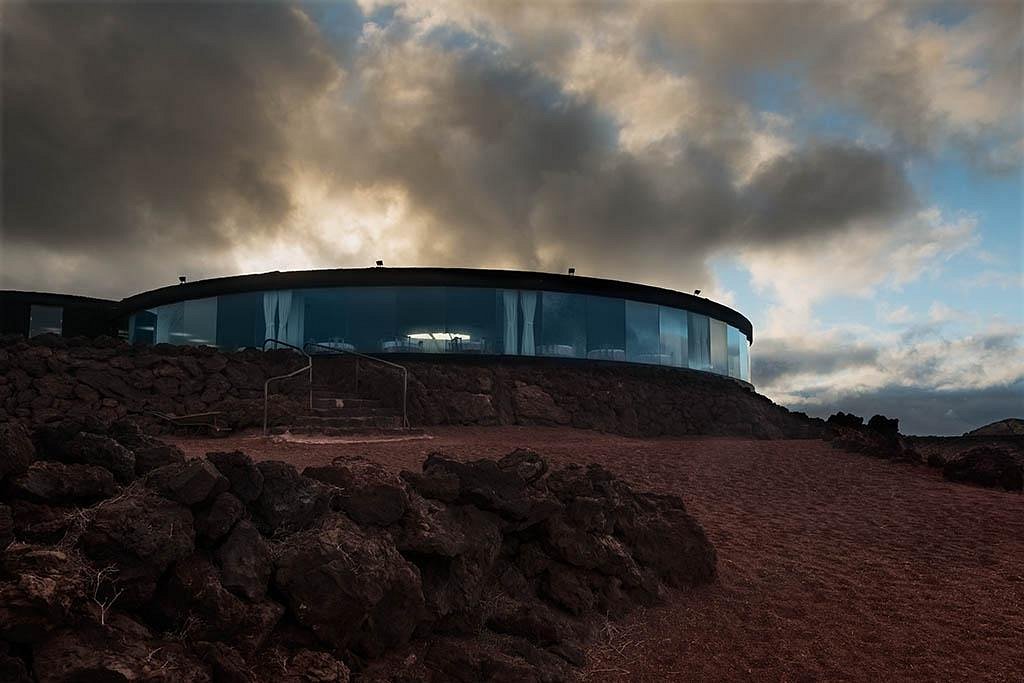
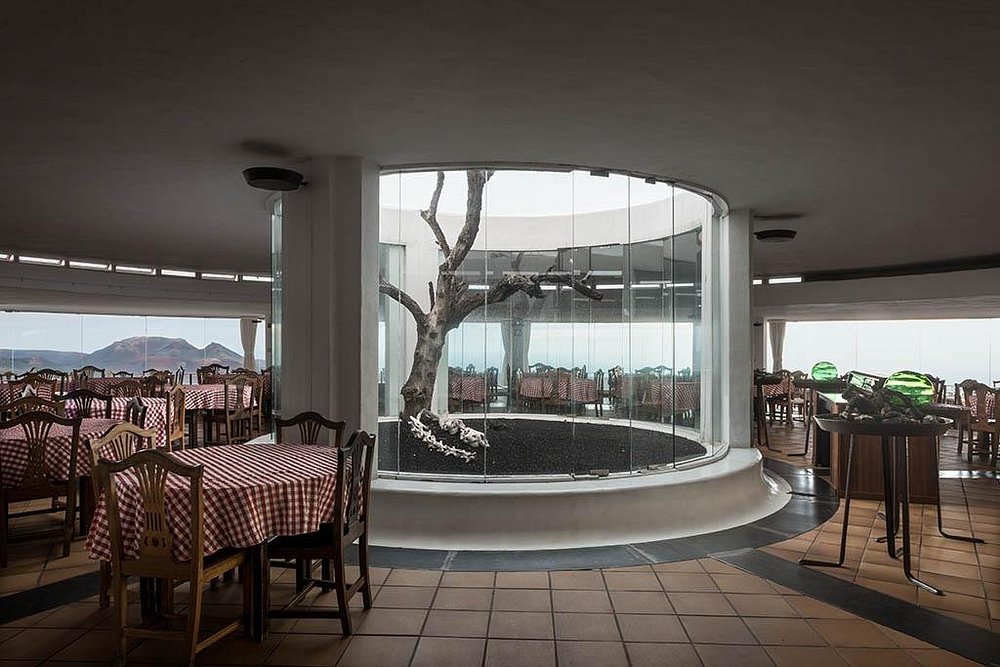
César Manrique dreamed up El Diablo as a circular, single-story building that just melts into the volcanic landscape. When you walk up, the main facade greets you with huge windows that open up to wild, panoramic views of the lava fields.
Inside, Manrique kept things simple—almost stark—so the volcanic environment could steal the show. He actually built volcanic rock right into the structure, which feels fitting here.
One of the more unusual features is the “Dead Garden.” It’s this glass-enclosed space where a dried tree trunk and a camel skeleton sit, almost hauntingly, symbolizing how tough life can be in this harsh volcanic setting.
Curved stone walls, all made from the local volcanic rock, lead you to the bathrooms. Off to the side, there’s a separate domed building with the volcanic oven—here, the kitchen team uses geothermal heat to cook your food.
Architectural elements:
- Circular design with panoramic windows
- Volcanic rock construction materials
- Minimal interior decoration
- Integration with natural landscape
Dining Experiences Overlooking the Landscape
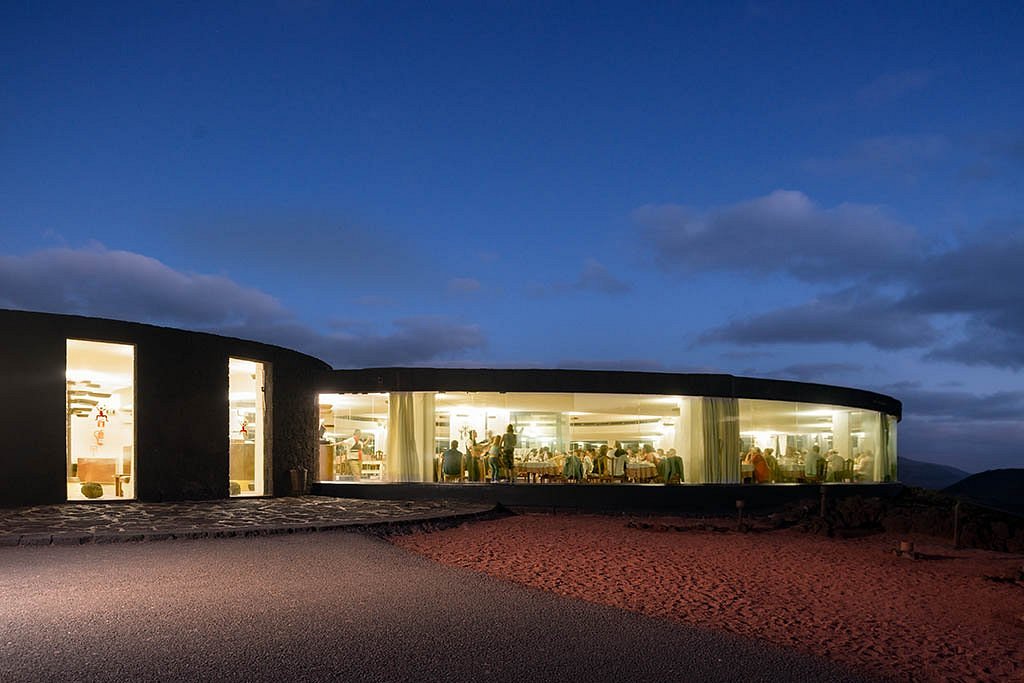
El Diablo serves up spectacular views of Timanfaya’s volcanic terrain along with traditional Canarian dishes. Those big windows? They let you soak in the colorful lava fields and jagged volcanic formations while you eat.
The kitchen team cooks everything using volcanic heat. Grilled meats and veggies come straight off the geothermal oven, and honestly, it’s one of the most unique culinary experiences I’ve ever had—National Geographic even called it one of the world’s most impressive dining spots.
Eating here feels surreal. You’re surrounded by the Fire Mountains, and the whole place has this otherworldly vibe that turns a meal into something unforgettable.
The restaurant ties right into the Timanfaya National Park tour. After the guided bus ride through the volcanic landscape, you can grab a table and refuel.
Dining highlights:
- Panoramic volcanic landscape views
- Food cooked with geothermal energy
- Traditional Canarian dishes
- Integration with park tour experience
Islote de Hilario and Other Scenic Stops
The bus tour winds through dramatic viewpoints where volcanic landscapes beg to be photographed. Even in this rugged terrain, I noticed wildlife making the most of the place.
Photo Opportunities and Viewing Points
El Diablo Restaurant sits up at the highest point of Islote de Hilario. Its circular glass design gives you 360-degree views of the volcanic terrain below.
From up there, I could see solidified lava flows stretching out toward Yaiza. The deep black rock against the bright blue sky? That contrast makes for some seriously striking photos.
The panoramic terrace acts as a built-in viewpoint. You don’t even have to eat at the restaurant—just step onto the terrace and snap away.
Looking out, volcanic cones dot the horizon. The lapilli fields below create textured patterns that shift color as the sun moves across the sky.
Key photo spots include:
- Restaurant terrace for wide landscape shots
- Geothermal demonstration areas with steam effects
- Bus windows during the route for close-up lava formations
- Parking area views toward the municipalities of Yaiza and Tinajo
If you’re chasing the best light, aim for early morning or late afternoon. The midday sun tends to wash out those dramatic colors in the rock.

Hilario’s Fig Tree Legend
The area gets its name from Hilario, a local shepherd who stumbled upon the geothermal magic here. According to legend, he planted a fig tree that somehow thrived in the volcanic soil.
Old records show shepherds used this kipuka—basically a patch of land spared by lava—as shelter. The higher ground helped them stay safe during the massive 1730-1736 eruptions.
Hilario’s story captures how people adapted to this wild volcanic terrain. Locals figured out how to use underground heat for practical things long before tourists ever showed up.
Maybe the fig tree is just a story, but the name stuck. Today, El Diablo Restaurant carries on the tradition by harnessing geothermal energy for cooking.
This link to local history adds a layer of meaning to the spot. It’s not just about geology—it’s about Lanzarote’s agricultural roots meeting its fiery present.
Wildlife and Adaptation in Harsh Terrain
Even with surface temperatures hitting 250°C in places, life somehow hangs on at Islote de Hilario.
Lichens cling to the volcanic rocks, kicking off the slow process of soil formation. These tough little guys handle both the heat and the dryness without much fuss.
Tiny arthropods and insects hide in cracks between the lava rocks. They come out at dusk and dawn when things cool down a bit.
Birds take advantage of the warm air currents rising from the ground. I watched several species just gliding effortlessly above the volcanic slopes.
Some plants have roots that dig deep to reach cooler soil. It’s wild to see greenery thriving just meters from steaming geothermal vents.
Nature’s resilience here is honestly inspiring. Life adapts in ways that almost seem impossible.
Optional Camel Rides and Immersive Activities
Timanfaya isn’t just a bus tour. You can get hands-on—camel rides are a classic, but there are also hiking trails and cycling routes if you want to explore on your own steam.
Riding Camels Across Volcanic Slopes
Camel rides run near Timanfaya National Park and cost about €6 per person. You’ll ride traditional dromedaries, just like locals did for centuries to get around the island.
The ride lasts 15-20 minutes and follows a set path through the lava fields. You sit on wooden saddles while the camels plod steadily over the rocky ground.
From the camel’s back, you get a totally new angle on the Fire Mountains. The extra height gives you better views of the craters and the crazy shapes of the lava fields.
Booking tips:
- Available daily during park hours
- No advance reservation needed
- Weight limit applies for safety
- Not recommended for back problems
Handlers guide each camel and the animals are well-trained. It’s a short ride, but it sticks with you—there’s something memorable about experiencing the landscape this way.
Hiking and Walking Tours
A bunch of guided tours include walking segments through designated volcanic areas. The most popular hiking route is the Volcanoes Route, which covers the main geological features on foot.
These walks usually last two to three hours and take you past volcanic formations like hornitos and slag cones. Guides share how the eruptions in the 18th and 19th centuries shaped what you see today.
If you want a recommendation, try the Natural Park of the Volcanoes hike. It winds between calderas and craters, showing off the wild color contrasts in the lava fields.
What to expect:
- Moderate difficulty level
- Proper hiking shoes required
- Water and energy bars provided
- English and Spanish guides available
The ground’s rough and sharp, so be ready. Tours include safety briefings and always stick to marked paths to protect both you and the fragile ecosystem.
Cycling and Alternative Explorations
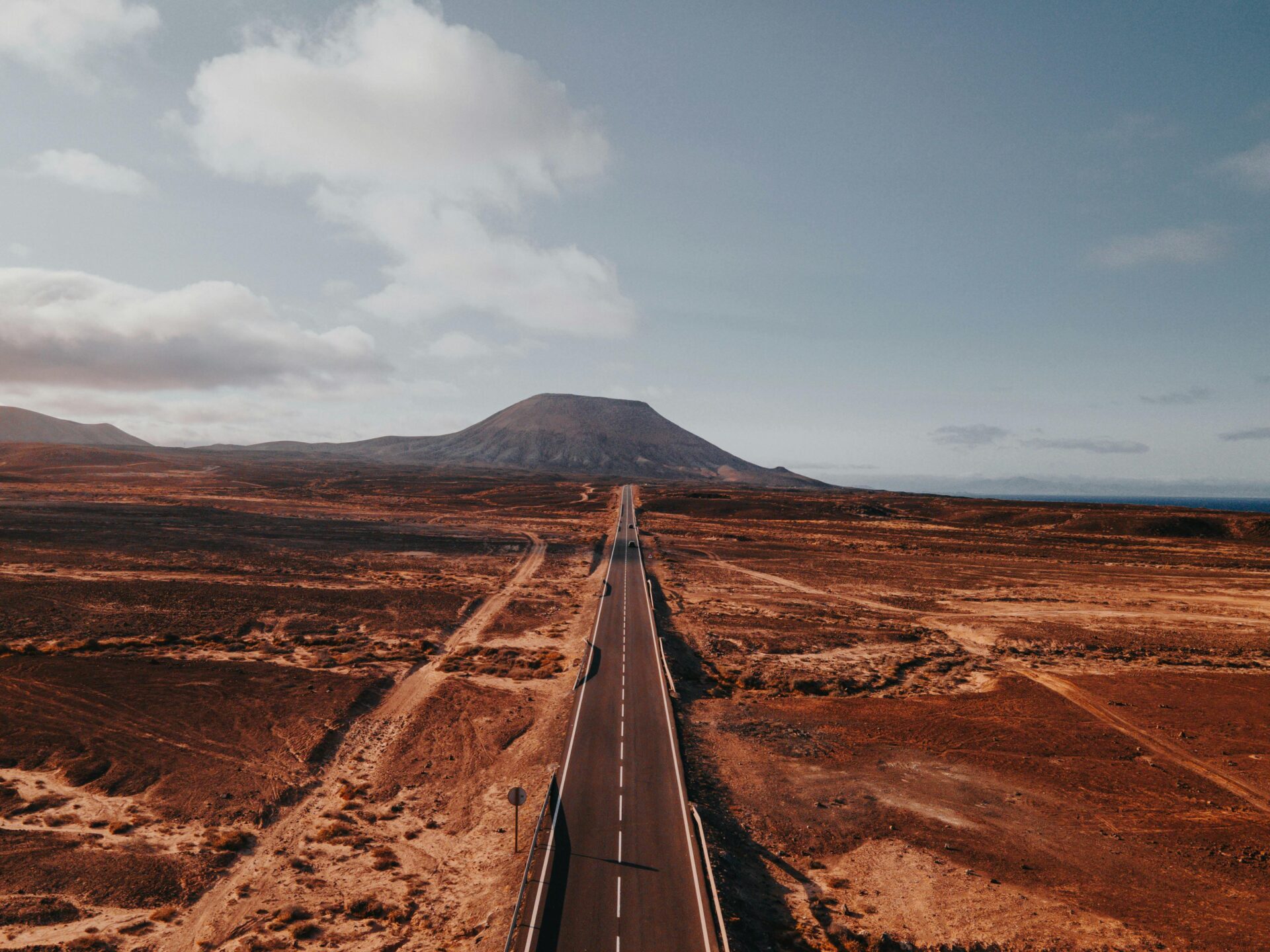
If you want to really get a feel for Timanfaya’s wild side, cycling around the park’s perimeter is a fantastic way to do it. The routes steer clear of the restricted core, but you’ll still wind through sprawling lava fields and even catch some dramatic coastal views.
Most of these cycling tours turn into full-day adventures. You’ll probably find yourself hopping off the bike to check out El Golfo, sip wine at the La Geria vineyards, or wander through volcanic landscapes just outside the main park.
The ground stays mostly flat, though the wind can make things interesting. Tour operators hand out mountain bikes and all the safety gear you’ll need. Support vehicles usually tag along, so you can focus on the ride.
Alternative activities include:
- Photography workshops
- Geological tours led by local specialists
- Wine tasting sessions in La Geria
- Coastal walks along volcanic cliffs
If you’re up for something a little different, these options let you go beyond the typical tourist path. It’s a chance to soak in Lanzarote’s volcanic magic in your own style.
