
Walking along the quays in Paris, I kept getting pulled in by the sight of Notre-Dame rising again above the city skyline. Five years after that terrible fire, watching the cathedral’s restoration up close has honestly been one of the most hopeful and unique things I’ve experienced here.
Seeing the skilled teams rebuild Notre-Dame in real time from the banks of the Seine made me appreciate the city’s resilience and its living history in a whole new way.
Locals and travelers gather by the water, sharing a quiet excitement as scaffolding grows and the new spire takes shape. From this spot, there’s an energy you just can’t find in old photos or on postcards—it’s the thrill of something beginning again.
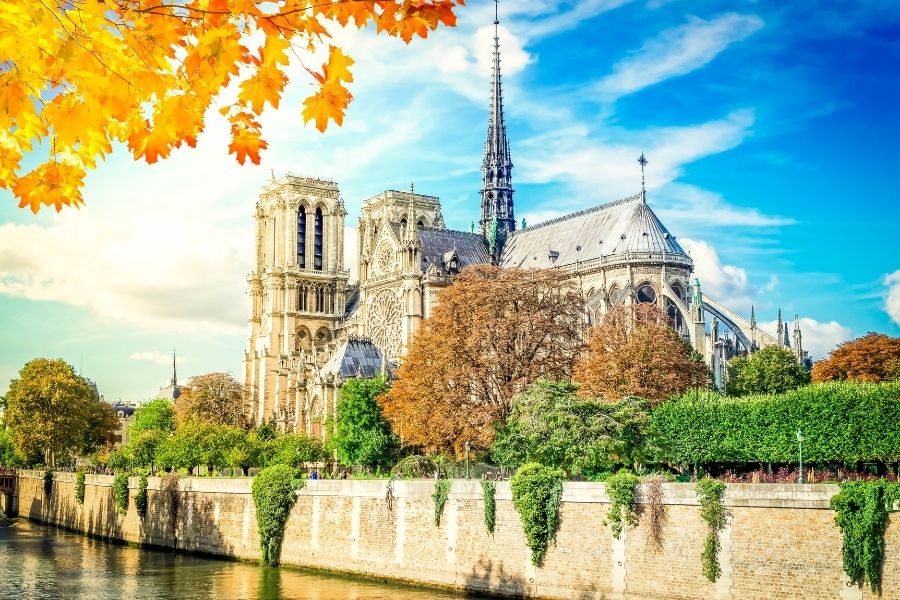
If you’re visiting Paris soon, spending an afternoon on the quays watching the restoration is a rare chance to witness history happening right in front of you.
The Magic of Watching Notre-Dame’s Restoration from the Quays
Every stroll along the Seine gives you a front-row seat to Notre-Dame’s transformation. The changing light over the cathedral and the mix of locals and travelers make each visit feel fresh.
Panoramic Views Along the Seine
As I walk the quays facing Notre-Dame, I get an open, panoramic view of the restoration. The riverbank between Pont de l’Archevêché and Pont Saint-Louis has become one of my go-to spots.
From there, the silhouette of the rebuilt spire stands out against the skyline, while scaffolding and clean stonework tell their own story. Tourists settle on benches, snapping photos or sketching the scene.
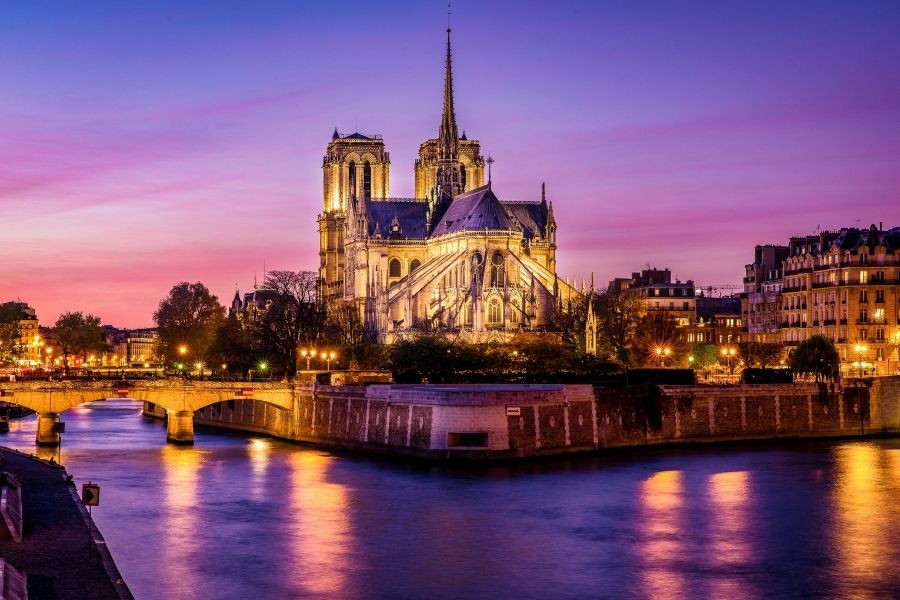
I love how the river’s reflection of Notre-Dame shifts with the weather and time of day. The transformation feels even more dramatic when I look at the old postcards or souvenirs sold by vendors along the Seine.
Behind me, booksellers (“bouquinistes”) line the quay, offering prints and mementos showing the cathedral before and after the fire. I’ve lost track of time browsing their collections and chatting about how Parisians feel about the restoration—most people I meet express pride and relief.
Best Times of Day for Visiting
Early morning is peaceful, with just a few joggers and a golden glow over the spire. I find the river at its calmest then, and the rising sun lights up the new stone and carved details.
Fewer crowds mean better photos and a perfect moment for quiet reflection. By late afternoon, the light warms up, Notre-Dame glows, and there’s a gentle buzz along the quays.
If I’m lucky, a musician plays nearby or a painter dabs at a canvas. Sunset is something else; as the sun drops behind the rooftops, the cathedral almost shimmers.
At night, spotlights light up the façade and spire. Watching the lights flicker on, with the distant sounds of the city, I feel the hope and resilience that Notre-Dame means to so many Parisians.

Evening strolls sometimes lead me to a last-minute souvenir from a closing stall.
Interaction with Parisians and Fellow Visitors
Meeting people on the quays has actually become a highlight. Locals share stories about how the fire touched them or their families, and I sense a real ownership in the restoration’s progress.
Some show old photos of Notre-Dame before 2019, comparing changes and swapping opinions about the rebuilt spire. Fellow visitors are friendly and curious.
It’s common for someone to ask about the best viewing spots or recommend a favorite café for a post-walk treat. Small groups form, sharing travel tips or chatting about the restoration’s effect on Paris’s identity.
Sometimes I join informal debates—has too much changed, or did they get it just right? The conversations rarely turn heated; mostly, there’s admiration for the effort and excitement for the reopening.
People leave inspired, many clutching new souvenirs and photos as reminders of this historic moment.
The Grand History and Cultural Significance of Notre-Dame
This cathedral isn’t just an architectural icon; it’s woven into the very heart of Paris. I’m always drawn in by its blend of stone, story, and spirit—from those towering spires to the tales that helped shape a nation.
Gothic Architecture and Famous Gargoyles
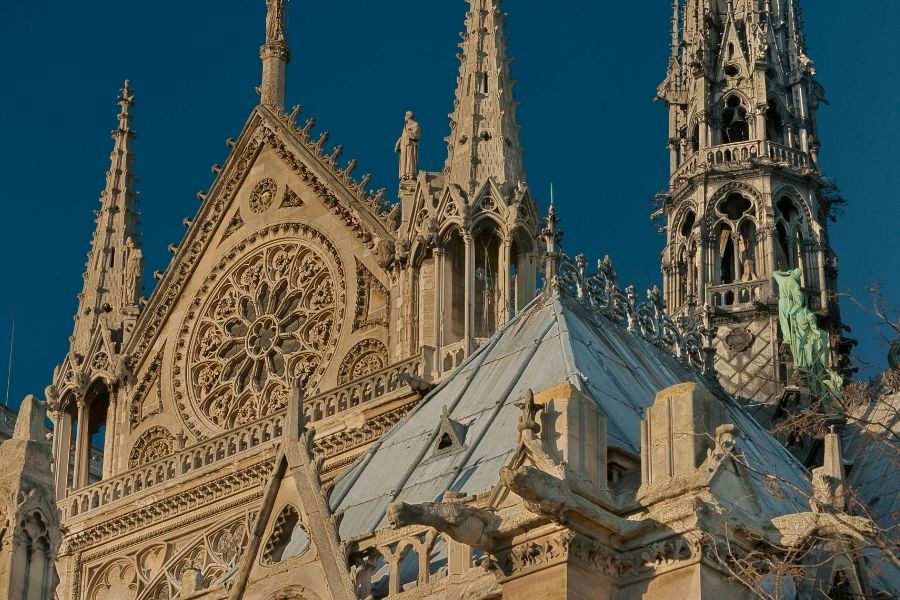
Notre-Dame stands on the Île de la Cité as a perfect example of French Gothic style. I’m amazed every time by its pointed arches, ribbed vaults, and flying buttresses.
These features aren’t just for show—they let the walls rise higher and thinner, filling the space with light through those grand stained-glass windows, especially the famous rose windows. What really gets most visitors, including me, are the chimeras and gargoyles.
These stone figures perch on the upper terraces, some looking fierce, others almost playful. Gargoyles funnel rainwater away from the building, while chimeras like the winged Stryga watch over Paris.
I love spotting their details up close—each one seems like a character peeking out over the rooftops.
Here’s a quick table of iconic elements:
| Feature | Purpose |
|---|---|
| Flying Buttresses | Support, light |
| Rose Windows | Decorative, storytelling |
| Gargoyles | Rainwater drainage |
| Chimeras | Artistic, symbolic |
Notre-Dame in Literature and Film
Notre-Dame comes alive for me through stories—especially Victor Hugo’s 1831 novel, The Hunchback of Notre-Dame. In those pages, Quasimodo, Esmeralda, Pierre Gringoire, and the dark priest Claude Frollo wander the cathedral’s towers and alleys.
Hugo’s book wasn’t just a tale; it actually saved Notre-Dame from neglect and inspired a big restoration in the 19th century. Visiting the cathedral, I can almost picture the Feast of Fools or Quasimodo ringing the bells.
The story’s impact spread through stage plays, movies, and even Disney’s animated film. These versions turned Notre-Dame’s towers and gargoyles into cultural icons, making them familiar even to people who’ve never set foot inside.
Key Historical Moments and the French Revolution
Notre-Dame has seen the highs and lows of French history. Built in the Middle Ages, it hosted royal ceremonies, coronations, and national celebrations.
I picture crowds outside its doors, celebrating both sacred and civic milestones. During the French Revolution, the cathedral suffered.
People damaged statues, scattered relics, and almost lost the building itself. Still, it survived—the French ideals of liberty, equality, and fraternity echo within its walls.
Every time I visit, I sense that history: from revolutionary storms to the recent fire and ongoing restoration, Notre-Dame stands for Paris’s enduring spirit.
Restoration Efforts: Modern Challenges and Inspirations
Every time I wander the quays near Notre-Dame, I’m reminded that this restoration is more than just rebuilding stone. Teams face technical, artistic, and historical questions—each choice shapes Paris’s spirit.
Expert Teams and Architectural Techniques
Watching the crew set up cranes and tools along the Seine, I see nearly a thousand specialists at work. Stonemasons, carpenters, engineers, and artisans all pitch in.
They blend modern machinery with old methods, hand-shaping limestone and heavy oak beams just like centuries ago.
Key challenges:
- Protecting the site from weather
- Keeping fire risks low while welding or cutting
- Coordinating so many workers safely
Advanced tech, like 3D scans and digital models, guides each step, making sure every stone lines up. Even with all the modern help, there’s a focus on craftsmanship—watching skilled hands at work reminds me why this project amazes so many.
Preserving Art, Sculpture, and Stained Glass
Up close, I notice the church’s beauty depends on more than its spire. Sculptures, paintings, and stained glass all took damage from smoke, fire, and falling debris.
Seeing restorers clean blackened stone, mend broken glass, and fix weathered sculptures gives me a new appreciation for the cathedral’s heritage. Some techniques are surprisingly delicate—tiny scalpels or chemical washes protect centuries-old art without harming it.
Stained glass experts use traditional leadwork to restore window panels, matching color and thickness so sunlight still feels just right.
Quick facts:
| Art Form | Restoration Focus | Special Challenge |
|---|---|---|
| Sculpture | Detail Preservation | Soot and cracks |
| Painting | Cleaning, Repair | Smoke damage, aging |
| Stained Glass | Leadwork, Matching | Breakage, heat exposure |
These careful efforts, visible only up close or on guided tours, are a lesson in patience and dedication.
Viollet-le-Duc’s Historical Legacy
Eugène Viollet-le-Duc, who restored Notre-Dame in the 1800s, still guides the teams working today. I find it fascinating how his vision—like the famous spire and many Gothic sculptures—helped shape what we think of as “classic” Notre-Dame.
Walking by the quays, I spot signs explaining how restoration experts debate every step, consulting Viollet-le-Duc’s archives and drawings. His mix of creativity and historical accuracy keeps today’s builders careful—never rushing, never changing the soul of the place.
Fun fact: Many of the big restoration choices, like using oak and lead, follow Viollet-le-Duc’s standards closely. Standing below the scaffolding, I can almost imagine how his legacy keeps shaping the look and story of this Parisian landmark.
Experiencing Parisian Life Near Notre-Dame
Life near Notre-Dame is packed with charming walks, lively markets, and history at every turn. Spending days along the Seine, I found new angles on everyday Paris—from the riverside bookstalls to the buzz of cafés and the beauty of nearby landmarks.
Strolling the Quays and Riverside Bookstalls
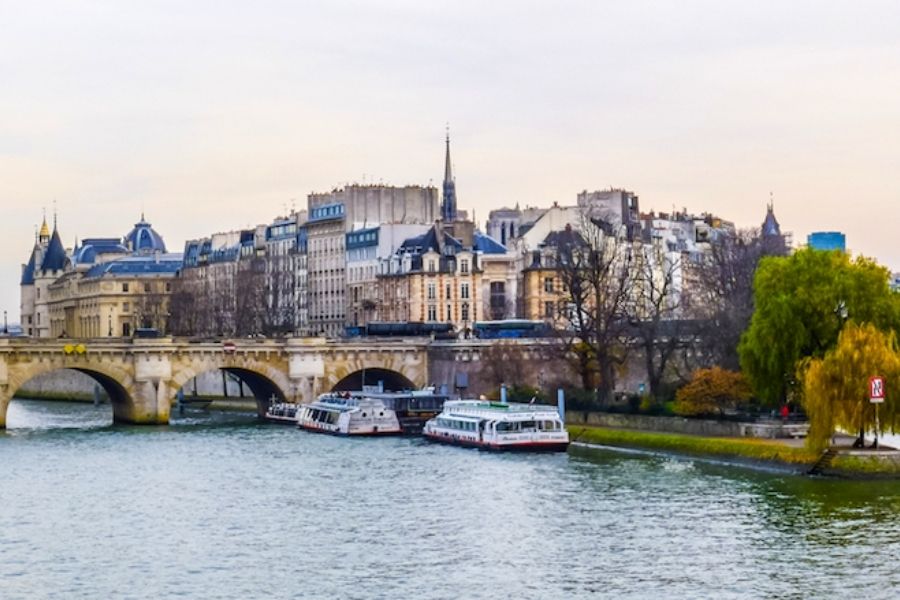
Each morning, the quays by the Seine burst into life with joggers, artists, and couples deep in conversation. I love watching the city wake up as the light bounces off the water and Notre-Dame’s silhouette grows brighter behind all that scaffolding.
The sounds of construction fade beneath birdsong and locals’ greetings. A walk along the river brings me to the bouquinistes, those open-air bookstalls.
Their weathered green boxes hold vintage books, prints, and old maps of Paris. I picked up a small watercolor of the Musée d’Orsay and a postcard of the Louvre to remember the day.
Stopping here isn’t just about shopping. Chatting with the vendors taught me a bit about Paris’s literary history.
These bookstalls have lined the Seine for over 150 years and count as a UNESCO World Heritage site all on their own.
Local Cafés, Markets, and Souvenir Shops
After a stroll, I always crave a coffee at one of the riverside cafés. Outdoor tables fill up fast, especially at sunrise or sunset, when the golden light makes everything feel almost magical.
My favorite is a tiny bistro where the waiter greeted me by name after just a few visits and always recommended the daily special. Local markets not far from Notre-Dame overflow with fresh produce, flowers, and handmade cheeses.
Sampling strawberries in spring or figs in late summer feels like tasting the best of Paris. Many markets pop up on the Île de la Cité or just across the bridges in the Latin Quarter.
For souvenirs, I browse shops near the cathedral, picking up classic Eiffel Tower keychains and hand-painted ceramics. Some shops now offer miniature versions of Notre-Dame—complete with the new golden spire added after the restoration.
Nearby Landmarks: Cluny, Sorbonne, and Palais de Justice
A few blocks from Notre-Dame, I stumbled upon the Musée de Cluny. It’s packed with medieval artifacts and, of course, the famous Lady and the Unicorn tapestries.
The building feels like a portal to another era. I loved its quiet gardens—sometimes I’d just sit there to escape the city noise for a while.
The Sorbonne sits nearby in the Latin Quarter, and you can’t miss the buzz of students and scholars in its courtyards. That intellectual charm just spills out into the streets.
I’d often grab a coffee and listen to students argue about philosophy. Honestly, is there anything more Parisian?
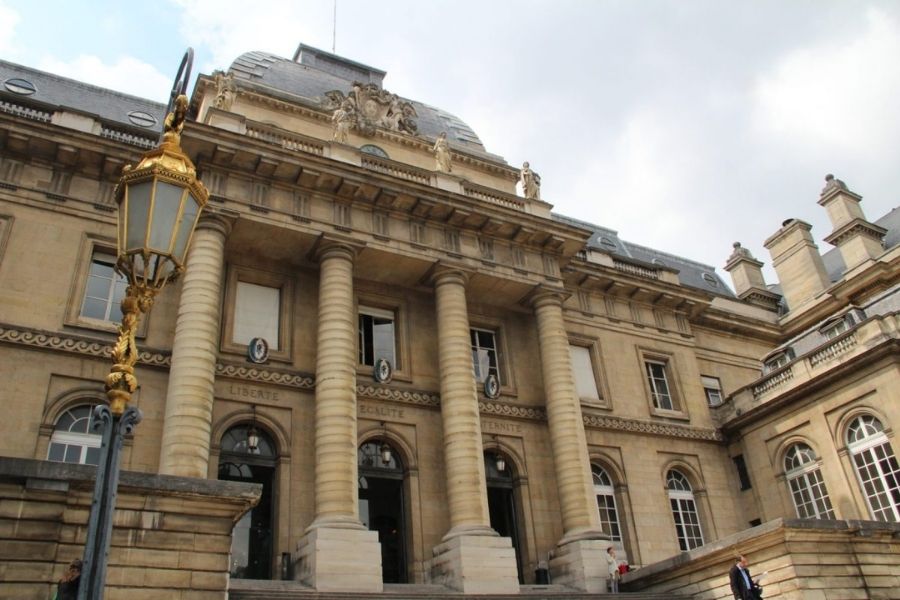
Across from Notre-Dame, the Palais de Justice looms with its tall, ornate iron gates and grand façade. Security keeps some parts off-limits, but you can still tour sections of the building and the breathtaking Sainte-Chapelle.
Each of these landmarks brings something special to the Parisian experience.
Connecting Notre-Dame’s Restoration to Europe’s Cultural Heritage
As I wandered along the quays by Notre-Dame, I couldn’t help but wonder how this restoration ties into a bigger story. Fixing the Cathedral isn’t just about bricks and stone—it’s about holding onto memories and values that cross borders and generations.
Parallels with Venice, Florence, and Rome
Watching cranes and scaffolding surround Notre-Dame, I thought of Venice battling floods, or Florence scrambling to save Renaissance treasures after the 1966 Arno flood.
These cities faced disasters, but people responded with creativity and teamwork. They knew their heritage mattered—not just to locals, but to everyone.
In Rome, every time they restored something after an earthquake or fire, it felt like the city was fighting to keep its soul alive.
The Colosseum and St. Peter’s have both seen repairs that went far beyond architecture. It’s about identity, really.
Every time I see experts from France and across Europe working together to save Notre-Dame, I feel that same sense of shared pride. There’s something quietly beautiful about that kind of responsibility. Isn’t it kind of inspiring?
Notre-Dame’s Role in Shaping French Identity
I can’t walk past Notre-Dame without thinking about its role in French history.
Monarchs like Louis XIV and Louis XVI came here for Mass.
Napoleon I—Bonaparte, the Emperor—crowned himself right inside these walls. That one moment changed the direction of European history.
Robespierre looked at the cathedral and saw a symbol for his radical ideas.
Notre-Dame has weathered war, revolution, and all sorts of change. Authors like Molière wrote with the cathedral as their backdrop, while major events unfolded around it.

When we preserve Notre-Dame, we’re really holding onto the stories and struggles that make France what it is.
Every stone they restore feels like a piece of the past—a living link to coronations, revolutions, and legendary performances. All these moments are tangled up in the heart of Paris.
Sometimes, when I watch the restoration from the quays, I feel swept up in a tradition that reaches from royal courts to the laughter of Parisian families.
