
Dartmoor, right in the heart of Devon, isn’t like anywhere else I’ve ever explored. This wild, open moorland is famous for its sweeping granite tors, free-roaming ponies, and ancient stone circles that hint at mysteries from long ago.
When I wandered Dartmoor’s rugged landscape, I found myself among low, scrubby plants and endless grassy hills. The place just stretches on, wild and untamed.
Every hike seemed to throw something new my way. Sometimes mist rolled in, hiding the rock formations, and then it would lift, revealing Dartmoor ponies grazing far off.

There’s so much freedom here—hardly any people, just open space and adventure. Each step pulled me further away from the everyday.
I can’t help but feel a little awed, knowing people have roamed these moors for thousands of years. Granite peaks, ancient ruins, and mysterious sites all invite you to slow down and look closer.
Dartmoor is a world shaped by nature, legends, and time.
Epic Hikes Across Dartmoor’s Legendary Tors
Dartmoor National Park is famous for its dramatic granite tors, wild open moors, and ancient sites. My hikes here always bring sweeping views, unusual wildlife, and glimpses into the area’s prehistoric past.
Iconic Granite Tors and Outcrops
Granite tors stand out as Dartmoor’s signature landmarks. These rocky outcrops, carved by centuries of wind and rain, rise from the moor like natural sculptures.
Some tors shoot up sharply, others gather in clusters, making them perfect markers for anyone exploring on foot.
As I walked between the tors, I ran my hands over the rough granite, noticing patches of moss and lichen. Each tor has its own vibe—Haytor almost looks sculpted, while Hound Tor sprawls out in jagged blocks.
Around the tors, you’ll usually spot wild ponies or hardy sheep picking their way through the grass. Sometimes, ruins and stone circles pop up between the rocks—little reminders that people have been here for ages.
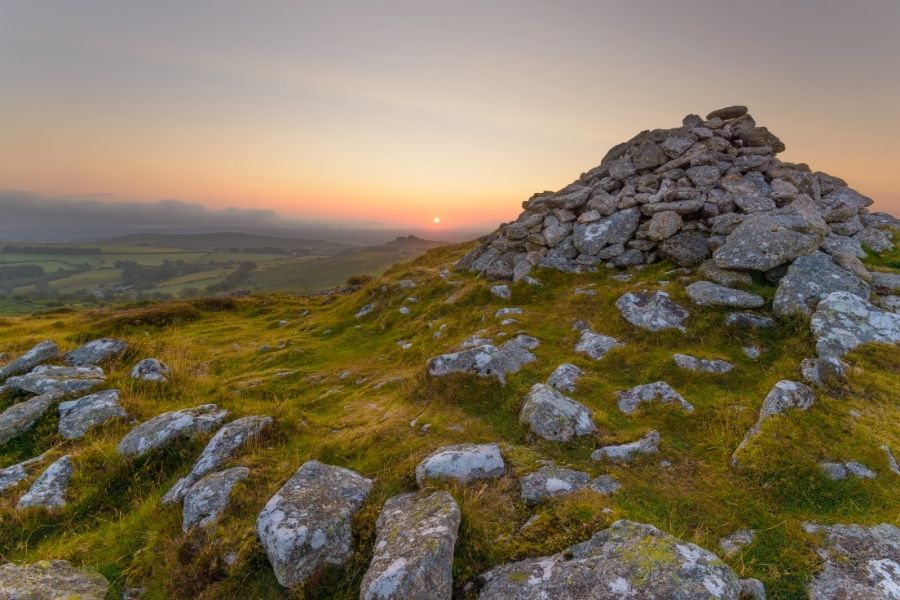
The history in this landscape just adds another layer to every trek.
| Notable Tors | Key Features | Nearby Landmarks |
|---|---|---|
| Haytor | Striking twin peaks, quarry | Haytor Quarry |
| Hound Tor | Broken, jagged rocks | Medieval village ruins |
| Great Links Tor | Highest tor in the north | Vast open moorland |
Haytor, Hound Tor, and Great Links Tor Adventures
Most of my Dartmoor adventures either begin or end at a famous tor. Haytor’s probably the easiest to reach—just follow the obvious path from the car park.
From the summit, I’ve watched shadows crawl over the moor. The granite at Haytor feels smooth in places, worn down by centuries of boots and hands.
Hound Tor feels wilder, a little less crowded. Among the scattered rocks, I stumbled across the remains of a medieval village—such an unexpected find right beside the granite.
The views from Hound Tor stretch over heather and bracken, and Dartmoor ponies often graze nearby.
Great Links Tor sits out on the northern moors, and getting there takes more effort. The climb gets steep, and the path isn’t always clear, but wow—the open landscape at the top is worth every step.
On the summit, you can see miles of moorland in all directions. Tip: The weather can flip on you fast up here, so bring sturdy boots and a map.
Panoramic Views and Walking Routes
Dartmoor’s network of trails lets you link up several tors in one day if you’re feeling energetic.
Some paths, like the Haytor and Hound Tor loop, are well-marked and popular. Others, especially around Great Links Tor, feel remote and demand a bit of navigation know-how.
I always pack an OS map (Ordnance Survey) to help me follow the footpaths across the moor. Trails range from gentle strolls for families to full-on hikes for the seasoned.
Most walks serve up dramatic views across rolling hills, scattered tors, and deep green valleys.
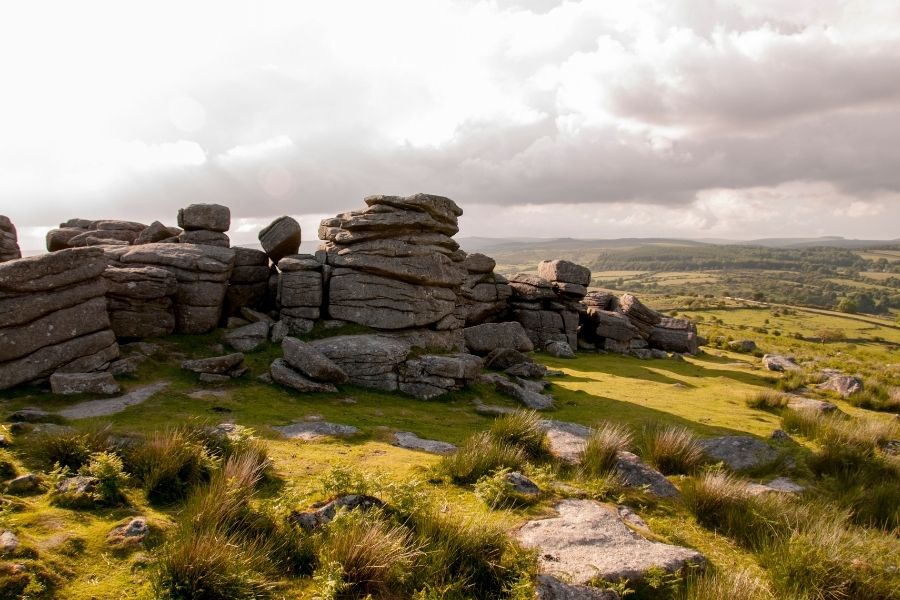
For a bit of variety, check out these Dartmoor routes:
- Haytor to Hound Tor: Easy to moderate, about 5 miles
- Great Links Tor Circular: More challenging and remote, roughly 7 miles
- Two Moors Way: A long-distance trek passing several iconic tors
On clear days, you can spot distant tors and valleys right out to the horizon. The weather here is a character in its own right—one minute you’re walking in sunshine, the next you’re lost in swirling mist.
Encounters With Dartmoor’s Wild Ponies and Wildlife
Dartmoor’s wide open spaces offer endless views—and plenty of chances to see animals in their natural habitat.
While hiking, I ran into wild ponies, sheep, and all kinds of birds. Each encounter added something unique to the landscape.
Observing Dartmoor Ponies
Dartmoor ponies are one of the moor’s most iconic sights. These tough little horses have survived here for centuries, grazing across the grass and heather—rain or shine.
You’ll often spot groups of ponies near the tors or by quiet streams. Their thick coats help them shrug off the worst weather.
Even though they sometimes seem tame, they’re truly wild—always moving together and keeping their distance from people.
I learned to watch them quietly and move slowly, never getting closer than 10 meters. Watching them graze or play, I felt a real connection to Dartmoor’s ancient past.
Other Wildlife: Sheep, Birds, and Beyond
Besides ponies, sheep are everywhere on Dartmoor. Flocks wander across the moor, shaping the land as they graze.
I’d often pass lambs curled up in the long grass.
Birdsong fills the air—skylarks, buzzards, and sometimes a kestrel hovering above. In wetter spots, frogs croak from hidden pools. Trout dart under the surface in the rivers.

Here’s a quick look at some animals I’ve seen:
| Animal | Where Seen | Notes |
|---|---|---|
| Dartmoor pony | Moor, near tors | Usually in groups |
| Sheep | Across the moors | Often with lambs |
| Buzzard | Skies, on fenceposts | Seen hunting |
| Skylark | Open grassland | Singing in flight |
| Frog | Wet, marshy areas | Heard, rarely seen |
All these animals have adapted to Dartmoor’s tough climate and rough ground.
Ethics of Wildlife Encounters
When I’m out hiking, I do my best to respect the land and its wildlife. I never approach, touch, or feed ponies or sheep.
Feeding wild animals can mess with their health or make them too bold around people.
I keep dogs on a short lead, especially near lambs or nesting birds. Sticking to marked paths helps avoid trampling fragile plants or disturbing ground-nesting birds.
If I want a closer look, I use binoculars instead of creeping up.
Leaving no litter and closing gates behind me keeps the moors safe for animals and future visitors. It’s a small effort, but it helps keep Dartmoor wild for everyone.
Exploring Prehistoric Mysteries and Ancient Sites
Dartmoor’s wild landscapes hide ancient woodlands and the traces of people who lived here thousands of years ago. Every hike brings me face-to-face with old stories, mossy ruins, and legends wrapped in mist.
Wistman’s Wood and Ancient Woodland
Wistman’s Wood is one of Dartmoor’s last patches of ancient forest. The first time I saw it, the twisted oaks and thick moss looked like something out of a fairy tale.
Some of these trees are hundreds of years old.
The woodland’s small, with gnarled trees growing low to the ground thanks to Dartmoor’s wild weather. Rocks litter the ground, making it uneven but oddly beautiful.
Ravens call overhead, and lichens cling to every surface.

Legends swirl around this wood—some say druids met here, and tales of ghostly hounds add to the mystery. It really does feel like stepping back in time.
Quick Facts about Wistman’s Wood:
| Feature | Detail |
|---|---|
| Size | About 3 hectares |
| Age of trees | 300-500 years |
| Notable species | Sessile oak, mosses |
Legends: The Hound of the Baskervilles
The moors are full of stories about ghostly black dogs. The best-known legend is the “Hound of the Baskervilles,” which inspired Arthur Conan Doyle’s famous novel.
Locals talk about huge, shadowy hounds haunting the moor at night, especially near Wistman’s Wood.
I’ve walked these same paths at dusk. With the wind howling and fog creeping in, the place feels lonely and a little eerie. It’s easy to see how these wild scenes inspired tales of mystery.
Some say the stories warn people not to stray too far after dark. Whether you believe or not, the legends add a thrill to every walk.
Neolithic and Bronze Age Remnants
Dartmoor’s moors are scattered with reminders of ancient people. I’ve visited stone circles, burial mounds, and stone rows left by prehistoric communities.
Scorhill Stone Circle stands out—its tall stones rise from the heather, shaped by centuries of wind and rain.
You’ll also find hut circles and the remains of ancient villages. Archaeologists say many date back to the Neolithic and Bronze Age.
Dartmoor actually has more Bronze Age ruins than anywhere else in Britain—over 5,000 hut circles and hundreds of stone rows.

Walking among these ruins, it’s easy to imagine what life was like for those early residents. The stones whisper stories of survival and ritual, side by side with the wild moors.
Untamed Landscapes: Rivers, Gorges, and Quarries
Wild rivers snake through Dartmoor, cutting deep gorges and filling hidden reservoirs.
Old quarries and rushing streams reveal both nature’s power and the area’s long, gritty history.
Lydford Gorge and Burrator Reservoir
Lydford Gorge is the deepest gorge in southwest England. Hiking its winding paths, I felt the spray from the White Lady Waterfall, which plunges over 30 meters into the woods.
The River Lyd crashes through the steep valley, swirling around mossy rocks.
Why Lydford Gorge sticks with me:
- Tall cliffs shelter ancient woodland
- The Devil’s Cauldron—a boiling, swirling pool
- Dramatic viewpoints along well-kept trails
Not far away, Burrator Reservoir sits at the base of rugged hills. Its calm waters collect rain from the high moor, providing drinking water for Plymouth and nearby towns.
I love the old stone walls, hidden bridges, and quiet trails—perfect spots to pause and soak in views of Dartmoor’s granite tors.
Foggintor Quarry and Wild Waters
Foggintor Quarry lies among rolling hills near Princetown. It used to buzz with granite extraction, but now it’s a flooded pit, ringed by broken blocks and steep cliffs.
Exploring the ruins, I saw how nature has crept back in—ferns push through cracks, and sheep wander the stone-strewn ground.

Streams trickle into the quarry, forming clear ponds teeming with life. The place tells stories of hard work and change.
Now, water covers the floors where men once cut stone for famous buildings across Devon. The wind whistles through the open quarry, ravens call overhead, and the whole place feels wild and a little haunting.
True Escape: Wild Camping and Remote Moorland Life
Wild camping pulled me into Dartmoor—its quiet, open spaces, the kind of windswept views you just don’t forget. Nights alone by the Tors, with only hardy ponies and the wind for company, left me with memories I’ll probably carry forever. There’s a freedom out here that money can’t touch.
Wild Camping on the Moors
I found out pretty quickly that Dartmoor is one of the rare spots in England where wild camping is actually allowed. You’ve got to stick to unenclosed land, keep your group small, and, of course, take every bit of litter with you.
Most nights, I’d pitch my little tent in the shelter of a Tor—Great Links Tor was a favorite, or sometimes near Fernworthy Forest.
The night sky stretched wide and impossibly clear, jammed with stars. Sleep came easily, with just the soft calls of night birds and the distant sound of sheep bells drifting in. Every sunrise felt like a reward, painting the moor in gold and mist.
I always tried to keep things low-key—lightweight stove, tidy campsite, nothing left behind. It’s such a simple way to protect the moor and, honestly, it helps me blend in.
Challenges and Building Resilience
Moorland life tested my nerves and patience, no doubt about it. On Dartmoor, the weather changes in a heartbeat—sunshine one minute, then rain, then thick fog creeping in.
Wet gear and muddy boots became normal. Most nights, the wind rattled my tent.
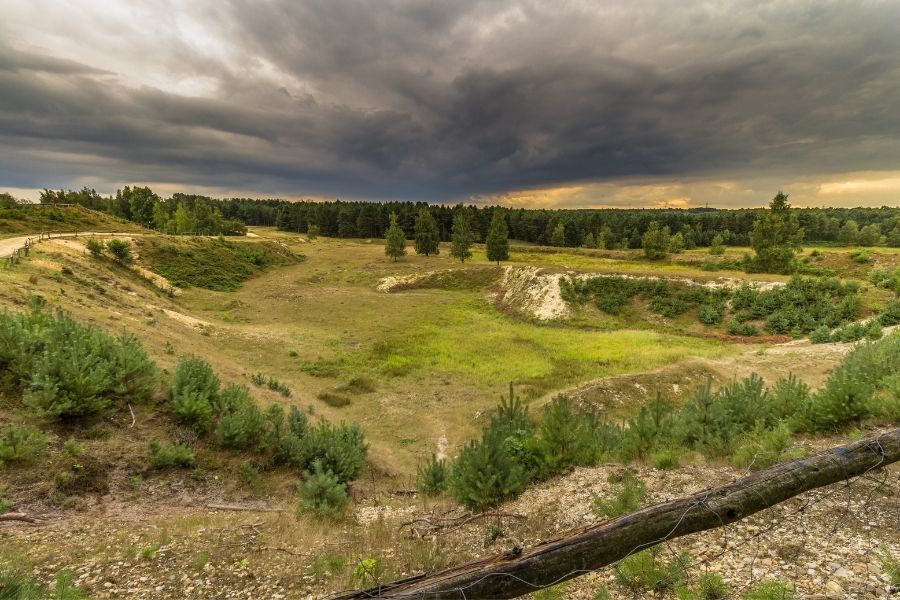
Walking alone, I’d hit rough paths, sudden chills, and those long, empty stretches between safe places to stop. I had to trust my map and compass—and, well, myself. Each day taught me something about self-reliance, even when I doubted it.
Here’s a quick look at what I faced:
| Challenge | How I Handled It |
|---|---|
| Changeable Weather | Layered clothes, waterproofs |
| Navigation Issues | Used OS maps, compass |
| Isolation | Kept calm, trusted myself |
| Wet Feet | Spare socks, foot care |
With every new challenge, I felt a bit tougher. By the end, those small fears faded, and I left with a quiet sense of pride—and a handful of stories.
Heather, Chagford, and the Spirit of the Moor
Heather blooms turned the hills soft pink and purple. The wiry branches sheltered skylarks, sometimes heavy with dew in the morning.
Spending a day in Chagford, one of Dartmoor’s liveliest villages, felt like a treat after the wild. I ducked into a cozy café, chatted with locals about village life, and devoured fresh scones.
Chagford blends comfort with that wild moorland energy. You see it everywhere—ponies grazing on the heather, the lonely beauty of granite tors, and, sometimes, a bit of courage you didn’t know you had.
Every trip onto the moor and each return to Chagford reminded me why this place is just different.
Dartmoor Villages, Landmarks, and Hidden Corners
Dartmoor’s villages and hidden sites really do feel untouched and authentic. Wandering around, I stumbled on places shaped by wild history, ancient stones, and local traditions that just don’t fit the usual tourist script.
Princetown and Dartmoor Prison
Princetown sits right at the heart of the moor, and honestly, it’s one of the highest towns in southern England. The air always feels sharp, and the views sweep out over those bleak hills.
Dartmoor Prison, a granite fortress from 1809, towers over the town. I walked past the iron gates and old guard towers, the history almost pressing out of the stone.
There’s a small museum, packed with stories of escapes and relics from the prison’s long, strange past.
Shops and cafés here mostly serve hikers and bikers. I grabbed a hot drink in a snug spot, watching the lonely roads and peat bogs outside.
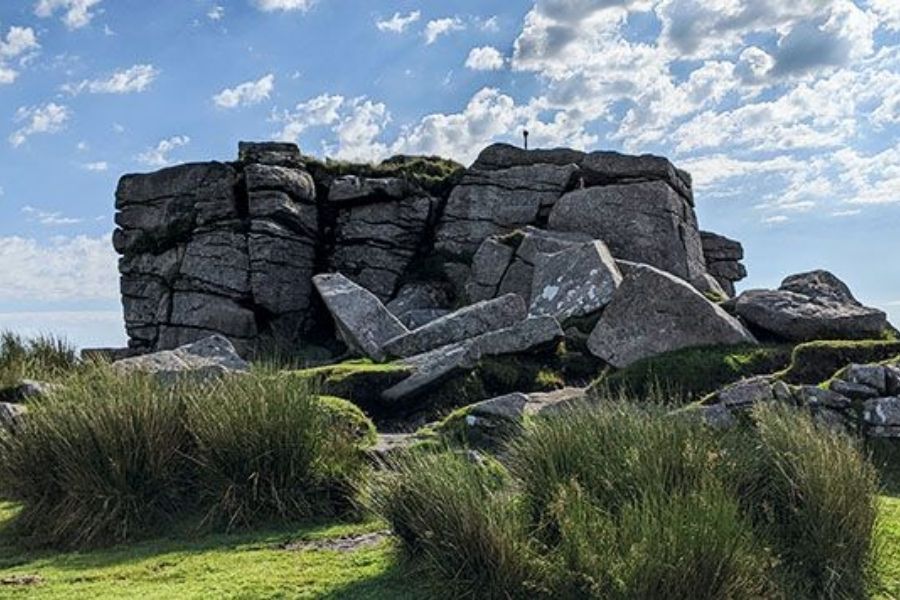
Princetown also makes a perfect base for hikes to North Hessary Tor and out onto the open moor.
Sheepstor and Lesser-Known Sites
Sheepstor sits quietly, tucked between green fields and rugged, rocky slopes. The old stone church has stood there since medieval days, and honestly, it felt like a peaceful haven when I wandered inside.
Sheepstor Tor looms close by—a jumble of granite boulders begging for a quick, steep scramble. I couldn’t resist climbing up, even if my legs protested a bit.
I noticed the area around Sheepstor felt much less crowded than the usual Dartmoor hotspots. The narrow lanes twisted past farmhouses and mossy stone walls, making the place feel almost secret.
One short walk took me straight to Burrator Reservoir. It’s tucked away, surrounded by trees and a surprising amount of wildlife. I lingered there, just soaking in the stillness.
Off the beaten path, I stumbled across lonely Bronze Age stone circles and hut circles. Most visitors miss these, which is a shame. Standing there, I could almost picture Dartmoor as it was thousands of years ago—windswept, mysterious, and brimming with untold stories.
