
After years of wandering trails across America, I can say nothing quite matches the thrill of stumbling upon a waterfall that just makes you stop and stare. There’s something about the roar, the mist, and those wild, dramatic backdrops that begs to be shared—yeah, even if it means pausing your hike to snap that perfect shot.
America’s most photogenic waterfalls are more than just pretty faces. They combine natural beauty with a sense of adventure, from Oregon’s famous 620-foot Multnomah Falls to Arizona’s turquoise Havasu Falls tucked deep in the Grand Canyon. Hikers get both jaw-dropping views and those envy-inducing photos that capture raw, untamed nature.
Whether you crave the monster cascades out west, the lush, hidden falls in the east, or those secret gems that demand a real trek, I’ve got you covered. You’ll also find some handy tips for snapping great photos and planning your waterfall trips safely—because, let’s face it, nobody wants a soggy phone or a twisted ankle.
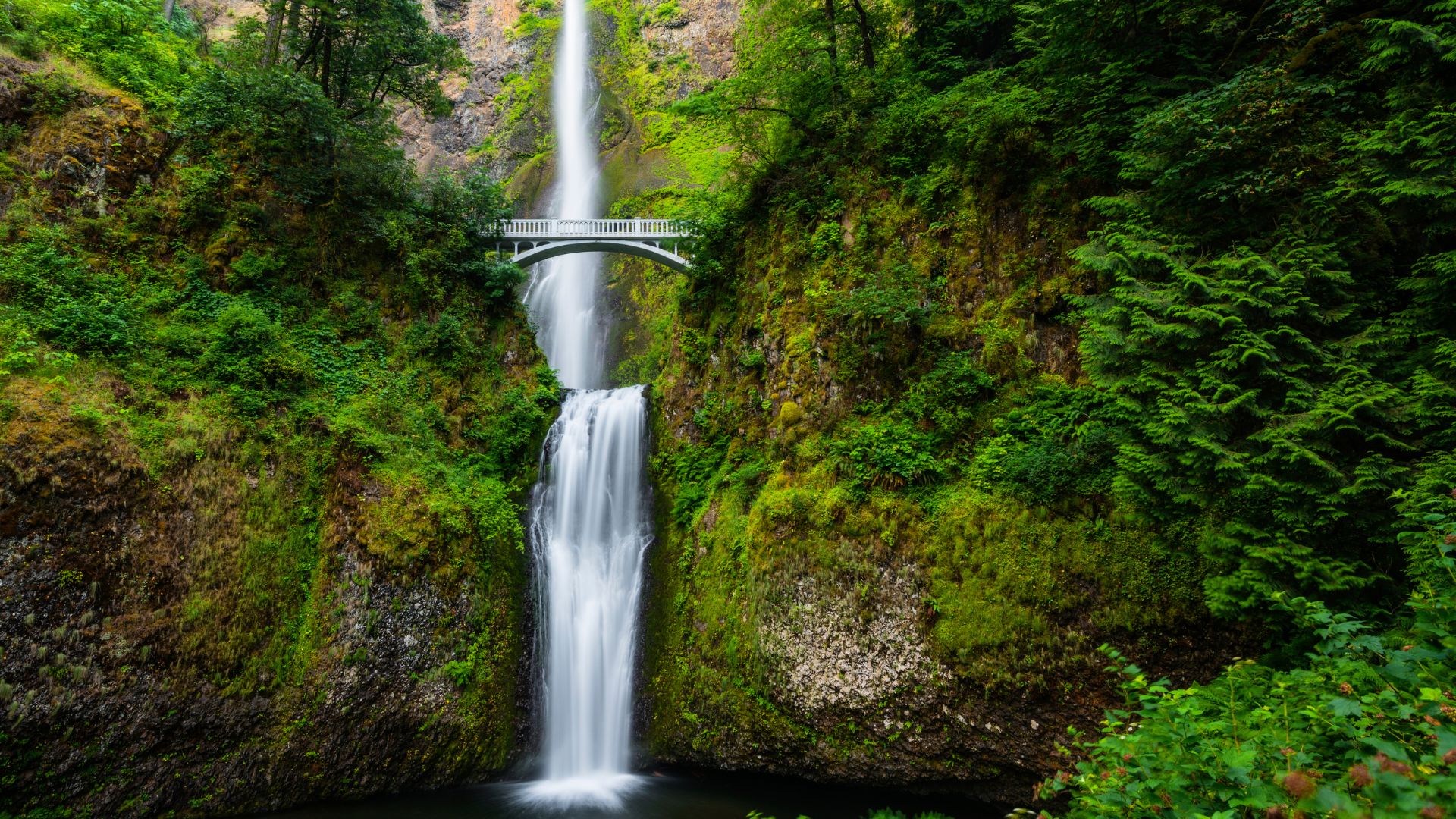
The 14 Most Instagram-Worthy American Waterfalls
Let’s kick things off with four of the most iconic waterfalls in the country. These are the ones people dream about—think moonbows, thunderous spray, and epic canyon drops.
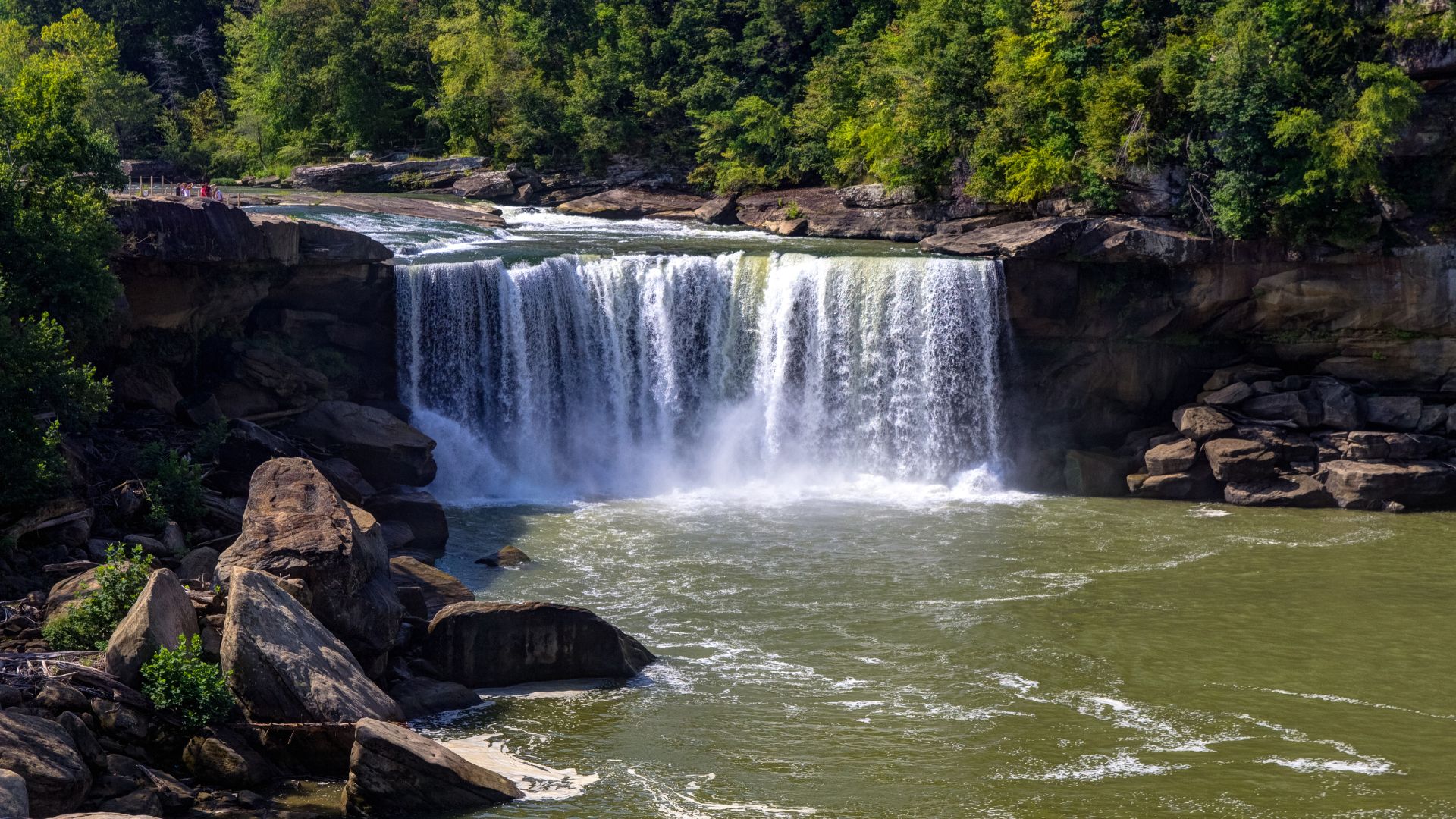
Cumberland Falls and the Moonbow Phenomenon
Cumberland Falls, in Kentucky, stands out as one of America’s most unusual waterfalls. At 68 feet high, it’s not the tallest, but it’s got a trick up its sleeve.
This place is famous for its moonbow—a rare rainbow that appears at night when the moonlight hits the mist just right. Only a handful of waterfalls in the world can pull this off.
Best moonbow viewing conditions:
- Clear, dark nights
- Full moon or close to it
- Plenty of water
- No clouds
I’d say spring is your best bet, since water levels peak then. The moonbow shows up as a ghostly white arc, and honestly, it’s a little surreal.
Daytime isn’t too shabby either. The water drops into a deep pool, framed by rugged cliffs on both sides.
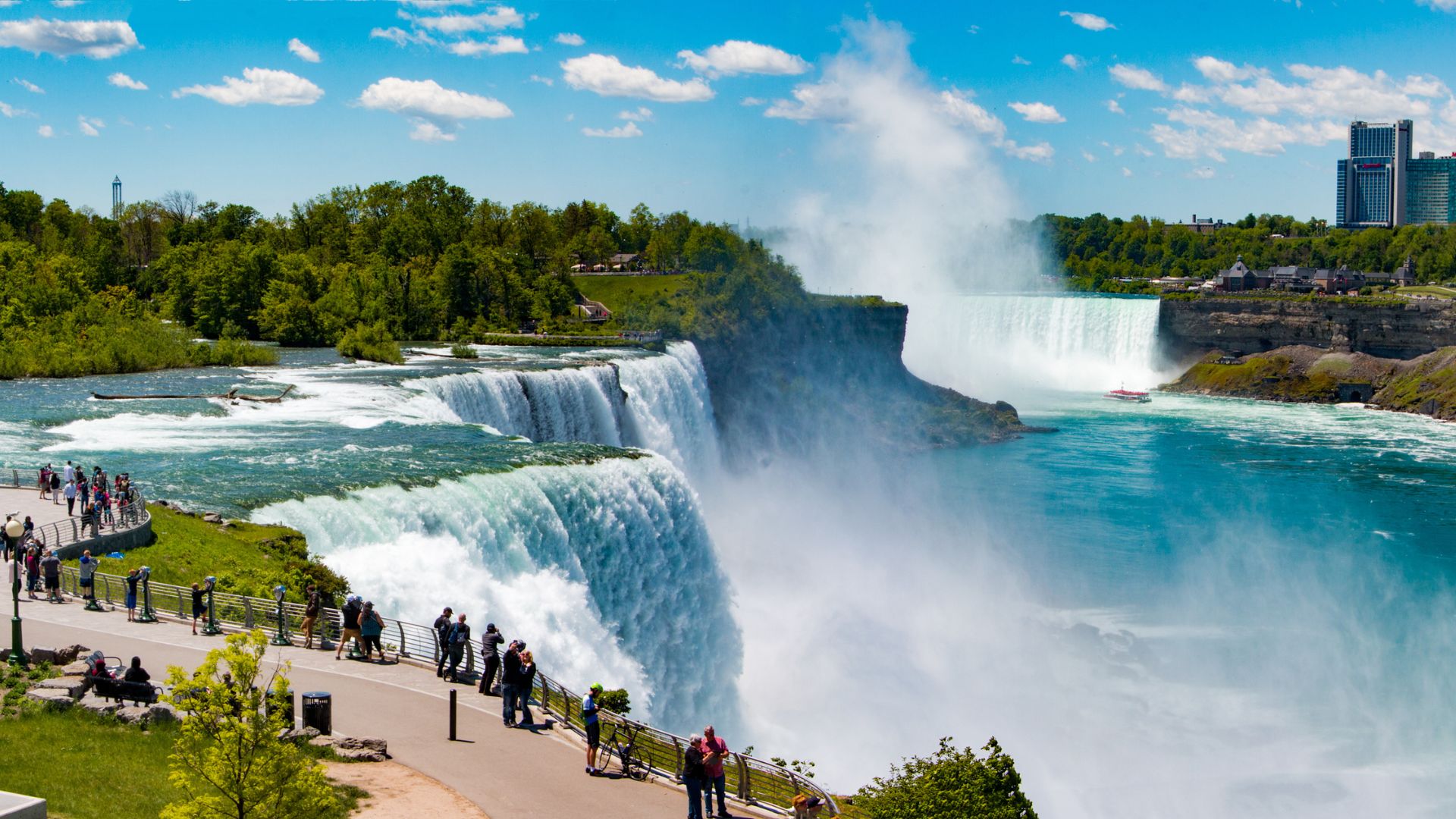
Niagara Falls: Icon of US Waterfalls
Niagara Falls pretty much defines “famous waterfall” in America. I’ve tried to capture its power in photos, but it’s almost impossible—there’s just too much going on.
The falls are actually a trio: Horseshoe Falls (the big one), American Falls, and Bridal Veil Falls. Horseshoe steals the show every time.
Key photo spots:
- Observation Tower for wide shots
- Maid of the Mist boat for up-close drama
- Cave of the Winds for that behind-the-falls thrill
- Rainbow Bridge if you want a sweeping view
Every second, about 3,160 tons of water crash down. On sunny days, rainbows pop up everywhere. I always stash my phone in a waterproof case—learned that the hard way.
Each season brings something new. Winter coats everything in ice, while spring unleashes the highest water flow.
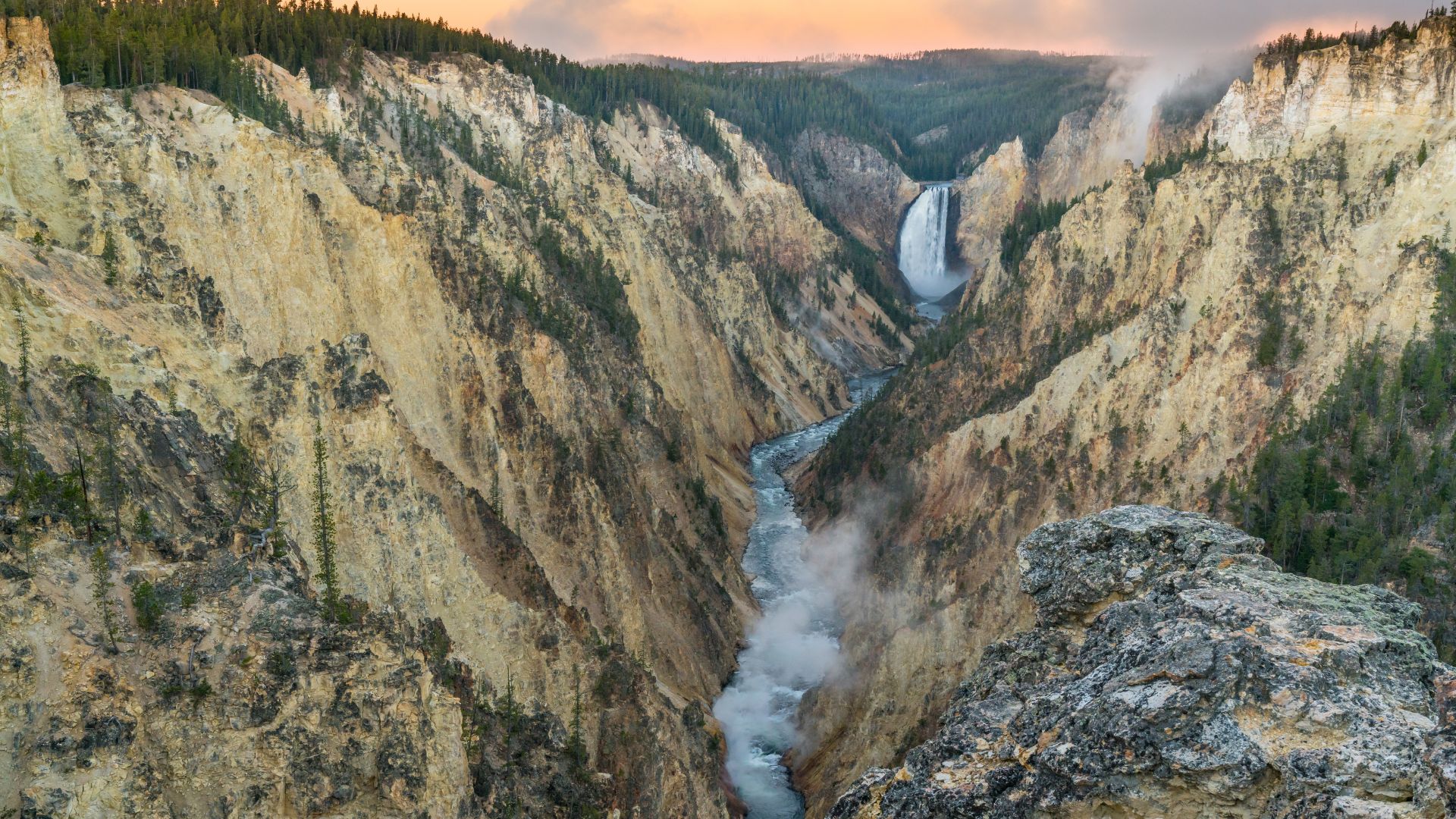
Lower Yellowstone Falls in Yellowstone National Park
Lower Yellowstone Falls plunges 308 feet into the Grand Canyon of Yellowstone. If you ask me, it’s one of the most dramatic falls in any national park.
The canyon walls glow yellow and gold from all the minerals. That contrast between the foaming white water and the colored rock? It’s a photographer’s dream.
Top viewing locations:
- Artist Point for those classic shots
- Uncle Tom’s Trail if you want to get close
- Red Rock Point for something different
- Lookout Point for sweeping canyon views
Late spring or early summer is the sweet spot. Water flow is at its wildest, but you’ll have to share the trail with plenty of other hikers.
During snowmelt, the falls really roar. By late summer, things quiet down quite a bit.
Yosemite Falls in Yosemite National Park
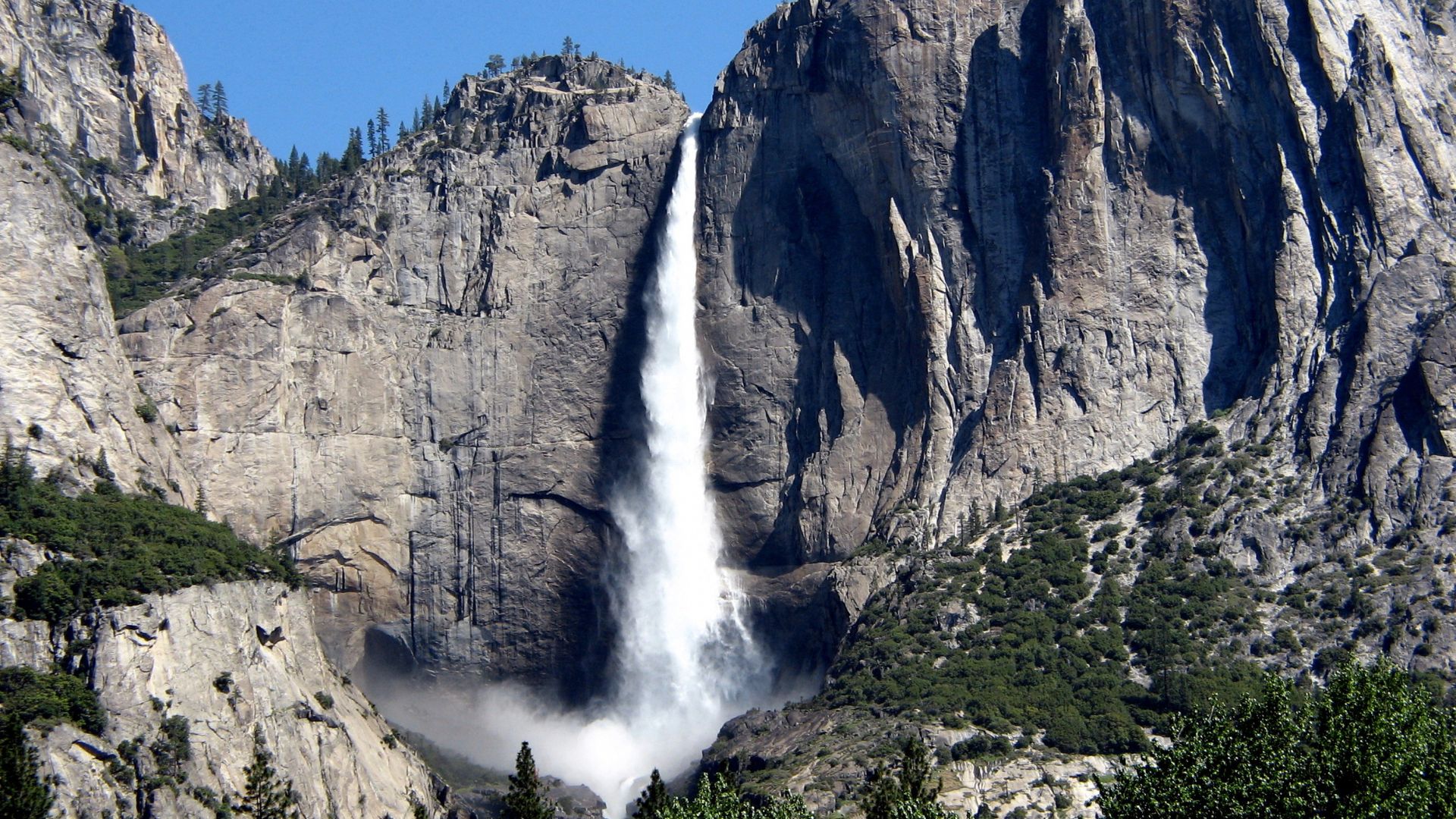
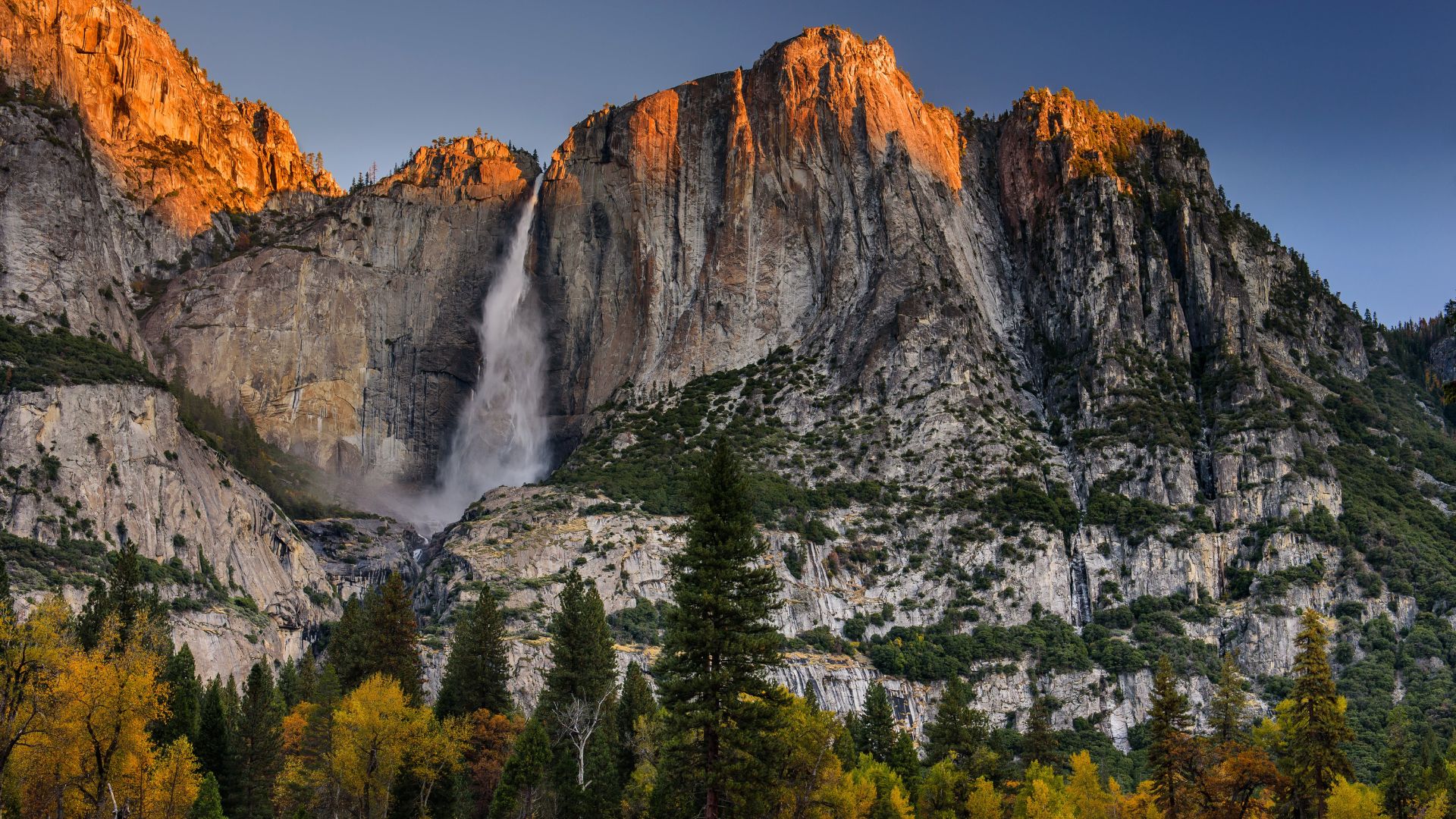
Yosemite Falls claims the title of tallest waterfall in North America at 2,425 feet. Every time I see it, I’m a little awestruck.
The waterfall tumbles in three sections. Upper Yosemite Fall drops 1,430 feet. The middle part adds 675 feet, and Lower Yosemite Fall finishes with a 320-foot plunge.
Photography tips:
- Valley floor for the full effect
- Swinging Bridge for reflection shots
- Glacier Point for that bird’s-eye view
- Visit in spring for peak water flow
I’ve tackled the Yosemite Falls Trail to the top—it’s a tough 7.2-mile round trip, but the views are worth every step.
The best flows are from April to June. By late summer, it’s often just a trickle, so check conditions before you go.
Jaw-Dropping Cascades of the West
The West is a waterfall lover’s playground. You’ll find everything from towering giants to secret desert oases. Here are four that really stand out—each with its own vibe and challenges.
Multnomah Falls and the Columbia River Gorge
Multnomah Falls is basically the poster child for Oregon waterfalls. Standing 620 feet tall, this two-tiered beauty draws over two million visitors a year.
Benson Bridge sits perfectly between the upper and lower drops. I always stop here for that classic “both falls in one photo” shot.
You can see the falls right from the parking lot, but a short paved walk to the bridge gives you a much better angle. If you’re up for it, the 2.4-mile round-trip hike to the top rewards you with epic views from above.
The Columbia River Gorge is packed with over 90 waterfalls on the Oregon side alone. It’s the country’s largest natural scenic area, so Multnomah is just one stop on a seriously epic waterfall road trip.
Spring is when the falls go wild with snowmelt, but the forest stays lush all year. That green makes every photo pop.
Shoshone Falls and the Snake River
Shoshone Falls gets called the “Niagara of the West,” and honestly, it’s earned it. At 212 feet, it’s actually taller than Niagara.
Just outside Twin Falls, Idaho, this beast crashes down into the Snake River Canyon. The roar is something you feel in your chest.
Spring is prime time, thanks to mountain snowmelt feeding the river. When it’s really flowing, the falls become a massive wall of whitewater that’s tough to look away from.
There’s a short hike along the canyon rim, with plenty of viewpoints. Each spot gives you a new angle. Early mornings are best for photos.
By summer, water flow drops as farmers upstream use more for irrigation. Even then, Shoshone still impresses.
Burney Falls at McArthur-Burney Falls Memorial State Park
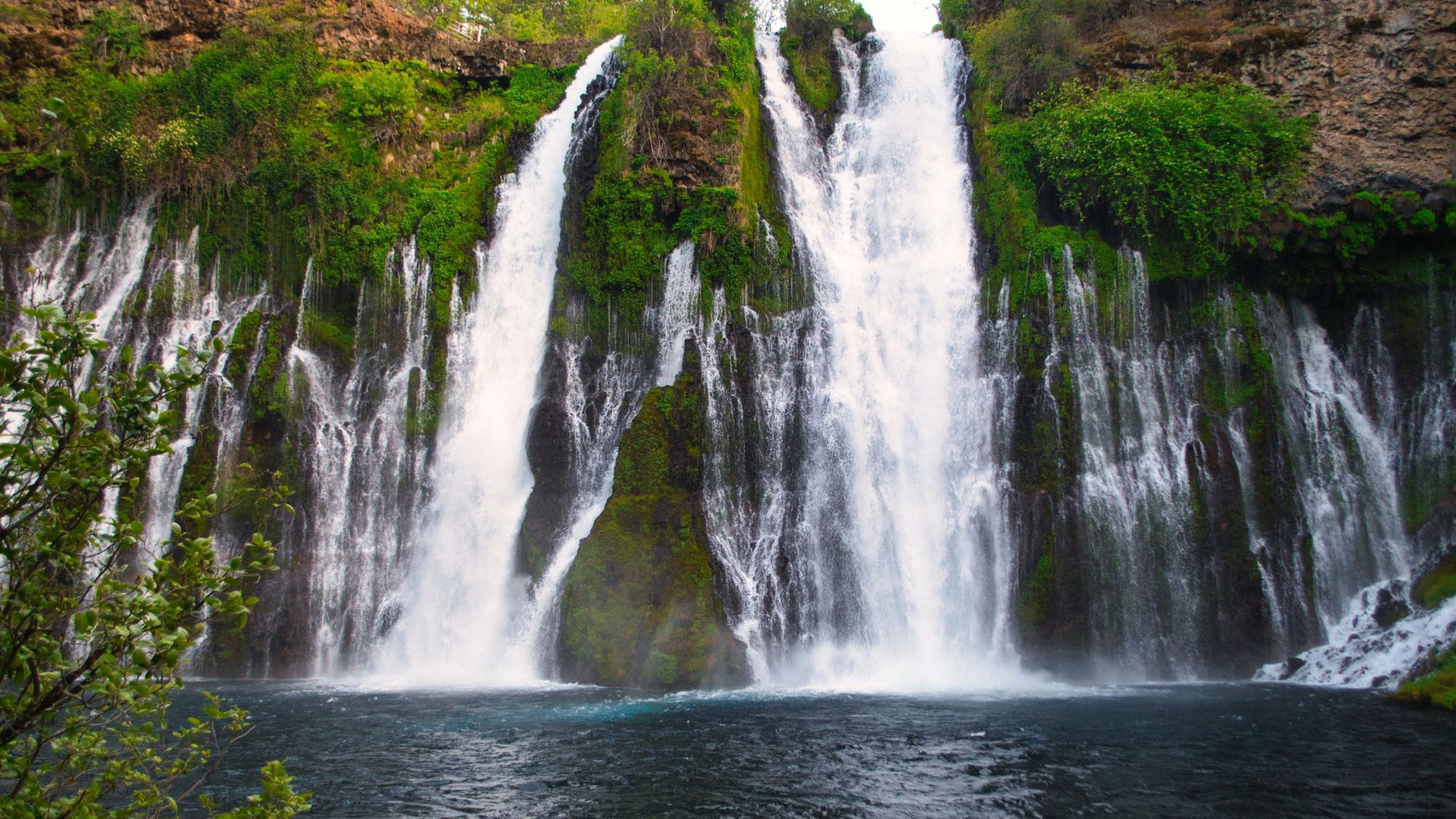
Burney Falls never dries up, thanks to underground springs that feed it all year. This 129-foot waterfall pours out about 100 million gallons a day, even in the driest months.
President Theodore Roosevelt once called it the “Eighth Wonder of the World.” Maybe that’s a bit much, but the constant flow and misty air really are something else.
McArthur-Burney Falls Memorial State Park charges $10 per car, but that gets you access to hiking, fishing, and camping too.
The 1-mile Falls Loop Trail brings you right to the base. I love feeling the cool mist on a hot day. Multiple viewpoints let you experiment with photos.
It’s about an hour from Redding, California. April to October is best for weather, but honestly, the falls look great any time.
Havasu Falls in the Grand Canyon
Havasu Falls is one of those places you see in photos and wonder if the colors are real. The blue-green water against the orange canyon walls? Unreal.
The 100-foot drop sits inside the Havasupai Indian Reservation. The water’s wild color comes from minerals and flows year-round.
Getting here isn’t easy. You need a reservation through the tribe, and permits are hard to snag. The 10-mile hike from Hualapai Hilltop is no joke.
But once you arrive? Swimming in the pools and camping nearby feels like a dream. I’ll never forget waking up with that view.
The falls are sacred to the Havasupai people. Visitors need to follow tribal rules and pack out all trash—respect is non-negotiable.
Must-See Waterfalls of the East and South
Don’t sleep on the East and South—these regions are loaded with waterfall gems. From Appalachian giants to underground wonders, you’ll find plenty of photo ops and trails for every skill level.
Whitewater Falls: Tallest Waterfall East of the Rockies
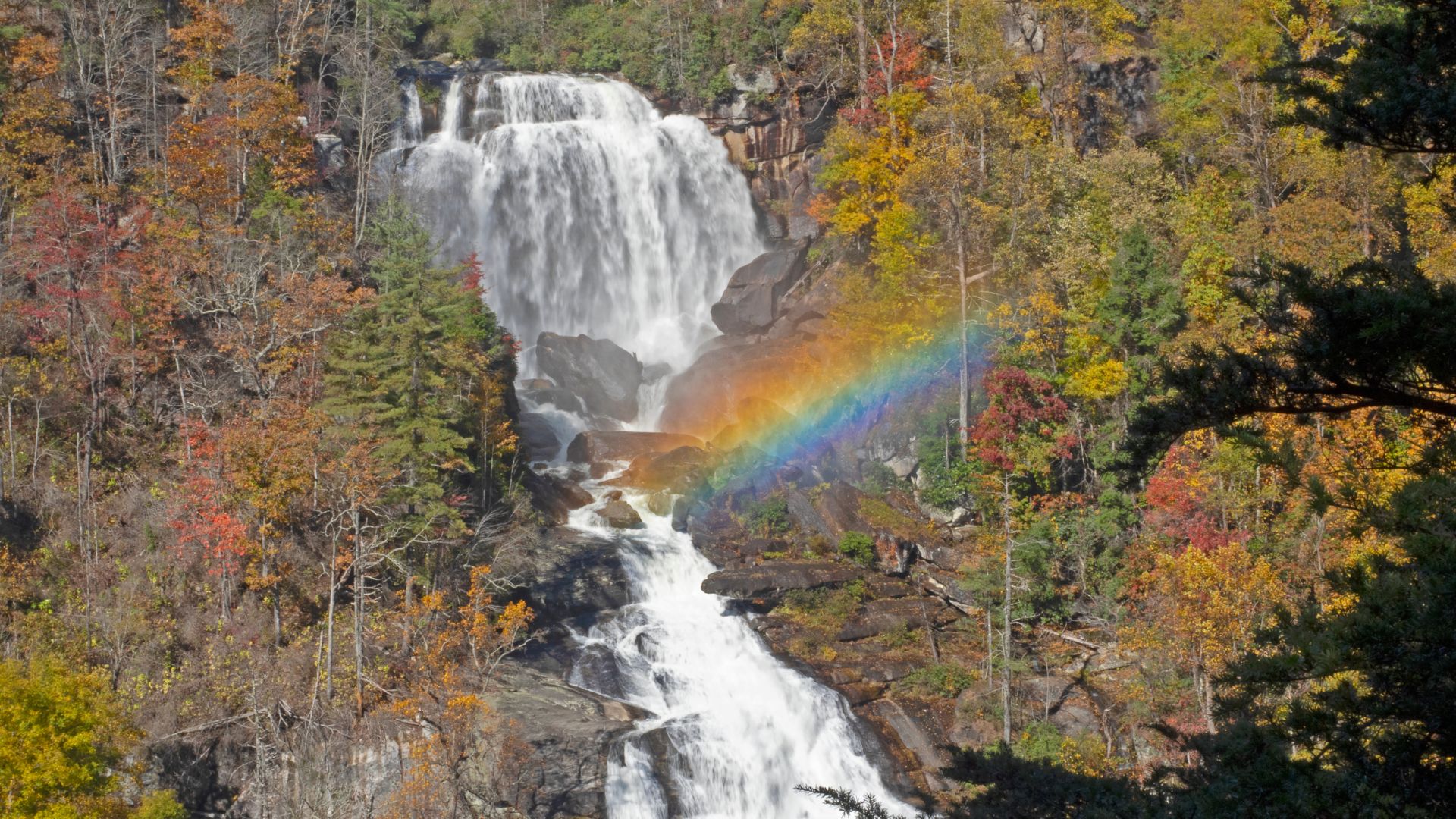
Whitewater Falls totally lives up to its hype as the tallest waterfall east of the Rockies. This monster drops 411 feet over a granite cliff straddling the North Carolina–South Carolina border.
The main viewpoint is a quick 0.2-mile stroll from the parking lot. The paved trail makes it super family-friendly.
Key Features:
- Height: 411 feet
- Trail difficulty: Easy
- Best time: Spring and fall
- Photo tip: Go in the morning for the best light
The lower falls add another 400 feet. I suggest the 1-mile hike down if you want to see both sections.
The mist keeps things cool and creates a little pocket of rare plants you won’t find anywhere else around here.
Tahquamenon Falls: Michigan’s Natural Wonder
Tahquamenon Falls is hands-down Michigan’s most impressive waterfall. The upper falls stretches 200 feet wide and drops 48 feet into the amber-tinted Tahquamenon River.
That brown color? It comes from tannins in the cedar swamps upstream. The contrast with the white foam and deep green forest is striking.
The upper falls are just a quarter-mile walk from the parking area. A boardwalk and viewing deck make it easy to get great shots.
Trail Info:
- Upper falls: 0.25 miles
- Lower falls: 1 mile
- Trail: Paved and boardwalk
- Extras: Visitor center and gift shop
The lower falls are a set of five smaller cascades, linked by hiking trails. Fewer crowds, more photo ops.
Peak fall colors hit in late September. The combo of amber water and fiery leaves is pretty spectacular.
Amicalola Falls: Georgia’s Premier Hiking Destination
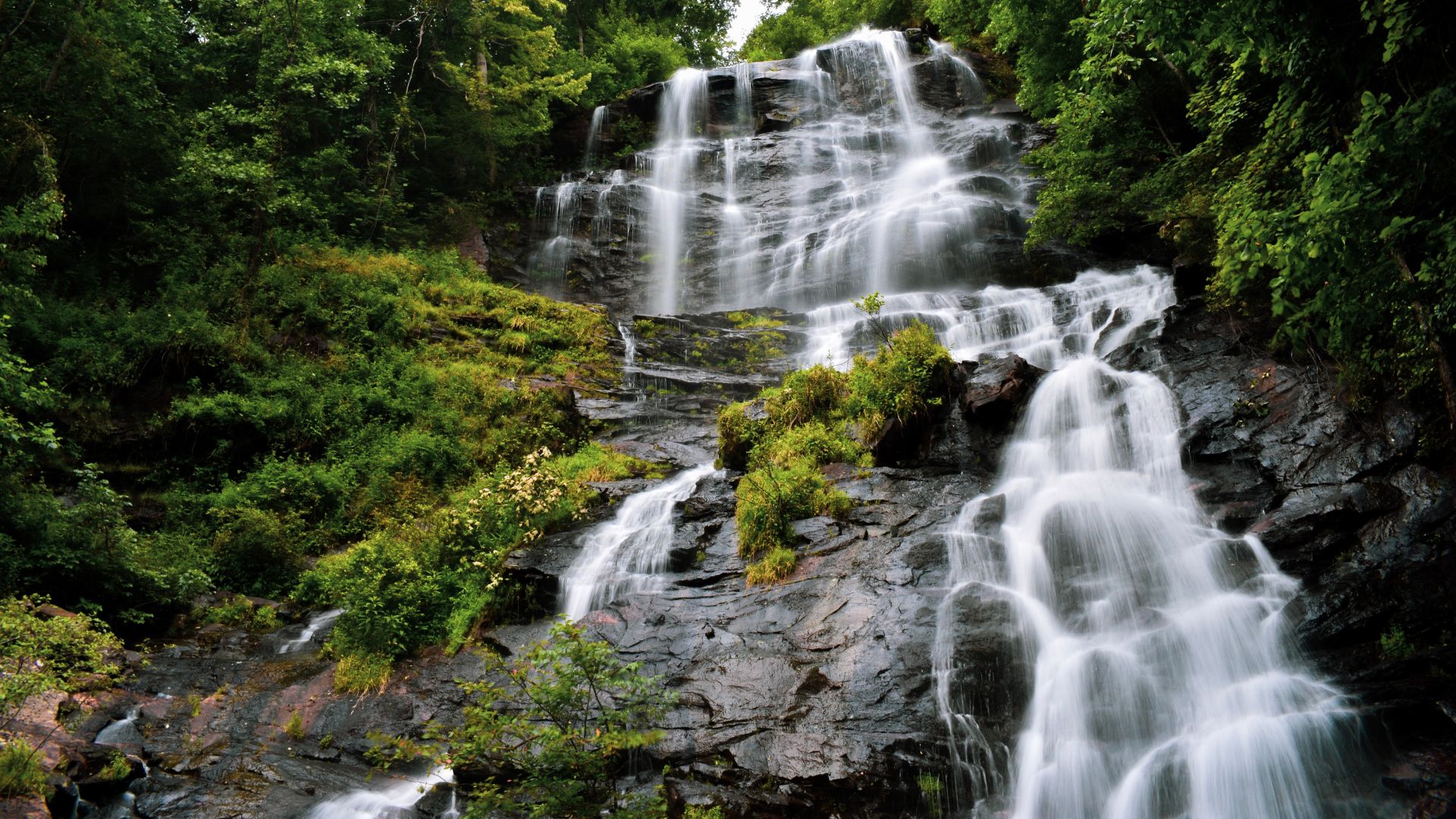
Amicalola Falls towers 729 feet, making it Georgia’s tallest and one of the Southeast’s most-photographed waterfalls. The name means “tumbling waters” in Cherokee, which fits perfectly.
Take the 0.9-mile West Ridge Trail to the top if you’re up for it. There are 604 steps and plenty of platforms for breaks (and photos).
Trail Options:
- Base to top: 0.9 miles, tough
- Reflection Pool Trail: 0.3 miles, easy
- Creek Trail: 1 mile, moderate
The reflection pool at the bottom is where most postcard shots come from. Early mornings are best for light and fewer people.
The falls run all year, but spring snowmelt makes for the biggest splash. Summer can be underwhelming if there’s been a dry spell.
Ruby Falls: The Subterranean Marvel
Ruby Falls is a waterfall experience like no other—it’s 1,120 feet underground inside Lookout Mountain, Tennessee. This 145-foot cascade flows through a limestone cave discovered back in 1928.
The guided elevator tour is a little touristy, but I still found it fascinating. The 70-minute journey covers the cave walk and the waterfall itself.
Visit Details:
- Depth: 1,120 feet
- Waterfall: 145 feet
- Tour: 70 minutes
- Reservations: Required
Colored lights make the falls glow in all sorts of hues. Some people prefer their waterfalls outdoors, but Ruby Falls is unforgettable and totally Instagrammable.
The cave stays a steady 60 degrees, so it’s a great escape from summer heat or winter chill.
You’ll also see other cool cave features like stalactites and flowstone. It’s a bonus adventure for geology fans.
Spectacular Hidden Gems for Hikers
Sometimes the best waterfalls are the ones most folks miss. These hidden gems demand a bit more effort—think longer hikes, off-the-beaten-path trails, and some real solitude. But wow, do they deliver on scenery and that feeling of discovery.
Lower Calf Creek Falls: Utah’s Desert Oasis
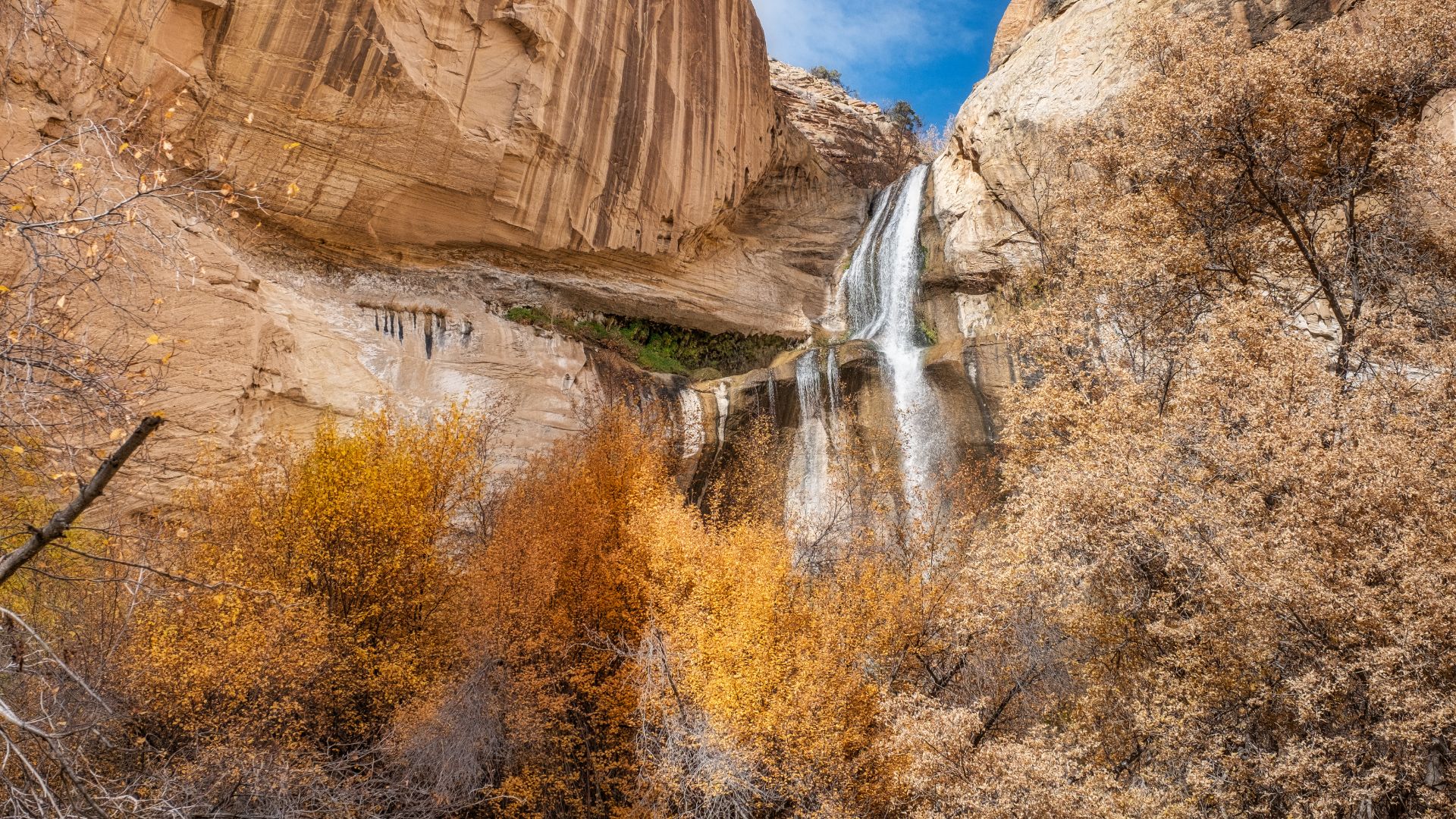
Lower Calf Creek Falls surprised me the first time I saw it. Picture a 126-foot waterfall tumbling into a bright emerald pool, all tucked away between those classic red Navajo sandstone cliffs.
Getting there means hiking a 6-mile round-trip trail that follows Calf Creek through Glen Canyon National Recreation Area. The sandy path winds past ancient petroglyphs and the occasional beaver dam—unexpected company in the desert.
Trail Details:
- Distance: 6 miles round-trip
- Difficulty: Moderate
- Best time: Spring and fall
- Water: Bring plenty—trust me, it’s dry out there
That pool at the base? It stays icy cool all year. I couldn’t resist a swim, even though the water nearly took my breath away.
The contrast of red rock and green brush looks unreal, especially if you’re into photography. Mornings around 10 AM, sunlight hits the falls just right.
Mist from the waterfall supports a little oasis of green that feels almost out of place in this dusty landscape.
Palouse Falls and the Basalt Cliffs
Palouse Falls drops 198 feet over wild basalt cliffs in southeastern Washington. I stood at the edge and watched water roar into a canyon carved by ancient floods—honestly, it’s hard to imagine the scale until you’re there.
The walk from the parking lot to the main overlook barely takes five minutes. From there, you get front-row views and the best angles for photos.
Key Features:
- Height: 198 feet
- Rock type: Columbia River basalt
- Access: Easy quarter-mile walk
- Peak flow: Spring snowmelt
Those cliffs? They’re layers of old lava flows, stacked like a giant’s layer cake. I went in spring when snowmelt made the falls thunder.
By summer, the waterfall thins out. If you’re chasing that golden hour glow, late afternoon lights up the canyon walls.
Snoqualmie Falls: Washington’s Misty Icon
Snoqualmie Falls crashes down 268 feet through a misty gorge, just a short drive from Seattle. I found it’s both an easy sightseeing stop and a legit hiking challenge, depending on your mood.
The upper viewpoint sits right by the parking lot. You don’t even need to break a sweat to get those classic waterfall shots.
Access Options:
- Upper deck: No hiking required
- Lower trail: 1.5 miles round-trip
- River level: Steep descent required
- Parking: Free with facilities
If you want to get closer, the lower trail drops you into dense forest and spits you out at the river’s edge. Down there, the falls feel even bigger, and the mist sometimes paints rainbows in the afternoon sun.
I always snap my best photos from river level—there’s just something about that angle. The evergreen forest frames the whole scene, and the green never fades, even in winter.
Bridal Veil Falls: Scenic Beauty and Accessibility
Bridal Veil Falls in North Carolina’s DuPont State Forest offers something special. The 45-foot ribbon of water spills over a rocky ledge, and you can actually walk behind it.
The trail’s an easy 1.4-mile round-trip, mostly flat and winding through hardwood forest. No need to worry about steep climbs here.
Trail Information:
- Distance: 1.4 miles round-trip
- Elevation gain: 200 feet
- Trail surface: Well-maintained dirt path
- Family-friendly: Yes
They named the falls for the way water drapes over the rocks like a wedding veil. I edged behind the curtain on a narrow ledge and got some of my favorite waterfall shots.
Spring brings wildflowers and the strongest flow, but even in summer, the falls keep running thanks to mountain springs. The forest here gives great light for photos all day.
Easy access means you don’t have to lug heavy camera gear far—huge bonus.
Planning Your Waterfall Hike and Photography Tips
Getting the perfect waterfall shot isn’t just luck. I’ve learned to check weather and water flow before heading out—both can make or break your day.
Essential Gear and Safety Considerations
I never hit the trail without a waterproof camera bag. Waterfall mist can fry a camera faster than you’d think.
Here’s my go-to gear list:
- Sturdy hiking boots with solid grip
- Tripod for those silky long exposures
- Polarizing filter to cut glare
- Extra batteries (cold and humidity zap them)
- Microfiber cloths for wiping away spray
Safety’s always at the top of my mind. I check trail conditions ahead of time and let someone know where I’m going. Wet rocks near waterfalls can be treacherous.
Even on short hikes, I pack a first aid kit and a headlamp. Mountain weather turns on a dime, and you don’t want to get caught unprepared.
Best Times of Year to Visit
Spring is prime time for most American waterfalls. Melting snow feeds the falls, so April to June usually delivers the biggest show.
Fall colors look incredible, but water levels drop. Some waterfalls—Yosemite’s seasonal ones, for example—can dry up by late summer.
If you want crowd-free photos, get there early. I like to arrive before 8 AM at popular spots like Multnomah Falls. The light’s softer, too.
Golden hour’s always magical, but honestly, mist and shifting sunlight can create wild effects at any time. I plan my timing based on where the sun hits the falls, and sometimes just go with my gut.
Permits and Access: What to Know Before You Go
Let’s talk about permits—some waterfalls, like Havasu Falls in Arizona, make you plan way ahead. You’ll need to snag a reservation months in advance since it sits on tribal land.
When I head to national parks, I usually pay an entrance fee, but for most day hikes, there’s no need for extra permits. Still, I always check the park’s website first because closures or random restrictions can pop up.
Parking can get tricky at the more popular falls. I’ve learned to look up alternative transportation and, honestly, arriving early makes all the difference during busy seasons.
If you’re eyeing a waterfall on private land, things get a little unpredictable. Sometimes, you have to ask the landowner for permission before you can even start your hike.
