
When I wandered through the ancient streets of Syracuse in Sicily, I honestly felt like I’d stepped back in time. This city once stood as one of the most powerful Greek colonies in the Mediterranean.
The Greek Theatre sprawls across the hillside, measuring a whopping 138 meters across. Back in its heyday, about 15,000 people would cram in to watch legendary playwrights.
This theater dates to the 6th century BC and claims the title of the largest Greek theater of its kind. Even now, people flock here for performances, soaking up drama in the same spot where crowds did over 2,500 years ago.

What really grabs me about Syracuse is the mix of monumental architecture and clever engineering. As I explored the Archaeological Park, I stumbled onto the story of how ancient Syracusans rerouted underground rivers and streams, pulling water from as far as 15 miles away. Their city, bursting with 100,000 people, thrived thanks to this hidden network.
Beneath the streets, these waterways made Syracuse a powerhouse in the fifth century BC. It’s wild to think about all that history just under your feet.
Unveiling Syracuse: A Journey into Ancient Sicily
Syracuse draws you in with its blend of Greek heritage, dramatic coastline, and ancient treasures. The theaters and mysterious underground rivers tell stories that reach back nearly three millennia.
Historical Significance of Syracuse
Corinthian settlers founded Syracuse in 734 BC, and the city quickly shot up to rival Athens in power and size. At its peak, Syracuse stood toe-to-toe with the greatest cities of the ancient world.
Under rulers like Hiero I, Syracuse blossomed. He commissioned public works, including that massive theater still standing today.
As I walked the city, I could sense all the layers of civilization beneath my feet. Syracuse passed through Greek, Roman, Byzantine, Arab, and Norman hands. Each era left its own mark on the city’s buildings and culture.
Archimedes, the genius mathematician, called this place home. His inventions reportedly helped defend the city during Roman sieges.

Exploring the Island of Ortigia
Ortigia is the cozy heart of Syracuse, perched on a little island linked to the mainland by short bridges. I spent hours here, getting lost in narrow medieval lanes that suddenly reveal sweeping sea views.
The Piazza del Duomo really wowed me. The cathedral rises right on top of a Greek temple, and you can spot original Doric columns built into its walls.
Markets in Ortigia burst with energy. I started my mornings with a granita, watching fishermen haul in their catch at the harbor.
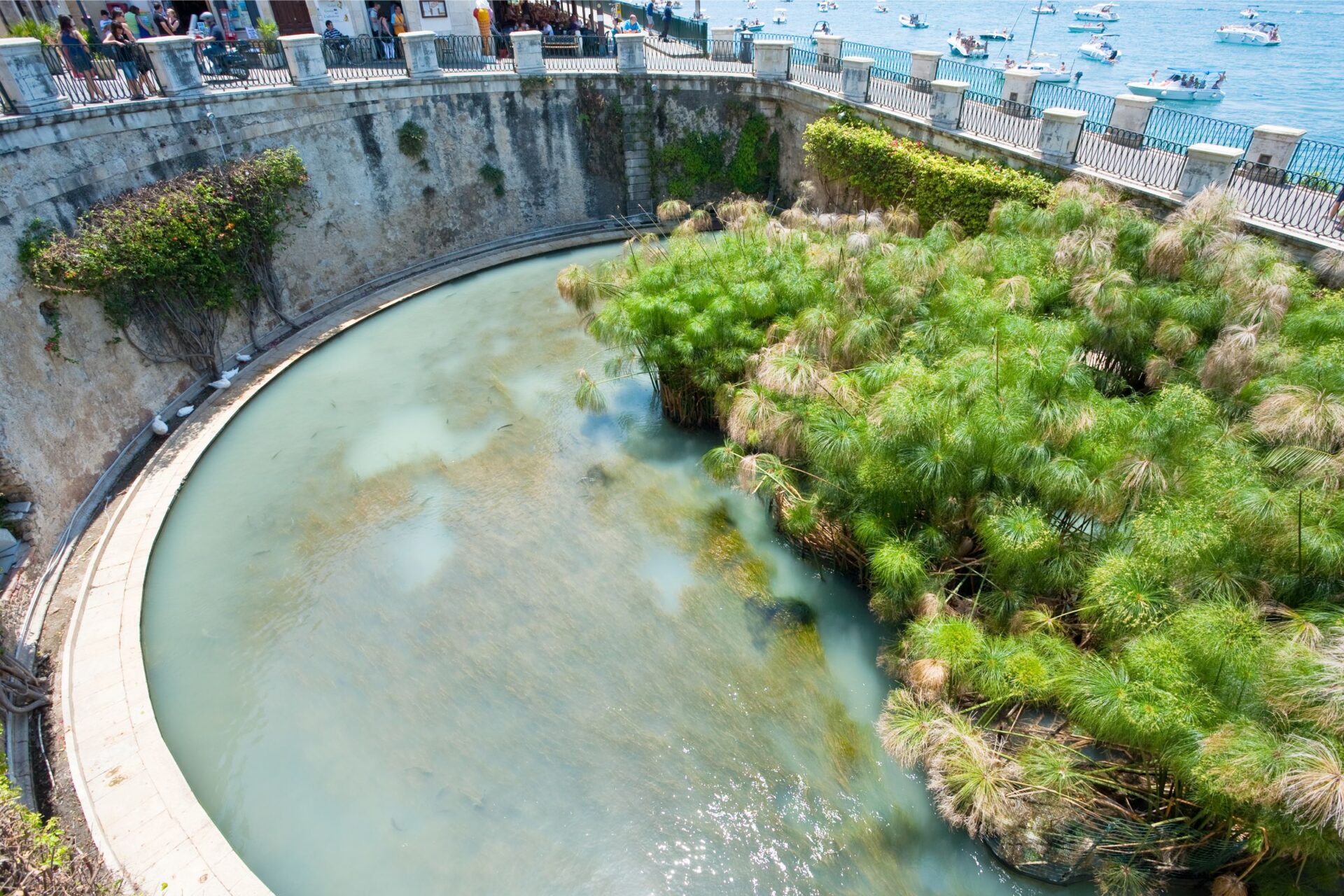
The Fountain of Arethusa, a freshwater spring pouring into the sea, ties directly to Greek myth. Legend says the nymph Arethusa fled here and transformed into these waters.
UNESCO World Heritage Recognition
In 2005, Syracuse snagged UNESCO World Heritage status for its exceptional Greek and Roman monuments. The Neapolis Archaeological Park and its huge Greek Theater get special mention, with seating for 15,000.
Ancient quarries like the “Ear of Dionysius” highlight Syracuse’s geological quirks. These stone pits built the old city and later doubled as prisons.
UNESCO’s recognition has helped protect these treasures and brought in sustainable tourism. I noticed how carefully they manage visitor numbers at key sites to keep things preserved.
Syracuse’s blend of Greek colonial history, religious shifts, and jaw-dropping architecture makes it a standout example of Mediterranean heritage.

The Greek Theatre of Syracuse: A Timeless Wonder
The Greek Theatre of Syracuse is honestly one of the most spectacular performance venues from the ancient world. Carved right into Temenite Hill, it pairs clever engineering with natural beauty. No wonder it’s captivated people for centuries.
Architecture and Layout of Teatro Greco
The first time I saw the Greek Theatre, I couldn’t believe how it fit so perfectly into the slope of Temenite Hill. Built in the 5th century BCE and spruced up in the 3rd, this teatro greco ranks among the largest ever.
The semicircular cavea—basically, the seating—fans out in nine sections, divided by eight aisles. What really struck me was how the Greeks just carved straight into the rock, using the hill itself as support.
At the top, there’s a walkway called the “diazoma” that splits the upper and lower seats. The orchestra, a circular space for the chorus, sits at the bottom. Behind that, the stage building (skene) would have stood.
Dramatic Performances and Cultural Life
Wandering through the theater, I kept picturing the vibrant cultural life that once filled this place. In ancient Greek times, crowds gathered for dramatic competitions and performances by legends like Aeschylus—some of his plays even premiered here.
Fifteen thousand spectators would settle in for tragedies, comedies, and satirical plays. These weren’t just shows; they were major religious and civic events tied to festivals for Dionysus, god of wine and theater.
Performances usually kicked off at sunrise and went on all day. The elite got the best seats down front, while women and non-citizens sat up higher.
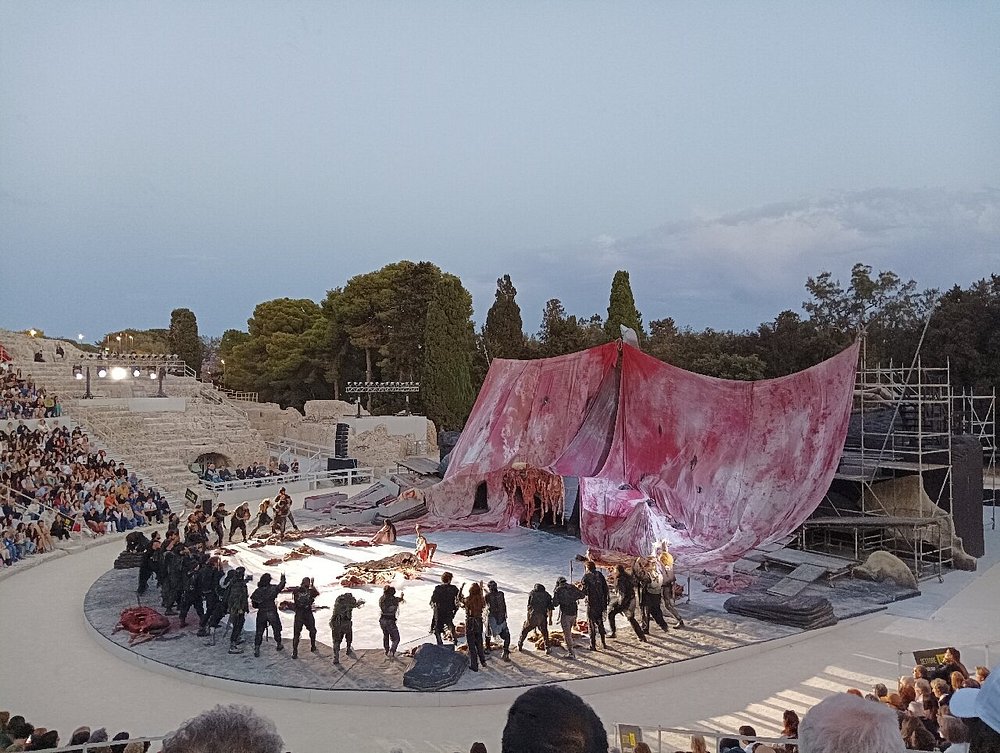
These days, the National Institute of Ancient Drama keeps the tradition alive, staging Greek plays here every summer. It’s kind of amazing—2,400 years of theater and counting.
Engineering Feats and Acoustics
The acoustics here are wild. I stood in the orchestra, spoke in a regular voice, and people at the very top—almost 60 meters away—could hear me clearly.
Greek engineers didn’t leave this to chance. They designed the curved seating and picked materials to bounce sound right to the audience, cutting down on echoes.
Beneath the orchestra, they carved a water drainage system. Small channels collect rainwater and send it away, so the theater doesn’t flood during Sicily’s rainy spells.
What’s really cool is how the Greeks used the hill’s natural shape to make the setting even more dramatic. The view of the sky and landscape behind the stage turns every performance into something unforgettable.
Modern-Day Events and Visitor Tips
If you’re planning a visit, try to get there early to dodge crowds and the blazing Sicilian sun. The theater opens daily from 9am to 6pm, and a ticket (about €10) covers the whole Neapolis Archaeological Park.
From May to July, you can catch the annual Greek theater festival. Watching a tragedy here, where it might have premiered 2,500 years ago, is just surreal.
For sweeping photos, climb up to the higher seats. You’ll get killer views of both the theater and the city. Bring water, sunblock, and good shoes—the ancient steps can get slippery.
At sunset, the place turns magical as golden light washes over the limestone. I’d try to time your visit for that if you can. Audio guides are available in several languages and add some great historical tidbits.
The Mysterious Underground Rivers and Caves
Hidden rivers snake through the limestone under Syracuse, shaping the city in ways you’d never guess from above. These underground rivers and cave systems did more than just supply water—they played roles in daily life and political intrigue.
Formation and Role in Ancient Syracuse
Over thousands of years, water wore away the soft limestone, carving out caves and tunnels beneath the city. The Greeks didn’t just leave it at that—they engineered an impressive aqueduct system to channel these waters.
Fresh water traveled through man-made channels carved in rock, reaching the city center from nearly 15 miles away. This feat meant Syracuse always had water, even during sieges.
These waterways became part of the city’s culture, too. Some passages doubled as secret escape routes or hiding spots. Others turned into sacred spaces tied to local gods.
The Ear of Dionysius: Orecchio di Dionisio
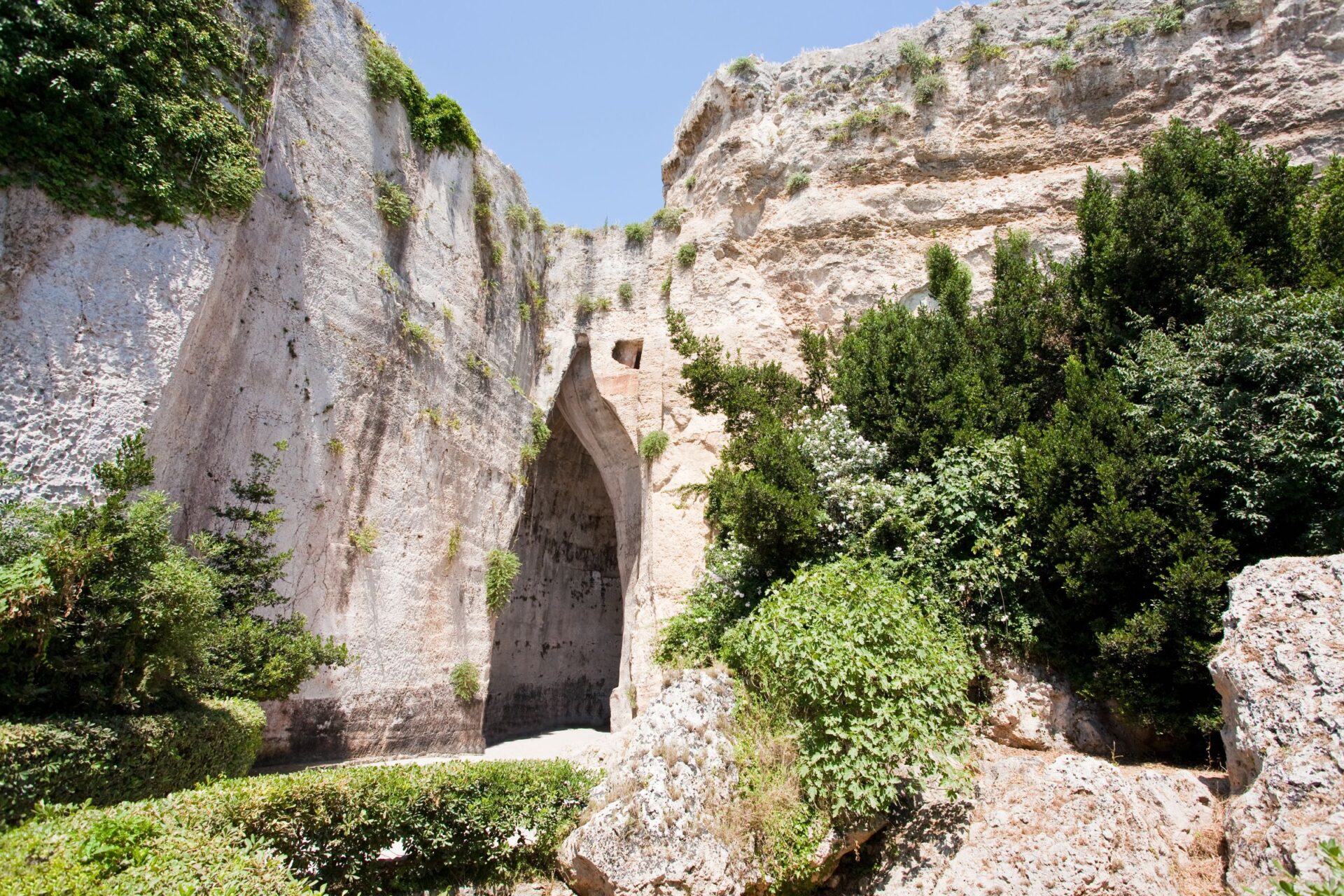
My favorite cave has to be the Ear of Dionysius (Orecchio di Dionisio). This man-made limestone cave stands 23 meters tall and twists in an S-shape, looking a lot like a human ear from above.
The tyrant Dionysius supposedly used it as a prison. Local guides say he’d stand near the entrance and listen in on prisoners’ whispered conversations, thanks to the cave’s crazy acoustics.
When I visited, even the softest whisper echoed through the cavern. The cave stretches about 65 meters deep into the cliff face of the old quarry, Latomia del Paradiso.
Legends and the Age of Tyranny
During the city’s Age of Tyranny (5th-4th centuries BCE), rulers like Dionysius I used these underground spaces for power and intimidation. Legend claims Dionysius locked up poets and philosophers here, letting the echoes of their suffering serve as warnings.
The “ear” cave supposedly let guards eavesdrop on prisoners, though historians still argue about the details.
It’s fascinating how these caves became symbols of Syracuse’s tangled political history. They saw tyrants rise and fall, offered shelter during sieges, and eventually turned into cultural landmarks.
Today, visitors get a glimpse of the city’s engineering genius—and its darker side—by venturing into these underground wonders.
Other Ancient Marvels of Syracuse
Syracuse has plenty more to show off beyond its famous theater and underground rivers. The archaeological park bursts with structures from both Greek and Roman times, each with its own story.
Roman Amphitheater: Anfiteatro Romano
Inside the park, the Roman Amphitheater really caught my eye. Built in the 3rd century CE under Emperor Augustus, it stretches about 140 meters long. Unlike the Greek theater, this one was made for gladiator battles and wild animal hunts.
They carved much of it into the bedrock, with stone seats rising up from the central arena. Underneath, a maze of chambers once held animals and gladiators before the fights.
Most of the seats are gone now, but you can still see the shape of the arena. The amphitheater stands as a reminder of how Syracuse changed under Roman rule, embracing new forms of entertainment.
Altar of Hieron II: Ara di Ierone II
Near the Greek Theater, the Altar of Hieron II stands out as one of Sicily’s most jaw-dropping monuments. This limestone altar is massive—198 meters long and 23 meters wide—making it one of the biggest ever built in the ancient world.
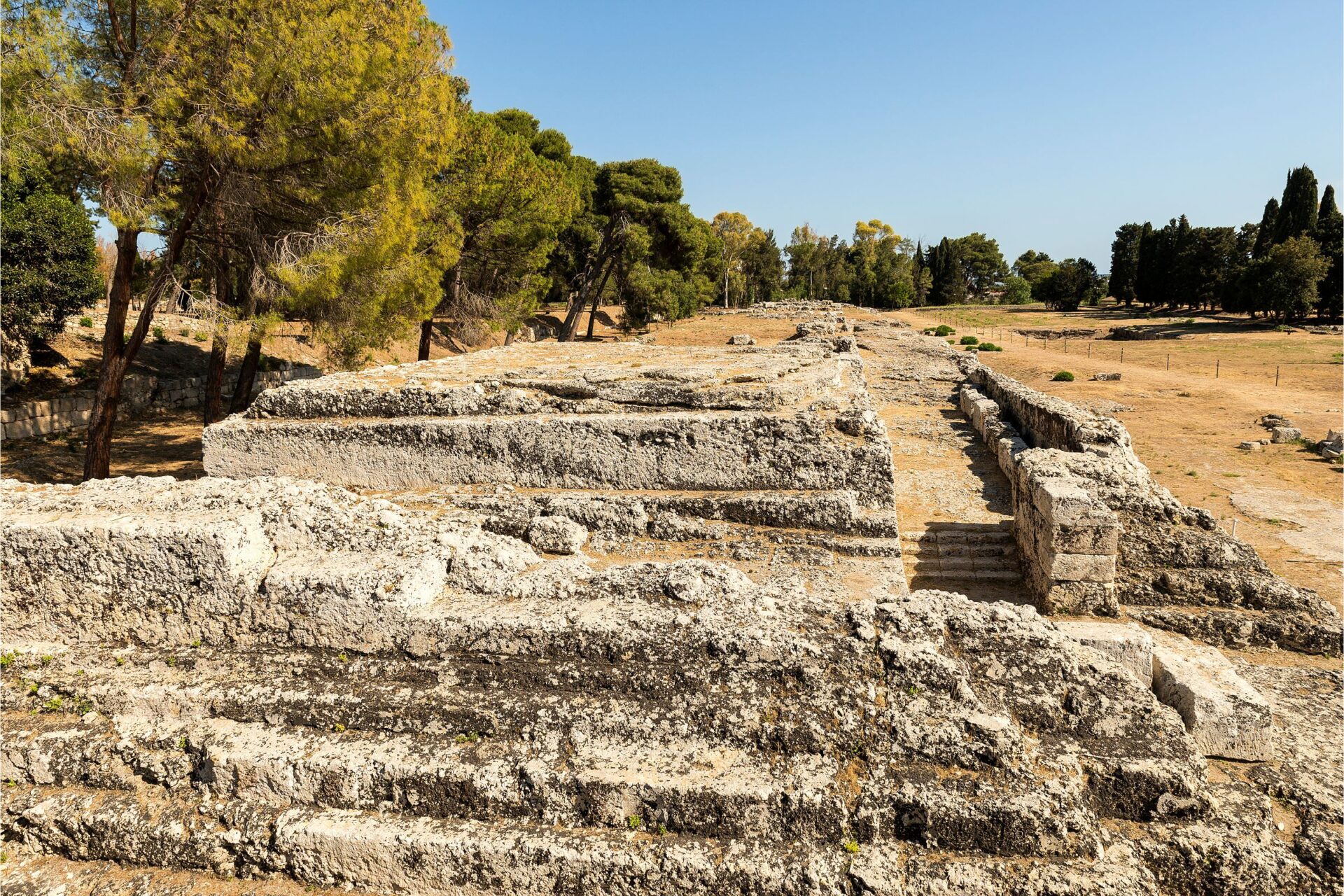
King Hieron II had it built around 240-215 BCE, dedicating it to Zeus Eleutherios (Zeus the Liberator). During the Eleutheria festival, they sacrificed up to 450 bulls at once here. That’s hard to even picture.
The altar’s platform still survives, though most decorations have vanished over time. Standing there, I could almost imagine the smoke and crowds during those epic ceremonies.
The Temple of Apollo and Classical Temples
The Temple of Apollo stands as Syracuse’s oldest Doric temple—one of the most ancient Greek religious sites in Sicily. Builders put it up around 565 BCE, and honestly, those massive columns blew me away. They’re some of the earliest stone columns you’ll find anywhere in the Greek world.
What sets this temple apart? It mixes architectural styles in a way that really shows off Syracuse’s place at the crossroads of so many cultures. Over time, people turned it into a Byzantine church, then a mosque during Arab rule, and later a Norman church.
You’ll spot other temples scattered around the archaeological site, like those dedicated to Athena (now part of the city’s cathedral) and Artemis. These sacred sites made up the spiritual core of ancient Syracuse and show just how deeply Greek religious traditions shaped the city’s character.

Cultural and Architectural Highlights
Syracuse’s streets blend ancient Greek vibes with jaw-dropping Baroque design. The layers of architecture tell the story of a city that’s always been a cultural heavyweight in the Mediterranean. Sacred spaces and lively squares still anchor community life here.
Cathedral of Syracuse and Piazza del Duomo
When I wandered into Piazza Duomo, the beauty stopped me in my tracks. This square sits at the heart of Syracuse’s old center on Ortygia Island.
The Cathedral is something else. Builders set it right on top of the ancient Greek Temple of Athena, so you can literally see history layered in its stones. Those original Doric columns? They’re still there, woven right into the cathedral’s walls.
What really fascinated me was watching the building’s story unfold over the centuries. The Greeks started it in the 5th century BC, then the Byzantines made it a church, and later the Normans and Baroque architects left their marks.
After the 1693 earthquake, the façade got some dramatic Baroque flair. Inside, I found Greek, Norman, and Baroque styles all hanging out together—surprisingly harmonious.

Baroque Architecture and Artistic Heritage
The 1693 earthquake changed everything. Afterward, Syracuse blossomed with Baroque architecture, and now those buildings are part of the Val di Noto UNESCO World Heritage site.
Everywhere I looked, I saw the Baroque touch. Balconies with fancy wrought iron, honey-colored limestone, and curving façades add drama to the streets.
Palazzo Beneventano del Bosco really stands out if you’re into Sicilian Baroque. Its balconies and quirky decorative masks caught my eye right away.
Local artisans shaped the golden limestone into buildings that seem to glow in the Mediterranean light. At sunset, the whole city takes on a warm, almost magical hue.
Church of Santa Lucia alla Badia
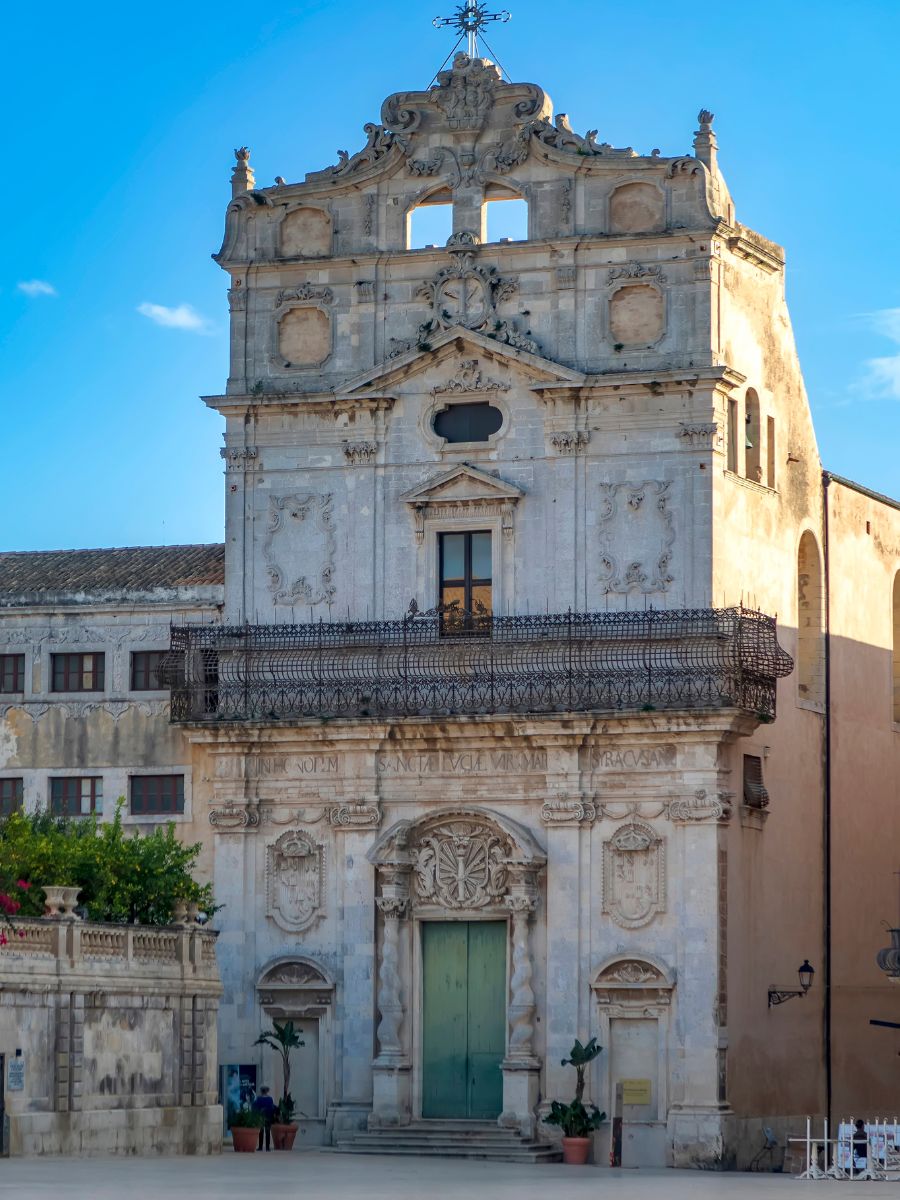
I stumbled upon the Church of Santa Lucia alla Badia tucked on one side of Piazza Duomo. It’s easy to overlook with the Cathedral nearby, but it’s just as intriguing. The church honors Saint Lucia, Syracuse’s patron, and it’s packed with both beauty and history.
The real showstopper here? Caravaggio’s “Burial of Saint Lucy” (1608). The way he plays with light and shadow makes the church feel even more solemn. Seeing it in its original setting, not a museum, gave me chills.
The façade is simple but elegant, with Baroque touches added after the big quake. Inside, marble details and religious relics make the space feel cozy yet grand.
In December, I watched the silver statue of Saint Lucia start its journey through the city from this very church.
Piazza Archimede and Urban Life
When I stepped into Piazza Archimede, I landed right in the middle of Syracuse’s daily buzz. Named for the city’s legendary mathematician, the square acts as a meeting point for locals and travelers.
The Fountain of Diana steals the show. Giulio Moschetti designed it in 1907, and it tells the myth of Arethusa turning into a spring to escape Alpheus, all thanks to Diana.
Historic buildings ring the square, with classic Baroque balconies and grand palazzi. Cafés spill out onto the sidewalk, and there’s no better spot for people-watching.
Evenings during the passeggiata, I joined locals strolling around, catching up and soaking in the cooler air. It’s a slice of real Sicilian life you don’t want to miss.

Practical Travel Insights for Exploring Syracuse
If you want to get the most out of Syracuse’s ancient wonders, a little planning goes a long way. I learned that knowing how to move through the archaeological sites and picking the right times to visit can really shape your experience.
Getting Around the Neapolis Archaeological Park
The Neapolis Archaeological Park is huge—about 240,000 square meters. Trust me, wear comfy shoes; you’ll be walking uneven paths for hours.
Tickets run about €10-13 for adults, with discounts for EU citizens under 25. That one ticket gets you into all the big sights, like the Greek Theater and the Ear of Dionysius.
There’s barely any shade, so pack water, sunscreen, and a hat—especially if you visit in summer. I always go early in the morning to dodge crowds and the worst of the heat.
Guided tours usually last 2-3 hours and add a lot of depth. Plenty of tour guides speak English and share great stories about the ancient ruins.
Must-Visit Experiences at Paolo Orsi Regional Archaeological Museum
The Paolo Orsi Museum blew me away with its collection. It’s one of Italy’s best archaeological museums, and the chronological layout makes it easy to follow Sicily’s story from prehistory up through Roman times.
Don’t skip the Greek section. The artifacts—terracotta figurines, ancient coins—bring ancient Syracuse to life in a way the ruins alone can’t.
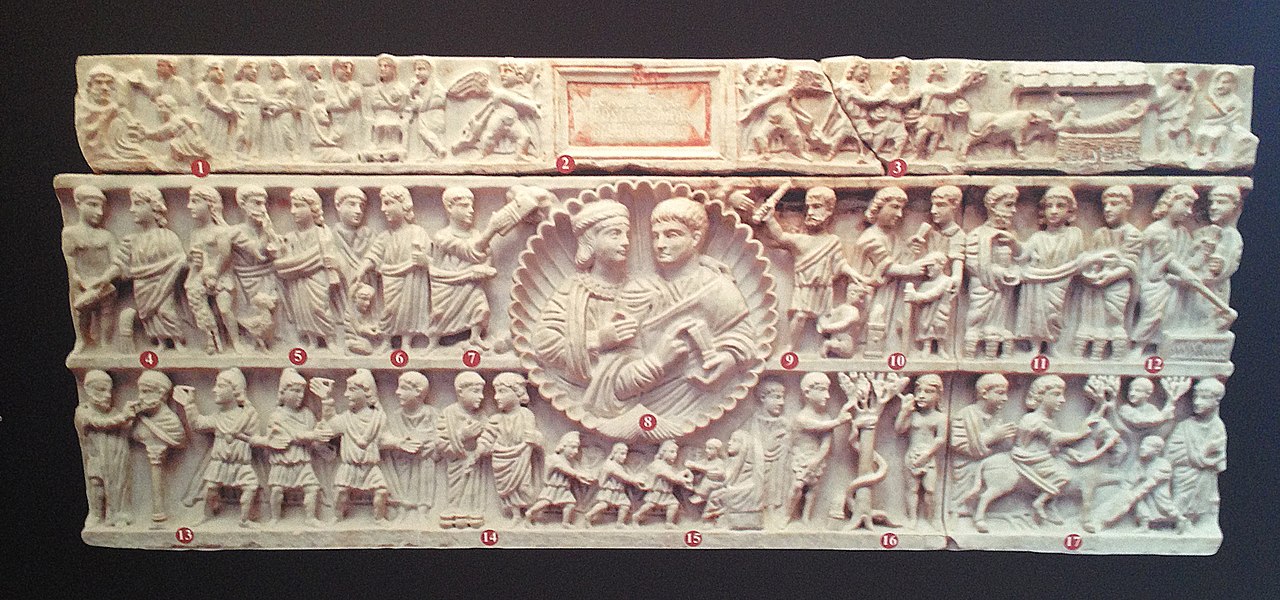
Image Source: Wikimedia Commons
I spent ages staring at the “Sarcophagus of Adelphia,” a 4th-century marble piece carved with detailed biblical scenes. It’s a real masterpiece.
Give yourself at least 2-3 hours to see everything. The audio guides (about €5) come in several languages, and I found them super helpful for understanding what I was looking at.
Best Times and Tips for Visiting
Honestly, April through June and then September to October usually bring the best weather for wandering around Syracuse’s outdoor spots. The summer stretch—July and August—gets oppressively hot, with the thermometer often shooting past 90°F.
If you show up early, say around 8:30 to 10:00 AM, you’ll catch cooler air and dodge most of the crowds. I love the golden hour just before sunset; that light at the Greek Theater is something special for photos.
The Neapolis Archaeological Park typically shuts its gates around 6:00 PM in summer and 4:00 PM in winter, but the schedule sometimes changes. I make a habit of checking the official website for up-to-date hours before heading out.
Grab a combined ticket if you can—it covers both the archaeological park and the Paolo Orsi Museum, and it’s a decent deal. One thing to remember: most sites close on Mondays, so double-check your plans.