
Watching the sun set over Athens never gets old. There’s always one place that pulls me back: Philopappos Hill.
Tucked just across from the Acropolis, this spot lets me soak in panoramic views of the city, the ancient Parthenon, and layers of glowing sky. Philopappos Hill gives you not just the best view of the Acropolis at sunset, but also a peaceful escape from the busy energy in other parts of Greece’s capital.
While most people rush to crowded viewpoints, I always choose the winding paths up this hill. The calm up here lets me enjoy both history and nature.
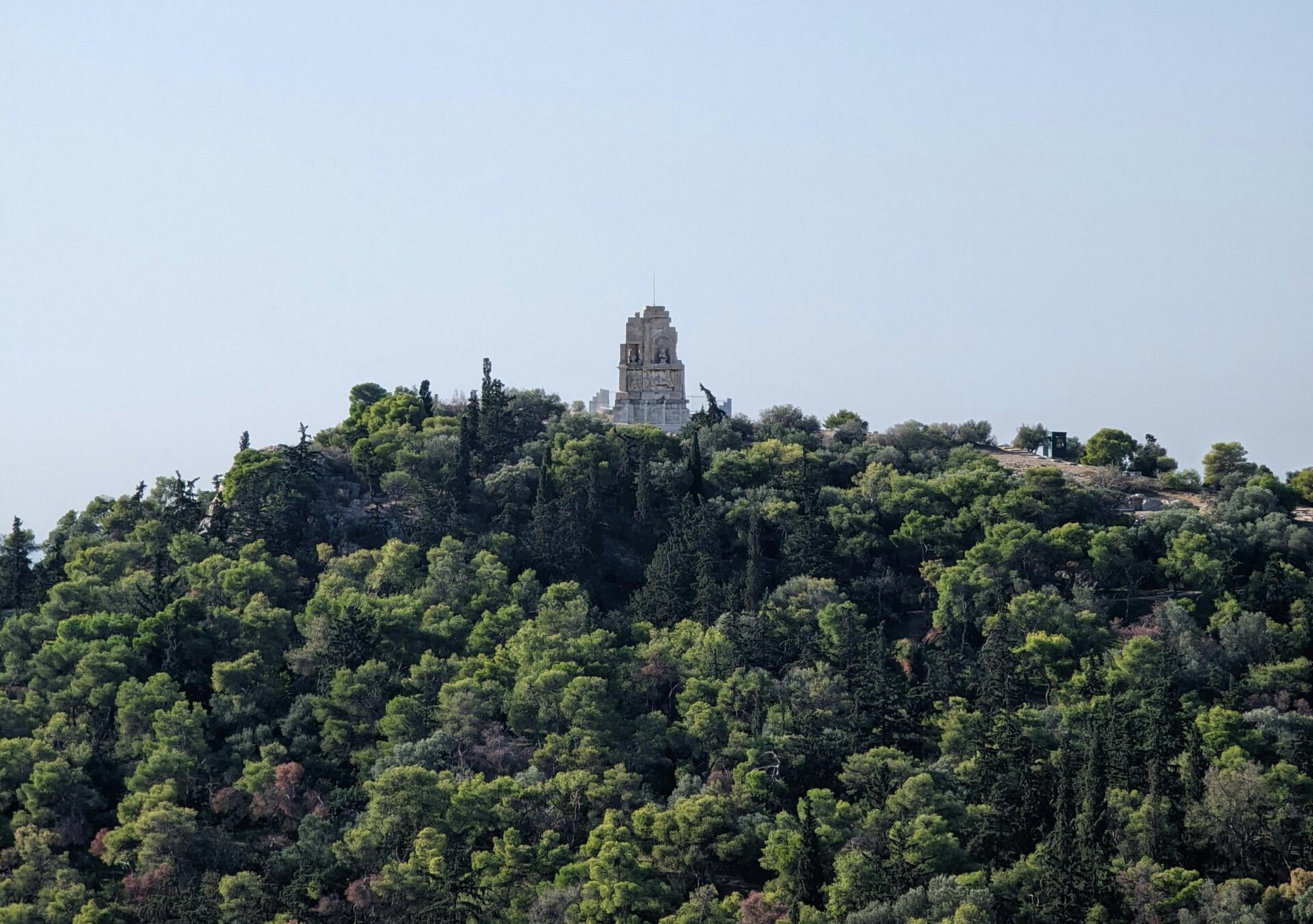
It’s not just a photo op—the mix of ancient monuments, walking trails, and local life adds a unique charm every time. If you want to end your day in Athens with something special, this is the hill I always recommend.
Why Philopappos Hill Is Athens’ Most Magical Sunset Spot
The first time I climbed Philopappos Hill, I felt like I’d found a secret above the city. As the sun dipped low, the hill revealed some of the best views Athens has to offer.
Up here, history, nature, and the glow of the Mediterranean sky just blend together.
The Alluring Panoramic View over Central Athens
Standing on Philopappos Hill, I could see way beyond the busy city center. The paths twist through pine trees and wildflowers, then suddenly open up to a wide cityscape.
Details of ancient, modern, and neoclassical buildings become clear as the sunset paints soft gold and pink shadows over the rooftops.
A simple bench on the hilltop turns into my front-row seat to Athens. I watch the city’s energy shift under evening light.
Sometimes locals picnic or chat quietly as the day cools. It’s a mellow, almost magical vibe.
Tip: Bring a light blanket and a bottle of water—there aren’t many shops nearby, and the walk up can get warm in the late sun.
Unrivaled Acropolis and Parthenon Vistas
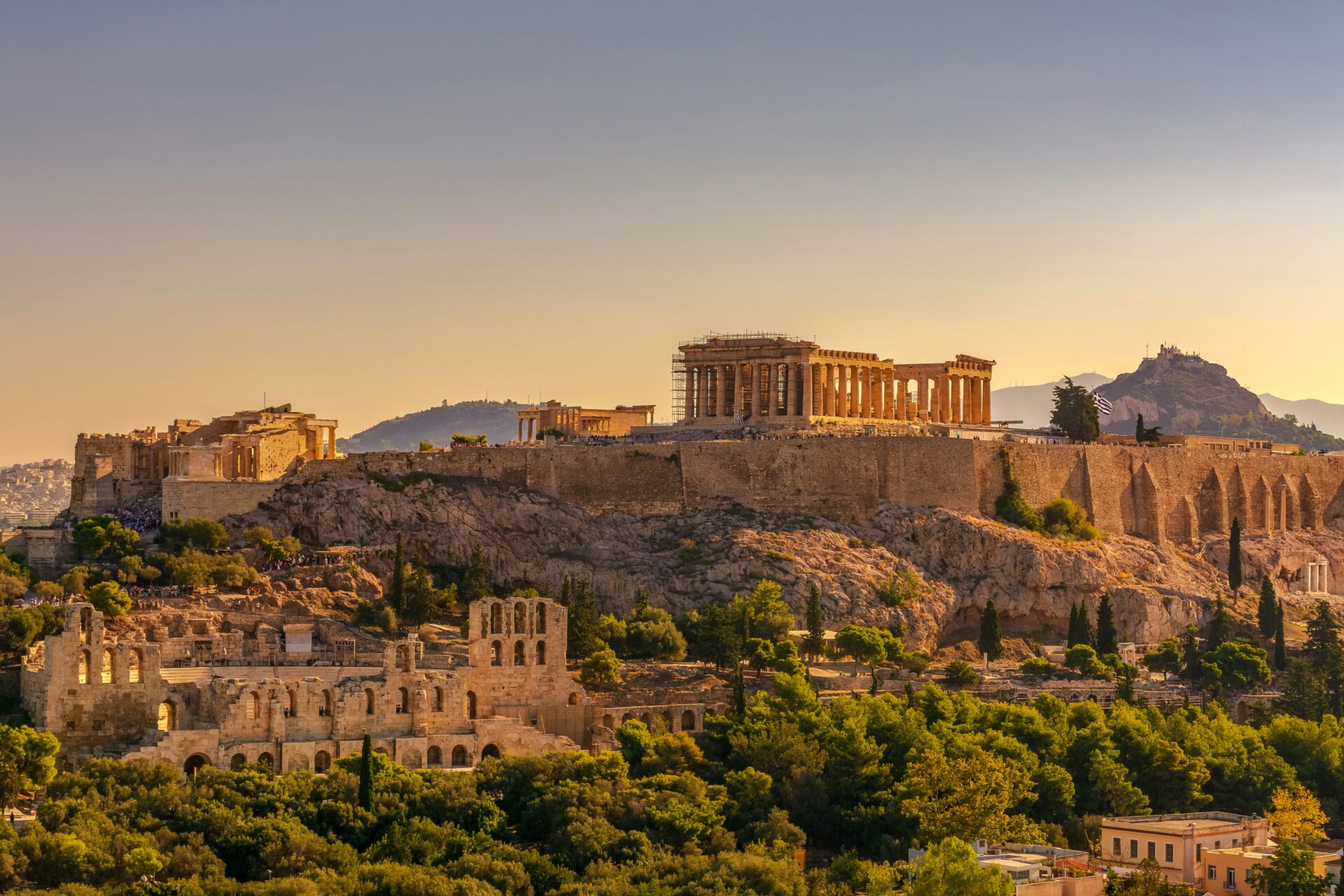
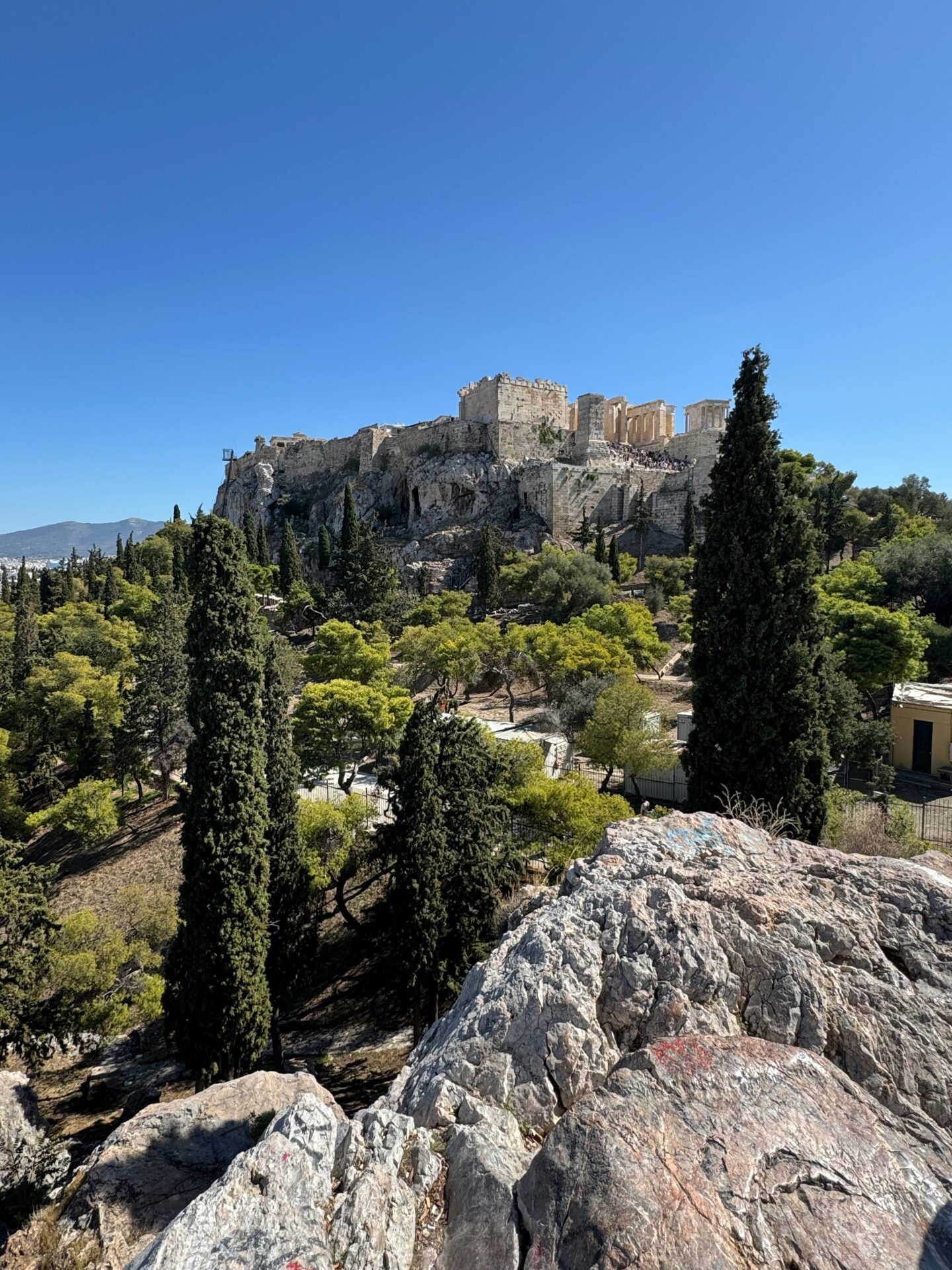
I keep coming back to Philopappos Hill for the unbeatable view of the Acropolis and its famous Parthenon. From here, the ancient citadel sits against the open sky, looking both grand and peaceful.
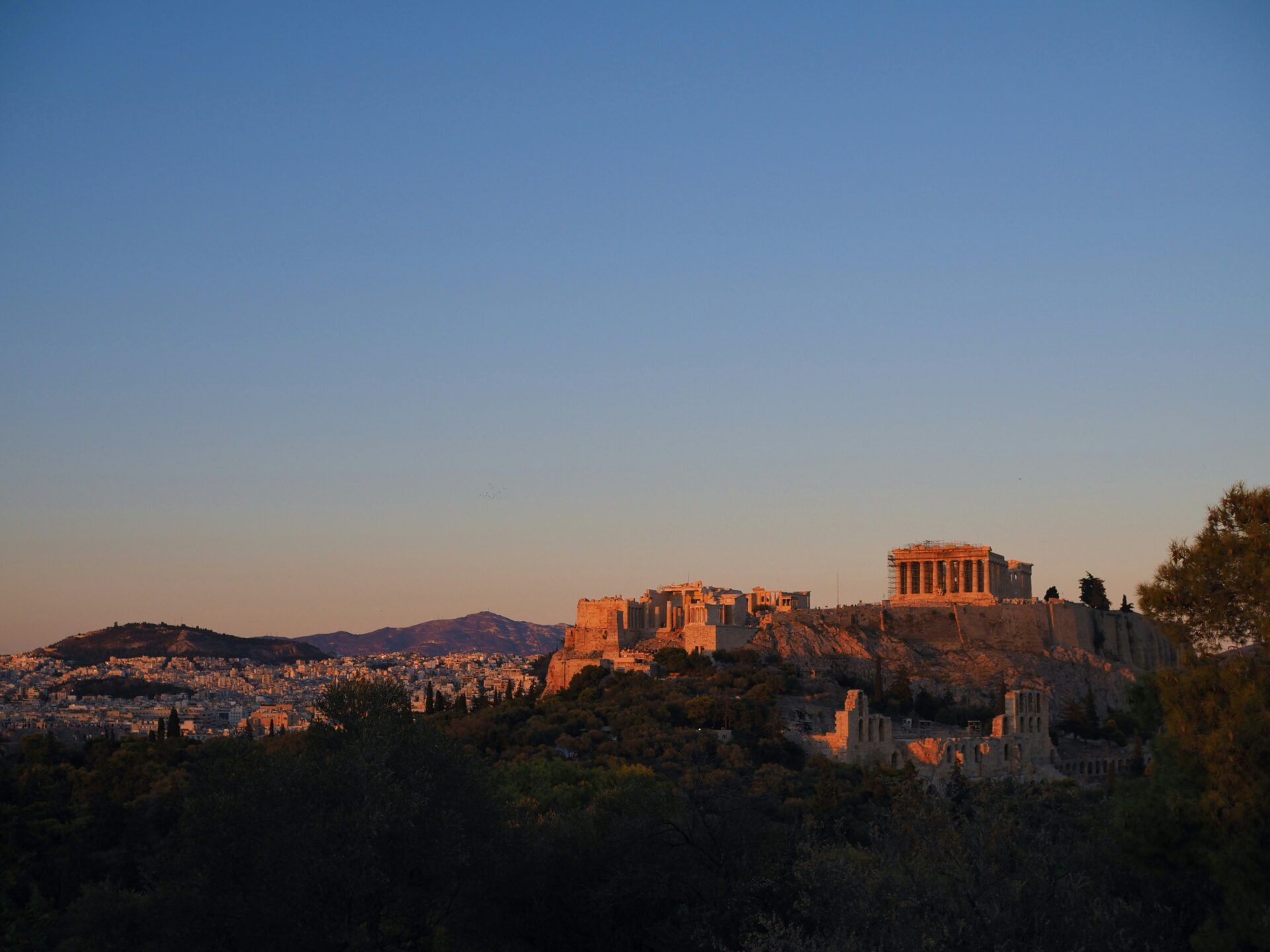
Unlike packed spots right beneath the Acropolis, this hill gives me space and a clear, unobstructed view. At sunset, the white marble of the Parthenon glows above the city.
It’s easy to imagine ancient Greeks walking these hills and seeing the same sight.
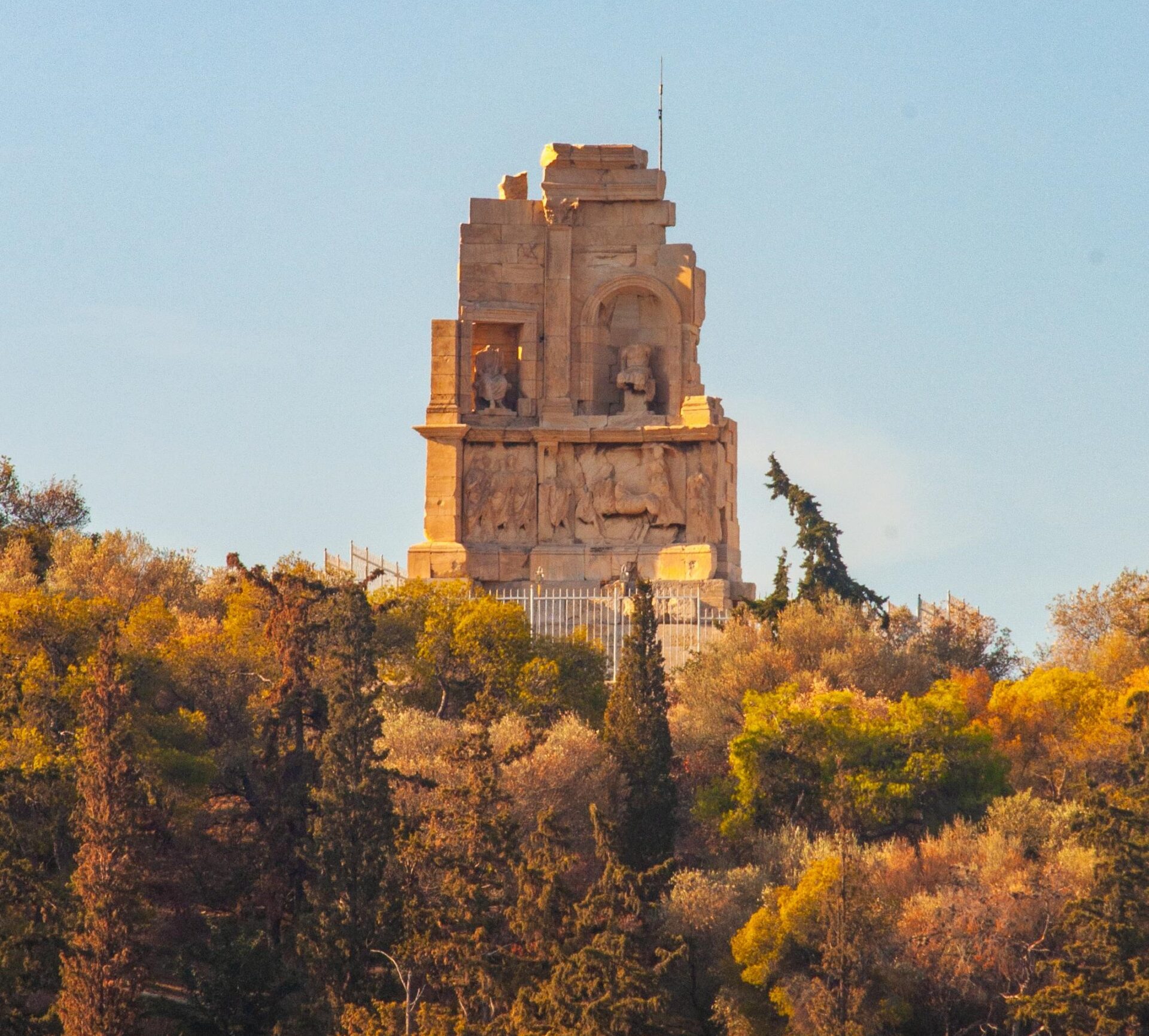
The Monument of Philopappos stands just behind me, adding another layer of history to the scene. As dusk falls, the Parthenon lights up, and the hill becomes a perfect place to take photos or just sit and reflect.
Beyond the Acropolis: Sights Straight to the Sea
When I turn away from the Acropolis, the panorama keeps going all the way to the blue edge of the Mediterranean. On clear days, I watch sunlight stretch across the city and sparkle over the Saronic Gulf.
Sometimes, faint outlines of Greek islands appear on the horizon. It’s a reminder of how close Athens is to the sea and its long seafaring history.
This open view gives a sense of freedom and space, with city, mountains, and coast all strung together at sunset.
If you’re lucky, you’ll spot boats heading toward the islands, their white sails catching the last light. Moments like this always remind me how Athens sits at the center of both ancient land and sparkling sea.

Exploring Philopappos Hill: History, Nature, and Culture
Philopappos Hill in central Athens is one of those places where every path and monument seems to whisper stories from the past.
Hiking to the sunset viewpoint draws plenty of people, but what sticks with me is how much more this hill offers, from ancient marble architecture to wild natural corners.
The Marvel of Philopappos Monument and Roman Influence
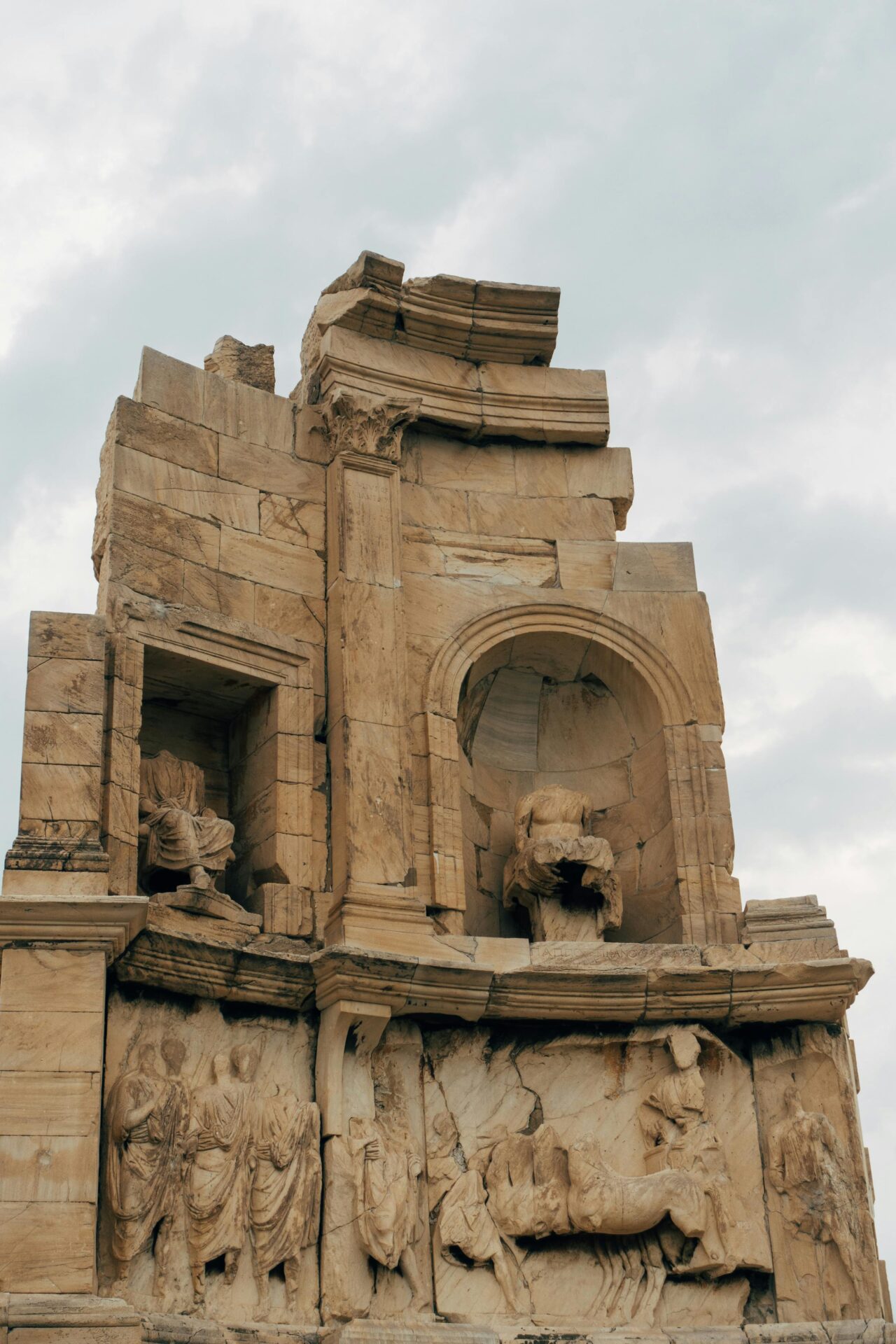
At the heart of the hill stands the Philopappos Monument, a grand marble tomb for Gaius Julius Antiochus Epiphanes Philopappos. The monument shows Rome’s influence over ancient Athens, blending Greek style with Roman architecture in a way that’s both beautiful and rare.
I look up at the inscriptions and sculpted reliefs and feel the history. The monument’s location isn’t random—it stands where ancient Athenians could see and honor Philopappos, a prince and Roman benefactor.
From the top, views of the Acropolis and the Roman Agora make it clear why they chose this spot for such a tribute.
Excavations around here have uncovered fragments of ancient roads and walls. Walking these paths, I feel connected to the city’s layered past.
Hiking the Trails: A Local’s Guide
Philopappos Hill feels like a hidden gem—a place where I can get away from the typical tourist crowds around the Roman Agora or Parthenon. The network of trails makes it perfect for hiking at your own pace.
Each path has its own feel. Some wind through groves of pine trees and wildflowers, while others pass old stone benches where locals sip coffee from thermoses.
A few trails climb quickly to the top, with rocky steps carved into the marble hillside. Others meander through shaded clearings, perfect for a small picnic.
My advice? Pack water and start your walk just before sunset. The city lights up below you, with the Acropolis bathed in gold.
Nature and Design: Flora, Fauna, and Secret Paths
Nature lovers will find Philopappos Hill inspiring. Unlike manicured city gardens, the hill feels wild and welcoming, thanks to native plants and smart landscaping that’s lasted for centuries.
I see olive, pine, and cypress trees everywhere, with bursts of yellow and purple wildflowers tracing the trails.
Birdsong is a constant here. I spot small hawks gliding above and bright songbirds hopping through the brush.
The paths themselves—some hidden behind old marble slabs and other relics—make the walk feel like a gentle adventure. If you follow the quieter trails, you might stumble across ancient stone ruins peeking through the grass.
It’s a reminder that this blend of nature and architecture didn’t just happen by accident, but through careful, timeless design.
How to Make the Most of Your Visit
Catching the Athens sunset from Philopappos Hill is all about timing, preparation, and a little bit of the right gear. A bit of planning and practical know-how can turn a scenic evening into a real highlight of any trip to central Athens.
Planning the Perfect Sunset Itinerary
I like to arrive at Philopappos Hill about an hour before sunset to give myself time to explore. Walking up the hill, I pass ancient ruins and winding trails—it’s not just about the view, but also the journey through history.
There’s no need for a ticket, since Philopappos Hill is a public park and open to all. If you want to visit nearby archaeological sites, like the Acropolis, check ticket details earlier in the day—sunset is for the hill.
I always check the local sunset time (it changes through the year) and allow 30–40 minutes to climb, explore, and find a good spot. The marble surfaces can get slippery, so I leave flip-flops at the hotel and wear good walking shoes.
Bring a snack or some water for the top, since there are no shops up there. I plan my return route before it gets dark because the area gets quieter and lighting is limited at night.
Photography Tips for Capturing Athens’ Golden Hour
The golden hour on Philopappos Hill is just spectacular. I set my camera or phone to landscape mode to capture both the sun and the Acropolis in one shot.
The warm light before sunset brings out the city’s colors, especially the white marble monuments.
If I want to photograph the excavations or skyline, I arrive a bit earlier to scout the best vantage points. I use a small tripod for stability, especially for panoramic shots or long exposures as the city lights start to twinkle.
Here’s my quick list for sunset photography:
| Essential | Why I Bring It |
|---|---|
| Extra battery | Sunset sessions can last |
| Microfiber cloth | Clean marble dust off lens |
| Tripod | Sharper low-light shots |

Even with just a phone, steady hands help, and using the HDR setting makes a difference. I keep an eye out for pickpockets in busier areas and keep my gear close.
Accessibility and What to Bring
The path to Philopappos Hill’s summit is steep in spots, but most people with average fitness can make it. The trail is uneven and some sections have marble paving, which can be slippery after rain or in the evening dew.
I always bring:
- Comfortable walking shoes with good grip
- Water in a reusable bottle
- A light windbreaker, since it can get breezy at sunset
- A small flashlight or phone light for the walk down
- A fully charged phone for photos and maps
If someone in your group has mobility concerns, go slowly or rest at benches along the way. Public transport and taxis are both good options to reach the base, and you don’t need advance tickets.
I’ve never had trouble finding a quiet spot to sit and watch the Acropolis glow as the sun slips away.
Nearby Neighborhoods and Experiences to Enhance Your Evening
When I watch the sunset from Philopappos Hill, I love knowing that Athens has so much more just steps away. From ancient neighborhoods to buzzing squares and unique museums, every visit feels fresh.
Strolling Through Plaka and Anafiotika
I always start my walk through Plaka—it feels like stepping into a charming village tucked beneath the Acropolis. Narrow, winding streets are lined with pale neoclassical houses, bright bougainvillea, and little shops selling everything from handmade jewelry to local olive oil.
If I want a quieter moment, Anafiotika is a hidden spot right above Plaka. Built by islanders from Anafi, this tiny maze of whitewashed houses and blue shutters feels almost Cycladic.
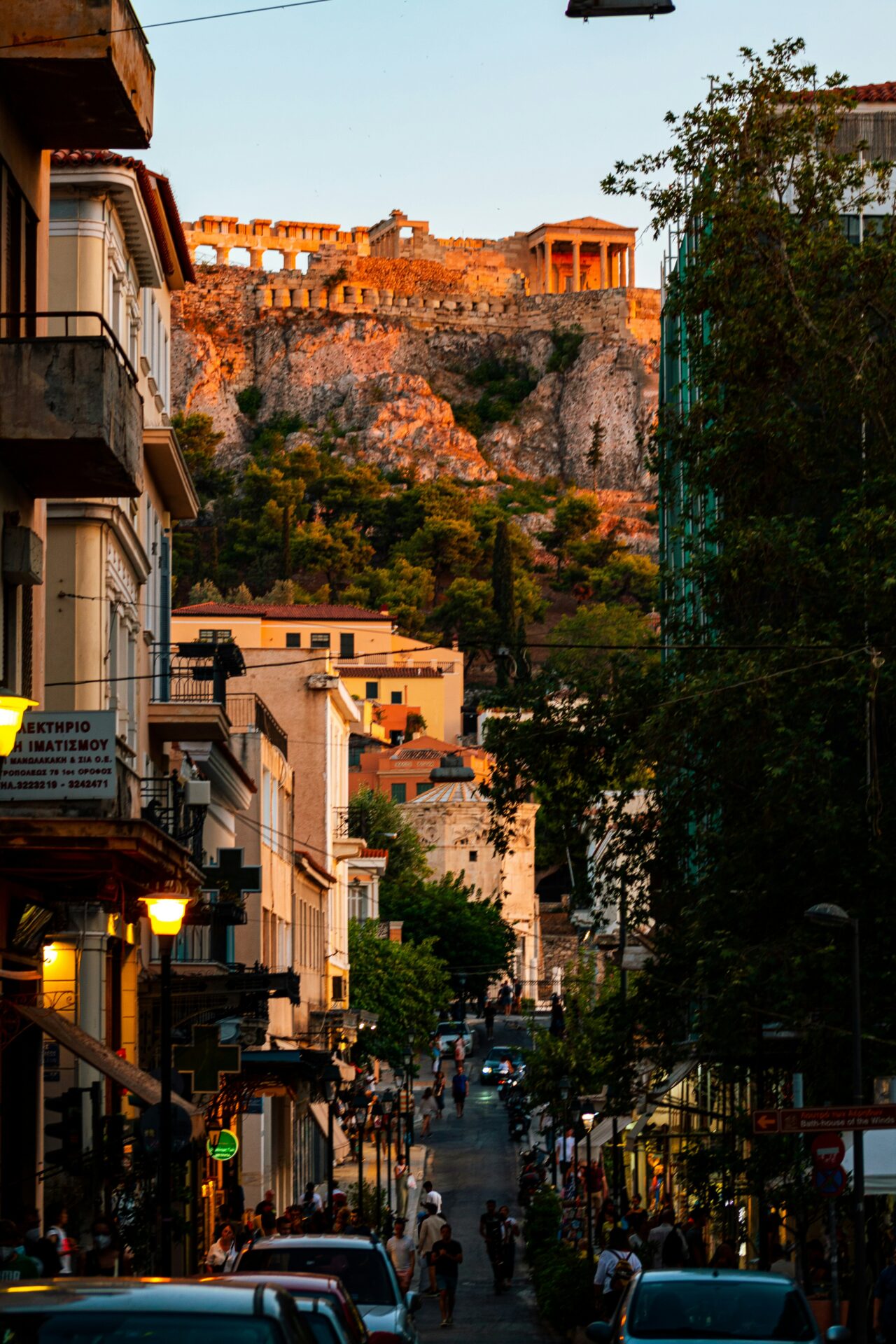
There’s a relaxed pace as I wander, with friendly vendors and the occasional cat sunning itself on a windowsill.
Cafés spill onto the sidewalks, serving Greek coffee and sweet baklava. For history lovers, the area is dotted with small churches and pieces of ancient walls.
It’s easy to lose track of time when every side street offers something new.
Dining and Nightlife by Monastiraki Square
After leaving the hill, Monastiraki is where I go for the city’s liveliest atmosphere. The square is famous for its vibrant flea market, which buzzes even after sunset.
There are rooftop bars with breathtaking views of the Acropolis glowing above the city lights—a perfect place for photos.
🍽 What I Like Near Monastiraki:
| Experience | Highlights |
|---|---|
| Street food | Try souvlaki or a gyro, hot and fresh |
| Wine bars | Local Greek wines and casual tastings |
| Italian eateries | Cozy spots for pizza and homemade pasta |

The Ancient Agora sits just steps away, with its history echoing through the night air.
After dinner, I like exploring backstreets dotted with craft cocktail bars and lively music spilling from doorways. If I feel adventurous, I might join a wine tasting or check out a rooftop for a different view of the city.
Museum Hopping: Acropolis Museum and Beyond
Evenings in Athens aren’t just about food and walks—I make time for museums, too. The Acropolis Museum stays open late on certain nights, letting me enjoy a quiet hour among statues and ancient artifacts after dark.
Its glass floors show hidden ruins beneath my feet, and the terrace café serves snacks with postcard views.
If I’m not ready to end my museum adventure, the nearby Museum of Greek Folk Art offers a closer look at local crafts. I’ve wandered through temporary art exhibitions near Plaka and found unique treasures in small, independent galleries.

For history lovers, the Ancient Agora Museum inside the Stoa of Attalos is a highlight, filled with objects from Athenian daily life.
Whether it’s classic art or everyday relics, these museums let me dive deeper into Athens before heading back out into the night.
Hidden Gems and Day Trip Inspiration Around Athens
I’ve spent many afternoons exploring Athens beyond its famous ruins. Some of my favorite experiences came after wandering outside the city center—finding local beaches, discovering quieter sites full of history, and learning the little tricks that make trips smoother.
Exploring Local Beaches and the Coastline
Athens isn’t just about ancient temples. The Mediterranean coastline sits close by, and honestly, it’s a breeze to reach.
I usually grab the tram or hop on a local bus heading south toward Glyfada or Vouliagmeni. These beaches have such a laid-back vibe, with clear water and plenty of little seaside cafes.
If you’ve got more time, try catching a fast ferry to one of the nearby Greek islands, like Aegina or Hydra. That move always gives me a fresh perspective.
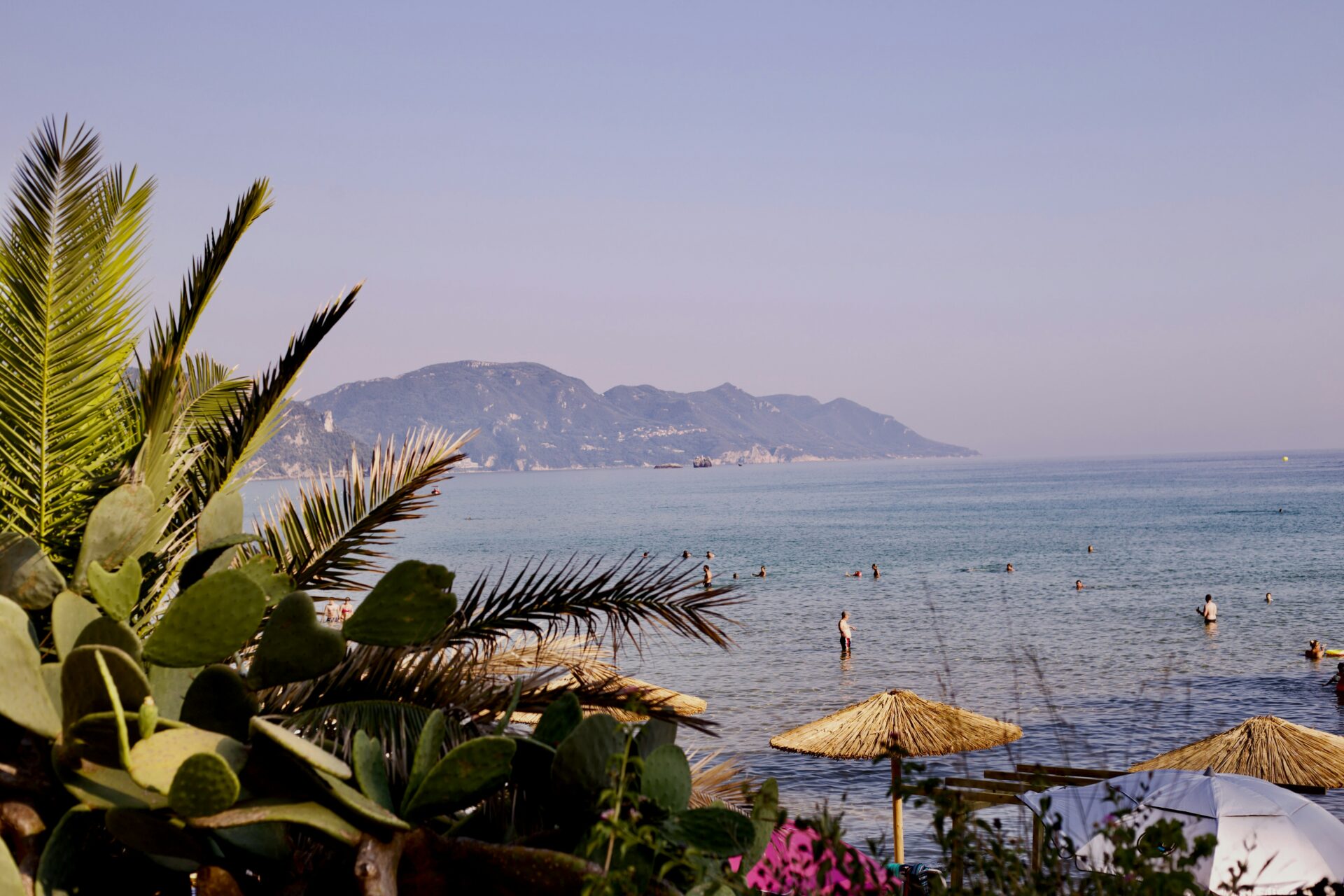
One time, I jumped on a morning boat and found myself stretched out on a quiet island beach by lunchtime. Heading even further, Crete offers stunning mountain walks and some wild, remote shores.
When I just want to escape the city for a bit, I throw a towel in my bag, grab a metro ticket, and end up with my toes in the sand in less than an hour. Here’s a quick cheat sheet:
| Beach Name | How to Get There | What I Love Most |
|---|---|---|
| Glyfada | Tram from city center | Lively, easy access |
| Vouliagmeni | Bus or taxi, 30 min drive | Clean water, relaxing |
| Aegina Island | Ferry from Piraeus Port | Local pistachios, history |
| Crete | Flight or overnight ferry | Incredible landscapes |
Syntagma and Olympia: More Cultural Discoveries
Most travelers rush to the Acropolis, but honestly, there are other gems that feel just as impressive—and way less crowded.
I really enjoy wandering through Syntagma Square, especially when the guards switch places at the Hellenic Parliament. You’ll spot small bakeries and hidden shops on the side streets nearby.
The Stoa of Attalos in the Ancient Agora has become one of my favorite peaceful corners. Its columns and museum create a calm vibe, totally different from the tourist buzz outside.
Not far away, the Temple of Hephaestus stands almost untouched, surrounded by wildflowers if you’re lucky enough to visit in spring. Sometimes, it’s easy to picture ancient Athens right from those grounds.
If I’m craving a day trip loaded with history, I look north toward Olympia. The train ride feels scenic, and you’ll find English and German tours that help you discover the best spots.
Walking where the original Olympic athletes once stood really blew my mind last time.
Planning with Omio and Essential Travel Tips
Trying to plan day trips or figure out island hops in Greece? Honestly, with all those transit options, it can get a bit overwhelming. I usually turn to Omio because it lets me compare ferry, train, and bus routes without much hassle.
I like that you can search for tickets in English or German. That’s saved me a lot of time, to be honest. When I booked ahead with Omio, I grabbed the best departure times for places like Crete or Olympia—otherwise, I might’ve missed out.
Here are a few quick travel tips I’ve picked up:
- Check ferry schedules ahead of time—they change quickly, sometimes with barely any warning.
- Always carry a bit of cash, especially if you’re heading to remote beaches or hopping on a local bus.
- Visiting several sites in Athens? Some combo-tickets actually cover spots like the Temple of Hephaestus and the Ancient Agora, which is pretty handy.
Honestly, when I plan things out just a little, I get to spend way more time soaking in sunsets by the coast or wandering through a quiet old temple—way better than stressing over tickets.