
Standing at the foot of the Acropolis in Athens, I felt right away that this was so much more than just another landmark you’d see on a postcard.
If you want your visit to the Acropolis to be truly special and memorable, there are a few simple tips that make all the difference—way beyond snapping a quick photo.
Greece brims with ancient wonders, but the Acropolis can get overwhelming fast if you don’t have a little insider info.

I’ve picked up tricks for finding the quietest entrances and knowing the best time to climb the hill, so you can dodge both crowds and the heat, but still soak in all the history.
These tips come from my own feet on those stone steps and the little things that stuck with me.
If you want Athens to leave its mark on you, I hope you’ll find something useful from my own Acropolis adventure.
Preparing for an Unforgettable Acropolis Experience
Planning a visit to the Acropolis isn’t just about ticking off a historic site.
Things like timing, which tickets you pick, and even your choice of guide can mean the difference between a visit that feels magical—or just crowded and rushed.
When and How to Visit for Maximum Impact
My best Acropolis memories happened when I arrived early—way before 10 a.m., when the crowds and heat start to build up.
The site opens at 8 a.m. most of the year.
Climbing up in the cool morning felt peaceful and gave me time to really take in the views.
The light’s best for photos in the early morning or late afternoon.
Tour groups usually flood in just before midday, so if you want a quieter visit, try to go outside those hours.
Weekdays beat weekends, hands down.
There are two main entrances—the busy west entrance and the quieter south entrance.
I always pick the south gate; it’s less crowded and lets you stroll past the Theater of Dionysus before you reach the Parthenon.
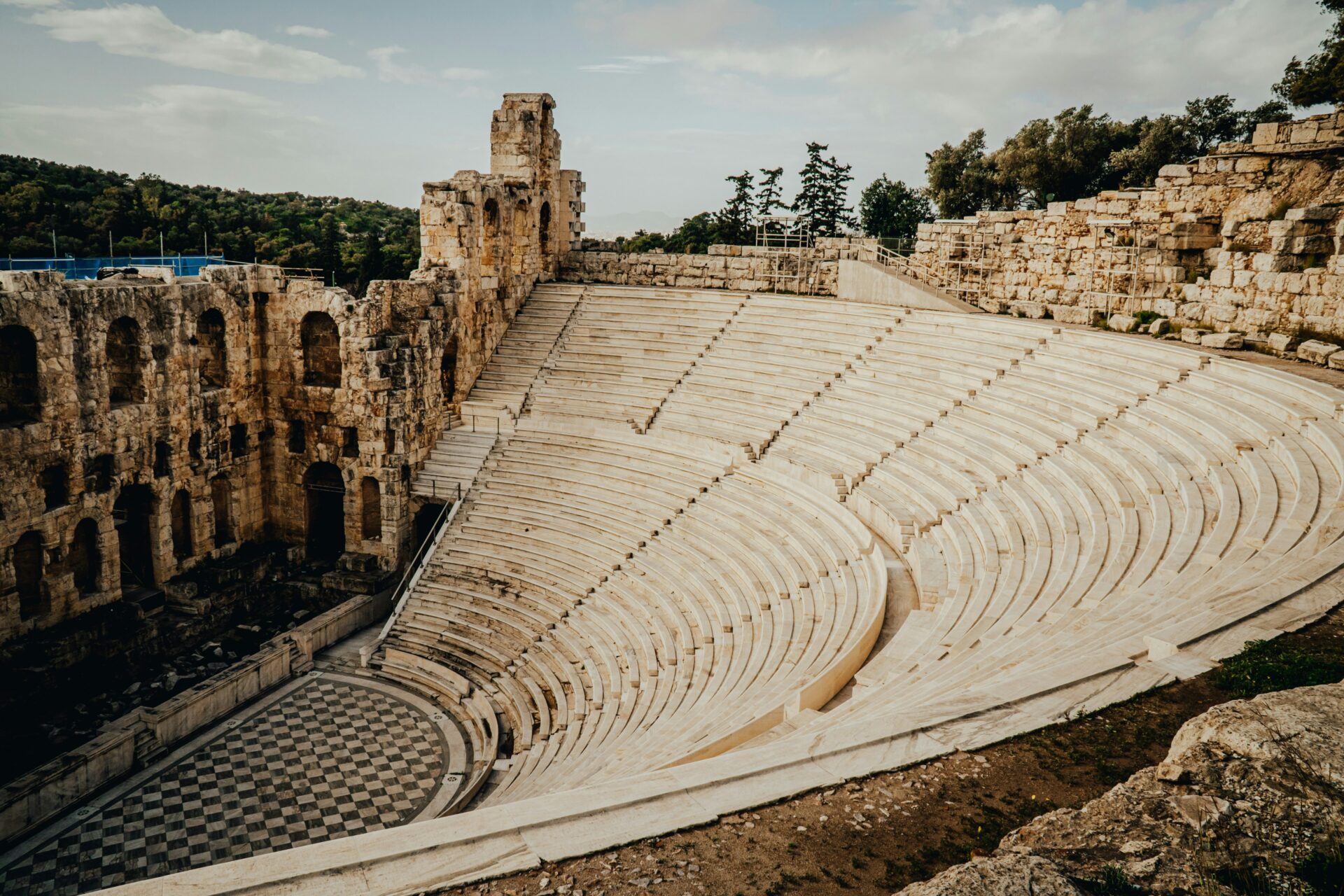
Essential Acropolis Entry Tips
Tickets sell out fast in high season, so I always buy mine online ahead of time.
Booking in advance means I secure my spot and skip the ticket booth lines.
They offer regular admission and discounts for students or seniors.
I found the payment process easy—the official site took my card without a hitch.
If your plans change, many tickets let you cancel for a full refund up to 24 hours before your entry time.
I always stick to official links on Tripadvisor or the Acropolis website to dodge third-party fees or scams.
Here’s a quick entry guide:
| Step | What To Do |
|---|---|
| Book your ticket online | Choose date/time, pay with card |
| Select your entrance gate | South entrance is less crowded |
| Bring your confirmation | Print or keep digital copy on your phone |
Choosing the Right Guide or Self-Guided Options
The Acropolis really comes alive when someone tells the stories—at least, that’s what I learned on a private tour with a licensed archaeologist guide.
Listening to an expert share myths and history made the ruins feel like more than just old stones.
When I book, I look for traveler’s choice badges or high reviews on Tripadvisor.
If you’d rather go at your own pace, a self-guided walking tour is easy to set up.
There are lots of downloadable apps with GPS narration for a small fee.
I used headphones and lingered as long as I wanted at the spots that caught my attention.
Private tours with archaeologists fill up early in peak season, so I recommend booking ahead.
Guided tours give you context, while self-guided visits let you wander on your own time.
Both have their perks, honestly.

Immersing Yourself in Acropolis History and Myth
The Acropolis isn’t just a pile of ancient ruins—walking its paths made the stories of gods, democracy, and epic legends feel real to me.
Even knowing a few myths in advance changed how I saw every statue and stone.
Stories of Athena, Poseidon, and the Olive Tree
I’ll never forget the story of Athena and Poseidon’s rivalry.
Legend says these two gods competed for the city’s favor.
Poseidon struck the ground with his trident, making a salty spring appear.

Not to be outdone, Athena gifted an olive tree—food, oil, and wood, all in one.
That olive tree turned out to be way more useful, so the city named itself after Athena.
I could picture ancient Athenians gathered here, thankful for her gift.
The olive trees still growing on the slopes make the myth feel alive.
When I rested under their shade, I felt the connection to both history and legend.
The Birthplace of Western Civilization and Democracy
The Acropolis has more than just myths.
Standing on the hill, I thought about how Athens basically invented democracy.
Citizens gathered below to debate, vote, and shape what’s now the foundation for so many governments.
Seeing the Parthenon and nearby sites put me face to face with the roots of Western civilization.
These marble columns aren’t just art—they’re the legacy of bold ideas and struggles for freedom.
Monuments like the Propylaea and the Erechtheion saw the city’s highs and lows, from democracy’s rise to the wars for independence.
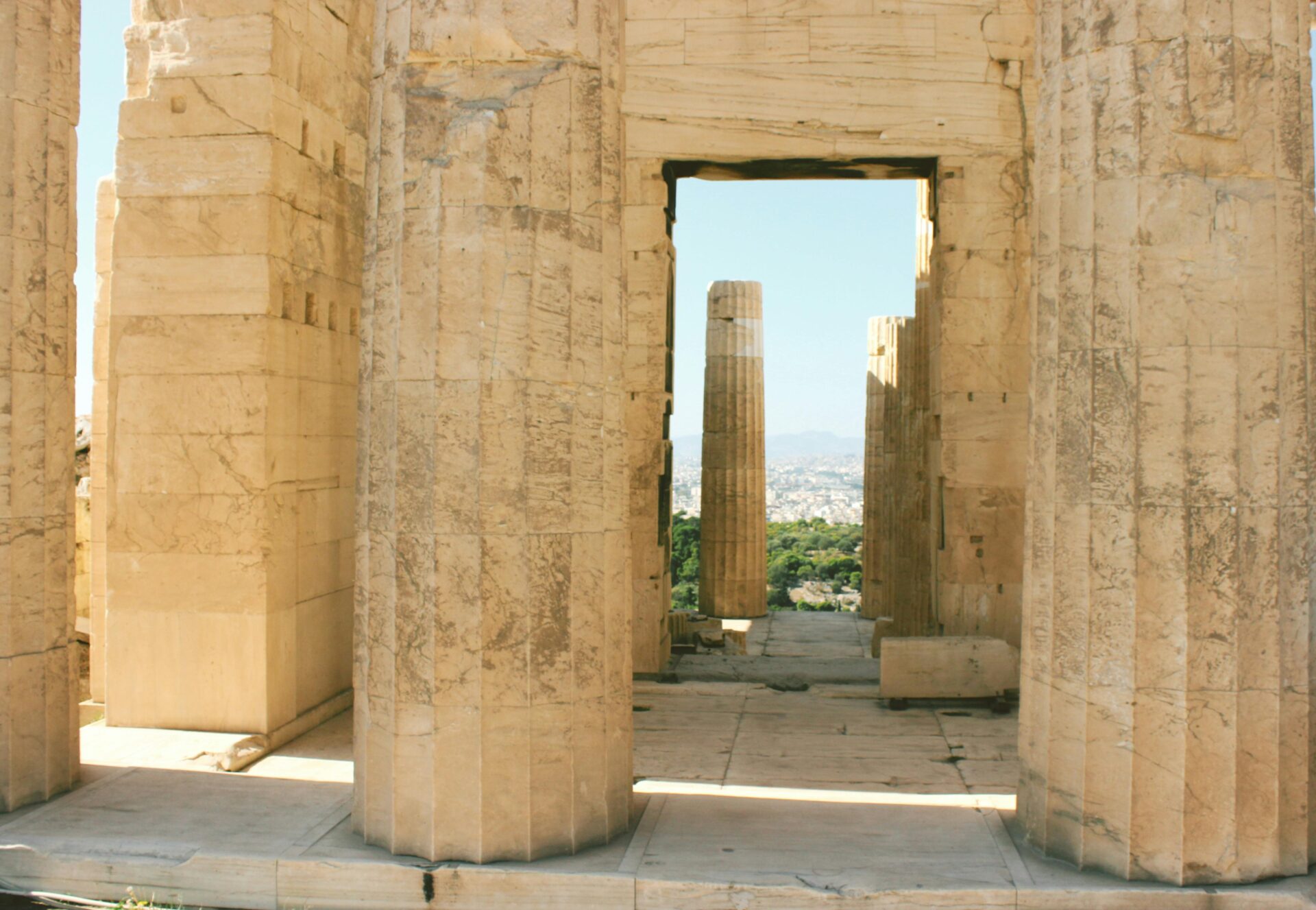
Visiting them gave me a real sense of human progress and resilience.
Legends Etched in Greek Mythology
Greek mythology weaves through every stone of the Acropolis.
Beyond Athena and Poseidon, I found stories of heroism and tragedy everywhere.
The Temple of Athena Nike honors the goddess of victory and the hope for success in battle.
Carvings and reliefs show gods, heroes, and monsters—scenes meant for everyone to see.
When I wandered the ruins, I could almost hear the ancient festivals and imagine the old myths shaping Athens’ spirit.
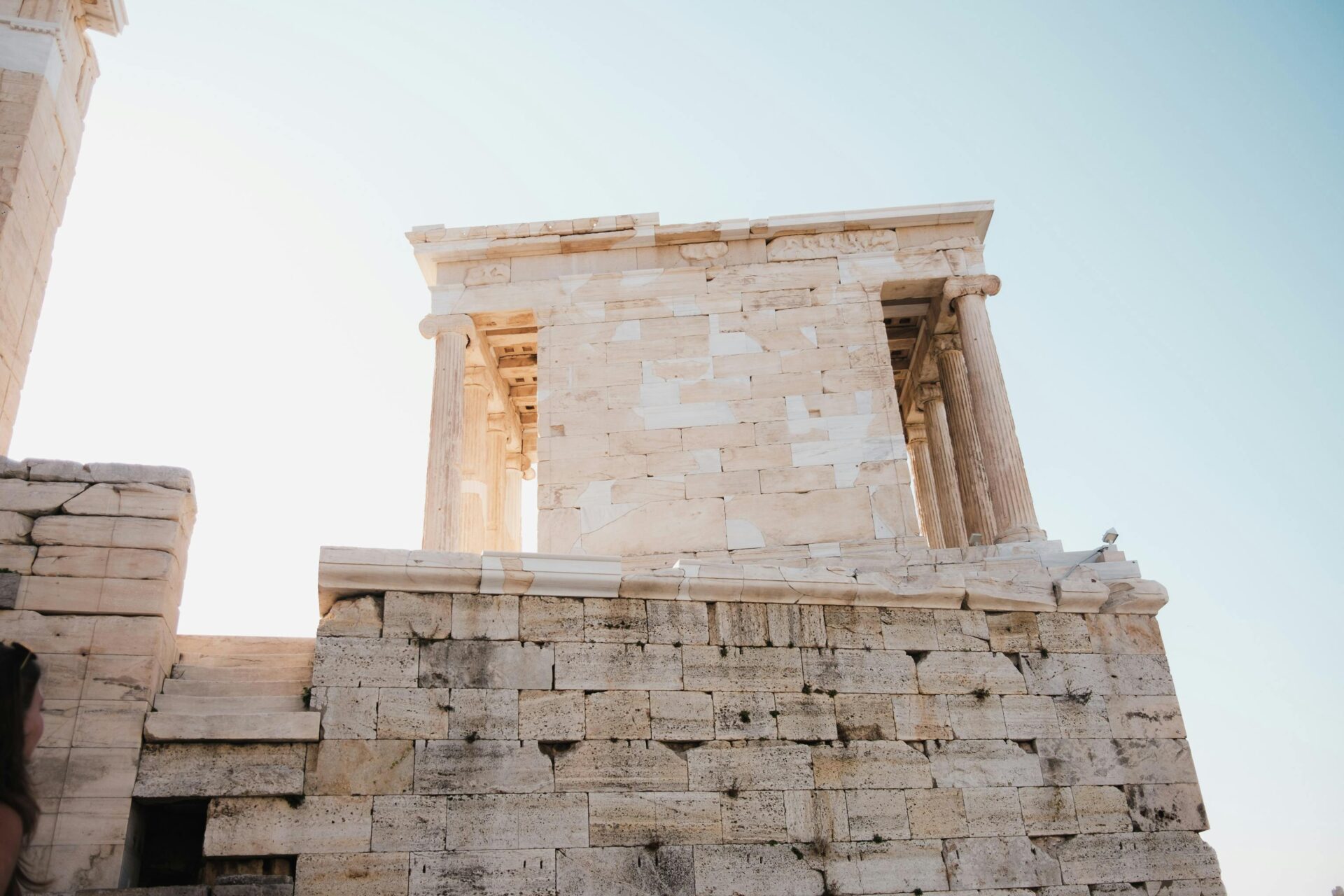
If you want to get more from these stories, read up a bit before you go or join a guided tour.
Guides often bring the myths to life, helping you see why the Acropolis is a living story, not just a pile of old rocks.
Highlights and Hidden Gems: What Moved Me Most
Some spots on the Acropolis felt like they’d always been there, while others surprised me with quiet corners or jaw-dropping views.
My favorite moments mixed history, scenery, and a real sense of awe.
Parthenon Perspectives
Standing in front of the Parthenon, I felt the centuries pressing in from its marble columns.
The sheer size and the little details of the ancient temple left me kind of breathless.
When I walked slowly around the monument, I noticed how the sunlight shifted the stone’s colors, especially in late afternoon.
I made sure to walk the full path around the Parthenon.
Every angle gives you something new—massive pillars here, intricate carvings there.
Most people crowd up front for photos, but I found a quiet moment on the south side, away from the busiest paths.
Out there, history felt less like a lesson and more like something alive.
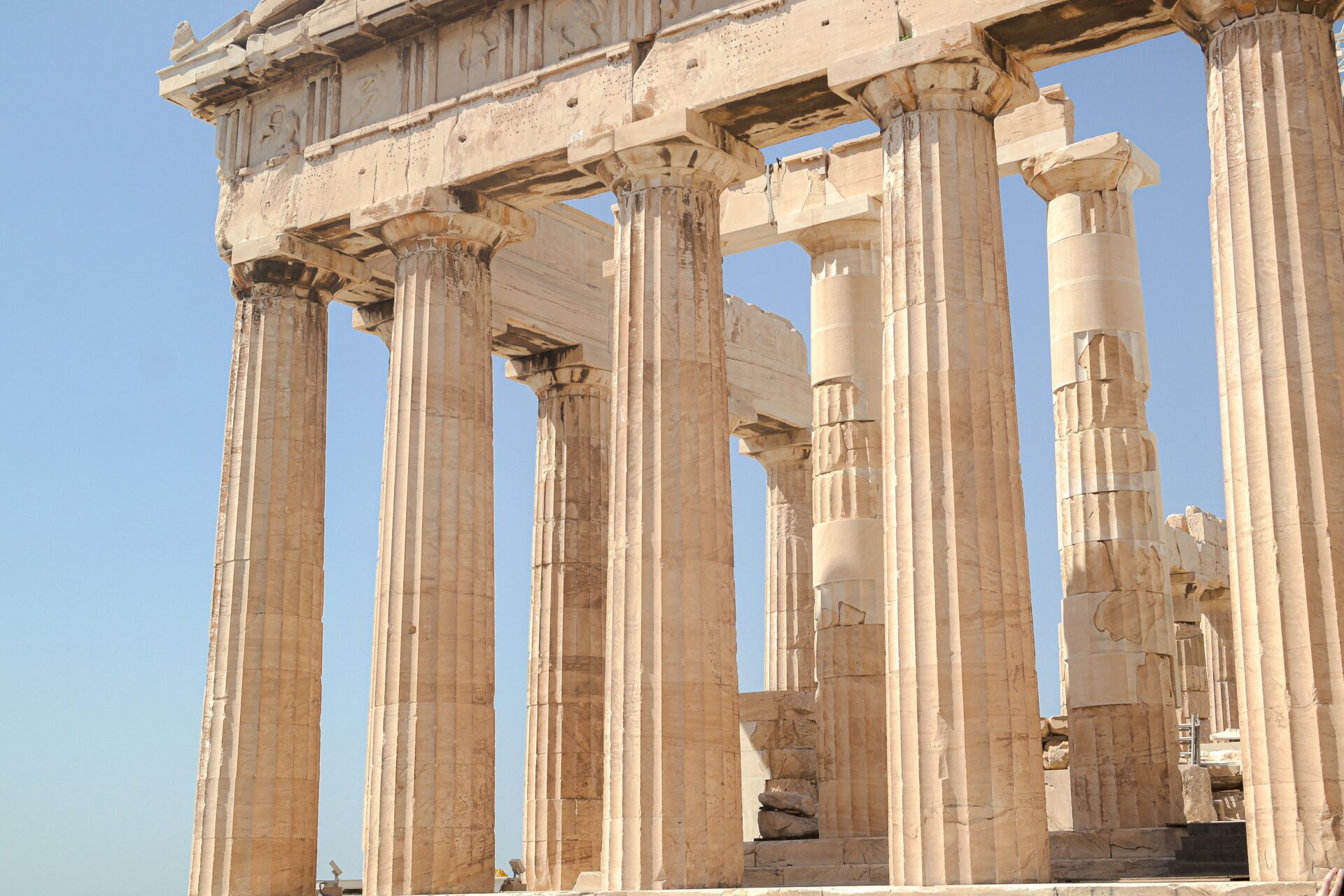
Tip: Bring a hat and water, especially in summer. There’s hardly any shade, and that sun doesn’t play around.
Caryatids and the Erechtheion
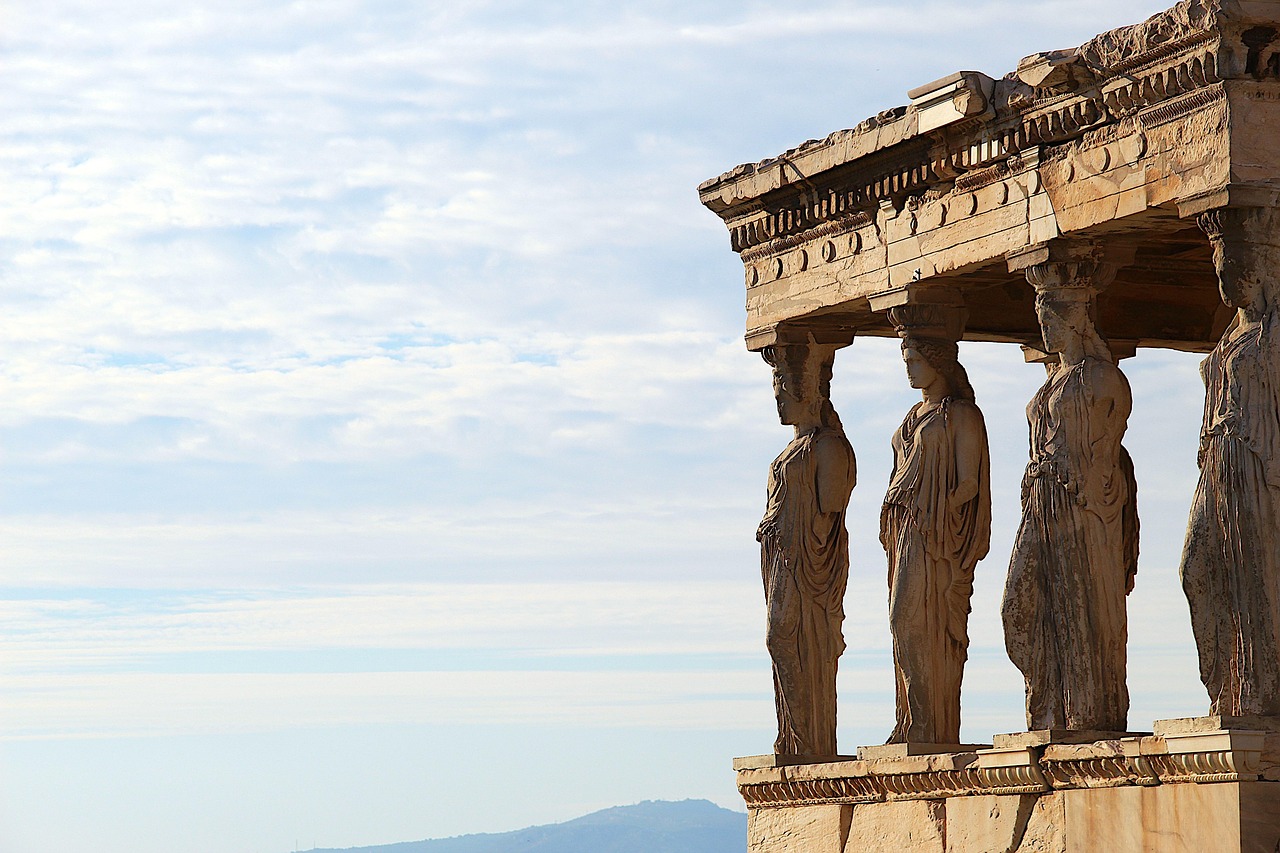
The Caryatids of the Erechtheion don’t draw as many tourists, but seeing them up close was a highlight for me.
These stone maidens seem to patiently hold up the porch, and their faces carved in marble really stuck with me.
The Erechtheion feels different from the Parthenon.
It’s quieter, calmer, almost gentle.
I stayed a while, just admiring the details—the flowing robes, delicate hair, and even the expressive eyes.
I later found out the originals are safe in the Acropolis Museum (which is worth a visit), and these are faithful copies.
Still, they have a powerful presence up there on the hill.
Captivating Views Over Athens and Beyond
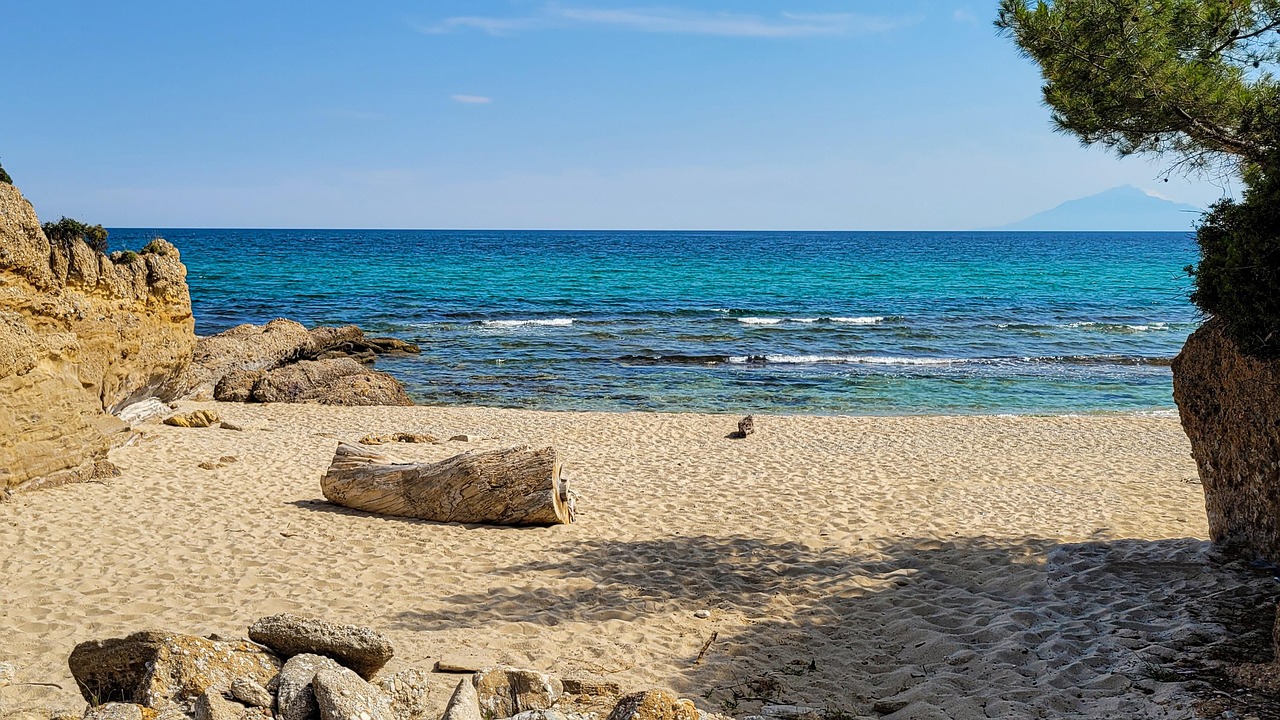
The Acropolis surprised me with some of the most stunning panoramic views of Athens, its neighborhoods, and even the sea.
At certain spots, I could see the modern city stretching from the ancient hilltop all the way to distant mountains.
There’s a low wall where you can stop and just take it all in.
I jotted down in my travel notebook everything I could spot:
- Lycabettus Hill
- The ancient Agora
- The Plaka quarter
- The blue Aegean Sea on a clear day
Watching the city below go about its day made the Acropolis feel both timeless and totally connected to the present.
The Neighborhood of the Gods
Right at the foot of the Acropolis, Plaka waits—people call it “the Neighborhood of the Gods.”
Wandering these stone streets felt like stepping into another era.
Warm yellow houses, flowering vines, and twisty paths gave the area a peaceful, welcoming energy.
Little shops sold local crafts, and small cafés served up traditional Greek food.
I found a shady bench under a tree and listened to street musicians play soft tunes.
If you’re tired after the climb, this is the perfect spot to relax and watch the world go by.
From the hilltop to the winding lanes below, Athens showed me a mix of living history and daily life.

Exploring Beyond the Acropolis Hill
After exploring the giants of ancient Greek history, I discovered some of my favorite moments just beyond Acropolis Hill.
Athens surrounds the ruins with lively neighborhoods, impressive museums, and stories waiting around every corner.
Acropolis Museum: Connecting Past and Present
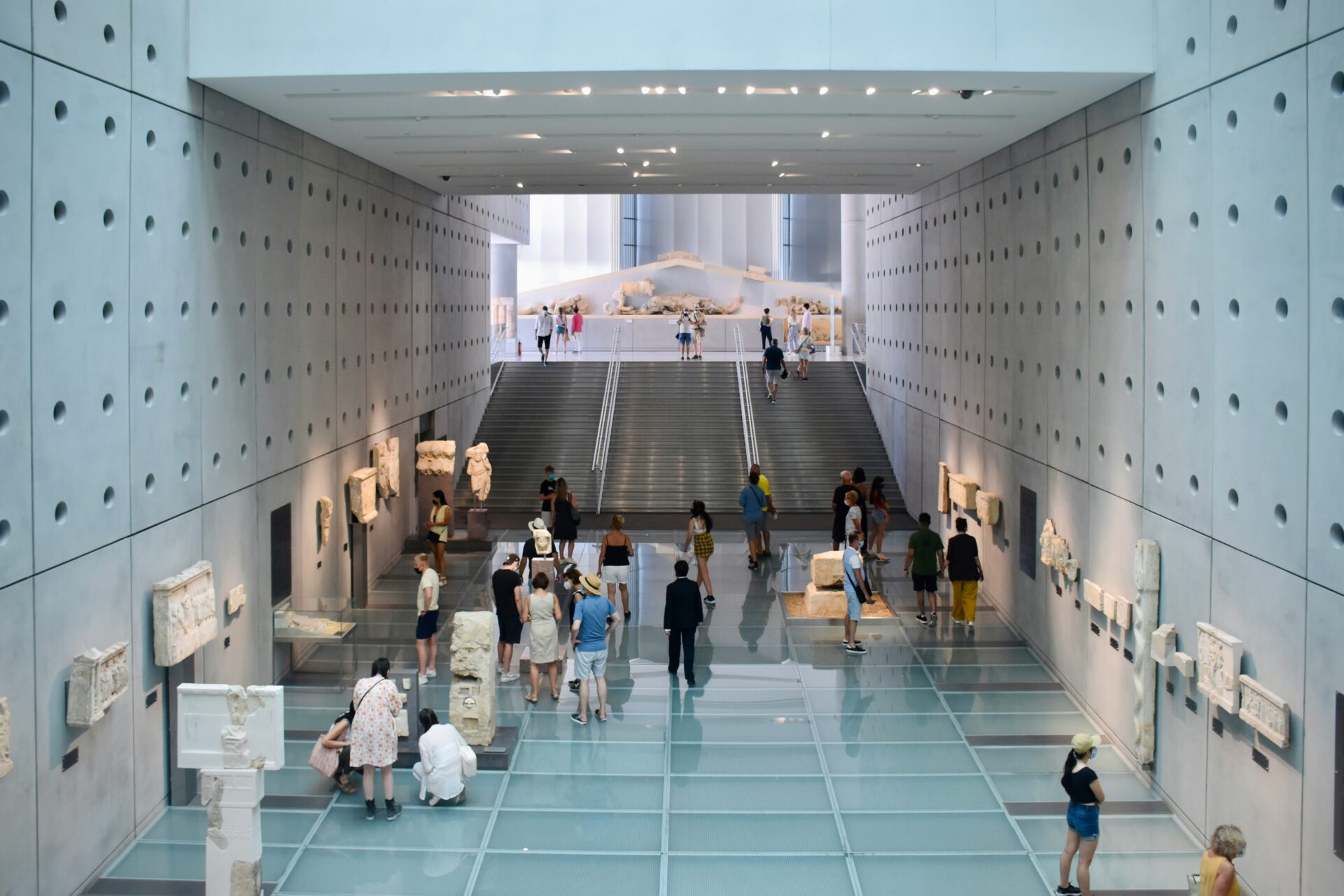
The Acropolis Museum wowed me even before I stepped inside.
Its sleek glass design almost floats above ancient ruins, letting sunlight pour onto centuries-old statues.
Walking across the transparent floors, I could see real archaeological digs beneath my feet.
I loved how the exhibits connect ancient life with today’s city.
The museum’s collection covers everything from marble statues to simple clay pots, all found on the Acropolis.
The top-floor Parthenon Gallery gives you an unbeatable view of the Parthenon, surrounded by original and replica friezes.
It’s not just about looking—I felt pulled into the stories behind broken pottery, temple decorations, and even ancient toys.
A visit here answered questions I didn’t even know I had about the Acropolis and Athens.
Don’t skip the café terrace; the coffee and the view are both worth it.
Ancient Agora and Stoa of Attalos
Leaving the Acropolis, I wandered into the Ancient Agora—the old marketplace and meeting spot of Athens.
It’s easy to imagine philosophers like Socrates debating here, or merchants calling out their wares.
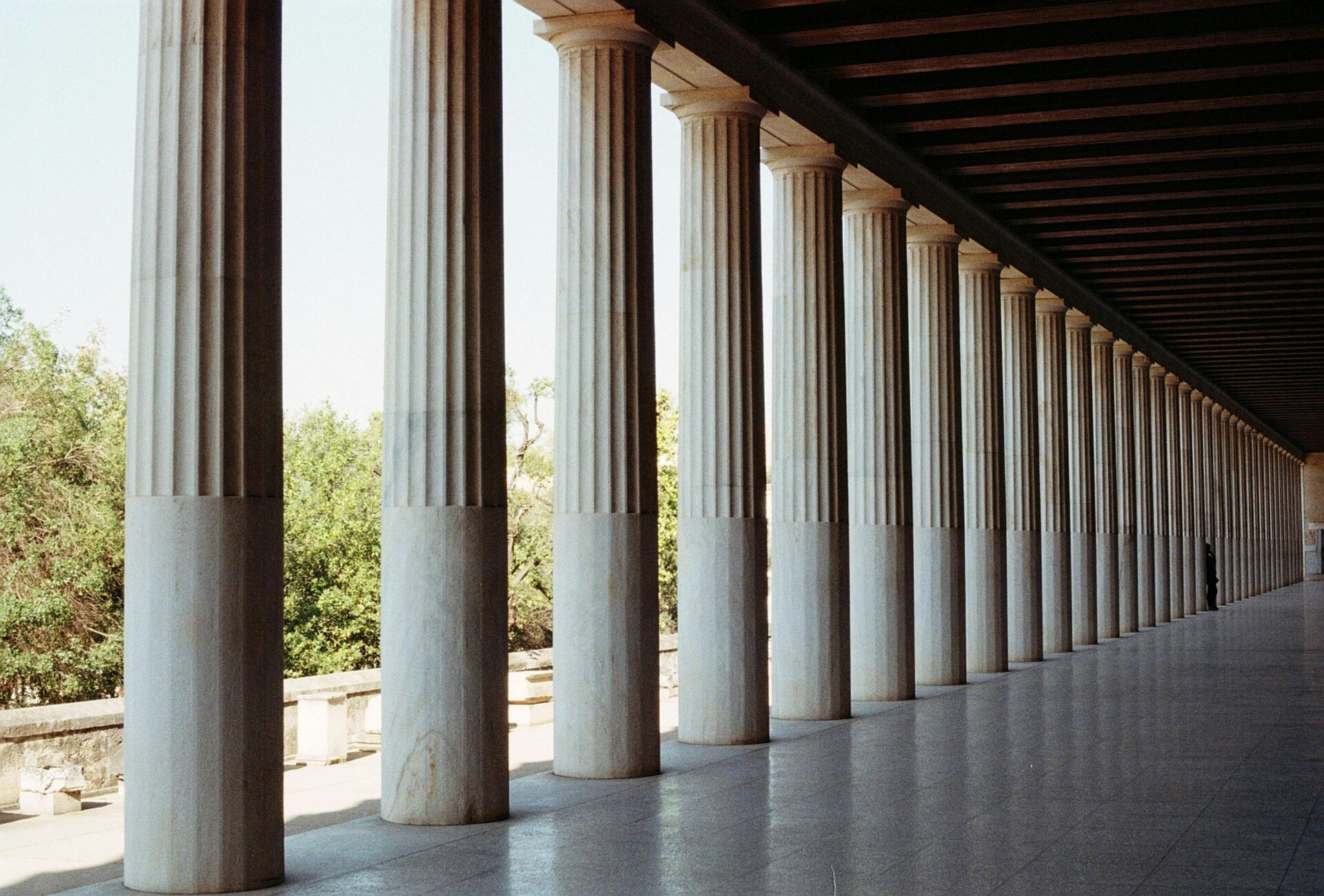
The Stoa of Attalos stands tall, its columns restored to show what public buildings looked like in classic Greece.
Inside, the Ancient Agora Museum displays finds from the area.
I saw ancient coins, pottery, and even early voting tools.
What really struck me was how lively and communal this place must’ve been, showing a whole other side of Greek history.
The wide courtyard invites you to slow down, enjoy the olive trees, and listen to street musicians.
I thought it was the perfect spot to pause and imagine daily life two thousand years ago.
Temple of Hephaestus and Hadrian’s Library
Just a short walk from the Agora, I stumbled on the Temple of Hephaestus.
This temple is one of Greece’s best-preserved, with tall columns and a peaceful garden setting.
Dedicated to the god of craftsmanship, it’s often less crowded, so I got to enjoy its details up close.
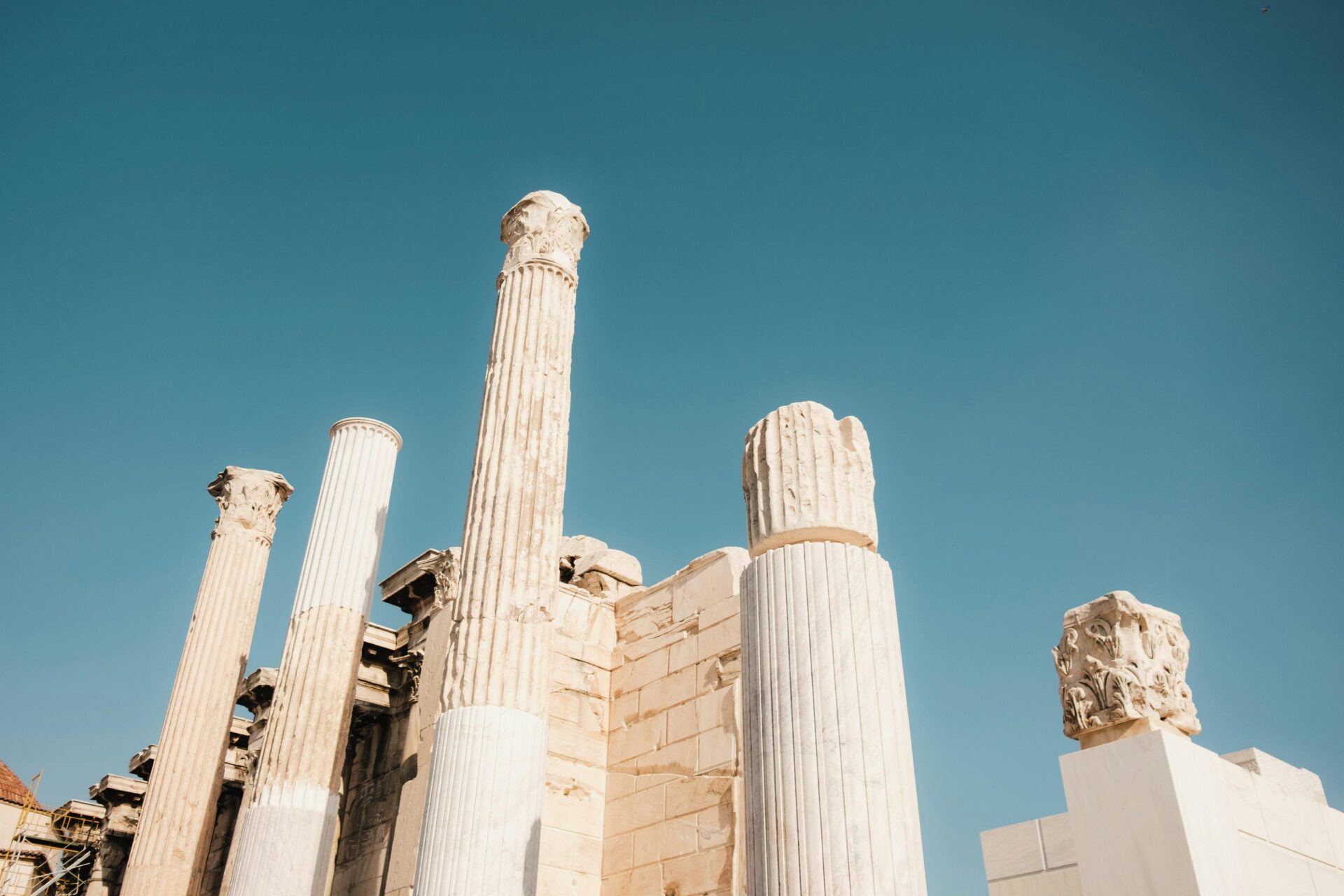
Across town near Monastiraki, Hadrian’s Library reveals another chapter of Athens.
Roman Emperor Hadrian built it, and its ruins hint at a time when Athens was as much Roman as Greek.
Rows of marble columns, battered but beautiful, stand quietly among busy shops.
I liked imagining students reading scrolls there under the Athenian sun.
Church of Kapnikarea and Monastiraki Square
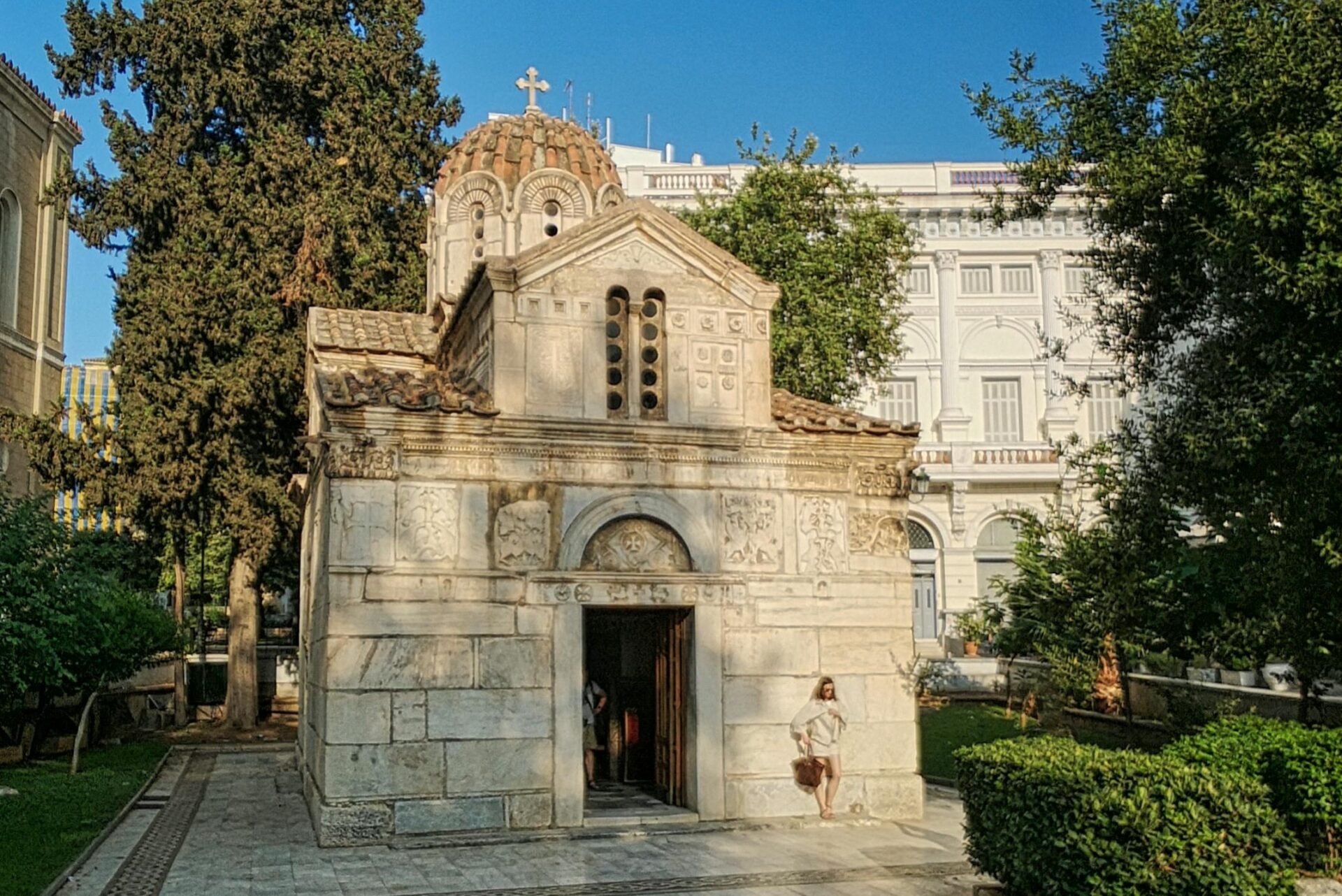
Right in the heart of the city, the 11th-century Church of Kapnikarea stands surrounded by the chaos of modern Athens and the busy Ermou shopping street. Its dark stone walls and bright mosaics feel like a secret from the past that somehow made it through the centuries.
Sometimes, I ducked inside for a quick moment of calm and reflection. Stepping back out, Monastiraki Square buzzed with life—street vendors, musicians, and that unmistakable scent of roasted nuts.
The famous Pandrossou Street Market lured me in with souvenirs and handmade crafts. I wandered over to the nearby Tzistarakis Mosque, another reminder of how many layers this city has.
In just a few city blocks, I saw old and new Athens blend together. Whether you’re after art, history, markets, or just a spot to people-watch, this area lets you catch all sides of the city.
Personal Touches: Small Details That Made My Visit Special
Simple moments shaped my time in Athens and the Acropolis. Tasting real food, strolling down quiet old streets, and spotting bits of the city’s history made the trip feel alive in ways a postcard never could.
Savoring Greek Coffee and Local Flavors
No morning felt right without a strong cup of Greek coffee. Locals served it in small cups, thick and a bit bitter, with the grounds settling at the bottom.
I tried it at a café tucked away from the crowds, where older men read the newspaper and chatted quietly. Grabbing a koulouri (those sesame bread rings) from a street vendor connected me to daily life in Athens.
Lunch at a taverna felt homey—juicy souvlaki skewers, tangy feta salads, olives, and warm bread. Each meal felt like more than just fuel; it was a taste of the city’s character.
If you visit, slow down and eat where locals eat. Honestly, it adds so much to the trip. Here are a few of my favorites:

- Greek coffee at a quiet neighborhood café
- Fresh koulouri from a street cart
- Family-style lunches at a traditional taverna
Strolling Through Plaka’s Villages and Bougainvillea-Lined Streets
Wandering through Plaka, I often felt like I’d landed in a small village instead of a European capital. The winding paths took me past houses with blue shutters, hidden courtyards, and verandas bursting with pink bougainvillea.
Bougainvillea draped over fences and balconies, splashing color against whitewashed walls. Pandrossou Street stood out for its lively energy.
Vendors lined the cobblestones, selling handwoven goods and simple souvenirs. I paused to listen to street musicians and took my time window-shopping in little stores tucked between tavernas.
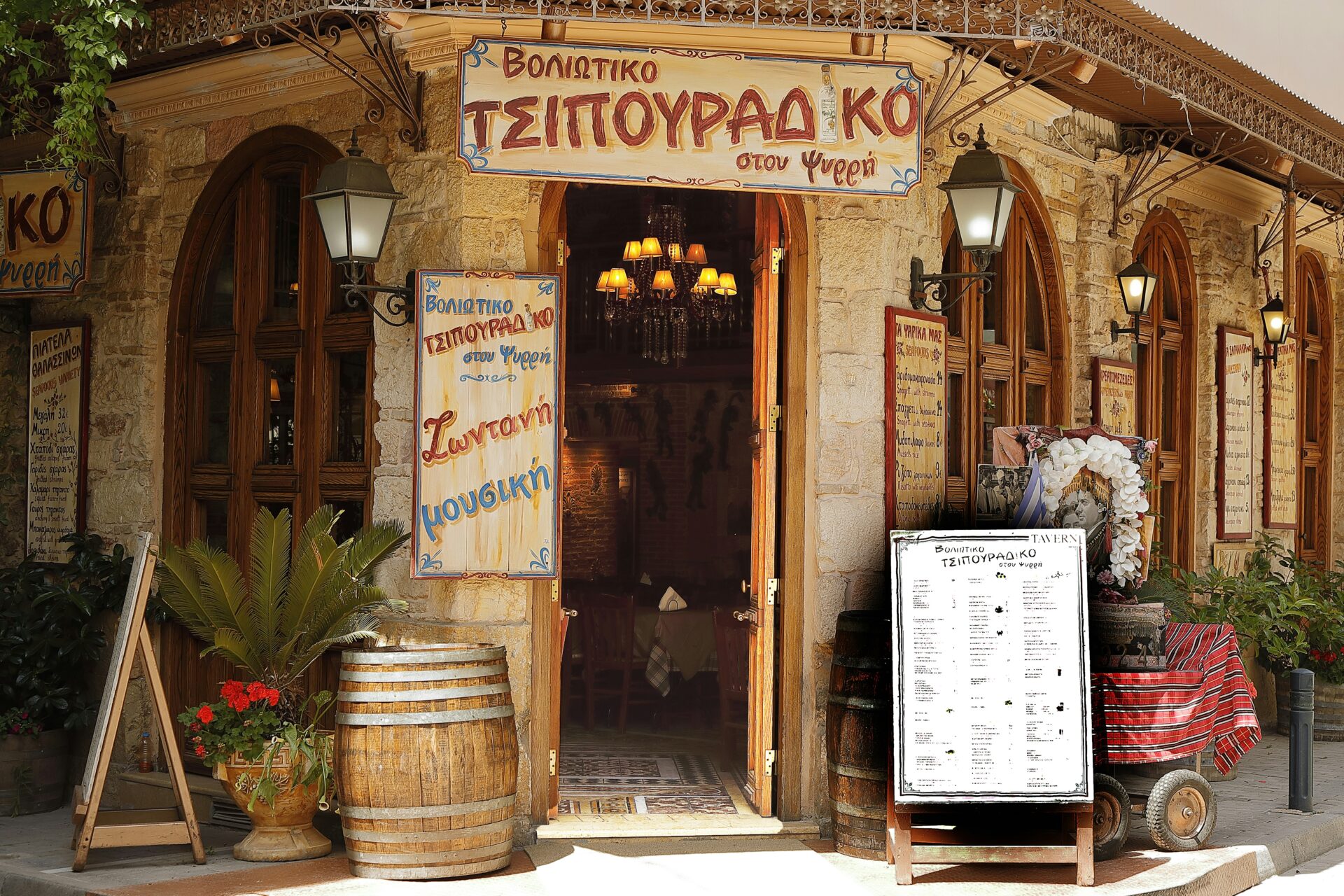
If you want to escape the crowds near the main entrance, these side streets let you slow down and soak in local life. I always brought my camera but often put it down just to look up and take in the scenes around me.
Finding Old-World Charm in Modern Athens
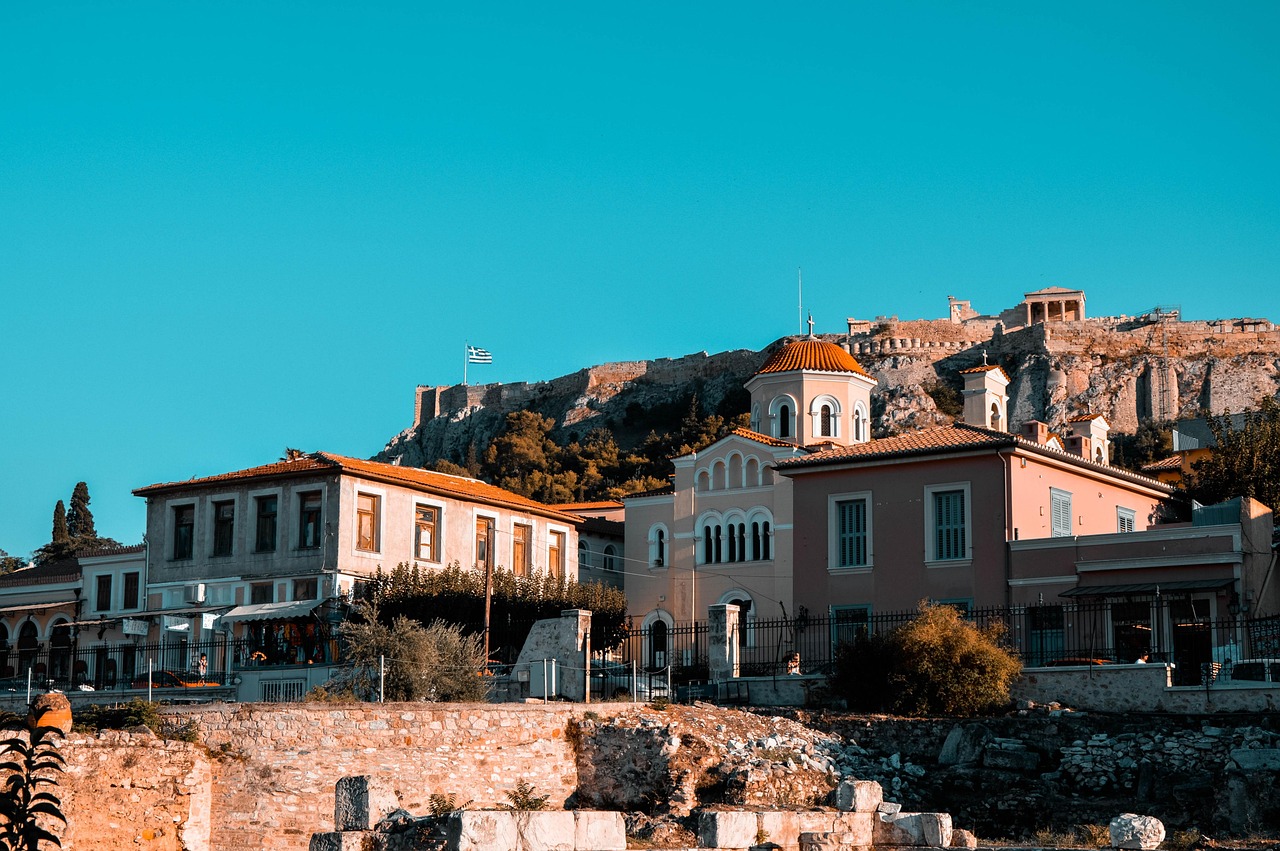
Athens buzzes with cars and people, but hidden pockets made me feel like I’d stepped back in time. Stone pathways led me to shaded squares where grandmothers sat together, talking in quiet voices.
A man played a bouzouki, and kids kicked a ball near centuries-old churches. My favorite moments came from spotting faded shop signs or ornate balconies on buildings that looked unchanged for decades.
I’d stop at a bakery where the counter was worn smooth, or a bookshop that smelled of dust and ink. These places weren’t in the guidebooks, but they had more character than any museum.
If you’re after old-world charm, let yourself wander without a strict plan. Follow narrow alleys, say hello in shops, and be open to small conversations. That’s where the city’s real heart shows itself.
Practical Tips for a Stress-Free Acropolis Journey
If you want to make the most of your Acropolis adventure, it helps to think ahead. Getting there, exploring nearby, and knowing what to bring can really shape your day.
Accessibility, Transportation, and Traveler Pickup
Getting to the Acropolis is part of the adventure. The walk from the entrance has steep steps and uneven ground, so wear comfortable shoes.
If you have mobility issues, there’s an elevator, but you should check ahead—it sometimes closes for maintenance or weather. I arranged private transportation, and honestly, it made my visit much easier.
Some services pick you up right from your hotel, and many tour vehicles have air conditioning. In Athens’ summer heat, that’s a lifesaver.
If you’re traveling with kids, ask for infant seats in advance. Coming from the Piraeus Port or Cruise Terminal? Direct transfers are usually available and save a lot of hassle. I found it way less stressful than dealing with taxis or public transport.
Planning Day Trips to Islands and Historical Sites
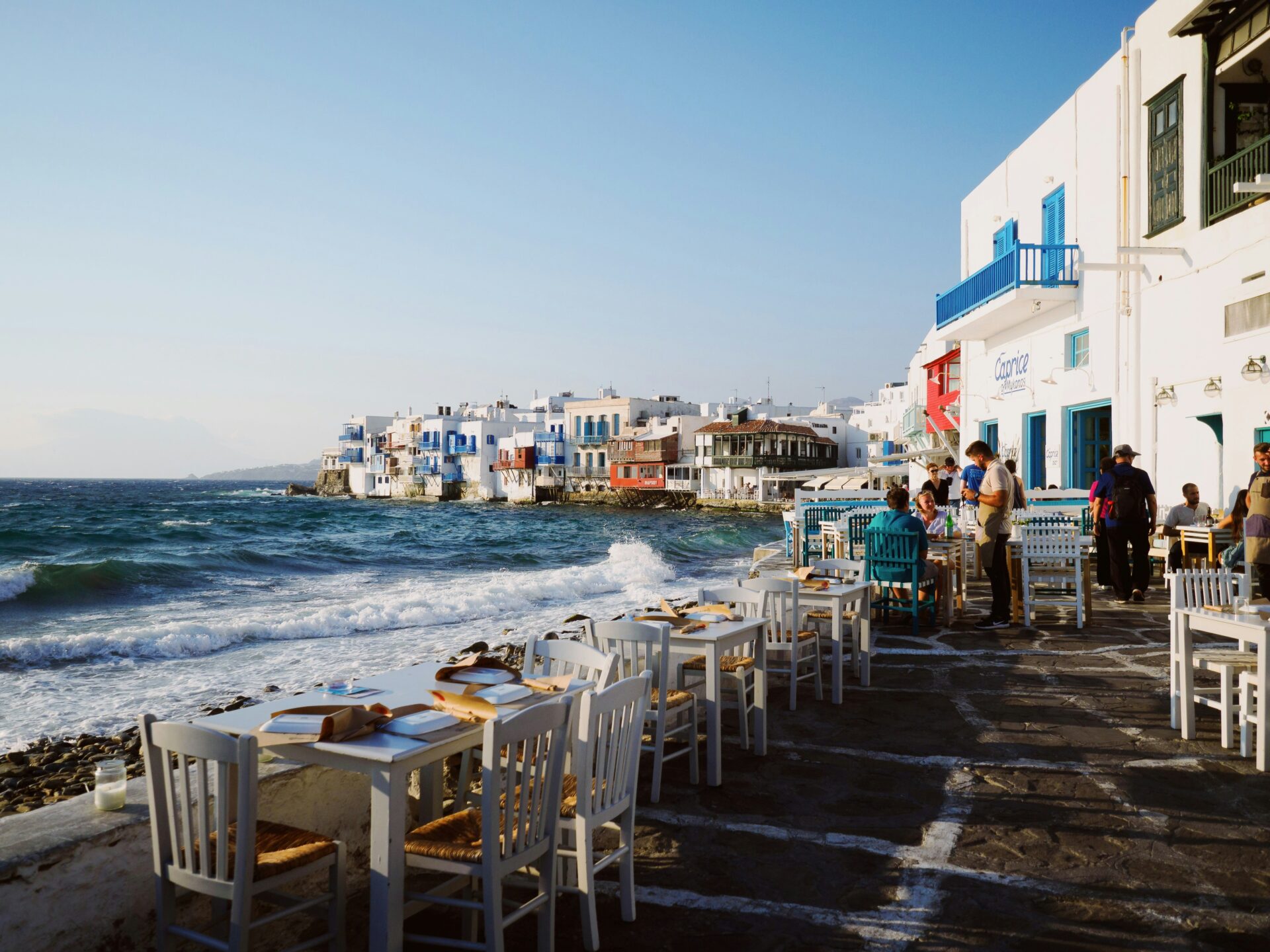
One thing I loved was tying my Acropolis visit to trips beyond Athens. Greek islands like Hydra, Mykonos, and Crete are within reach—Hydra is just a short ferry ride from Piraeus.
The Cyclades each have their own vibe, from ancient ruins on Delos to the sandy beaches of Naxos. Each feels like a different world, just offshore in the sparkling Aegean Sea or the wider Mediterranean Sea.
Some visitors pair the Acropolis with a day trip to the Peloponnese. Ancient Corinth stands out, and it’s not much more than an hour away.
If you plan well, you could even connect your visit with cruises heading to Naples or Egypt. The trick is booking ahead, especially in the busy season.
What to Pack and Wear for the Best Experience
The Acropolis rises above Athens, and honestly, the sun just beats down on you up there. I always toss sunscreen, a wide-brimmed hat, and a refillable water bottle into my bag.
Light, breathable clothes make the climb so much easier. I never leave out sunblock or sunglasses—those are non-negotiable for me.
You really need shoes with good grip. The marble paths look stunning, but wow, they get slippery if it rains even a little.
If I’m heading to an island or checking out another site afterward, I throw a small daypack over my shoulder for an extra layer or maybe some swimwear. And of course, I grab my camera or phone; those city views are just too good to miss.
