
Standing in the heart of Loreto, Italy, I found myself mesmerized by the magnificent Basilica della Santa Casa, home to one of Catholicism’s most treasured relics. The Holy House of Loreto is believed to be the actual home where the Virgin Mary lived in Nazareth and where the Annunciation took place. It was miraculously transported to Italy in the late 13th century. This sacred site has drawn countless pilgrims for centuries, making it one of the most important Marian shrines in the world.
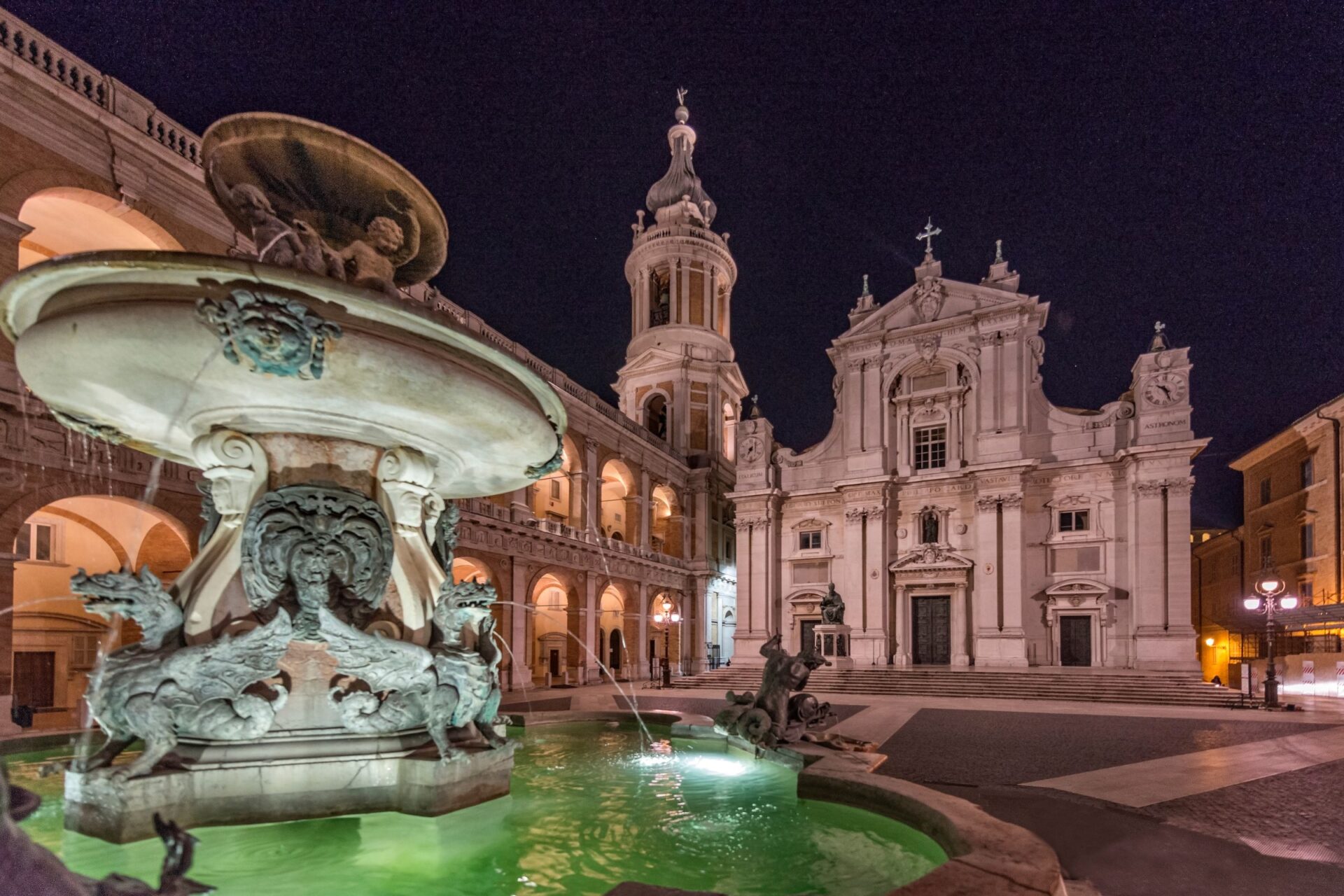
My first visit to this remarkable place left me speechless. The contrast between the simple brick structure of the Holy House inside and the ornate marble screen that surrounds it creates a powerful spiritual atmosphere. The basilica itself is a masterpiece of Renaissance architecture, with its impressive dome visible from miles around the rolling hills of the Marche region.
Whether you’re making a Catholic pilgrimage or simply interested in historic religious sites, Loreto offers an experience that combines deep spiritual significance with artistic beauty. I’ve put together this complete guide to help you plan your visit, including the best times to avoid crowds, what to look for inside the basilica, and practical tips to make your journey to this sacred place meaningful and hassle-free.
The Enigmatic Journey of the Holy House
One of the most fascinating mysteries in Christian history is how the Holy House of Loreto traveled from Nazareth to its current location in Italy. The story combines faith, legend, and historical investigation spanning many centuries.
Origins and the Voyage of the Santa Casa
The Holy House, or Santa Casa, is believed to be the actual home where the Virgin Mary was born, raised, and where the Annunciation took place. According to tradition, this small stone structure was miraculously transported by angels from Nazareth when the Holy Land fell to Muslim forces in 1291.
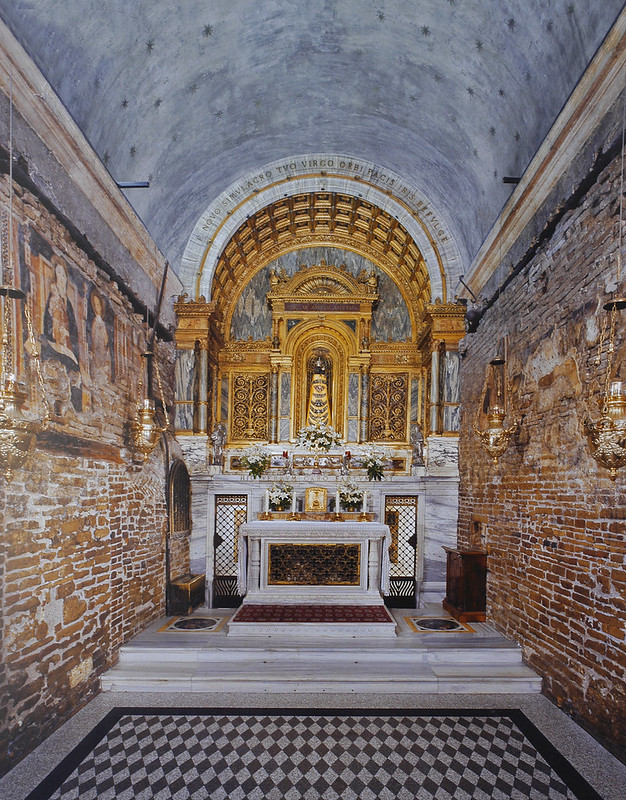
I visited the simple stone structure and was amazed by its modest dimensions—about 30 feet long, 13 feet wide, and 15 feet high. Inside, you can see the original walls made of limestone and brick that supposedly came from Nazareth.
The most fascinating detail I discovered was the graffiti on the stones, which experts say matches markings found in 1st-century Palestine. Many pilgrims touch these ancient walls with reverence, believing they’re connecting with the very place where Mary lived.
Dalmatia to Loreto: Angels and Anthropology
Before reaching Loreto, historical accounts suggest the house first appeared in Tersatto, Dalmatia (modern-day Croatia) in 1291. Three years later, it mysteriously crossed the Adriatic Sea to several locations in Italy before finally settling in Loreto.
While the angelic transport narrative has been the traditional explanation throughout the Middle Ages, modern researchers have proposed alternative theories. Some suggest the Angeli family (whose name means “angels” in Italian) may have transported the stones during the Crusades.
When I explored the shrine of the Holy House, I noticed how the basilica was built around the small dwelling to protect it. Local guides pointed out archaeological evidence that supports parts of both the miraculous and historical accounts.
The shrine became one of Christianity’s most important pilgrimage sites during the Middle Ages, attracting millions of visitors who sought blessings from this extraordinary relic.
Architectural Splendor of the Basilica della Santa Casa
The Basilica della Santa Casa stands as a magnificent example of Gothic-Renaissance architecture in Loreto, in the Marche region of Italy. Its impressive structure houses one of Christianity’s most treasured relics while showcasing remarkable artistic achievements.
The Basilica’s Unique Design
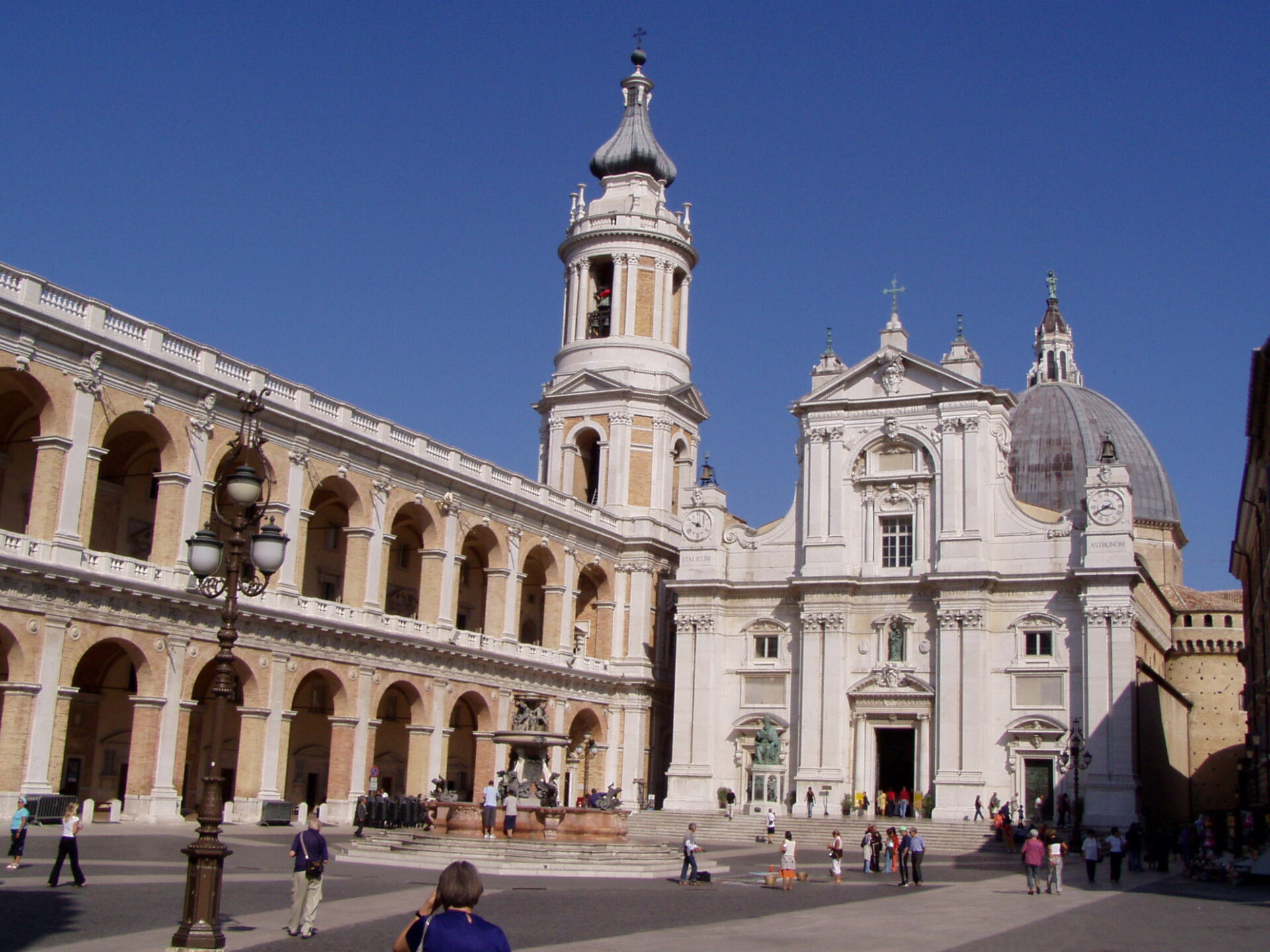
When I first approached the Basilica della Santa Casa, I was immediately struck by its imposing façade. Built between the 15th and 16th centuries, the basilica blends Gothic and Renaissance elements in a harmonious design that’s truly captivating.
The most distinctive feature is the grand dome that rises majestically above the Holy House shrine. Walking around the exterior, I noticed the beautiful marble cladding that adorns the sanctuary, giving it a luminous quality in the sunlight.
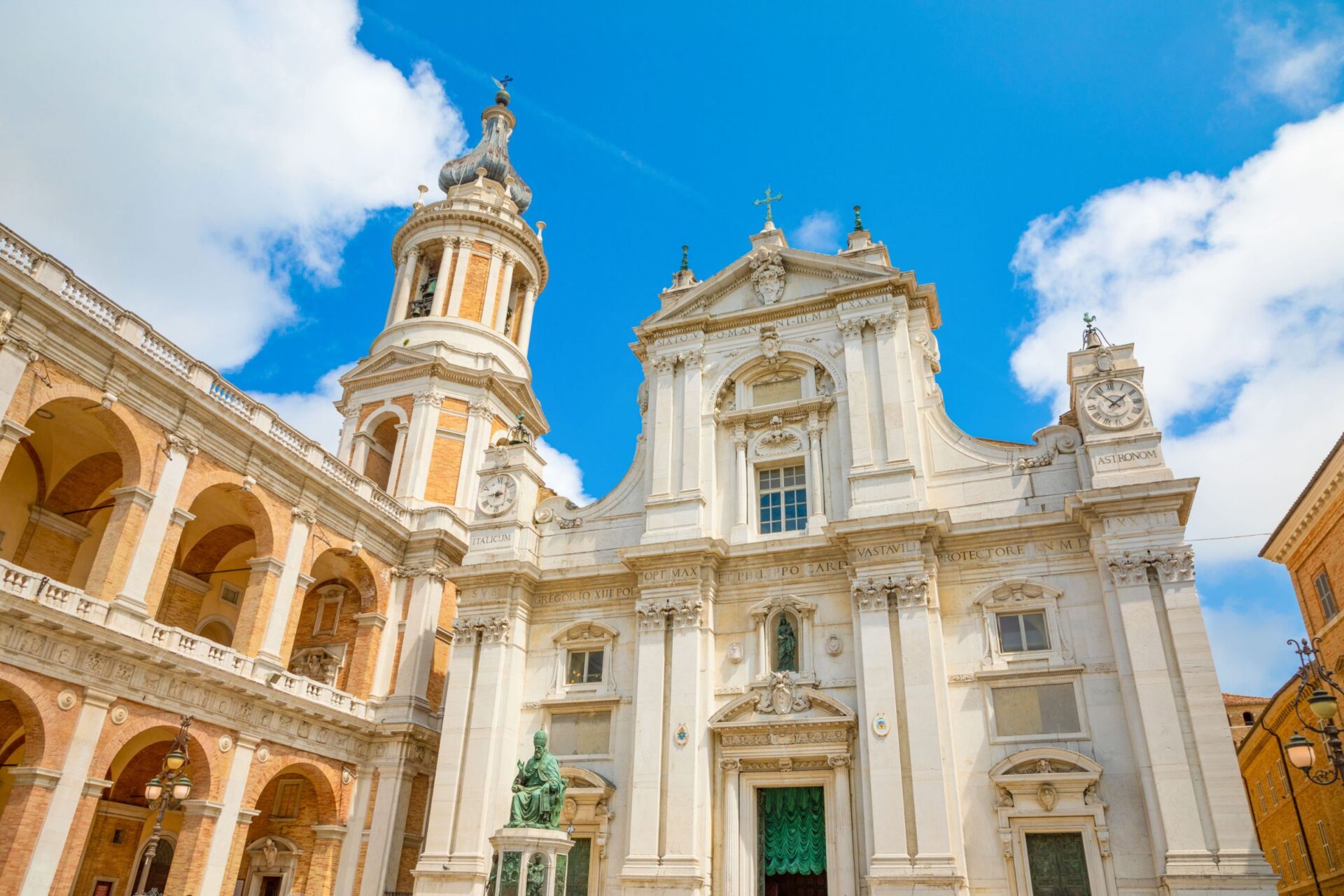
Bronze doors created by Antonio di Pietro Averlino welcome visitors at the entrance. These intricate doors tell biblical stories through detailed relief work that I found myself studying for nearly an hour.
The architectural layout follows traditional basilica design with a central nave and side aisles, but with unique adaptations to accommodate the Holy House within its heart.
Artistic Treasures Inside the Basilica
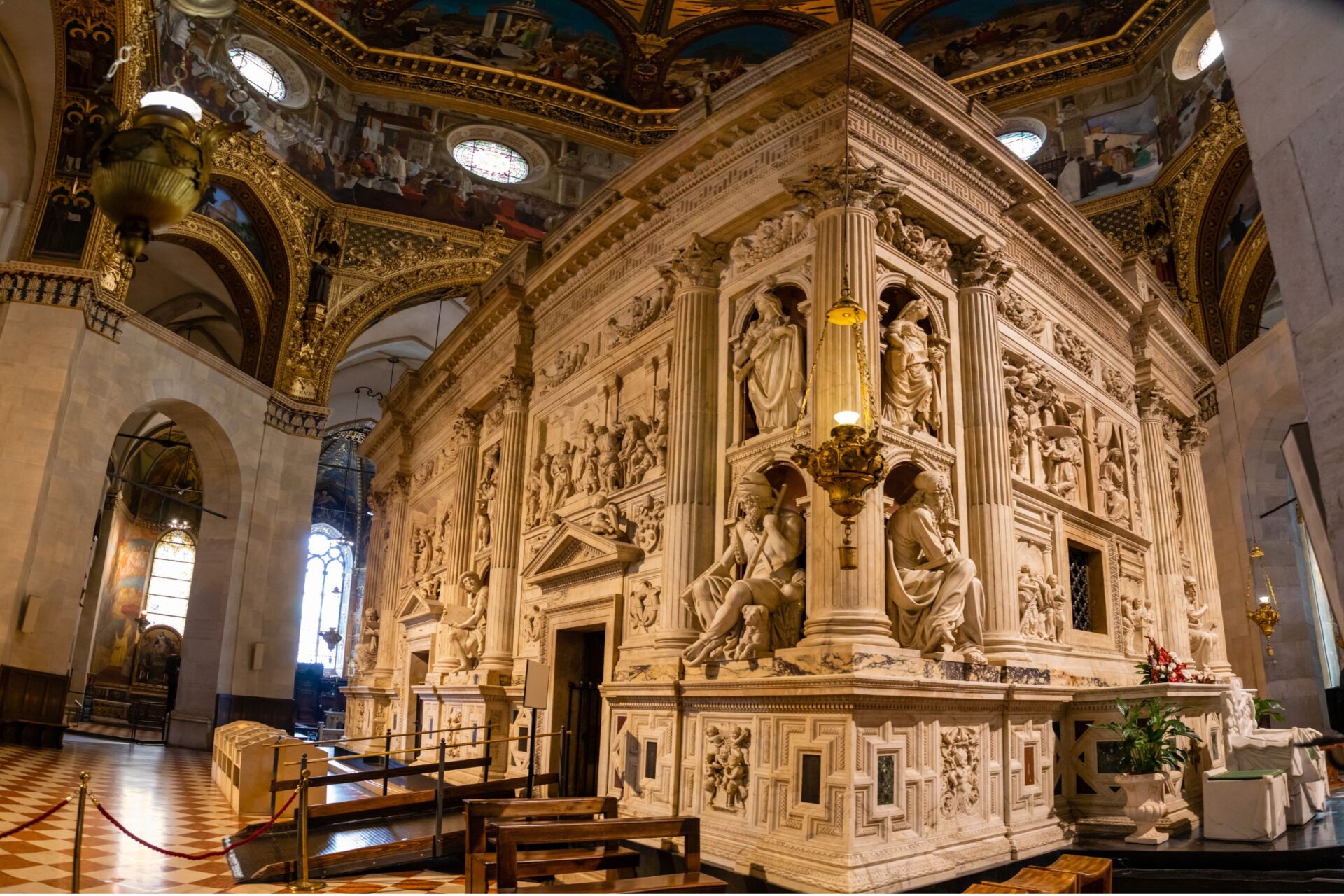
Stepping inside the basilica, I was overwhelmed by the artistic wealth surrounding me. The walls and ceiling feature stunning frescoes by renowned Italian artists depicting scenes from the Virgin Mary’s life.
The Holy House itself sits beneath the dome, encased in an exquisite marble screen designed by Bramante. This ornate casing is decorated with reliefs that tell the miraculous story of the house’s journey from Nazareth to Loreto.
I spent hours admiring the various chapels within the basilica. Each contains remarkable paintings, sculptures, and decorative elements that showcase the finest Italian craftsmanship of the Renaissance period.
The sacristy houses precious liturgical objects and vestments, while the Treasury Museum displays ex-votos and gifts presented to the sanctuary by pilgrims and notable figures throughout history.
Bold lighting highlights architectural details that might otherwise go unnoticed, creating an atmosphere of reverence and wonder throughout this sacred space in the province of Ancona.

Image Source: Wikimedia Commons
Spiritual Significance and the Marian Devotion
Loreto’s Holy House stands as one of Catholicism’s most treasured Marian shrines, drawing pilgrims seeking to connect with the very place where the mystery of the Incarnation began. The spiritual power of this site comes from its direct connection to Mary’s life and the pivotal moment of the Annunciation.
The Shrine and the Blessed Virgin Mary
When I visited Loreto, I immediately felt the deep devotion to Mary that permeates every corner of the basilica. This shrine is considered special because it houses what many believe to be Mary’s actual childhood home from Nazareth, where she was born and raised.
The Madonna of Loreto has become a beloved devotional image, depicted as the Black Madonna. Many pilgrims touch the sacred walls, believing they’re connecting directly with the space where Mary lived her daily life.
I noticed how visitors often spent long moments in silent prayer before the statue of the Virgin, some with tears in their eyes. This powerful connection between Mary and her earthly home makes Loreto unique among Marian shrines worldwide.
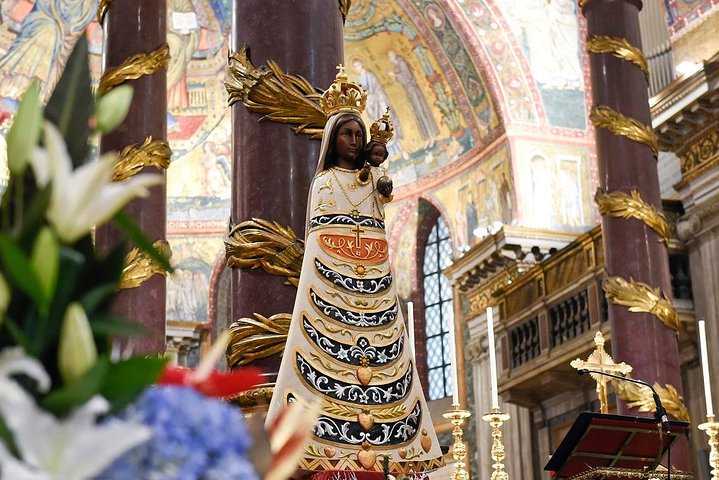
Image Source: Tripadvisor
Annunciation and Marian Celebrations
The Holy House marks the spot where the angel Gabriel announced to Mary that she would bear Jesus. This pivotal moment of the Annunciation makes Loreto especially meaningful during certain feast days.
The most important celebrations include:
- December 10: Feast of the Translation of the Holy House
- March 25: Feast of the Annunciation
- September 8: Birth of Mary
During these celebrations, the basilica comes alive with special Masses, processions, and devotional practices. I was fortunate to witness a candlelit evening procession that wound through Loreto’s medieval streets.
Many pilgrims time their visits to coincide with these feast days, when the spiritual atmosphere feels particularly charged with devotion to Mary and the mystery of the Incarnation.
Attaining Plenary Indulgence
Loreto is one of the few places where Catholics can receive a plenary indulgence, which the Church teaches is a complete remission of temporal punishment for sins. During my visit, I learned the specific requirements:
- Sacramental Confession (within about 20 days)
- Reception of Holy Communion
- Prayer for the Pope’s intentions
- Complete detachment from sin
The Holy House has been designated by the Vatican as a site where this special grace can be received. Many pilgrims I met had traveled specifically for this spiritual benefit.
I observed that the priests at Loreto are especially attentive to hearing confessions, with confession booths available in multiple languages to accommodate international visitors seeking this indulgence.
Pilgrim Experiences and Religious Practices
The Holy House of Loreto offers visitors profound spiritual encounters through various religious activities. Pilgrims from around the world come to participate in sacred rituals that have been practiced for centuries.
Participating in Holy Masses and Rituals
I was moved by the reverent atmosphere during Mass at the Basilica. Services are held multiple times daily, with special celebrations on Marian feast days that attract thousands of pilgrims. The most crowded times are during major Catholic pilgrimages in May and September.
During my visit, I joined pilgrims walking on their knees around the Holy House. Many visitors touch the sacred walls while praying, believing in their healing powers.
The Basilica also hosts beautiful processions, especially during Holy Week and the Feast of the Translation of the Holy House on December 10th. I recommend checking the sanctuary’s schedule to plan your visit around these meaningful celebrations.
The Camerino Chapel and Sacraments
The Camerino Chapel provides a peaceful space for receiving sacraments. I noticed many pilgrims participating in confession, which is available throughout the day in multiple languages – a thoughtful accommodation for international visitors.
Special arrangements can be made for groups seeking baptisms or marriages within this sacred space. During my pilgrimage, I witnessed a beautiful wedding ceremony that blended family celebration with profound spiritual significance.
The sanctuary priests offer spiritual guidance to those seeking deeper connection. Many pilgrims report profound experiences of peace and renewal after receiving sacraments here. I found the priests exceptionally welcoming and patient with visitors unfamiliar with Catholic practices.
The chapel’s intimacy creates a stark contrast to the grandeur of the main Basilica, offering a more personal space for prayer and reflection.
Exploring Loreto and Beyond
Loreto serves as an excellent base for discovering the charming Marche region. The area offers both spiritual enrichment and cultural treasures that complement your pilgrimage experience.
Staying at Hotel Pellegrino e Pace
I found Hotel Pellegrino e Pace to be the perfect accommodation for pilgrims visiting Loreto. Located just steps from the sanctuary, this historic hotel has been welcoming religious travelers for generations.
The rooms offer comfortable simplicity with views of either the basilica or the surrounding countryside. What impressed me most was the staff’s knowledge of the sanctuary’s schedule, helping me plan my visits during quieter periods.
Their restaurant serves traditional Marchigian cuisine, and I particularly enjoyed their homemade pasta with seafood from the nearby Adriatic coast. The hotel also arranges guided tours of the Holy House with knowledgeable local guides who explain the spiritual significance of this sacred place.

Image Source: Tripadvisor
Nearby Attractions: Recanati and the Adriatic Coast
Venturing beyond Loreto revealed even more treasures. Just 6 km away lies Recanati, the birthplace of Giacomo Leopardi, one of Italy’s greatest poets.
I spent a delightful morning exploring his family palazzo and the evocative landscapes that inspired his works.
The Adriatic coastline beckons just 15 minutes from Loreto.
Porto Recanati offers lovely beaches with crystal-clear water and excellent seafood restaurants. I recommend trying the brodetto, a local fish stew that varies from town to town.
For nature lovers, the Conero Regional Park provides stunning hiking trails with panoramic views where the mountains meet the sea.
Many pilgrims extend their stay to combine spiritual reflection at the sanctuary with these natural wonders.
The local tourist office in Loreto’s main square can arrange transportation to these nearby attractions if you don’t have a car.



