
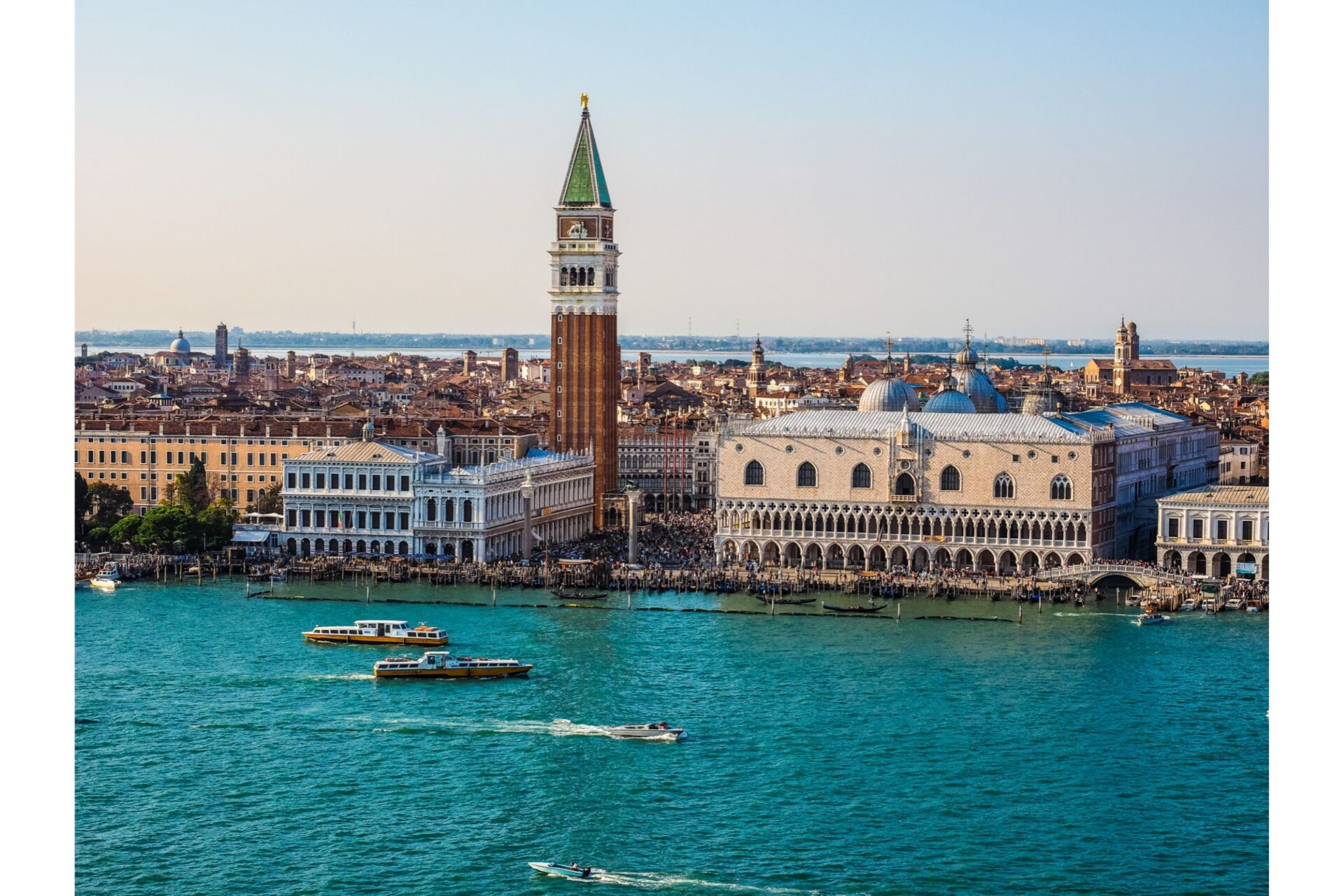
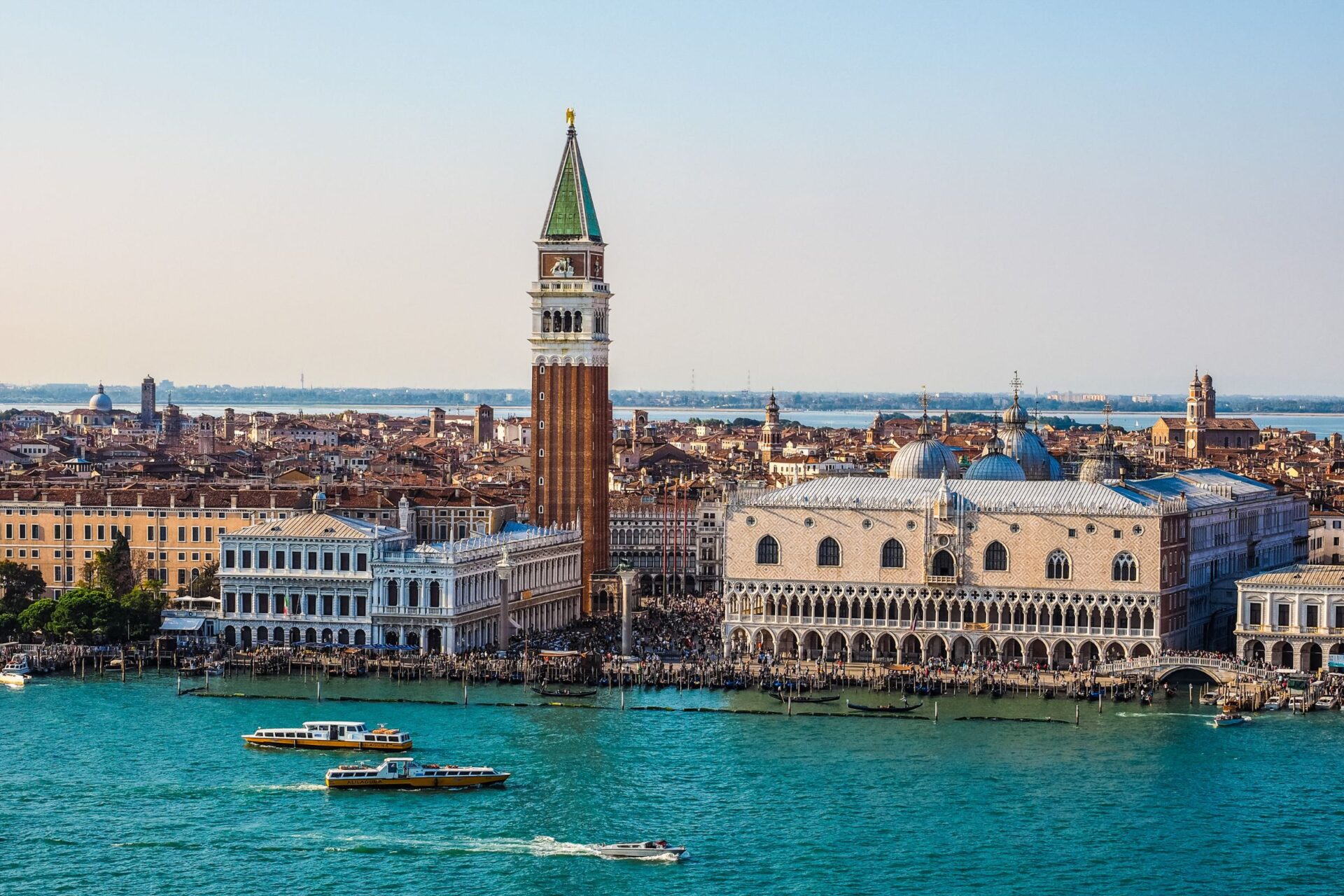
Venice awakens differently before the crowds arrive. I discovered this truth one morning when I stepped into St. Mark’s Square just as pink light touched the basilica’s golden domes.
Standing alone in this normally bustling space, I felt the true heart of Venice—a city born from the quiet determination of fishermen who built something magnificent from humble beginnings on a sandbank.
The basilica itself holds countless stories, including the heart of Doge Francesco Erizzo, literally buried within its walls. This perfectly captures how St. Mark’s isn’t just a building but the emotional center of Venetian identity.
As morning light streamed through the windows, the mosaics came alive in ways impossible to experience during crowded daytime hours.
My footsteps echoed across the empty square as I moved between shadows and sunlight. The Grand Canal lay still beyond, not yet churned by vaporetto traffic.
This peaceful moment revealed Venice’s dual nature—a city of both fantasy and deep history, of both joy and quiet reflection. If you visit only once in your life, make it at dawn.
The Allure of Venice at Dawn
Venice transforms into a magical realm in the early morning light, offering a rare glimpse of its true character when the crowds are absent and silence blankets the ancient stones.
St. Mark’s Basilica Without the Crowds
I arrived at Piazza San Marco just as the first light painted the East beyond the Lido. The square that normally bustles with tourists stood empty before me. It felt surreal to have this magnificent space all to myself.
St. Mark’s Basilica loomed majestically in the soft dawn light. Without the usual throngs of visitors, I could appreciate its Byzantine details and golden mosaics in perfect solitude.
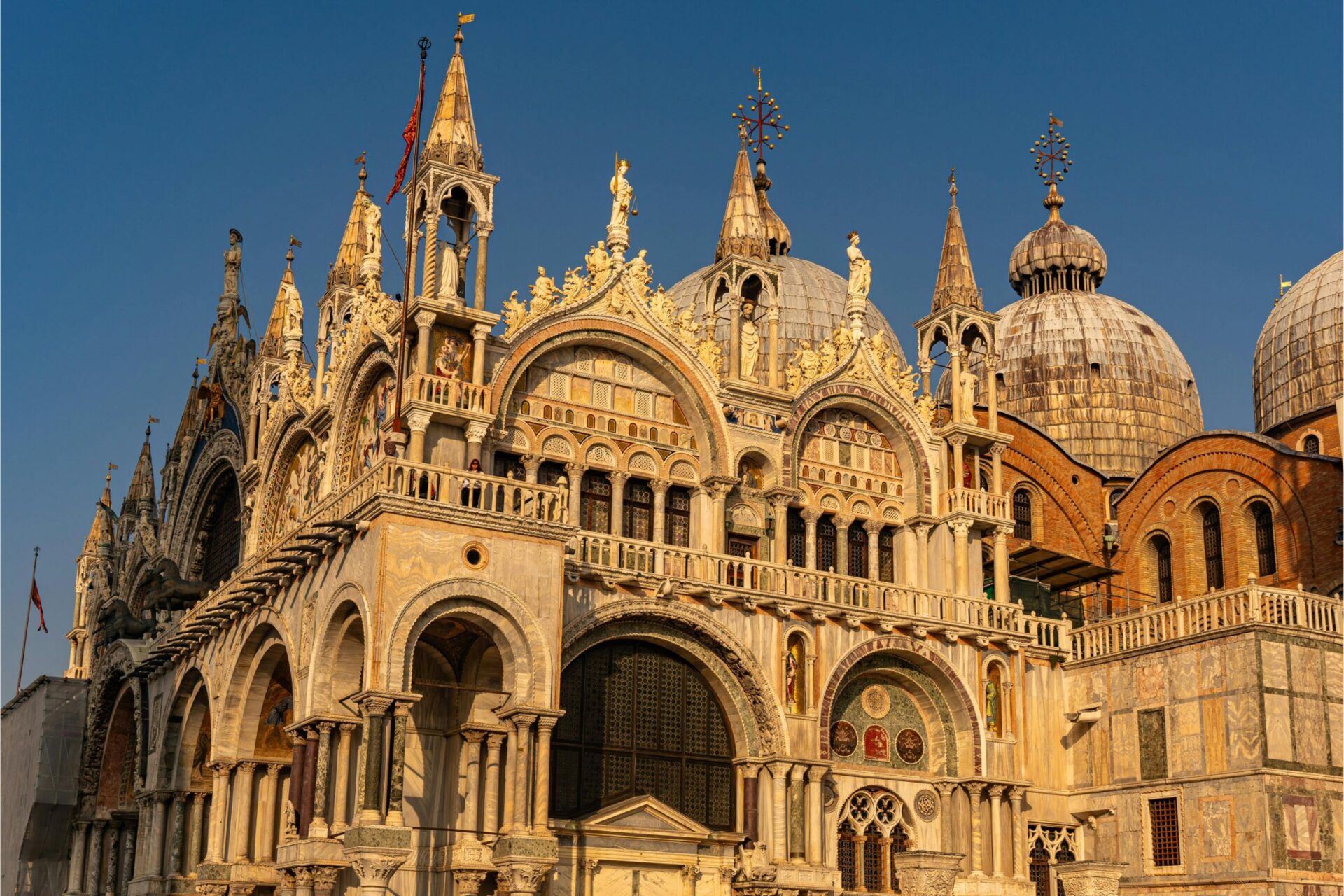
Walking across the empty piazza, my footsteps echoed against the historic buildings. This is when Venice reveals her true self—when you can hear the whispers of centuries past without distraction.
The Piazzetta leading to the Grand Canal offered breathtaking views that few tourists ever witness. I stood there, savoring the rare privilege of experiencing Venice’s heart in such intimate tranquility.
The Silent Canals and Enigmatic Morning Light
The canals at dawn possess an enchanting quality that’s impossible to describe. The water lies perfectly still, creating mirror-like reflections of the surrounding buildings.
I walked along the quiet waterways, watching the city slowly awaken. Early morning light created long shadows and warm hues that transformed ordinary buildings into works of art. This is the Venice that inspired countless paintings like Easton’s “Venice at Dawn.”
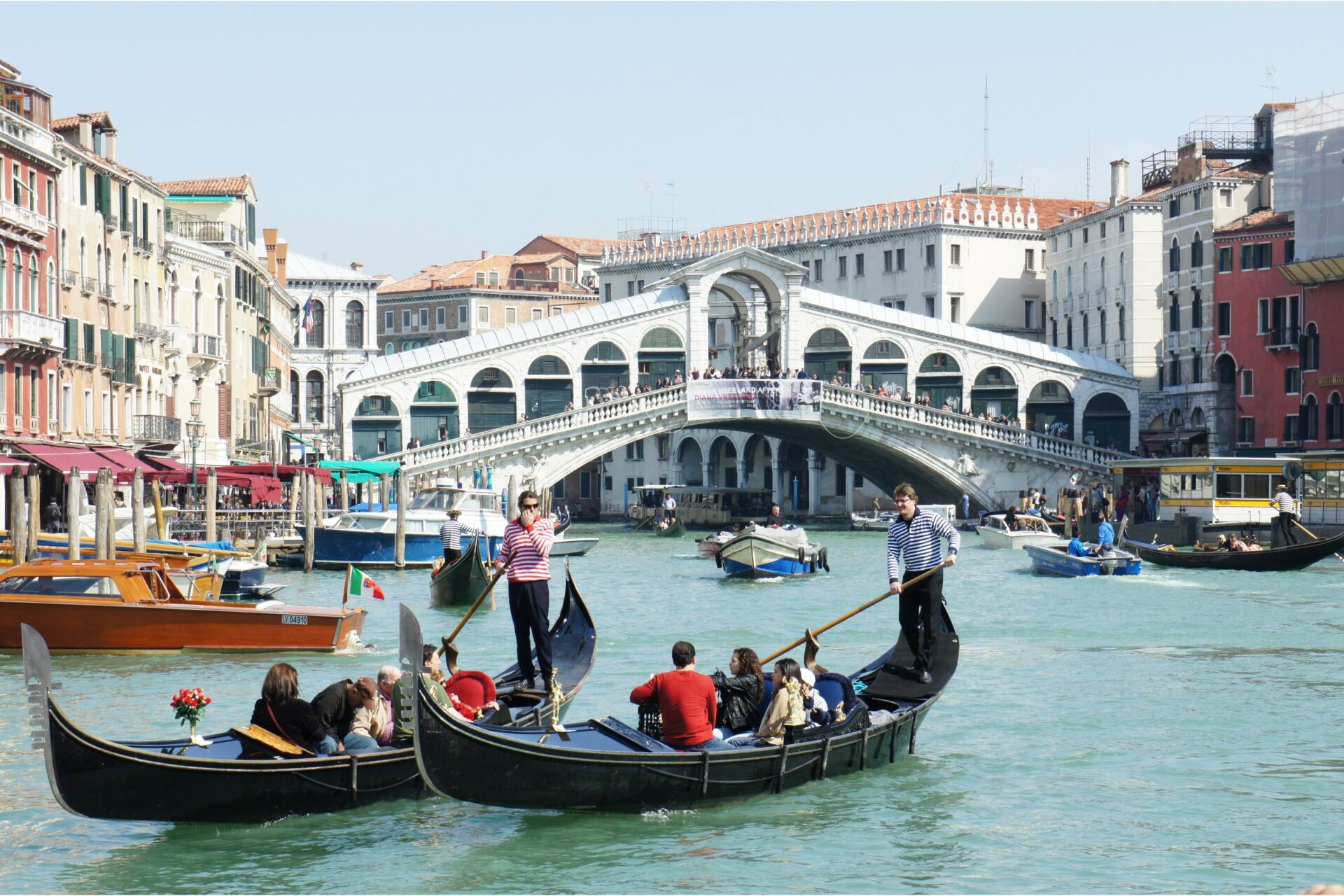
A lone gondola glided by, breaking the canal’s surface into gentle ripples. The gondolier nodded silently—a fellow early riser appreciating Venice’s morning charm.
The romantic atmosphere is undeniable. Without tour groups and souvenir sellers, the Venetian character emerges in quiet corners and hidden spots that become invisible when the crowds arrive.
Historical Echoes in Venetian Architecture
Venice’s architecture tells the story of a once-mighty Mediterranean power, with buildings that have witnessed centuries of politics, commerce, and cultural exchange. The stones of these magnificent structures speak of wealth, ambition, and artistic brilliance across the ages.
Doge’s Palace: An Emblem of Power and Artistry
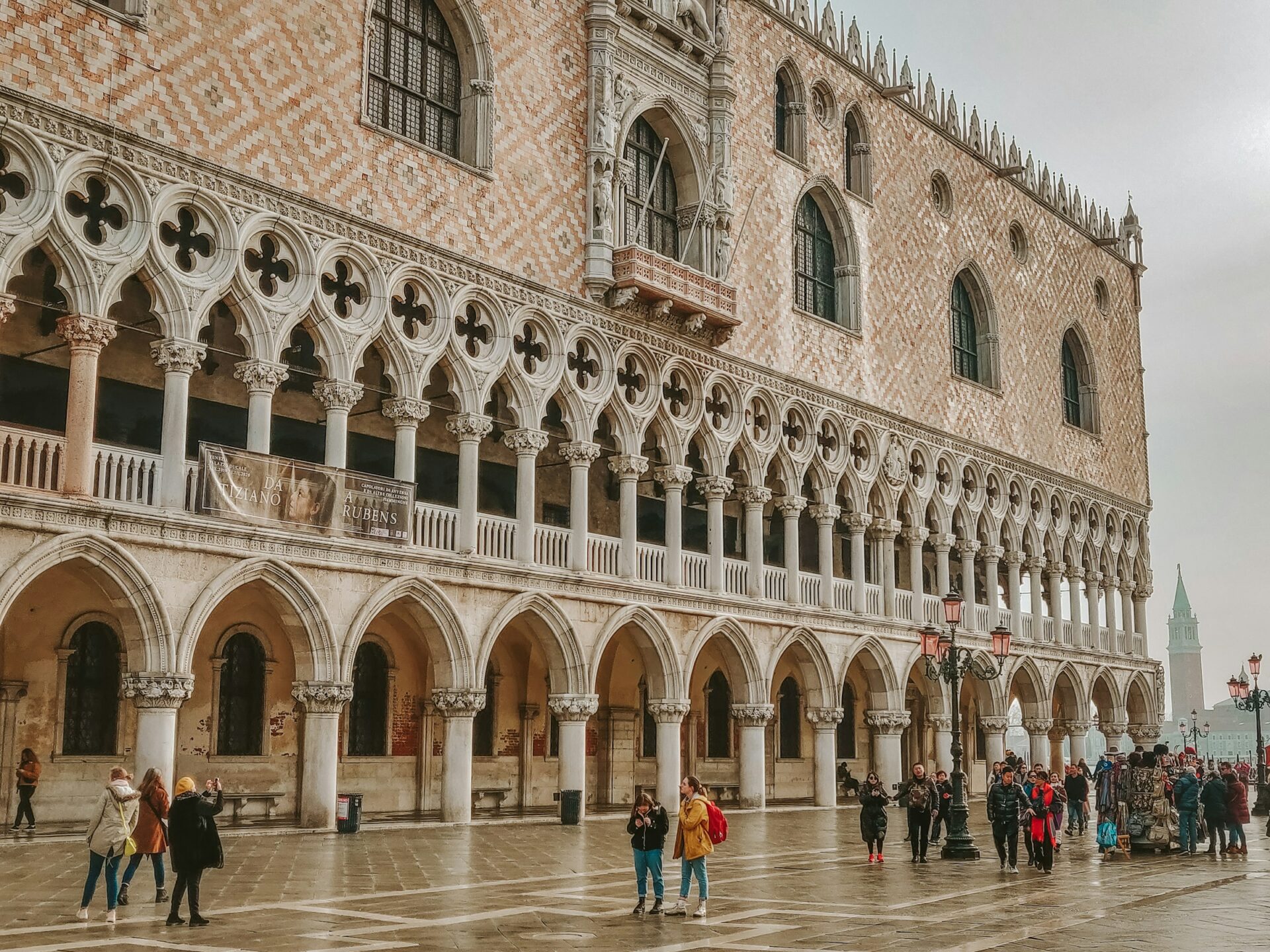
Walking through the Doge’s Palace, I’m always struck by how this building perfectly captures Venice’s former glory. Built in its current form during the late Middle Ages, this Gothic masterpiece served as both the Doge’s residence and the Republic’s government headquarters.
The palace’s distinctive pink and white diamond pattern façade never fails to impress me. Its delicate arched windows and ornate stonework show the Venetians’ commitment to beauty even in seats of power.
Inside, I love to linger beneath the massive gold-leafed ceilings and study the paintings by Tintoretto and Veronese. These aren’t just decorations – they’re political statements about Venice’s might and divine favor.
What amazes me most is how the palace combines beauty with practical governance. The Doge, Venice’s elected leader, ruled from here for centuries, overseeing the Republic’s vast maritime empire.
Bridge of Sighs: A Journey Through Legends
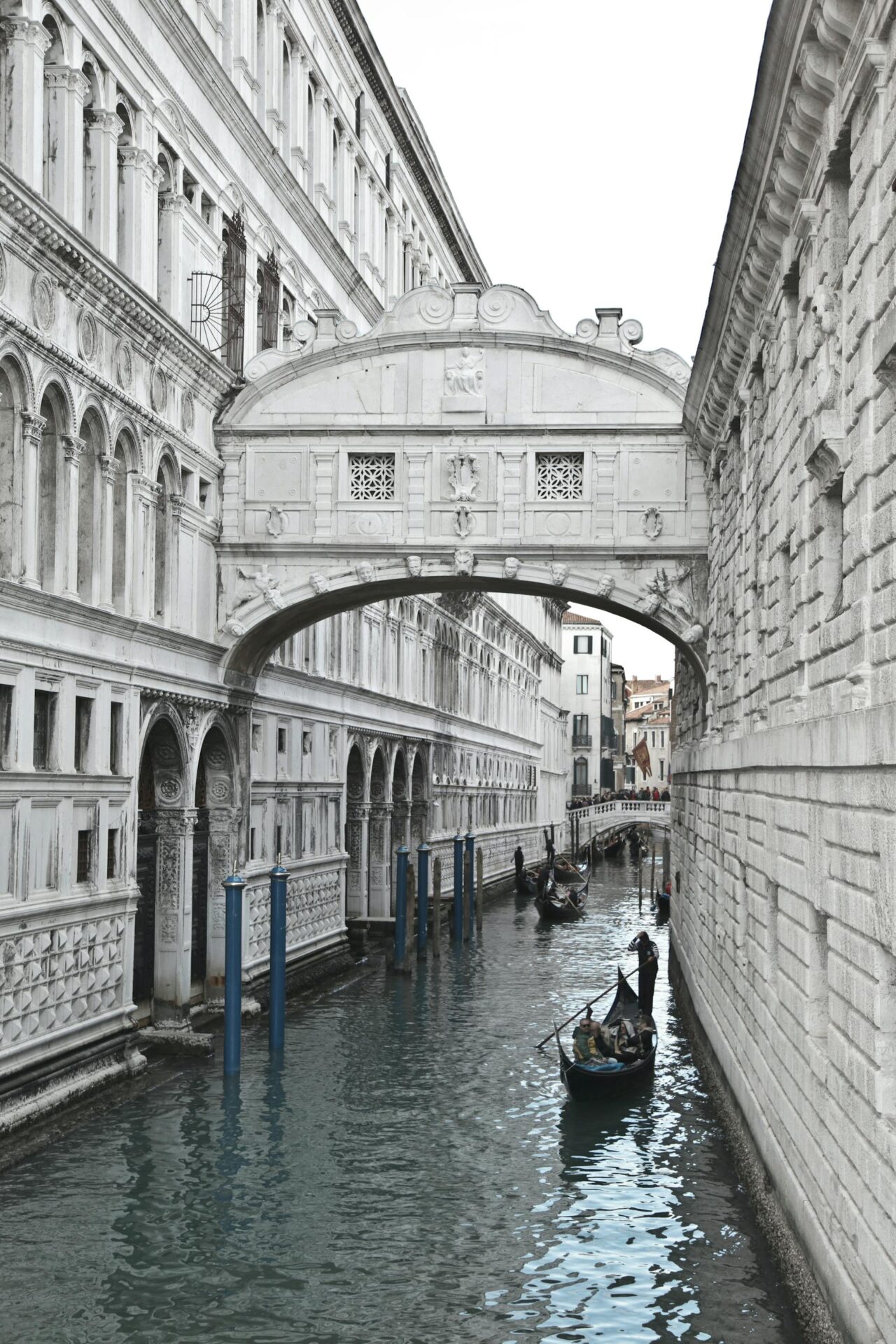
The small, enclosed limestone bridge connecting the Doge’s Palace to the prison next door carries centuries of fascinating stories. Built in the early 1600s, the Bridge of Sighs got its romantic name from the sighs of prisoners catching their last glimpse of beautiful Venice before imprisonment.
I find it fascinating how this simple corridor has captured the imagination of visitors for centuries. Lord Byron helped popularize its melancholy name, though historians note most prisoners were petty criminals rather than political figures facing execution.
The bridge features small, distinctive arched windows with stone bars – a striking contrast to the open, airy architecture elsewhere in Venice. Standing on it today, I can feel the weight of countless footsteps that crossed before me.
Despite its somber purpose, the Bridge of Sighs remains one of Venice’s most photographed spots. I recommend seeing it both from the inside during a palace tour and from the outside by gondola for completely different perspectives.
Cultural Tapestry of Venice
Venice has always been more than just canals and gondolas; it’s a living museum where art, literature, and history intertwine to create one of the world’s most vibrant cultural centers. The city’s artistic and literary heritage reflects centuries of innovation, beauty, and intellectual pursuit.
Venetian Art: A Legacy of Beauty and Genius
Walking through Venice is like stepping into an open-air art gallery. The city nurtured some of Italy’s greatest painters, including Titian, Tintoretto, and Veronese, whose works still adorn churches and museums throughout the city.
I was particularly moved by the Scuola di San Rocco, where Tintoretto’s dramatic canvases cover walls and ceilings. The play of light and shadow in these works feels almost supernatural in the quiet morning hours.
Venice’s artistic soul extends beyond painting. The delicate glasswork of Murano represents centuries of craftsmanship, while Canova’s neoclassical sculptures brought marble to life with unprecedented skill and emotion.
The city itself is art. From the Byzantine splendor of St. Mark’s Basilica to the Gothic elegance of the Doge’s Palace, Venice’s architecture reflects its position as a bridge between East and West.
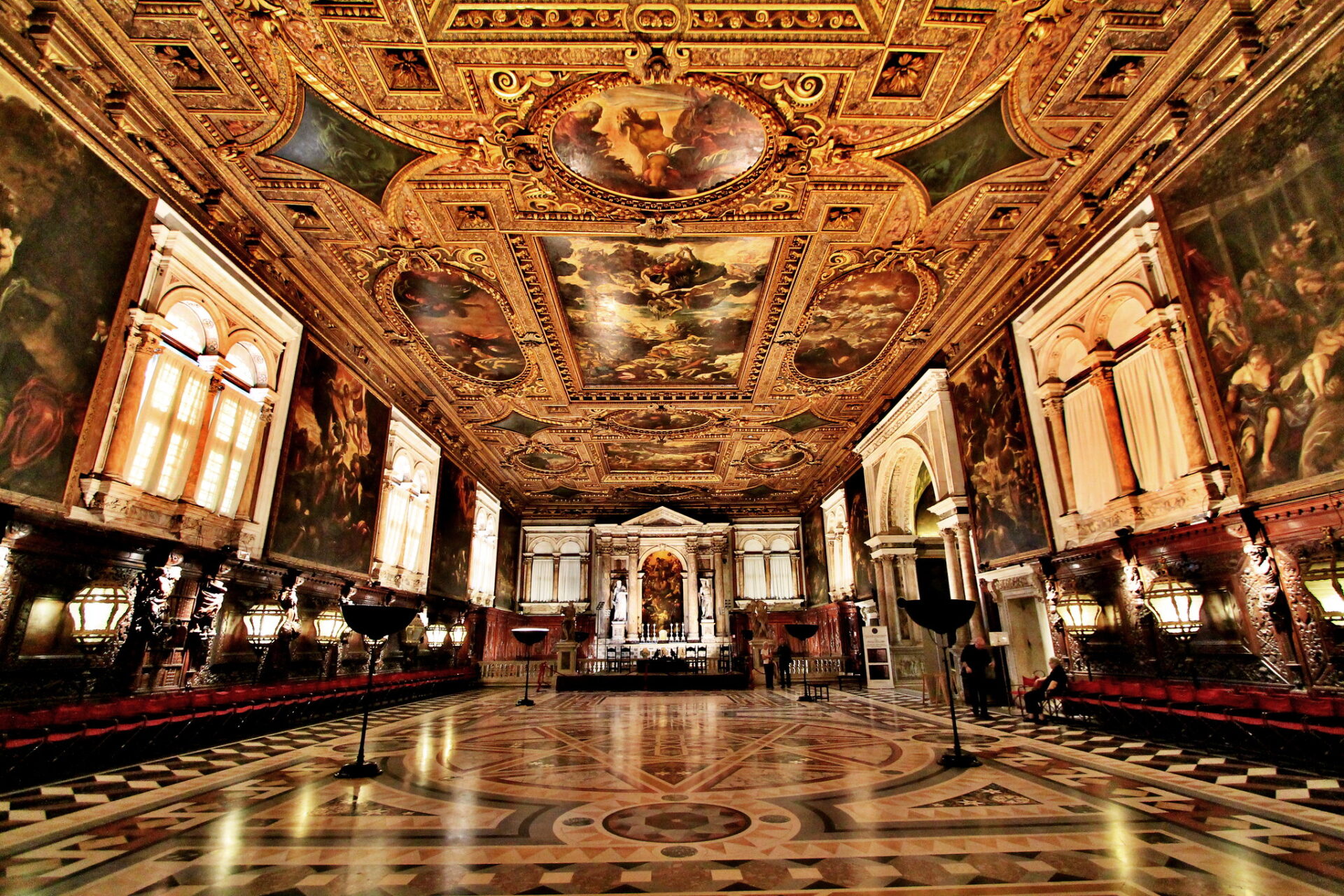
Image Source: Flickr
Literary Venice: From Lord Byron to Modern Writers
Venice has cast its spell over countless writers through the centuries. Lord Byron famously swam the Grand Canal and captured the city’s decadent allure in his poetry, declaring it “a fairy city of the heart.”
I often find myself recalling Henry James’s observation that Venice is “the repository of consolations.” The city’s unique atmosphere—its silence, water, and light—has inspired deep reflection in generations of writers.
Russian poet Joseph Brodsky loved Venice so much he returned every winter for seventeen years. His essays on the city explore how its beauty forces us to confront our own mortality.
Even today, writers flock to Venice seeking inspiration. The city continues to appear in novels, poems, and memoirs, each author discovering new aspects of its complex personality.
In Piazza San Marco, I sometimes imagine these literary giants sitting at café tables, watching the same scenes that captivate me now, finding words for the inexpressible magic of Venice.
The Daily Rhythms of Venetian Life
The pulse of Venice beats from St. Mark’s Square outward through a complex network of canals and narrow streets, creating a city with rhythms entirely its own. Morning markets bustle with locals while evenings transform the lagoon into a shimmering canvas of lights.
Local Markets and Culinary Exploration
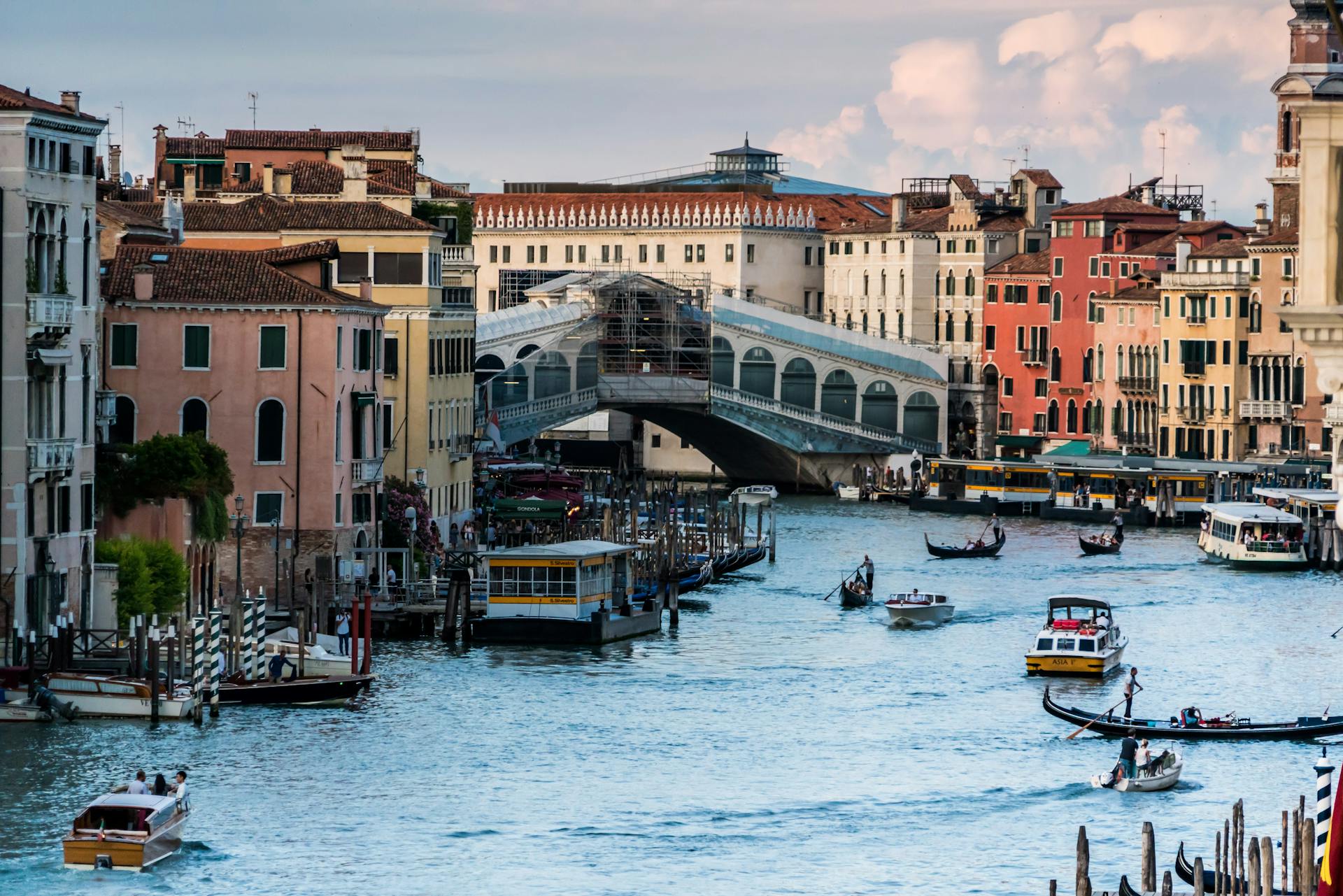
I always start my Venetian mornings at the Rialto Market, where local fishmongers display their catches by 7:30 AM. The market has been the culinary heart of Venice for nearly 1,000 years, situated just steps from the iconic Rialto Bridge.
Fresh seafood glistens on marble slabs – tiny soft-shell crabs called moeche are a rare seasonal treat when available. Nearby fruit vendors arrange vibrant produce with artistic precision.
What I love most is watching Venetian housewives expertly select ingredients for the day’s meals. They navigate the crowded stalls with practiced efficiency, bargaining in dialect that feels musical to my ears.
The market empties by early afternoon, transforming into a different space entirely. By evening, nearby bacari (wine bars) fill with locals enjoying cicchetti – Venice’s version of tapas.
Contemporary Venice: Beyond the Postcard Image
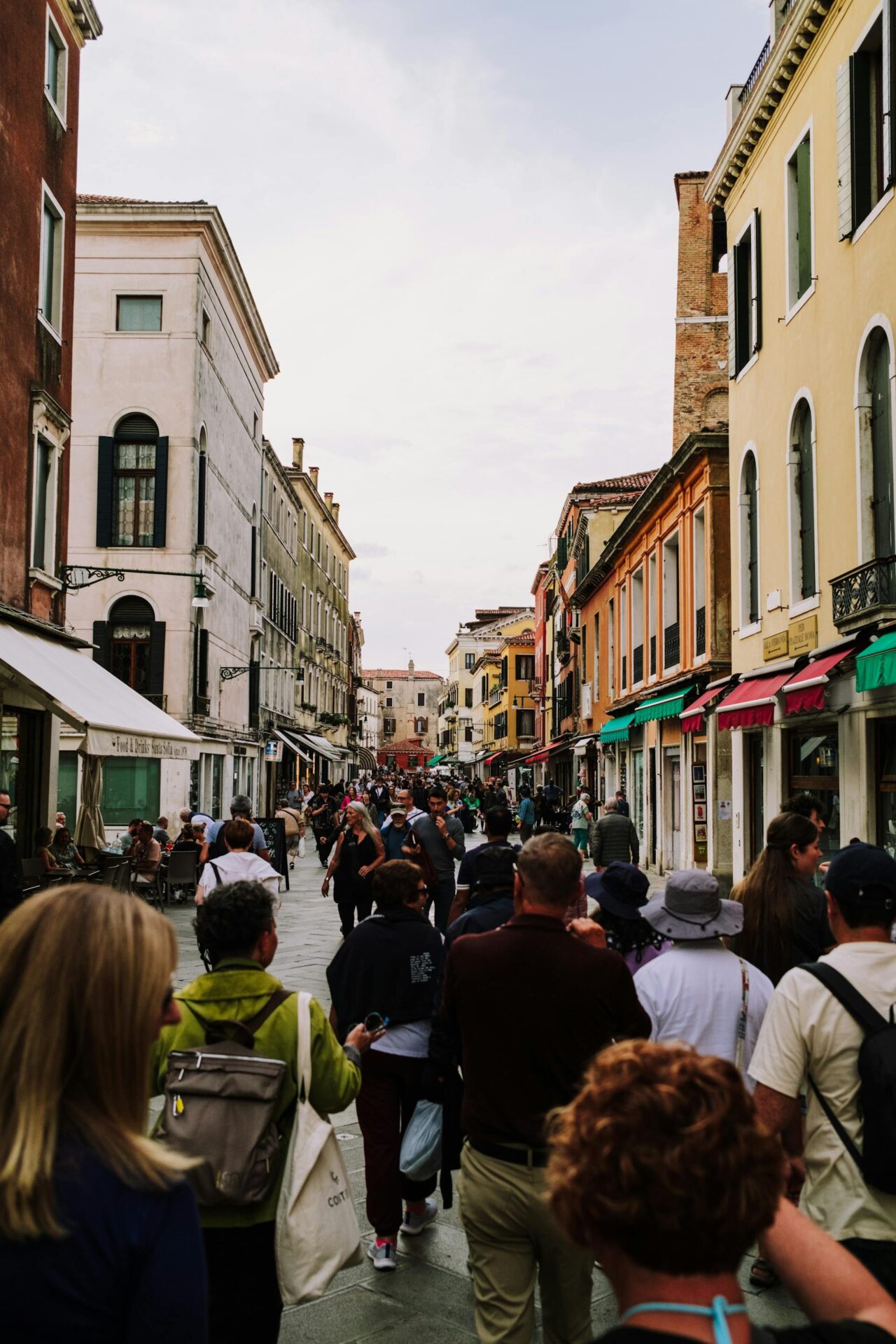
Real Venetian life exists beyond tourist hotspots, in residential neighborhoods like Cannaregio and Castello. Here, laundry stretches between buildings and children play in small campi (squares).
Daily life revolves around the water. Water taxis function as buses, while delivery boats bring everything from furniture to groceries. I’ve watched amazed as a refrigerator was hoisted by rope to a third-floor apartment window!
The gondolas tourists admire actually represent a diminishing tradition. Today, most Venetians travel by vaporetto (water bus) for practical transportation across the lagoon.
Modern challenges shape daily life here. The resident population has dropped below 50,000 as tourism and rising costs push locals to mainland communities. Those who remain maintain traditions with fierce determination.
Jasper-colored sunset light illuminates the ancient stones each evening, reminding me that Venice endures despite challenges. The rhythm continues as it has for centuries.

Off the Beaten Path in Venice
Venice offers so much more than just crowded tourist hotspots. The city reveals its true magic when you venture beyond St. Mark’s Square and the Rialto Bridge to discover its hidden treasures.
Discovering the Islands of Murano and Burano
I took a vaporetto from the bustling Riva degli Schiavoni early one morning, watching Venice’s skyline fade as I headed to Murano. This island has been famous for its exquisite glassmaking since 1291. The craftsmen here create stunning works that range from delicate figurines to elaborate chandeliers.
Walking through Murano’s workshops, I watched masters transform molten glass into art with techniques passed down through generations. My grandmother once told me these skills are Venice’s living heritage.
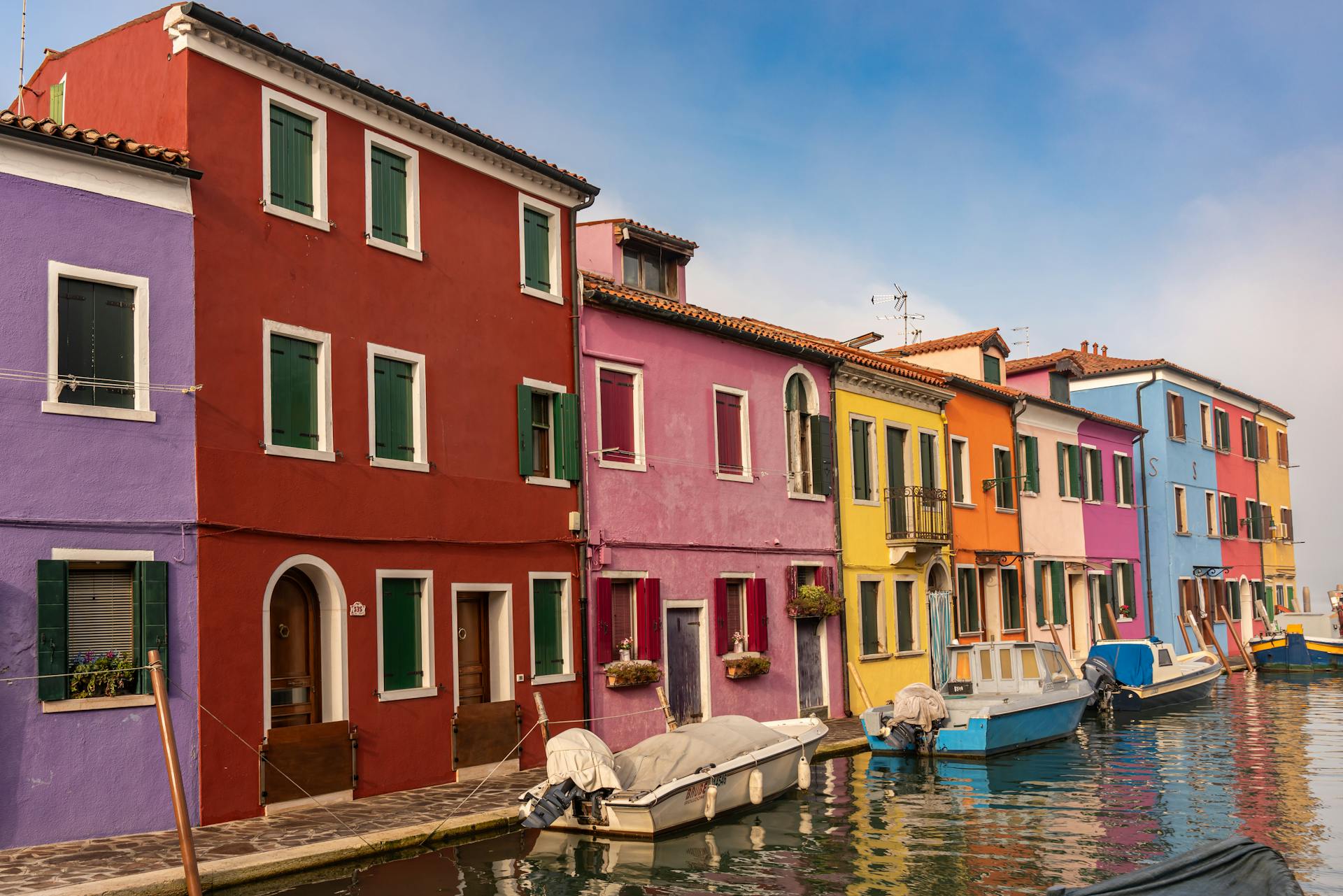
Just a short boat ride away lies colorful Burano. Its rainbow-hued houses create the perfect backdrop for photos. The island is also renowned for its handmade lace, though authentic pieces come with matching price tags.
Venice’s Coastal Escapes: The Lido’s Allure
The Lido offers a completely different side of Venice. Here, you’ll find actual streets, cars, and beautiful beaches. This slender island serves as a natural barrier between Venice and the Adriatic Sea.
I love escaping here when the crowds in central Venice become overwhelming. The Lido’s wide sandy beaches provide a perfect retreat for sunbathing and swimming during summer months.
Unlike the narrow alleyways of Venice proper, the Lido features tree-lined avenues perfect for cycling. You can rent bikes and explore the entire island in just a few hours.
The Grand Hotel des Bains, made famous in Thomas Mann’s “Death in Venice,” stands as a reminder of the Lido’s glamorous past as Italy’s premier beach destination.
