
I’ve watched Day of the Dead celebrations in American communities create something truly special—a cultural bridge that invites us to see death as more than just an ending. It really feels like a continuation of love and memory.
Most Americans first meet Día de los Muertos as a swirl of sugar skulls and marigolds. But if you look closer, there’s a deep philosophy here—one that embraces every part of life, even the hard stuff.
Mexican culture’s approach to death through Day of the Dead gives Americans a healthier way to face mortality. Instead of fear, there’s celebration. Instead of just grief, there’s joyful remembrance.
This ancient tradition, happening every November 1st and 2nd, helps us honor those we’ve lost while finding a bit of peace with life’s inevitable changes.
Let’s dig into the roots, spiritual practices, and lively traditions of this holiday. I want to share how Day of the Dead is shifting American ideas about death, family, and community.
From the symbolic altars families craft to the communal parties popping up in U.S. cities, this Mexican tradition teaches us how to find meaning in both life and loss.

Understanding the Essence of Day of the Dead
Day of the Dead celebrates death as a natural part of life. It honors family connections that don’t just end when someone passes.
This Mexican holiday turns grief into celebration with vibrant traditions that invite loved ones back for a visit.
Honoring Life Through Remembrance
I’ve seen families build ofrendas (altars) that act as bridges between the living and the dead. They fill them with photos, favorite foods, and little treasures that belonged to their relatives.
The focus stays on joy, not sorrow. People swap stories about those they’ve lost while making pan de muerto and mole in the kitchen.
Marigolds, with their wild color and bold scent, guide spirits home. Families believe these flowers help loved ones find their way back.
| Traditional Ofrenda Items | Purpose |
|---|---|
| Photos of deceased | Personal connection |
| Favorite foods | Nourishment for spirits |
| Candles | Light the way home |
| Marigolds | Guide spirits |
Sugar skulls, each with a name, celebrate individual lives. Kids learn to talk about death openly and remember family members they never got to meet.

Embracing the Cycle of Life and Death
Día de los Muertos teaches that death doesn’t slam the door shut—it opens a new one. Mexican culture sees death as a natural transition, not a final goodbye.
This celebration takes the sting out of death by making it familiar. Families gather in cemeteries for picnics, laughter, and music, turning graveyards into places full of life.
The holiday spans two days. November 1st is for the little ones—angelitos. November 2nd brings adult spirits home.
Ancient Aztec beliefs mix with Catholic traditions here. Aztecs believed souls traveled to different afterlife levels depending on how they died.
Death, in this worldview, becomes a teacher. The celebration nudges us to cherish our time together and stay connected to our roots.

Differences From American Customs
American culture usually keeps death private, tucked away from daily life. Mexican Day of the Dead traditions bring it out into the open, with the whole community joining in.
Halloween in the U.S. is all about fear and spooky stuff. Day of the Dead, on the other hand, uses color and treats death more like an old friend.
Memorials in America happen quietly, maybe on anniversaries. Día de los Muertos bursts into a yearly, everyone’s-invited celebration.
Key differences:
- Mexican: Death is celebrated together, in public
- American: Grief stays private
- Mexican: Death links generations
- American: Death separates families
Mexican traditions build community through shared celebration. American customs often leave grieving families feeling alone.
Day of the Dead lasts for days, with lots of prep and community events. That anticipation draws people together and strengthens social ties.
Historical and Spiritual Origins
Día de los Muertos grew out of ancient Aztec rituals that honored ancestors. Spanish colonizers arrived, and these indigenous traditions blended with Catholic practices like All Saints’ Day and All Souls’ Day.
Aztec and Pre-Hispanic Roots
The Aztecs and other early cultures saw death as just another part of life’s cycle. They held month-long festivals to honor ancestors and the dead.
They worshipped Mictlantecuhtli, god of the underworld, and Mictecacihuatl, the “Lady of the Dead.” These festivals happened during the ninth month of the Aztec calendar.
Indigenous families built altars with food and flowers, hoping spirits would visit during these special times.
Key elements from pre-Hispanic traditions:
- Skull imagery and death symbols
- Food offerings for the dead
- Marigold decorations
- Belief in spirit visits
- Celebrating, not mourning, death
These old traditions set the stage for today’s Day of the Dead. The idea that death isn’t an ending but a continuation still shapes the holiday.

Catholic Traditions and Syncretism
Spanish colonizers arrived in the 1500s and started converting locals to Catholicism. They shifted the traditional death festivals to match Catholic holy days.
The church lined up the celebrations with All Saints’ Day (Nov 1) and All Souls’ Day (Nov 2). All Saints’ Day honors children and saints. All Souls’ Day remembers adult family members.
Over time, families blended ancestor worship with Christian prayers and saints.
Catholic influences:
- Fixed November dates
- Prayers for the dead
- Church services and masses
- Saints and religious images
- Christian symbols mixed with indigenous ones
The Catholic Church tried to erase indigenous traditions at first. Eventually, they accepted the blend, as long as Christian elements stayed.

Evolution of Día de los Muertos in Mexico
Modern Día de los Muertos mixes ancient indigenous and Catholic traditions. Each region in Mexico adds its own flair.
In rural areas, families visit cemeteries, decorating graves with candles, marigolds, and favorite foods. They clean tombstones and share stories.
Cities throw street festivals with music, parades, and dancing. People wear skull masks (calacas) and paint their faces.
Modern practices:
- Building home altars (ofrendas)
- Making sugar skulls and pan de muerto
- Decorating with marigolds
- Sharing favorite foods of the dead
- Swapping memories and stories
The celebration keeps the indigenous belief alive: death isn’t scary, it’s a reunion. Families treat the return of spirits as a joyful gathering.

Symbolism and Key Traditions
Day of the Dead centers on three main symbols: home altars (ofrendas), skull imagery that turns death into art, and bright marigold flowers that help guide spirits home.
Building Altars and Ofrendas
Mexican families put together elaborate ofrendas in their homes to honor loved ones. These displays act as spiritual bridges.
Altars usually have three levels. The top holds photos and religious statues. The middle has favorite foods and drinks—tequila, mezcal, or atole.
The bottom tier glows with candles to help spirits find their way. Some families add a washbasin and towel so spirits can freshen up after their journey.
Common ofrenda items:
- Water for spiritual thirst
- Salt for cleansing
- Copal incense for guidance
- Pan de muerto (sweet bread)
- Personal keepsakes
I’ve walked through Mexico City’s plazas and museums, seeing massive public altars. These displays show how private grief can become a shared celebration.

Iconic Symbols: Calaveras, Sugar Skulls, and La Catrina
Sugar skulls are everywhere during Day of the Dead. These bright calaveras, made from pressed sugar, get decked out with icing, foil, and beads.
Each one carries a name on its forehead. Families place them on altars as sweet gifts for visiting spirits.
La Catrina, the fancy skeleton lady with her feathered hat, is the holiday’s superstar. Artist José Guadalupe Posada brought her to life in the early 1900s.
La Catrina stands for:
- Death as the great equalizer
- Mexican comfort with mortality
- The beauty in life’s endless cycle
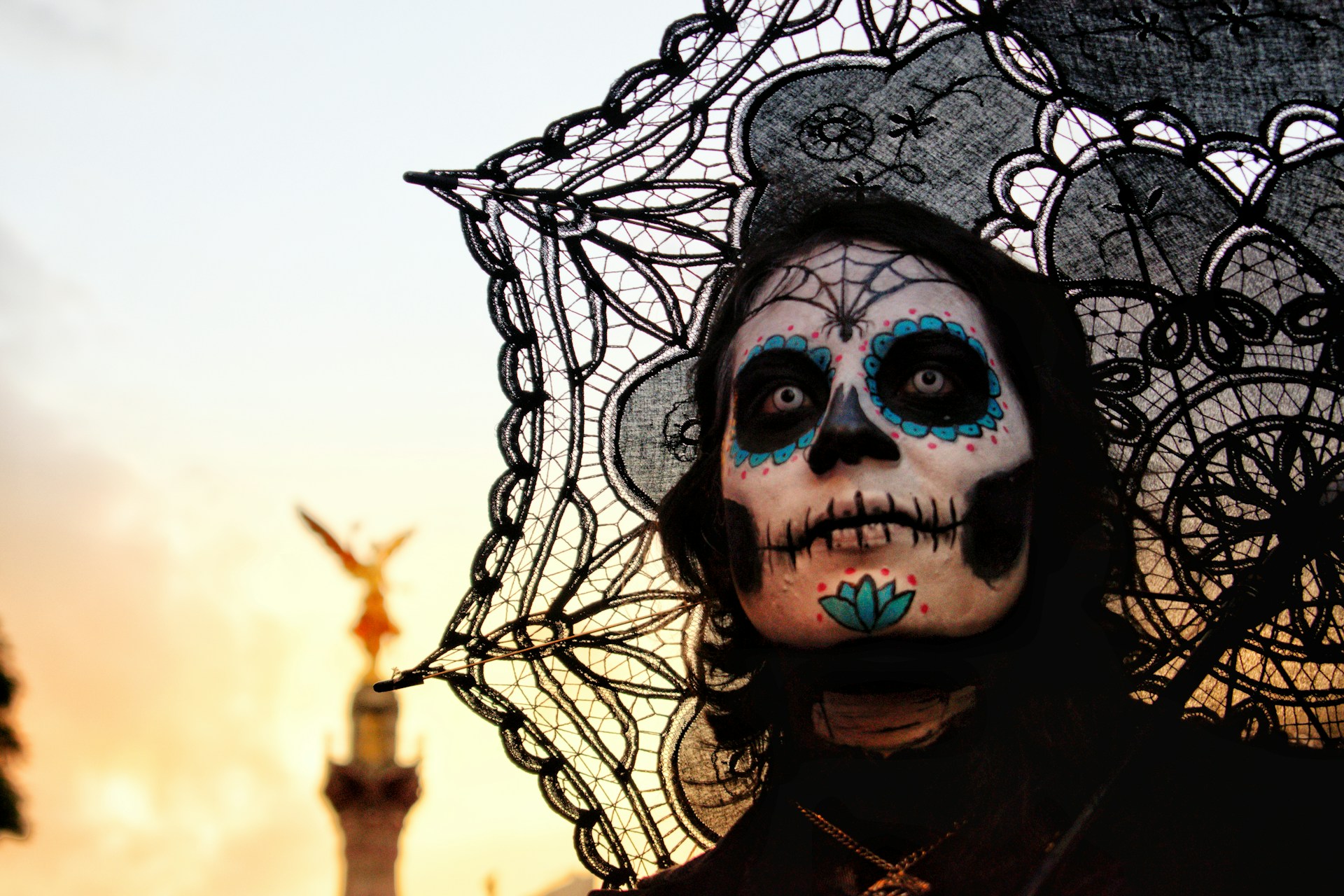
Calaveras pop up on faces, costumes, and decorations. Painting your face as a skull turns death from something scary into something joyful and creative.
This imagery reveals a totally different attitude toward death. Here, it’s just part of the story.

The Role of Marigolds and Decorative Elements
Marigolds, or cempasúchil, help spirits find their way. Their bright orange petals and bold scent create a path for souls to follow.
Mexicans call marigolds “flor de muerto,” or flower of the dead. Families scatter petals from cemeteries to their front doors, lighting the way home.
The flowers stand for the beauty and fragility of life. Their color represents the sun and eternal life.
Other decorations:
- Papel picado: Colorful tissue banners with cut-out designs
- Candles: Sometimes skull-shaped, symbolizing fire
- Crosses: Made from ashes or as religious markers
I once visited marigold farms near Oaxaca, where fields glow orange for miles. Farmers grow them just for this holiday.
Papel picado flutters above graves and altars, its delicate cuts reminding us how fragile life really is. These banners tie the living and dead together through shared beauty.

Culinary Rituals and Shared Experiences
Food is the heart of Day of the Dead. Families make pan de muerto, tamales, and warm atole to honor ancestors.
These food traditions turn kitchens into sacred spaces. Recipes and stories pass from one generation to the next.
Pan de Muerto: Bread of the Dead
Pan de muerto is the bread everyone waits for. I’ve watched families spend days preparing this sweet, orange-scented treat shaped like skulls and bones.
The round loaf stands for the circle of life and death. Bone-shaped dough on top brings in traditional skull imagery.
Orange blossom water and anise seeds give the bread its signature flavor. The smell alone feels like a celebration.
What goes in:
- Flour and eggs for the dough
- Orange zest for brightness
- Butter and sugar for sweetness
- Anise seeds for a twist
Making pan de muerto pulls families together. Kids shape dough, grandparents share stories. It’s a tradition that connects everyone.

Traditional Foods and Drinks
Beyond pan de muerto, families cook up feasts with the favorite dishes of those they’ve lost. Tamales, wrapped in corn husks, show up on almost every altar.
Mole, a rich sauce with chocolate and chilies, often takes center stage. It can take days to make and usually comes from a family recipe.
Day of the Dead foods:
- Tamales with all sorts of fillings
- Mole over chicken or turkey
- Sugar skulls, bright and sweet
- Fresh fruit like oranges and bananas
Warm drinks matter, too. Atole, made from corn masa, brings comfort on cool nights. Champurrado, with chocolate, pairs perfectly with sweet breads.

Food as a Spiritual Offering
Families arrange food on ofrendas to feed returning spirits. Each dish means something special and connects the living to their ancestors.
People believe spirits absorb the essence of the food. Plates stay untouched for hours, giving the dead a chance to enjoy their favorite meals.
Spiritual side of food:
- Personal touch – dishes reflect who the person was
- Cultural continuity – recipes keep traditions alive
- Sacred nourishment – food feeds body and soul
- Memory – meals spark stories and keep memories fresh
Salt, for purification, shows up on most altars. Water quenches spiritual thirst after a long journey. These simple foods take on deep meaning during Day of the Dead.

Art, Community, and Public Celebration
Day of the Dead turns public spaces in Mexico and the U.S. into vibrant art shows. Parades, colorful decorations, and collaborative art bring families and strangers together.
Street festivals pop up, papel picado flutters, and everyone shares in the creative spirit. It’s a celebration for both the dead and the living, woven together by art and community.
Mexican Art and Día de los Muertos
Mexican artists dive deep into life’s big questions using Day of the Dead imagery. Walk through Mexico and you’ll spot traditional sugar skulls and skeletons painted or sculpted everywhere—on walls, in markets, tucked into galleries.
I love how artists turn ofrendas (altars) into living, breathing art. They mix family photos, bright marigolds, and personal treasures of loved ones who’ve passed. Each display seems to whisper a unique family story.
Modern artists in Mexico blend old symbols with today’s world. You’ll see skeletons dancing, cooking, or just hanging out. This playful twist makes death feel natural—almost friendly, not something to fear.
Key artistic elements:
- Bursts of orange marigolds
- Painted clay pottery
- Handcrafted ceramic skulls
- Lush, detailed floral designs
Head to Mexico City in November and you’ll find art museums buzzing with Day of the Dead exhibitions. Local artists set up stalls in public markets, selling everything from painted skulls to intricate altars.

Festivals and Parades in Mexico and Beyond
When Day of the Dead rolls around, Mexican towns explode with parades. Families go all out—costumes, painted faces, the works.
Mexico City throws one of the world’s biggest Day of the Dead parades. Imagine thousands marching through downtown, giant skeleton puppets bobbing above flower-studded floats.
In the U.S., cities like Los Angeles, San Antonio, and Phoenix put their own spin on the celebration. Their festivals draw crowds from all over, eager to join the fun.
Parade highlights:
- Towering skeleton dancers
- Mariachi bands belting out classics
- Kids with faces painted as sugar skulls
- Floats blanketed in flowers
These celebrations open a window into Mexican culture for everyone. Americans join in, learning the holiday’s meaning by dancing, watching, and celebrating side by side.

Papel Picado and Creative Expressions
Papel picado might just be the most iconic Day of the Dead art form out there. Skilled hands cut wild, intricate patterns into colorful tissue paper—no easy feat with just tiny chisels.
I always notice these fluttering banners strung across streets and doorways. Their skulls, flowers, and crosses catch the breeze and bring the whole neighborhood to life.
Community workshops pop up everywhere, teaching folks of all ages how to make papel picado. Kids pick up the craft from parents and grandparents, passing tradition down one snip at a time.
Common papel picado designs:
- Skeletons mid-dance
- Marigold blossoms
- Crosses and religious icons
- Butterflies in flight
More and more American schools are joining in. Art classes now feature papel picado projects, letting students create their own designs while soaking up the holiday’s deeper meaning.

Day of the Dead’s Influence on American Perspectives
Day of the Dead has genuinely nudged how Americans think about death and family. Mexican-American communities brought their traditions here and, in doing so, taught many people to celebrate life instead of dreading its end.
Mexican-American Celebrations and Adaptations
Mexican-American families started celebrating Day of the Dead in the U.S. back in the 1890s. Those early gatherings were quiet—just family, a visit to the cemetery, maybe a prayer.
Then, in the 1970s, everything changed. Chicano artists and activists took Day of the Dead public. They wanted to spark cultural pride and raise awareness.
What changed?
- Festivals grew from private rituals to huge community parties
- Museums and galleries filled with Day of the Dead art
- Parades featured costumes, music, and dancing
- Schools started teaching about the holiday
Self Help Graphics & Art in East LA kicked off a new era in 1973. Their Day of the Dead event mixed traditional altars with tough topics like gang violence.
Soon, the movement spread. Community centers and art groups across the country began hosting their own celebrations. The holiday broke out of Mexican-American neighborhoods and found a place in mainstream American culture.

Lessons About Life from Día de los Muertos
Day of the Dead really flips the script on how many Americans think about death. Instead of just focusing on fear or grief, people gather to celebrate and keep connections with loved ones who’ve passed.
When I first saw an ofrenda—one of those vibrant altars covered in photos, favorite snacks, and little mementos—it struck me. Families don’t just say goodbye; they invite memories to stick around, right there in the living room.
Here’s how my perspective—and maybe yours—can shift:
- Celebrate the lives of family members who’ve passed on, not just mourn them.
- Accept that death is woven into the fabric of life, not separate from it.
- Find comfort in community, especially when everyone remembers together.
- Channel grief into art, music, food, and creativity.
Joy takes center stage here, and honestly, it’s contagious. I’ve watched families laugh over old stories, cook up cherished recipes, and fill the house with music that once made their loved ones dance.
Schools have started weaving Day of the Dead into art and social studies. Kids get to see that other cultures approach death with openness, even a kind of hope, and that’s a lesson worth holding onto.