
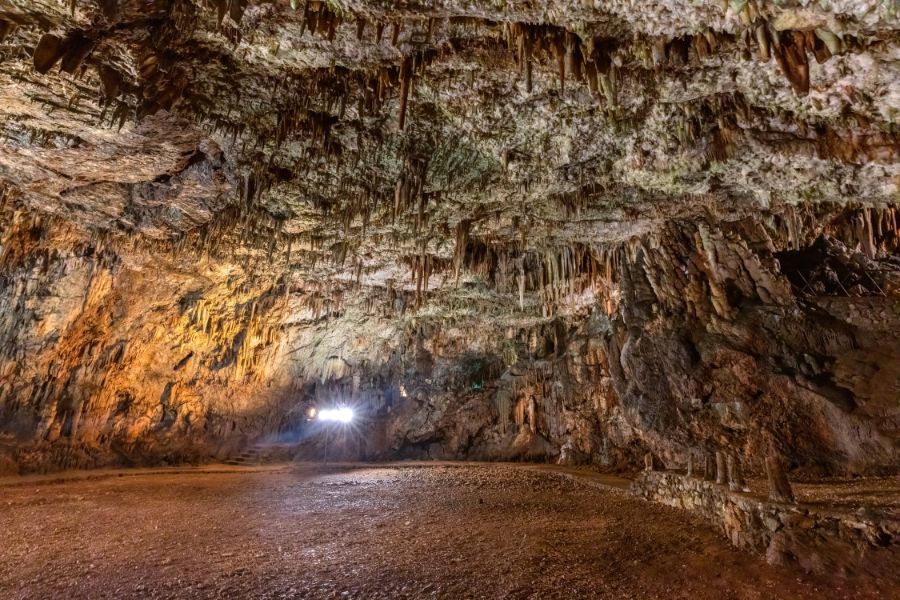
Deep beneath Kefalonia, you’ll find one of Greece’s most jaw-dropping underground chambers. Drogarati Cave is a 150-million-year-old limestone marvel that nature designed as its own concert hall, filled with surreal stalactites and stalagmites that took eons to create.
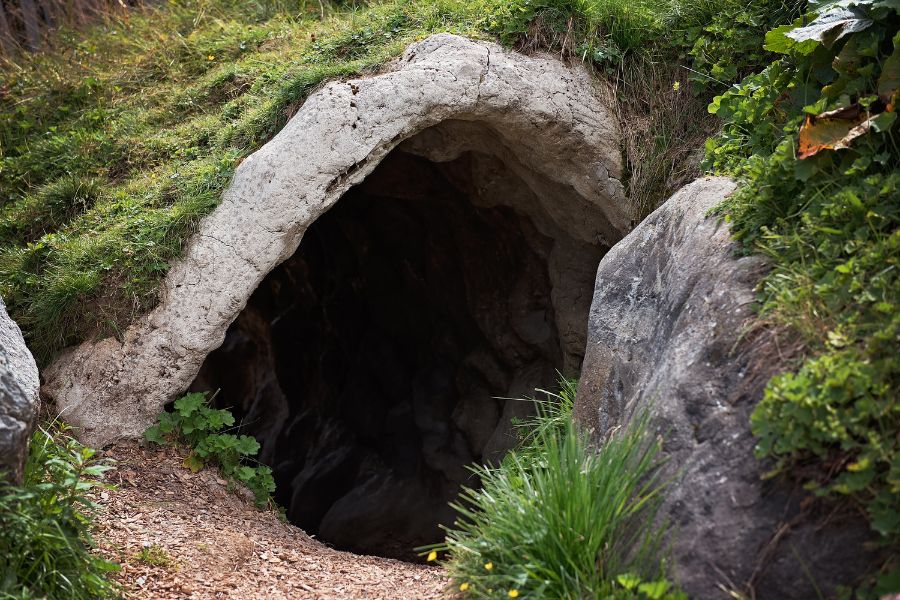
Locals stumbled upon this geological wonder about 300 years ago when an earthquake cracked open its hidden entrance near Sami. It’s wild to imagine how long it slept beneath everyone’s feet.
What sets Drogarati apart is its otherworldly acoustics and that cathedral-like vibe. Step into the main chamber, the “Sala of Apotheosis,” and you’ll understand why musicians have performed here—rumor has it, even Maria Callas was floored by the sound.
I’ve got you covered with everything you’ll want to know about visiting this natural masterpiece. From the cave’s wild rock formations to practical travel tips, let’s dig in. And if you’ve got time, there are some seriously cool spots nearby, like Melissani Lake and the sleepy harbor town of Sami.
Drogarati Cave’s Awe-Inspiring Natural Architecture
Drogarati Cave puts on a show with its natural artistry, shaped over millions of years. These formations and chambers build an underground cathedral that kind of makes you forget the world above.
The Formation of Stalactites and Stalagmites
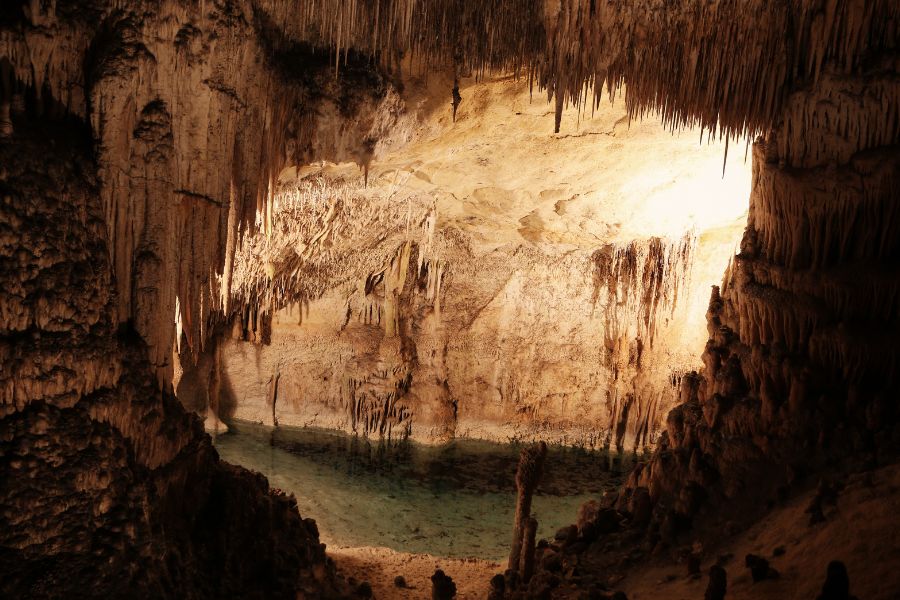
Stalactites and stalagmites inside Drogarati Cave didn’t just appear overnight. Rainwater seeps through the limestone, picking up lime as it goes.
When those drops fall from the ceiling, they leave behind tiny bits of calcium carbonate. Over time, those bits stack up and create the icicle-like stalactites. The water that hits the floor adds to the upward-growing stalagmites.
Growth Rate:
- Stalactites creep along at just 1 centimeter per 100 years
- The shapes we see today took ages—literally millions of years
- Some look almost glassy, thanks to mineral build-up
The formations hang like stone curtains. I’ve heard people say the stalactites look like frozen waterfalls, and honestly, I can’t disagree.
The Geological History and Phenomenon
Drogarati Cave started forming over 150 million years ago, back when dinosaurs ruled the Earth. For centuries, it stayed hidden about 200 feet below ground.
An earthquake about 300 years ago finally cracked open the entrance and revealed this ancient wonder. The cave stretches 65 by 45 meters, with a ceiling that soars up 20 meters.
Scientists think there are more chambers connected to Drogarati, still waiting to be discovered. It probably links up with other sea caves in the area.
Key Geological Facts:
- Age: 150 million years
- Discovery: Revealed by earthquake 300 years ago
- Temperature: Holds steady at 18°C all year
- Humidity: Stays at 90% humidity
The limestone rock here is just right for these kinds of caves. That steady temperature and humidity keep the delicate formations intact.
Unique Features: Royal Balcony & Chamber of Exaltation
Drogarati splits into two main sections, each flaunting its own natural architecture. The upper area, called the Royal Balcony, overlooks the main chamber like a theater box.
This entrance area drips with the most impressive stalactites. The main chamber, a big circular space with a vaulted ceiling, is what locals call the “Chamber of Exaltation” or “Sala of Apotheosis.” The acoustics in here are so perfect, it’s actually hosted concerts and musical events.
Special Architectural Elements:
- Stone balcony formation that feels like nature’s own theater
- Circular chamber with a high, vaulted roof
- Acoustics that make every sound ring clear
- Jagged corners that create dramatic lighting
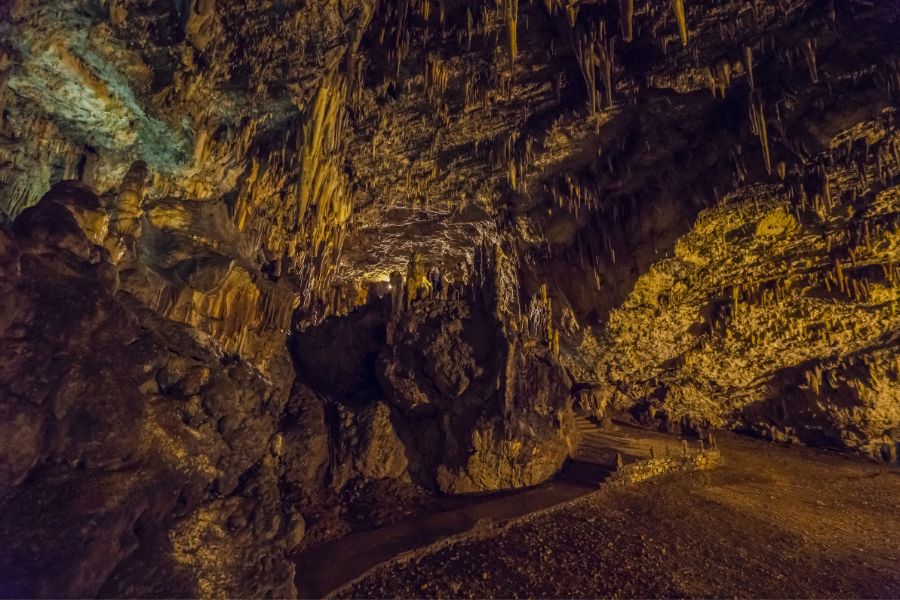
Legend says Maria Callas once sang here, and honestly, I can see why. The cave’s 900 square meters make it feel both grand and intimate. Warm lights highlight the wild shapes and corners, giving the whole place a magical glow.
The Concert Hall Experience: Acoustics & Cultural Events
Drogarati Cave stands out as Greece’s only cave that hosts concerts. There’s a performance area set up to take full advantage of the natural acoustics. The chamber’s size and mineral formations make it a one-of-a-kind venue.
Acoustic Qualities and Event Atmosphere
The main chamber measures 65 by 45 meters, with a ceiling about 20 meters up. These dimensions create ideal conditions for sound.
Stalactites and stalagmites act as natural sound diffusers. They spread music evenly through the space.
Musicians perform on a platform built just for concerts. The cave keeps a cool, steady 18°C, no matter the season.
When I listened to music here, the sound bounced off the limestone in a way I’ve never heard anywhere else. Every note seems to hang in the air.
That’s why people call it the “Chamber of Exaltation.” The acoustics really are something special.
Legendary Performances and Famous Visitors
For decades, classical musicians have flocked to Drogarati Cave to experience its acoustics. The movie Captain Corelli’s Mandolin even brought international attention to Kefalonia’s natural magic.
Artists have played chamber music, solos, and small ensemble pieces here. The space isn’t huge, so you won’t see a full orchestra, but that just makes the experience more personal.
Concerts still happen, though they’re scheduled carefully to protect the cave. The combo of raw natural beauty and perfect sound makes each performance feel unforgettable.
Visiting Drogarati Cave: Practical Information
Drogarati Cave is open seasonally, with a small entrance fee that makes it easy for most travelers to visit. The cave stays cool all year, and you’ll need to walk down a set of stairs to get inside.
Opening Hours and Entrance Fees
Drogarati Cave opens daily from 10 am to 6 pm during the summer. Double-check the current hours before you go—things can change with the seasons.
Entrance fees:
- Adults: €4
- Children: €3
Honestly, it’s a bargain for something this unique. I paid at the entrance, and they take both cash and card.
The ticket booth sits right near the parking lot, so you can grab your pass and head straight for the stairs.
Accessibility and What to Expect
You’ll need to walk down a bunch of stairs to reach the main chamber, about 95 meters below the surface. The path is well-kept, but it’s a bit of a workout.
What to bring:
- Shoes with a good grip (the floor can be damp)
- A light jacket, since it’s always cool inside (about 18°C/64°F)
- Water for after your visit
The Chamber of Exaltation is surprisingly spacious—65 by 45 meters. Once you reach the bottom, it really opens up.
Drogarati Cave sits just outside Sami, a quick 10-minute drive from the port. If you’re coming from Argostoli, expect about a 30-minute drive along the main road.
Photography and Visitor Tips
You can take photos throughout the cave, but the lighting is tricky. Bring a camera that does well in low light if you want good shots.
Photography tips:
- Go easy on the flash—it can ruin the natural mood
- Use the cave’s lighting to your advantage
- The Royal Balcony gives the best wide-angle views
Visitor guidelines:
- Don’t touch the formations—even a fingerprint can stop their growth
- Stick to the paths
- Keep your voice down (sound really carries in here)
Try to visit in the early morning or late afternoon to dodge the crowds. The cave’s acoustics mean even a whisper can echo, so quiet really does make it more magical.
Most people spend 30-45 minutes exploring. If you’re planning your day, Melissani Lake is right nearby and makes a perfect double feature.
How to Get to Drogarati Cave and Explore the Area
Drogarati Cave is just outside Sami, so it’s pretty easy to reach from most parts of Kefalonia. I found the road signs clear, whether you’re starting in Sami or coming from Argostoli.
Routes from Sami and Argostoli
From Sami (3 km away):
Start in Sami’s center and head toward Argostoli. You’ll spot signs for the cave on your left before you hit the main road junction.
It’s a quick 5-minute drive. The road is in good shape, and any type of car can handle it.
From Argostoli (25 km away):
Take the main coastal road toward Sami. You’ll wind through some gorgeous mountain scenery for about 30 minutes.
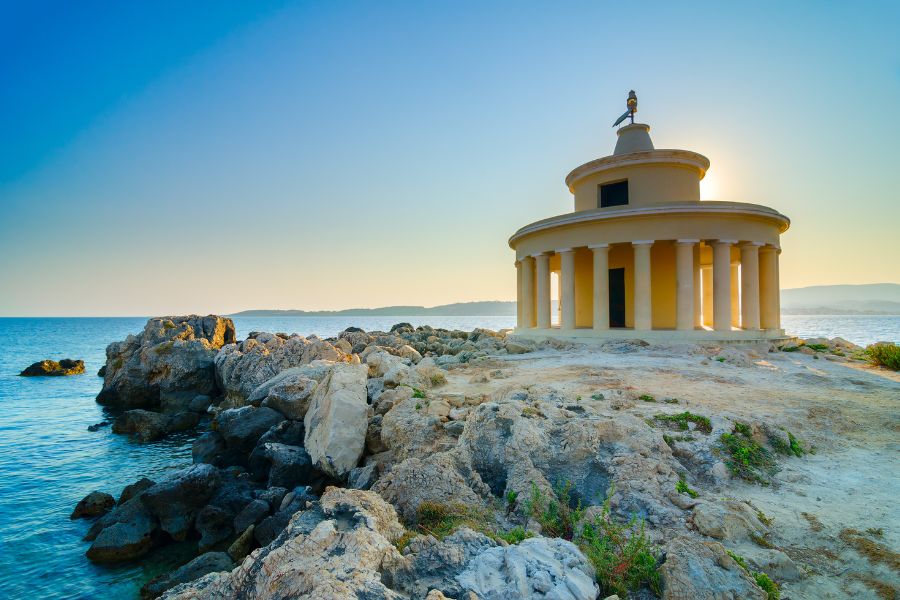
Look for the Drogarati Cave sign just before you reach Sami. Turn right, and after a few hundred meters, the road bends right into the parking lot.
The lot handles both cars and tour buses. Even in summer, I usually find a spot without much trouble.
Public Transport, Tours, and Self-Drive Options
Self-Drive:
Renting a car is the most flexible way to get around Kefalonia. Book ahead in peak season (June-September) to be safe.
GPS works well, and rental agencies in both Argostoli and Sami hand out maps with major sights marked.
Organized Tours:
Plenty of tour operators bundle Drogarati with Melissani Cave. These half-day trips often include transport from your hotel.
Tour groups tend to arrive between 10 AM and 4 PM. Private tours cost a bit more but let you set your own pace.
Public Transport:
There’s a limited bus between Argostoli and Sami. Check with your hotel for the latest schedule, since it changes by season.
A taxi from Sami will run you about 15-20 euros for the short ride.
Nearby Natural Marvels and Attractions
Drogarati Cave sits right in the heart of Kefalonia’s geological playground. Underground lakes, wild coastlines, and dreamy beaches are all within easy reach. Melissani Lake is just minutes away, and Myrtos Beach isn’t far if you want to see one of Greece’s most famous shores.
Melissani Lake: The Neighboring Underground Lake
Melissani Lake is part of the same geological story as Drogarati. It’s just a short drive away, so visiting both in one trip is a no-brainer.
The lake fills a collapsed cave, and sunlight pours through the open roof, lighting up the water in every shade of blue. You can hop on a small boat for a quick tour across the surface.
Key Features:
- Crystal-clear water straight out of a dream
- Natural skylight that makes the colors pop
- 10-minute boat rides available
- Formed by the same forces as Drogarati
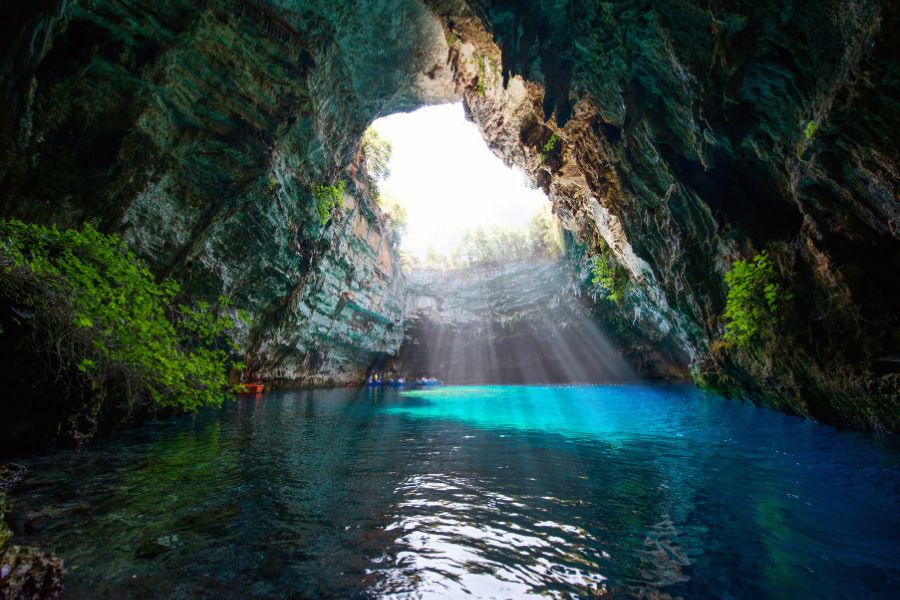
Some spots are 40 meters deep. I noticed the water changes color as the sun moves overhead—kind of mesmerizing.
Sea Caves and Kefalonia’s Unique Coastline
Kefalonia’s limestone shores are dotted with sea caves. Wave erosion over thousands of years sculpted these hidden gems.
The coastline near Sami hides several accessible sea caves. Some caves you can reach by boat, others only by swimming. Inside, the water often glows bright blue thanks to sunlight bouncing around.
Notable Coastal Features:
- Dramatic limestone cliffs
- Secret swimming spots
- That unreal turquoise water
- Easy to explore by local boat tours
If you’re up for it, take a boat trip to see a bunch of caves in one go. Kefalonia’s geology just begs to be explored.
Myrtos Beach and Other Local Highlights
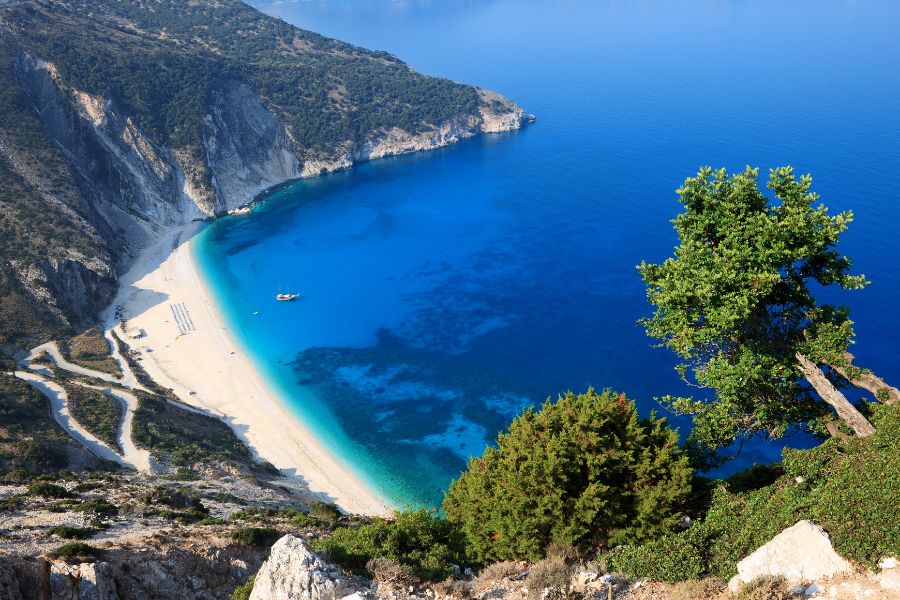
Myrtos Beach easily lands on the list of Greece’s most iconic beaches. It’s only about a half-hour drive from Drogarati Cave, and I’ll be honest—those white pebbles and the shockingly clear water really do live up to the hype.
Towering white cliffs rise behind the beach, making the whole scene feel dramatic and a bit unreal. If you’re after the best photo, stop along the winding road above before heading down to the shore. Trust me, the view from up there is something else.
Other nearby attractions include:
- Antisamos Beach (closer to Sami)
- Karavomilos Lake (a tiny surface lake)
- Agia Efimia village (a charming coastal town)
- Ancient ruins near Sami
Antisamos Beach makes things easy with its good facilities and smoother access. Driving between these spots means winding through Kefalonia’s wild, mountainous interior—honestly, the views along the way are almost as good as the destinations.
Frequently Asked Questions
During the summer, the cave opens every day. Entrance fees are pretty reasonable, and stepping inside means you’ll see rock formations that have been growing for literally 150 million years. The acoustics in there? People say they’re perfect.
What are the operating hours for the Drogarati Cave?
Usually, the cave welcomes visitors from 9:30 AM to 5:30 PM throughout the summer, starting in late April and running into early October.
In winter, hours can shrink or the cave may not open at all. There’s no official website, so I’d suggest asking around locally to get the latest info.
How can one obtain tickets to visit the Drogarati Cave?
Just walk up and buy tickets at the cave entrance. Adults pay €5, while kids get in for €3.
You don’t need to book ahead. Pay when you arrive, and you’re good to go.
What is the historical significance of the Drogarati Cave?
About 300 years ago, a massive earthquake cracked open the entrance and revealed the cave. Before that, it hid 200 feet underground for something like 150 million years.
The cave opened to the public in 1963. Many consider it one of Greece’s geological treasures.
Researchers think the cave began forming back in the age of dinosaurs. Over millions of years, lime deposits slowly created the wild shapes you see today.
Are there guided tours available for the Drogarati Cave, and how can they be booked?
You’ll find guided tours as part of bigger day trips around Kefalonia. These often bundle Drogarati Cave with Melissani Lake, Myrtos Beach, and sometimes Fiscardo Village.
Booking is easy—local tour operators or online platforms have options. These tours usually include hotel pickup and all the rides between stops.
If you only want a guided tour of the cave, you might be out of luck. Most people wander through on their own, and honestly, you can see everything in about half an hour.
What unique features can visitors expect to see in the Drogarati Cave?
Inside, the cave splits into two main areas. First, the Royal Balcony entrance hits you with a wall of stalactites. Then you step into a huge circular chamber with a vaulted ceiling—honestly, it feels like nature’s own concert hall.
Stalactites dangle overhead, looking like glass chandeliers. Thick stalagmites poke up from the floor, catching the light in strange, beautiful ways.
The cave stays at a steady 18°C, with humidity hovering around 90% no matter the season. Locals call it the “Sala of Apotheosis” because the acoustics are just that good.
They’ve even hosted concerts here, including a legendary performance by opera singer Maria Callas. The 900-square-meter space makes music sound almost magical.
How accessible is the Drogarati Cave for visitors with mobility issues?
You’ll need to head down a set of steps from the entrance to reach the main chamber—there’s no way around it. The cave sits about 60 meters underground, so that descent isn’t exactly minor.
Inside, the pathways are just rough, uneven rock. You won’t find elevators or any alternative routes for wheelchairs.
If you have mobility challenges, keep in mind that getting in and out means tackling stairs and sometimes slippery spots. The cave’s natural layout just isn’t friendly for folks who have trouble walking.
