
Standing at the end of the Appian Way in Brindisi, I felt the weight of history beneath my feet. This ancient Roman road, the Via Appia, stretches from Rome all the way to this coastal town, where a tall column marks its endpoint before the Mediterranean Sea.
Rome’s first and most important road, the Appian Way, was built in the 4th century BC to connect the capital to southern Italy. That’s why people still call it the “Queen of Roads.”
The journey along this old path winds through landscapes dotted with ancient monuments, tombs, and villas. I really suggest exploring parts of it on foot or by bike—especially those well-preserved stretches near Rome, where you can literally walk the same stones that Roman legions, merchants, and emperors once traveled.

What makes the Appian Way so special? For me, it’s how it connects you to everyday Roman life across centuries. As I traced the road to its final destination in Brindisi, where a 17-meter column stands as a silent sentinel, I couldn’t help but imagine ancient travelers seeing this same marker, signaling their arrival at the port where ships would carry them eastward across the Mediterranean.
The Appian Way: Rome’s Ancient Highway to the Sea
The Appian Way stands as one of the most remarkable feats of Roman engineering and ambition. This ancient highway connected the heart of Rome to the southeastern port of Brindisi, creating a lifeline for military movements, trade, and communication across the empire.
Origin and Construction
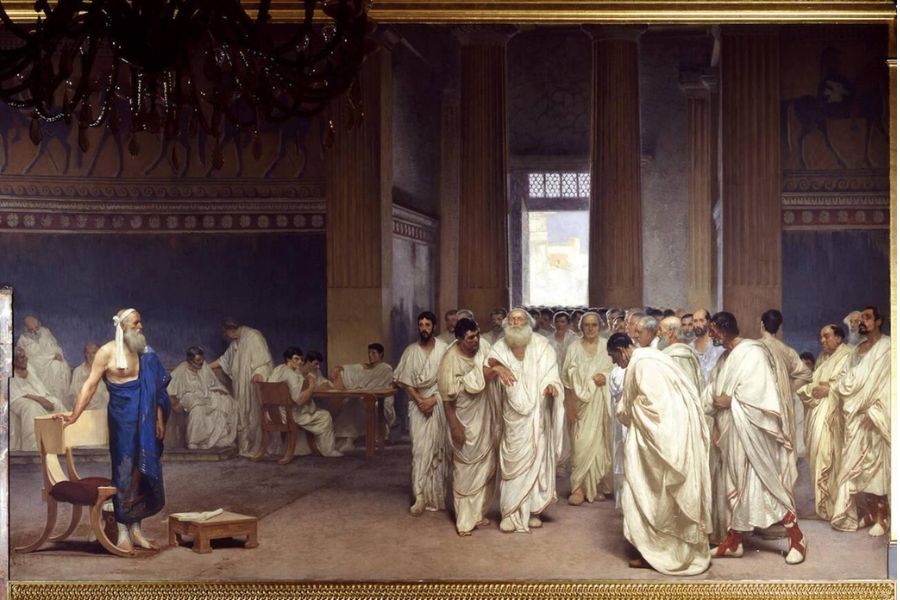
I still remember my first walk along the Appian Way—Via Appia, as the Romans called it—just marveling at its origins. Appius Claudius Caecus kicked off construction in 312 BCE, and the road ended up named after him.
The initial section went from Rome to Capua, about 132 miles south. Later, the road stretched all the way to Brindisi, the natural port where Italy nearly touches Greece across the Adriatic Sea.
This extension turned the Appian Way into Rome’s gateway to the eastern Mediterranean and beyond.
The Romans didn’t cut corners. They used volcanic rock for the foundation and huge, flat basalt stones for the surface. A lot of these original stones are still there, grooved by countless ancient wheels.
Strategic Importance for Ancient Rome
When I walk the Appian Way today, I almost hear the marching of Roman legions that once used this road to deploy quickly throughout southern Italy. The military advantage Rome gained from this road was enormous.
They called it “Regina Viarum” – the Queen of Roads – because it played a crucial role in expanding and maintaining their vast empire. Fast communication mattered for ruling distant territories, and the Appian Way let messengers travel swiftly between Rome and its southeastern regions.
Trade flowed along this artery, bringing goods from eastern provinces to the capital and back again. The road also sparked cultural exchange, spreading Roman ideas, laws, and customs throughout conquered lands while bringing foreign influences back to Rome.
Roman Engineering Marvels
The Appian Way shows off Roman engineering at its best. I’m always amazed that their construction techniques were so advanced, parts of the road have survived for over 2,300 years!
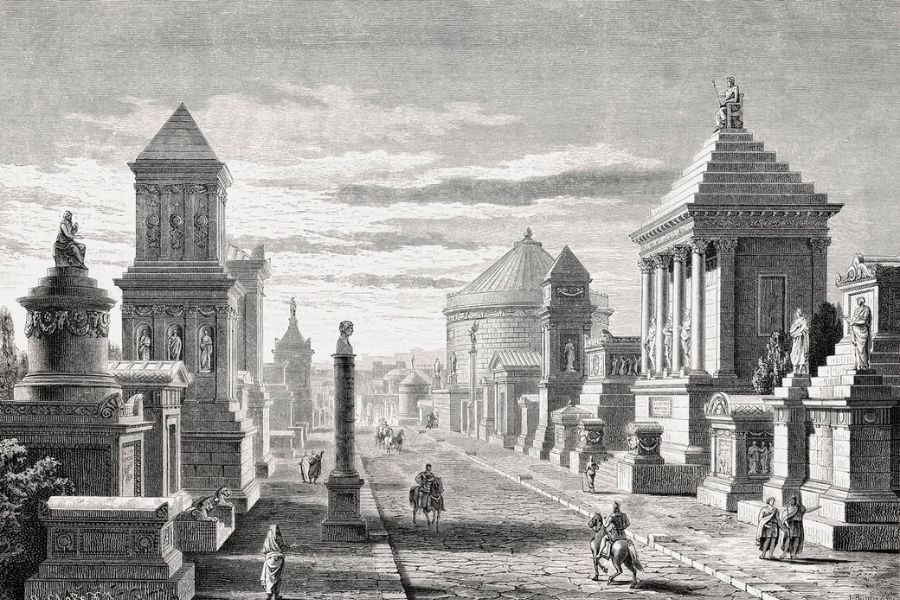
They built the road in layers: first, a foundation of crushed stone and lime, then gravel and sand for drainage, and finally a surface of perfectly fitted polygonal basalt slabs. This smart layering kept the road from flooding and cut down on maintenance.
Along the route, they built bridges, viaducts, and drainage systems to overcome natural obstacles. The road runs straight through some pretty tough terrain—a sign of Rome’s determination to conquer nature itself.

You can see the precision in the stonework. The surface stones still fit tightly together, even without mortar. These interlocking stones have endured centuries of use, weather, and even earthquakes—a real testament to Roman engineering that still inspires modern builders.
Tracing the Route: From Rome to Brindisi
The Appian Way stretched 365 miles from Rome to Brindisi, creating a vital link that people could travel in about two weeks. This engineering feat connected the heart of the empire to its gateway to the East.
Major Stops and Ancient Villages
The journey along the Via Appia begins in Rome, where I love checking out the original ancient paving stones still visible today. Heading southeast, the road passes through the Alban Hills, with volcanic lakes and fresh air that offered Romans a break from city heat.
My favorite early stop is Capua, which was almost as important as Rome itself. The amphitheater here rivals the Colosseum, but you won’t find nearly as many tourists.
As I keep going, I hit Terracina, where the road cuts dramatically through a limestone cliff. The Romans even carved numbers into the rock face to show how deep they excavated—pretty wild.
The village of Appii Forum was a key overnight stop, even mentioned in biblical accounts. Nearby, Three Taverns refreshed ancient travelers just like modern cafés do for us today.
Crossing the Pontine Marshes
The Pontine Marshes section gave ancient engineers their biggest headache. These swampy lowlands were notorious for malaria and tough passage until Emperor Trajan improved the route.
I find it fascinating that travelers could pick between land travel or a parallel canal through the marshes. At night, boats pulled by mules would carry passengers while they slept—kind of like an ancient overnight train.
The marshlands needed constant maintenance. Drainage works and raised roadbeds kept the Via Appia usable despite the soggy terrain.
During rainy seasons, some sections flooded, forcing detours through higher ground near Ardea. Today, you can still spot remnants of the raised causeway that kept ancient travelers dry.
The Final Stretch to the Adriatic
After the marshes, the road passes through Formiae (modern Formia), where Cicero had a villa and was later assassinated. The coastline views here are just stunning—crystal blue waters that must have wowed ancient travelers too.
Continuing southeast, I rolled through Sinuessa, known for its healing baths. Romans would stop here to rest and recover before the last push toward Brindisi.
The final stretch features more and more Greek influences in architecture and culture. It’s a reminder that the Appian Way didn’t just connect places, but also cultures.
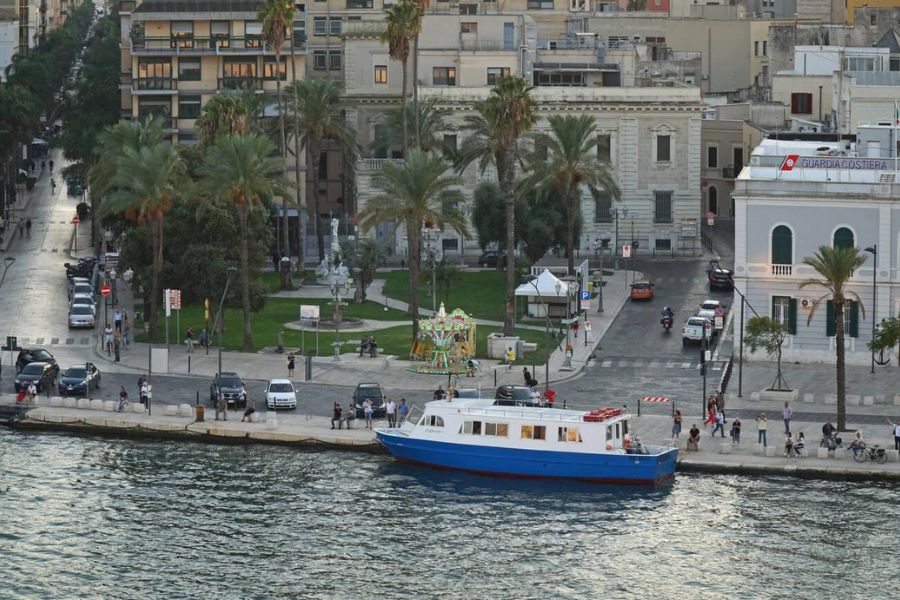
As you approach Brindisi, the road follows a straight line to the harbor—a symbolic finish line toward ships waiting to carry travelers east. Two tall columns once marked the end, though only one stands today.
Connections to Greece and the East
Brindisi’s natural harbor made it the perfect terminus for the Via Appia and a launch pad for eastern journeys. Ships regularly departed for Greece, Egypt, and Asia Minor from here.
I’ve watched modern ferries follow these same ancient routes to Greece from Brindisi’s port. The shortest crossing to Greece held serious value for both merchants and military.
Other routes included sailing from Puteoli (modern Pozzuoli) near Naples, or heading by sea to Sicily, stopping at Syracuse before reaching Rhegium (modern Reggio Calabria).
Some travelers continued to Malta and North Africa. The Romans turned Mediterranean navigation into a network, with the Appian Way as its western backbone.
The journey from Rome to Brindisi usually took about 13-14 days—a big improvement over earlier travel times. This efficiency helped spread Roman influence throughout the Mediterranean.
Appian Way at the Waterfront: Where History Meets the Sea
The Appian Way’s final stretch reaches the sparkling Mediterranean at Brindisi, creating a breathtaking historical junction. This terminus wasn’t just an engineering feat but a vital gateway connecting Rome to the eastern provinces through maritime trade routes.
Arrival at Brindisi’s Ancient Harbor
Standing at Brindisi’s harbor, I felt the weight of history where countless Roman travelers once stood. The ancient port, with its natural bay formation, made it the perfect endpoint for Rome’s most famous road.
Two Roman columns once marked the harbor entrance. Today, only one remains—a solitary sentinel watching over where land meets sea. This column isn’t just for show; it served as a navigational aid for ships.
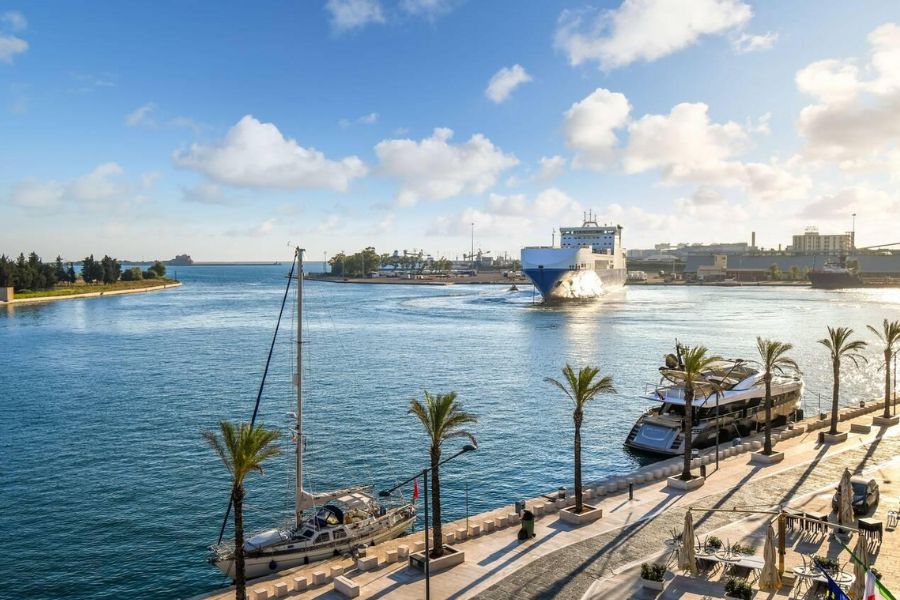
The harbor has changed over the centuries but still holds its historical importance. Walking along the waterfront promenade, I traced the final stones of the Appian Way as they seem to disappear into the Adriatic.
UNESCO Recognition and Preservation Efforts
Recent preservation projects have brought new attention to Brindisi’s ancient harbor area. UNESCO has recognized parts of the Appian Way, including its terminus, for possible World Heritage status.
Archaeological digs have uncovered original Roman port structures beneath modern buildings. I found the underwater archaeological work, revealing ancient mooring posts and breakwater remains, absolutely fascinating.
Local authorities set up protected zones around key sites. Information panels along the waterfront help visitors understand the crucial role this bay played in ancient Mediterranean commerce.
The “Appian Way Regional Park” project now extends protection to the road’s coastal conclusion. This means future generations can experience where this marvel of Roman engineering finally meets the sea.
Travelers, Pilgrims, and Pioneers: Stories Along the Via Appia
The ancient Appian Way has seen countless journeys over its stones, each traveler adding to the rich tapestry of history that makes this road so fascinating today.
Apostle Paul’s Journey and Trials
Walking along the Via Appia, I can’t help but imagine Apostle Paul traveling this same road around 60 CE. After his ship docked at Puteoli, Paul and his companions journeyed to Rome along this very path. Acts 28 in the New Testament says believers came as far as the Forum of Appius to meet him.
Paul wasn’t just any traveler—he was a Roman citizen being taken to stand trial before Emperor Nero. This status gave him certain protections, though he still traveled in chains.
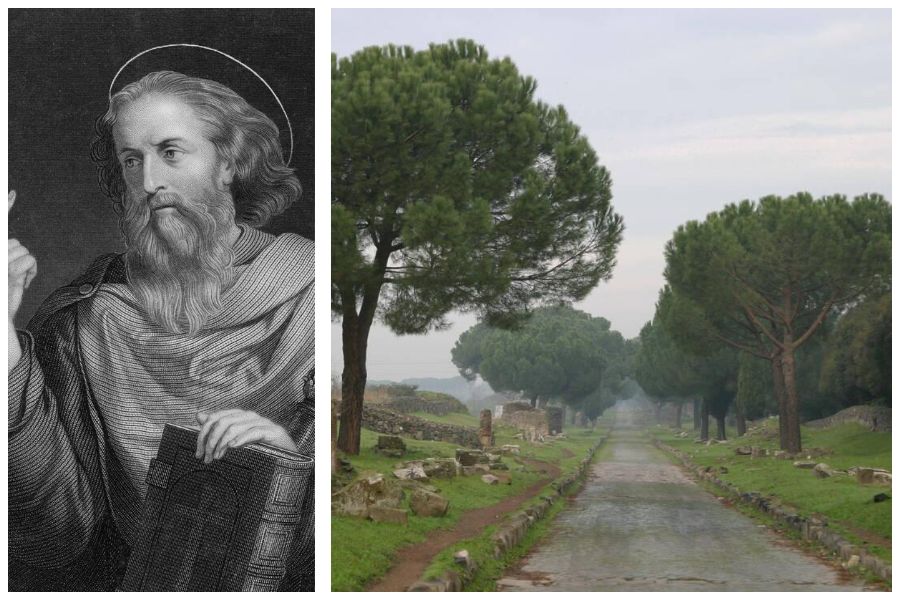
What strikes me is how this military road, built for conquest, became the path for Christianity’s spread. Standing where Paul once walked, I feel connected to those early days when the faith was just starting to take root in Rome.
Roman Citizens and Soldiers on the Road
The Via Appia buzzed with military activity. Roman legions marched along its perfectly laid stones, moving quickly to defend Rome’s growing territories.
Wealthier Roman citizens traveled with entourages, stopping at mansiones (official rest houses) that lined the route. These places offered both overnight lodging and a spot to change horses.
I’ve read the accounts of Julius Caesar, who definitely used this road during his campaigns. Later, Emperor Augustus set up a regular courier service along the Via Appia, which changed communication across the empire.
The road also saw countless military triumphs. Soldiers returning from successful campaigns marched along it toward Rome, where they were celebrated with grand ceremonies.
Journeys of Emperors and Poets
Emperors traveled the Via Appia often, their processions grand displays of power. Titus reportedly raced his chariot along sections of the road, while Augustus took a special interest in its upkeep and expansion.
The poet Horace famously wrote about his journey along the Via Appia in his Satires. His account gives us a glimpse into ancient travel, from bustling inns to colorful characters.
I love picturing these historical figures navigating the same curves and slopes I walk today. Strabo, the Greek geographer, praised the road’s engineering, noting how water drained perfectly from its slightly convex surface.
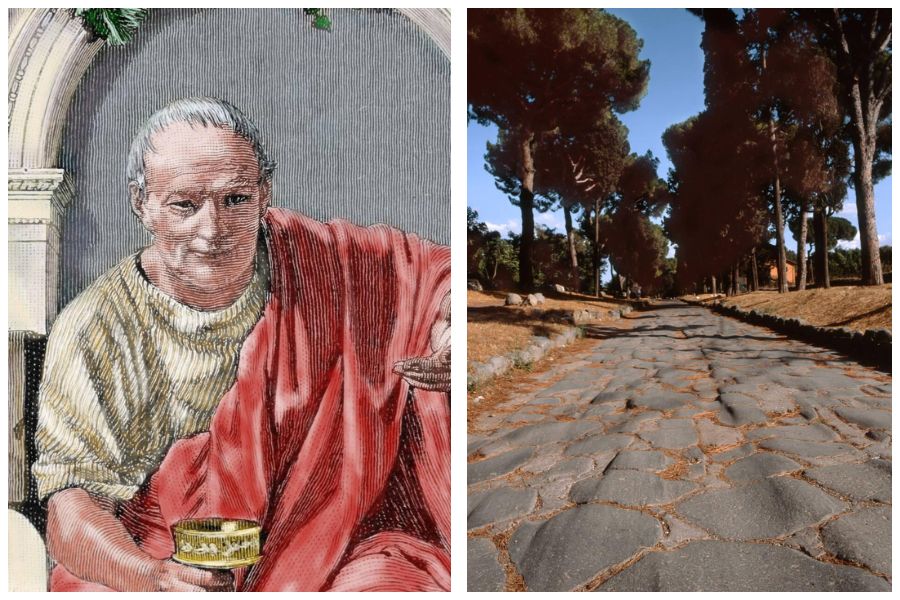
Emperor Nero’s ties to the road were more sinister. After the Great Fire of Rome, Christians were persecuted, and many faced execution along the Via Appia.
Inspiring Pilgrimages and New Testament References
By medieval times, the Via Appia had turned into a pilgrim route. The Via delle Sette Chiese (Seven Churches’ Road) crossed it, creating a pathway for devout travelers visiting Rome’s holiest sites.
I find it moving that Christians walked this road to visit catacombs and martyrs’ burial places. The same road that carried Paul to his trial became a sacred path for those inspired by his teachings.
The New Testament connection gives the road special meaning for religious travelers even today. Many people come to reflect on passages from Acts and imagine early Christians greeting Paul.
Popes throughout history worked to preserve the Via Appia as both a historical monument and spiritual pathway. During Holy Years, pilgrims from all over Europe arrived in Rome via this ancient road, their journeys ending at St. Peter’s Basilica.
Modern Encounters: Exploring the End of the Ancient Road Today
Traveling to Brindisi, where the ancient Appian Way meets the Mediterranean, offers a unique blend of history and modern experiences. Today’s visitors can explore this historic endpoint through activities that connect us to Rome’s glorious past.
Walking and Cycling the Via Appia Antica
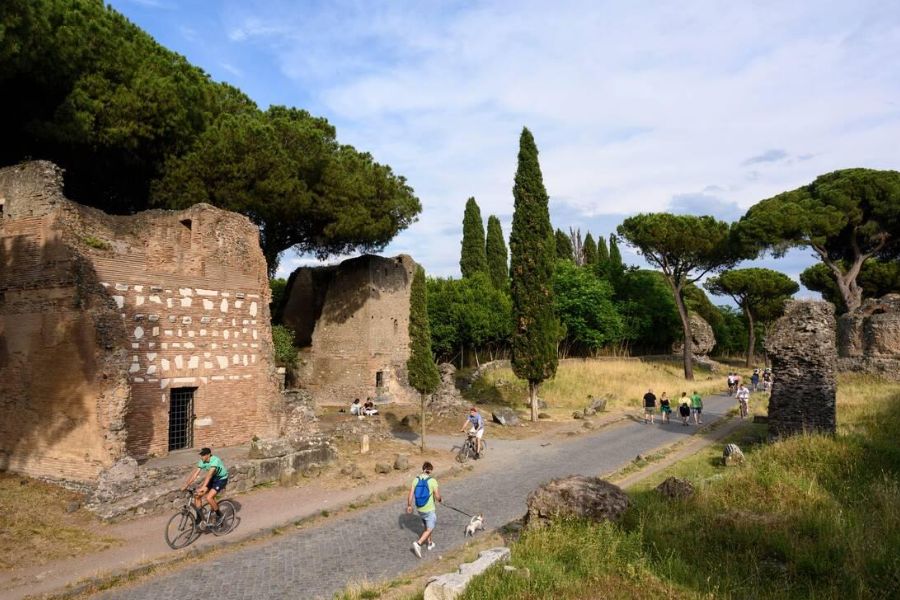
I found that walking the final stretches of the Via Appia Antica gives you an intimate connection with history you just can’t get by car. The ancient basalt stones under my feet near Brindisi felt worn smooth by thousands of years of travelers.
Renting a bicycle from a local shop gives you the freedom to cover more ground. I especially enjoyed cycling the coastal sections where the ancient road hugs the Adriatic shoreline.

The path is well-marked with signs in both Italian and English. These highlight key historical points and explain how the road worked during Roman times.
Tour companies offer guided walks that add depth and detail. I joined a three-hour tour that pointed out things I would have missed alone—like ancient mile markers and the ruins of way stations where Roman travelers once rested.
Cultural Events and Local Traditions
Brindisi hosts the annual “Via Appia Festival” each June, celebrating the road’s historical importance with reenactments of Roman arrivals at the port. Local actors dress as centurions, merchants, and politicians, recreating scenes from the past.
The “Taste of the Appian Way” food festival features dishes ancient travelers might have eaten. I sampled olive oil, wines, and bread made using traditional methods from ingredients grown along the route.
Local museums offer rotating exhibits about the Appian Way. When I visited, the Maritime Museum had a great display showing how the road made Mediterranean trade possible.
Traditional music performances often happen at sunset at the Roman columns marking the end of the road. These columns stand as a powerful symbol where land transportation met sea routes to Greece and beyond.
Practical Tips for Visiting Brindisi
The best time to visit is April through October, when the weather is great for outdoor exploring. I found May especially nice—fewer crowds and comfy temperatures around 70°F (21°C).
Accommodations near the port make it easy to access the Appian Way’s endpoint. I stayed at a converted palazzo with views of the harbor where Roman ships once docked.
You can get to Brindisi by train from Rome (about 5 hours) or by flying into Brindisi Airport. Once there, the city center is compact and walkable, so I didn’t need a rental car.
English is widely spoken in tourist spots, but learning a few Italian phrases really helps. Restaurant staff appreciated my attempts at Italian, even if they replied in English.
Via Appia’s Legacy Across Europe
The road-building techniques pioneered on the Appian Way influenced transportation networks all over Europe. In Roman Britain, engineers used similar methods for roads connecting London to York.
I’ve traced parts of these Roman roads in several European countries. The straight designs and layered construction are still visible from Spain to Romania.
Modern highways often follow these ancient Roman routes. Driving the A1 motorway in Italy, I realized I was paralleling the same path Roman engineers set 2,300 years ago.

The Appian Way set standards for infrastructure that still benefit us today. Its influence goes beyond just roads—it shaped how we connect communities and move goods, laying the groundwork for modern European transportation.
