
Standing face to face with Ötzi the Iceman was a moment I’ll never forget. This 5,300-year-old mummy, discovered in the Alps in 1991, offers us an incredible window into life during the Copper Age. His remarkably preserved body tells stories that no history book could capture with such intimate detail.
Recent DNA analysis has revealed that Ötzi had dark skin, dark eyes, and was likely bald with a receding hairline—quite different from earlier reconstructions. This discovery challenges some of our assumptions about ancient Europeans and reminds us how science continues to evolve our understanding of the past. Forensic artists have worked meticulously to put “flesh on the bones” of his story, creating lifelike reconstructions that help us connect with this ancient individual.
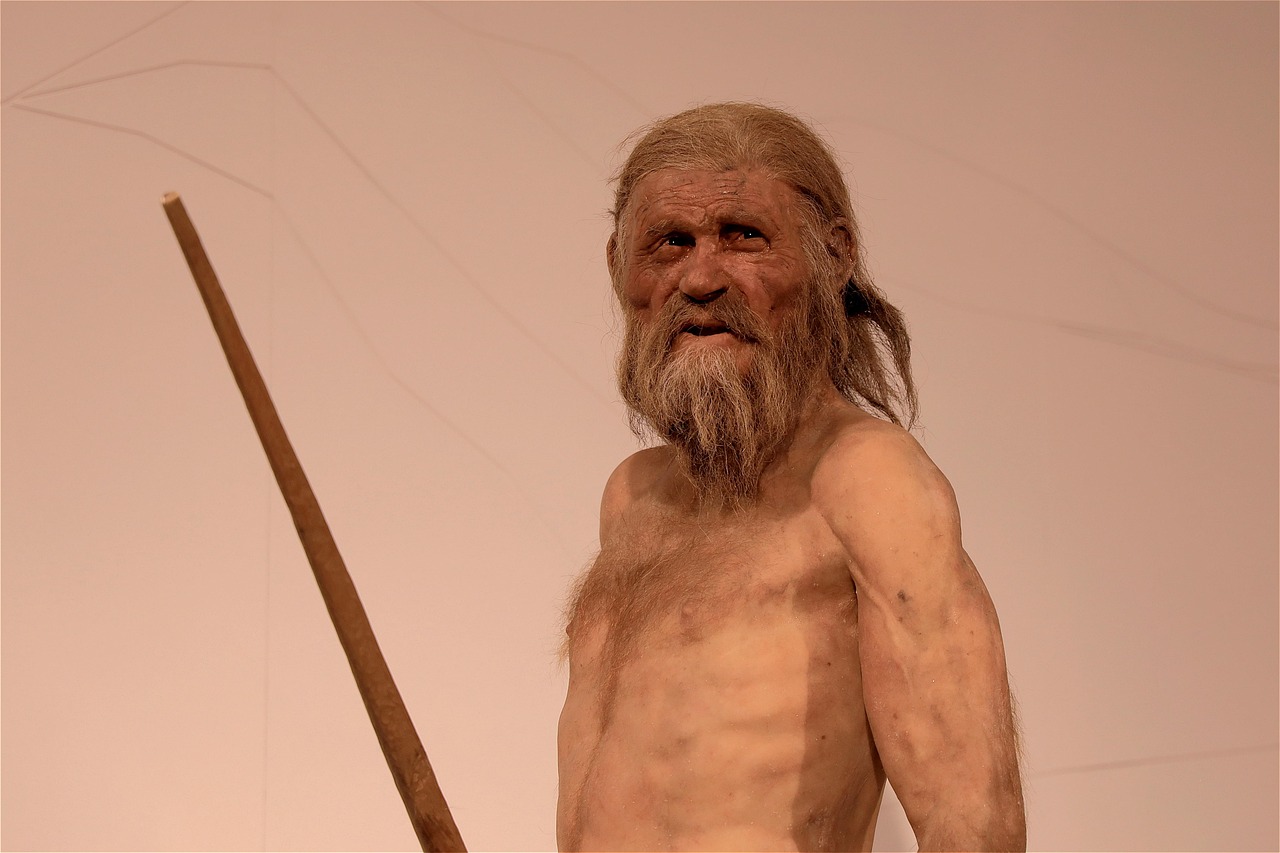
As I gazed at his preserved remains in the museum, I couldn’t help but feel a profound connection across millennia. Ötzi wasn’t just a scientific specimen—he was a human being who lived, breathed, and struggled through life just as we do today. The tattoos on his skin, the tools he carried, and even the meals preserved in his stomach tell us about a life cut short in the mountains over five thousand years ago.
Unveiling the Past: The Discovery of Ötzi
The story of Ötzi’s discovery reads like an extraordinary accident of fate, forever changing our understanding of prehistoric humans. This remarkable find in 1991 would become one of archaeology’s most significant moments.
The Discovery in the Ötztal Alps
I still remember the excitement that rippled through the scientific community when news broke about Ötzi. Two German hikers stumbled upon his remains while trekking in the Ötztal Alps near the Italian-Austrian border on September 19, 1991.
At first, they thought they’d found a recent mountaineering casualty. The body was partially emerging from the melting Schnalstal glacier at 10,530 feet above sea level. The couple reported their discovery to authorities, unaware they had found something truly extraordinary.
What makes this discovery so remarkable are the perfect preservation conditions. The glacier had kept Ötzi frozen for over 5,300 years, creating a time capsule from the Copper Age. His belongings, clothing, and even his last meal remained intact.
First Impressions: Ötzi’s Reveal
When I first saw images of Ötzi, I was struck by how lifelike he appeared despite his extreme age. His leathery, darkened skin tells the story of millennia spent in ice. Scientists initially struggled with proper recovery techniques, as this was an unprecedented find.
The excavation team carefully extracted him from his icy tomb, along with his remarkable collection of tools and clothing. His possessions included a copper axe, a flint dagger, and a bow with arrows – items that would revolutionize our understanding of Copper Age technology.
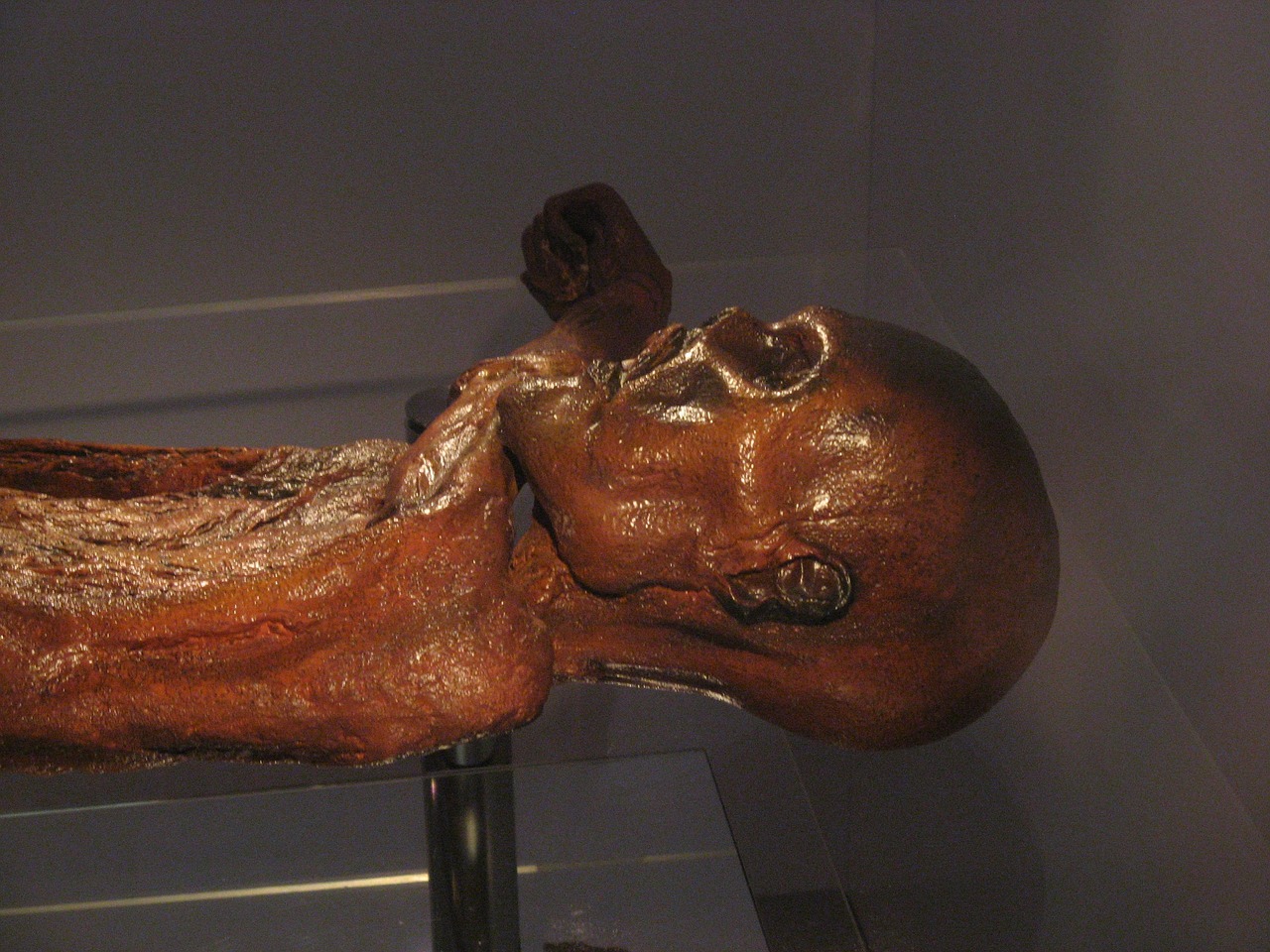
Initial examinations revealed fascinating details: tattoos on his body, evidence of health issues, and ultimately, the shocking discovery that Ötzi was murdered. An arrowhead lodged in his shoulder showed this wasn’t a mountaineering accident but a violent end to his life.
Preserved in Time: The State of Ötzi
Standing before Ötzi’s preserved body at the Museum of Archaeology in Bolzano was a truly remarkable experience. This 5,300-year-old mummy offers an unprecedented window into Copper Age life through his incredibly well-preserved body and possessions.
A Mummy Revealed: Preservation and Examination
What struck me most about Ötzi was how the icy Alpine conditions naturally preserved him for millennia. His skin appears darkened and leathery, with remarkable detail still visible. I could clearly see his receding hairline and facial features, giving me a direct connection to this ancient man.
Scientists have thoroughly examined his mummified body, revealing fascinating details about his life and death. The forensic reconstruction of his face, which I saw at the museum, brings him to life in an uncanny way.
The preservation is so exceptional that researchers identified the arrow wound that killed him. This transforms Ötzi from merely an archaeological specimen into what feels like a 5,300-year-old murder victim whose story continues to unfold.
Clothing and Equipment of a Copper Age Hunter
I was amazed by Ötzi’s complete outfit and toolkit, offering an unprecedented look at Copper Age daily life. His clothing showed surprising sophistication – he wore a coat and leggings made from carefully stitched animal skins, and a bearskin cap to protect him from the harsh mountain elements.
His footwear particularly impressed me – complex shoes with bearskin soles, deerskin uppers, and grass insulation for warmth. Nothing primitive about these well-designed mountain boots!
The iceman carried a remarkable collection of equipment, including a copper axe (revolutionary technology for his time), a yew wood bow, and a quiver containing arrows. His belt held various tools for survival in the Alpine wilderness.

These artifacts demonstrate that people living 5,300 years ago possessed advanced skills and knowledge about surviving in challenging environments, far beyond what I had imagined.
Journey to the Museum: Ötzi’s New Home
After his discovery in the Alps, Ötzi needed a permanent home where scientists could study him and visitors could learn his story. The South Tyrol Museum of Archaeology in Bolzano, Italy became that special place, creating an entire exhibition dedicated to this remarkable finding.
The South Tyrol Museum of Archaeology Exhibition
I arrived at the Museo Archeologico dell’Alto Adige on a crisp morning, eager to see the famous iceman. The museum is modern and specifically designed to house Ötzi in optimal conditions. His body rests in a special freezer chamber that maintains precise temperature and humidity.
Through a small window, I could see the actual mummy. It was a moving experience to stand just inches from someone who lived over five millennia ago.
The exhibition surrounds his chamber with his possessions. I was amazed by his copper axe, bow, arrows, and clothing. Each item tells part of his story.
The museum does an excellent job explaining the scientific work. Interactive displays show how researchers determined his age, diet, health issues, and even the cause of his death.
Reconstructing the Past: 3D Images and Models
The most fascinating part of my visit was seeing Ötzi’s face. Using advanced technology, scientists created three-dimensional images of his skull and features.
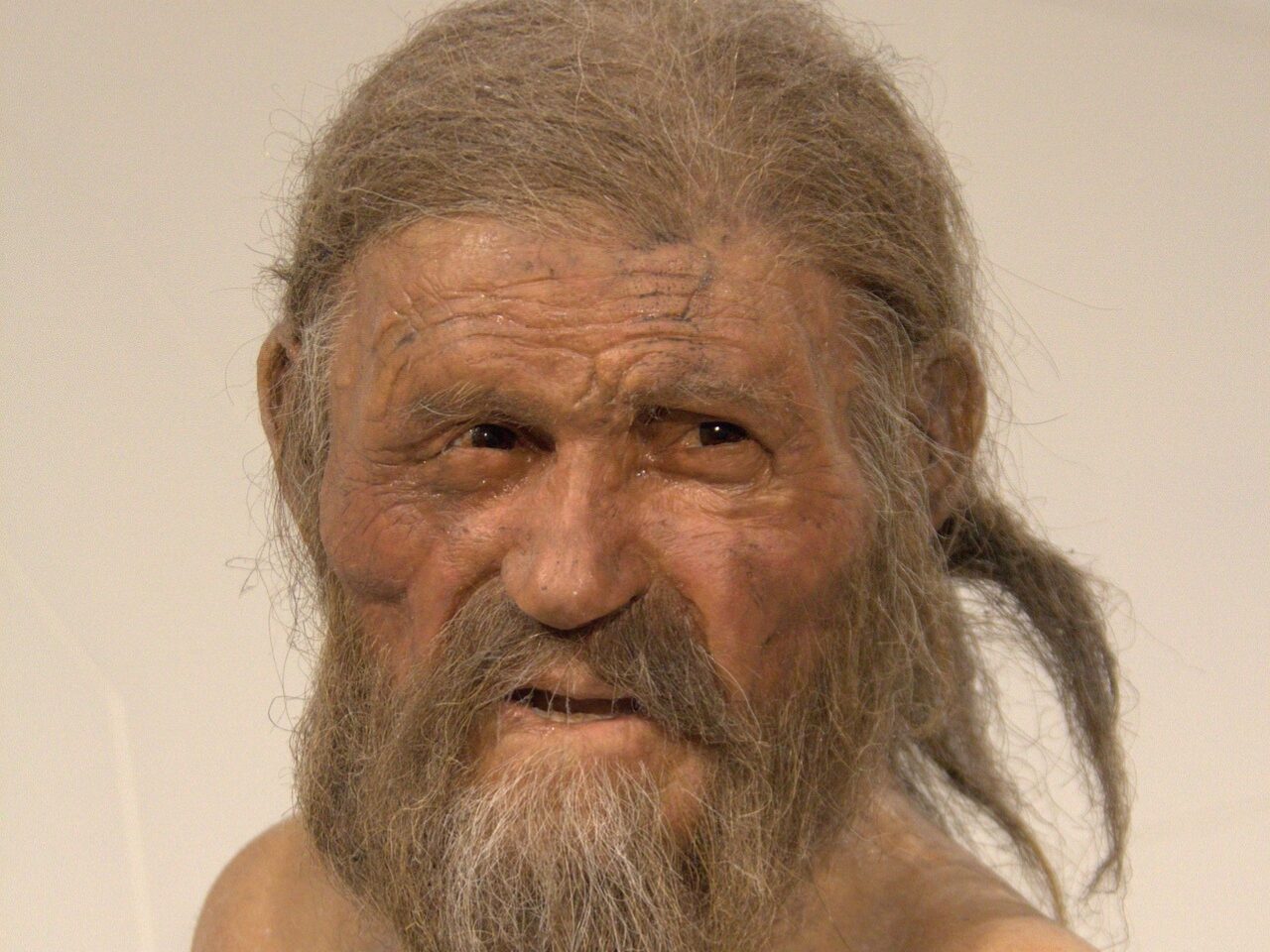
Artists Adrie and Alfons Kennis used these images to create lifelike reconstructions. Their model shows Ötzi as he might have looked in life – with dark eyes, weathered skin, and a weary expression.
The reconstruction process combined forensic science with artistic interpretation. Computer modeling helped determine his facial structure, while careful research informed details about his appearance.
Standing face-to-face with this recreation was extraordinary. It transformed Ötzi from a scientific specimen into a real person who had lived, struggled, and died in the mountains thousands of years ago.
The museum also offers 3D visualizations of his tools and clothing, helping visitors understand his daily life better than traditional displays ever could.
Decoding Ötzi: Scientific Insights and Mysteries
Scientists have uncovered fascinating details about this ancient man through careful study. Modern technology has revealed surprising facts about his life, death, and genetic makeup.
Cause of Death and Health Mysteries
When I examined the research on Ötzi’s death, I was shocked to learn he was murdered. An arrow wound in his left shoulder damaged a major blood vessel. The flint arrowhead remained lodged in his body, suggesting a violent death rather than an accident.
CT scans revealed his deep-set brown eyes and numerous health issues. Ötzi suffered from whipworm parasites and was lactose intolerant. He also had heart problems that might have led to a heart attack if the arrow hadn’t killed him first.
His last meal consisted mainly of ibex meat, eaten about 2 hours before his death. I found it fascinating that his body bears 61 tattoos, which some researchers believe were a form of early acupuncture treatment for his joint pain.
Legacy in Genetics: The Male Descendants
The genetic analysis of Ötzi has offered remarkable insights into human migration patterns. He was descended from farmers who migrated from what is now Turkey, not from local hunter-gatherers as once believed.
His DNA reveals a surprising connection to present-day populations. However, his particular male genetic line (Y-chromosome haplogroup) appears to have died out, meaning he has no direct male descendants living today.
Studying Ötzi’s genes has helped me understand how humans adapted to farming life. His genetic makeup shows early signs of adaptation to an agricultural diet, though he still carried many hunter-gatherer traits.
This natural mummy continues to contribute to science as new technologies develop, giving us unprecedented glimpses into prehistoric life and human evolution.
The Cultural Impact of Ötzi
Ötzi has become more than just a scientific discovery – he’s a cultural icon who has transformed how we connect with our distant past. His remarkably preserved body bridges the gap between modern society and prehistoric life in ways few archaeological finds ever could.
Popularizing Prehistory: Ötzi in the Public Eye
I’ve noticed how Ötzi has captured public imagination since his 1991 discovery in the Schnalstal glacier near the Austrian-Italian border. His mummified remains have drawn millions of visitors to his home at the South Tyrol Museum of Archaeology in Italy.

The recent 3D facial reconstruction by artist Heike Engel has made him even more relatable. I was struck by how human he looks – a balding, middle-aged man with dark eyes and skin pigmentation darker than many modern Europeans.
Ötzi has inspired countless documentaries, books, and even feature films. When I visited the Italian Alps, I saw his image on everything from t-shirts to chocolate wrappers! This commercialization has made prehistory accessible to people who might never enter a museum.
Ötzi’s Contribution to Prehistoric Understanding
Before Ötzi, my knowledge of Alpine prehistoric life was limited. Now, his tattoos are the world’s oldest confirmed tattoos and have revolutionized our understanding of ancient body modification practices.
His fully preserved clothing and equipment provide unprecedented insights into daily life 5,300 years ago. Each item tells a story. For example, his copper axe shows early metallurgy, while his medicinal fungus suggests knowledge of natural remedies.
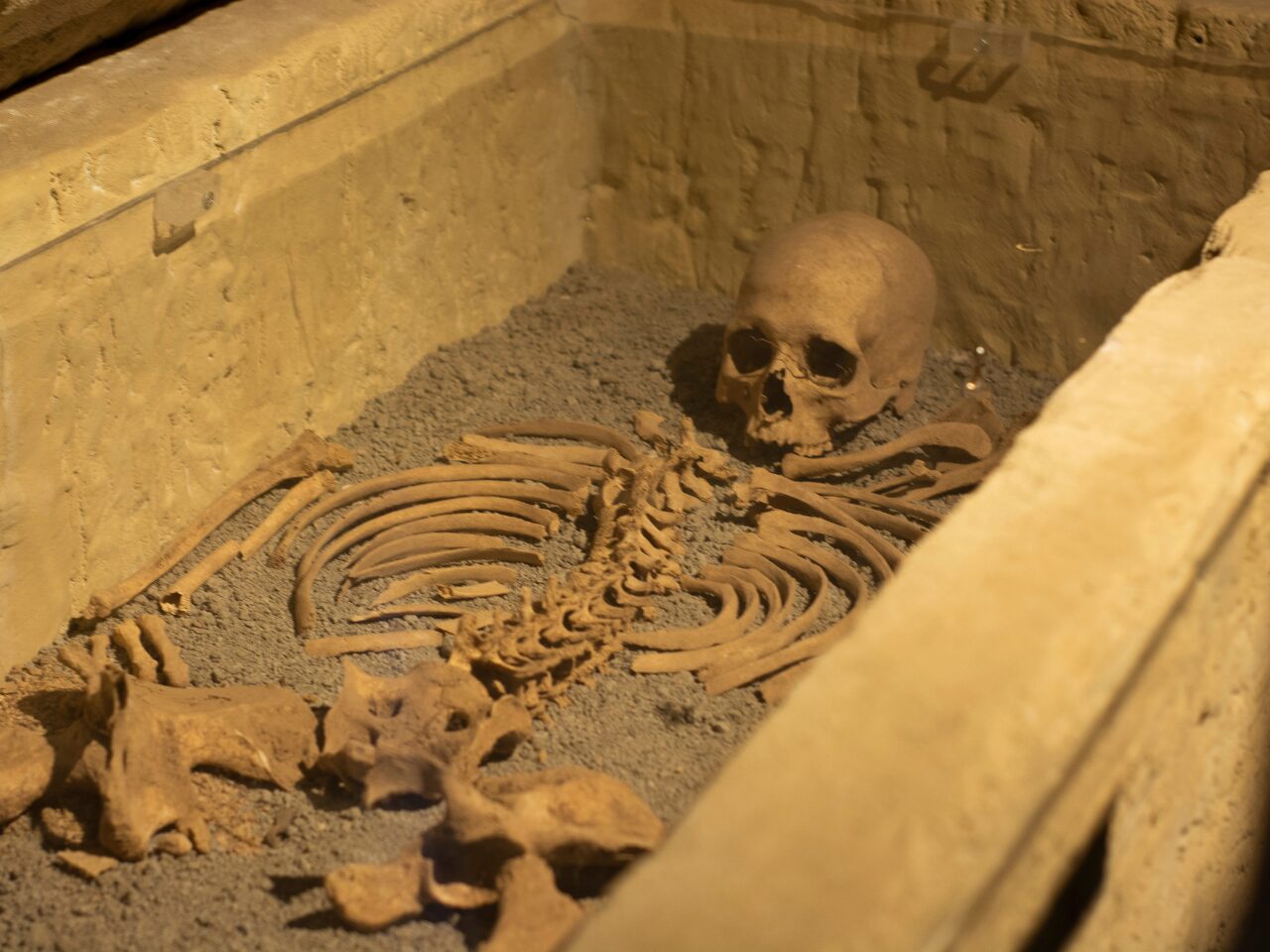
His genetic analysis has revealed fascinating details about European migration patterns. Scientists determined he had dark skin and eyes, challenging simplistic views about European ancestry.
I’m amazed by how Ötzi continues to generate new discoveries. Each technological advancement brings fresh insights from his remains, making him a continuously evolving window into our prehistoric past.
