
Just half an hour from the chaos of Athens, I stumbled upon a peaceful retreat—the Daphni Monastery. This UNESCO World Heritage site feels like it belongs in another world, far from city noise. The ancient Byzantine church stands quietly, protecting centuries of history. Its golden mosaics glow in the soft light that slips through narrow windows.
Finding spiritual stillness here isn’t just possible—it almost sneaks up on you. The monastery’s calm seems to wrap around you like a gentle hug.
My trip started with a winding drive through pine forests, the monastery suddenly appearing like a memory from another era.
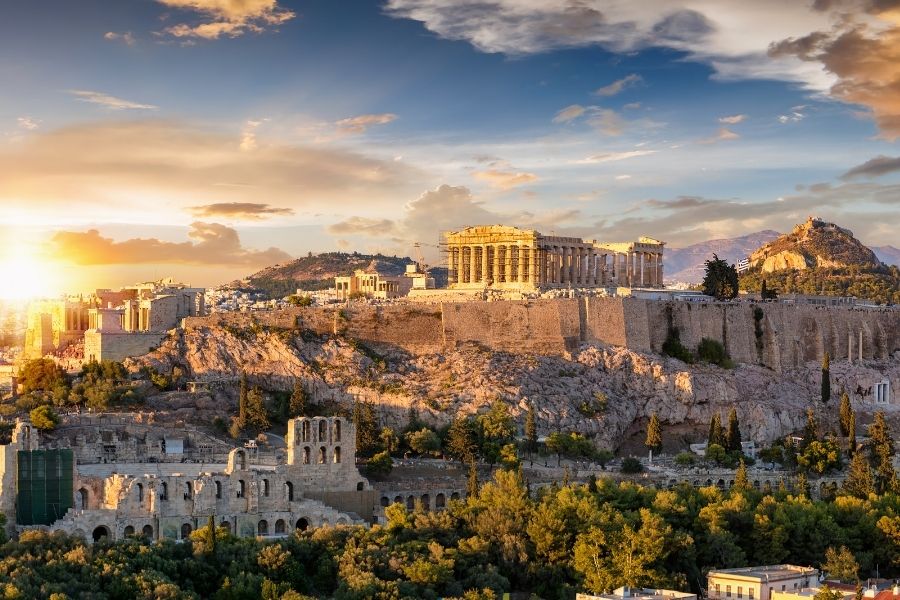
Unlike the crowded Acropolis, Daphni offers a far more personal brush with Greek heritage.
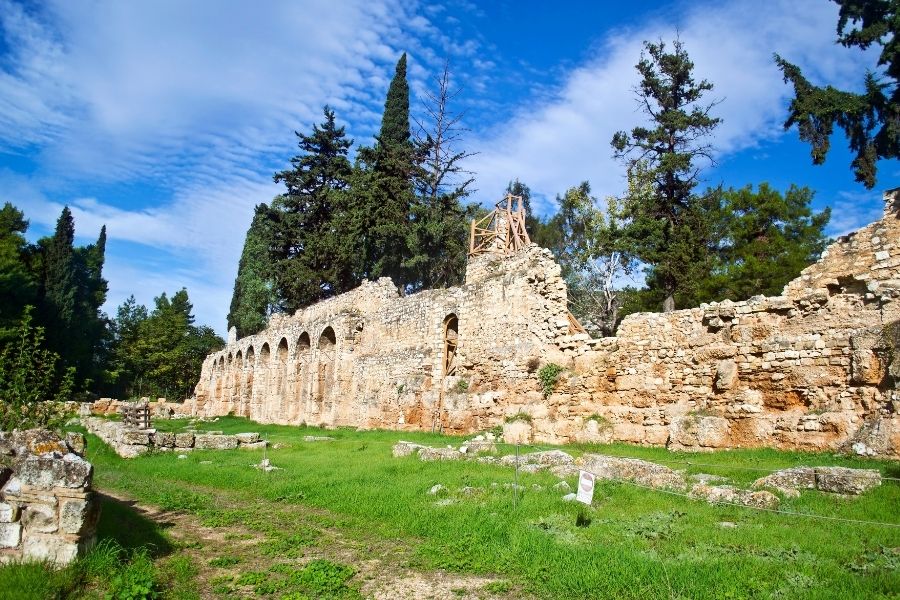
I wandered the grounds alone for nearly an hour, hearing nothing but my own footsteps and distant birds.
The 11th-century architecture and the dazzling mosaics of Christ Pantocrator really do deserve their UNESCO fame, but honestly, it’s the deep peace that makes this place unforgettable.
If you go, try to arrive early or late in the day—the golden light inside is just unreal.
Bring a journal if you’re into that; you’ll probably want to scribble down your thoughts in a spot where time feels like it’s paused.
Discovering Daphni Monastery: A UNESCO World Heritage Site
Just outside Athens, I found a spiritual gem that captured my heart the moment I stepped onto its ancient stones.
Daphni Monastery stands as proof of Byzantine artistry and devotion, and yet, not many travelers make it out here.
Historic Significance and Byzantine Mastery
You’ll find Daphni Monastery about 11 kilometers northwest of Athens, in Chaidari.
It shares its UNESCO status with Hosios Loukas in Phocida and Nea Moni on Chios Island.
Even though these monasteries sit far apart, they form a trio that’s huge in Byzantine religious history.
The site’s roots go back to the 6th century, but most of what you see now comes from the 11th.
When I visited, I learned that Daphni represents the peak of Middle Byzantine art and architecture.
This place has seen centuries of change, from its founding to times of abandonment and revival.
What really struck me was how Daphni survived so many eras and conquests, yet kept its spiritual heart.
The monastery feels like a living museum of Byzantine faith and creativity.
Artistic Marvels and Sacred Architecture
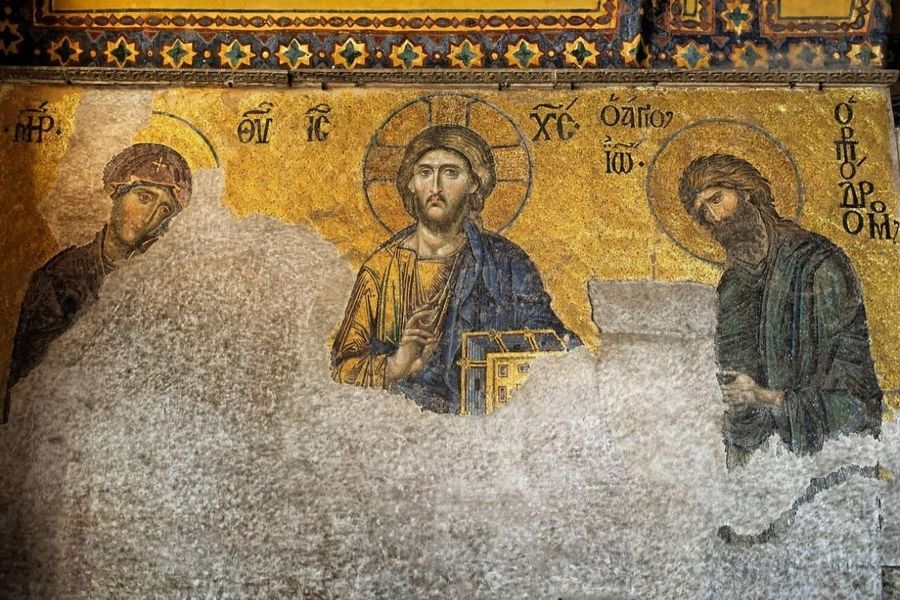
As soon as I stepped inside, the mosaics caught my eye.
Gold backgrounds light up scenes of saints and biblical stories.
The Pantokrator mosaic in the dome almost seems to follow you as you walk beneath it.
The architecture uses the classic cross-in-square plan found in many Byzantine churches.
A perfectly balanced dome sits on an octagonal base, creating this odd sense of harmony that’s hard to describe.
I noticed how the building’s design lets sunlight in just right.
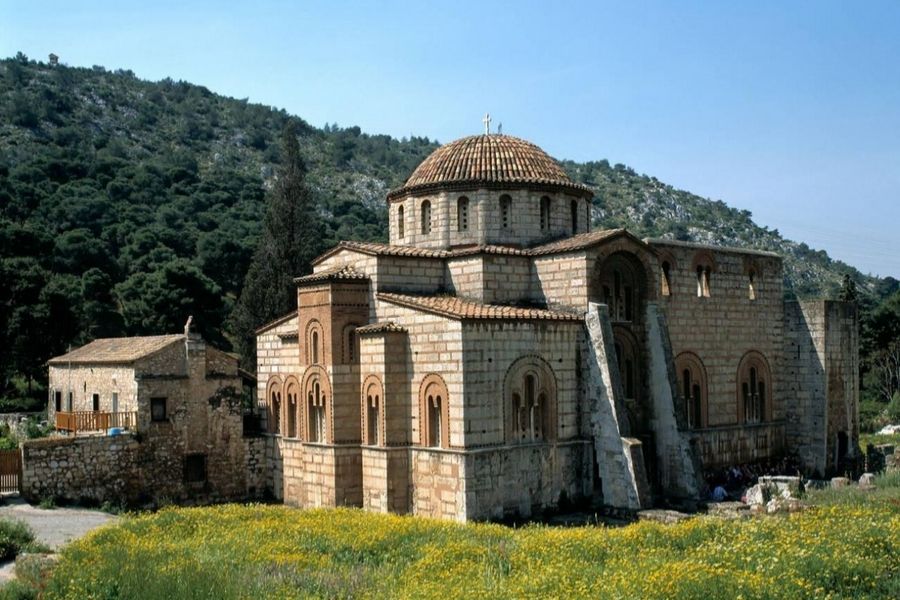
Beams filter through small windows and make the gold tiles glow as if they’re alive.
There’s a small museum with artifacts that help you understand the monastery’s artistry.
I spent a good while examining the tiny details that medieval artists patiently crafted so long ago.
Georgian Christianity and the Legacy of Faith
Most people don’t realize that Daphni once had ties to Georgian Christianity.
At different times, Georgian monks lived and prayed here, leading to a fascinating blend of traditions.
You can spot this mix in some of the frescoes and architectural details.
My guide pointed out subtle differences in style that hint at this cultural exchange.
Today, Daphni mostly serves as a historical monument, but it still feels sacred.
As I walked the quiet courtyard, I felt connected to pilgrims from centuries past.
UNESCO’s preservation work shows real commitment here.
Recent restoration has stabilized the building and saved its art for future visitors.
The Journey from Athens: A Personal Escape to Stillness
Leaving Athens behind, I felt drawn toward the peaceful sanctuary of Daphni Monastery.
The trip itself became part of the spiritual experience, shifting me from city buzz to sacred quiet.
How to Reach Daphni: Travel Tips and Logistics
Getting to Daphni is easier than you might think.
From central Athens, I hopped on the Blue Line (Line 3) metro to Agia Marina, then caught a local bus that dropped me near the gates.
The whole journey took about 45 minutes.
If you’d rather drive, just follow the Athens-Corinth National Road for about 11 kilometers.
There’s parking near the entrance, but it fills up fast during busy times.
The monastery opens Wednesday through Monday, 8:30 AM to 3:30 PM.
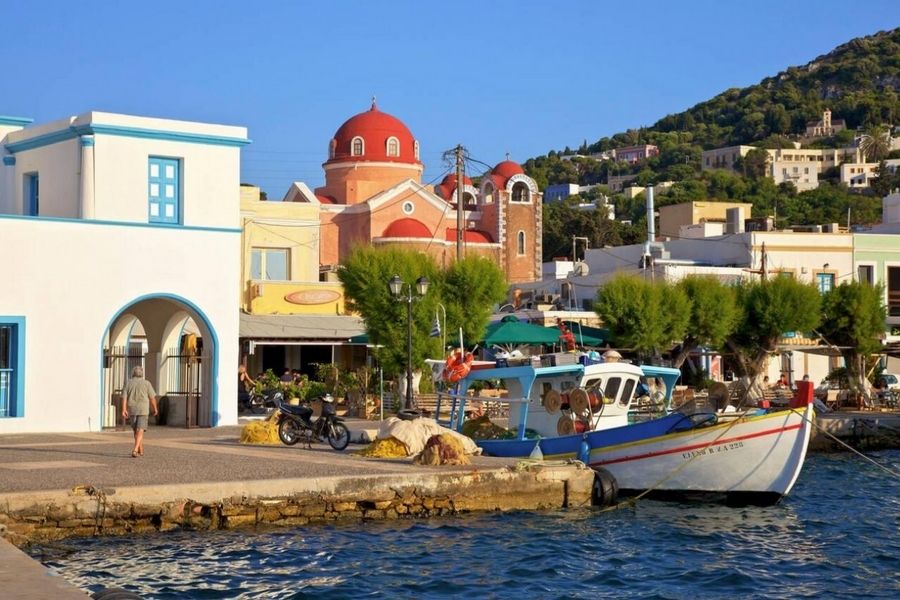
I found mid-week mornings to be the quietest—fewer tourists and a much calmer vibe.
Entry is just €6, and students get half off with an ID.
The Road Less Traveled: Moments of Anticipation
As the city faded, the landscape changed.
Pine-covered hills rolled by, making a perfect backdrop for reflection or a quick photo.
Each kilometer away from Athens seemed to peel away my stress.
I stopped at a roadside café for Greek coffee and chatted with the owner, who told me stories about the monastery.
Honestly, those random moments often become the best memories.
As you approach Daphni, you’ll catch glimpses of the golden dome through olive trees.
That first sight is a thrill—the anticipation builds as you realize you’re almost there.
Serenity Within Daphni: Moments of Spiritual Stillness
Daphni Monastery offers a rare kind of sanctuary where time slows down.
The peace here makes it easy to reflect and find your center.
Personal Reflections: Finding Inner Peace
Stepping into the main church, I immediately noticed the quality of silence.
It wasn’t empty—just full of centuries of prayer and quiet.
The golden mosaics caught the afternoon sun in a way that felt almost magical.
I found a quiet corner and just sat for twenty minutes, doing nothing but breathing and watching.
The stress of Athens melted away.
What surprised me was how the space seemed to meet me halfway.
The more still I became, the more details I noticed—the worn marble, beeswax candles, the echo of footsteps.
This wasn’t just running away from noise; it was showing up and being present.
My resistance to slowing down faded while I sat in that sacred calm.
Zen and Mutuality in Sacred Spaces
There’s a kind of Zen quality to Daphni, even though it comes from a totally different tradition.
Both value presence and the beauty in simplicity.
The monastery seems to create a partnership between visitor and space.
It doesn’t try to impress with size, nor does it disappear into the background.
It just meets you where you are.
I watched other visitors instinctively lower their voices.
It wasn’t about following rules—it was about respecting something real.
Sometimes, Byzantine music recordings play softly in the background, adding another layer of serenity.
When the horn passages drifted through the church, the golden mosaics almost seemed to vibrate.
If you’re looking for spiritual renewal, Daphni is close enough to Athens to be accessible, but feels far enough away to be a true escape.
Sacred Sounds: Music, Chant, and Timeless Performance
The walls of Daphni Monastery have absorbed centuries of music.
The acoustics here really bring out the beauty of ancient Byzantine melodies.
Byzantine Chant and Voice in the Monastic Tradition
I got lucky during my morning visit and heard the monks’ daily service.
Their voices filled the dome with haunting Byzantine chants.
This tradition uses only the human voice—no instruments—relying on harmonies that echo through the space.
Byzantine chant follows an eight-tone system, creating distinctive patterns.
The monks perform these ancient compositions from memory, learned over years of practice.
The sound seemed to hang in the air, bouncing off the mosaic walls.
It’s obvious the monastery was designed for this—the acoustics let even a single voice fill the whole space.
Some visitors plan their trips for feast days, when the full liturgical chanting happens.
Exploring Ancient and Modern Instruments
While chant dominates, Daphni sometimes features Greece’s traditional instruments during special events.
I caught a small ensemble playing:
- Byzantine lyra
- Kanonaki (like a zither)
- Percussion with frame drums
Sometimes, clarinet and violin players join in, blending modern touches with ancient tunes.
This creates a bridge between old and new.
You can buy recordings of these performances in the monastery’s gift shop to take a piece of that sound home.
Echoes of Performance: Dance, Ritual, and Composition
The sounds of Daphni aren’t just about music—they extend to movement and ritual.
On certain feast days, traditional Greek dance accompanies the liturgy, creating a full sensory experience.
Dancers move in circles, echoing patterns from Byzantine court ceremonies and symbolizing eternity.
I watched, a bit mesmerized, as performers in traditional clothes stepped in time to the chanting.
Their dance seemed to mirror the mosaics overhead.
Composers over the years have found inspiration in Daphni’s acoustics.
Some modern Greek composers, like Xenakis, have woven these ancient sounds into their works.
The monastery occasionally hosts workshops where musicians can experiment with sound in these unique spaces.
A Tapestry of Resistance and Libertarian Ideals
Underneath its religious surface, Daphni Monastery hides a fascinating political story.
As I wandered, I realized this place quietly stands for resistance to hierarchy and spiritual equality.
Byzantine Anarchism and Egalitarianism
Daphni’s layout challenges the usual power structures.
Unlike cathedrals that focus on authority, these spaces feel open and communal.
The monks who lived here practiced a kind of proto-egalitarianism.
They shared resources, rotated duties, and made decisions together.
Many mosaics show Christ among ordinary people, not just rulers.
That’s a subtle but powerful statement about equality.
Because Daphni sits a bit removed from Athens, it developed its own traditions, away from imperial control.
This freedom let alternative social structures take root, quietly pushing back against Byzantine hierarchy.
Kierkegaard, Anachronism, and Spiritual Apprenticeship
I stood in the quiet courtyard and suddenly felt connected to Kierkegaard’s idea of the “knight of faith.” He talks about people who seek spiritual truth through their own journey, not just by following institutional doctrine.
Daphni strikes me as a beautiful anachronism—almost like it’s out of step with its era. The monastery holds onto philosophical approaches that, weirdly enough, feel pretty modern in how they focus on individual spiritual experience.
The monks built their apprenticeship system around personal mentorship. Instead of rigid educational structures, new members learned directly from experience and relationships.
I even came across some inscriptions that hinted monks could question their teachers. That idea feels radical, and it lines up with Kierkegaard’s belief in wrestling personally with faith instead of just accepting answers handed down from above.
This spiritual apprenticeship made room for lots of different perspectives, but still kept everyone moving toward a shared purpose. The monks managed to hold onto community without insisting on total uniformity. I think that balance feels especially relevant now, given all our modern struggles.
Modern Connections: Daphni’s Influence Beyond Time
Daphni’s ancient monastery still sends ripples through our world today. You can spot its influence in blockbuster movies, fine art, and even critical theory.
Daphni in Popular Culture: From Star Wars to Disney
When I walked through Daphni’s gold-mosaic sanctuary, I couldn’t shake the feeling that I’d seen some of these architectural details before. The rounded arches and the way light streams through narrow windows reminded me a lot of the Jedi Temple scenes in Star Wars.
Disney’s animation teams have borrowed ideas from Byzantine mosaics like the ones at Daphni. You can see it in several of their productions. Those rich gold backgrounds and the stylized figures definitely influenced the look of films like “Hercules,” where ancient Greek themes blend with Byzantine art.
What really gets me is how Daphni’s color palette—those deep blues, golds, and earthy reds—shows up in modern entertainment. Millions of people enjoy it without ever realizing its roots go back so far.
Echoes in Visual Arts and the New York Times
Daphni’s reach goes deep into modern visual arts. The Metropolitan Museum has hosted big exhibitions featuring contemporary artists who work with mosaic techniques inspired by Daphni.
In 2023, The New York Times ran a long article about the revival of Byzantine aesthetics in today’s art scene. They highlighted how artists are taking ancient techniques and giving them new life with modern materials.
One artist stood out to me—she used digital sorting algorithms to rearrange mosaic patterns. She called her project “debugged Byzantium.” That’s such a wild mix of old aesthetics with new technology and computational thinking.
The mathematical precision in Daphni’s mosaics gives artists a natural benchmark. They use it to explore the crossroads between ancient craftsmanship and digital expression.
Neorealism and Paisan: Artistic Benchmarks
Daphni’s stark, honest beauty really left a mark on Italian neorealist filmmakers. You can especially see it in Rossellini’s “Paisan.”
That film looks at post-war reality with an unblinking eye, kind of like how the monastery strips away ornament to get at spiritual truth.
When I visited, I actually spotted a film crew there. They were shooting a documentary on sacred spaces.
The director chatted with me for a bit. He said they relied on special editing software to catch the odd, almost golden light you find in Byzantine buildings.
Cinematographers keep coming back to Daphni’s light as a gold standard for atmosphere. Sunlight slips through the monastery windows and creates these natural spotlights—something filmmakers have tried to mimic for years, usually with a mess of complicated lighting gear.
Honestly, no matter how hard they try, nothing quite matches the real thing.