
I recently took a boat trip through the Corinth Canal in Greece, and honestly, I’m still kind of in awe. This narrow waterway—barely 50 feet wide in some spots—cuts through massive rock walls that rise up on both sides.
Taking a boat through the Corinth Canal is absolutely worth it for the unique perspective and scenery you just can’t get any other way.
Passing through this historic channel that splits mainland Greece from the Peloponnese feels special. As our boat moved through the canal, a strong breeze swept across the deck, making the experience even more thrilling as the stone walls loomed overhead.
The water glows turquoise against the pale rock. It’s gorgeous—one of those sights that makes you reach for your camera over and over.
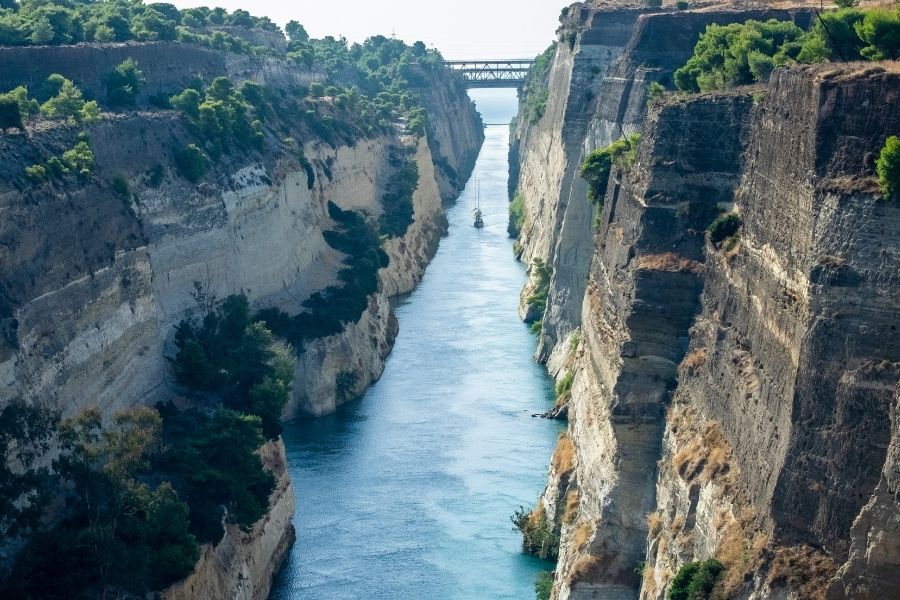
The journey itself is pretty short (about 1 kilometer), but the impact sticks with you. Unlike some touristy spots that get packed, my time at the Corinth Canal felt peaceful and refreshingly uncrowded.
I could actually soak in the engineering wonder without shoving through crowds or waiting in endless lines. There’s a blend of history, natural beauty, and a dash of adventure that really caught me off guard—in the best way.
What Makes the Corinth Canal Unique?
The Corinth Canal stands out as one of Greece’s wildest engineering feats. It slices through solid rock, creating a narrow channel with steep vertical walls that left me genuinely impressed.
A Marvel of Greek History and Engineering
They finished building the Corinth Canal between 1882 and 1883, but the dream goes way back—Greek rulers like Nero tried to do it centuries earlier! What really hit me was how gutsy the whole project was.
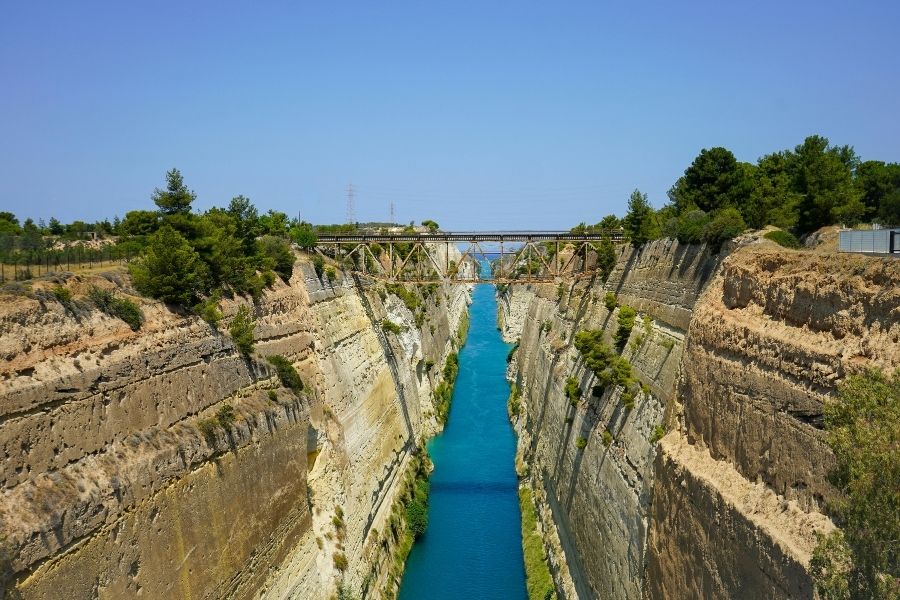
The canal is super narrow—maybe less than 50 feet wide in places—which makes it tricky for even small boats to pass.
When I visited, I found out about 30 ships travel through daily, adding up to roughly 11,000 vessels each year. The passage isn’t cheap! Ships pay a hefty fee to skip the long way around the Peloponnese peninsula.
Workers had to cut through solid limestone, and the vertical walls shoot up on both sides. I can’t even imagine how much work that took before modern machines.
Geographical Significance in Greece and Europe
The canal’s location really matters. It connects the Ionian Sea to the Aegean Sea, making a crucial shortcut across the Greek mainland.
Before it existed, ships had to go all the way around the Peloponnese—a detour of about 185 nautical miles. That’s a lot of extra time and fuel!
During my visit, I realized how much the canal changed Greece’s maritime landscape. It basically turns the Peloponnese into an island, separated from the rest of Greece.
The canal’s influence goes beyond Greece. It’s a key link for European shipping between Italy and the eastern Mediterranean.
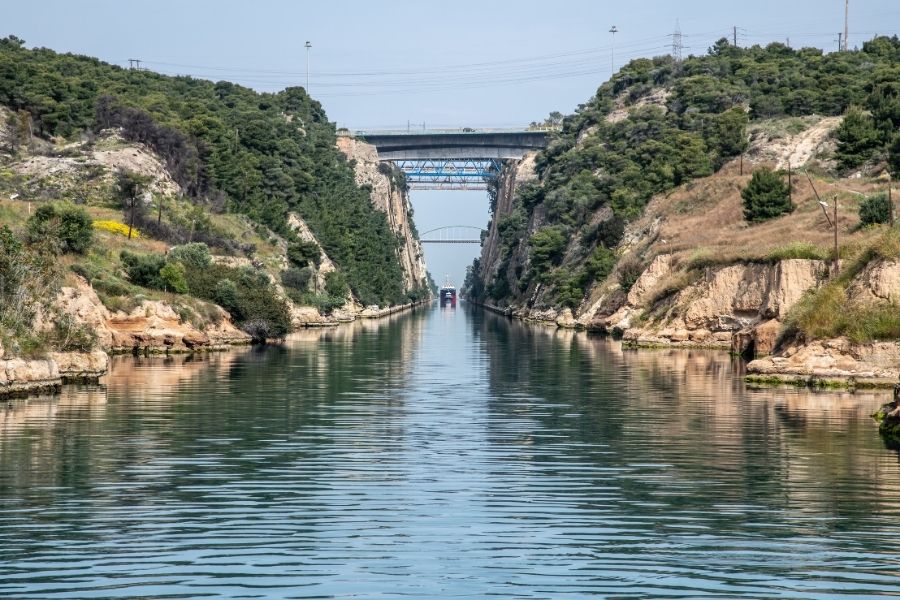
Even though it’s only about 1 kilometer long (that’s what other visitors told me), it’s had a huge impact on trade and tourism in the region.
The Experience: What to Expect on a Corinth Canal Boat Trip
Taking a boat through the Corinth Canal gives you a front-row seat to this engineering wonder. The narrow channel creates an up-close experience with massive walls that make you feel tiny.
A Step-By-Step Journey Through the Canal
Before boarding, our guide gave a quick safety talk and shared some history. The boat ride starts at either the Aegean (east) or Ionian (west) entrance.
As we set off, the limestone walls started to rise up, eventually reaching about 300 feet high. The canal is so narrow—maybe 70 feet at its widest. Our small tour boat had plenty of space, but I watched a bigger ship squeeze through with barely any room to spare!
The trip takes about 30 minutes to cover the 3.9-mile length. The breeze on deck felt great, but it got pretty strong at times. Definitely secure your stuff and wear a hat that won’t fly off.
Boat Types and Excursion Options
You’ve got a few tour options, depending on what you want:
Small Group Tours:
- 2-3 hour excursions
- Usually include the canal and nearby coast
- About 15-25 people per boat
- Average cost: €35-55 per person
Private Charters:
- Custom routes
- Some luxury options with snacks and drinks
- Great for photographers
- Starting at €150 for small groups
I booked through a local Athens travel agency, but plenty of hotels can set you up too. In summer, book ahead—boats fill up fast.
Scenic Highlights: Mythology, Ancient Sites, and Nature
The canal is the main event, but the guides tell some pretty cool stories along the way. I learned how Nero tried to dig the canal in 67 CE but didn’t make it, and how the project finally finished in 1893.
You can spot distinct layers in the rock walls—my guide pointed out how they reveal the region’s geological past. Birds nest high up in the crevices, sometimes swooping down near the boat.

Most trips include views of:
- The submersible bridge at Isthmia
- The Ancient Corinth archaeological site (a short drive away)
- The Temple of Apollo
- The Acrocorinth fortress on a nearby hill
My favorite unexpected moment? Watching the sunset light up the limestone walls while the guide told stories about Poseidon and the Isthmus of Corinth.
Is a Corinth Canal Boat Trip Worth It? My Honest Answer
After seeing the Corinth Canal up close, I can honestly say it’s worth the time and money. The narrow channel gives you a unique view of Greece that most tourists miss.
Personal Surprises and Unforgettable Moments
The biggest surprise for me was just how narrow the canal really is! Some say it’s only 50 feet wide, and that felt spot-on when I was there. The limestone walls shoot up on both sides, making the passage feel almost unreal.
The wind on deck was stronger than I expected, adding to the whole sensory experience. Hold on to your hat and camera!
Watching other boats squeeze through the canal was a highlight. There’s something almost magical about seeing ships navigate this slim waterway that literally splits Greece in two.
I got this strange sense that time had stopped. The canal’s been there since the late 1800s, and standing there, I felt a connection to travelers from way back.
Comparing to Other Mediterranean Destinations
Compared to other Mediterranean spots, the Corinth Canal gives you real value. Unlike the packed Greek islands or touristy hotspots, I found it was actually “nicely uncrowded“—and I loved that.
The canal experience only takes a few hours but leaves a big impression. Most Greece trips focus on ruins or beaches, but this is a different side of Greek history and creativity.
Some private tours even pair the canal with trips to Aigina and Agistri islands, which is a smart way to get more out of your travel budget.
The guides on my boat were fantastic—friendly, knowledgeable, and not too overwhelming with details.
If you’re into photography, you’ll get shots here that you just can’t find anywhere else in Greece.
Planning Your Corinth Canal Excursion
Planning your Corinth Canal visit takes a little effort, but the views make it totally worth it. Having the right info on timing, transport, and local services really helps.
Best Time to Visit and Climate Tips
I found that late spring (April-May) and early fall (September-October) are the sweet spots for visiting. The weather’s pleasant—not blazing hot like summer, when the sun can make those exposed decks pretty uncomfortable.
Morning is best for photos. The light hits the canal walls perfectly, and if you’re lucky, you’ll catch a boat passing through—always a cool sight. The canal can get windy, so bring a light jacket, even on warmer days.
Weekdays are quieter than weekends. I visited on a Tuesday morning and had plenty of space for photos without crowds.
How to Get There: From Athens, Nafplio, and More
Athens is the most common starting point, about 78 km (48 miles) from the canal. I drove a rental car, which gave me flexibility, but you’ve got options:
From Athens:
- By car: 1-hour drive on highway E94
- By bus: KTEL buses run from Kifissos Bus Terminal
- Organized tour: Lots of companies offer half-day trips
From Nafplio:
- By car: About an hour’s drive
- By taxi: Reliable, but a bit pricier
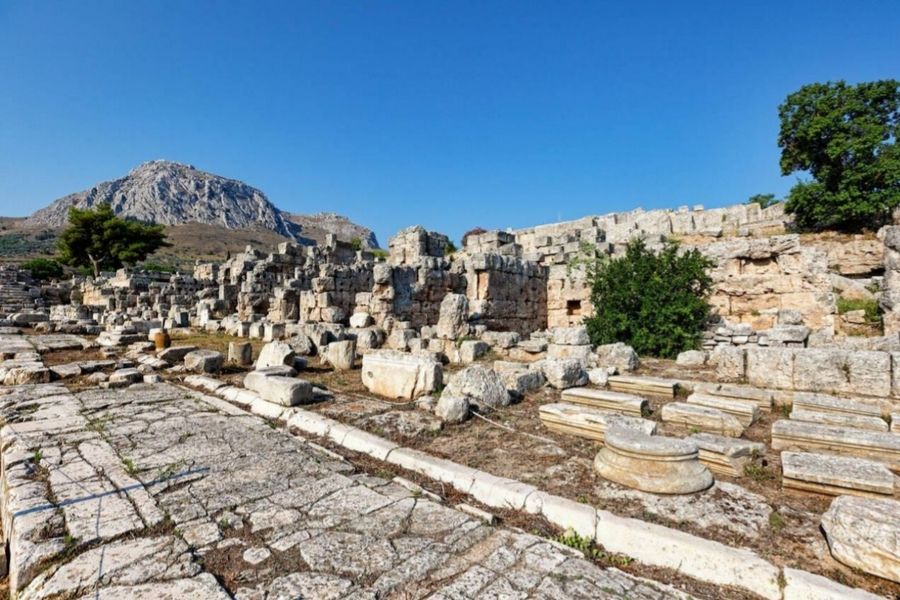
You can also stop by the canal if you’re traveling between Athens and places like Ancient Corinth or Mycenae. It’s easy to add to your itinerary without losing a whole day.
Travel Arrangements and Taxi Services
For my trip, I used a taxi service my hotel recommended, and honestly, it was a great call. My driver, George Kokkotos (locals call him the “famous taxi driver”), gave awesome service and even acted as a mini-tour guide.
Several taxi companies offer:
- Airport transfers to and from the canal
- Custom trips that include the canal and nearby sights
- Multilingual drivers who know the area’s history
If you’re staying in Athens, just ask your hotel to help arrange transport. Many services let you book online with clear prices. I paid about €120 for a half-day trip from Athens, including waiting time.
Make sure to confirm your pickup time and meeting spot ahead of time. Most drivers are flexible if you want to linger at certain stops.
Nearby Destinations for the Ultimate Greek Adventure
Greece has so much more to offer than just the Corinth Canal. After cruising through that narrow channel, I found a bunch of amazing places nearby that turned my trip into a full-on Greek adventure.
Exploring Ancient Sites: Delphi, Mystra, and Meteora
Delphi really captured my imagination. The ancient sanctuary of Apollo sits dramatically on Mount Parnassus, about 2.5 hours from the canal.
I spent a whole day wandering the Temple of Apollo, the old theater, and the Delphi Archaeological Museum.
Mystra caught me off guard with its Byzantine beauty. This fortress city near Sparta has incredible monasteries and churches with centuries-old frescoes.
The hillside views are just breathtaking.
The floating monasteries of Meteora blew me away. These six active Eastern Orthodox monasteries perch on huge rock pillars, making for one of the most jaw-dropping landscapes in Greece.
It’s a longer trip (about 4 hours from the canal), but honestly, the scenery is worth every minute.
Greek Islands and Coastal Towns: Mykonos, Naxos, and Santorini
From Rafina port (near Athens), I hopped on a ferry to Mykonos. The white-washed buildings, windmills, and buzzing nightlife totally lived up to the hype.
Little Venice, with its colorful houses right on the water, became my favorite sunset spot.
Naxos won me over with its laid-back vibe and fewer crowds. The island’s long beaches, mountain villages, and ancient marble quarries offer a nice mix of chill and adventure.
Santorini’s caldera views are just unreal. I stayed in a cave hotel in Oia, checked out black sand beaches, and visited ancient Akrotiri—a Bronze Age site buried in volcanic ash.
Other great island options include Andros, Tinos, and Syros, each with their own charm.
Discovering the Peloponnese: Sparta and Arcadia
The Peloponnese peninsula sits just beyond the Corinth Canal, tying itself to mainland Greece. Honestly, I think it hides some of Greece’s most overlooked gems.
In Sparta, I wandered through the ruins of that once-mighty city-state. The Archaeological Museum caught my attention with its fascinating artifacts from the area.
Arcadia’s rugged mountains really took me by surprise. I spent hours hiking through dense forests and stumbled upon secret waterfalls.
I ended up staying in stone villages like Dimitsana and Stemnitsa. They felt timeless, almost untouched by the outside world.
The Lousios Gorge gave me some of the best hiking I’ve ever done. Ancient monasteries cling to the cliffs, and I couldn’t help but stop and stare.
After crossing the canal, I made my way to the ancient theater of Epidaurus. Its acoustics are legendary—honestly, you have to hear it to believe it.
Nafplio, with its Venetian buildings and fortified walls, felt like a movie set. The whole place has a charm that’s hard to describe.
If you’re planning a trip, give the Peloponnese at least three or four days. There’s just too much history and scenery to rush through.
