

As I walked through the grand entrance of the Royal Palace of Caserta, a wave of awe hit me. This famous “reggia” near Naples isn’t just another historical site—it’s a deep dive into royal Italian life.
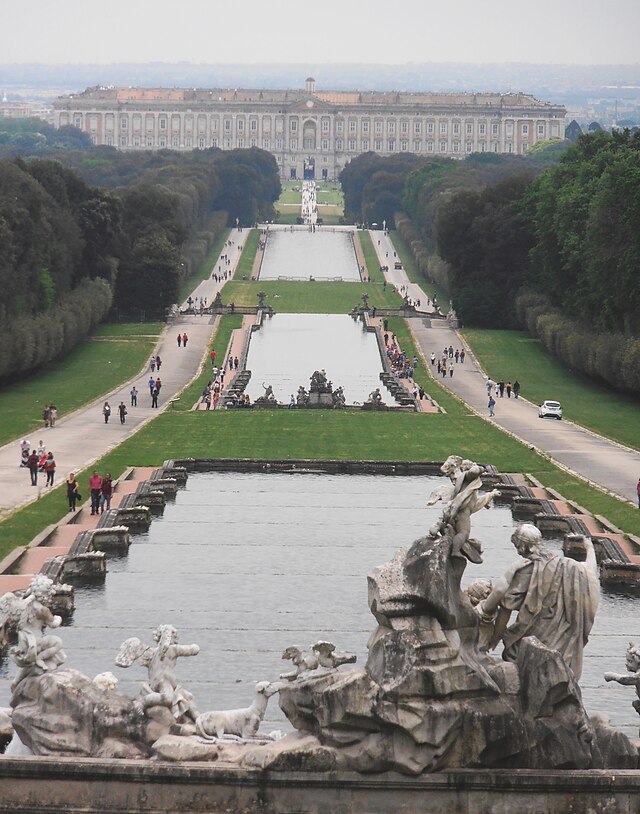
Image Source: Wikimedia Commons
The Royal Park of Caserta really stands out as a triumph of Italian Baroque architecture. It’s home to Italy’s first landscape garden, where you can wander among rare plants and stunning water features.
I spent an entire day getting wonderfully lost in these sprawling gardens, venturing far beyond the magnificent waterfall that marks the heart of this UNESCO World Heritage site. Caserta’s park isn’t like those tourist spots you can rush through in an hour. Here, patience pays off.
The winding pathways kept surprising me—hidden fountains popped up, classical statues peeked from the greenery, and peaceful groves muffled all traces of modern life.
What really sets Caserta apart is how it fuses human creativity with nature’s beauty. As I wandered the grounds on a perfect spring day, I couldn’t help but wonder about the vision behind such a place—where royalty once strolled and where we, today, can still feel that same sense of wonder.
The gardens strike just the right balance between structured elegance and wild charm. If you love photography or nature, you’ll probably fall for this place too.
Entering the Royal Park: First Impressions and Grand Arrival
The approach to Caserta’s royal gardens sets the mood right away. The sheer scale and careful design become obvious with that first glimpse, and anticipation starts to build.
Navigating Caserta: Access Points and the Railway Station
Getting to Caserta’s Royal Park turned out to be refreshingly easy. The railway station is just a quick 10-minute walk from the palace entrance, so it’s a great day trip from Naples or Rome.
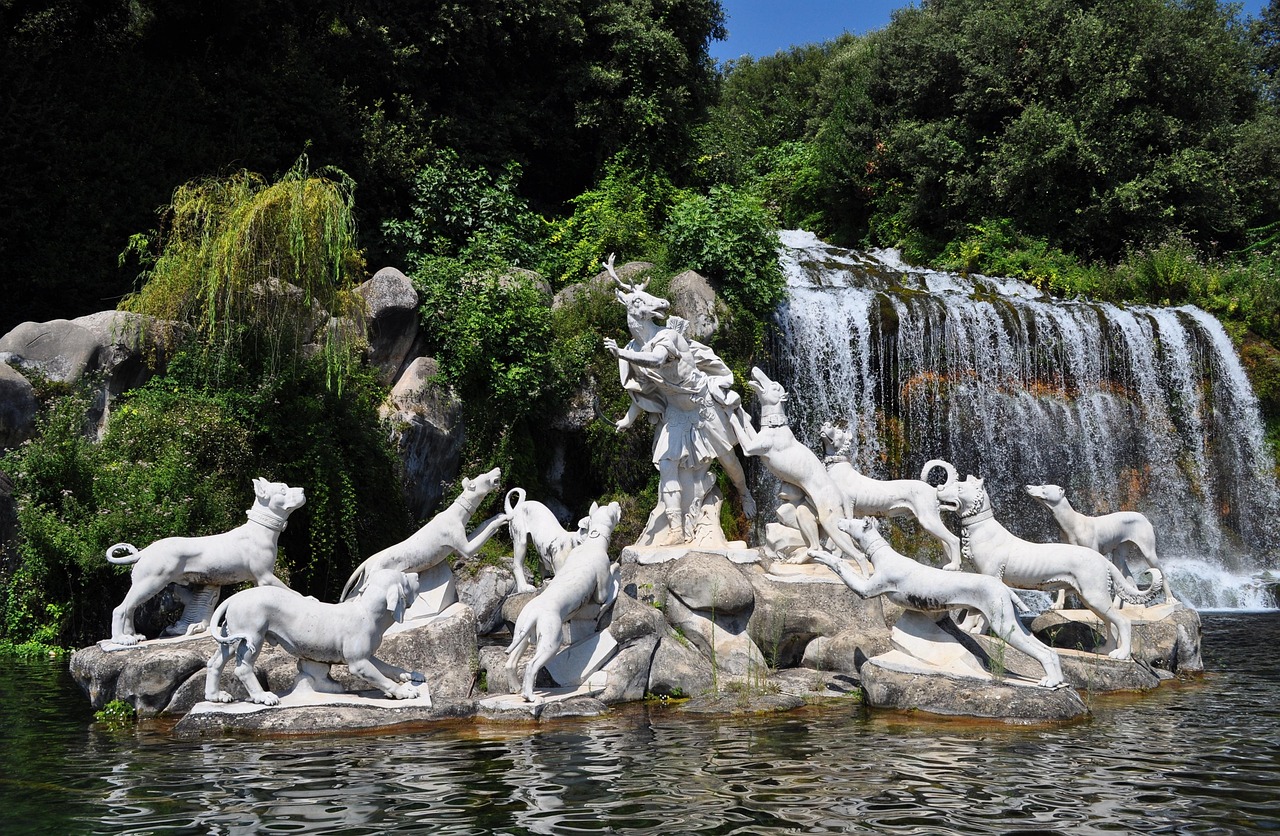
When I stepped off the train, the palace immediately dominated the landscape. The station itself has this old-world charm, and the signs pointing to the UNESCO site couldn’t be clearer.
If you’re driving, you’ll find several parking lots around the complex, but honestly, try to get there early on weekends. The main entrance gate has info boards in different languages, laying out the park’s history and layout.
Here’s a tip: the side entrances usually have shorter lines, especially in the busy summer season.
The Welcome of History: Initial Views of the Palace
My first look at the palace façade honestly stopped me in my tracks. The massive Baroque structure stretches across 247 meters, making a statement that shouts Bourbon ambition.

Image Source: Tripadvisor
The symmetry naturally draws your eyes to the center. I noticed how the afternoon sun in Naples turns the limestone a gorgeous golden color.
Standing in the forecourt, I felt tiny compared to this feat of human ambition. Charles VII of Naples started building the palace in 1752, aiming to outdo Versailles.
Everyone around me seemed just as spellbound, snapping photos and soaking in that first breathtaking view.
A Sense of Pageantry: Exploring the Entranceways
Stepping through the main gates really feels like traveling back in time. The sense of ceremony hits you right away, with an entrance designed to wow dignitaries and set the tone for the entire grounds.
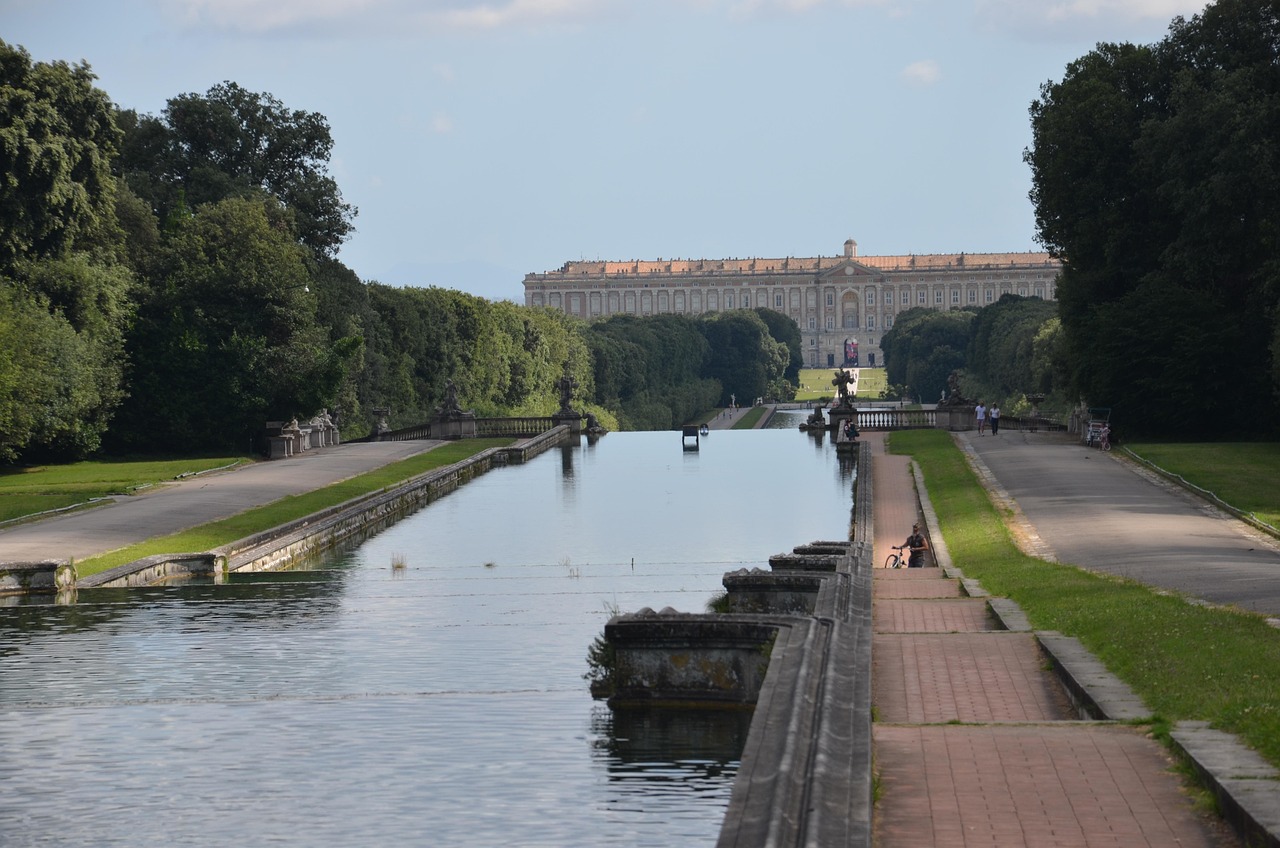
Pause for a moment at the threshold—the sightlines are perfectly planned. The entrance frames the distant waterfall over a mile away, a clever design trick that shows off just how huge the park is.
The vestibule is full of ornate details hinting at the splendor inside. Sometimes, guards in period-inspired uniforms stand watch during special events, adding to the historic vibe.
What really struck me was how smoothly the palace flows into the park. Each archway or passage opens up to a new view, making the whole arrival feel like a series of discoveries.
Walking Through Centuries: The Gardens’ Storied Past
Caserta’s Royal Gardens hold centuries of fascinating stories within their vast grounds. These gardens have seen everything from royal celebrations to revolutionary upheavals.
From Enlightenment to Empire: Caserta and Napoleon
Napoleon’s influence runs deep here. As I wandered through certain sections, I could almost imagine the French Emperor himself pacing these paths during his Italian campaigns.
Napoleon’s brother, Joseph Bonaparte, took over as King of Naples in 1806 and made Caserta his royal home. During that time, the gardens gained new features with a clear French imperial touch—some areas feel almost military in their precision.
The Enlightenment ideals of order and reason had already shaped the garden’s design, but Napoleon’s regime took those principles and ran with them. You can see the geometric precision in the pathways from this era.
Caserta and Versailles: Influence of French Grandeur
Walking through Caserta, the Versailles inspiration is impossible to miss. Architect Luigi Vanvitelli definitely borrowed ideas from the French royal gardens when he designed Caserta in the 18th century.
Both places have dramatic water features. Caserta’s cascade and fountains echo Versailles’ famous displays. The long, straight central axis in both gardens leads you through the property, creating a feeling of grandeur.
But Caserta does something different—it weaves in more of the local landscape. The formal gardens near the palace eventually give way to more natural, English-style areas, showing how Caserta evolved past its French roots.
Both gardens scream royal ambition, designed to show off absolute power and human control over nature.
Political and Cultural History of the Royal Gardens
Exploring the grounds, I realized these gardens weren’t just for show—they served as a political stage and a hub of culture. They symbolized Bourbon rule and the aspirations of the Kingdom of Naples.
Royal parties, diplomatic meetings, and cultural events unfolded here, making Caserta a center for both politics and the arts. Every fountain and statue was chosen to send a message about royal authority.
Many of the mythological scenes in the sculptures actually carry political messages and allegories about the Bourbon dynasty. These weren’t just pretty decorations—they were propaganda.
Art and music thrived here, with performances and exhibitions nestled among the hedges and fountains.
From 1799 to Present: Royalty, Revolution, and Beyond
The gardens saw dramatic shifts during the Neapolitan Revolution of 1799, when revolutionaries briefly ousted the monarchy. As I walked those same paths, I could almost feel the tension between royals and rebels.
After Italian unification in 1861, Caserta stopped being a royal residence and became a national monument. The switch from private playground to public heritage site changed everything about how the gardens were used.
During World War II, the palace served as Allied headquarters and parts of the gardens suffered damage. Some areas still show subtle signs of restoration from that difficult time.
Since 1997, UNESCO has protected these gardens. Now, families, tourists, and locals fill spaces once reserved for royalty—maybe the biggest transformation of all.
Masterpieces of Garden Design and Landscape Architecture
The Royal Gardens of Caserta show off incredible landscape architecture, blending natural beauty with human creativity. Walking here feels like stepping into a living museum of design principles from different centuries.

Landscape Architecture Inspirations: From Renaissance to Vaux
Caserta’s designers pulled from all sorts of styles. I spotted Renaissance influences—geometric patterns and symmetrical layouts guide you through the space.
The French garden style, especially from Vaux-le-Vicomte, shows up in the dramatic perspectives and optical tricks. Walking the central axis, I found it hard not to be impressed as the fountains seemed to stretch on forever.
Italian traditions blend with French formality. The terraced sections reminded me of old Roman villa gardens, each level revealing something new as I moved along.
Iconic Features: Waterfalls, Fountains, and the Imperial Crown
The Grand Cascade steals the show—it’s a mesmerizing series of waterfalls. I spent ages just watching the water tumble down, each pool catching the sky in a different way.
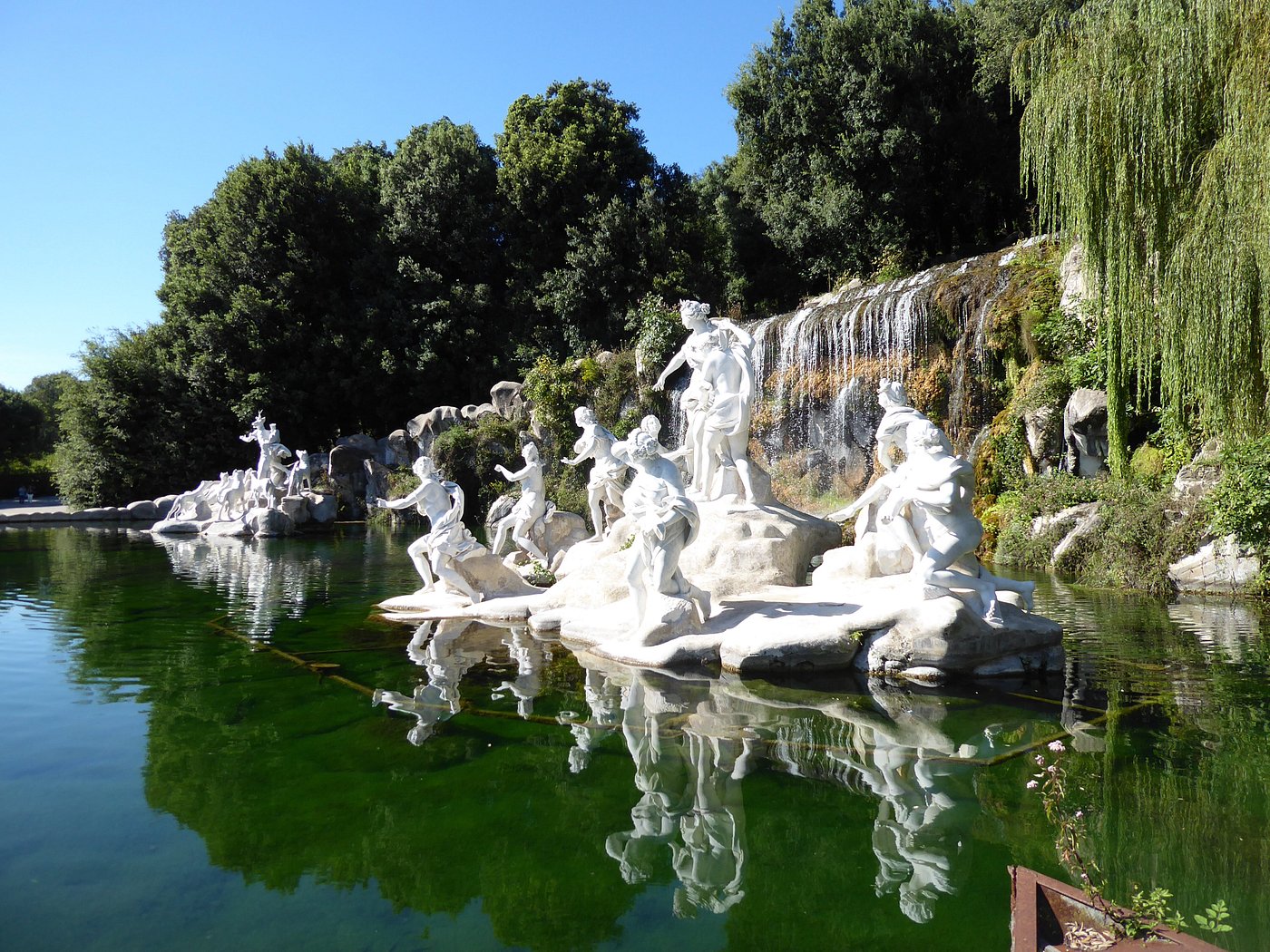
The fountains are a feat of engineering. Water flows naturally through an 18th-century aqueduct, no modern pumps needed. It’s still working after all these years!
The Imperial Crown fountain is probably my favorite. Water jets form a crown shape every hour, and when the sun hits the spray just right, it’s pure magic.
There are also hidden fountains along the smaller paths. I accidentally set one off and got a little wet—a nice surprise on a hot day.
Renaissance Gardens and Modern Influences
The English Garden section is a world apart from the formal areas. Here, winding paths, romantic ruins, and native plants create a space that feels wild but is actually very carefully planned.
You can see Renaissance ideas of harmony and proportion everywhere. The balance between water, plants, and architecture seems just right.
Modern restoration keeps the historic feel while adding sustainable touches. Native plants now grow alongside traditional varieties, helping maintain the ecological balance.
I found it fascinating that Caserta’s Renaissance gardens still influence modern park design. Sight lines and focal points you see here pop up in public parks around the world.
Royal Gardening Techniques: Horticulture in Practice
The gardeners here stick to centuries-old traditions. I watched them use classic pruning methods on the ancient boxwood hedges.
They use special grafting to keep rare fruit trees alive—some are direct descendants of the originals planted in the 1700s!
The water management system is clever, using gravity-fed channels to deliver water all over the grounds.
Seasonal rotations of flowers keep the gardens colorful all year. Spring tulips, summer roses, fall chrysanthemums—it’s all planned out, and the gardeners have this down to an art.
Exploring the Park’s Hidden Corners and Botanical Wonders
Beyond the grand palace, Caserta’s Royal Park hides a world of natural treasures. As I wandered, I found myself drawn to botanical collections, quiet corners, and landscaping that could rival any garden in Europe.
Wild Flowers and Botanical Gardens: Natural Beauty on Display
The botanical collections here blew me away with their variety. In spring, the meadows burst into color—poppies, daisies, and native Italian flowers turn the grass into a living painting.
I spent hours in the English Garden, which Carlo Vanvitelli and John Andrew Graefer designed in the late 1700s. Rare plants from across Europe and beyond grow here, and the intentionally “natural” style contrasts with the palace’s formal gardens.
Don’t skip the ancient magnolias and camellias—they put on a spectacular show when in bloom. The collections feature:
- Mediterranean plants from Campania
- Exotic species from royal expeditions
- Medicinal herb gardens with signs explaining their uses
- Blooms arranged by color and plant family
Strolls Among Private Gardens and Secret Groves
Straying from the main paths led me to some of the park’s most magical spots. The private gardens, once reserved for royalty, now offer peaceful escapes from the crowds.
I stumbled on secret groves with stone benches, perfect for sitting and soaking it all in. These quiet corners, often framed by cypress or flowering shrubs, offered much-needed shade during the midday heat.
One of the best discoveries was a tiny citrus garden tucked behind hedges. The air smelled of lemon and orange blossoms while fountains gurgled quietly nearby.
Water features connect many of these hidden corners. Following the sound of running water, I found pools where dragonflies skimmed across lilies.
Comparing Caserta to World Gardens: Stowe, Kew, and Beyond
Caserta’s park shares some design DNA with other European gardens but keeps its own Italian soul. Stowe in England is all about temples and monuments, while Caserta shines with its water features and plant diversity.
Kew Gardens might have more exotic species, but Caserta’s way of blending plants into the landscape feels more natural. The terracing—kind of like Persian gardens—adds visual interest and lets different plant communities shine.
French influences pop up in the formal areas, but Caserta feels less rigid than Versailles. The designers mixed traditions, adapting to the local climate and terrain.
What really sets Caserta apart is its sheer size. Few royal gardens let you get so lost in nature while still being part of a designed landscape.
The Royal Gardens in Literature, Art, and Modern Media
Caserta’s Royal Gardens have sparked the imagination of writers, artists, and filmmakers for ages. These grounds serve as both inspiration and backdrop, their grandeur captured in countless works.
Caserta’s Gardens in Literature and Ebook Representations
Several novels use Caserta’s amazing landscape as a setting. Luigi Vanvitelli’s original designs show up in historical fiction like “The Bourbon Legacy” and “The Architect’s Dream,” where characters wander the cascading fountains just as I did.
Modern ebook guides give virtual tours, with interactive maps that point out hidden gems. I tried one called “Hidden Caserta” during my visit and learned about the symbolism behind the waterworks and statues.
Travel bloggers love to feature these gardens in their “Must-See Italian Treasures” lists. Many compare the experience to stepping into a living painting—each view seems more impressive than the last.
Garden Representation in Art and Iconography
Artists have fallen for Caserta’s beauty for centuries. The gardens appear in countless paintings, from old commissioned works to fresh interpretations.
In the gift shop, I saw reproductions of Jacob Philipp Hackert’s landscapes. His detailed paintings of the English Garden capture its wild, deliberate design perfectly. The waterfall cascade shows up in a lot of Italian art, often as a symbol of Bourbon power.
Photography books and postcards highlight Caserta’s symmetry and perspective. The long canal down the central axis is a favorite subject.
Inspirations from Moscow to St. Petersburg
Caserta’s gardens share design elements with some of Russia’s most famous parks. Peter the Great’s Peterhof Palace outside St. Petersburg shows similar Versailles-inspired features.
I found out that Russian nobles used to travel to Caserta to study its water systems and garden layouts. Caserta’s influence shows up in Moscow’s park traditions, especially in how they arrange fountains and water features.
Caserta’s museum even has a bibliography mentioning the cultural exchange between Italian and Russian garden designers. This sharing of ideas helped shape a European garden heritage stretching from the Mediterranean to the Baltic.
Daily Life, Virtue, and Social Insight Amidst Greenery
As I wandered through Caserta’s vast gardens, I noticed how these spaces act as living museums of social structures and moral philosophy. The park’s design reveals a lot about 18th-century society, values, and daily life.
Sociology and Anthropology of Royal Gardens
The Royal Gardens of Caserta give us a peek into historic social hierarchies. Different paths were designed for nobles and servants—the grand walkway was for royalty and VIP guests.
Near the English Garden, I watched visitors today unconsciously follow those old patterns, gathering in the same spaces people did centuries ago.
The layout—with public areas for socializing and hidden nooks for private chats—mirrors the complex social dance of court life. Even now, families, couples, and friends seem to organize themselves along these invisible lines.
The water features weren’t just for show. They provided cool spots and refreshments during summer gatherings, making palace life more comfortable.
Virtue, Talent, and the Garden as a Reflection of Society
The garden’s design celebrates virtues valued in the 18th century. As I walked among the mythological statues, I realized each one stands for something—wisdom, strength, harmony.
The fountains tell a moral story, with the Great Waterfall at the end representing the peak of virtue. It’s not just beautiful landscaping, but a philosophical journey.
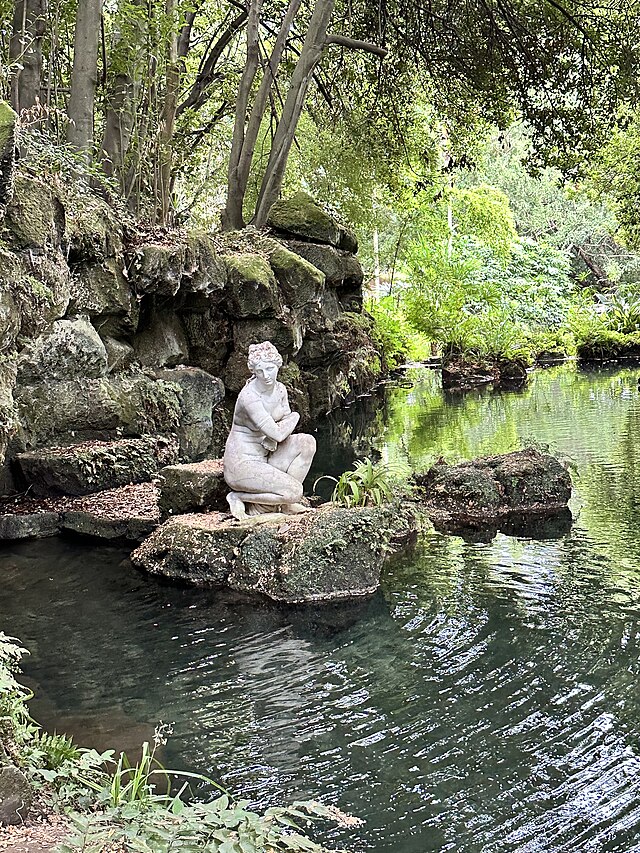
Image Source: Wikimedia Commons
In the English Garden, the “wild” look is actually carefully crafted—a reminder that even virtue needed cultivation in royal society.
The garden also served as a showcase for talented architects, sculptors, and botanists. The rare plant collections showed off royal power to gather treasures from around the world.
Even today, visitors (including me) respond to these symbols, often without noticing the moral lessons built into every pathway and view.
