
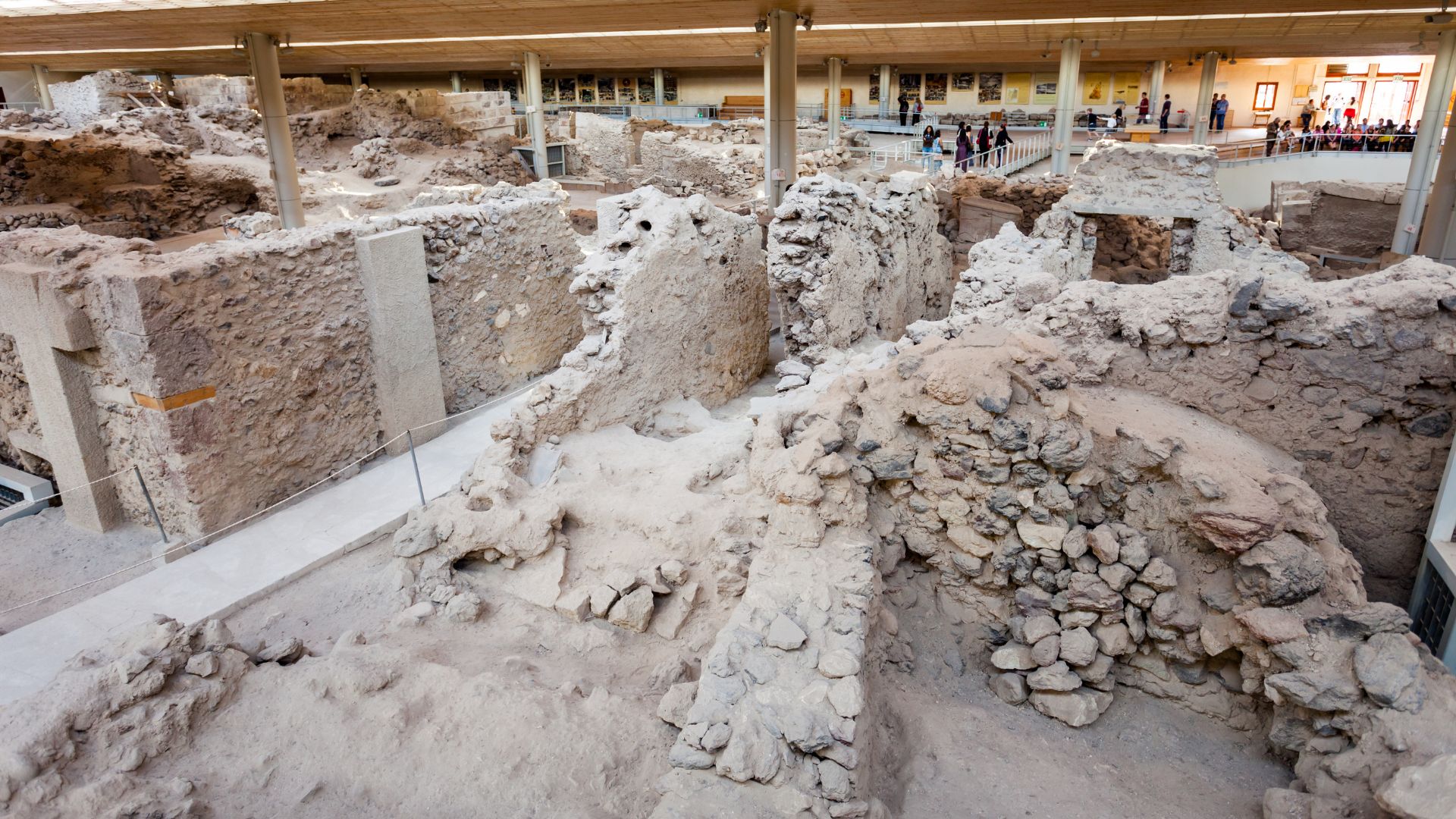
Walking through the ruins of Akrotiri on Santorini, I honestly felt like I’d slipped back in time. Thick layers of volcanic ash have kept this ancient city astonishingly well-preserved—people often call it the “Greek Pompeii.”
But honestly, Akrotiri is so much more than just frescoes on the walls. It’s a real window into a lost Minoan world, full of advanced homes, clever drainage systems, and all the little details of daily life that show just how sophisticated ancient Thera was.
It blew my mind to see buildings with multiple stories, streets laid out with care, and even traces of furniture left behind after the eruption. Everywhere I turned, I noticed signs of a creative, resourceful society. It’s honestly hard to believe this place existed over 3,500 years ago.
Art draws in a lot of travelers, but wandering among Akrotiri’s ruins flipped the way I see ancient Greece and the Minoans. There’s a real sense of discovery, seeing how thoughtfully these people planned their city.
Discovering Akrotiri: Lost City Beneath the Ash
When I first heard about Akrotiri on Santorini, I got hooked by more than just those famous frescoes. The site’s story is shaped by disaster, explorers’ curiosity, and the wild power of nature.
Learning about its discovery gave me a new respect for the lives interrupted by a massive eruption.
The Accidental Unearthing of Akrotiri
I still remember walking through modern Santorini, knowing this island once hid an entire city below ground. Akrotiri didn’t come to light by design.
Decades ago, villagers dug for pumice—needed for houses and roads—and started hitting walls, pottery, and painted plaster deep beneath the surface.
Curiosity quickly took over as more pieces turned up. At first, people guessed it was just a small, forgotten Minoan outpost.
But the discoveries kept coming—whole buildings, vivid ruins, and art frozen in time. Suddenly, Akrotiri revealed itself as a bustling center, not just a tiny settlement.
Even now, each excavation season brings new surprises.

Early Archaeologists and Adventurers
News spread fast, and archaeologists rushed to Akrotiri. Professor Spyridon Marinatos led the first big dig in 1967.
His team worked layer by layer, gently brushing away volcanic ash that covered the city for more than 3,500 years.
Their careful approach paid off. You can almost feel the excitement as Marinatos and his team uncovered pottery, tools, and multi-story buildings that just didn’t exist anywhere else in Greek prehistory.
Some people say the thrill of discovery at Akrotiri is unmatched in Greece. Their work changed what we know about Bronze Age settlements and life in the Aegean.
The Role of Santorini’s Volcanic Eruption
Santorini’s massive volcanic eruption in the 16th century BCE preserved Akrotiri so well. This wasn’t your average eruption—it ranks among the most powerful in prehistory.
Ash fell suddenly and thickly, sealing homes, streets, and artwork like a giant time capsule.
Standing at the site, I could see how the ash protected even fragile wall paintings and everyday things. Akrotiri’s layout and treasures survived nearly untouched.
Nature’s force didn’t just bury ruins; it locked away stories about how people lived, built, and organized their city before disaster hit. It’s humbling, honestly.
You get this rare chance to peek into advanced infrastructure, city planning, and a society’s final moments.
Akrotiri’s Stunning Frescoes and Artistic Revelations
As I wandered through Akrotiri’s ruins, I felt like I’d stepped into a world where art was stitched into daily life. Every wall, vessel, and object seemed to tell a story about people who loved color, celebrated nature, and wanted beauty in their homes.
Iconic Frescoes: Colors, Subjects, and Meanings
The frescoes at Akrotiri grabbed me right away with their reds, blues, yellows, and greens. These colors weren’t just for show—they made even the smallest rooms feel alive.
Artists painted everything from blooming flowers to leaping dolphins. I spotted scenes of women gathering saffron, boys boxing, and fishermen showing off their catch.
Each painting pulled the ancient world closer, showing how adults and kids lived on Thera. These weren’t just decorations; they meant something, reflecting a love of nature and celebration.
The way figures and animals appear hints that these images might’ve played a role in ceremonies or told stories about beliefs.
Beyond Wall Art: Minoan Pottery and Decorative Wares
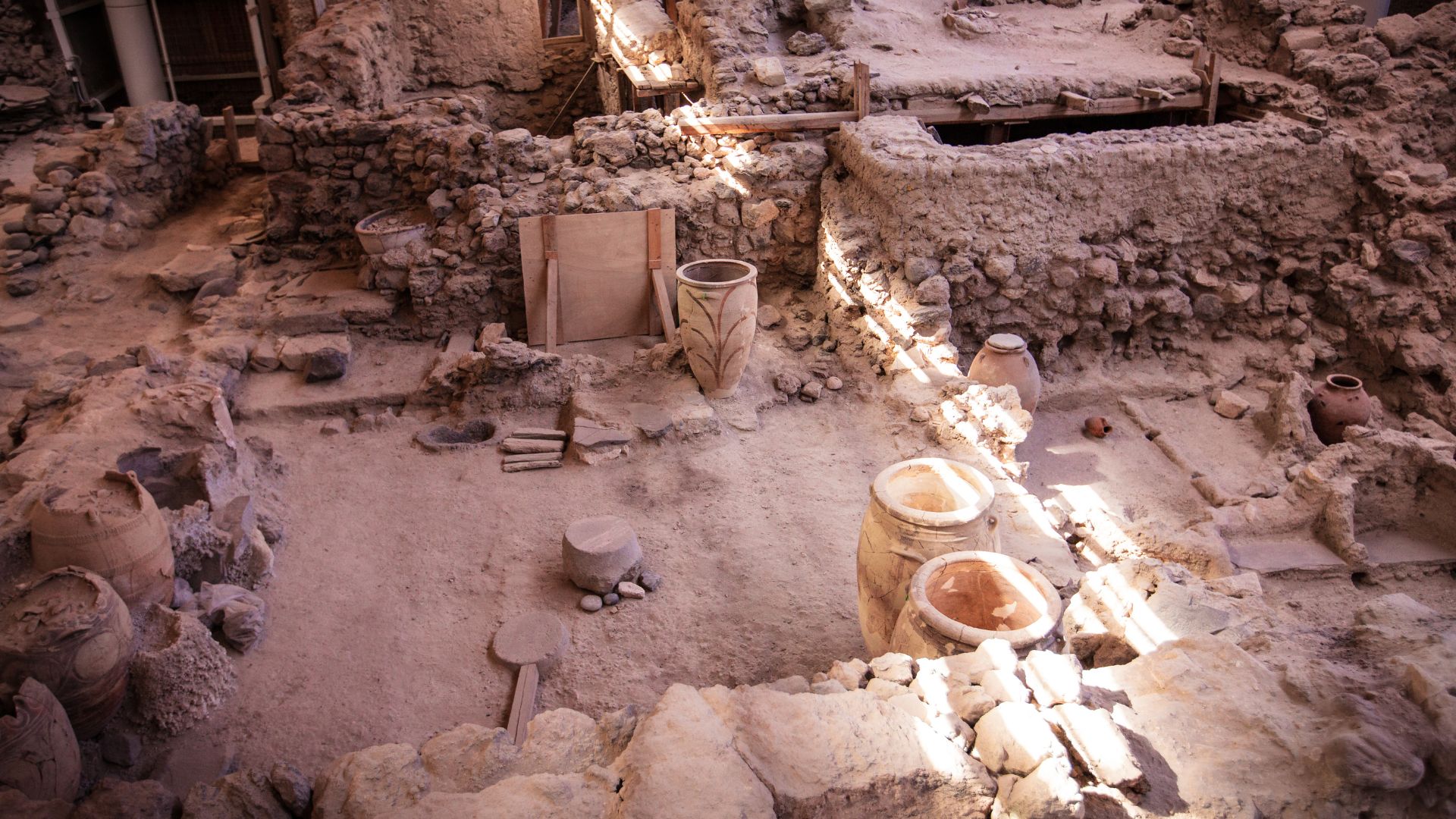
Frescoes aren’t the only treasures the ash preserved. I found pottery and vases with swirling designs and bold colors.
Many had wave patterns, spirals, and birds in flight. Small clay containers and elegant cups caught my eye.
Experts think some pieces held perfumes or spices, maybe for rituals. Delicate votive objects and tiny bronze statuettes popped up too—proof that art was part of both celebrations and spiritual life.
Travel tip: The museum on site displays painted pottery and bronze figures. Seeing them up close gave me a new respect for ancient Minoan artists.
Symbolism and Spirituality in Minoan Art
Akrotiri’s art is more than just style—it’s packed with symbols and hints about faith. The Mother Goddess shows up everywhere, usually as a powerful woman surrounded by animals or plants.
I noticed ritual objects, elegant figurines, and scenes happening at peak sanctuaries—little shrines on mountaintops. These details suggest the Minoans tied their lives closely to worship and nature’s cycles.
Seeing these symbols in person really changed how I think about ancient art. It’s not just decoration; it’s a glimpse into what mattered to them.

Life and Innovation in an Advanced Bronze Age Society
Exploring Akrotiri felt like walking into another world. I found myself surrounded by clever streets, homes, and hints of creativity that made it clear just how advanced this Cycladic settlement was.
Urban Planning and Architecture of Akrotiri
When I visited, the town’s layout really impressed me. The streets formed a neat grid, making it easy to picture life in a well-organized city.
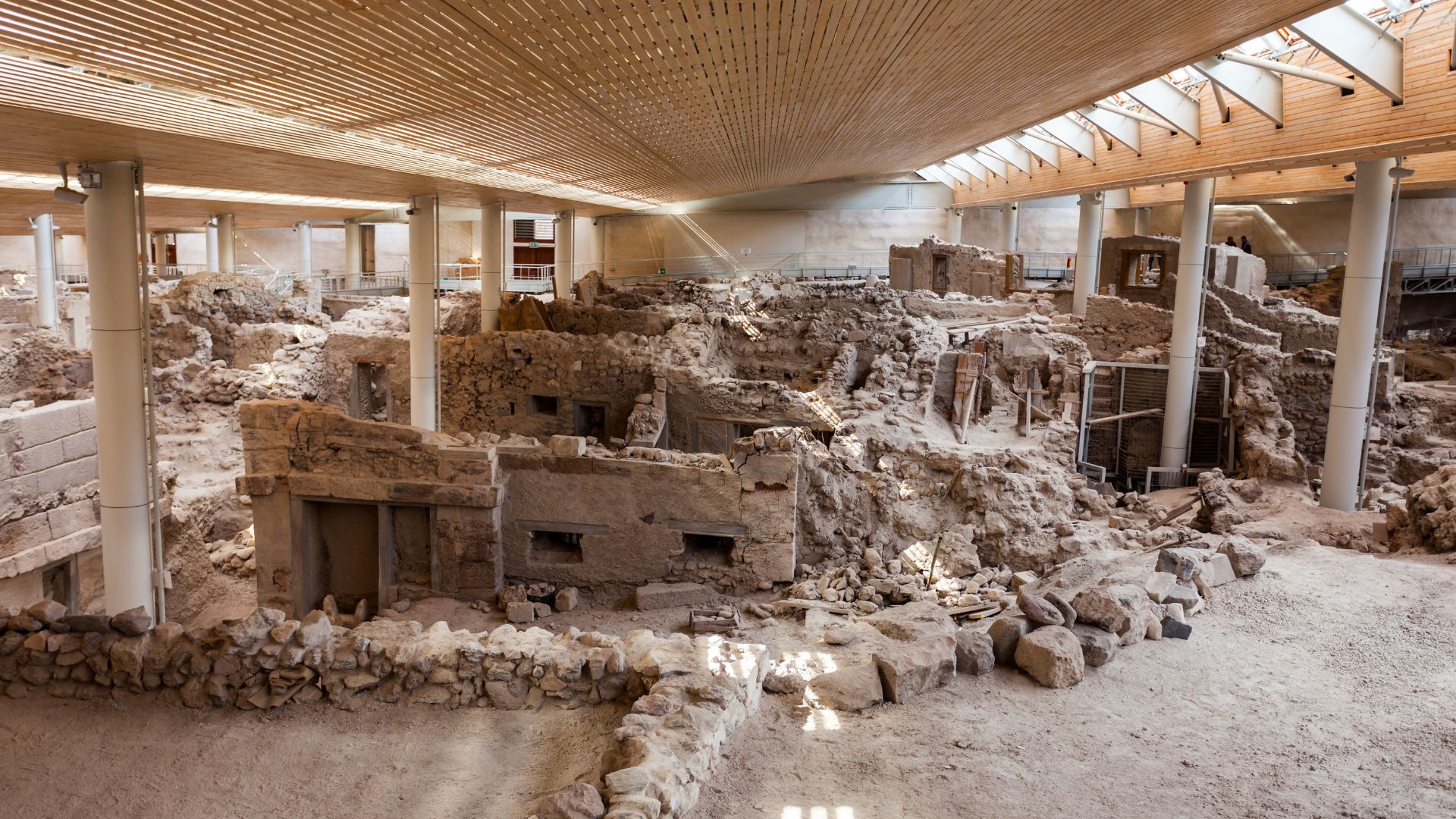
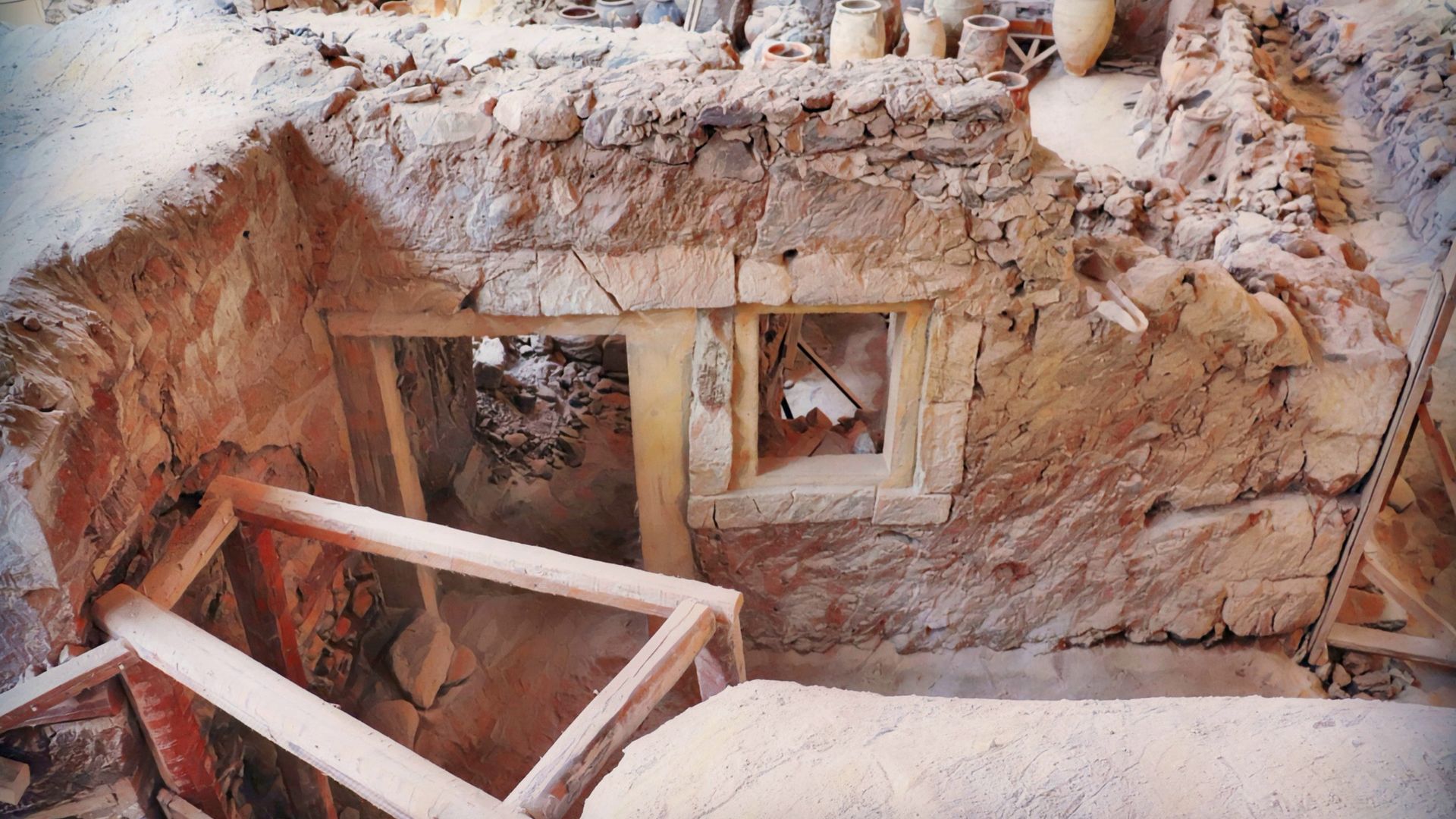
Multi-story buildings—some up to three floors—reminded me of modern apartments. Houses often had colorful frescoes and were built using stone, mudbrick, and timber.
Many windows and balconies faced open courtyards, letting in light and fresh air. Some homes even had storage rooms and workspaces on the lower floors.
The town’s careful planning stood out. I saw spaces set aside for markets and workshops.
I could almost see traders, artists, and families bustling through those streets. Akrotiri’s mix of beauty and function made it stand out from other Bronze Age places.
Innovative Sewage and Water Systems
Akrotiri’s water and sewage systems honestly blew my mind. In ancient times, comforts like these were rare, but here people had running water and indoor toilets.
The city used clay pipes to bring fresh water into homes and public spaces—maybe from springs or rainwater stored in cisterns.
Every house I stepped into had traces of a drainage system. Underground pipes carried wastewater away, keeping homes clean and protecting people from disease.
Public toilets connected to main sewage lines, and some houses even had private latrines.
This system made daily life easier and made Akrotiri feel more like a modern city than a Bronze Age village. Knowing this, I gained a new appreciation for how thoughtful and advanced this ancient society was.
Wealth, Trade, and Seafaring Connections
Akrotiri clearly lived well. Artifacts—pottery, jewelry, furniture—show its people traded with neighbors all over the Aegean.
Finds from Crete, mainland Greece, Cyprus, and even Egypt turned up across the city.
A lot of their wealth came from shipbuilding and seafaring. Being on Santorini put Akrotiri in a prime spot to control key trade routes in the Cyclades.
The city’s harbors and ship images in frescoes told the story of a people always tied to the sea.
These trading links brought in exotic goods and new ideas. As I explored, it was obvious Akrotiri thrived on these connections.
The settlement, art, and daily life all reflected this mix, showing Akrotiri was much more than just an island outpost—it was a hub of innovation shaped by its reach across the seas.
Deciphering Minoan Civilization: Religion, Power, and Language
As I wandered through Akrotiri and Crete, I realized Minoan culture was more than art and frescoes. Their society blended unique religious practices, mysterious scripts, and surprising traditions that shifted how I see the ancient world.
Priestesses and Minoan Religion
Walking among the ruins, I couldn’t miss the many female figures in Minoan art. Priestesses played a huge role in Minoan religion and daily life.
They led rituals, stood at the heart of processions, and probably held real power in their communities.
The Mother Goddess pops up again and again, usually surrounded by snakes or other symbols of fertility and renewal. These religious scenes reveal what the Minoans valued—nature, life cycles, and strong women.
Unlike other ancient cultures run mostly by male priests or rulers, Minoan society gave priestesses special honor.
Visiting the sites, it’s easy to see how their spiritual beliefs shaped everything—from city planning to the layout of homes. The temples and shrines are honestly some of the most peaceful places I’ve ever visited.
The Enigma of Linear A and the Search for Translation
One of the most fascinating things I ran into was Linear A—an ancient script found on everything from clay tablets to religious offerings.
Nobody has cracked this language yet, and experts still argue about its origins and meaning.
Minoans used Linear A for record-keeping, inventories, and maybe sacred rituals. Unlike later Greeks, the Minoans spoke and wrote something totally different.
Archaeologists have figured out many symbols, but the actual words remain a mystery.
Every trip to museums or sites around Crete adds a tiny piece to the puzzle. Some scholars still dream of the day they’ll translate these texts, hoping for new insights into trade, law, and daily life.
For now, Linear A remains one of the great unsolved mysteries of the ancient Mediterranean.
Myths, Rituals, and the Legacy of Bull Leaping
If you visit Akrotiri or Knossos, bull leaping comes up everywhere. It wasn’t just a myth—bull leaping actually happened, and the vivid frescoes prove it.
Young men and women vaulted over live bulls in risky, athletic displays. This ritual says a lot about Minoan values—courage, agility, and respect for animals.
Some connect it to worship of the Mother Goddess, or think it helped link earth and sky during festivals.
Unlike other ancient cultures, the Minoans didn’t glorify war. Their myths, art, and rituals like bull leaping show a focus on festival, renewal, and harmony with nature.
Seeing those bull-leaper frescoes, I felt a weird connection to a civilization that balanced excitement, beauty, and mystery right at its core.
Akrotiri’s Global Connections and Enduring Mysteries
As I wandered through Akrotiri’s quiet ruins, I found myself following the threads that connect this lost city to powerful cultures all over the ancient world.
The site isn’t just about beautiful frescoes—it hides clues to trade, disaster, and legends that ripple out to Egypt, Knossos, and even the story of Atlantis.
Links to Egypt, Knossos, and Ancient Empires
Akrotiri never stood alone. Frescoes show blue monkeys and reeds—paintings that point to trade with Egypt, where those animals and plants thrived. I picture merchants from Crete arriving, chatting in the noisy harbor markets.
Pottery and artifacts from Knossos show up here too. Rooms at Akrotiri follow layouts you’d find in Minoan palaces, with clever plumbing and storage. Mycenaean Greek touches pop up, and objects from the Hittites and even lands near the Assyrian Empire turn up as well.
All these exchanges turned Akrotiri into a key point between East and West in the Bronze Age. When I walked those streets, I could almost feel how merchants passed ideas and goods far beyond the Aegean.
Theories of Atlantis and Prehistoric Catastrophe
People love linking Akrotiri to Atlantis. When the Santorini volcano blew, ash buried Akrotiri almost overnight. Plato described Atlantis as a mighty island lost in a single day and night—doesn’t that sound familiar?
Maps and old texts hint that the city’s sudden destruction inspired myths about sunken lands. Standing among the ruins, I couldn’t help but wonder. The site’s advanced architecture—roads, drainage, frescoed walls—really does fit the picture of a lost, sophisticated world.
The eruption probably triggered disasters across the region—plagues, fires, migrations. These problems may have played a part in the later collapse of empires and the big shifts in Mediterranean history.
Echoes through Time: Sea Peoples, Philistines, and Others
After Akrotiri fell, chaos ripped through the ancient world. Egyptian records mention mysterious “Sea Peoples” attacking cities along the Mediterranean, including those of the Hittites and Mycenaeans. Some historians think these invaders might have come from survivors fleeing disasters like Thera.
There’s a theory that groups like the Philistines—or maybe even the Etruscans—descended from migrations sparked by Akrotiri’s eruption. Wandering among the ruins, I thought about those who sailed away from Santorini, carrying their skills, stories, and art.
Whenever I travel the region, I look for hints of Akrotiri’s culture in unexpected places—pottery, city plans, or legends of wandering peoples after disaster.
Travel Tips: Visiting Akrotiri and the Spirit of Santorini
Standing in Akrotiri’s ruins made me appreciate the ancient past and the present-day magic of Santorini. Here are the travel notes that made my trip unforgettable, from the archaeological site to the local museum and wandering Santorini on foot.
Exploring the Excavation Site
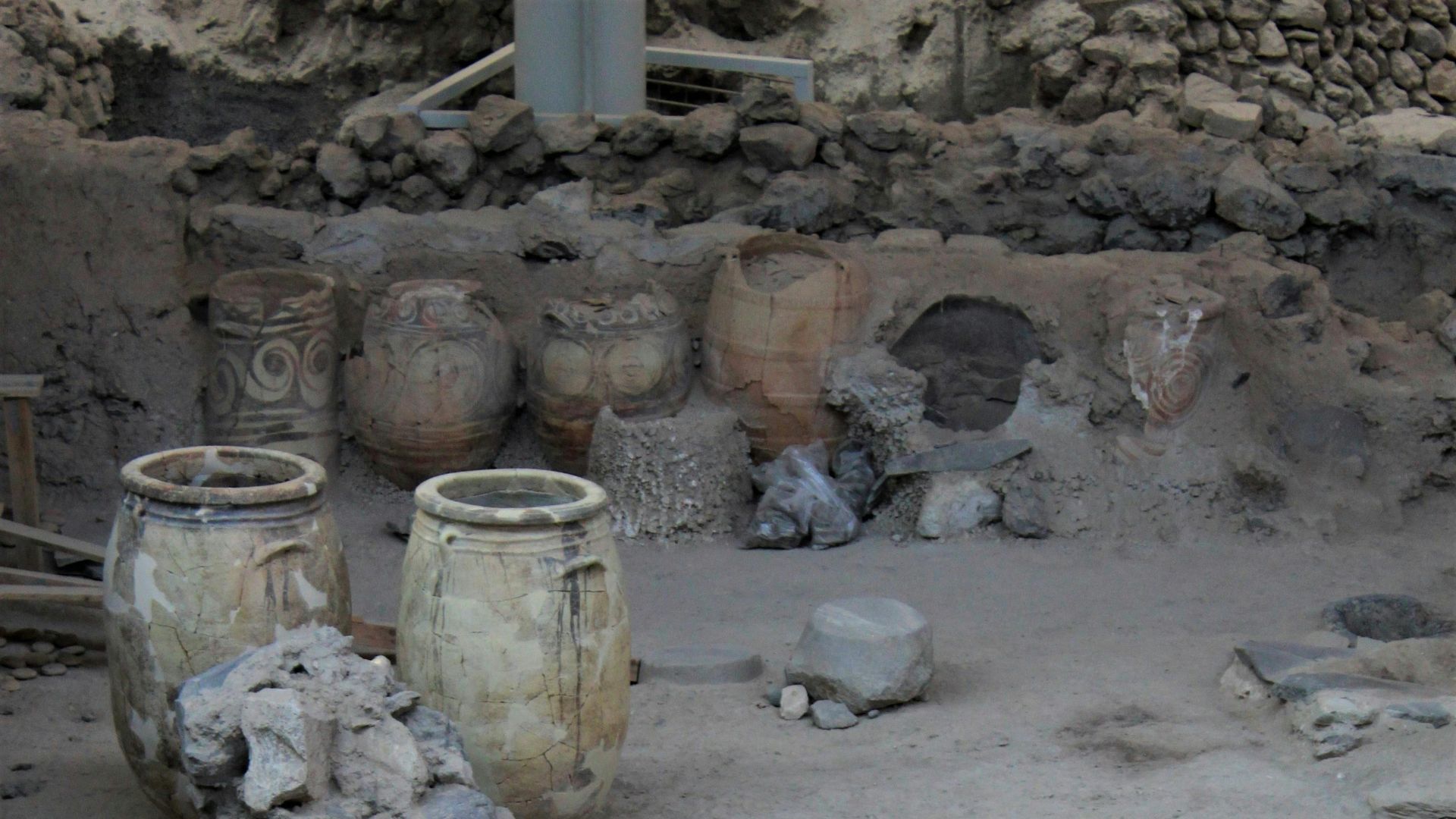
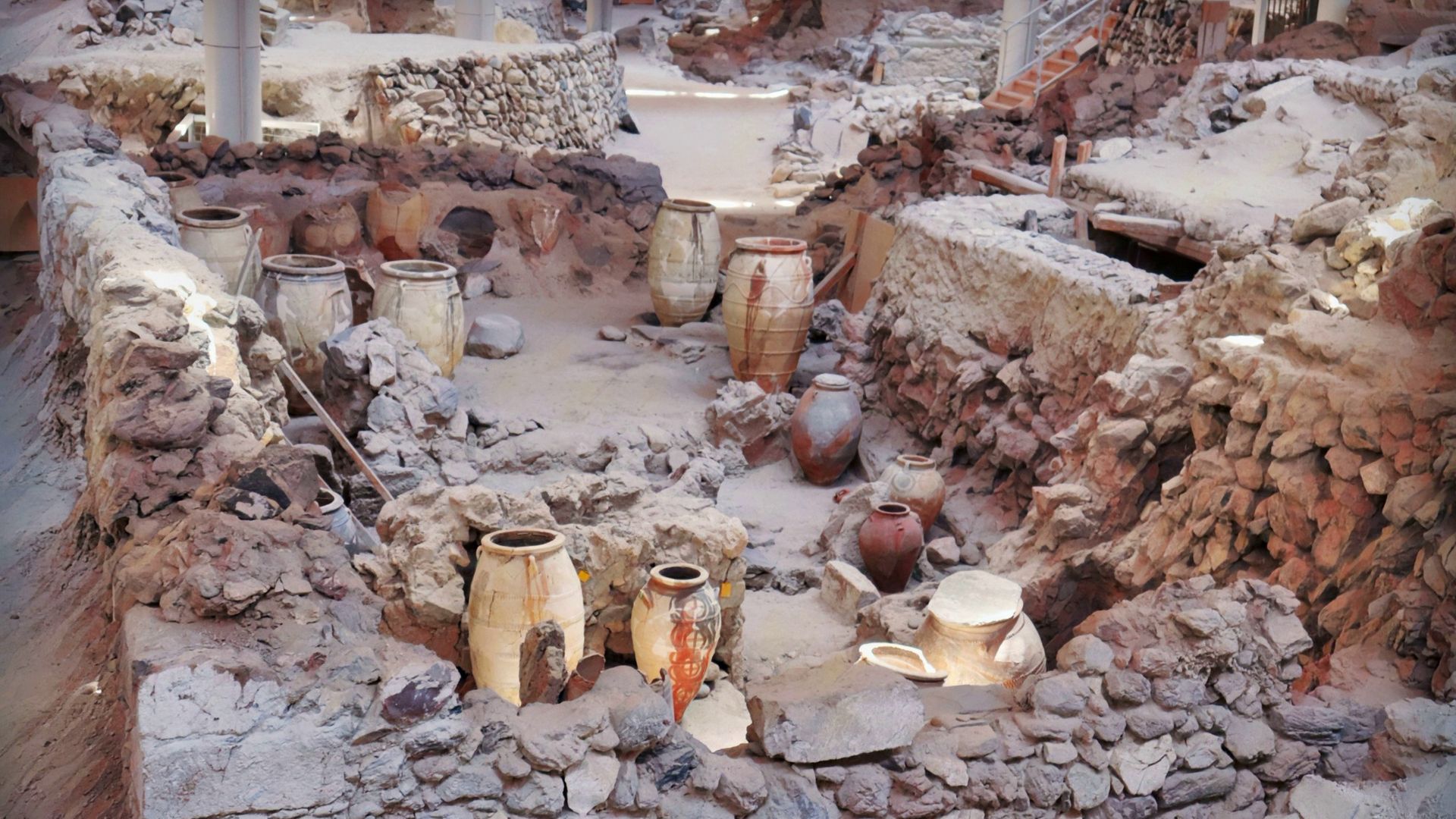
I kicked off my visit at the Akrotiri archaeological site, one of Greece’s most fascinating ruins. Once, volcanic ash buried everything here. Now, a modern roof lets in gentle sunlight. Raised walkways make it easy to follow the site, keep your shoes clean, and offer great views of the ancient homes below.
Guided tours come in several languages. Listening to an expert really made the Minoan city feel alive for me. Expect to see:
- Roomy, multi-storey buildings
- Pots for storing food
- Painted frescoes that hint at daily life and beliefs
They’ve only uncovered a small part (about 3–4%) of Akrotiri so far, so keep in mind—most of it still hides underground. Even the visible parts stunned me with their size and order. I’d suggest arriving early to dodge crowds and the midday heat. Bring water and wear comfy shoes.
Must-See Finds at the Archaeological Museum
Most frescoes and delicate objects got moved for safekeeping, but their beauty lives on—many are at the Archaeological Museum of Thera in Fira, Santorini’s main town. That’s where I found vivid wall paintings, clay ovens, jewelry, and tools that once belonged to Akrotiri’s people.
Some big-ticket items split time between this museum and the Archaeological Museum in Heraklion, Crete. I found it handy to make a checklist of must-see pieces, like the famous “Boxer” fresco and pottery with Minoan designs.
Tip: The museum is air-conditioned and quiet, which gave me a cool break from wandering outside. Photos are allowed (mostly without flash), so I snapped plenty for my travel journal.
Walking Santorini: A Modern Pilgrimage
I explored Santorini on foot and honestly, that helped me connect with the spirit of the island in a way I didn’t expect. After spending a morning in Akrotiri, I wandered along paths that overlooked the caldera.
Whitewashed houses and blue-domed churches popped up everywhere I looked. Each corner seemed to whisper stories from the island’s long history, shaped by volcanoes and Minoan settlers.
When I walked from Fira to Oia, I passed through tiny villages and vineyards. Honestly, they felt a world apart from the busy tourist spots.
I made sure to carry a refillable water bottle and kept my hat on—trust me, the sun doesn’t mess around here, even if it’s not summer.
These walks turned sightseeing into something deeper for me. With every step, I felt like I was connecting with both Akrotiri’s ancient residents and the living soul of Santorini itself.
