
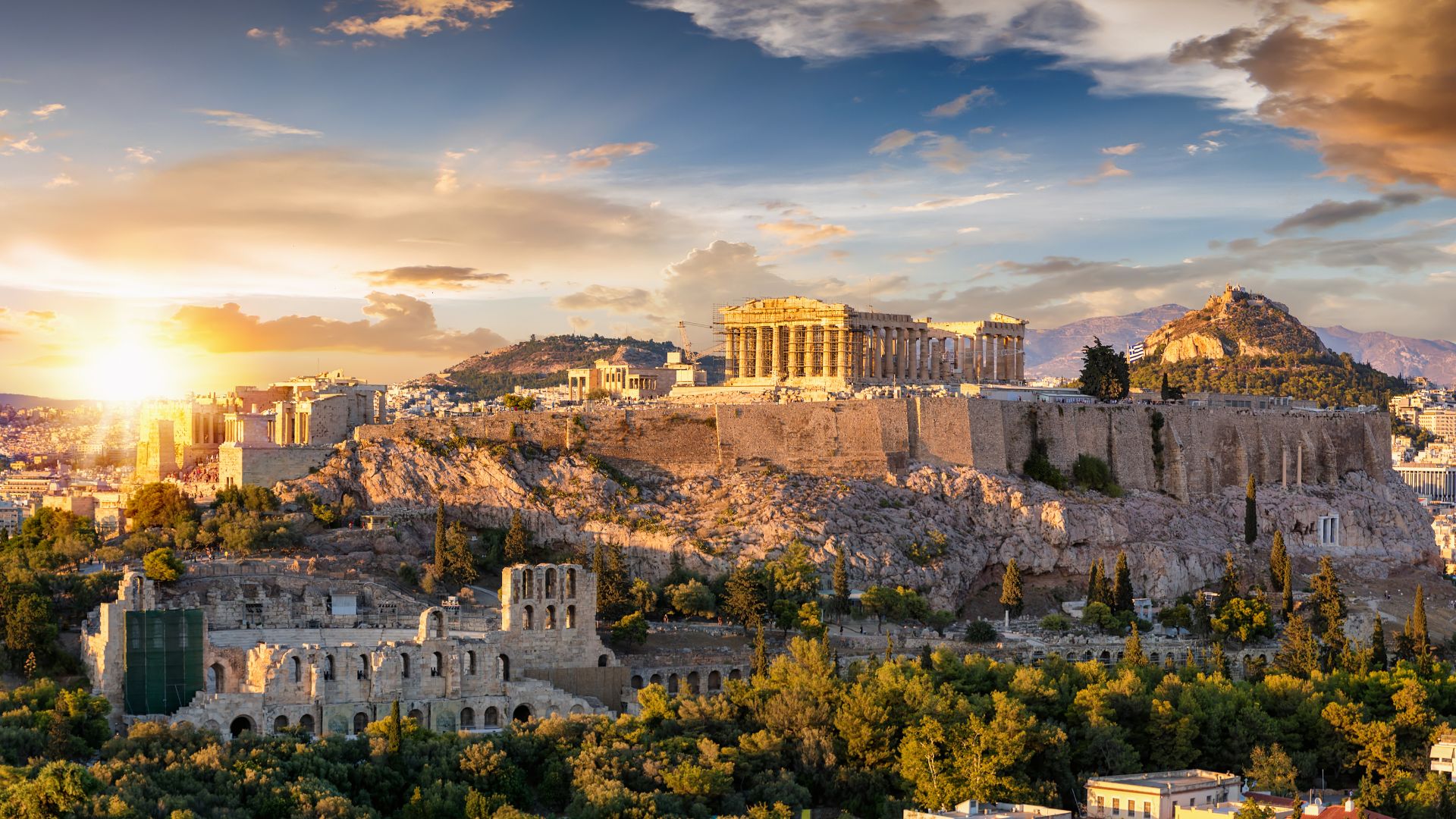
Everybody’s heard of the Acropolis in Athens, right? But honestly, Greece hides so many ancient wonders that it’s almost overwhelming. After wandering through more than 500 archaeological sites across this country, I’ve found places that can easily rival Athens’ famous marble hilltop—both in beauty and in sheer historical wow-factor.
So, what are my top three ancient sites that go way beyond the Acropolis? Let’s start with mystical Delphi and its oracle sanctuary, then the Bronze Age palace of Knossos in Crete, and finally, the legendary fortress city of Mycenae. Each spot feels totally different from the crowded steps of the Parthenon, and honestly, maybe even more magical.
Visiting these places flipped my view of ancient Greece upside down. Standing where priestesses once whispered prophecies that shaped empires, or wandering through Europe’s oldest throne room—it’s a feeling the Acropolis just can’t match.
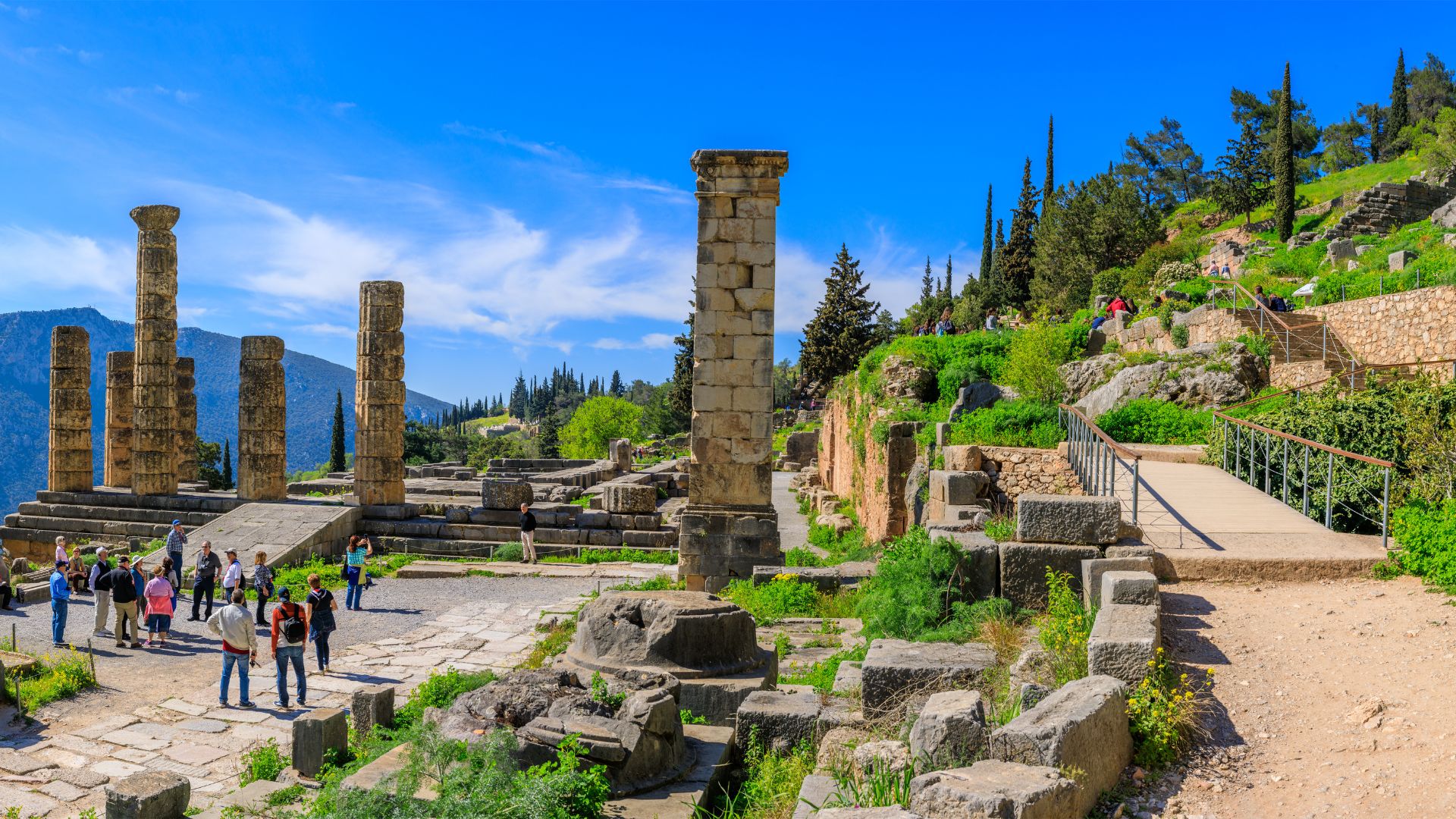
Why Greece’s Ancient Sites Go Far Beyond the Acropolis
Greece bursts with over 18,000 registered archaeological sites. That’s 4,000 years of history, from Bronze Age palaces to Roman theaters. Eighteen UNESCO World Heritage sites protect the most jaw-dropping spots.
Overview of Greece’s Archaeological Treasures
The archaeological riches here stretch way beyond Athens. I’ve stumbled on ancient sites in Greece in every corner of the country.
The Peloponnese alone packs in Olympia, Mycenae, and Epidaurus. Central Greece claims Delphi, while northern Macedonia keeps the royal tombs at Vergina and the haunting ruins of Dion.
And the islands? They’re a whole other chapter. Crete’s got Knossos and Phaistos, relics of the mysterious Minoans. Delos in the Cyclades was once a sacred island and trading hotspot. Each place tells a different story from a different era.
Major Archaeological Regions:
- Attica: Acropolis, Ancient Agora, Temple of Poseidon at Sounion
- Peloponnese: Olympia, Mycenae, Epidaurus
- Central Greece: Delphi, Thermopylae
- Macedonia: Vergina, Dion, Pella
- Islands: Knossos (Crete), Delos (Cyclades)
Every site has its own vibe. Mycenae brings the Bronze Age to life. Delphi pulses with ancient spirituality. Hellenistic ruins show off Greek expansion and ambition.
The Significance of Ancient Greek Civilizations
Ancient Greece didn’t just have one civilization—it had several, and each one left its mark on history. The Minoans on Crete basically invented Europe’s first advanced society around 2700 BCE.
Their palaces at Knossos look shockingly sophisticated even today.
The Mycenaeans followed, building fortress cities like Mycenae and Tiryns. Homer’s epic poems probably owe a lot to these guys. Their massive stone walls? Later Greeks called them “Cyclopean,” as if only giants could’ve built them.
Then came the Classical Greeks—Athens, Sparta, and all those city-states. Democracy, philosophy, theater, the Olympic Games—so much started here. Just walking through the Ancient Agora in Athens, you can almost feel where democracy was born.
Olympia hosted the first Olympic Games in 776 BCE. The place still hums with the energy of ancient athletes and religious rituals. Delphi, on the other hand, was the spiritual beating heart of Greece, guiding major decisions with its mysterious oracle.
Greek civilization didn’t stop there. Alexander the Great’s conquests spread Greek culture everywhere. Hellenistic sites all over Greece show just how far their influence reached.
UNESCO World Heritage and Cultural Importance
Greece has 18 UNESCO World Heritage sites, each protecting a slice of humanity’s shared story. These places matter on a global scale.
The Acropolis of Athens joined the UNESCO list in 1987. Delphi got its badge the same year, thanks to its role as the spiritual center of ancient Greece. Olympia followed in 1989.
Later Greek history gets its due too, with the Medieval City of Rhodes and Mystras. Thessaloniki’s Paleochristian and Byzantine monuments show the shift to Christianity. Mount Athos keeps Orthodox traditions alive.
Key UNESCO Archaeological Sites:
- Acropolis of Athens (1987)
- Archaeological Site of Delphi (1987)
- Archaeological Site of Olympia (1989)
- Archaeological Sites of Mycenae and Tiryns (1999)
- Archaeological Site of Aigai (Vergina) (1996)
UNESCO status means these sites get protected and preserved for the future. It also brings in researchers and travelers from around the world. The sites have to follow tough conservation rules, which is honestly a good thing.
But these ancient places aren’t invincible. Tourism, pollution, and natural disasters threaten them all the time. UNESCO protection helps make sure future generations can still walk among these ruins.
Delphi: The Mystical Oracle of Ancient Greece
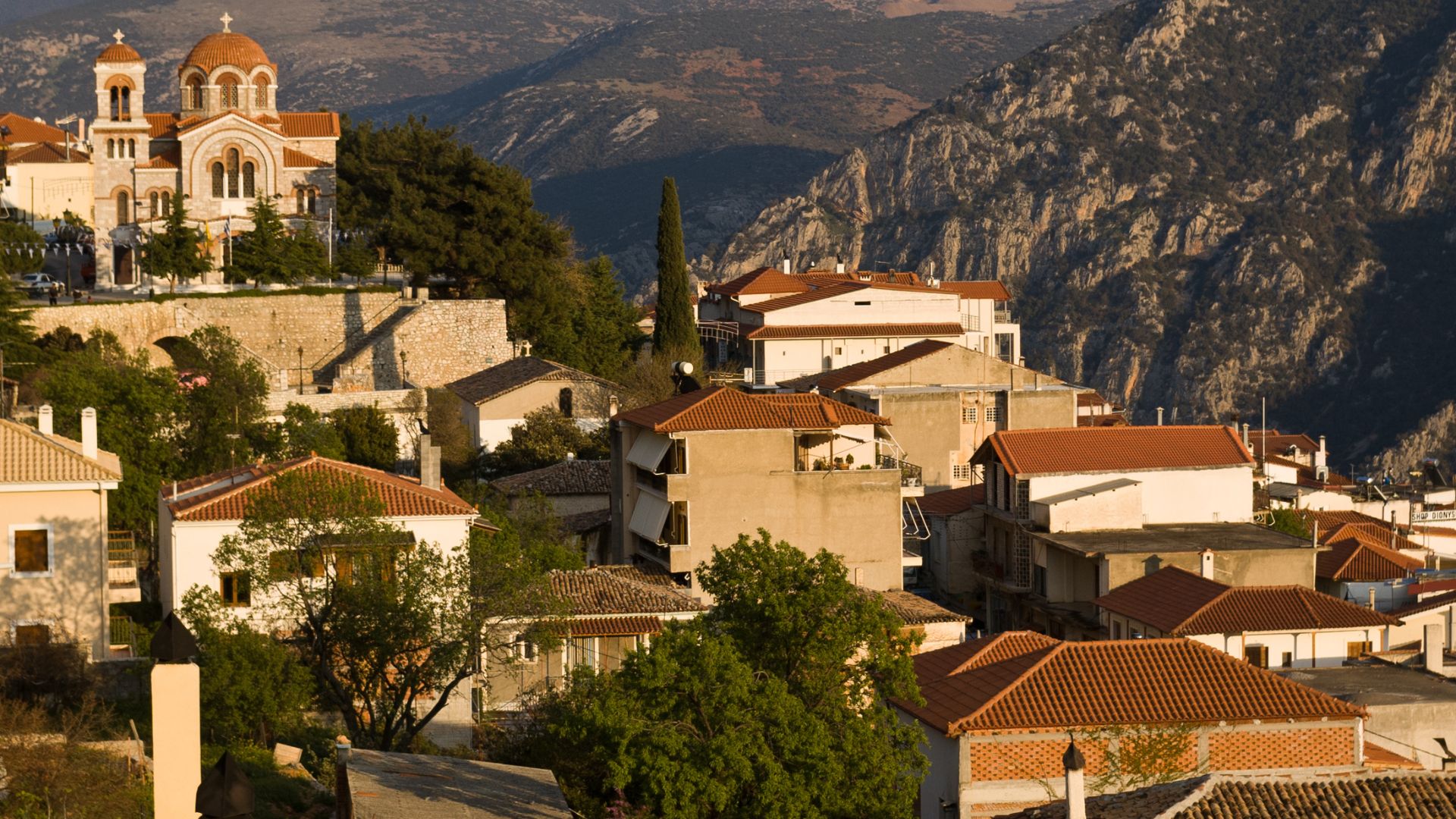
Delphi sits high on Mount Parnassus, and for over a thousand years, it was the most important religious center in Greece. The famous Oracle of Apollo drew people from all over the Mediterranean, each hoping for a prophecy that could change their life—or the fate of nations.
History of Delphi and Its Role in Greek Culture
The sanctuary’s story goes back to the 8th century BC when Apollo’s cult took over. Before that, the spot was sacred to the Earth goddess, especially during Mycenaean times.
Greek myth claims Zeus sent two eagles from opposite ends of the earth, and they met at Delphi, marking it as the world’s “navel.” That’s a wild origin story, isn’t it?
By the 6th century BC, Delphi had grown powerful and independent. The sanctuary held real sway over Greek politics. Even kings traveled here, desperate for guidance from the Oracle.
Key developments at Delphi:
- 8th century BC: Apollo cult arrives
- 6th century BC: Sanctuary at its peak
- 4th century AD: Emperor Theodosius I shuts it down
People flocked here for over a millennium, bringing lavish gifts for Apollo. Delphi ended up one of the wealthiest places in ancient Greece.
Exploring the Temple of Apollo and Tholos
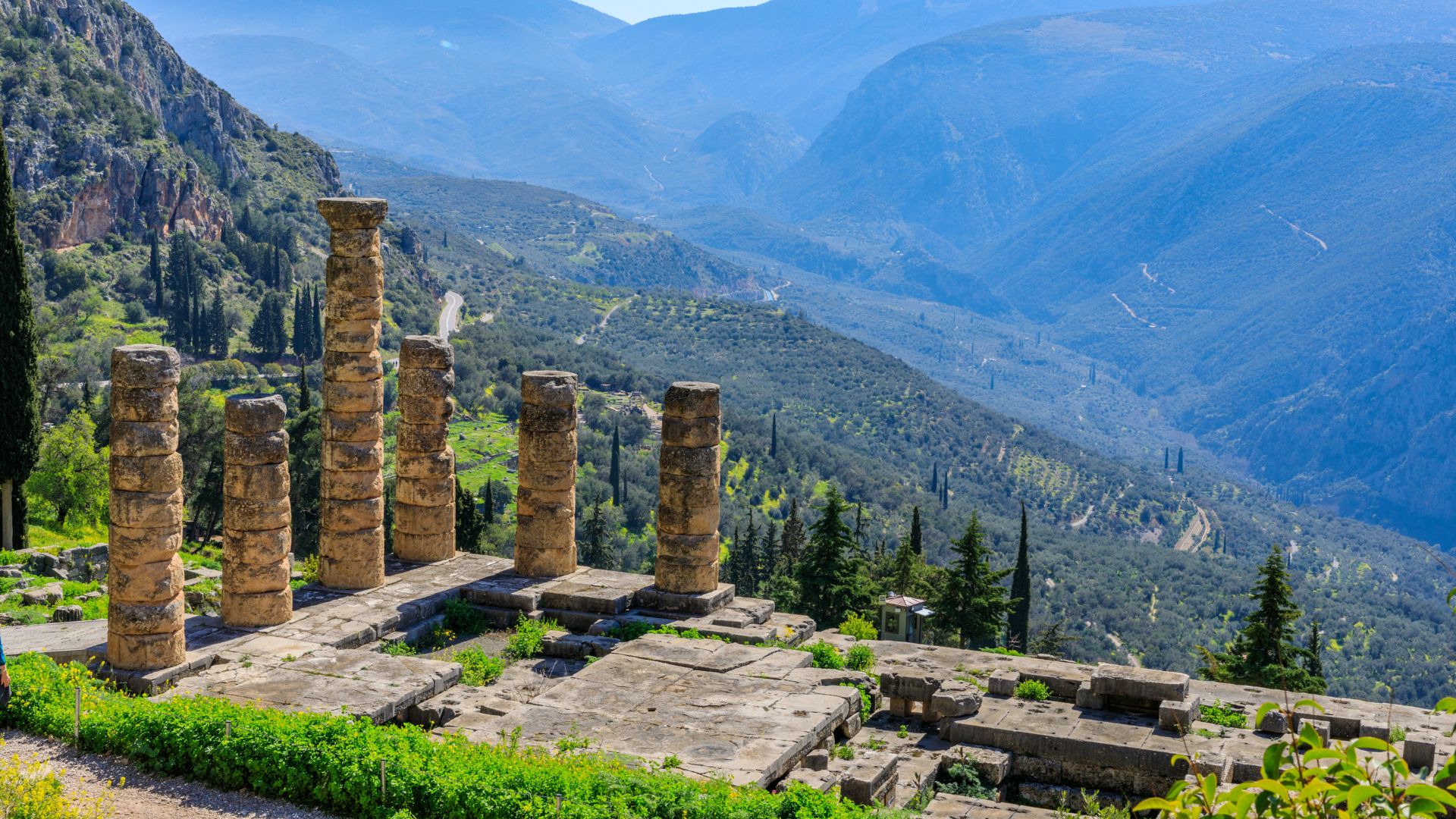
The Temple of Apollo is the heart of Delphi. This Doric temple, built in the 4th century BC, replaced an older version.
Inside, the Pythia—the Oracle herself—sat in a hidden chamber, ready to deliver Apollo’s words. Even in ruins, the temple’s scale and energy are hard to ignore.
The Treasury of the Athenians stands nearby, a little gem of Doric architecture. Athens built it to house their offerings, and the carvings still tell stories if you look closely.
Then there’s the Tholos, Delphi’s most eye-catching monument. Built around 380 BC, it’s a round temple that stands out from all the others. You’ll spot it right away.
Other highlights? There’s the theater, perched above the sanctuary, where festivals came alive. The stadium sits even higher, where athletes competed in the Pythian Games.
Don’t forget the Castalia spring—every visitor stopped here to purify themselves before entering the sacred grounds.
The Oracle and Legends on Mount Parnassus
The Oracle of Delphi wasn’t just a legend—she was a real priestess, the Pythia. She sat on a tripod above a crack in the earth, supposedly inhaling mysterious vapors.
Ancient Greeks thought the vapors sent her into a trance. Modern science hints that natural gases might’ve actually played a role. Either way, her words held immense power.
People asked the Oracle about everything—wars, marriages, founding new cities. Her answers, often cryptic, shaped Greek history for centuries.
Famous Oracle consultations:
- Kings seeking battle advice
- City-states asking about new colonies
- Regular folks making life-changing decisions
Mount Parnassus adds a mystical backdrop to it all. The mountain belonged to Apollo and the Muses, making the whole place feel enchanted.
Delphi thrived until the 4th century AD, when Christianity took over and the old gods faded. French archaeologists rediscovered the site in the late 1800s, unearthing its secrets.
Knossos: The Enchanting Palace of the Minoan Civilization
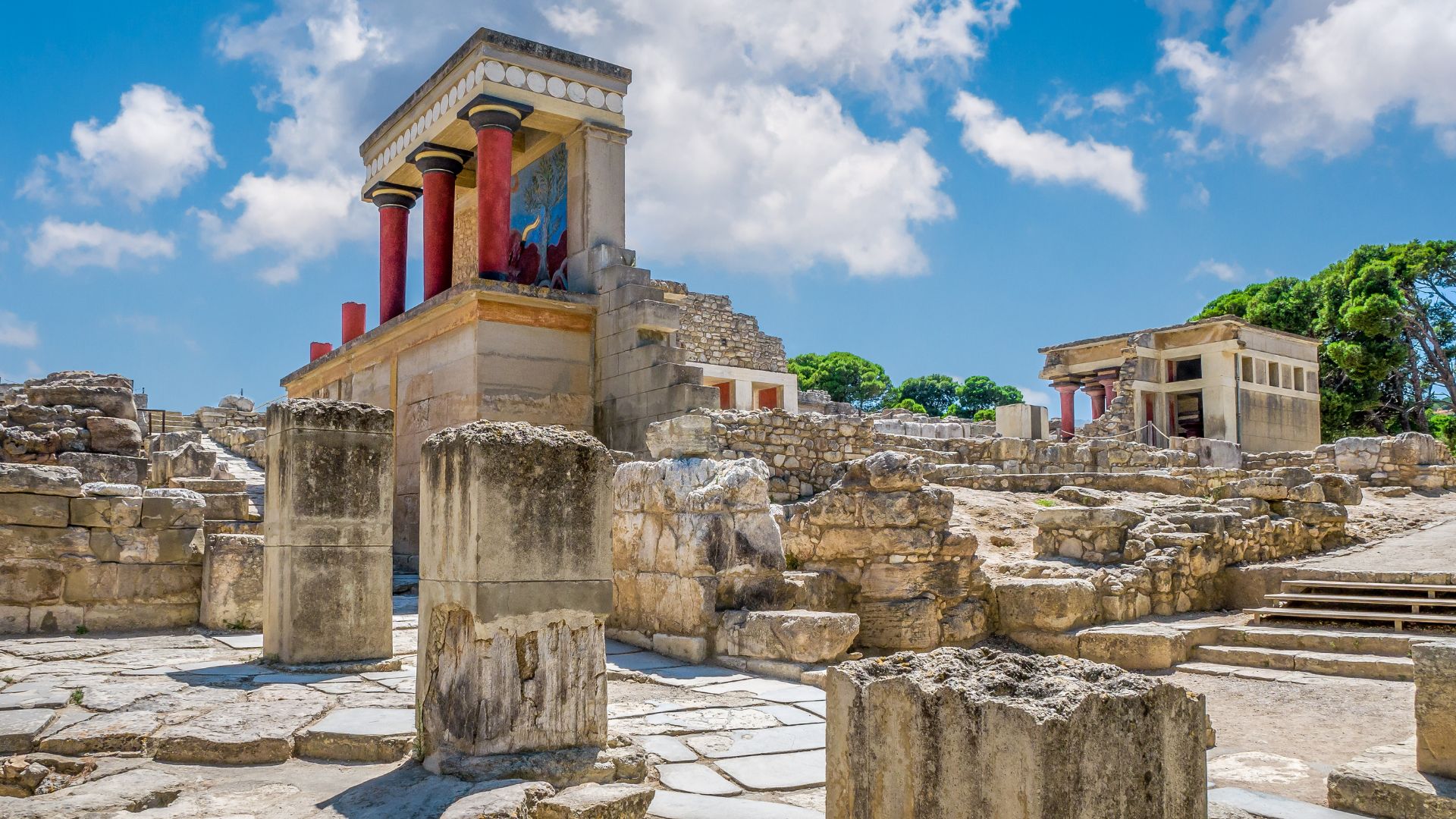
The Palace of Knossos on Crete is Europe’s oldest palace complex, built around 1900 BC and then rebuilt after 1700 BC. This place isn’t just about ruins—it’s a gateway into the mysterious Minoan world, with wild myths, bold architecture, and colors that still pop after thousands of years.
The Story of King Minos and the Minotaur
Knossos and King Minos go hand in hand. According to myth, Minos ruled from this very palace, a king both powerful and a little terrifying.
The Minotaur legend starts here—a half-man, half-bull monster that Minos kept locked in a labyrinth beneath the palace. Every seven years, Athens sent young men and women as tribute to feed the beast. Theseus eventually killed the Minotaur and escaped, thanks to Minos’s daughter Ariadne.
Sure, these are stories, but they probably have roots in real Minoan rituals. The palace walls are full of bull imagery, and bull-leaping was a real (and dangerous) sport.
The palace itself is a maze, with over 1,000 rooms on multiple levels. It’s easy to see how the labyrinth myth was born.
Architectural Marvels of the Palace of Knossos
Knossos sprawls across 22,000 square meters, making it the biggest Minoan palace by far. Builders worked in two main phases, between 1900 BC and 1450 BC.
The engineering here is mind-blowing for its time. Minoans invented drainage systems and even indoor plumbing. Light wells brought sunshine deep inside.
Those famous red columns? They’re upside-down compared to later Greek columns, with the wider part at the top. They supported several stories and give Knossos its signature look.
Storage rooms held giant clay jars—pithoi—filled with oil, wine, and grain. The palace had everything: workshops, living spaces, ceremonial halls, and offices, all under one roof.
Staircases wind through the place, and builders used local limestone and gypsum. The throne room still holds what might be Europe’s oldest stone throne.
Minoan Art, Frescoes, and Rituals
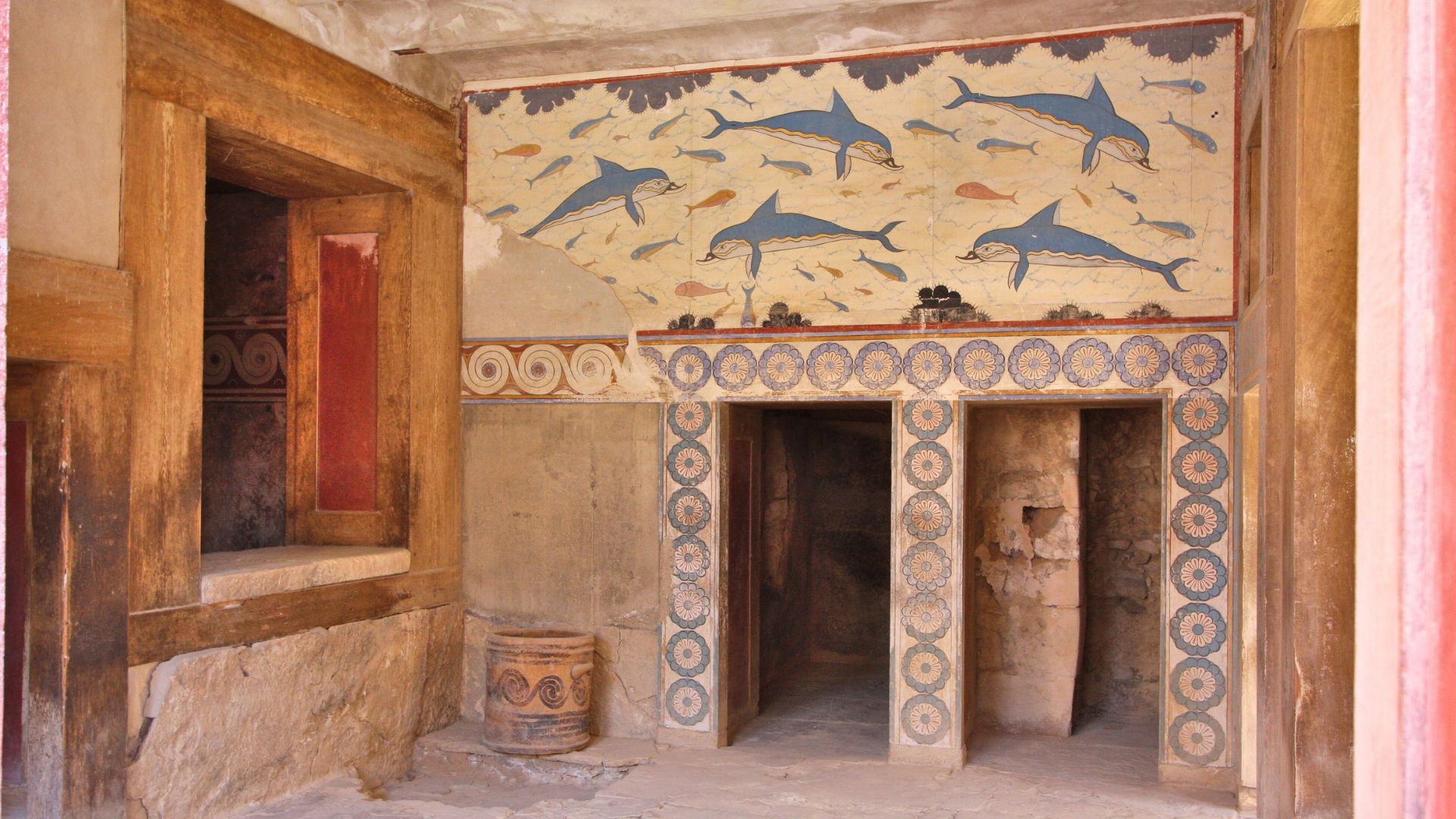
Knossos bursts with color. The walls show off lively frescoes—reds, blues, yellows—that bring dolphins, birds, and flowers to life. Scenes of court life and nature tell stories we’re still trying to decode.
The Prince of the Lilies fresco is especially striking—a young man in a feathered crown, striding confidently. Bull-leaping scenes show athletes risking everything for glory.
Art wasn’t just for show. It marked important rooms and guided visitors through the palace. Colors signaled status and purpose.
Religion played a big part here. Shrine rooms, decorated with sacred motifs, hint that women held powerful religious roles. The snake goddess figurines are iconic.
Cup-bearer frescoes reveal elegant court rituals, while nature scenes remind us how connected the Minoans were to their island home. Every detail adds another layer to their story.
Controversies and Modern Interpretation
Sir Arthur Evans dug up Knossos in the early 1900s, but his restoration work still stirs debate. He used concrete and modern paints, sometimes guessing more than preserving.
Evans even recreated whole frescoes from tiny fragments, so what you see today is part ancient, part modern imagination. Not all archaeologists are thrilled about that.
And what was Knossos, really? Evans called it a royal palace, but some experts think it was more of a religious or administrative center.
The end of Knossos is still a mystery. It was abandoned between 1380 BC and 1100 BC, maybe after earthquakes, fires, or invasions.
Today, archaeologists use gentler methods. New finds keep challenging what we thought we knew about the Minoans and their world.
Mycenae: Fortress of Heroes and Legends
Walking through Mycenae felt like stepping straight into Homer’s epics. This Bronze Age citadel in the Peloponnese ruled mainland Greece for centuries, and its legends—Agamemnon, the Trojan War—still echo through its massive stone gates.
Rise and Power of the Mycenaean Civilization
So, the Mycenaean civilization popped up around 1600 BCE and, for a long stretch, these folks basically ran mainland Greece. They didn’t just sit at home, either—they built their reputation with both sharp swords and savvy trade, reaching far across the Mediterranean.
Honestly, I never expected to find Mycenaean artifacts turning up in places like Georgia or even Cornwall. Yet, their bronze work ended up everywhere, and ancient people really valued it.
Their society revolved around those iconic hilltop palaces. Warrior elites ruled from these fortified palaces, keeping a tight grip on the surrounding lands.
Key Mycenaean achievements:
- Invented the Linear B writing system
- Set up sprawling trade networks
- Erected massive stone fortresses
- Sparked legends that fueled Greek mythology
The city of Mycenae itself became the heart of it all. By about 1350 BCE, it locked down the gateway to the Peloponnese.
Lion Gate and Cyclopean Walls
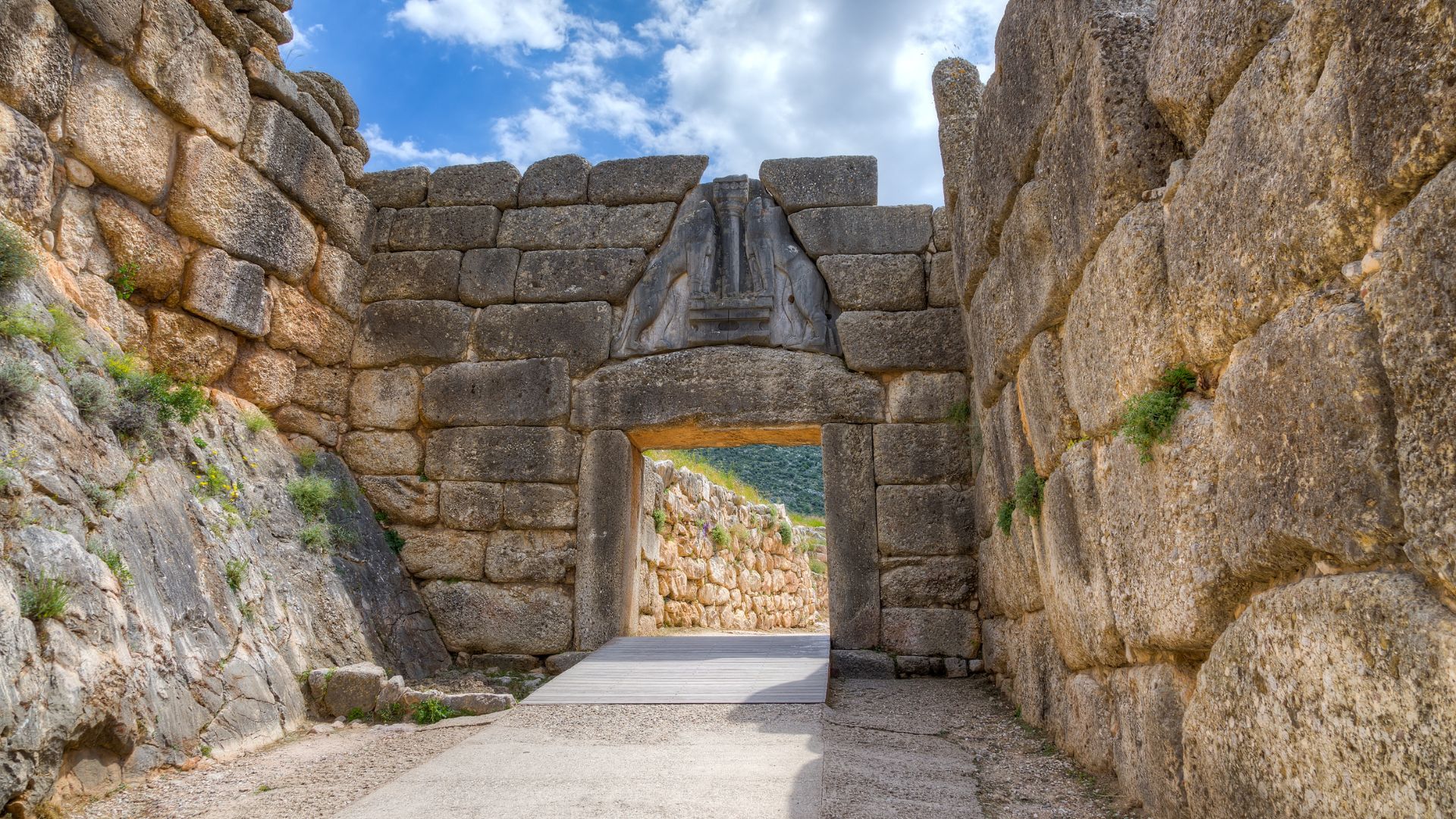
The Lion Gate absolutely stopped me in my tracks. This massive stone entrance has stood watch since the 13th century BCE—still the only complete Bronze Age monument left in Greece.
Two lions carved above the gate stare each other down, separated by a pillar. The whole thing is three meters wide and just as high. I get why ancient Greeks thought only Cyclopes could have built it.
Those Cyclopean walls surrounding the gate are jaw-dropping, too. The stones are so huge that later Greeks insisted giants must’ve hauled them into place.
Walking through that ancient entrance, I tried to picture the Mycenaean warriors who passed here 3,000 years ago. Even now, the stones fit together perfectly—no mortar at all.
The walls weren’t just for show. Mycenae was a fortress first, palace second. These defenses kept the elite safe inside, while most people lived outside the walls.
Treasury of Atreus and Beehive Tombs
Now, the Treasury of Atreus really blew my mind. Built around 1250 BCE, this beehive tomb shows off the Mycenaeans’ engineering chops.
I wandered down a long, echoing passage and stepped into a massive domed chamber. The stone ceiling rises in perfect circles—no mortar, just gravity and clever design.
People call this the Tomb of Agamemnon, but it actually predates the famous king. The Mycenaeans switched from earlier shaft graves to these grand tholos tombs.
Beehive tomb features:
- Corbelled stone domes
- Long entrance passages (dromos)
- Side rooms for burial treasures
- Enormous stone lintels
There are nine of these beehive tombs at Mycenae, but the Treasury of Atreus stands out. Standing inside, I felt like I’d dropped right into the Bronze Age.
These tombs weren’t just for show—they held gold masks, weapons, and jewelry that could rival anything in Egypt.
Epidaurus: Sanctuary of Healing and the Ancient Theatre
Epidaurus really surprised me. It’s not just one thing—it’s a legendary medical center and a theater with acoustics so good you can hear a whisper from the stage. For over a thousand years, pilgrims came here to heal, and the theater next door still hosts performances.
Sanctuary of Asclepius and Medical Innovations
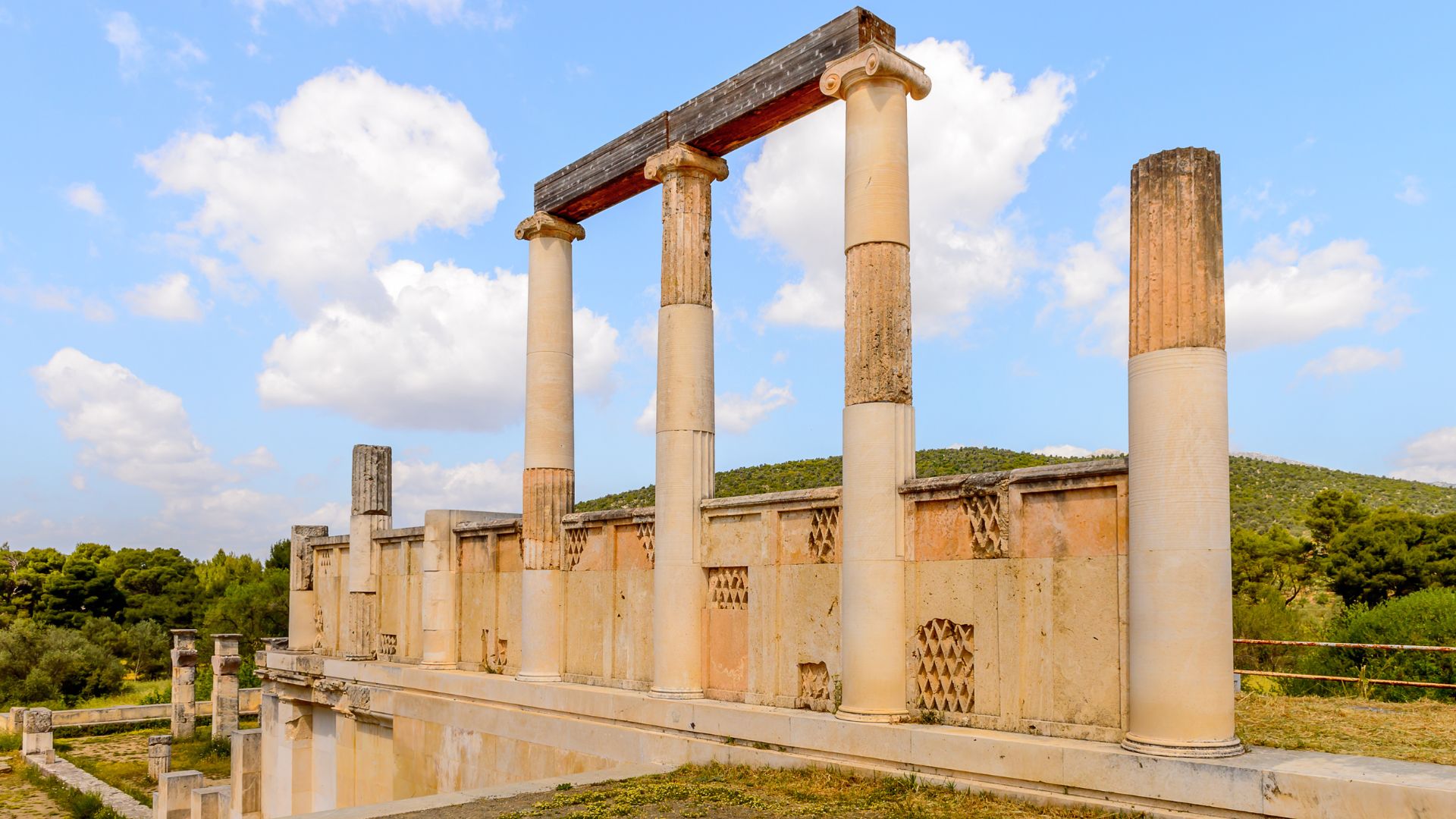
The Temple of Asclepius at Epidaurus was ancient Greece’s top healing spot. People came from all over the Mediterranean, hoping for a cure.
The whole place felt like a wellness retreat. Patients joined in religious rituals, soaked in sacred springs, and spent nights in the abaton, hoping the healing god would visit them in their dreams.
What really struck me was how advanced they were. The sanctuary offered:
- Physical treatments: mineral baths and exercise
- Mental wellness: theater shows and music therapy
- Spiritual healing: rituals and dream therapy
- Social support: shared meals and group activities
Doctors at Epidaurus actually kept records of their cures. The carved inscriptions describe surgeries, herbal remedies, and therapies that shaped medicine for ages.
The site included gymnasiums, stadiums, and even guest houses. It felt more like a wellness resort than just a temple.
Exploring the Ancient Theatre’s Acoustics
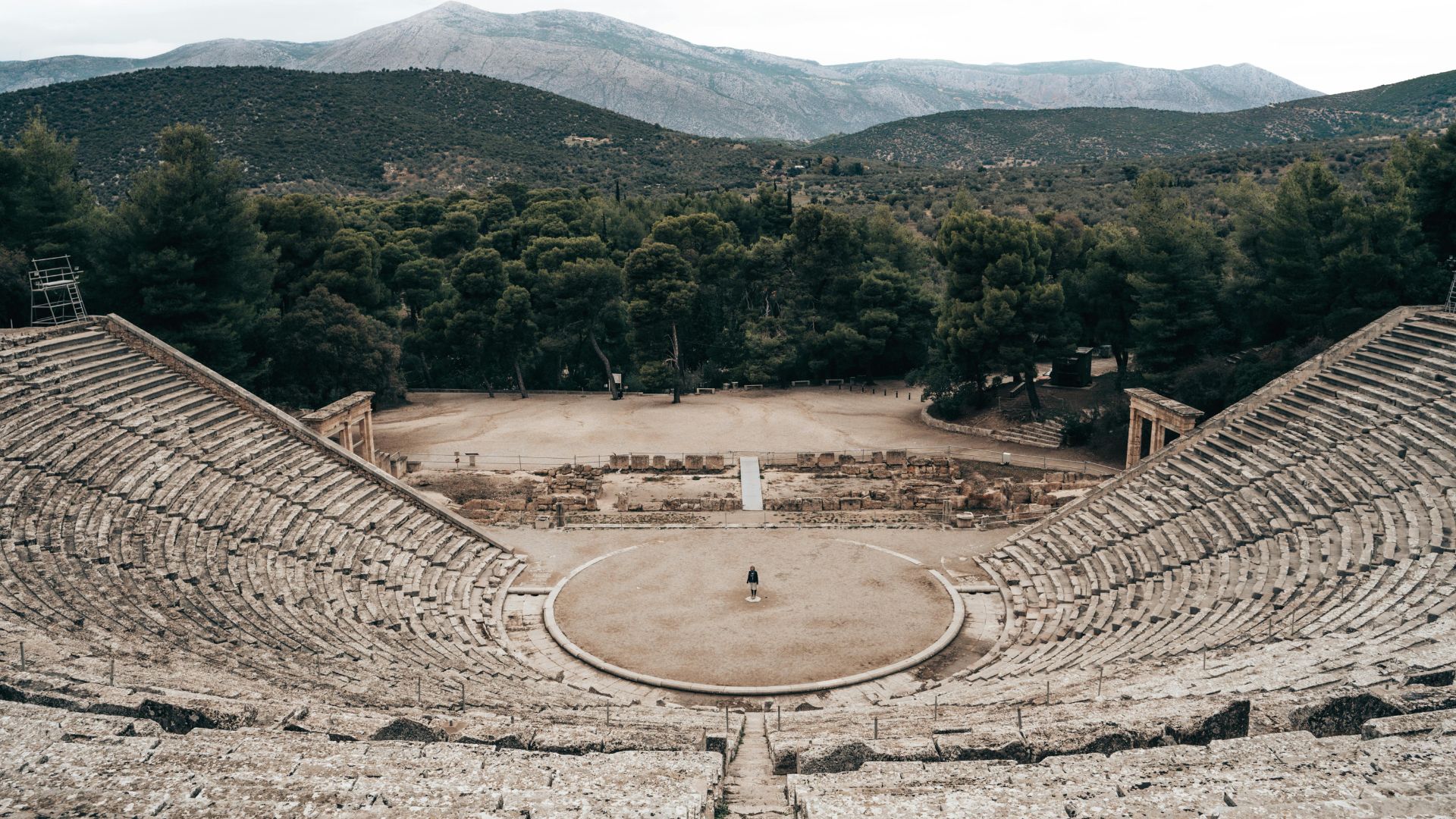
The Ancient Theatre of Epidaurus, built in the 4th century BCE, delivers the best acoustics I’ve ever heard. If you whisper on stage, someone can catch it from the very back—180 feet away.
The theater’s design isn’t an accident. The limestone seats bounce sound straight to the audience, and the semicircular shape helps, too.
What’s special about this theater?
- 55 rows of seats for 14,000 people
- Perfect symmetry and geometry
- Natural sound amplification—no microphones needed
- Still in use for live performances
I watched a show here, and it’s wild—actors don’t need microphones at all. Every word reaches the highest seats.
The theater sits inside the Sanctuary of Asclepius because Greeks believed drama could heal. Watching tragedies and comedies was more than entertainment—it was therapy.
Olympia: The Birthplace of the Olympic Games
Ancient Olympia feels like sacred ground for sports fans. Here, in 776 BCE, the first Olympic Games kicked off to honor Zeus and kept going for nearly 1,200 years. The huge Temple of Zeus dominated the site, while Hera’s temple was where the sacred flame burned and the real heart of the festival beat.
Origins and Legacy of the Olympic Games
Standing on the original Olympic starting line gave me chills. In 776 BCE, athletes from all over Greece gathered here to compete for Zeus.
The Games weren’t just about sports. They brought all the Greek city-states together—even during wars. A sacred truce, the “Olympic Peace,” kept everyone safe on their journey.
Key Olympic Events:
- Footraces (the 192-meter sprint was the big one)
- Wrestling and boxing
- Chariot racing in the hippodrome
- Pentathlon (a five-event challenge)
- Pankration (kind of like ancient MMA)
The stadium held 45,000 spectators, all packed onto grassy slopes. Only men could compete or watch, except for the priestess of Demeter.
The Games ran for over a thousand years until Emperor Theodosius called it quits in 393 CE. The modern Olympics picked up the torch in 1896.
The Temple of Zeus and Ancient Training Grounds
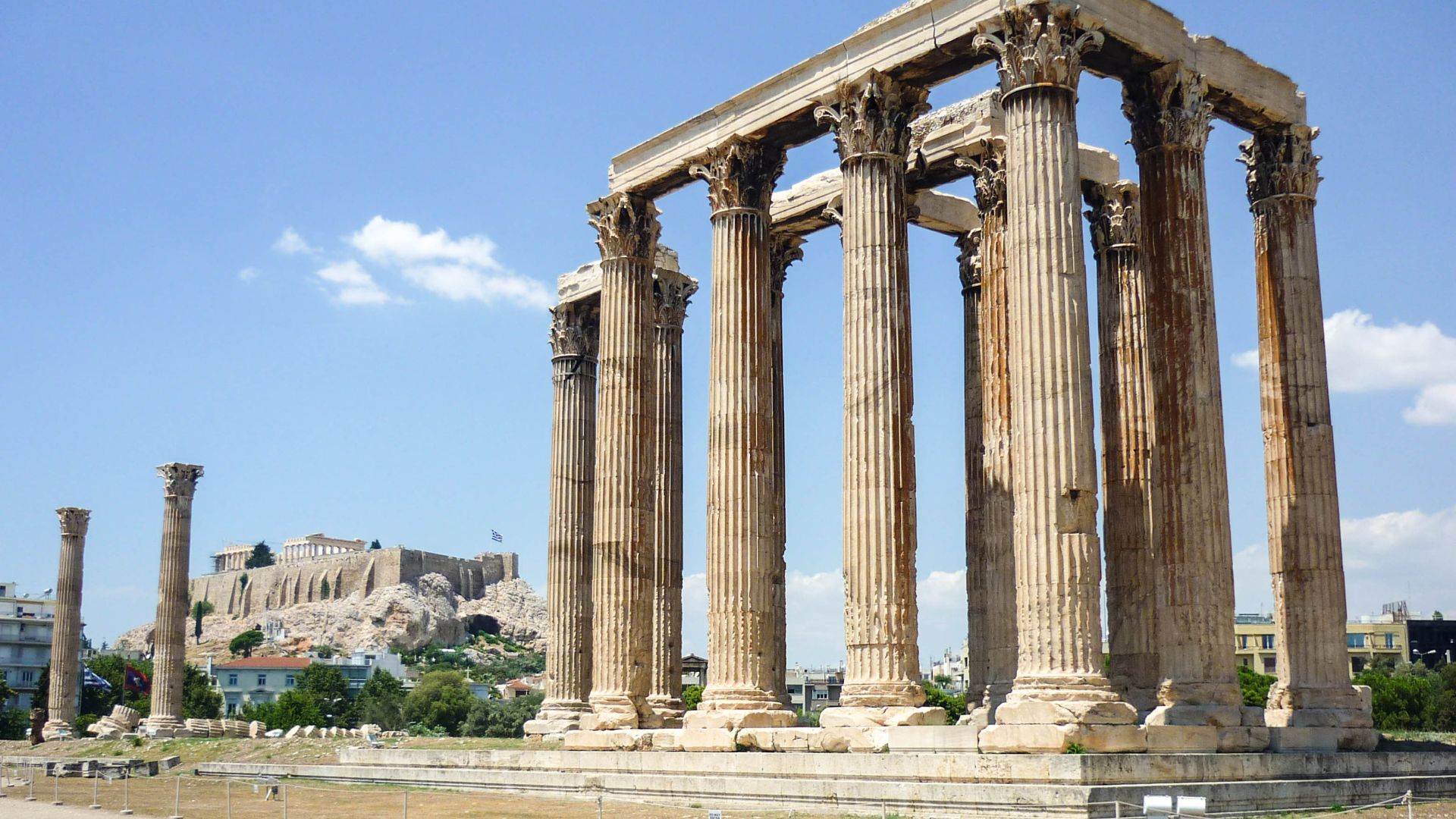
The Temple of Zeus was the centerpiece at Olympia. Built in the 5th century BCE, this huge Doric temple housed one of the Seven Wonders of the Ancient World.
Inside, Phidias’s statue of Zeus towered 12.5 meters high, made of gold and ivory. Zeus sat on his throne, holding Nike in one hand and a scepter in the other.
The temple’s sculptures told dramatic Greek myths. The east pediment showed Pelops racing King Oenomaus. The west side had centaurs battling heroes.
Athletes trained in the gymnasiums around the temple. Before competing, they’d walk through the Krypte tunnel into the stadium, passing bronze statues called Zanes—paid for by fines from cheaters.
The Nymphaeum fountain brought fresh water for thousands. That alone must’ve been a lifesaver during the crowded festivals.
The Role of Hera and Sacred Rituals
Hera’s temple played a key role in Olympic ceremonies. Built in 590 BCE, it’s one of Greece’s oldest Doric temples, originally for both Hera and Zeus.
The temple started with wooden columns, swapped out for stone over centuries. By the 2nd century CE, only one original oak column remained.
Sacred Olympic Rituals:
- Lighting the flame at Hera’s altar
- Athletes swearing oaths before Zeus’s statue
- Victory crowns of olive leaves
- Processions through the sanctuary
Even today, the Olympic flame begins its journey at Hera’s altar. Every four years, actresses dressed as priestesses use a parabolic mirror to light the fire—just like in ancient times.
The temple doubled as a museum, holding treasures like Praxiteles’s statue of Hermes with baby Dionysus.
Women had their own games, the Heraia, in honor of Hera. These races gave female athletes a rare chance to compete in Olympia.
Frequently Asked Questions
Greece is packed with ancient sites beyond Athens. From oracle temples to Olympic stadiums, these places offer some of the best-preserved ruins in the Mediterranean. They’re a dream for history buffs.
What are the top ancient historical sites to visit in Greece besides the Acropolis?
I’d start with Delphi in Central Greece—the legendary oracle site. The Temple of Apollo sits on a dramatic mountain slope.
Ancient Olympia in the Peloponnese is another must. The Olympic Games started here, and the site once held a giant gold statue of Zeus.
Mycenae’s Lion Gate and Cyclopean walls are iconic, and you can easily visit the Epidaurus theater on the same trip.
The Temple of Poseidon at Cape Sounion delivers killer cliff-top views. Up north, Vergina’s royal tombs and Dion’s archaeological park are worth the detour.
Can you list the most well-preserved ancient ruins in Greece?
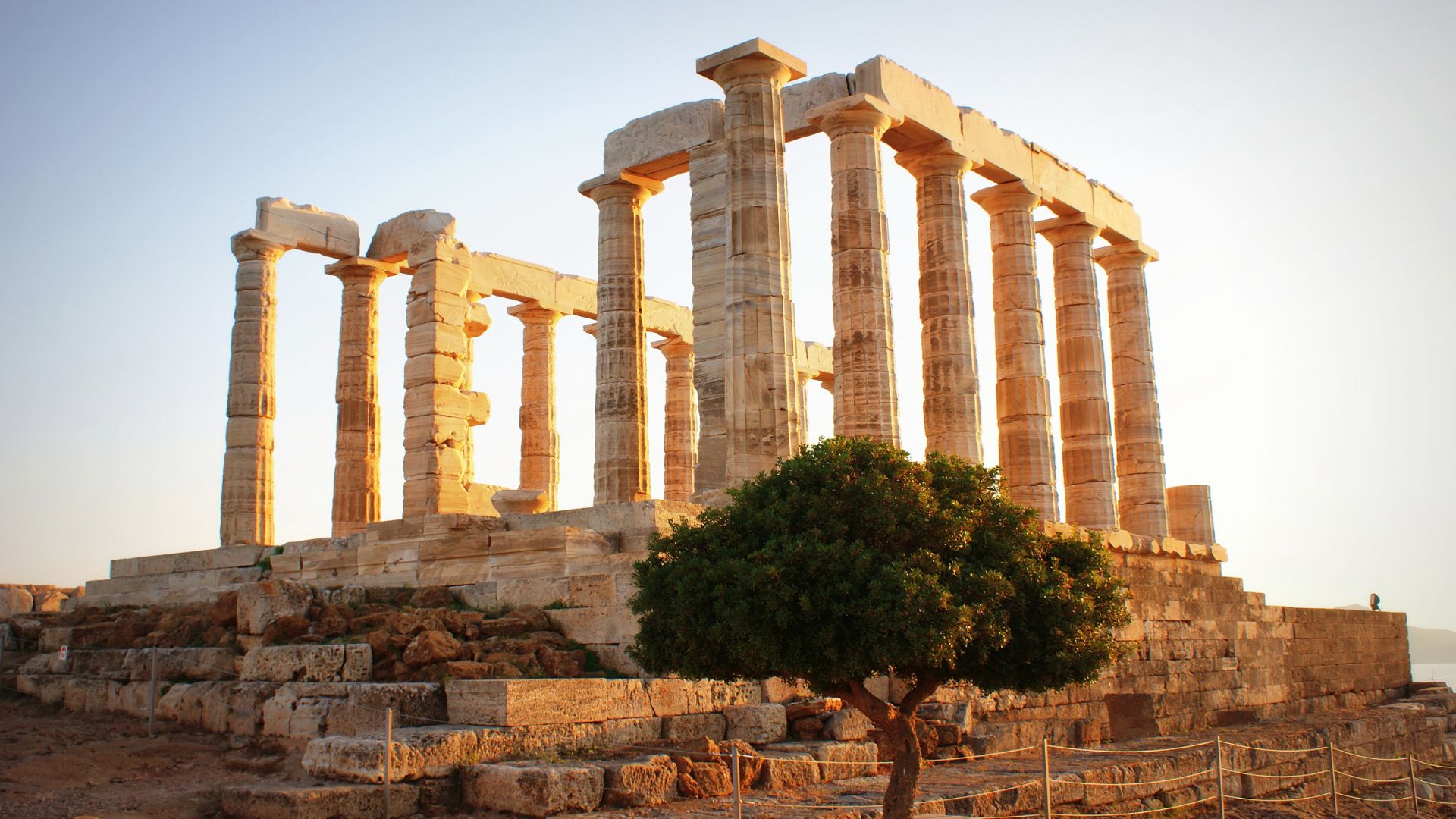
The Temple of Poseidon at Sounion still has its columns standing tall since 440 BC. The Epidaurus theater is in amazing shape and even hosts shows.
Vergina’s underground museum protects gold treasures and rare paintings from the Macedonian royals. It’s a time capsule.
Dion has mosaics, baths, and villa ruins that make you feel like you’ve stepped into an ancient city.
At Delphi, you’ll find the Temple of Apollo’s foundations and the stadium still visible. The mountain setting has kept many structures safe.
Which ancient Greek sites offer the most breathtaking experiences for visitors?
Delphi wins for most dramatic setting—the oracle site clings to the mountain, with epic valley views.
Cape Sounion’s sunsets from the Temple of Poseidon are unforgettable. The cliffs drop straight to the Aegean.
Vergina’s underground tombs are emotional. Seeing Philip II’s golden crown up close? Unreal.
At Ancient Olympia, you can stand on the same ground as athletes from 2,500 years ago. The original stadium never fails to give me goosebumps.
Where can I find a comprehensive map of the major ancient sites in Greece?
The Greek Ministry of Culture’s website posts official maps with site details and visiting info.
I like using Greece Travel Guide websites—they map out all the big sites by region, making trip planning way easier.
Tourist info centers in Athens hand out free printed maps that highlight the main sites across Greece.
Guidebooks like Lonely Planet include detailed maps and distances between sites, which helps for multi-day trips.
How has Ancient Greece influenced modern society in various ways?
Ancient Greece laid the groundwork for democracy—modern governments still use their ideas. The Athenian system inspired constitutional designs worldwide.
Greek philosophy from Plato and Aristotle shapes how we learn and think, even today.
The Olympic Games, born in Olympia, are now the planet’s biggest sporting event. That original spirit of competition lives on.
Greek architecture—those columns and proportions—shows up in government buildings everywhere, from Washington DC to Europe.
And let’s not forget theater. Greek comedies and tragedies set the stage for modern drama. Their storytelling style is still going strong.
What is considered the most impressive temple from ancient Greece that one can visit today?
The Parthenon on the Acropolis? Honestly, it’s hard to beat. Those iconic Doric columns and the way the building just owns the hill—it’s the gold standard for classical architecture.
Then there’s the Temple of Poseidon at Sounion. I still remember standing there, salty breeze in my face, watching the sun dip behind those sixteen marble columns. The view over the Aegean is unreal.
Delphi’s Temple of Apollo has a different vibe. You walk up, and suddenly, the mountains just rise around you. The ruins might be modest, but you can feel how sacred the place once was.
At Olympia, the Temple of Zeus sprawls out with its massive foundations. Sure, not much stands, but you can picture the sheer scale—and imagine the crowds gathering for the ancient games.
Each temple brings something unique. The Parthenon stuns with its design, while Sounion sweeps you away with its scenery. I can’t really pick a favorite; every visit feels like stepping into another world.
