
The Neues Palais in Potsdam isn’t just a grand building—it’s a bold statement. Frederick the Great himself, who commissioned it, once called it a “Fanfaronnade”—basically, a show-off.
When I strolled past its sweeping façade for the first time, I instantly understood why people in the 18th century couldn’t stop talking about it.
During my visit, I wandered through halls bursting with marble, vibrant frescoes, and gold accents everywhere I looked. The palace’s size seemed almost intentionally overwhelming, as if Frederick wanted to impress anyone who dared walk through those doors.
Every detail told me something about Frederick’s need to flaunt Prussia’s power and culture to the world.
Standing inside Neues Palais, I experienced firsthand how ambition and history collide in this monumental place. I caught a glimpse of Frederick the Great’s world and the wild vision behind Potsdam’s biggest palace.
Historical Significance of Neues Palais
Neues Palais marks Prussia’s ambition in stone. Built in the late 1700s, it captures the power, style, and ideas of its era.
Frederick the Great’s Vision
Frederick II of Prussia—better known as Frederick the Great—ordered Neues Palais built right after the Seven Years’ War. He wanted to prove Prussia wasn’t just tough in battle, but also rich and cultured.
Unlike the cozy, private Sanssouci Palace, Neues Palais shouts for attention. Frederick himself called it a “Fanfaronnade,” a word that means show-off or boast. He used its massive scale and lavish details to highlight Prussia’s comeback and pride.
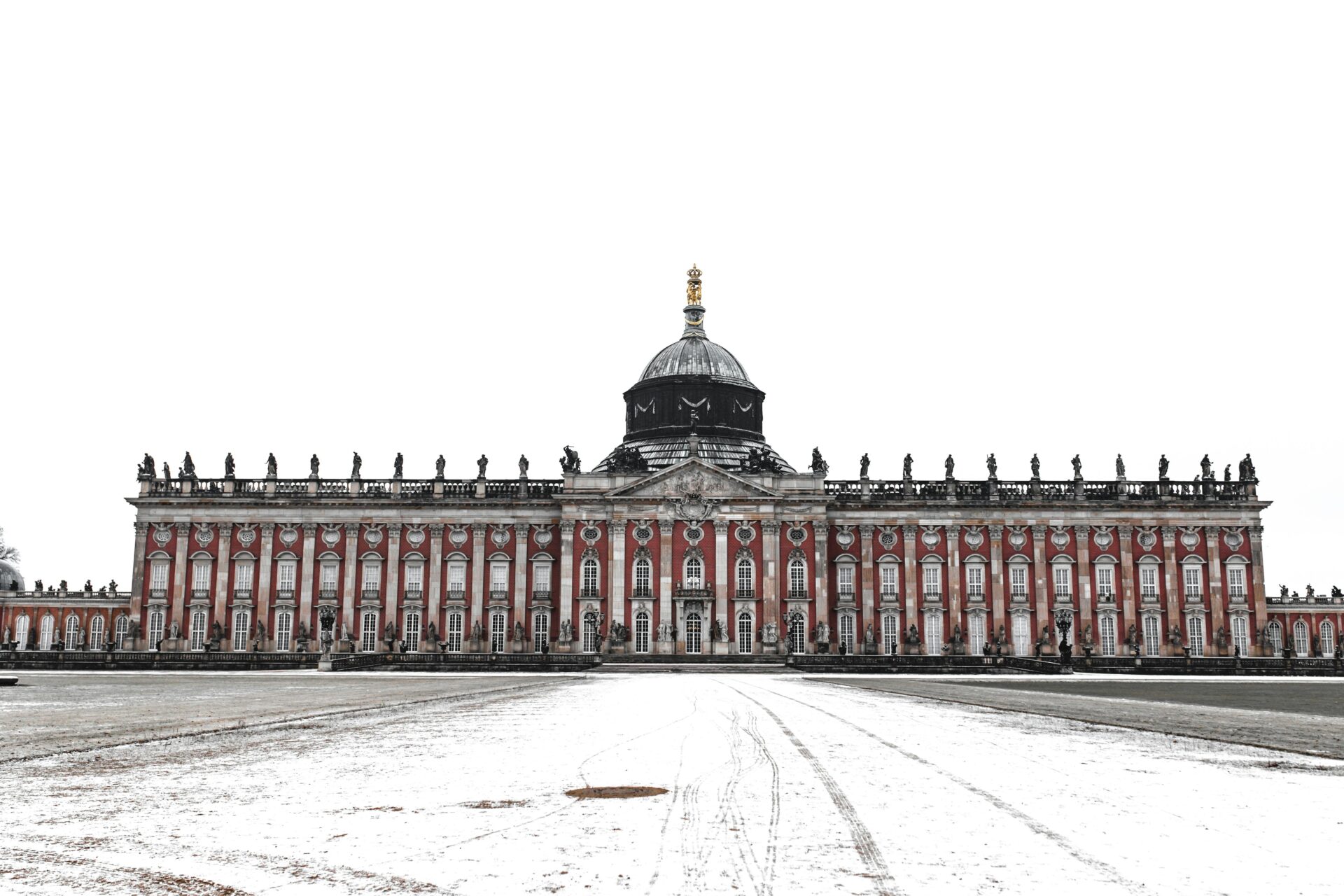
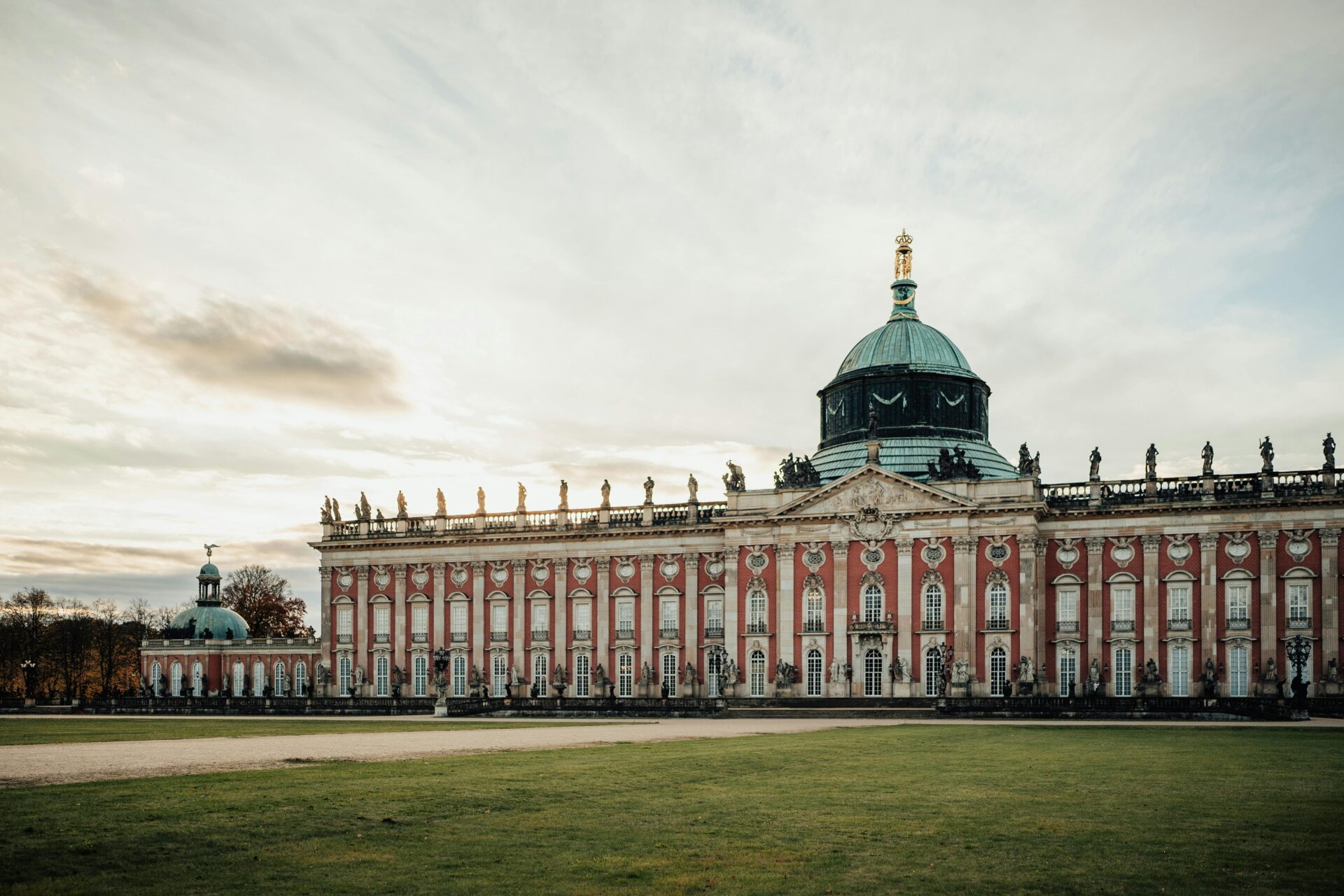
The palace stretches an impressive 220 meters along the front. Its design, with formal layouts and ornate interiors, commands respect. Frederick didn’t just build a palace—he shaped Prussia’s image as a European powerhouse.
Role in Prussian Royalty
Frederick never actually lived here. Neues Palais acted as a guest palace for visitors, dignitaries, and the royal court.
They held big celebrations and important state events in its halls. Art, fine furniture, and rare treasures from all over Europe filled the rooms.
Frederick invited foreign guests to marvel at the palace, using these visits to impress both friends and rivals. Later Prussian kings also used the palace for official occasions.
The palace’s rooms witnessed meetings, state dinners, and family gatherings—real moments from Prussian royal life.
Transition Through the Ages
Neues Palais changed with the times. After the Prussian monarchy fell, its status shifted.
During the German Empire, it stood as a reminder of old royal splendor, but people used it less for day-to-day life.
World War II threatened the area, but the palace survived. After the war, Neues Palais opened as a museum and welcomed the public. Some parts even became university spaces.
These days, Neues Palais is part of Potsdam’s UNESCO World Heritage sites. It invites visitors like me to step inside and feel a slice of Prussian history.
Architectural Grandeur and Style
Neues Palais stands out for its scale, decoration, and the boldness Frederick II wanted everyone to notice. Every corner seems designed to impress and show off Prussia’s strength after the Seven Years’ War.
Baroque and Rococo Influences
As I wandered through Neues Palais, I saw how Baroque and Rococo elements blend together. The building’s layout is pure late Baroque—balanced, symmetrical, and leading your eyes from one grand space to the next.
Inside, Rococo flair takes over. Rooms brim with detailed stucco, pastel colors, and gilded mirrors. Sculpted decorations cover doors, fireplaces, and ceilings.
Frederick didn’t pick these styles just for looks; he wanted to show off his court’s modern taste and sophistication.
Golden moldings, curved shapes, and sunlight pouring through big windows make the palace feel lively and light. I noticed how these choices made the space more inviting than older, heavier Baroque palaces.
Iconic Facade and Dome
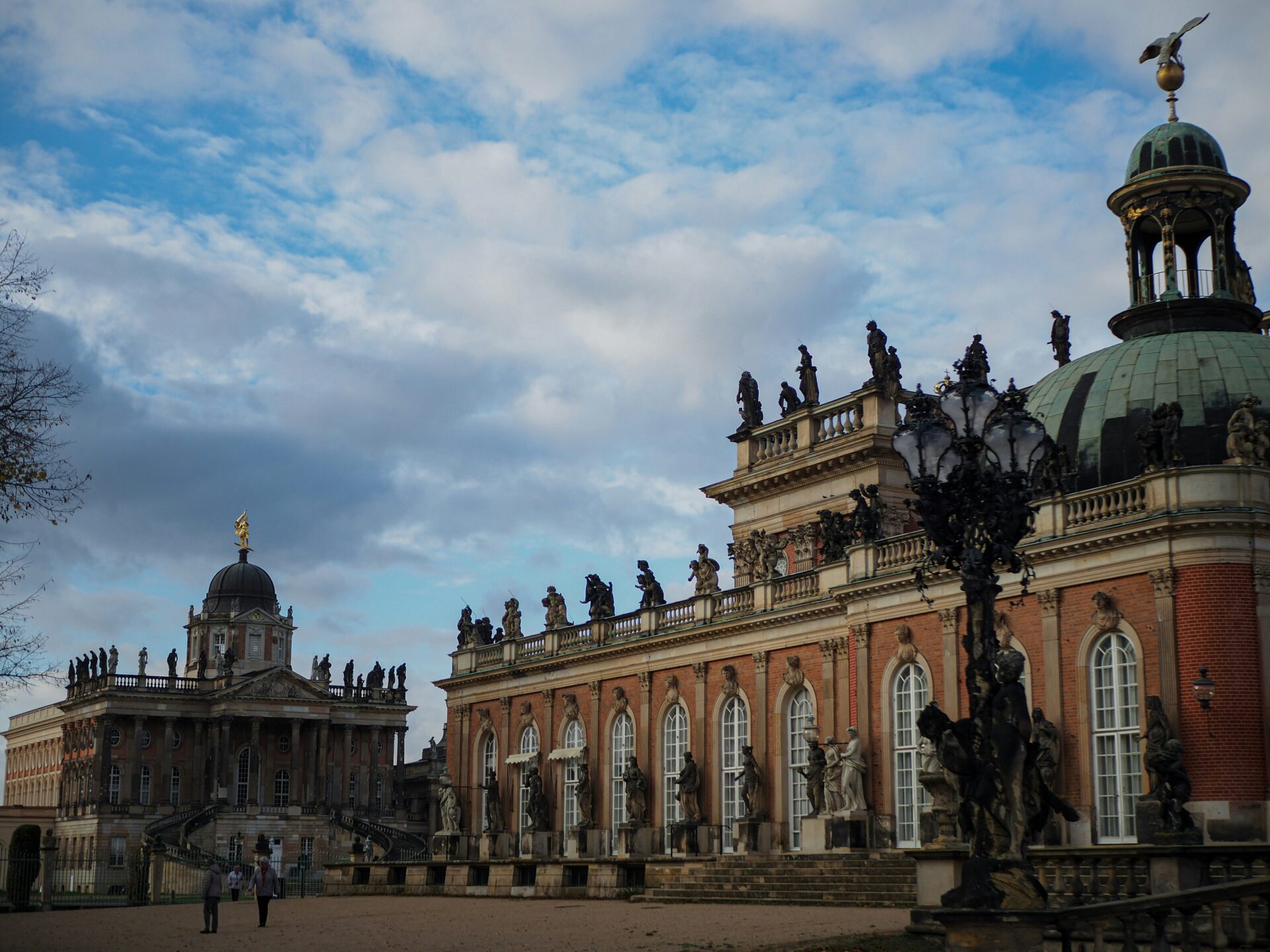
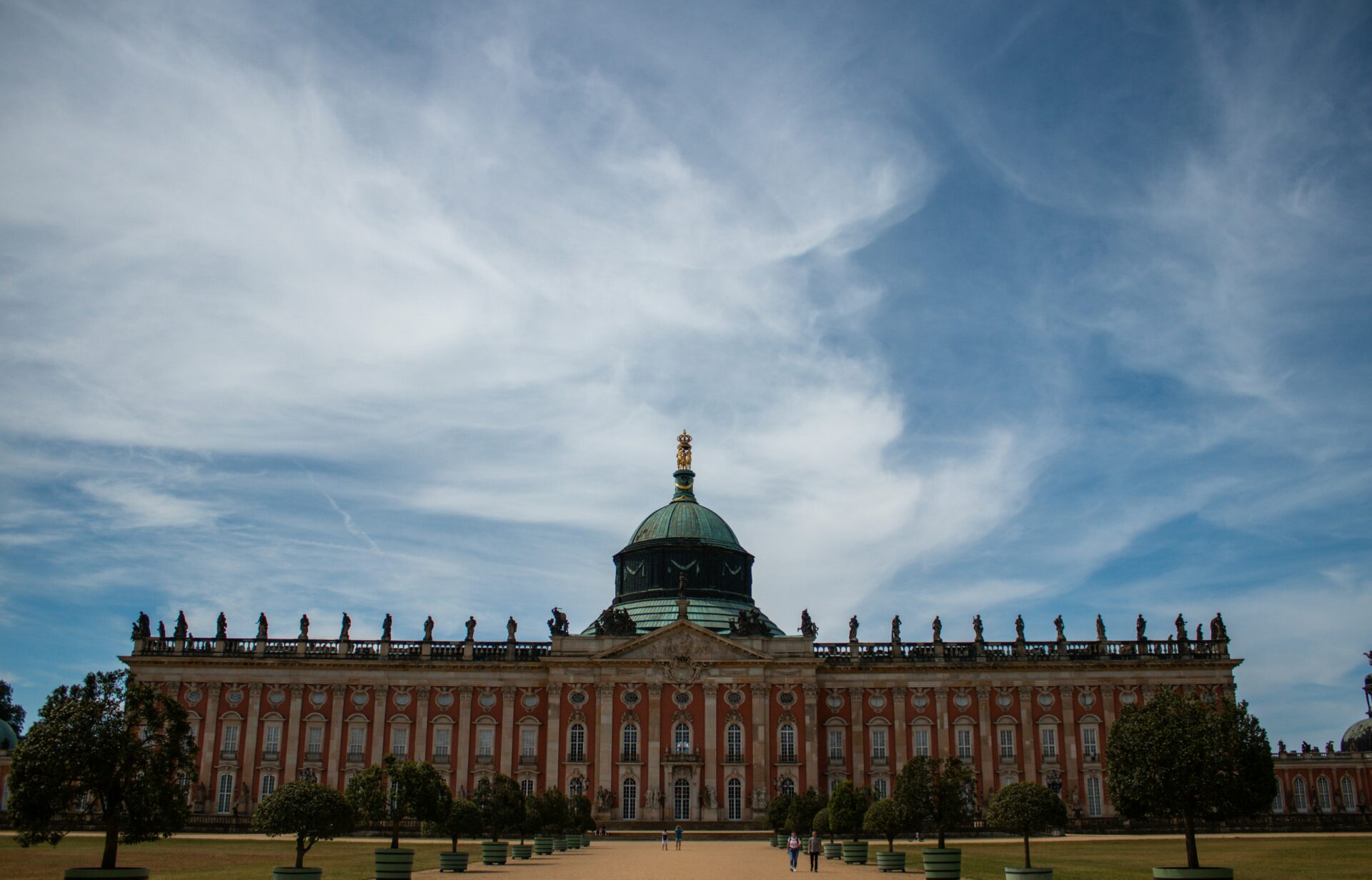
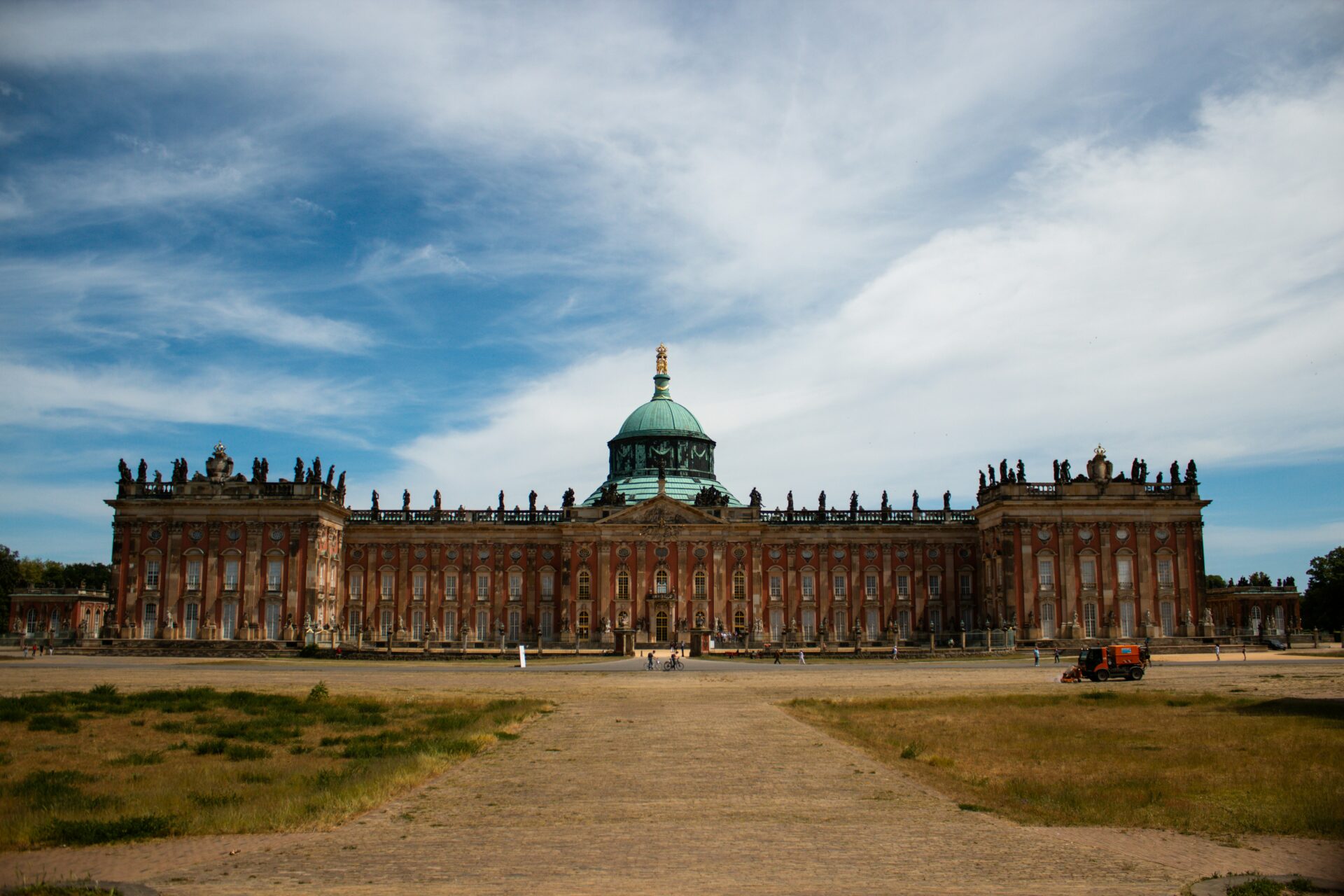
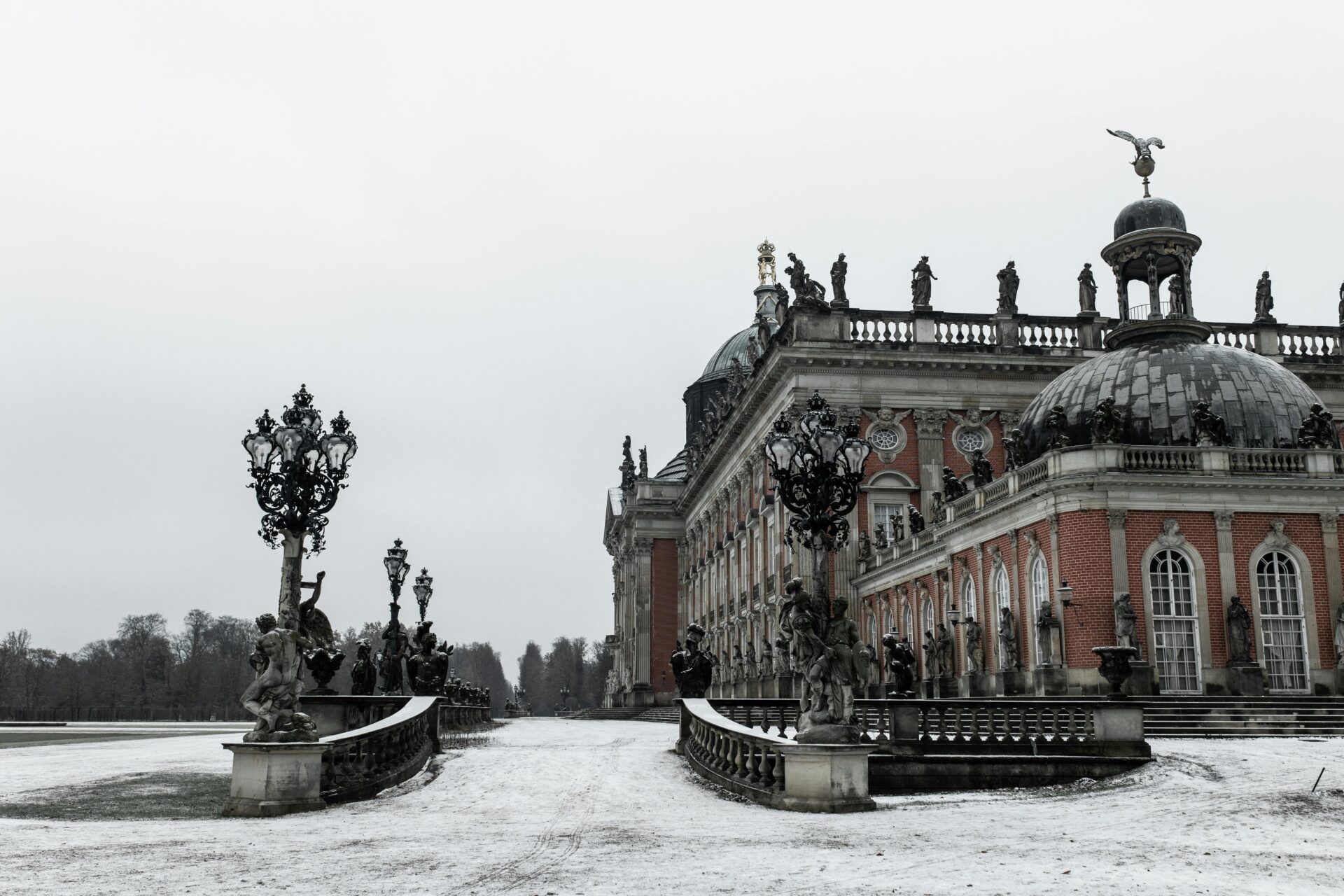
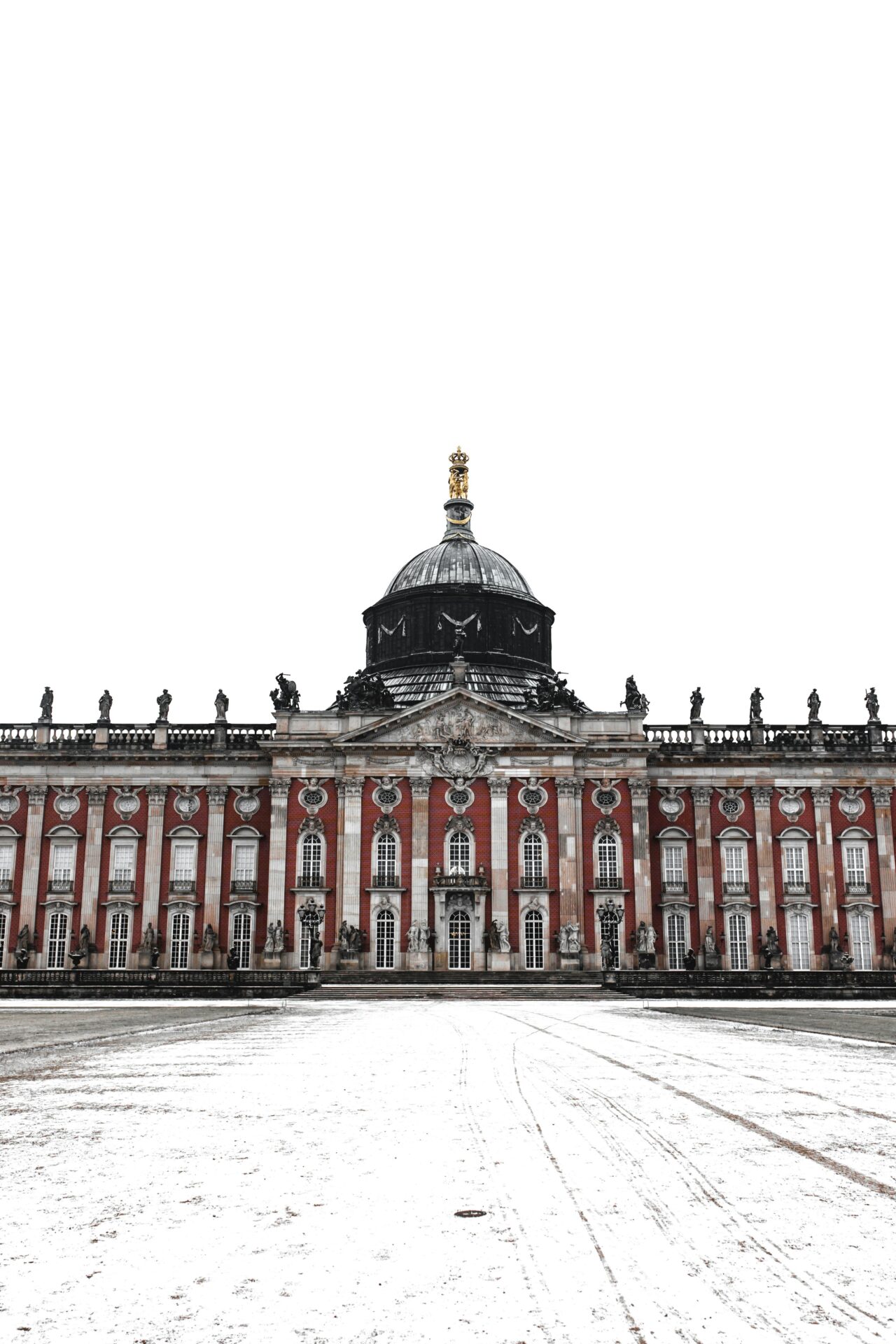
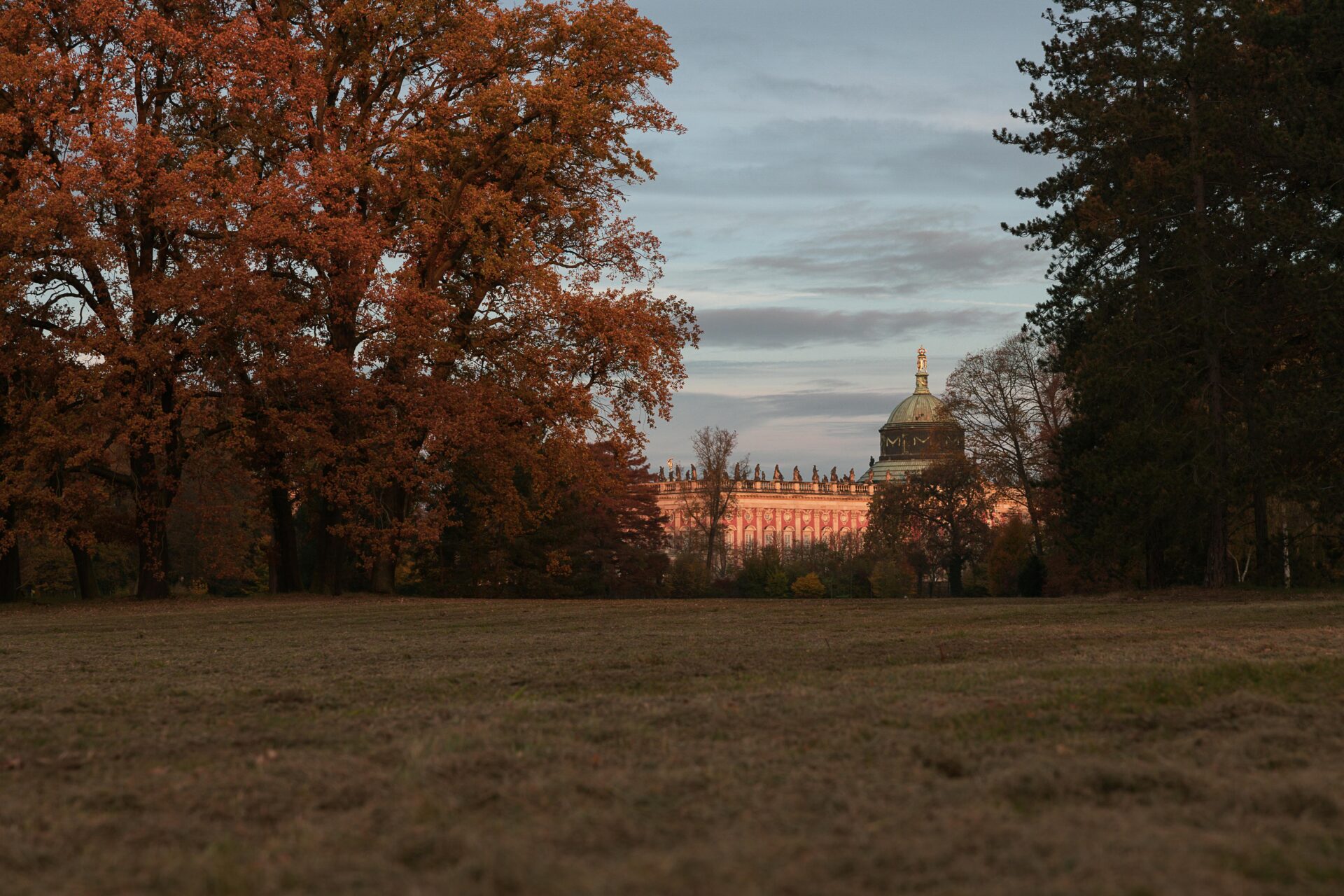
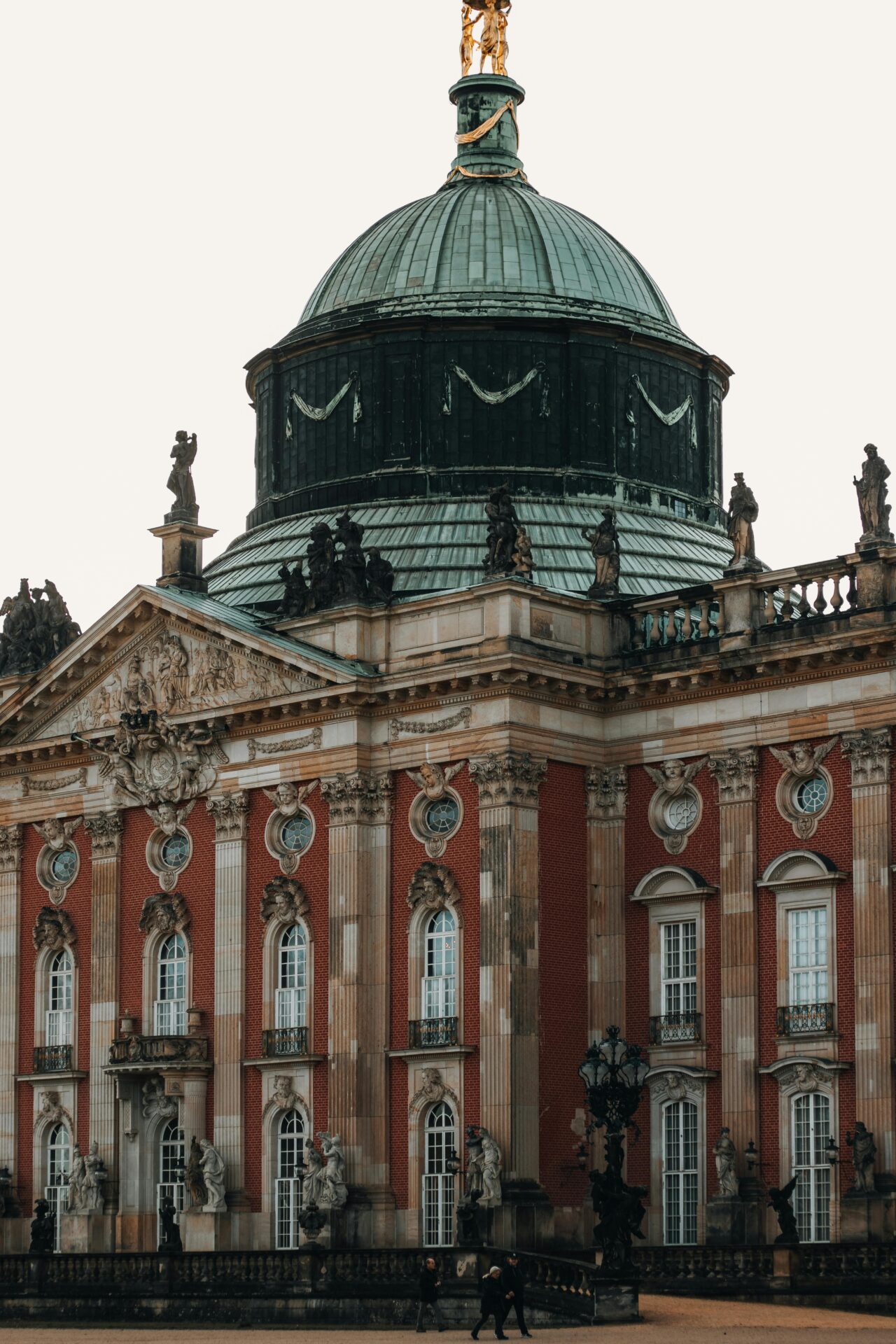
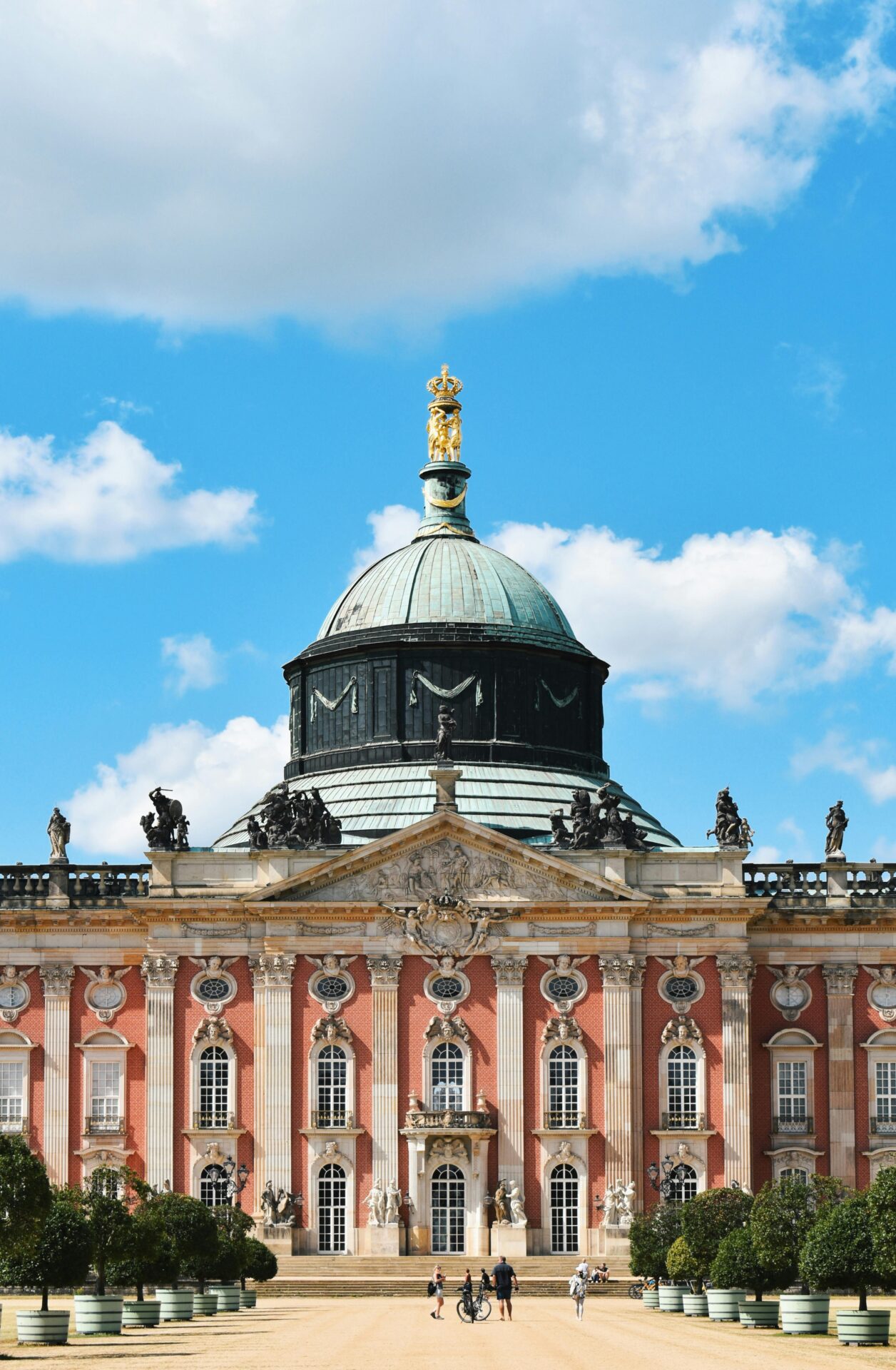
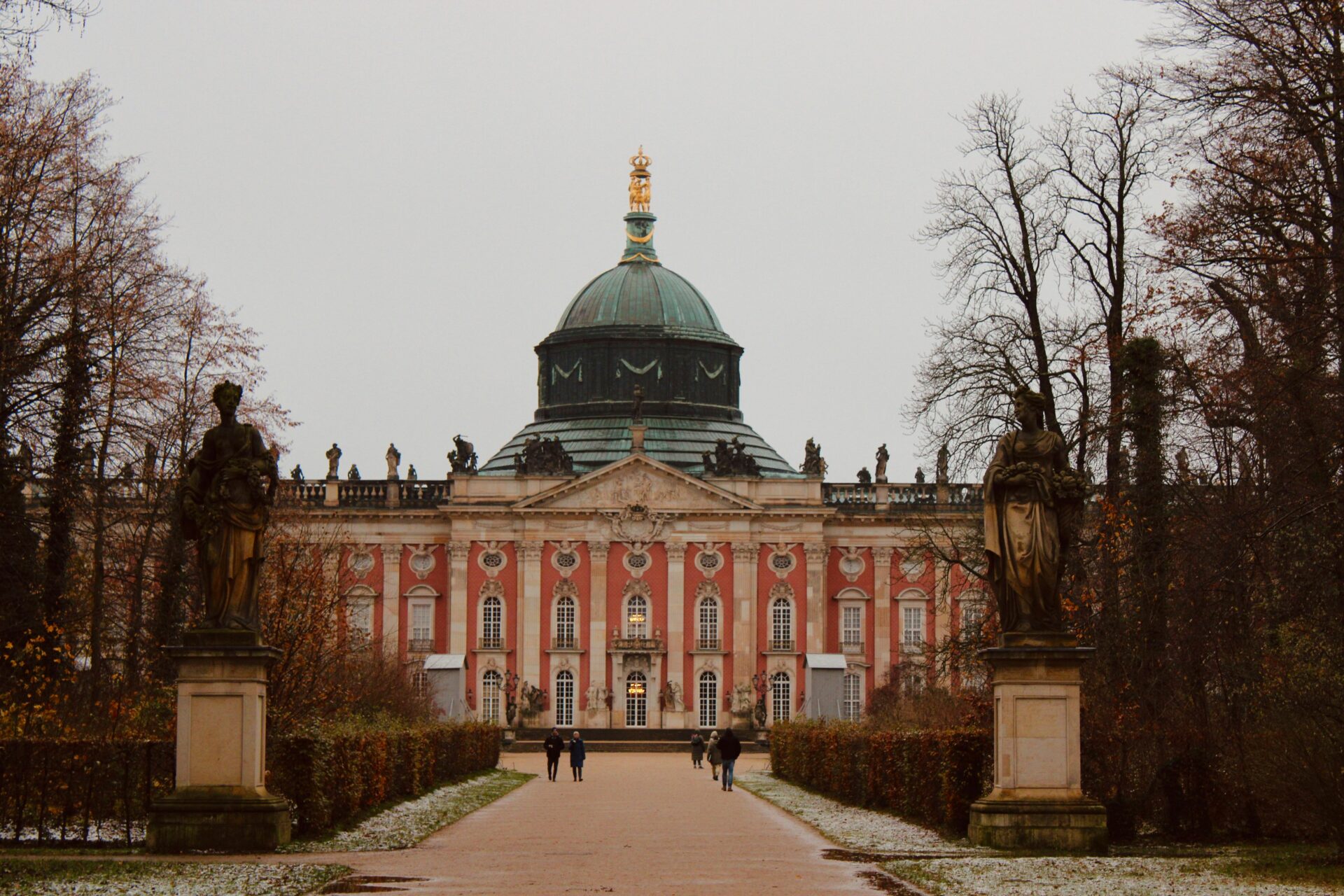
The first thing that hit me outside was the endless facade—over 200 meters long, one of Germany’s biggest. Red brick, white columns, and loads of sandstone create a sharp contrast. Statues of mythological and historical figures line the roof, almost daring you to look up.
At the center, a grand dome rises. Its copper roof and ornate lantern dominate Sanssouci Park’s skyline. This dome sits above the Marble Hall, making it the palace’s crown inside and out.
Symmetry rules the wings, corner pavilions, and decorated pediments. Every piece seems planned to show off wealth and power before you even step inside.
Symbolism of Opulence
Frederick II called this place a “Fanfaronnade”—a show-off palace—and he clearly meant it. He had it built right after Prussia’s victory in the Seven Years’ War, sending a message of royal pride and national strength.
Marble, gold leaf, rare woods—everywhere you look, the materials scream luxury. Gigantic halls, endless corridors, and countless guest rooms make space for state events and royal festivities.
From marble statues to ceiling frescoes, every detail signals the king’s taste for the good life.
To me, Neues Palais delivers its message straight: Frederick wanted to show Europe that Prussia was powerful, cultured, and not going anywhere. The architecture makes that point in stone and gold, and it’s honestly breathtaking.
Lavish Interiors and Unique Highlights
When I stepped inside Neues Palais, I found myself surrounded by rooms designed to dazzle. Each hall and gallery shouts about Frederick the Great’s ambition and artistic vision.
The Marble Hall
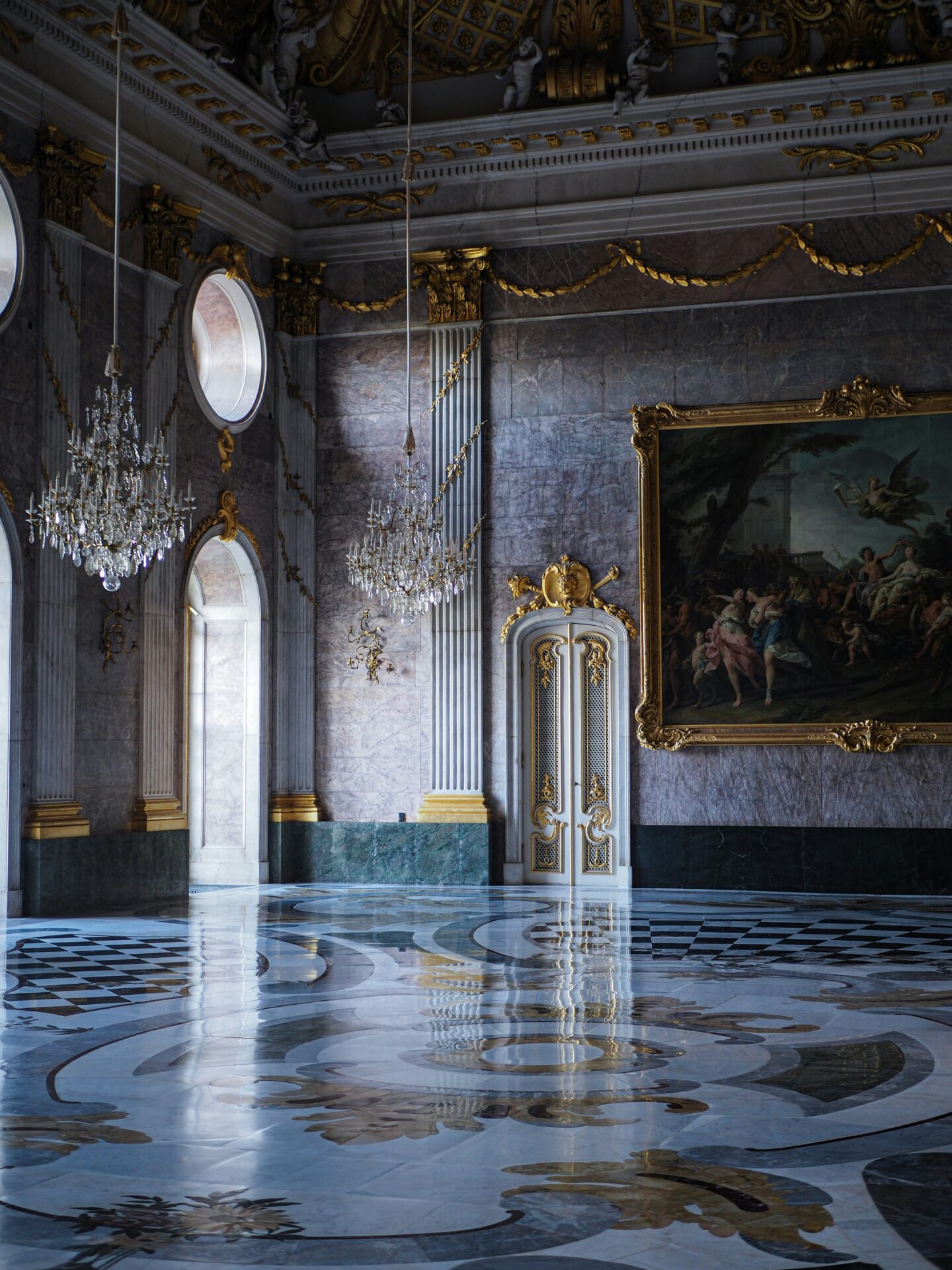
The Marble Hall really blew me away. This grand space sits at the palace’s heart, stretching across two floors.
Huge marble columns line the sides, topped with ornate capitals. The ceiling bursts with colorful frescoes showing scenes from classical mythology.
Light pours in through tall windows, making the marble almost glow. Intricate stucco and gold accents add layers of luxury.
The floor, laid with colorful marble tiles in geometric patterns, caught my eye. Tables along the walls once held elaborate banquets for royal guests.
Even now, the room’s sheer size makes you stop and stare.
Grotto Hall and Gold Cabinet
The Grotto Hall is just wild. Its lower walls are covered in shells, minerals, crystals, and stones—all set into patterns that look like a cave, but with a designer’s touch.
This space was meant to wow people with creativity and nature’s sparkle. The way light dances across the stones is unforgettable.
Every detail shows Frederick’s love for the arts and his craving for originality.
Right next door, the Gold Cabinet glimmers with gilded wood, sparkling mirrors, and rare porcelain. Gold leaf covers the walls and ceiling.
Delicate furniture and Asian treasures line the room, showing off the king’s taste for exotic luxury.
Theater of Neues Palais
I made sure to check out the palace theater. It’s smaller than I expected, but packed with Baroque charm and color.
Rows of red velvet seats face a tiny stage, decorated with carvings, painted panels, and golden figures. The ceiling, painted with mythological scenes and golden clouds, echoes the Marble Hall’s drama.
They designed the acoustics so even whispers carry. I learned that the theater once hosted concerts, operas, and plays for the king and his court.
Amazingly, many original stage decorations and curtains remain, giving you a real sense of the music and drama that filled palace life.
Art Collections and Furniture
Neues Palais shows off a wild mix of paintings, sculptures, and decorative arts. Portraits of Prussian royals, scenes from European history, and lush landscapes cover the walls.
Each room has its own vibe, set by Frederick himself.
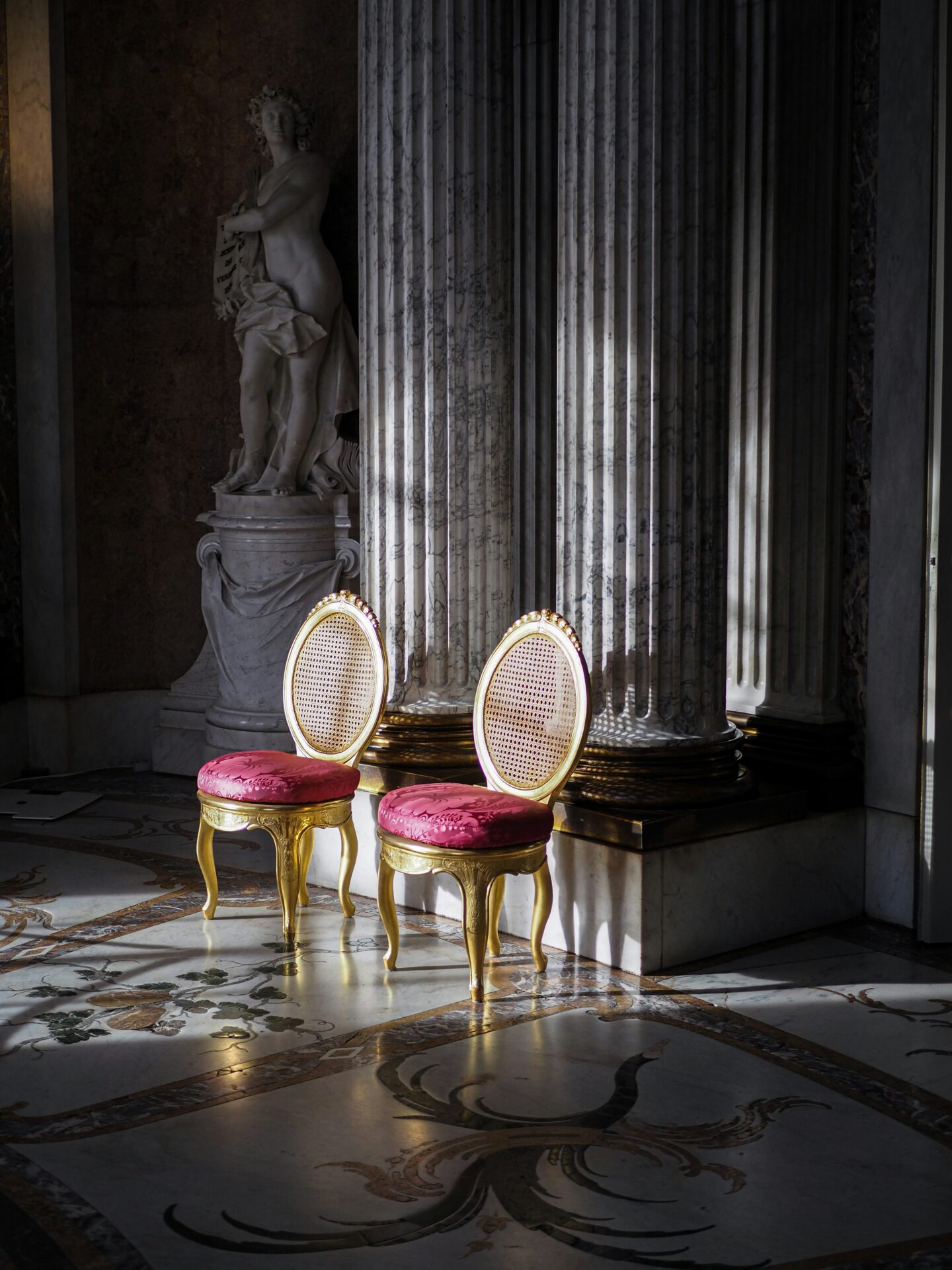
Plenty of original Rococo and Baroque furniture still sits in place. Chairs and tables have curved legs, rich fabrics, and inlaid wood.
Porcelain vases and gold tableware pop up in several rooms, showing off royal taste.
Cabinets display rare objets d’art from across Europe and Asia. Even the silk wallpaper and carved mirrors add to the feeling of a private museum.
Frederick clearly wanted every detail to impress and educate his guests.
Frederick the Great’s ‘Fanfaronnade’: Intent and Legacy
Frederick II of Prussia—Frederick the Great—was a man of bold moves and big style. Neues Palais captures both, showing off his drive to display power and his love for grandeur.
Political Statement and Power
After the Seven Years’ War, Frederick didn’t want anyone to think Prussia was weak. He ordered Neues Palais built to send a message.
He called it his “Fanfaronnade“—a boast, really. The palace stood as proof that Prussia could still finance and build grand monuments after tough times.
Set at the west end of Sanssouci Park, the palace is massive and over-the-top. Its 200+ rooms and richly decorated halls were designed to impress locals and foreign guests alike.
Personal Tastes of Frederick II
Frederick didn’t do subtle. He loved baroque styles and filled Neues Palais with bold colors, gold, and ornate art.
The hallways and theaters show his passion for music and French-inspired décor. For private life, he preferred the smaller, simpler Sanssouci Palace.
But for public events and big diplomatic moments, Neues Palais let him go all out.
His love for French culture shaped everything—from the furniture to the art. Even calling it “Fanfaronnade” shows how at home he felt with French language and style, just like many Prussian nobles back then.
Impact on European Courts
Neues Palais set a new bar for royal residences across Europe. Other rulers took notice of its scale and luxury.
It competed with Versailles and rivaled Austria’s grand homes. Frederick used it to put Prussia on the map among Europe’s great powers.
Visiting diplomats and royalty often left impressed—or sometimes a bit overwhelmed. Neues Palais added to Prussia’s reputation for resilience and creativity, though some saw it as a bit much.
Visitor Experiences and Preservation Today
Visiting Neues Palais is both a thrill and a lesson in history. The palace is beautifully maintained and lets guests like me get up close with Prussian grandeur.
Tour Highlights and Accessibility
When I first wandered into Neues Palais, I was struck by just how massive the place feels. The main building stretches a jaw-dropping 220 meters. You’ll find yourself weaving through grand halls, ballrooms, and what once were royal apartments.
Everywhere you look, ornate ceilings and vivid frescoes catch your eye. The Rococo and Baroque styles really shine, especially in the Marble Hall. I still remember the Grotto Hall—its walls glitter with shells and minerals, and honestly, it’s hard not to just stop and stare.
They’ve put a lot of thought into accessibility here. The park’s paths are wide and mostly flat, so wheelchairs and strollers glide along with ease.
Guided palace routes use ramps and lifts whenever possible. It’s clear they want everyone to enjoy the experience.
You’ll find restrooms, a café for a quick break, and a gift shop if you’re in the mood for souvenirs. Signs pop up in several languages, and you can grab a detailed map right at the entrance.
Key features:
- Wheelchair accessible routes
- Audioguides and brochures available in multiple languages
- Onsite parking and public transportation nearby
Guided Experiences and Events
When I joined a guided tour, I got a real sense of Frederick the Great’s daily routines and the buzz of the Prussian court. The guides didn’t just rattle off facts—they brought the palace to life with stories about royal guests, lavish receptions, and the clever symbolism tucked into the palace’s design.
You’ll find all sorts of tours here. Some are tailored for families, while others dive deep into art or the palace’s architecture. Honestly, there’s something for everyone.
In summer, the palace park transforms. Open-air concerts fill the evenings, and classical music festivals draw a lively crowd. The staff also sets up exhibitions and themed tours, shining a spotlight on art, architecture, and even the nitty-gritty of restoration work.
These events really show why it matters to protect and preserve the palace. If you’re curious about what’s coming up, check the official website or keep an eye on local noticeboards. I’d recommend booking a timed ticket or reserving a spot for special tours—it made my visit way smoother and much less crowded.
