
The Greek islands pull in millions every year, but most people seem to make a beeline for the usual suspects like Santorini and Mykonos. Sure, those islands have their moments, but let’s be honest—peace and authenticity can get lost in the shuffle. Chalki, a pint-sized 28-square-kilometer gem in the Dodecanese, gives me the exact opposite vibe—a place where I can actually breathe, unplug, and slip back into the gentle rhythms of traditional Greek island life.
You’ll find Chalki just an hour by boat from Rhodes, but it feels like it’s in another universe—no tourist stampedes, no endless notifications. Nimporio, the main town, hugs a serene harbor lined with pastel neoclassical mansions. There’s no traffic, no chain restaurants, and absolutely no Wi-Fi panic. Instead, I get fishing boats, cozy tavernas, and conversations that roll on until the sun disappears.
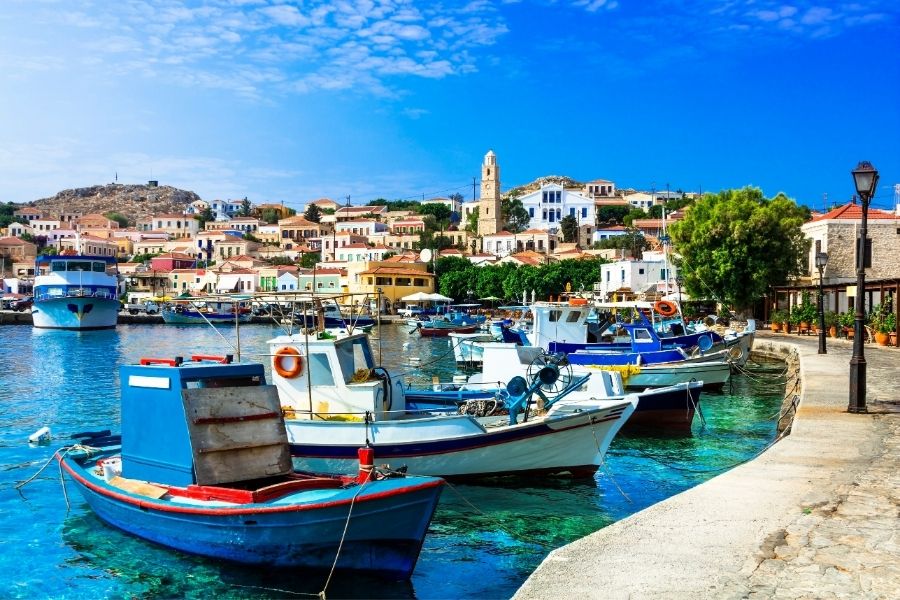
Whenever city life gets overwhelming, I run to Chalki for a reset. The island’s story stretches from ancient copper mines to medieval castles, and its beaches and trails beg for exploring. But what really gets me is how the 2,000 or so locals still live at a pace that puts people before profit. Every visit feels like I’m stepping into a truer, slower Greece.
Unplugging on Chalki: Escaping the Modern World
Chalki lets you escape the always-on grind with its authentic Greek island pace and peaceful atmosphere. The island’s small size and limited development make it easy to slow down and connect for real.
Authenticity and Slow Island Living
Chalki’s authenticity stands out, especially if you’ve bounced around the busier Greek islands. Here, life ticks along on its own schedule, not the tourists’.
People wander through Nimporio’s neoclassical lanes at a pace that feels almost meditative. In the evenings, locals gather at kafenions. I often watch fishermen mending nets while kids play tag in the harbor square.
A typical day? Something like this:
- Morning coffee by the water
- Siesta when the sun’s at its fiercest
- Evening strolls around the port
- Seafood dinners under a blanket of stars
With only around 2,000 people, familiar faces become, well, familiar fast. Shopkeepers remember what I like. Restaurant owners share stories about their grandkids.
All this makes Chalki feel more like home, not just another stop on the map.
Tranquility Compared to Other Greek Islands
Chalki’s calm is the total opposite of the energy on Rhodes or Mykonos. There are no cruise ships, no wild parties.
I wake up to the sound of waves and gulls, not traffic. Cars are rare here, so the island stays refreshingly quiet.
Even in summer, the beaches don’t get packed. At Pontamos Beach, I can stretch out on the sand without anyone nearby. Pebbly Kania Beach is even quieter—just the sound of my own splashing.
There aren’t many shops or restaurants, and that’s the point. Chalki’s minimalism is what makes it perfect for unplugging.
Embracing the Island of Peace and Friendship
UNESCO called Chalki the “Island of Peace and Friendship” for good reason. The island has this genuine, welcoming spirit that’s hard to fake.
Locals greet me with a smile and don’t push me to buy anything. Meals at the taverna turn into long, laughter-filled evenings.
Sustainability matters here too. Solar panels now power most of Chalki, making it Greece’s first solar-powered island. That fits right in with the slower, more thoughtful way of life.
Evenings gather everyone around the harbor for sunset. It’s these moments that remind me why Chalki is my antidote to modern stress.
Arriving and Settling In: First Impressions and Journey
Getting to Chalki takes a bit of planning—there are no direct flights, and Nimborio’s peaceful harbor is where the slow-down really begins. Here, walking replaces driving.
Getting to Chalki from Rhodes and Athens
I usually fly into Athens, then grab a quick flight to Rhodes. The hop from Athens to Rhodes only takes about an hour, and there are plenty of flights in summer.
From the Rhodes airport, I catch a taxi to Mandraki Harbor. It’s a 20-minute ride, usually €25-30. Some hotels offer shuttles for less.
Ferry Schedule from Rhodes to Chalki:
- Summer (May-October): Daily at 9:00 AM
- Winter (November-April): 2-3 sailings per week
- Trip time: 90 minutes
- Price: €15-20 one way
The ferry Chalki is small but does the job. I always buy tickets the day before at the port office—during peak season, booking ahead is a good idea.
Weather sometimes messes with the ferry schedule. If it’s windy, trips might get canceled, so I always keep my plans a bit loose.
Nimborio Harbour Welcomes
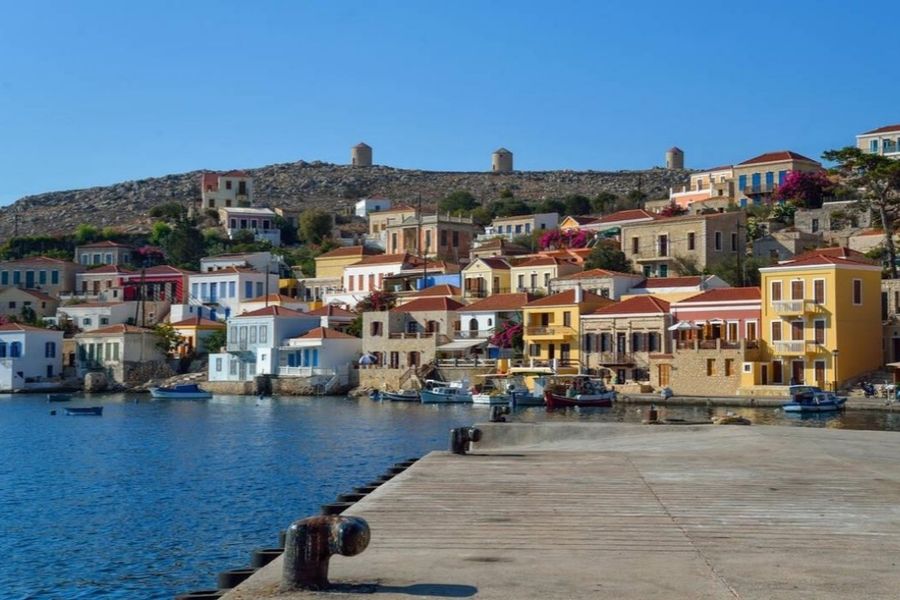
Arriving at Nimborio Harbor by boat? It’s a sight I never get tired of. Neoclassical houses in soft yellows, pinks, and creams climb up the hillside.
The harbor’s tiny, almost cozy. No cruise ships here—just fishing boats and the daily ferry. That’s my cue to slow down.
First impressions?
- Water so clear it looks unreal
- Stone houses with wooden balconies
- The old clock tower watching over the port
- Locals chatting at waterfront cafes
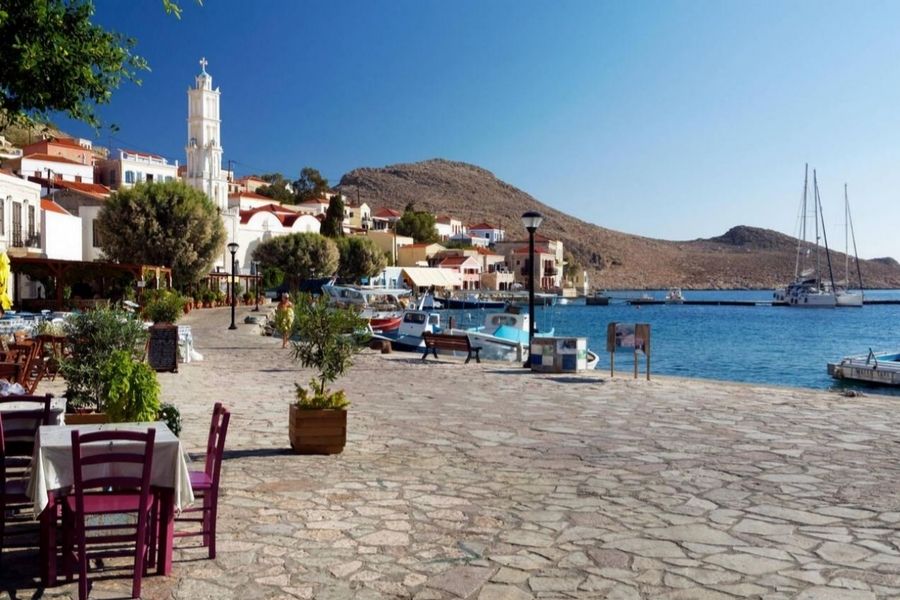
The whole town fits in one glance from the ferry deck. With just 300 year-round residents, everyone seems to know everyone.
Unloading is a breeze. No chaos, just a gentle welcome to island time.
Travel Without Cars and the Joy of Walking
I barely see any cars on Chalki—maybe five or six total. After the chaos of Rhodes or Athens, the quiet hits me right away.
Everything in Nimborio is within a 10-minute walk. The bakery, tavernas, shops, and places to stay all huddle around the harbor.
How I get around:
- Walking: Nothing’s more than 15 minutes away
- Boat taxis: Perfect for reaching remote beaches like Pontamos
- Hiking: Trails lead to the old Chorio village and ruins
My suitcase rolls easily along the smooth promenade. No blaring horns, just the sound of waves and the occasional rooster.
Without cars, I actually hear myself think. My phone stays in my pocket more.
Walking up to old Chorio takes about 45 minutes. The path winds past ancient ruins and offers killer views across the Dodecanese.
Atmosphere, Villages, and Chalki’s Unique Charm
Chalki’s calm comes from its beautifully preserved neoclassical buildings, real village life, and the warmth of locals who still believe in Greek hospitality. The architecture feels like a living museum, but life goes on in the most natural way.
Chorio: Ancient Capital and Rural Beauty
Chorio sits high above Nimborio, Chalki’s old capital. I love hiking up the steep trail to wander among its abandoned stone houses.
The ruins tell stories—thick-walled homes stand among wild herbs and olive trees.
What stands out in Chorio:
- A medieval castle built by the Knights of St. John
- Church of Agios Nikolaos with sweeping views
- Classic stone architecture
- Hiking trails through the countryside
It’s about a 30-minute walk from the harbor. I always go early or late to dodge the heat.
The castle at the top has the best views. On a clear day, I can spot Rhodes in the distance.
Hospitality and Local Life
People here still follow old Greek customs. After just one visit, taverna owners remember my name.
Only about 300 people live here year-round. Most families have roots going back generations.
I often sip coffee at the waterfront and watch fishermen repairing nets. Life just moves at its own pace.
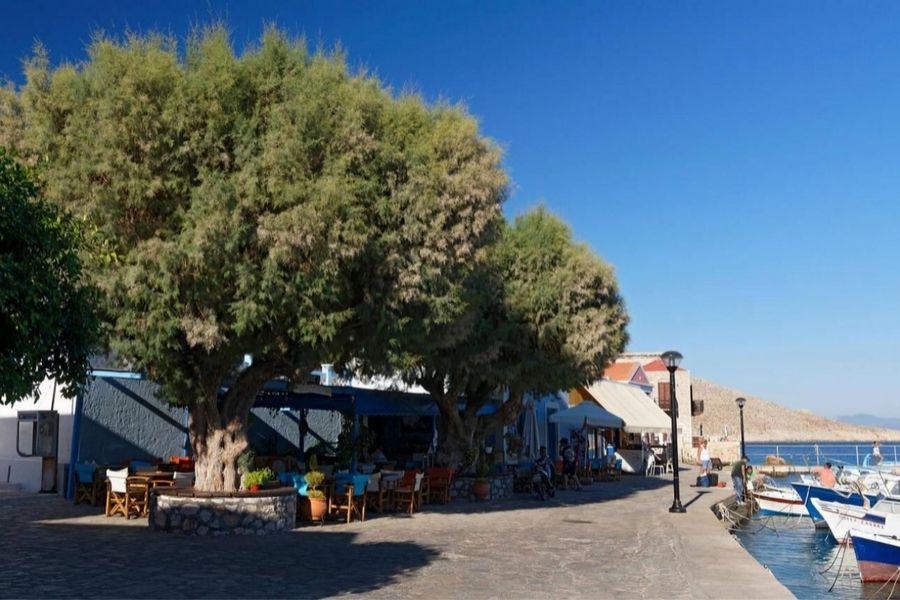
A day in Chalki:
- Morning: Fishing boats return
- Afternoon: Siesta, shops close up
- Evening: Everyone gathers at tavernas
- Night: The harbor gets quiet and peaceful
UNESCO recognized Chalki as the Island of Peace and Friendship back in the ‘80s. That says a lot about the hospitality here.
Neoclassical and Venetian-Inspired Architecture
Nimborio’s harbor is a showcase of neoclassical architecture. These colorful mansions date back to the 19th century, when sponge diving made the island rich.
Strict rules keep the old style intact. Any new building has to match the traditional look.
The mansions stand out for:
- Pastel shades—yellow, pink, blue, white
- Wooden balconies with carved details
- Thick stone walls and solid foundations
- Red-tiled roofs, classic Mediterranean
The old clock tower is the village’s focal point. Built in the early 1900s, it still keeps perfect time.
Many of these houses were once sea captains’ homes. Their grand design hints at Chalki’s maritime heyday during the Ottoman era.
Cultural Highlights and Island Sights
The Church of Agios Nikolaos is the island’s spiritual heart, its bell tower rising above all. Ancient windmills and tiny chapels pop up everywhere, revealing Chalki’s history through Byzantine art and timeless architecture.
Church of Agios Nikolaos and Mosaic Pebbled Yards
I always start my culture fix at the Church of Agios Nikolaos, smack in the center of Nimborio. Its bell tower stands tall above the pastel houses.
The church is all white-washed walls outside. Inside, I find religious art that feels like it’s been here forever.
But what really catches my eye are the mosaic pebble yards. Black and white stones from Chalki’s beaches form intricate patterns. Local craftsmen must have spent ages getting them just right.
This church is the island’s gathering spot. I’ve seen locals here for services and festivals. It’s peaceful—perfect for just sitting and thinking.
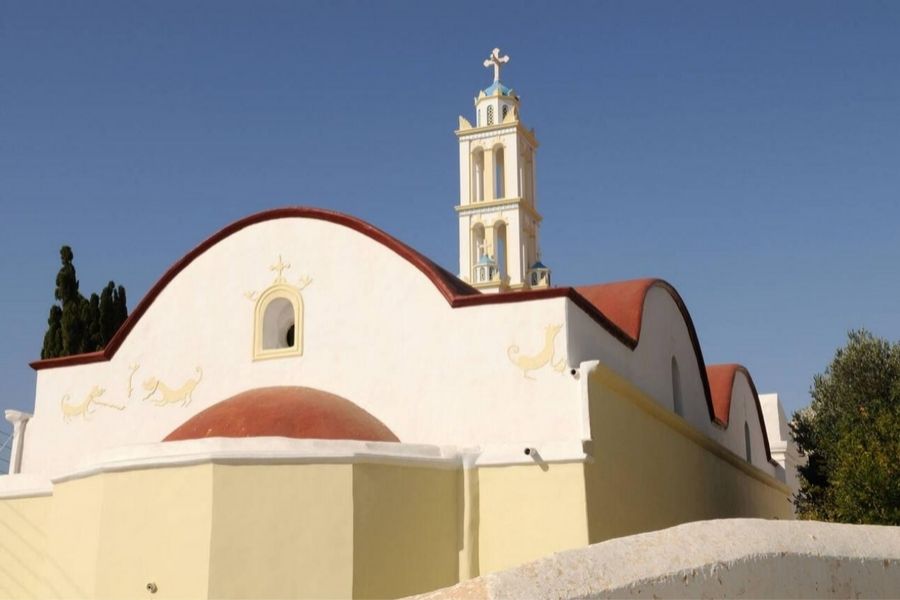
The area around the church is classic Dodecanese, with narrow streets and pastel houses creating that postcard vibe.
Historic Windmills and Clock Tower
Chalki’s windmills stand like white guardians on the hills. These old stone mills once ground grain for everyone on the island.
A handful still remain, mostly from the 18th and 19th centuries, back when sponge diving and trade filled the island’s coffers.
The clock tower in Nimborio shows off the Italian influence from the early 20th century. It still keeps the village on time.
These landmarks tell stories of Chalki’s self-sufficiency. The windmills harnessed the fierce Aegean winds to grind wheat and barley for the village.
Some have been lovingly restored, others are romantic ruins. I like hiking up to the highest ones for sweeping views toward Turkey’s coast.
Remarkable Frescoes and Chapels
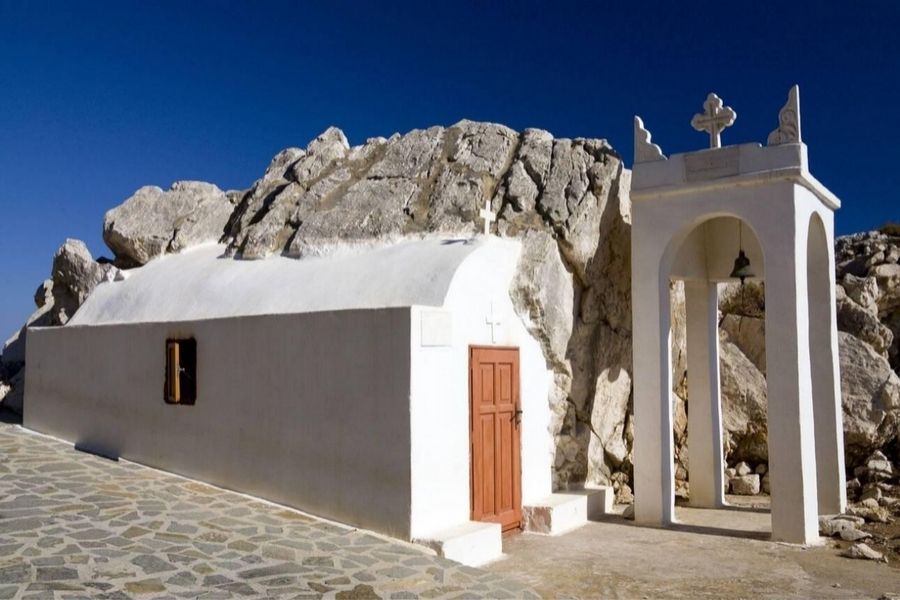
Tiny chapels dot Chalki, many hiding some of the best frescoes in the Dodecanese. I make a point to hunt them down on my walks.
The Monastery of Panagia is the real showstopper, with Byzantine-style frescoes in deep blues, golds, and reds. Biblical scenes and saints cover the walls.
Most of these frescoes go back to the 15th or 17th centuries. Local artists used traditional techniques and natural pigments. Some colors have faded, but the artistry shines through.
I stumble upon smaller chapels tucked into hills or olive groves. Each one tells a different story—some with Greek, some with Italian influences.
Families still keep these chapels alive, holding annual celebrations. There’s something special about the mix of art, faith, and tradition.
Beaches, Nature, and Nearby Adventures
Chalki’s beaches are all about crystal-clear water and space to yourself—none of the crowds you’ll find on the bigger Greek islands. The island’s rugged hills and trails make for fantastic hikes to old ruins and quiet chapels.
Pontamos and Ftenagia: The Main Beaches
Pontamos is probably the best-known beach on Chalki. The fine white sand feels soft underfoot, and the water stays shallow for several meters—great for a casual swim.
I always bring snacks and lots of water, since there aren’t any beach bars or facilities. The lack of development really keeps the place feeling wild and unspoiled.
Ftenagia gives you a change of scenery with its pebble shore. The deeper blue water attracts stronger swimmers, and honestly, it’s a lovely spot for a quiet dip.
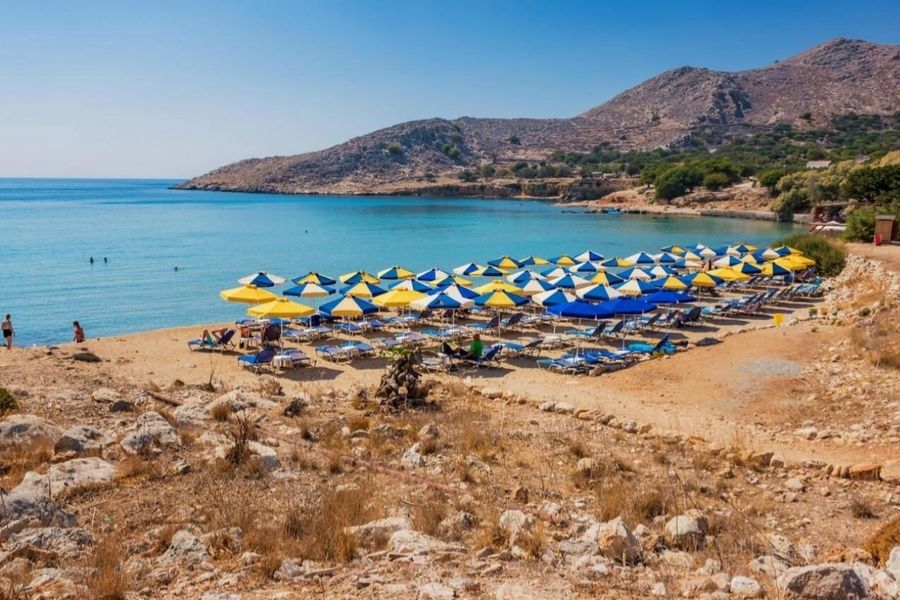
Both beaches stay pretty empty, even in the middle of summer. That’s something I really appreciate.
Getting to Pontamos from Nimporio port only takes about 15 minutes on a clear coastal path. Ftenagia’s a bit more of a trek—expect a rocky walk that takes a little longer.
I always throw on sturdy sandals for both hikes. Trust me, your feet will thank you.
Boat Trips to Alimia and Off-the-Beaten-Path Shores
Alimia sits quietly between Chalki and Rhodes—a tiny, uninhabited islet. Local boats run day trips out here during the summer.
The beaches on Alimia have pristine sand and water so clear it’s almost unreal. If you want to feel completely away from it all, this is the place.
I discovered Trahia beach by boat one summer. It’s only accessible from the sea, so you’re almost guaranteed to have it to yourself.
Most boat trips actually stop at a few hidden coves along the way. It’s a great way to see the wilder side of Chalki.
Kania, Giali, and Areta beaches all have pebbly shores and that stunning blue water. You’ll need a boat or a challenging hike to reach them, but the payoff is total seclusion.
Sometimes local fishermen will offer informal boat rides to these remote spots. Prices tend to hover around 20-30 euros per person for a half-day adventure.
Hiking, Chapels, and Panoramic Views
The old Chorio village sits high above the port—abandoned now, but still full of history. Pirates once threatened the coast, so people built their homes up here for safety.
You can wander among stone houses and winding paths that have barely changed over the centuries. It’s like stepping back in time.
Agios Nikolaos temple hides 15th and 17th-century frescoes inside. The hike from Nimporio takes about 20 minutes uphill, and I always bring a flashlight to really see the artwork.
The ruins of the Knights of St. John fortress sit on the island’s highest hill. It’s a 45-minute climb over rocky ground, but the views are totally worth it.
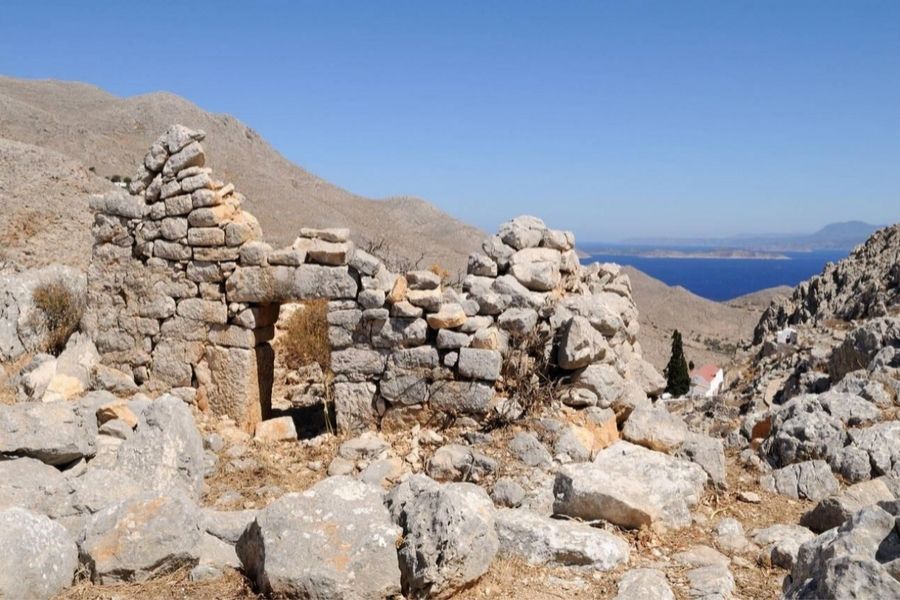
On clear days, you can see all the way across the Dodecanese toward Karpathos. It’s a bit of a workout, but the scenery keeps you going.
Small chapels dot the hiking trails all over Chalki. Most paths are well-marked, but I always carry water—summer heat can be intense.
Loose stones and steep sections make some trails a challenge. Good shoes are a must.
Connections in the Dodecanese: Chalki Beyond the Island
Chalki sits just six kilometers west of Rhodes, which makes it perfect for anyone dreaming of island-hopping in the Dodecanese. You’ll find yourself connected to ancient trade routes, shared histories, and ferry networks that tie this little paradise to some of Greece’s most fascinating destinations.
Exploring Rhodes, Kos, and Neighboring Islands
Rhodes is usually my entry point to Chalki, thanks to daily ferry services. The trip takes less than an hour, so you can easily do a day trip in either direction.
Ferry Connections from Chalki:
- Rhodes: Daily, 45-60 minutes
- Kos: 2-3 times a week, 3-4 hours
- Symi: Weekly via Rhodes
I often use Chalki as my quiet base for exploring the busier islands nearby. Rhodes delivers ancient history and that medieval vibe, while Kos has vibrant nightlife and fascinating archaeological sites.
It always strikes me—one minute I’m lost in Rhodes’ bustling Old Town, and by evening I’m back in Chalki’s peaceful harbor. That contrast is honestly the best part.
Symi makes a great day trip, too. Like Chalki, it still has that authentic Greek island feel, untouched by mass tourism.
Chalki’s Place in Dodecanese History and Culture
Chalki has belonged to Rhodes’ sphere of influence since the 4th century BC. There are ancient inscriptions showing the island as part of Rhodian Kamiros, one of Rhodes’ three ancient cities.
The Dodecanese islands share a pretty unique history. Italian rule from 1912 to 1948 left its mark, and you’ll spot similar neoclassical buildings on Chalki and across the whole island chain.
Shared Cultural Elements:
- Sponge diving traditions
- Italian architectural touches
- Orthodox religious heritage
- Maritime trading history
Chalki’s golden age came in the 19th century, thanks to sponge harvesting. Neighboring Symi and Kalymnos have similar stories.
Many families moved to Tarpon Springs, Florida in the 1950s. Some descendants have come back, bringing fresh perspectives to island life.
The Knights of Saint John built Chalki’s 14th-century castle. They controlled most of the Dodecanese islands back in medieval times.
Links to Athens and the Broader Greek Archipelago
Athens sits about 475 kilometers from Chalki, so you’ll need to plan a bit. I usually fly into Rhodes from Athens, then hop on a ferry to Chalki. There aren’t any direct flights to the island.
Travel Routes to Athens:
- Ferry to Rhodes → Flight to Athens (usually 3-4 hours total)
- Ferry connections through Piraeus (12+ hours)
Summer opens up more ferry connections. Sometimes I catch boats from Chalki through the Cyclades to Piraeus, Athens’ main port. It’s a long day, but the views are spectacular.
Chalki connects to Greece’s wider island networks via Rhodes. From there, ferries reach Crete, the Cyclades, and the mainland. The Blue Star Ferries network lets you string together a whole chain of island adventures.
I’ve used Chalki as my launching pad for longer Greek trips. Its calm, relaxed vibe helps me recharge before heading to busier places like Santorini or Mykonos.
It’s also a perfect spot to unwind after a whirlwind city break in Athens or Thessaloniki.
Frequently Asked Questions
Chalki lets you truly disconnect from modern life. The car-free environment, renewable energy, and having just one inhabited village make it a haven for anyone seeking a genuine Greek island experience—no crowds, no digital noise.
What unique experiences does Chalki Island offer for a peaceful getaway?
Chalki’s car-free vibe hits you the moment you arrive. You get around on foot or by boat, and that alone brings instant calm.
Nimborio, the only village, is home to just 350 people. You’ll meet locals who actually live here—not just folks catering to tourists.
Since 2019, Chalki has run entirely on solar and wind power. No generator noise, just the sound of the sea.
Exploring abandoned Chorio village is a peaceful escape. Medieval ruins and sweeping Aegean views—what more could you want?
The island’s 28 square kilometers hide secret coves, only reachable by foot or boat. Privacy for swimming and reflection comes easy here.
How does one reach Chalki, and what are the transportation options?
I usually fly into Rhodes International Airport first. Direct flights from Athens take about an hour.
Fast boats from Rhodes’ Mandhraki Port reach Chalki in roughly 1.5 hours. Dodekanisos Seaways operates these daily in summer.
Conventional ferries take 2-3 hours and cost less. I actually prefer these slower boats—they ease you gently into island time.
Some ferries run straight from Piraeus to Chalki. Those overnight journeys take 12 hours or more but skip the Rhodes stop.
Schedules drop off outside peak season, so I always double-check with Ferryhopper before booking.
What are the key attractions on Chalki for travelers seeking tranquility?
Pondamos Beach is a quiet gem—golden sand, shallow water, and no beach bars blasting music. Most days, it’s just you and the sea.
The hike to St. John’s Monastery takes about 1.5 hours through untouched hills. The 19th-century building is a peaceful spot for meditation and soaking up the view.
Near Pondamos, you’ll stumble upon abandoned iron mines. These silent, industrial ruins add a mysterious layer to the landscape.
A boat trip to Alimia islet lets you wander a deserted village and swim in crystal-clear water. It’s a little eerie, but in a good way.
Chorio’s medieval castle ruins offer the best panoramic view on the island. The climb is tough, but the solitude at the top is unbeatable.
Can visitors find accommodation on Chalki that provides a secluded retreat?
Accommodation is intentionally limited on Chalki, so it never feels crowded or overrun.
You’ll find traditional mansions in Nimborio, many restored from the Italian era. These places ooze character—just don’t expect flashy hotel amenities.
I always book well ahead for summer. With so few rooms, it’s genuine scarcity, not a marketing trick.
Most guesthouses run family-style. Owners often invite you in for a meal or share their local tips.
No big resorts exist here, and that’s by design. The island supports only small-scale, personal accommodation.
What is the best time of year to visit Chalki for a quiet vacation?
May and June are perfect—great weather, hardly any crowds, and ferry connections run smoothly.
September and October still offer warm seas, but most tourists have left. It’s peaceful and slow.
July and August bring more visitors, but even then, Chalki feels relaxed compared to the bigger Greek islands.
In winter, most businesses shut down and ferries become unreliable. It’s not the best time to visit, unless you love total solitude.
Personally, I love the shoulder seasons. Spring wildflowers and autumn light make the island feel extra magical.
Are there any cultural experiences on Chalki that allow for digital detox?
Traditional fishing here isn’t just some tourist show—it’s real, and it’s been the heartbeat of Chalki for generations. I’ve joined those early morning trips, where you really have to pay attention to the wind and the sea. There’s no room for distraction, and honestly, you forget about your phone entirely.
Dining at local tavernas feels like stepping into another rhythm. Meals stretch on, and nobody seems in a hurry. It’s not about when your food arrives; it’s about lingering over conversation, laughing with locals, and letting time slow down. Checking your phone just feels out of place.
When festival season rolls around, the whole island comes alive. Everyone gathers for religious celebrations, and you get swept up in the energy. People connect face-to-face, not through screens, and you start to realize how refreshing that is.
Sponge diving isn’t just a bit of history—it’s woven into daily life. I’ve sat with elderly islanders who tell stories that pull you in. You find yourself truly listening, caught up in their memories, and your phone stays buried in your bag.
WiFi? It’s spotty at best. Most places I’ve stayed offer just the basics, and honestly, the way they’re set up nudges you toward offline adventures. You end up exploring, chatting, and just living in the moment—something that’s surprisingly easy to get used to here.
