
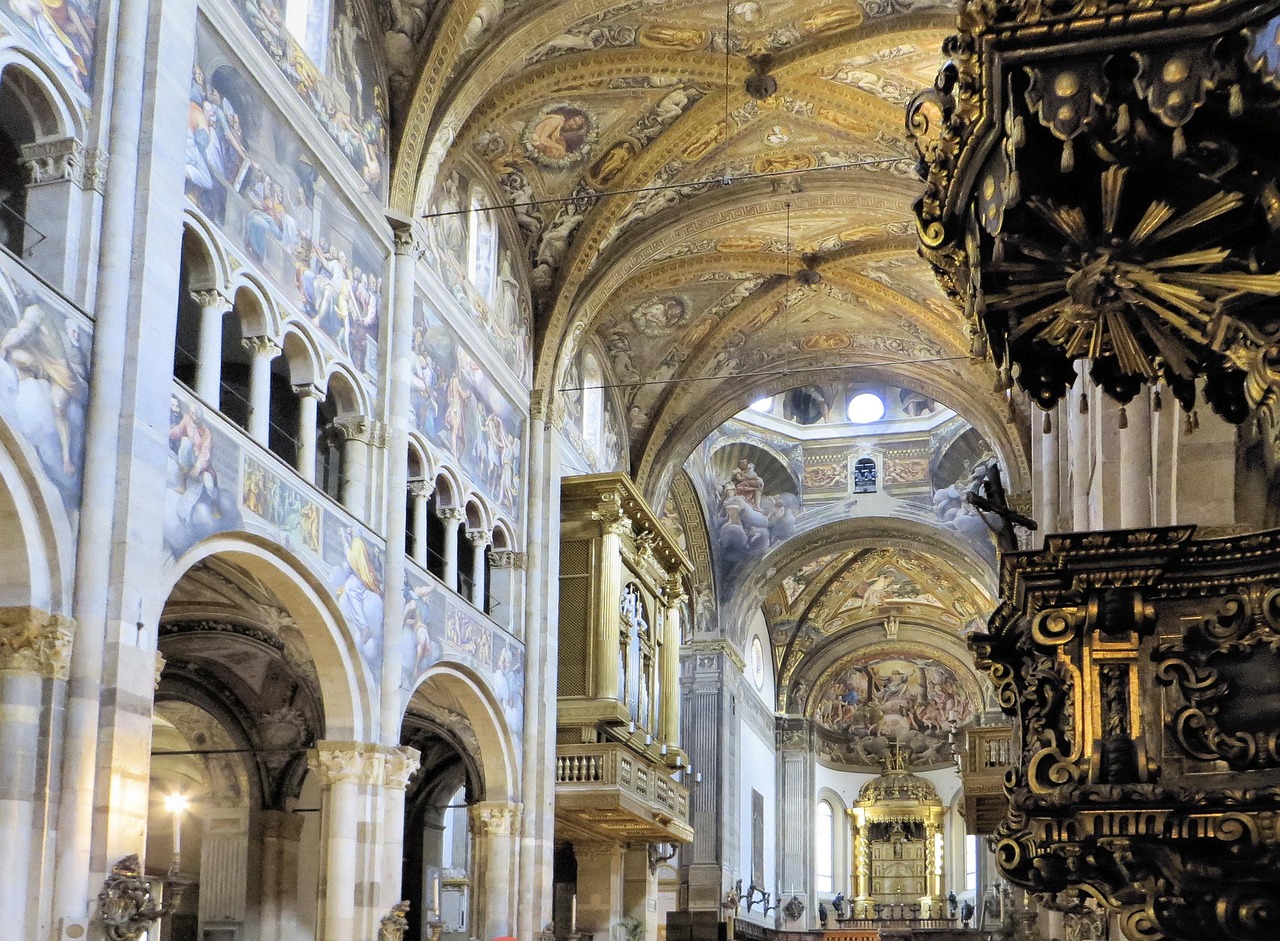
When I first stepped into Parma Cathedral in Italy, my eyes were immediately drawn upward to one of the most stunning achievements of Renaissance art. Antonio da Correggio’s Assumption of the Virgin transforms the cathedral’s dome into a breathtaking illusion of heaven opening up above.
Created in the early 16th century, this masterpiece uses an innovative perspective technique called di sotto in su (“from below to above”) that makes viewers feel as if they’re witnessing the Virgin Mary’s actual ascent into paradise.
What makes Correggio’s work so revolutionary is how he completely reimagined what a church dome could be. Instead of treating it as a solid surface, the Italian Renaissance master filled it with swirling clouds and hundreds of figures that seem to recede infinitely upward.
Walking beneath it, I felt a genuine sense of vertigo as the boundaries between architecture and celestial vision dissolved before my eyes.
The dome represents the pinnacle of illusionistic painting, showing why Antonio Allegri (known as Correggio) deserves recognition alongside more famous Renaissance artists. His pioneering use of foreshortening and perspective creates a convincing three-dimensional effect that makes this heavenly scene feel alive and in motion. The experience of standing beneath this painted sky is something photographs simply can’t capture—you need to see it in person to fully appreciate its magic.
The Life and Legacy of Antonio Allegri
Antonio Allegri, better known as Correggio, was one of the most innovative painters of the Italian Renaissance. His mastery of perspective and light created works that bridged Renaissance ideals with early Baroque sensibilities.
Early Years in Correggio
Antonio Allegri was born around 1494 in the small town of Correggio in northern Italy. This modest beginning gave him the name we know him by today.
Growing up in a family of merchants, young Antonio showed artistic talent early on. His initial training likely came from his uncle, Lorenzo Allegri, a local painter.
The small-town environment of Correggio couldn’t contain his developing talent for long. By his early twenties, he had already begun to develop a distinctive style that combined technical precision with emotional depth.
His early works show influences of northern Italian painters, particularly those from Ferrara and Bologna. These regional styles shaped his early approach before he encountered the works of Renaissance masters.
Artistic Development in Mantua and Rome
My research shows that Correggio’s artistic vision expanded dramatically when he visited Mantua around 1515. There he encountered the works of Andrea Mantegna, whose mastery of perspective and foreshortening deeply influenced him.
Though there’s limited evidence of Correggio visiting Rome, he clearly absorbed the revolutionary techniques of Leonardo, Michelangelo, and Raphael. Their influence appears in his increasingly confident handling of light and human anatomy.
During this period, Correggio developed his signature approach to illusionistic ceiling painting. He mastered the di sotto in sù (“from below upward”) perspective that would later dazzle viewers in Parma.
His time in these artistic centers transformed him from a provincial talent into a master innovator. He combined technical brilliance with emotional warmth that set him apart from his contemporaries.
Mature Works and Influence
Correggio’s greatest achievements came in Parma between 1520 and 1530. His masterpiece, the Assumption of the Virgin in Parma Cathedral’s dome, showcases his genius for creating heavenly illusions that seem to break through solid architecture.
The dome fresco presents a joyful vision of Mary rising to heaven surrounded by a swirling mass of angels and saints. His revolutionary technique creates the illusion that the dome has disappeared, replaced by an opening to heaven itself.
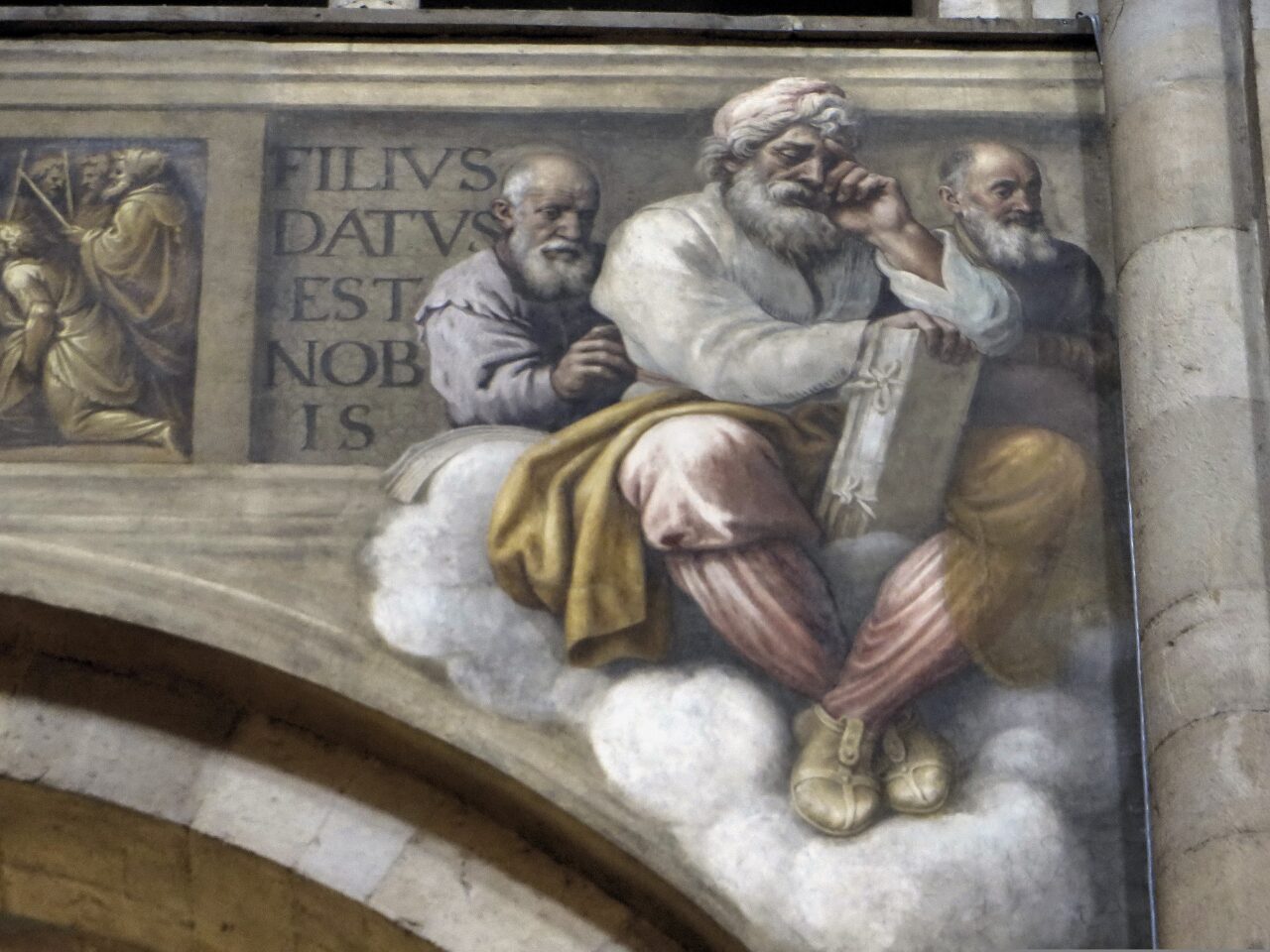
Correggio died relatively young in 1534, but his influence extended far beyond his lifetime. His dramatic use of light and movement profoundly shaped Baroque art in the following century.
Artists like Barocci, the Carracci brothers, and even Bernini drew inspiration from his innovative techniques. His ability to create emotional, dynamic compositions that blur the boundary between painting and architecture remains his enduring legacy.
The Architectural Marvel of Parma Cathedral
Parma Cathedral stands as a remarkable blend of Romanesque architecture and Renaissance art, creating an awe-inspiring space where structure and decoration work in perfect harmony.
Historical Significance of the Cathedral of Parma
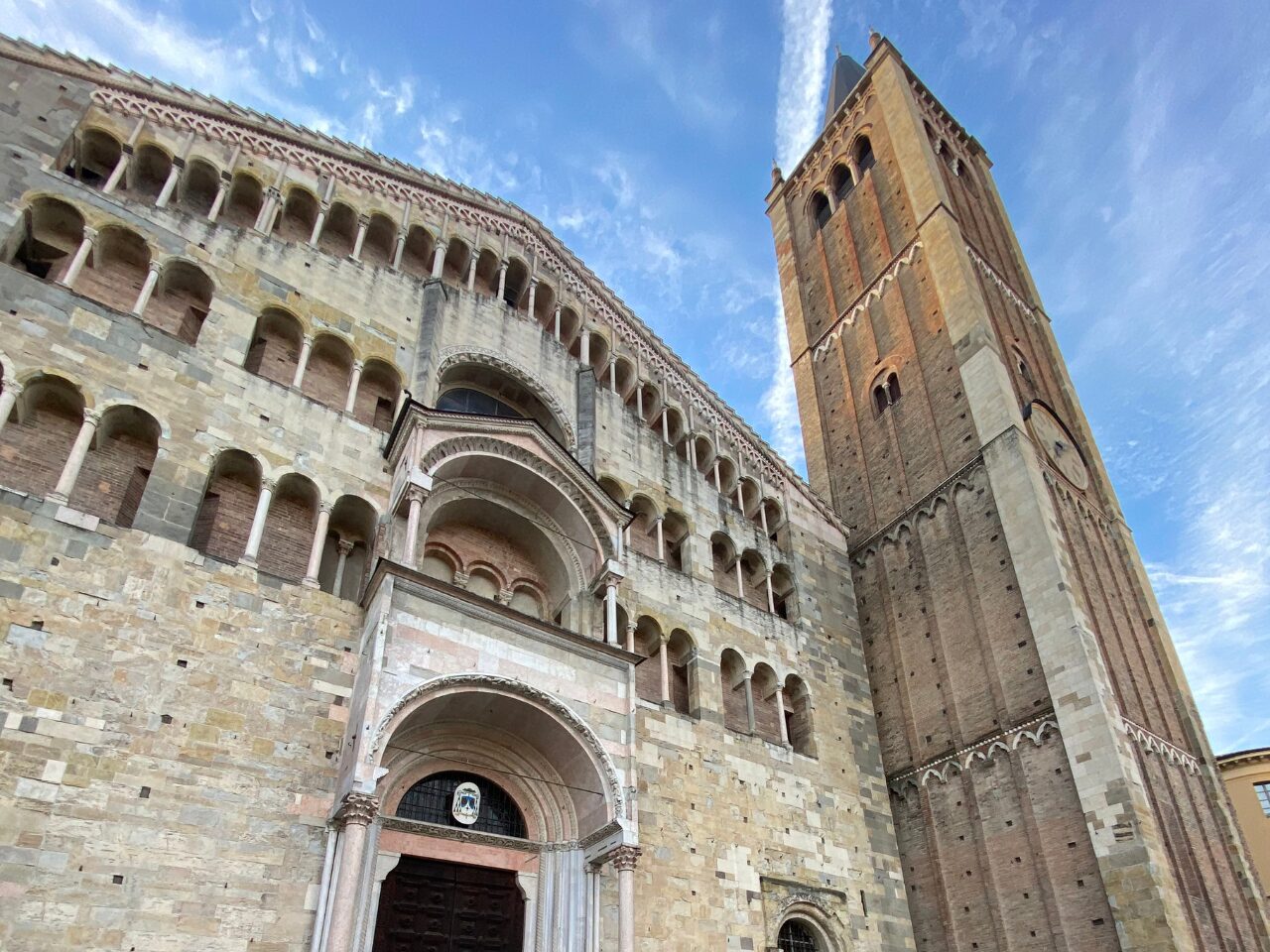
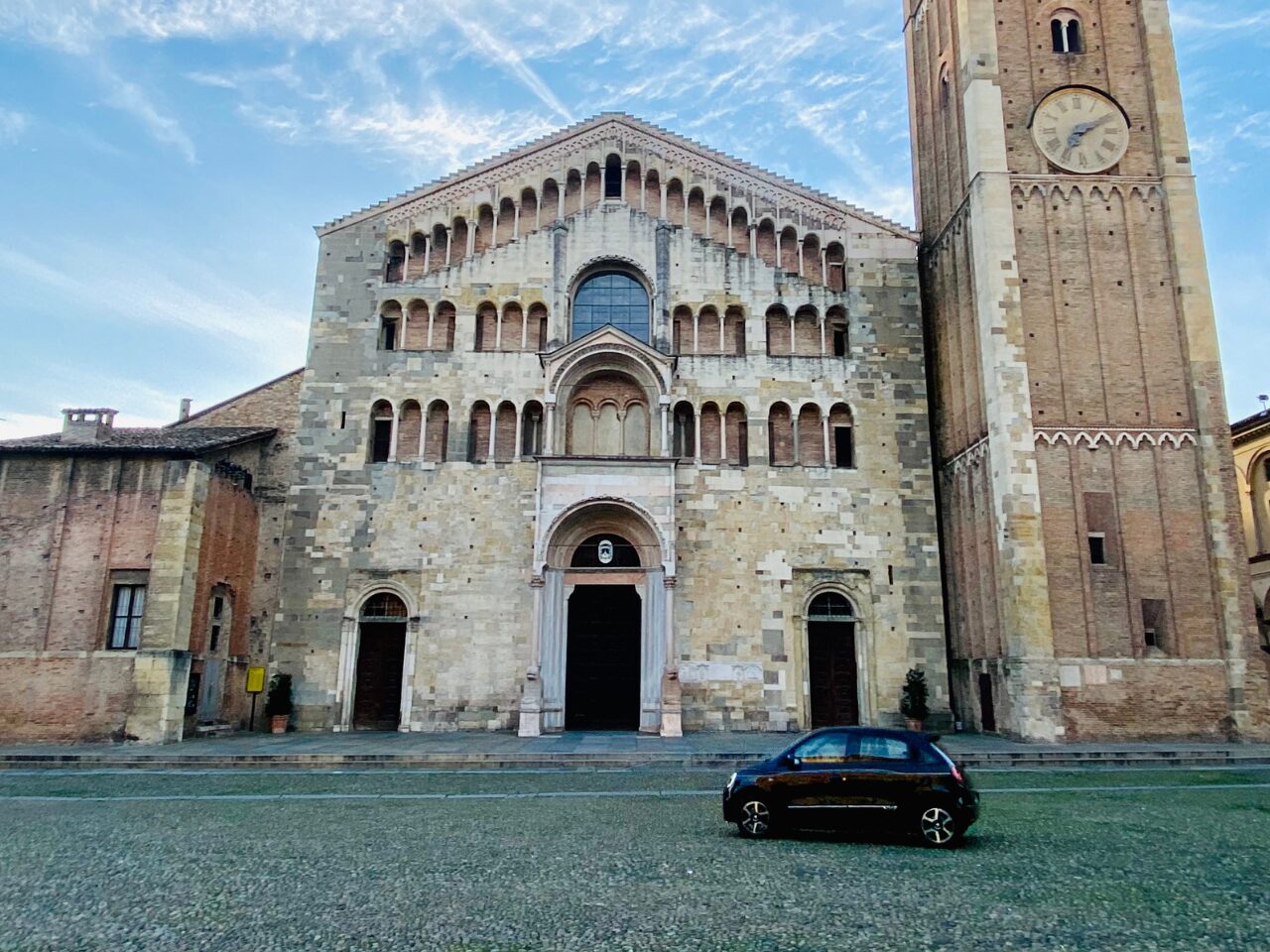
The Cathedral of Parma was built in the 12th century and represents a stunning example of Romanesque architecture in northern Italy. I was amazed by its cross-shaped layout and impressive façade made of pink Verona marble. The cathedral has survived centuries of history, including earthquakes and wars.
What struck me most was how the building evolved over time. Additions and renovations throughout the 15th and 16th centuries created the perfect canvas for Correggio’s masterpiece in the dome.
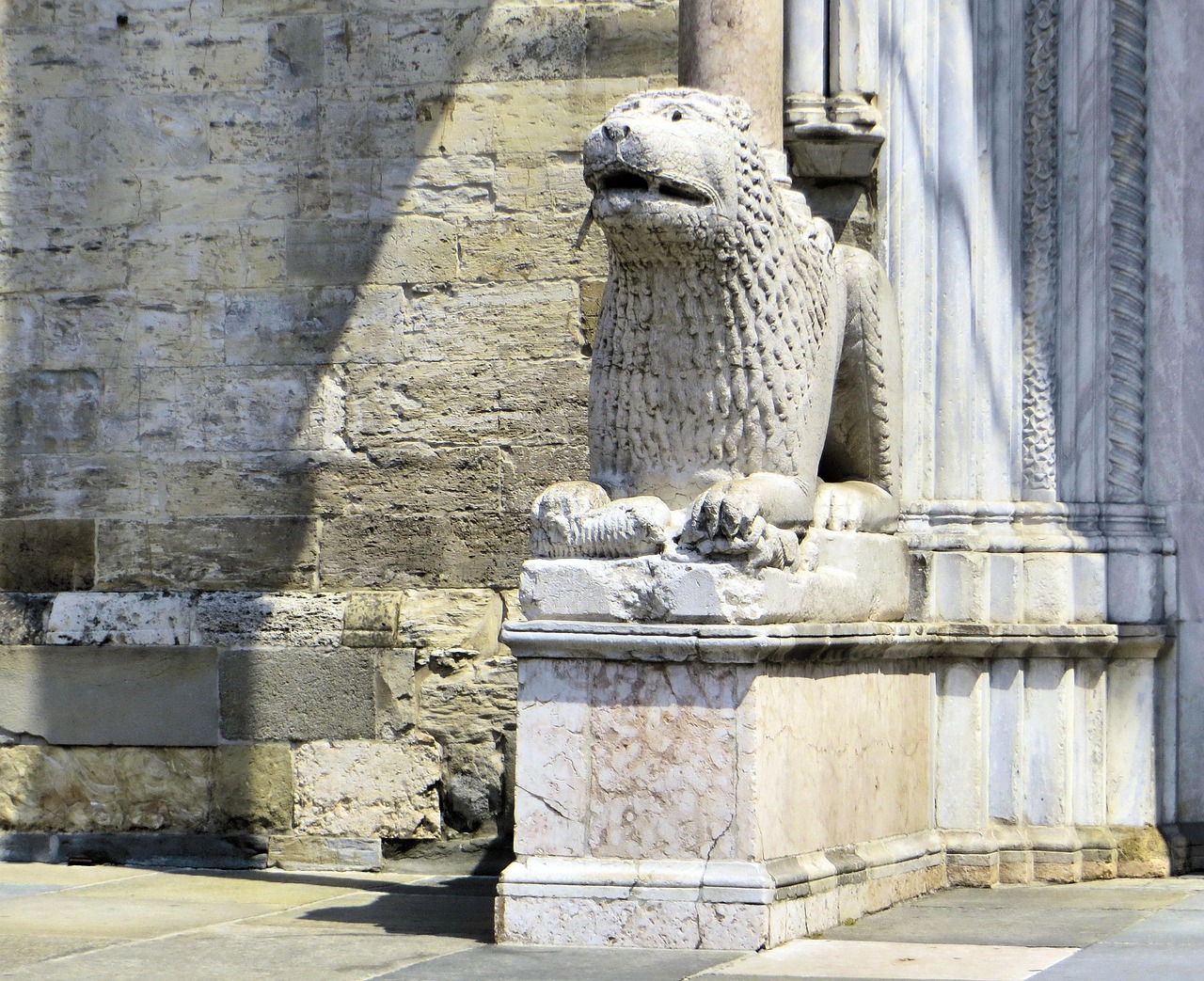
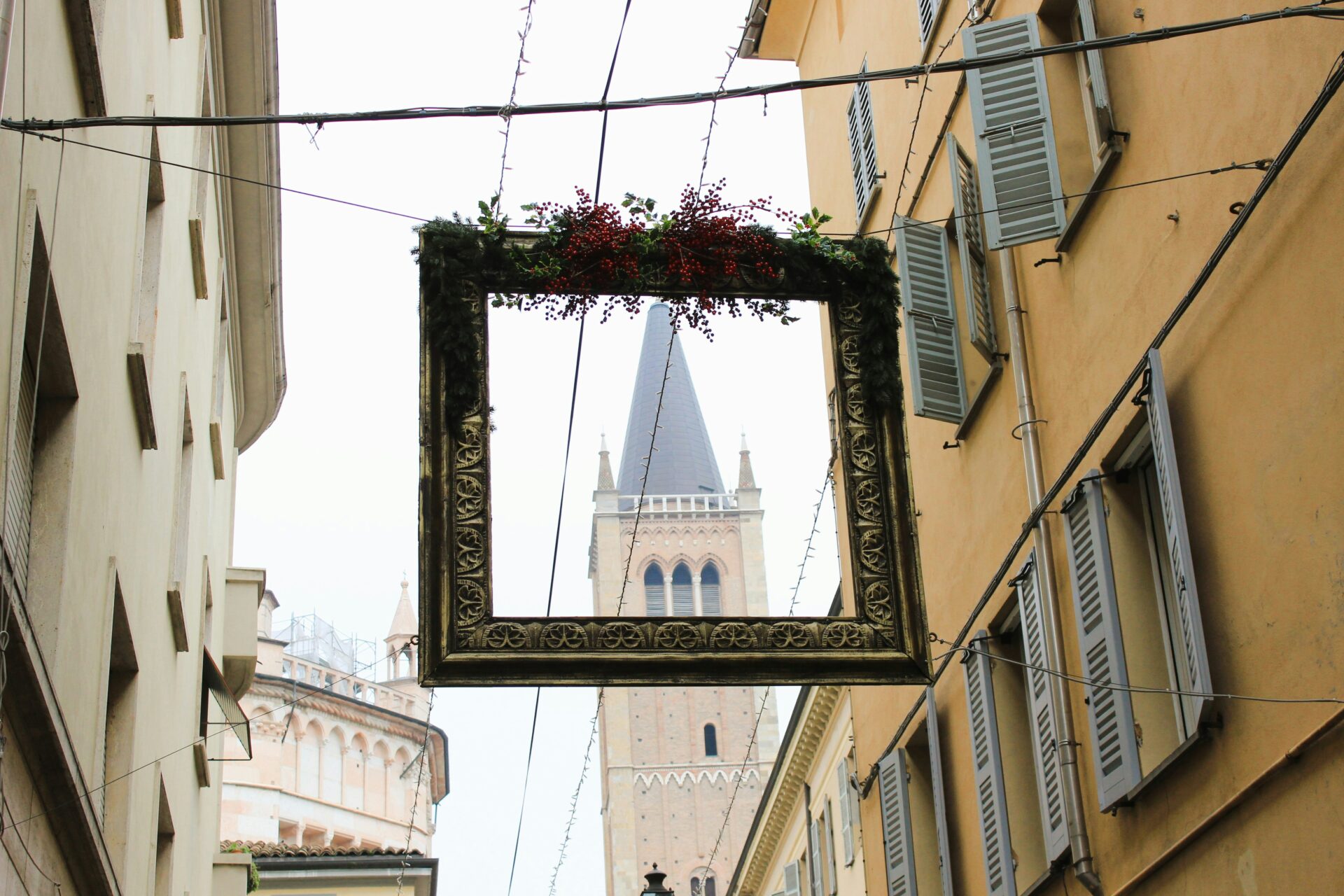
The bell tower, added in the 13th century, reaches an impressive height and creates a dramatic silhouette against Parma’s skyline. Inside, the space feels both grand and intimate, with light filtering through ancient windows.
The Mannerist Style in Religious Architecture
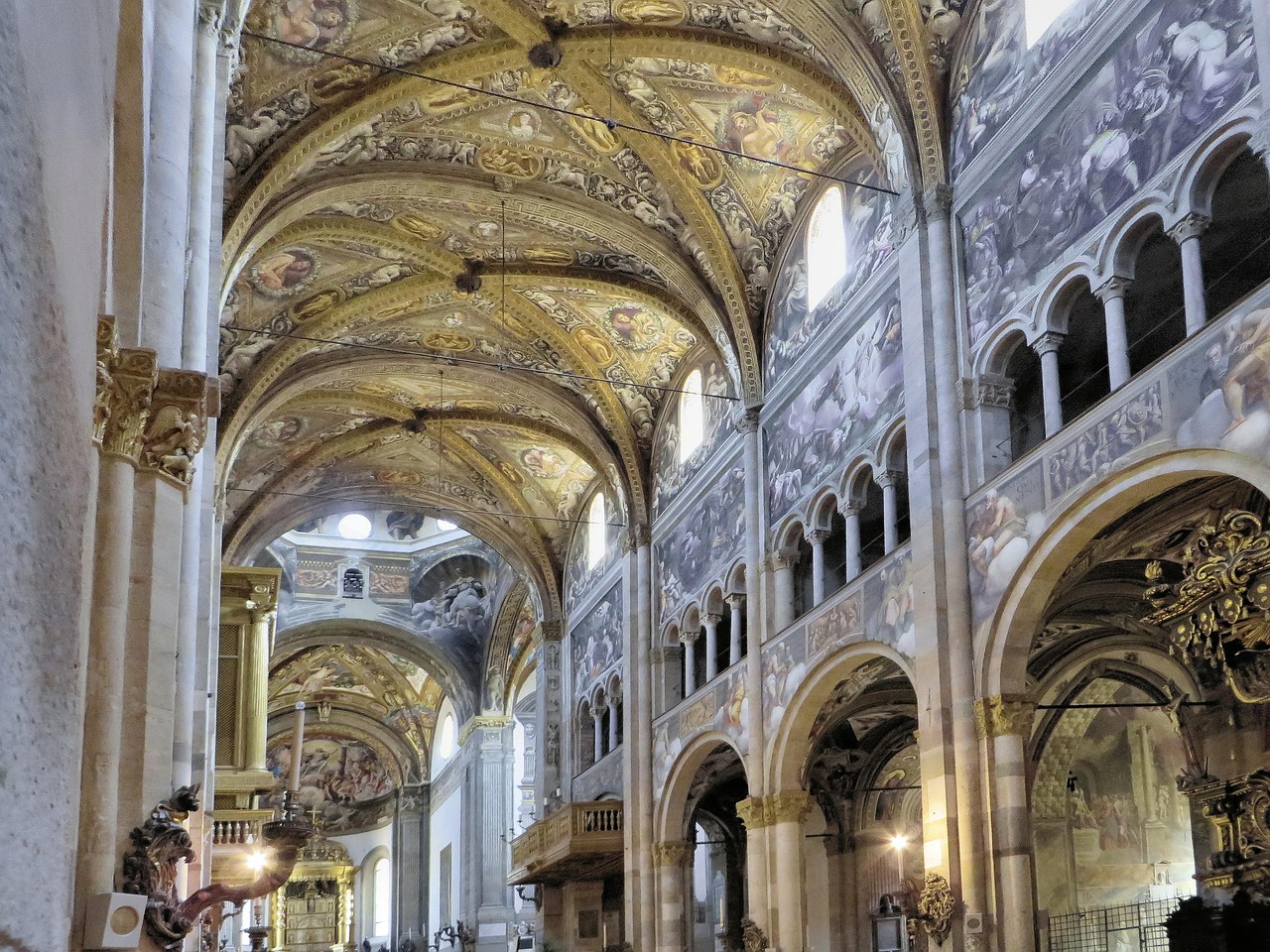
Walking through the cathedral, I noticed how the Mannerist style appears throughout the interior spaces. Unlike the balanced proportions of earlier Renaissance works, the Mannerist elements show exaggerated forms and dramatic spatial relationships.
The cathedral’s architecture provides the perfect setting for Correggio’s revolutionary dome painting. The Mannerist approach embraced emotional intensity and bold visual effects—exactly what Correggio achieved with his illusionistic heaven.
The cathedral combines elements of different styles:
- Romanesque foundation: Solid walls and rounded arches
- Gothic touches: Pointed elements in some windows
- Renaissance refinement: Harmonious proportions
- Mannerist drama: Spatial complexity and artistic tension

These architectural choices create a building that feels like it’s reaching toward heaven—a physical manifestation of spiritual aspiration.
Decoding the Illusionistic Dome Frescoes
Correggio’s masterpiece in Parma Cathedral revolutionized dome painting through innovative techniques that create a powerful illusion of heaven opening above the viewer. The fresco combines technical brilliance with rich theological symbolism.
Technical Mastery of Foreshortening
Correggio’s exceptional skill in foreshortening transformed the dome into a breathtaking pictorial illusion. When I stand beneath this masterpiece, I’m struck by how he manipulated perspective to make figures appear as if they’re truly floating in space.
The artist painted gigantic figures that seem to recede into the celestial heights. This dramatic foreshortening creates a convincing three-dimensional effect despite being painted on a curved surface.
I’ve noticed how Correggio abandoned traditional dome organization with concentric circles. Instead, he created a swirling upward movement that pulls your eye toward heaven. The figures appear to spiral upward in a cloud of limbs and drapery.
Symbolism in ‘The Assumption of the Virgin’
The fresco depicts the Assumption of the Virgin Mary into heaven, completed around 1526. I find the theological message powerful – Mary ascends toward Christ while apostles gaze upward in awe from the lower edge of the dome.
Angels surround the Virgin in concentric rings, creating a heavenly host that seems to extend infinitely upward. The composition brilliantly visualizes the connection between earth and heaven.
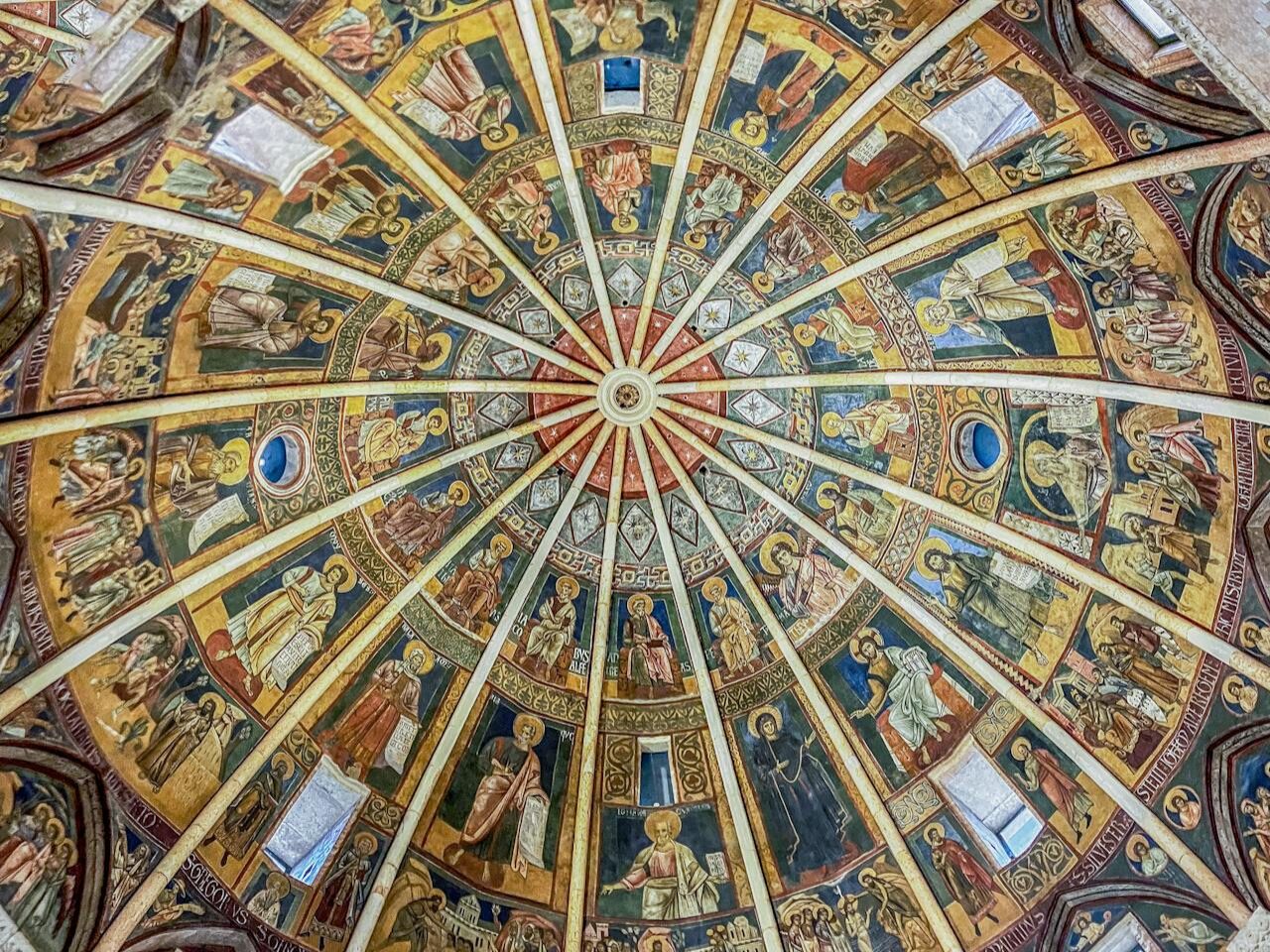
What fascinates me is how Correggio used light to emphasize divinity. The brightest area surrounds Mary and Christ, creating a visual focal point that draws the viewer’s attention to this sacred moment.
The dome becomes a literal “vault of heaven” – a theological concept made tangible through paint and perspective.
Interaction with the Architectural Surface
I’m always amazed by how Correggio transformed the physical dome into an illusion of infinite space. The fresco doesn’t simply decorate the architecture – it dissolves it completely.
The painted figures interact with the curved surface in revolutionary ways. Some appear to be entering our space, while others recede into heavenly realms. This creates a dynamic relationship between real and painted space.

Correggio used the dome’s circular shape to enhance the swirling composition. The architectural framework becomes an integral part of the pictorial unit rather than just a surface for decoration.
The fresco creates an emotional experience for viewers. Looking up, I feel both the grandeur of heaven and a personal connection to the divine narrative unfolding above.
The Artistic Context and Comparison
Correggio’s dome in Parma Cathedral represents a pivotal moment in Renaissance art, creating ripples of influence that shaped future generations of painters. His innovative techniques established new possibilities for ceiling decoration and spatial illusion.
Contemporaries: Lanfranco and Parmigianino
Correggio’s work in Parma existed alongside other remarkable talents of the period. Parmigianino, though younger than Correggio, developed his own distinctive style characterized by elegant elongation of figures and refined grace. While Correggio embraced dramatic foreshortening, Parmigianino pursued a more mannered approach.
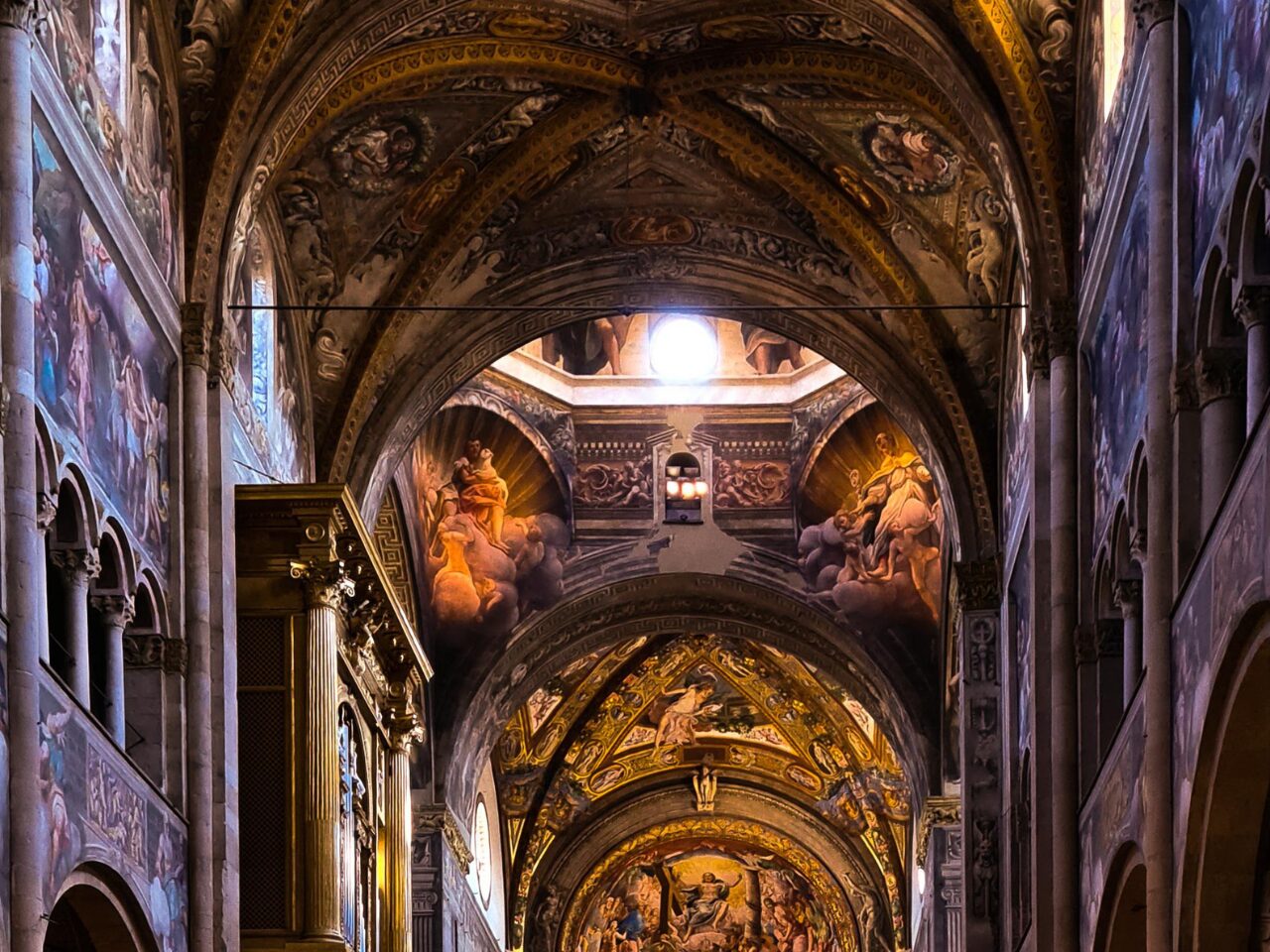
Giovanni Lanfranco, who came after Correggio, directly built upon his illusionistic achievements. In his own dome paintings, Lanfranco adopted Correggio’s technique of creating heavenly openings that seem to dissolve architectural boundaries.
These artists formed a distinctive “Emilian school” that valued emotional intensity and theatrical compositions. What sets Correggio apart was his masterful use of light and his ability to create convincing spatial illusions without the heaviness seen in later Baroque works.
Renaissance vs. Baroque: The Evolution of Styles
Correggio’s dome sits at a fascinating transition point between Renaissance harmony and Baroque drama. Unlike the structured compositions of High Renaissance masters like Raphael, Correggio introduced swirling, dynamic arrangements that would become hallmarks of Baroque painting.
His use of dramatic foreshortening (the infamous “frog’s legs” view) represents an early shift toward the emotional intensity that would define Baroque art. Yet he maintains Renaissance ideals of beauty and proportion.

The dramatic lighting effects Correggio pioneered would be adopted and intensified by Baroque artists like Caravaggio. His clouds of billowing figures would evolve into the complex, sweeping compositions of Baroque ceiling painters.
Correggio’s work shows none of the decorative excess that would characterize later Rococo art, maintaining a spiritual gravitas despite its theatrical elements.
Influence on High Renaissance Masters
Though chronologically part of the High Renaissance, Correggio’s influence rippled both forward and backward through artistic traditions. Leonardo da Vinci’s subtle modeling of form and atmospheric effects finds echo in Correggio’s soft handling of light and shadow.
Michelangelo, whose Sistine Chapel ceiling predates Correggio’s dome, took a different approach to ceiling decoration. Where Michelangelo created a series of framed narratives, Correggio boldly opened the ceiling to heaven itself.
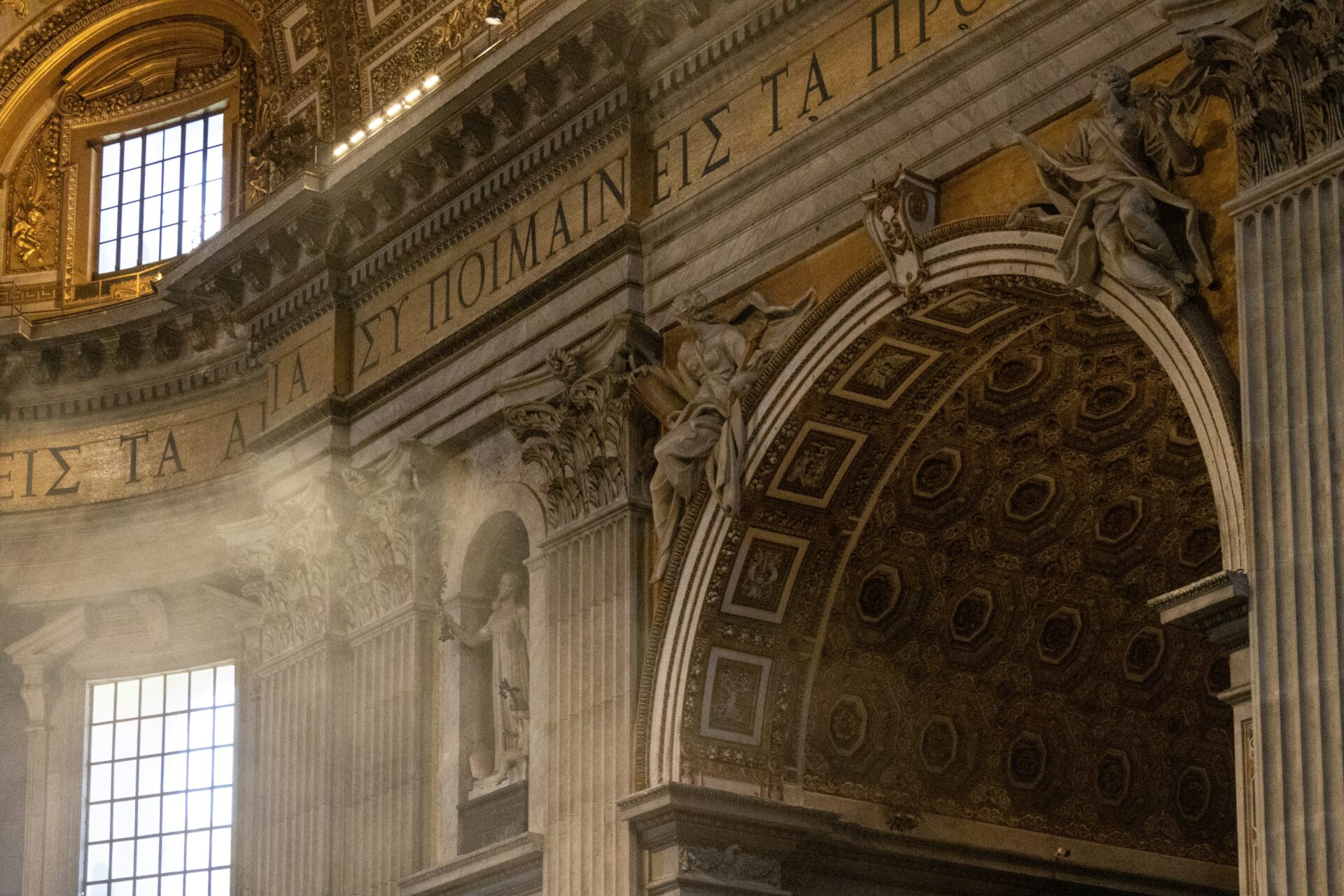
Raphael’s harmonious compositions and idealized figures share qualities with Correggio’s work, though Correggio pushed further into emotional expressiveness. Later artists studying both would often combine Raphael’s compositional clarity with Correggio’s emotional intensity.
The revolutionary perspective techniques Correggio developed transformed ceiling painting forever, establishing new possibilities that even the greatest masters would eventually acknowledge and incorporate.
Exploring Parma Through its Art and Architecture
Parma shines as a treasure trove of artistic and architectural wonders that span centuries of Italian creativity. The city offers visitors a chance to witness the evolution of art from Romanesque foundations through Renaissance masterpieces.
A Journey through Italian Renaissance and Baroque
Walking through Parma feels like stepping into an open-air museum. The city’s artistic legacy began flourishing during the Renaissance when local patrons commissioned works from masters like Correggio.
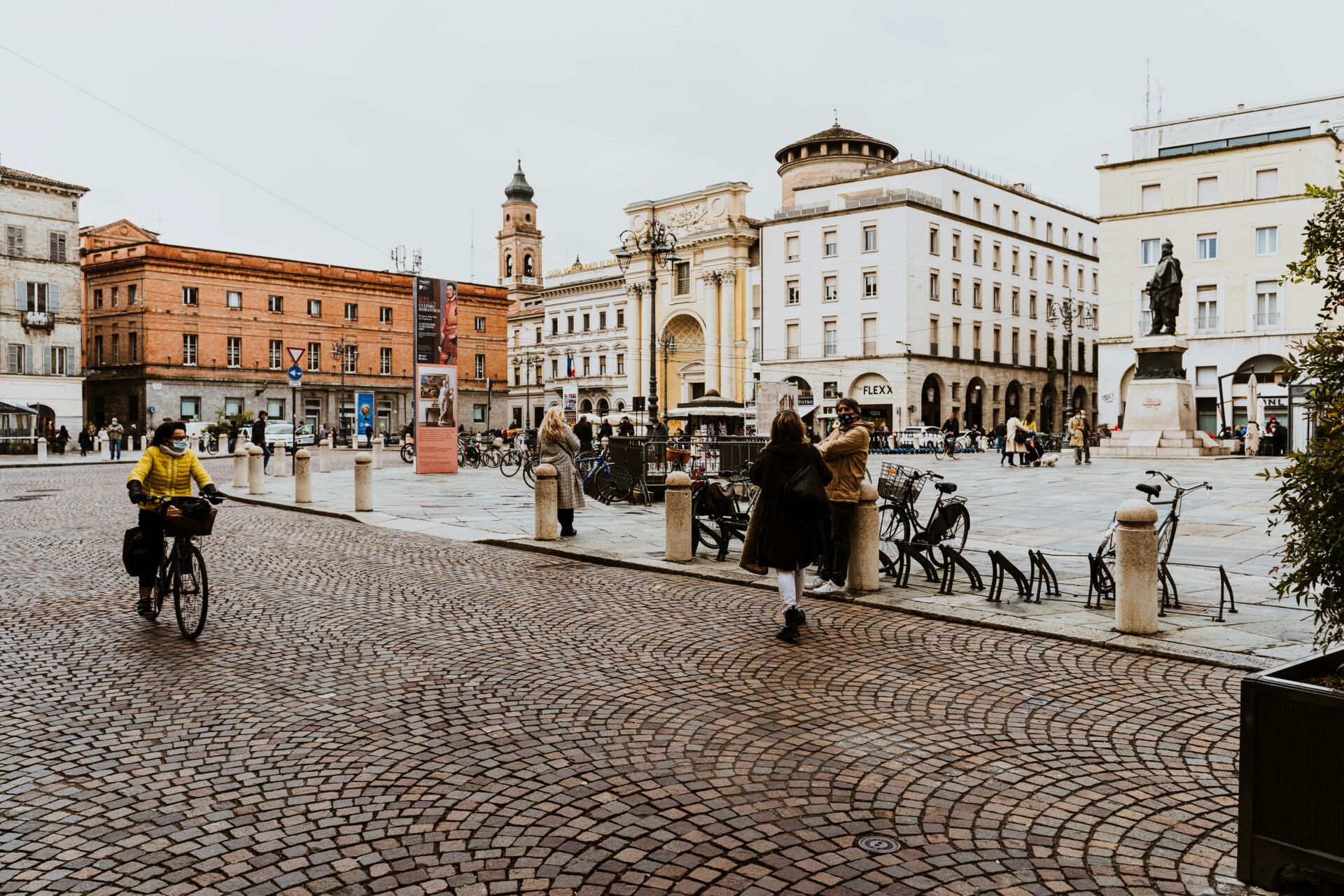
I’ve found that Parma Cathedral stands as the perfect starting point for any art exploration. Built in the Romanesque style, this 900-year-old structure houses incredible bas-reliefs by Benedetto Antelami that showcase medieval craftsmanship at its finest.
What truly transformed Parma’s artistic landscape was Correggio’s revolutionary dome fresco in the cathedral. His “Assumption of the Virgin” created an optical illusion that seemingly breaks through the ceiling, opening to heaven above.
The Baroque period later added another layer to Parma’s artistic identity, with elaborate decorations adorning many churches and palaces throughout the city.
Parma Cathedral as a Tourist Attraction
Parma Cathedral offers free entry, making this artistic treasure accessible to everyone. I recommend arriving early to avoid crowds and fully appreciate Correggio’s dome in peaceful contemplation.
Looking up at the fresco, you might understand why an 18th-century priest reportedly compared it to “frog leg stew.” The tumbling figures and dramatic perspective can be overwhelming at first glance!

The cathedral itself deserves thorough exploration beyond just the famous dome. Take time to examine the Romanesque façade, the intricate carvings, and the impressive interior spaces.
For the best experience, I suggest bringing binoculars to study the details of Correggio’s masterpiece high above. The swirling figures and heavenly light effects reveal new details with each viewing.
