
Stepping off the ferry onto Ithaca for the first time, I felt an odd shiver run down my spine. This wasn’t just any Greek island. It was the legendary home of Odysseus—yes, that Odysseus.
Ithaca, to me, is way more than a dot in the Ionian Sea; it’s the ultimate symbol of home, belonging, and that universal itch to come back to your roots after life’s wild detours.
The rugged coastlines, those ancient olive groves—honestly, you can almost picture Homer himself wandering here for inspiration. It’s a place where myth and jaw-dropping reality just kind of melt together.
Curiosity got the best of me, so I dove into Ithaca’s layers of history. I wandered from ancient archaeological sites to modern digs.
Researchers recently uncovered what might be the actual Sanctuary of Odysseus. You’ll find inscribed tiles with his name—no kidding.
These discoveries just add new fuel to that age-old debate: Was Homer’s hero real, or just a masterful story?
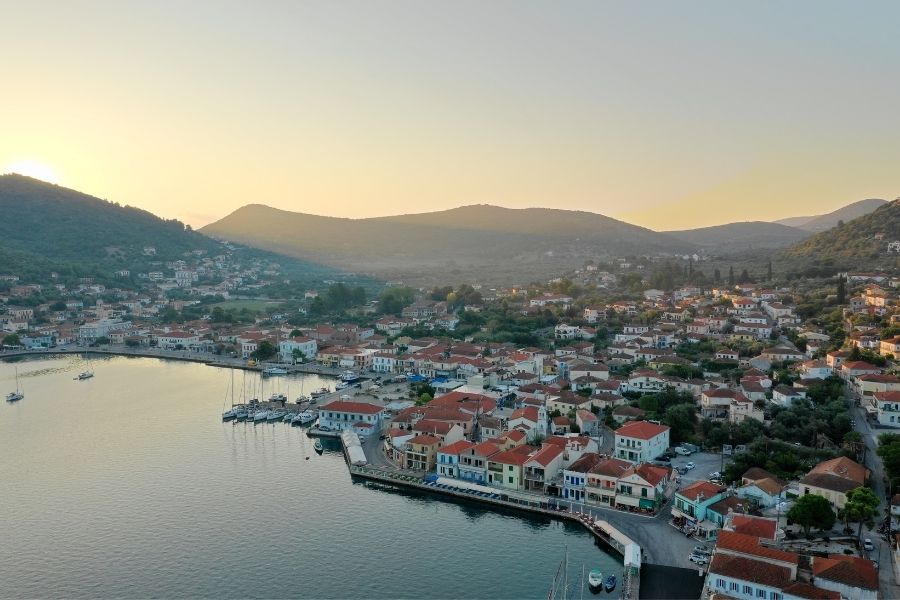
But the real magic of Ithaca isn’t just about solving literary puzzles or ticking off famous sights. This island digs deeper.
Here, you see how geography shapes stories and how myths become the heart of a culture. Somehow, this little Greek isle continues to represent our shared longing for home, even after thousands of years.
Ithaca in Homer’s Odyssey: Myth, Home, and Identity
In Homer’s epic, Ithaca is both a real place and a powerful symbol. It’s the ultimate anchor—the place everyone wants to come back to.
It gives its most famous residents their sense of self.
Odysseus and His Profound Longing for Home
Odysseus spends twenty years trying to get back to Ithaca. Every choice he makes, every risk he takes, is driven by that pull toward home.
He calls Ithaca “low-lying,” tucked farthest to the west among his islands. Even when the goddess Calypso offers him immortality, he’d rather have his rocky homeland.
Odysseus loves Ithaca for more than its landscape. The island is his identity as king and father.
Without Ithaca, he’s just another lost warrior drifting after the Trojan War.
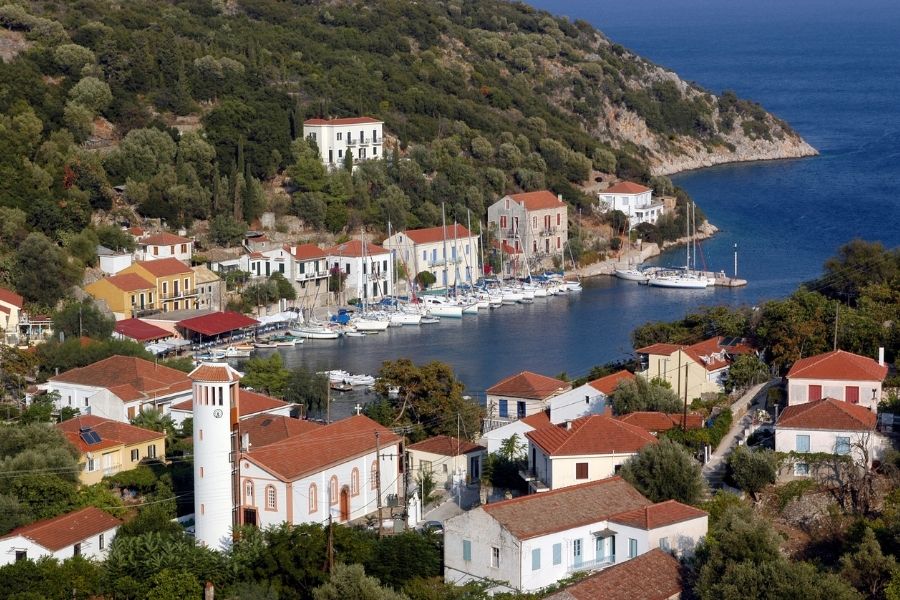
Homer makes it clear: home isn’t just a place. It’s where your responsibilities and relationships shape who you are.
Odysseus needs Ithaca to feel whole.
Penelope, Telemachus, and the Heart of the Isle
While Odysseus is gone, Penelope and Telemachus keep Ithaca’s spirit alive. They’re the reason the island matters.
Penelope holds the kingdom together with her cleverness and loyalty. She weaves by day, unravels by night, fending off suitors and hoping for Odysseus’s return.
Telemachus grows up searching for his father. His journey mirrors Odysseus’s own, showing how the longing for home passes from one generation to the next.
They prove Ithaca’s real treasure is its people. Without them, the island would mean nothing to Odysseus.
Their love and hope turn mere land into something sacred.
Symbolism of Ithaca in Greek Mythology
In Greek myth, Ithaca is more than just Odysseus’s birthplace. It’s a symbol for everyone’s need to belong and find purpose.
The island stands for stability in a world full of chaos. While Odysseus faces monsters and angry gods, Ithaca stays the same.
It keeps him grounded.
Homer uses Ithaca to dig into themes like:
- Identity and self-discovery
- What makes a civilization
- The deep bond between a ruler and his land
- The power of memory and longing
Ithaca becomes a stand-in for any goal truly worth the struggle. Even today, readers relate to Odysseus’s desperate wish to see home again.
Geography and Landscape of Ithaca
Ithaca sits right in the heart of the Ionian Sea, covering just 117.8 square kilometers. Only about 3,000 people live here.
The coastline is dramatic, with natural harbors like Vathy Bay. Inland, rugged mountains and olive groves take over the landscape.
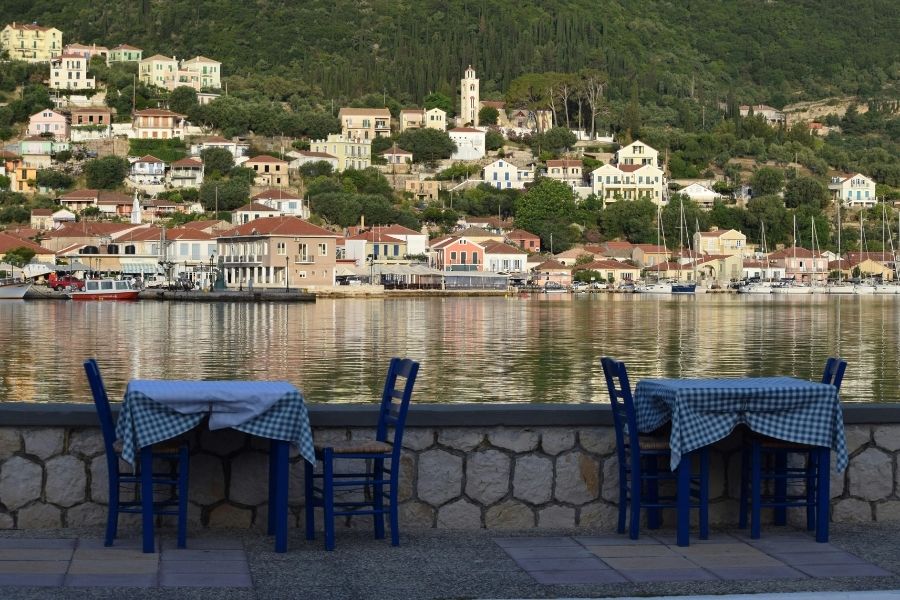
Location in the Ionian Sea
Ithaca is tucked off the northeast coast of Kefalonia. You’ll find it at 38°22′N 20°43′E—pretty easy to reach from mainland Greece.
The main island covers 96 square kilometers, with another 21.8 square kilometers made up of tiny islets.
It’s only about 20 kilometers from the Greek mainland. That prime spot put ancient Ithaki right on the trade routes between Greece and Italy.
Quick Facts:
- Total Area: 117.8 km² (45.5 sq mi)
- Population: 3,091 (2021 census)
- Population Density: 24 people per km²
- Capital: Vathy (or Vathi)
Natural Harbors and Rugged Terrain
Vathy Bay is the main natural harbor and the island’s capital. The deep, protected bay cuts into Ithaca’s east coast, making it a perfect spot for boats.
The land rises steeply from the sea to the mountains. Olive groves and Mediterranean brush cover the hills.
Ithaca’s coastline is full of little bays and inlets. These sheltered spots once helped ancient sailors—and now, they draw modern travelers.
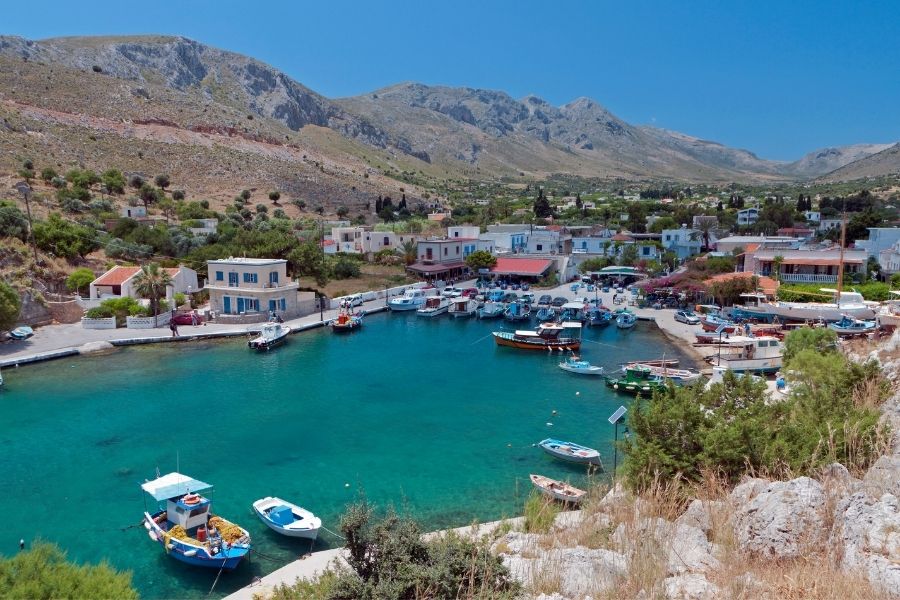
Most people settled near the coast, and it’s easy to see why. The rocky hills and lack of flat land made building inland a real challenge.
Neighboring Ionian Islands: Kefalonia and Lefkas
Kefalonia sits just southwest, separated by a channel less than 3 kilometers wide. On a clear day, you can spot Kefalonia’s mountains from Ithaca.
Lefkas (or Lefkada) is up north. Together, these three make up the central Ionian Islands, sharing similar geology and weather.
Ferries run between Ithaca and its neighbors every day. It’s only a 20-minute ride to Kefalonia, and about 45 minutes to Lefkas.
These islands often shared rulers over the centuries. Under Venetian rule, Ithaca usually got lumped in with Kefalonia.
The Legendary Journey: Trials, Gods, and Fateful Encounters
Odysseus battled Poseidon’s wrath and leaned on Athena’s protection for ten long years. He ran into mythical beasts like the Cyclops Polyphemus, the sorceress Circe, and the Sirens.
He finally reached Ithaca’s shores at places like Polis Bay and Stavros.
Obstacles and Allies: Athena, Poseidon, and the Gods
The gods meddled in every part of Odysseus’s journey. Poseidon became his biggest enemy after Odysseus blinded the Cyclops Polyphemus.
Poseidon cursed him to wander the seas for a decade, sending storms and blocking his way.
Athena acted as his protector. She loved his cleverness and fighting spirit, helping him escape danger and nudging him toward home.
Zeus mostly stayed out of it, but sometimes stepped in. He let Poseidon punish Odysseus but kept things from getting too out of hand.
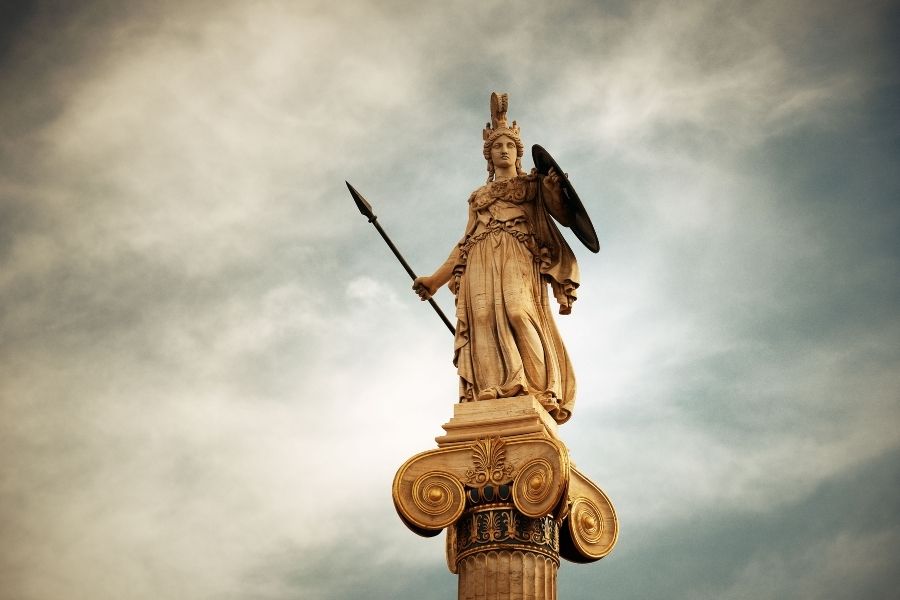
This tug-of-war between Poseidon’s anger and Athena’s help decided if Odysseus would ever see Ithaca again.
Hermes popped in to give Odysseus magic herbs against Circe. The gods’ constant involvement shows just how much mortals depended on divine favor back then.
Encounters with Mythical Beings: Cyclops, Circe, Sirens, and More
Odysseus ran into all kinds of monsters and magic. Polyphemus the Cyclops trapped him and his men, eating a few before Odysseus blinded the giant and got away.
Circe turned his crew into pigs. Thanks to Hermes, Odysseus resisted her spell and forced her to help. She eventually became an ally and offered advice.
The Sirens tried to lure him with their singing. Odysseus plugged his crew’s ears with wax and had them tie him to the mast so he could listen safely.
Scylla and Charybdis forced a tough choice. Scylla, a six-headed monster, snatched sailors from passing ships, while Charybdis threatened to swallow the whole vessel.
Calypso kept Odysseus captive for seven years. She loved him, but finally let him go when the gods insisted.
Each challenge tested something different—sometimes bravery, sometimes brains, and sometimes just pure grit.
Polis Bay, Stavros, and Traces of Odysseus’ Path
Modern Ithaca offers real traces of Odysseus’s return. Polis Bay in the north lines up with Homer’s description of a hidden harbor.
Archaeologists have found ancient pottery and coins near Polis Bay. Some believe this was the main settlement during the Bronze Age.
Stavros sits in the middle of the island. Locals say Odysseus’s palace might have been nearby. The town looks out over valleys that fit Homer’s details.
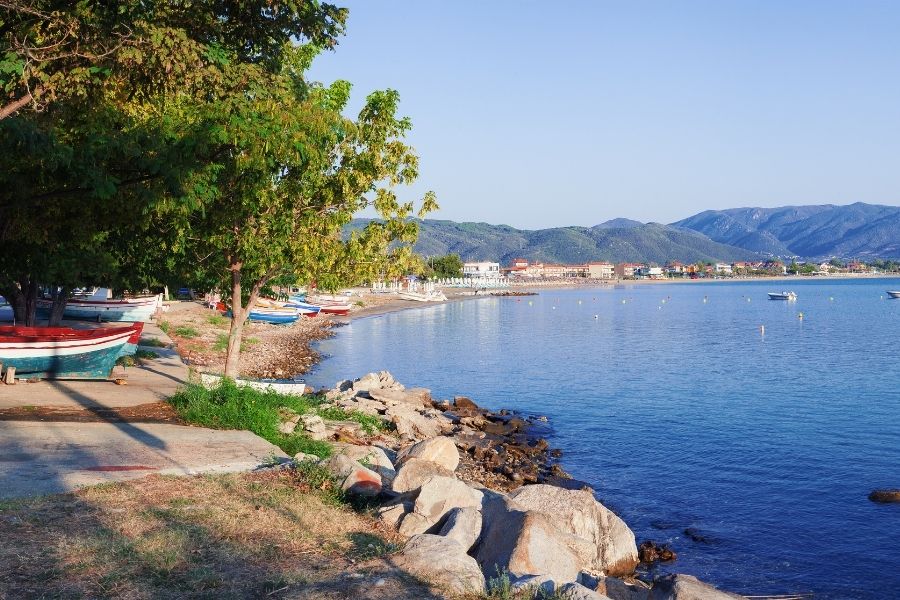
The School of Homer near Stavros keeps the epic alive. Old ruins dot the hills around the village.
Polis Bay’s calm waters would have been perfect for landing ships. The cliffs nearby offered natural protection.
Walking these paths, it’s easy to imagine Odysseus finally coming home. The myth feels close enough to touch.
Ithaca’s Historical and Archaeological Mysteries
Ithaki hides secrets under centuries of earth. Recent digs have revealed Mycenaean settlements and maybe even sanctuaries for Odysseus himself.
Scholars still argue about whether modern Ithaca matches Homer’s story, but archaeological finds keep turning up evidence of ancient life.
Ancient Settlements and the Search for Odysseus’ Palace
The most exciting discoveries, in my opinion, come from the School of Homer site up north. Archaeologists from the University of Ioannina have found layers of history, from the Neolithic era through Roman times.
The Mycenaean finds are especially fascinating. Digs revealed:
- Underground cisterns built with ancient corbeling
- Dozens of pottery fragments from the 14th-13th centuries BCE
- A network of 7-8 key sites across northwest Ithaki
These discoveries point to a Mycenaean palace that controlled water and ports. The sites might have formed the heart of Homeric Ithaca during Odysseus’s time.
Recent inscriptions at the site read ΟΔΥCCEOC and ΟΔΥCCEI—clear nods to Odysseus in ancient Greek. A bronze bust of the hero, ritual artifacts, clay votives, jewelry, and more than 100 coins suggest this was a sanctuary dedicated to his worship.
Debates on the True Location of Homer’s Ithaca
For centuries, people have argued over whether today’s Ithaki is really the Ithaca Homer described. I’ll admit, the whole geographical debate fascinates me.
Some researchers believe Kefalonia lines up better with Homer’s details. They point out that Homer calls Ithaca the westernmost island, but Kefalonia actually sits farther west than Ithaki does.
Others still defend Ithaki’s claim. They bring up a few things:
| Evidence Type | Supporting Details |
|---|---|
| Archaeological | Mycenaean remains at multiple sites |
| Topographical | Natural harbors matching epic descriptions |
| Cultural | Continuous worship traditions |
The island’s ancient name pops up in historical records as early as the 8th century BCE. Linear B tablets found on the Greek mainland mention “I-ta-ka,” hinting the island mattered during Mycenaean times.
Excavations lately have only added fuel to Ithaki’s case. The School of Homer site, for example, shows folks lived and worshipped there for over 3,000 years.
Archaeological Discoveries: Vathy and Polis Bay
When I wandered through Vathy, I noticed the archaeological evidence is limited but still pretty significant. The modern capital sits right on top of older settlements, so big digs aren’t really possible.
Polis Bay turned out to be much more dramatic. Back in the 1930s, archaeologists found the famous Loizos Cave inscription—“ΕΥΧΗΝ ΟΔΥCCΕΙ” (“Thanks to Odysseus”). That discovery actually came decades before people started talking about the School of Homer.
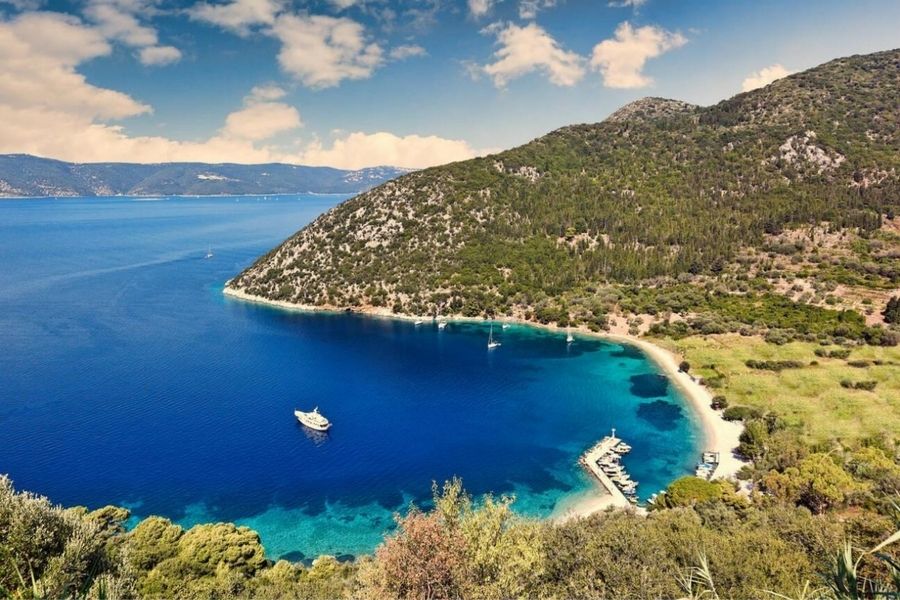
Inside the cave, they uncovered:
- Bronze tripods that match Homer’s descriptions
- Pottery fragments from different eras
- Votive offerings that point to hero worship
These finds line up perfectly with the Odyssey’s stories about gifts stashed away in caves. The evidence really suggests Polis Bay was an important harbor for ancient Ithaki.
Water sources mattered a lot to ancient settlements. The School of Homer site sits close to springs in the foothills, which explains why it was such a strategic spot. Mycenaean cisterns around here show off some pretty advanced water systems, hinting at bigger populations than we once thought.
Ithaca’s Lasting Legacy: Culture, Poetry, and Modern Perceptions
Homer’s Ithaca isn’t just an old myth anymore—it’s become a symbol for home, journeys, and purpose. Constantine Cavafy, probably the island’s most famous modern interpreter, took Ithaca and turned it into a metaphor for life’s journey instead of just a place on a map.
Cavafy’s Ithaca and the Metaphor of the Journey
When I first read Cavafy’s 1911 poem “Ithaca,” it flipped my understanding of Homer’s tale. The Greek poet took Odysseus’s story and made it about so much more than just getting home.
Cavafy says Ithaca gives you the journey itself. Without the island, you might never have set out in the first place. The real treasure isn’t reaching Ithaca—it’s what you pick up along the way.
He warns us not to rush the voyage or wish it were shorter. The experiences and lessons matter more than the finish line. By the time you get to your Ithaca, you realize it’s already given you everything you needed.
This poem gets quoted everywhere when people talk about life’s purpose. It nudges us to focus on the journey, not just the end. Cavafy took Homer’s homecoming and turned it into a kind of guide for living well.
Ithaca in Art, Literature, and Collective Memory
The Odyssey keeps inspiring writers, artists, and filmmakers, even now. Odysseus shows up everywhere, from James Joyce’s Ulysses to modern stories I stumble across.
Visual artists can’t seem to resist Ithaca’s rocky shores and olive groves. Paintings, sculptures, and even movie scenes echo the island’s sense of home and longing. You’ll see Ithaca in:
- Classical paintings showing Odysseus’s return
- Modern sculptures that celebrate the journey
- Film adaptations of Homer’s epic
Museums around the world display artifacts with ties to Odysseus’s legend. Archaeologists on Ithaca keep finding bronze busts and inscriptions that mention him at old worship sites.
The island’s name pops up on everything from universities to space missions. It stands for the idea that some journeys are worth taking, no matter how tough they get.
Frequently Asked Questions
People often ask how my travels link up with classical literature—especially how personal journeys can echo old Greek stories. They’re curious about the mythological significance of the places I visit and how those experiences tie into themes like homecoming and self-discovery.
How does ‘Ithaca: My Odyssey to Find Homer’s Legendary Isle’ explore the themes presented in the original ‘Ithaka’ poem?
I let Cavafy’s poem guide my travels, using it as a reminder that the journey itself is what matters most. The poem encourages us to savor each experience, not just chase the goal.
My own travels reflect this approach. I made a point of wandering off the main path to visit small villages and chat with local fishermen. Every conversation taught me something new about Greek culture—and about myself.
The poem’s message about wisdom through adversity really hit home during rough seas and language mix-ups. Those moments turned into chances to grow, not just problems to solve.
What insights into Greek mythology and culture does the book provide to readers seeking an understanding of Odysseus’ journey?
I look at how ancient Greeks understood the push and pull between mortals and gods, using Odysseus’s story as a lens. The hero’s struggles mirror our own search for identity and belonging, even now.
My chats with local archaeologists showed me how oral traditions kept Homer’s stories alive for generations. These tales shaped Greek identity long before anyone wrote them down.
I share what it felt like to visit ancient ruins where pottery fragments actually depict scenes from The Odyssey. Those artifacts prove how deeply the story seeped into everyday life.
Modern Greeks still see themselves in Odysseus. Many islanders I met genuinely believe they’re descended from his crew.
In what ways does the book ‘Ithaca: My Odyssey to Find Homer’s Legendary Isle’ intertwine personal narrative with historical and mythological exploration?
I use my own sense of being out of place to connect with Odysseus’s longing for home. My search for the “real” Ithaca ended up being a search for where I belong, too.
Every ancient site I visited brought up memories from my own life. Standing on the supposed landing spot of Odysseus, I couldn’t help but think about my own returns after long trips.
I try to link archaeological finds with personal emotion. Discovering ancient coins in museum cases moved me in ways I didn’t expect, making the story feel more real.
Struggling with the Greek language reminded me of Odysseus’s own challenges in foreign lands. That shared sense of being a stranger made me feel oddly close to the ancient hero.
What are the significant locations visited in the book that are tied to Homer’s depiction of Ithaca?
I spent time on modern Ithaki, which most scholars see as Homer’s Ithaca. The northern coast lines up with the Odyssey’s descriptions better than I thought it would.
The Bay of Polis has ruins that archaeologists connect to Odysseus’s palace. I wandered those hills for days, picturing the hero’s homecoming.
I also checked out Cephalonia, since some theories say it could be the real Ithaca. Its western peninsula might have been a separate island way back when.
Lefkada comes up as another candidate, based on clues from Homer’s geography. I looked at how each island fits the ancient text in its own way.
There’s even a tiny islet, Asteris, between Cephalonia and Ithaki that Homer mentions. I hopped on a boat to see it for myself and imagine how ancient sailors navigated those tricky waters.
How does ‘Ithaca: My Odyssey to Find Homer’s Legendary Isle’ address the influence of ‘Ithaka’ on modern literature and art?
I explore how Cavafy’s poem inspired writers like James Joyce and T.S. Eliot. Their work uses the journey motif to dig into modern feelings of alienation and searching for meaning.
Greek artists today still paint scenes from Odysseus’s return. I spoke with a few painters who told me how the story speaks to the experience of exile and longing.
I wandered galleries filled with modern sculptures showing the tension between leaving and coming back. These works prove Homer’s themes are still alive.
Travel writers keep using Ithaca as a metaphor for any meaningful destination. That tradition keeps showing up in memoirs and modern travel writing.
What notable discussions of peace and personal growth are presented in ‘Ithaca: My Odyssey to Find Homer’s Legendary Isle’ as it parallels the poem ‘Ithaka’?
I found an unexpected calm in the Greek island monasteries. The monks live simple lives, focused on spiritual growth, and their peace seems to come from accepting whatever life throws at them.
Spending time with elderly fishermen, I learned a lot about patience. They just work with the weather and tides—never fighting, just adapting.
Hiking those mountain paths left me physically exhausted, but, weirdly enough, that’s when my mind started to clear up. The tough journey peeled away all the extra worries and thoughts.
Learning to be alone with my thoughts out in those remote spots really changed things for me. Solitude turned into a kind of teacher, not something I needed to run from.
